Nature Plays for Keeps

00-intro

Humans are going to extinctify themselves in the near future; that much is a fact, not a speculation. It isn’t a matter of if, but when. The only question is whether they take every other life form with them on their one-way train to extinction.

That nature has been willing to part with a great many incredible species of animals over the years leaves me no doubt that Homo sapiens will eventually join the long list of beings we bring down with us.

But people need to take a good, hard look in the mirror before we call other species “invasive”—all humans are invasive to this hemisphere, including those said to be “indigenous.” And there’s nothing noble about setting fires and driving herds off cliffs. That’s a part of our past which we’d understandably want to forget. (It was the beginning of the sixth mass extinction event—man’s greatest achievement, and now his legacy.) Yet to acknowledge human nature is to understand why the Earth has grown tired of us as a species.

The thought that, thanks to anthropogenic climate change, our planet may become uninhabitable for humanity within our lifetimes may seem unfair unless you stop to think how humans have taken advantage of and mistreated Mother Earth when she’s so generous.

In the end, whether she will forgive us or resent us for all time is perhaps debatable. 

Jane Goodall: SeaWorld ‘should be closed down’


10999110_1609525825948983_7501551319274198003_n

http://www.wfla.com/story/28921634/jane-goodall-seaworld-should-be-closed-down#WNPoll146628

Apr 28, 2015 <em class=”wnDate”>Tuesday, April 28, 2015 3:59 PM EDT</em>

Jane Goodall is best known for her work with primates, but she is making waves for saying SeaWorld should be shut down.

In an interview with the Huffington Post, Goodall said whales and dolphins should never be held in captivity and that the theme park famous for its orcas should be put out of business.

“They definitely should be closed down,” Goodall told HuffPo in an interview published Monday.

SeaWorld (SEAS)has come under fire for its treatment of killer whales, or orcas, after the sharply critical documentary “Blackfish” aired in theaters in the summer of 2013 and on CNN in the fall of that year.

Goodall points out that whales and dolphins communicate with sonar-like sound waves. Keeping them confined in tanks means those sound waves bounce off of the walls and echo back, creating what she called an “acoustical hell” for the animals.

SeaWorld said in a statement that it works with experts in “bioacoustics” to measure the noise level in its enclosures, which it says are quieter than the “ambient ocean.”

The company suggested that Goodall may not be familiar with recent research on whales and dolphins kept in zoos.

“Jane Goodall is a respected scientist and advocate for the world’s primates, but we couldn’t disagree more with her on this,” SeaWorld said in a statement. “Zoos and marine mammal parks like SeaWorld allow people to experience animals in a way that is inspiring and educational.”

More broadly, Goodall said she is hopeful that humans are becoming less interested in watching orcas perform and more sympathetic to their plight in captivity.

“It’s not only that they’re really big, highly intelligent and social animals so that the capture and confinement in itself is cruel,” she said, but also that “they have emotions like ours.”

Goodall’s comments come amid an ongoing backlash against SeaWorld.

Attendance at SeaWorld parks, which are located in Orlando, San Diego and San Antonio, has declined since “Blackfish” premiered.

“Blackfish” recounts the 2010 death of veteran SeaWorld trainer who was killed by a whale named Tilikum. It challenges the concept of keeping killer whales for entertainment and suggests that Tilikum had been driven to madness by captivity.

The company has also lost some of its long-standing corporate sponsors, including Southwest Airlines (LUV), which dissolved its 26-year-long partnership with the company. Mattel (MAT), which made a SeaWorld-themed Barbie, confirmed last week that it would not renew its licensing agreement with the company.

Meanwhile, SeaWorld’s stock price has gone into a tailspin, falling roughly 48% since the documentary debuted.

The Jane Goodall Institution did not immediately respond to a request for comment.

Also See, L.A. Times Editorial SUNY chimp case questions animals’ right to freedom: http://www.latimes.com/opinion/editorials/la-ed-chimps-20150504-story.html


Taconite Tommy Throws a Hissy Fit and Science Itself Must Pay

rali74's avatarOur Wisconsin, Our Wildlife

Photo via Wikimedia Commons. Photo via Wikimedia Commons.

Throughout human history politicians have always used their positions and influence to punish rivals or further their agendas. This is nothing new but in Wisconsin it always has to be taken to more and more lofty extremes to the point of punishing the foundation of science itself.

A couple of weeks ago I wrote about how Wisconsin just had to one up the assholes of the nation by sending out lay off notices to 57 Wisconsin Department of Natural Resources employees on Earth Day. These were not just any employees but those that belonged to the science division of the agency. While the anti-science stance of the anti-environment, anti-wolf, anti-everything labeled “progressive” or “liberal,” Walker Administration should not come as a surprise the petty reasons behind these latest cuts are truly disturbing.

According to a news article published today the root of the DNR science cuts…

View original post 731 more words

Extinction of your favorite animal more real than you realize

Extinction of your favorite animal more real than you realize

This week a study published in Science Advances has suggested that the extinction of some of the world’s most beloved animals is a clear and present danger. Fourty-four of the 74 largest terrestrial herbivores are now threatened with extinction, 12 of them “critically endangered” or extinct in the wild. Many of the species in decline, suggests the study, “are poorly known scientifically, and [are] badly in need of basic ecological research.” Not only will they die unless we do something, we’ll never know what they are all about in the first place.

Below you’ll see a set of two maps. The map at the top shows areas where large herbivore species exist. The cool colors show places where large herbivores exist, but only a handful of species.

The warmer the color, the more species of large herbivore exist.

F1.large-1

The second map shows where large herbivores are threatened. Save South America, most areas with very few large herbivore species seem to be less threatened.

The following species are currently threatened:
• African elephant (VU)
• Asian elephant (EN)
• Hippopotamus (VU)
• Pygmy hippopotamus (EN)
• Eastern gorilla (EN)
• Western gorilla (EN)
• Malayan tapir (VU)
• Baird’s tapir (EN)
• Lowland tapir (VU)
• Mountain tapir (EN)
• Philippine warty pig (VU)
• Oliver’s warty pig (EN)
• Visayan warty pig (CR)
• Palawan bearded pig (VU)
• Bearded pig (VU)
• Indian rhinoceros (CR)
• Javan rhinoceros (CR)
• Sumatran rhinoceros (CR)
• Black rhinoceros (CR)
• Grevy’s zebra (EN)
• Mountain zebra (VU)
• African wild ass (CR)
• Przewalski’s horse (EN)
• Asiatic wild ass (CR)
• Sambar (VU)
• Barasingha (VU)
• Père David’s deer (EW)
• White-lipped deer (VU)
• Bactrian camel (CR)
• Indian water buffalo (EN)
• Gaur (VU)
• Kouprey (CR)
• European bison (VU)
• Wild yak (VU)
• Banteng (EN)
• Takin (VU)
• Lowland anoa (EN)
• Tamaraw (CR)
• Mountain nyala (EN)
• Scimitar-horned oryx (EW)
• Mountain anoa (EN)
• Sumatran serow (VU)
• Walia ibex (EN)

This study shows three of the best-known species whose populations are contracting as we speak. These herbivores are the African Elephant, the Common Hippopotamus (not common for long), and the Black Rhinoceros.

F3.large

The most recent range polygons for the rhino are not shown here because of “recent poaching pressure.”

The change in population and possibility of extinction in all of these areas is due largely to one (or more) of four elements. Exploitation (hunting), Livestock (problems therein), Land-use change, and Conflict – as in Civil Unrest between warring human factions.

oops

Above you’ll see the percentages of large herbivore species threatened based on these four major threat categories.

NOTE: The total here adds up to more than 100% because each large herbivore may have more than one existing threat.

Photo Credits: Elephant and hippopotamus (K. Everatt), rhinoceros (G. Kerley).

You can see the full study in Science Advances 01 May 2015: Vol. 1, no. 4, e1400103. Code DOI: 10.1126/sciadv.1400103. Authored by William J. Ripple, Thomas M. Newsome, Christopher Wolf, Rodolfo Dirzo, Kristoffer T. Everatt, Mauro Galetti, Matt W. Hayward, Graham I. H. Kerley, Taal Levi, Peter A. Lindsey, David W. Macdonald, Yadvinder Malhi, Luke E. Painter, Christopher J. Sandom, John Terborgh, and Blaire Van Valkenburgh.

The title of the paper this information comes from is “Collapse of the world’s largest herbivores”. This paper is available now for further review – again, from Science Advances.

Airline Takes On Big Game Hunters to Protect Rhinos, Lions, and Elephants

Africa’s largest airline bans the shipment of endangered animal trophies on its flights.

An elephant head with ivory tusks and other hunting trophies in a taxidermy store in Bulawayo, Zimbabwe. (Photo: Robert Caputo/Getty Images)

April 30, 2015

Taylor Hill is TakePart’s associate environment and wildlife editor.

It just got harder for big game hunters to bring endangered animal trophies back home from South Africa to hang on their wall.

That’s because South African Airways, the continent’s largest airline, has banned the transport of endangered rhinos, elephants, and lions aboard its passenger and cargo flights.

“SAA will no longer support game hunters by carrying their trophies back to their country of origin,” SAA country manager Tim Clyde-Smith told the South African media on Wednesday. “The vast majority of tourists visit Africa in particular to witness the wonderful wildlife that remains. We consider it our duty to work to ensure this is preserved for future generations and that we deter activity that puts this wonderful resource in danger.”

The news broke April 25, when the Professional Hunters Association of South Africa posted internal documents from SAA revealing its embargo plans. The airline then issued a statement announcing that the embargo had gone into effect April 21 on all of its flights. No exceptions will be made, even if the hunter holds a valid permit “issued by the relevant authorities” to transport the animal, the airline said.

SAA spokesperson Tlali Tlali said in an email that a recent incident influenced the airline to establish the embargo. “Early in April 2015, a shipment lodged as machinery spare parts was discovered in Australia whilst in transit to Kuala Lumpur. The shipment contained elephant tusks and was seized. We were issued with a notice of seizure.”

“We recognize that this decision could impact several stakeholders,” Tlali added. “SAA Cargo remains committed to playing a significant role in curbing the illegal transportation of all animal species while positively contributing to national and international conservation efforts.”

Conservation groups are touting the move as a step in the right direction, helping curb the hunting of Africa’s endangered animals and limiting options for illegal wildlife traffickers who might otherwise transport wildlife products under the guise that the goods were obtained via legal hunts.

“We see this as a bold and positive move on South African Airways’ part to limit human-induced mortalities,” said African Wildlife Foundation spokesperson Kathleen Garrigan. “It’s especially impactful given that [SAA] services a major sport-hunting destination.”

With SAA taking the first step, the question is whether other international airlines will follow suit. Delta Airlines, the only U.S.-based airline with direct flights to South Africa, did not immediately respond to a request for comment regarding SAA’s embargo.

If other airlines jump on board, trophy hunting might not be so appealing to big game hunters if they can’t bring evidence of their kills home. American hunters are already facing restrictions on what African animals they can go after.

U.S. Fish and Wildlife officials banned ivory trophy imports from Tanzania and Zimbabwe last year and are considering listing the African elephant as an endangered species—which would effectively ban all ivory trophy and elephant skin imports from legal hunts.

“This move will likely not deter hunters from hunting, but it may deter them from choosing South Africa as a destination for sport hunting,” Garrigan said.

_________________________

Also see:  With conditions: Carolinas regulators approve first federal permits for offshore oil surveys

http://www.foxbusiness.com/markets/2015/05/04/with-conditions-carolinas-regulators-approve-first-federal-permits-for-offshore/

Tell Craigslist to end ivory sales on its sites!

1924891_10152211828561061_1647642544_n
Jobs, used bikes, apartments, ivory trinkets. They’re all available on Craigslist, but only one comes from the gruesome slaughter of elephants.
But here’s the thing: Craigslist’s own policy prohibits the sale of animal parts, including ivory on its sites. And yet, right now, the sale of ivory is rampant on Craigslist. Do they know that all ivory comes from dead elephants?
Craigslist’s policy is humane and simply the right thing to do. But they need to follow through and enforce their own rules.
We just conducted a joint investigation with our friends at the International Fund for Animal Welfare and what we found was shocking. A sample of Craigslist sites in cities both large and small yielded hundreds of postings for ivory – valued at well over one million dollars! And this was only examining a small percentage of what is available on the 420 sub-sites that make up Craigslist.
We’ve sent multiple letters to Craigslist leadership drawing attention to this issue. They have taken a first step by explicitly adding ivory to their list of prohibited items.
It’s a start, but we need them to take it further and enforce the rules.
So now we’re turning to you, our elephant-lovers (and many Craigslist users!), to help turn up the heat.
To be clear, what Craigslist is doing isn’t illegal. Many of the listings say that the ivory is antique, imported to the U.S. before the bans in the 1970s and 1980s and in compliance with state and federal law. But they offer no documentation proving this authenticity, and it’s incredibly difficult to tell the difference between ivory that’s decades old and ivory that came from an elephant poached 6 months ago. Even experts can be duped.
That’s exactly why eliminating all ivory sales is necessary. If we’re going to save African forest elephants from extinction, we need to drive down demand for ivory. That means enacting bans on the federal and state levels and then securing the resources to enforce those bans. Persuading corporations to enact and enforce their own bans is another critical piece of the puzzle.
Craigslist is one of the most popular online classified companies in the world. Taking a stand for elephants would be a huge step forward on this issue and make it easier for other companies to follow in their footsteps.
Together, we can win this! We’ve helped enact bans in New York and New Jersey. We convinced PBS’s Antiques Roadshow to stop appraising ivory on-air. Here’s to the next big win.
Sincerely,
John F Calvelli
John F. Calvelli
Executive Vice President for Public Affairs
Wildlife Conservation Society
Director, 96 Elephants

Sunshine and Slaughter: Finding a missing pet

Stacey's avatarOur Compass

Source Sunshine and Slaughter
April 12, 2015

In February, I saw a shocking Instagram post from a person I follow. Her dog walker lost her dog. Sugar is still missing, and not a day goes by when I don’t think about her. If you know anything or see her, go to her Facebook page.

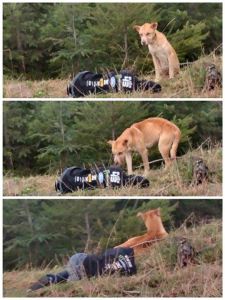
More recently, a friend pointed me to a story with a happy ending. A couple who tracks lost dogs learned of a dog who needed help. He’d been spotted for months in a remote park near Mount Rainier. He was starving and afraid. No one could catch him. When Amanda and Dylan, the trackers, couldn’t lure him with food, they devised a new plan.

baby bear Lost, Found Pets of WA State

Amanda lay down on the ground. Amazingly, the dog approached. She whimpered. He lied down next to her. She gained his…

View original post 782 more words

Ricky Gervais Blasts Trophy Hunters…..

Nabeki's avatarHowling For Justice

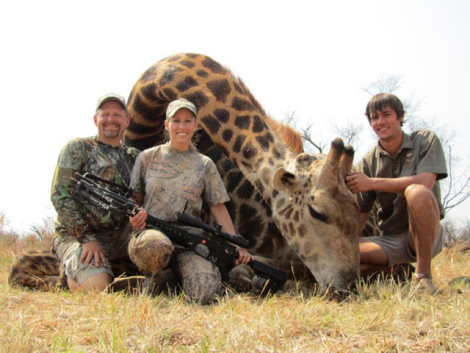
Trophy hunting a giraffe_Random storydotorg

Ricky Gervais is having none of trophy hunters BS they like to throw around, to defend their indefensible behavior and blood lust by killing innocent animals for sport.

Keep it up Ricky, you have their number and the courage and platform to call them out. Trophy hunting is not a sport, its animal cruelty and should be banned worldwide.

“These psycho trophy hunters always have stuff about their family being everything to them on their profiles. Elephants love their family  too.”…..Ricky Gervais Tweet April 18th 2015

===

Ricky Gervais blasts trophy hunters trying to excuse ‘grim sport’ by saying they ‘provide a service’

 
Comedian has been embroiled in a debate over hunting
 Wednesday 22 April 2015

Ricky Gervais has condemned trophy hunters for “exploiting the needs of the poor” following a protracted debate over hunting sparked by the controversial activities of female huntress Rebecca Francis.

Francis had…

View original post 501 more words