Crude oil Clock: http://www.oildecline.com/ |
||||||||||||||
The time to kick the habit is now…
It has taken between 50-300 million years to form, and yet we have managed to burn roughly half of all global oil reserves in merely 125 years or so. The world now consumes 85 million barrels of oil per day, or 40,000 gallons per second, and demand is growing exponentially. Oil production in 33 out of 48 out countries has now peaked, including Kuwait, Russia and Mexico. Global oil production is now also approaching an all time peak and can potentially end our Industrial Civilization. The most distinguished and prominent geologists, oil industry experts, energy analysts and organizations all agree that big trouble is brewing. The world is not running out of oil itself, but rather its ability to produce high-quality cheap and economically extractable oil on demand. After more than fifty years of research and analysis on the subject by the most widely respected & rational scientists, it is now clear that the rate at which world oil producers can extract oil is reaching the maximum level possible. This is what is meant by Peak Oil. With great effort and expenditure, the current level of oil production can possibly be maintained for a few more years, but beyond that oil production must begin a permanent & irreversible decline. The Stone Age did not end because of the lack of stones, and the Oil Age won’t end because of lack of oil. The issue is lack of further growth, followed by gradual, then steep decline. Dr King Hubbert correctly predicted peaking of USA oil production in the 1970’s on this basis. It is now widely acknowledged by the world’s leading petroleum geologists that more than 95 percent of all recoverable oil has now been found. We therefore know, within a reasonable degree of certainty, the total amount of oil available to us. Any oil well has roughly the same life cycle where the production rate peaks before it goes into terminal decline. This happens when about half of the oil has been recovered from the well. We have consumed approximately half of the world’s total reserve of about 2.5 trillion barrels of conventional oil in the ground when we started drilling the first well at a current rate of over 30 billion a year, meaning the world is nearing its production plateau. Worldwide discovery of oil peaked in 1964 and has followed a steady decline since. According to industry consultants IHS Energy, 90% of all known reserves are now in production, suggesting that few major discoveries remain to be made. There have been no significant discoveries of new oil since 2002. In 2001 there were 8 large scale discoveries, and in 2002 there were 3 such discoveries. In 2003 there were no large scale discoveries of oil. Given geologists’ sophisticated understanding of the characteristics that would indicate a major oil find, is is highly unlikely that any area large enough to be significant has eluded attention and no amount or kind of technology will alter that. Since 1981 we have consumed oil faster than we have found it, and the gap continues to widen. Developing an area such as the Artic National Wildlife Refuge in Alaska has a ten year lead time and would ultimately produce well under 1% of what the world currently consumes (IEA). Oil is now being consumed four times faster than it is being discovered, and the situation is becoming critical. “The consumption of a finite resource is simply a finite venture and the faster we use the quicker it peaks” (M. Simmons)
Recent Warnings: “Peak oil is now.” German Energy Watch Group –2008 “By 2012, surplus oil production capacity could entirely disappear..…” U.S. Department of Defense –2008 & 2010. “A global peak is inevitable. The timing is uncertain, but the window is rapidly narrowing.” UK Energy Research Centre -2009 “The next five years will see us face … the oil crunch.” UK Industry Taskforce on Peak Oil and Energy Security –2009
The Saudi Arabia Case With more than fifty oil-producing countries now in decline, focus on the oil-rich Middle East has sharpened dramatically. Countries of the Middle East have traditionally been able to relieve tight oil markets by increasing production, but, as the this region nears its own oil peak, any relief it can provide is limited and temporary. Saudi Arabia is a major oil producer with 73% of all incremental world demand being met by this country. The worrying fact is that 90% of their production comes from only 5 mega fields (one is the Ghawar field which is the biggest ever discovered), and are all at risk of unplanned production collapse. In 2004 there were warning signs of production falling into depletion. For years, Aramco, the Saudi national company, use secondary recovery techniques by injecting enormous amounts of seawater (7 million barrels daily) into their biggest field to boost production. These methods have only temporary effects, and lead to accelerated rates of depletion in the future. Matt Simmons, long time energy analyst who studied energy for 34 years, in his book “Twilight in the Desert” effectively confronts the complacent belief that there are ample oil reserves in Saudi Arabia and has created a compelling case that Saudi Arabia production will soon reach a peak, after which its production will decline and the world will be confronted with a catastrophic oil shortage. The factual basis of the book is over 200 technical papers published over the last 20 years which individually detail problems with particular wells or particular fields, but which collectively demonstrate that the entire Saudi oil system is “old and fraying” with reserves deliberately vastly overestimated. Geologist Dr Colin Campbell in a 1998 article in Scientific American also details numerous discrepancies about estimates in Middle East reserves. The extent of reserves reported remained amazingly constant from year to year and then jumped dramatically. A similar unexplainable jump occurred in other countries in the Middle East, sometimes even in the total absence of exploration, strongly suggesting that OPEC’s reserves are overstated.
Peak Oil Imminent The only uncertainty about peak oil is the time scale, which is difficult to predict accurately. Over the years, accurate prediction of oil production was confronted by fluctuating ecological, economical, and political factors, which imposed many restrictions on its exploration, transportation, and supply and demand. At the end of 2009, the Kuwait university and the Kuwait Oil company collaborated in a study to predict the peak date using multicylic models, depending on the historical 2 oil production trend and known oil reserves of 47 major oil production countries, to overcome the limitations and restrictions associated with other previous models. Based on this model, world production is estimated to peak in 2014. Other experts, oil companies and analyst firm estimate the peak date between now and around 2020. What’s certain is that the global production will go into a permanent decline within our generation. “One of nature’s biggest forces is exponential growth” (Albert Einstein) At a current average global consumption growth rate of 2% annually (1995-2005), by 2025 the world will need 50% more oil (120 mbd), and the International Energy Agency (IEA) admits that Saudi will have to double oil production to achieve this, which is not feasible in even the most optimistic scenario. And that’s not even taking into account that 80% of the world is only just starting to use oil & gas. In recent years, energy demands from mostly emerging economies have increased dramatically in populous countries as their oil consumption per capita grows. The International Energy Agency estimates that 93% of all incremental demand comes from non-OECD countries. Therefore, in time oil prices will continue to rise. Based on Simmon’s analysis, sudden and sharp oil production declines could happen at any time. Even under the most optimistic scenario, Saudi Arabia may be able to maintain current rates of production for several years, but will not be able to increase production enough to meet the expected increase in world demand. There is no likely scenario that some new frontier can replace Middle East oil declines. From Wiki leaks it has emerged that Senior Saudi energy officials have privately warned US and European counterparts that Opec would have an “extremely difficult time” meeting demand and that the reserves of Saudi have been overstated by as much as 40%.
Exxon Mobil Corporation, one of the world’s largest publicly owned petroleum companies, is the most forthright of the major oil companies having had the courage and honesty to quietly publish the declining discovery trend, based on sound industry data with reserve revisions properly backdated. Furthermore, the company is running page-size advertisements in European papers stressing the immense challenges to be faced in meeting future energy demand, hinting that the challenges might not be met despite its considerable expertise. Chevron recently joined their campaign publishing an advertisement in national newspapers stating that the ‘Era of Easy Oil is Over’ (see here to view full ad). “Initially it will be denied. There will be much lying and obfuscation. Then prices will rise and demand will fall. The rich will outbid the poor for available supplies.”
The fallacy of Alternatives The public, business leaders and politicians are all under the false assumption that oil depletion is a straightforward engineering problem of exactly the kind that technology and human ingenuity have so successfully solved before. Technology itself has become a kind of supernatural force, although in reality it is just the hardware and programming for running that fuel, and governed by the basic laws of physics and thermodynamics. Much of our existing technology simply won’t work without an abundant underlying fossil fuel base. In addition, physicist Jonathan Huebner has concluded in The History of Science and Technology that the rate of innovation in the US peaked in 1873, and the current rate of innovation is about the same as it was in 1600. According to Huebner, by 2024 it will have slumped to the same level as it was in the Dark Ages. Hence, without sufficient innovation and a comfortable surplus of fossil fuels, we may simply lack the tools to move forward. With this energy base dwindling, there is simply not enough time to replace a fluid so cheap, abundant and versatile. It is rich in energy, easy to use, store, and transport. Nothing has the bang for the buck of oil, and nothing can replace it in time – either separately or in combination. Wind, waves and other renewables are all pretty marginal and also take a lot of energy to construct and require a petroleum platform to work off. Natural gas is a diminishing resource as well and cannot satisfy the growing demand for energy. US Gas supplies were so low in 2003 after a harsh winter that to preserve life and property supplies were close to being cut off to manufacturers, electric plants and lastly homes. Ethanol has a net energy value of zero (not accounting for soil and water damage and other costs due to unsustainable agricultural practices) – it is subsidized as a boon to agribusiness and would have a negligible effect (Prindle, ACEEE). Solar energy produces marginal net energy, but are still decades away at best from being a viable substitute given the recent rate of progress in efficiency and costs (averaging about five percent a year) and is nowhere ready to meet the world’s energy needs. More importantly, solar photovoltaic cells (PVC) are built from hydrocarbon feed stocks and therefore require excess resources. It is estimated that a global solar energy system would take a century to build and would consume a major portion of world iron production (Foreign Affairs, Rhodes). The widespread belief that hydrogen is going to save the day is a good example of how delusional people have become. Hydrogen fuel cells are not an energy source at all, but are more properly termed a form of energy storage. Free hydrogen does not exist on this planet. It requires more energy to break a hydrogen bond than will ever be garnered from that free hydrogen. The current source of hydrogen is natural gas – that is, a hydrocarbon. In the envisioned system of solar PVC & hydrogen fuel cells, every major component of the system, from the PVC to the fuel cells themselves will require hydrocarbon energy and feedstocks. The oil age will never be replaced by a hydrogen fuel-cell economy. Coal is abundant, but its net energy profile is poor compared to oil and its conversion process to synthetic fuels is very inefficient. Coal would have to be mined at much higher rates to replace declining oil field. In addition, coal production is extremely harmful to the environment. One large coal burning electric plant releases enough radioactive material in a year to build two atomic bombs, apart from emitting more greenhouse gases than any other fuels. Coal is implicated in mercury pollution that causes 60.000 cases of brain damage in newborn children every year in the USA. Resorting to coal would be a very big step backwards and what we may face then may be more like the Dim Ages. More importantly, coal is distributed very unevenly with the top three countries (China, USA, USSR) possessing almost 70% of total. Much of the current oil and gas supply is in low-population countries, such as Saudi Arabia, that cannot possibly use all of the production for themselves. They are hence quite willing, indeed eager, to sell it to other countries. When oil and gas are gone, and only coal remains, and the few (large-population) countries that possess it need all of it for their own populations, it will be interesting to see how much is offered for sale to other countries. Obtaining usable oil from tar sands requires huge amounts of energy, as it has to be mined and washed with super hot water. From an energy balance, it takes the equivalence of two barrels of oil to produce three, which is still positive but poor in terms of energy economics. In the early days of conventional oil, this ratio used to be one to thirty. Nuclear power plants are simply too expensive and take ten years to build, relying on a fossil fuel platform for all stages of construction, maintenance, and extracting & processing nuclear fuels. Additionally, uranium is also a rare and finite source with its own production peak. Since 2006, the uranium price has already more than doubled. Nuclear fusion is the kind of energy that the world needs. However, mastering it has been 25 years away for the past 50 years, and still is… Fossil fuels allowed us to operate highly complex systems at gigantic scales. Renewables are simply incompatible in this context and the new fuels and technologies required would simply take a lot more time to develop than available and require access to abundant supplies of cheap fossil fuels, putting the industrial adventure out of business. In an interview with The Times, former Shell CEO Jeroen van der Veer calls for a “reality check” and warns that the world’s energy crisis cannot be solved by renewables. “Contrary to public perceptions, renewable energy is not the silver bullet that will soon solve all our problems. Just when energy demand is surging, many of the world’s conventional oilfields are going into decline. The world is blinding itself to the reality of its energy problems, ignoring the scale of growth in demand from developing countries and placing too much faith in renewable sources of power”. Alternative energies will never replace fossil fuels at the scale, rate and manner at which the world currently consumes them, and humankind’s ingenuity will simply not overcome the upper limits of geology & physics.
|
Monthly Archives: May 2015
Save Our Seas For the Beauty of Nature: Tell Royal Dutch Shell to get out of Seattle!
Gallery
This gallery contains 12 photos.
Brian May blasts David Cameron over support for ‘psychopathic’ fox hunting and badger cull
By Mikey Smith
The Queen guitarist and animal rights campaigner gave the Prime Minister both barrels, calling him ‘the worst kind of Tory’ and saying he has no compassion for animals.
Brian May has launched a passionate attack on David Cameron, who he says has “no compassion for animals whatsoever.”
The Queen guitar legend and animal rights campaigner condemned the Prime Minister’s support for the badger cull and the legalisation of fox hunting.
Speaking exclusively to the Mirror, he said: “It looks like nothing can stand in Cameron’s way. Now he’s got a majority he can plough through with the things he was hesitating on, like fox hunting.
“I think Cameron is a special kind of Tory. The worst kind of Tory. The kind that has no compassion for animals whatsoever.”
He said: “The most appalling thing is that they fought this election on the economy, and now the first thing that comes up is fox hunting.”
Dr May has been vocal on animal rights issues since 2005.
He runs animal rights organisation Save Me, with whom he’s campaigned against blood sports and the badger cull.

He says that of the dozen or so reasons people give for why fox hunting is necessary, all but one fall down on close inspection.
“The only thing you can honestly say about fox hunting is that people enjoy it,” he said. “People have a sadistic pleasure in seeing an animal ripped apart.
“It’s sadism. To be honest, it’s psychopathic behaviour to enjoy the suffering of another creature.”
He added: “People who have no compassion for animals tend not to have compassion for humans either.”
The Mirror contacted Downing Street for a response to Dr May’s comments, but they had not responded at the time of publication.
He said the one glimmer of hope was that when the bill to repeal the Hunting Act is introduced to the Commons, it will be a free vote.
“I think all votes should be free votes,” he said. “It’s by no means certain he’ll have the full support of his party.”
He said a new petition would be set up in the coming days on the government’s website against the repeal.
Dr May was a key campaigner against the badger cull, which was piloted by former environment secretary Owen Patterson, and looks set to continue under his successor Liz Truss.
The 2013 pilot badger culls in Gloucester and Somerset were described as “ineffective” at stemming the spread of bovine TB and failed the test for humaneness, according to an independent panel of experts put together by the Department for the Environment, Food and Rural Affairs (Defra).
And yesterday it was revealed that at a time when the government is planning £12bn in cuts to welfare, they are content to spend more than £5,000 per badger killed in the heavily criticised plan.
In February, Liz Truss told the annual conference of the National Farmers’ Union (NFU) she would press on with the cull in spite of the criticism
She said: “We will not let up, whatever complaints we get from protesters groups. We are in it for the long haul and we will not walk away.”
Dr May said: “She speaks from the same hymn book as Patterson – which is the same hymn book as Cameron, who it seems has some kind of behind closed doors agreement with the NFU to continue the cull regardless of the evidence.”
NFU Director General Andy Robertson said: “The NFU has always been clear about the need for a badger cull as part of a comprehensive strategy to address the scourge of TB. However, we have not met the Prime Minister and Brian May’s claim of a behind the scenes deal therefore makes him look ridiculous.”

In the run up to the election, Dr May launched Common Decency, a project intended to encourage people to vote for people who would act with decency in the House of Commons.
He admits he’s disappointed in the outcome of the election.
He says he has no plans to abandon the project, but will be changing his methods.
“A lot of the old methods don’t work,” he said. “Even getting a vote in the House of Commons and winning that vote is no guarantee you’ll influence the government.”
But the Queen guitarist played down reports of a rift between him and Prince Charles.
In one of the Prince’s recently revealed “black spider” letters, the Prince describes the anti-badger cull lobby as “intellectually dishonest”.
But the letter was sent a decade ago, before Dr May was vocal on animal rights issues – and crucially, before the independent report declared the badger cull pilot ineffective.
Dr May said: “I imagine Prince Charles’ views could have changed.
“Somebody should ask him.
Brian May is a panelist on tonight’s Question Time tonight on BBC One at 10.45pm.
Also on the panel are Ukip leader Nigel Farage, and Jeremy Hunt, who confirmed last week that a bill to repeal the Hunting Act would be on the government’s agenda for this Parliament.
‘Kayactivists’ protest as Arctic drill rig moors off Seattle
http://www.komonews.com/news/local/Kayakers-protest-as-Arctic-drill-rig-moors-off-Seattle-303891431.html
»Play Video The 400-foot-long rig rising nearly 300 feet above the water dwarfed the flotilla of tiny boats on Thursday, as it passed the city’s Space Needle and downtown skyline and docked at Terminal 5.
The watery protest marked a pivotal moment for an environmental movement increasingly mobilized around climate change, but the scene also suggested how outmatched Shell’s opponents have been as they try to keep the petroleum giant from continuing its $6 billion effort to open new oil and gas reserves in one of the world’s most dangerous maritime environments.
“The environmental issues are big and this is an opportunity to present a David versus Goliath position – the people and the planet versus Shell – and create a national debate about drilling in the Arctic,” said Paul Adler, 52, of Shoreline, who paddled a single white kayak to “unwelcome” the Polar Pioneer.
Environmental groups in the Pacific Northwest are sensing a shift in the politics that surround energy production and have mobilized against a series of projects that would transform the region into a gateway for crude oil and coal exports to Asia.
“These proposals have woken a sleeping giant in the Northwest,” said Eric de Place, policy director for Sightline Institute, a liberal Seattle think tank. “It has unleashed this very robust opposition movement.”
Added Seattle City Councilmember Mike O’Brien, who joined the so-called kayaktivists on the water Thursday: “Shell’s attempt to use Seattle as a home base for Arctic drilling may be the last battle on the front of Arctic drilling, and the energy I have seen and felt from people in the region is really powerful and it gives me hope that we can stop Arctic drilling.”
hell still needs other permits from state and federal agencies, including one to actually drill offshore in the Arctic and another to dispose of wastewater. But it’s moving ahead meanwhile, using the Port of Seattle to load drilling rigs and a fleet of support vessels with supplies and personnel before spending the brief Arctic summer in the Chukchi Sea, which stretches north from the Bering Strait between Alaska and Russia.
Hurricane-force winds and 50-foot seas can quickly threaten even the sturdiest ships in the seas off Alaska. But Shell cleared a major bureaucratic hurdle Monday when the federal Bureau of Ocean Energy Management, after taking public comments and reviewing voluminous reports, approved the multiyear exploration plan.
If exploratory drilling goes well, Shell plans to invest billions more in infrastructure to open this new frontier, building pipelines under the ocean and onto the tundra of Alaska’s North Slope, along with roads, air strips and other facilities.
Shell’s last effort to do exploratory drilling in the Arctic Ocean also left from Seattle and ended badly. The Noble Discoverer and the Kulluk – a rig Shell had spent hundreds of millions of dollars to customize – were stranded by equipment failures in terrible weather, and the Coast Guard barely rescued the Kulluk’s crew. Federal investigations resulted in guilty pleas and fines for rig owner Noble Drilling.
The Kulluk ended up on a scrap heap in China. Shell is leasing the Polar Pioneer in its stead, again backed by the Noble Discoverer. But Shell says it has gained vital experience and can safely drill on its leases in the Chukchi Sea, as well as the Beaufort Sea, an even more remote stretch north of the Alaska National Wildlife Refuge.
Shell spokesman Curtis Smith called Monday’s approval an important milestone that “signals the confidence regulators have in our plan.”
Officials in Alaska have welcomed the drilling, even flying to Seattle this week to lobby for Shell’s plan. Labor groups representing port workers noted that Foss Maritime is employing more than 400 people already to service the Shell fleet.
Seattle Mayor Ed Murray, for his part, is strongly against hosting Shell’s fleet, warning that the port could face daily fines because it lacks the proper permit.
Those fines would amount to no more than $500 a day for the port – a tiny drop in a very large barrel if Shell, one of the world’s largest companies, manages to recover billions of gallons of oil from the Arctic Ocean.
Seattle’s environmentalists, however, have a sense that their time is now.
“Unless people get out there and put themselves on the front lines and say enough is enough, then nothing will ever change,” said Jordan Van Voast, 55. “I’m hopeful that people are waking up.”
When the Kulluk was being prepared in 2012 for Shell’s last Arctic venture, “it wasn’t this big civic moment,” recalled KC Golden, a senior policy adviser for Climate Solutions, an organization advocating for renewable energy.
But “now it is,” Golden said. “That’s a measure of how the awareness has grown. I think it’s a moment for Seattle.”
Just FYI: Fox calls it ‘The worst bird flu outbreak on record’
From: http://www.foxnews.com/health/2015/05/15/nebraska-declares-state-emergency-in-bird-flu-outbreak/
Government officials were working closely with the nation’s poultry industry Friday to contain the worst outbreak of bird flu on record, one that already has prompted the governors of four states to declare emergencies and led to the culling of 33 million birds in 16 states.
Nebraska became the latest state to declare an emergency amid the outbreak, which has seen three deadly strains of avian influenza have hit North America since December. That action by Gov. Pete Ricketts followed similar moves in Wisconsin, Minnesota and Iowa. With the spread of infection picking up speed in recent weeks, the battle to stem the crisis has become an all-hands-on-deck situation.
_____________________________________
Also see, from: http://www.nytimes.com/2015/05/15/business/bird-flu-outbreak-chicken-farmers.html?emc=eta1&_r=1
Deadly avian flu viruses have affected more than 33 million turkeys, chickens and ducks in more than a dozen states since December. The toll at Center Fresh farms alone accounts for nearly 17 percent of the nation’s poultry that has either been killed by bird flu or is being euthanized to prevent its spread.
While farmers in Asia and elsewhere have had to grapple with avian flu epidemics, no farmers in the United States have ever confronted a health crisis among livestock like this one, which seemed to travel along migratory bird pathways from the Pacific Northwest to the Midwestern states. Almost every day brings confirmation by the Agriculture Department that at least another hundred thousand or so birds must be destroyed; some days, the number exceeds several million.
On Thursday, South Dakota reported its first possible infection on a chicken farm with 1.3 million birds in the eastern part of the state.
Mounds and mounds of carcasses have piled up in vast barns here in the northwestern corner of Iowa, where farmers and officials have been appealing for help to deal with disposal of such a vast number of flocks. Workers wearing masks and protective gear have scrambled to clear the barns, but it is a painstaking process. In these close-knit towns that include many descendants of the area’s original Dutch settlers, some farmers have resorted to burying dead birds in hurriedly dug trenches on their own land, while officials weighed using landfills and mobile incinerators.
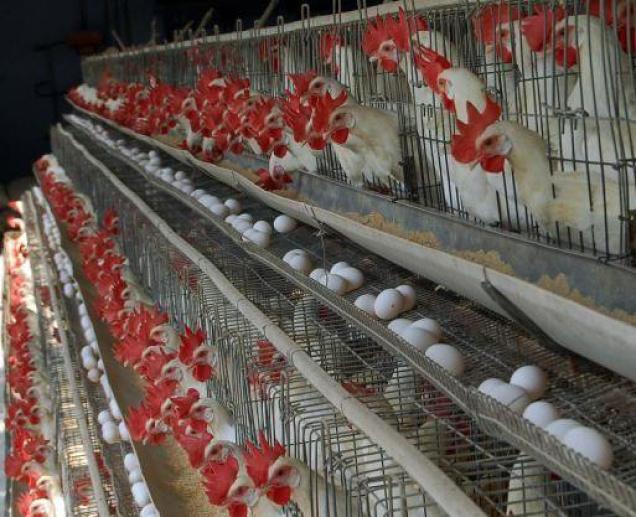
Iowa, where one in every five eggs consumed in the country is laid, has been the hardest hit: More than 40 percent of its egg-laying hens are dead or dying. Many are in this region, where barns house up to half a million birds in cages stacked to the rafters. The high density of these egg farms helps to explain why the flu, which can kill 90 percent or more of a flock within 48 hours, is decimating more birds in Iowa than in other states.
Patricia Randolph’s Madravenspeak: Let’s have $5 ‘gatherer’ license to take live animals and plants from public lands
Wisconsin Wildlife Ethic-Vote Our Wildlife
“Any society allows you to agree with the government. A free society allows you to disagree fundamentally.” ~ I.F. Stone, “Con Games”
To equalize fair citizen participation, I propose that the Wisconsin Department of Natural Resources establish laws encouraging citizens to dig up trees and plants and take live animals from our public lands without limit, with a $5 annual “gatherer” license incentive. Citizens can start a small nursery business of indigenous plants and trees or a live indigenous animal center to re-populate empty Wisconsin woods.
The season would not have to interrupt the $5 licenses sold to new trappers for indiscriminate killing of wildlife. Their $5 season spans mid-October through March in the south, into April birthing seasons up north. It would be appropriate to have live animal trapping after birthing seasons in March/April and plants and trees taken during spring re-growth of new vegetation through fall.
As equal…
View original post 765 more words
The Root of the Problem
Everything You Want to Know About the Bird Flu Outbreak
400,000 Coyotes Are Killed in the U.S. Each Year…
400,000 Coyotes Are Killed in the U.S. Each Year… The Reason Why Will Make You Livid
M. M. SullivanAt least 400,000 coyotes are killed each year in the United States. That’s an average of nearly 1,100 individuals a day.
So why isn’t the government doing something to stop it? Well, mainly because they have been orchestrating a discreet mass slaughter of coyotes for nearly a century.
Read more at http://blog.therainforestsite.com/killing-coyotes/#g4cx4aXjKm7uwMDO.99
The Role Of Science In A Push For Animal Liberation
http://wcqs.org/post/role-science-push-animal-liberation
Last Friday in the Washington Post, Charles Krauthammer asked which contemporary practices will be deemed “abominable” in the future, in the way that we today think of human enslavement.
He then offered his own opinion:
“I’ve long thought it will be our treatment of animals. I’m convinced that our great-grandchildren will find it difficult to believe that we actually raised, herded and slaughtered them on an industrial scale — for the eating.”
Krauthammer goes on to predict that meat-eating will become “a kind of exotic indulgence,” because “science will find dietary substitutes that can be produced at infinitely less cost and effort.”
I don’t often agree with Krauthammer’s views and his animal column is no exception. His breezy attitude on animal biomedical testing does animals no favors. (It’s perhaps only fair to note that I have similar concerns about Alva’s conclusions on animal testing from his 13.7 post published that same day.)
But, still, Krauthammer does a terrific job of awakening people to many issues related to animals’ suffering. And he’s not alone. On April 17, I joined other scientists and activists on the radio show To the Point hosted by Warren Olney, to discuss this question: Is Animal Liberation Going Mainstream? In the 34-minute segment, we discussed the public outcry against SeaWorld’s treatment of orcas, Ringling Brothers’ plan to retire elephants from the circus in three years, and the rightness or wrongness of keeping animals in zoos — all issues brought up by Krauthammer in his column.
But why now? What combination of factors is moving our society at this specific point in time towards greater concern for animal welfare? I posed this question to Lori Marino, executive director for The Kimmela Center for Animal Advocacy and, on Monday, she responded by email in this way:
“Most changes in public attitudes are due to the scientific exploration of behavior and cognition in other animals and the translation of that knowledge into the public mindset. Now, more than ever, many people accept that other animals have thoughts, feelings and, indeed, autonomous lives to live. We’re seeing changes in how the public feels about keeping wild animals captive for entertainment and biomedical research, the legal status of other animals with the groundbreaking work of the Nonhuman Rights Project, and in plant-based diets slowly but surely becoming part of the “cultural furniture” in many parts of the world.
So, we can credit science for revealing to us the many complex levels of intelligence and sensitivities in other animals. Of course, science is always a double-edged sword, and the same scientific endeavors which have led to increased awareness of other animals have also opened up new windows of opportunities to exploit many of those same animals.
With our increasing capabilities in genomics, molecular biology, cloning and neuroscience, we are now capable of manipulating other animals in more invasive ways than ever. One need only think about the commercial catalogs for genetically engineered mice, the overuse of antibiotics in factory farmed animals, and the glint of genetic monster-making in the growing efforts at de-extinction. (Science is one aspect of our global exploitation of animals; the commercial market for animal parts and labor, climate change and habitat destruction have forced this planet into the current sixth mass extinction event.)
So the answer to this question depends upon one’s perspective. I wish I could say that the groundswell of increasing awareness and concern for other animals is a global phenomenon. But, I am keenly aware of how my standpoint is shaped by being ensconced in the animal protection world and how cautious I need to be about over-reaching conclusions. Instead, every day I try to see things from the 32,000 foot perspective. When you look from that vantage point the situation is not very encouraging.
Overall, I see two parallel paths into the future. One represents growing understanding, compassion and unity with our fellow animals. The other represents the increasing exploitation and abuse. It is probably too late to turn everything around for the planet. But we can all make a difference for other animals on an individual level and, in the process, maybe salvage the dignity of our own species as well.”
Through Marino’s words, we can see that the answer to “why now” is intimately tied to advances not only in scientific techniques but also in the questions scientists bring with them into the field. It’s a building crescendo: Studies of wild elephants, orcas and chimpanzees reveal that these animals live in layered, complex societies and cooperate in the expression of intelligent and/or emotional acts; those revelations lead in turn to scientists’ deciding to test hypotheses about intelligent and emotional action in other animals. What we’re finding out about fish cognition and sentience alone represents an exciting new development — and new scientific developments make their way into the public consciousness about animals’ lives, as Marino notes.
While I feel that it’s important to celebrate recent strides in animal welfare, including those mentioned by Krauthammer in his column, I also take note of Marino’s bottom-line caution. Invasive, experimental and, in many cases, unethical science on animals continues in traditional ways on species ranging from monkeys to mice, and also in novels ways rooted in modern technologies like cloning and other forms of genetic manipulation.
The best question for animals really isn’t “Why now?” but “What’s next?,” in the sense of “What can we do next to help and protect animals?” One key answer to that question brings us right back to Krauthammer on meat: As a panel of U.S. nutritional experts recommends we can adopt a more plant-based diet.
Barbara J. King, an anthropology professor at the College of William and Mary, often writes about human evolution, primate behavior and the cognition and emotion of animals. Barbara’s most recent book on animals was released in paperback in April. You can keep up with what she is thinking on Twitter: @bjkingape.