Exposing the Big Game

Forget Hunters' Feeble Rationalizations and Trust Your Gut Feelings: Making Sport of Killing Is Not Healthy Human Behavior

Exposing the Big Game

‘American Wolf’….06 Story Coming To The Big Screen

Nabeki's avatarHowling For Justice

Leonardo DiCaprio’s Appian Way and Langley Park eye ‘American Wolf’

BEVERLY HILLS, CA - FEBRUARY 10:  Actor Leonardo DiCaprio attends the 86th Academy Awards nominee luncheon at The Beverly Hilton Hotel on February 10, 2014 in Beverly Hills, California.  (Photo by Kevin Winter/Getty Images) . (Photo by Kevin Winter/Getty Images)

No, American Wolf is not a follow-up to The Wolf of Wall…

View original post 185 more words

Just Keep ’em Stupid: No More ‘Bird Flu’

Gag Rule Against saying “Bird Flu” or “Climate Change”

11 May 2015

 http://www.thepoultrysite.com/poultrynews/35021/whats-in-a-name-no-more-bird-flu/

GLOBAL – The World Health Organization (WHO) has issued new guidelines for naming new human infectious diseases, which include the use of names such as ‘bird flu’ and ‘swine flu’, which have unintended negative impacts by stigmatising certain communities or economic sectors.

The WHO has called on scientists, national authorities and the media to follow best practices in naming new human infectious diseases to minimize unnecessary negative effects on nations, economies and people.

Dr Keiji Fukuda, Assistant Director-General for Health Security at the WHO said: “In recent years, several new human infectious diseases have emerged. The use of names such as ‘swine flu’ and ‘Middle East Respiratory Syndrome’ has had unintended negative impacts by stigmatizing certain communities or economic sectors.

“This may seem like a trivial issue to some, but disease names really do matter to the people who are directly affected. We’ve seen certain disease names provoke a backlash against members of particular religious or ethnic communities, create unjustified barriers to travel, commerce and trade, and trigger needless slaughtering of food animals. This can have serious consequences for peoples’ lives and livelihoods.”

Diseases are often given common names by people outside of the scientific community. Once disease names are established in common usage through the Internet and social media, they are difficult to change, even if an inappropriate name is being used. Therefore, it is important that whoever first reports on a newly identified human disease uses an appropriate name that is scientifically sound and socially acceptable.

The best practices apply to new infections, syndromes, and diseases that have never been recognised or reported before in humans, that have potential public health impact, and for which there is no disease name in common usage. They do not apply to disease names that are already established.

The best practices state that a disease name should consist of generic descriptive terms, based on the symptoms that the disease causes (e.g. respiratory disease, neurologic syndrome, watery diarrhoea) and more specific descriptive terms when robust information is available on how the disease manifests, who it affects, its severity or seasonality (e.g. progressive, juvenile, severe, winter). If the pathogen that causes the disease is known, it should be part of the disease name (e.g. coronavirus, influenza virus, salmonella).

Terms that should be avoided in disease names include geographic locations (e.g. Middle East Respiratory Syndrome, Spanish Flu, Rift Valley fever), people’s names (e.g. Creutzfeldt-Jakob disease, Chagas disease), species of animal or food (e.g. swine flu, bird flu, monkey pox), cultural, population, industry or occupational references (e.g. legionnaires), and terms that incite undue fear (e.g. unknown, fatal, epidemic).

WHO developed the best practices for naming new human infectious diseases in close collaboration with the World Organisation for Animal Health (OIE) and the Food and Agriculture Organization of the United Nations (FAO), and in consultation with experts leading the International Classification of Diseases (ICD).

The new best practices do not replace the existing ICD system, but rather provide an interim solution prior to the assignment of a final ICD disease name. As these best practices only apply to disease names for common usage, they also do not affect the work of existing international authoritative bodies responsible for scientific taxonomy and nomenclature of microorganisms.

Eco groups push for sustainable diet guidelines

Bob Berwyn's avatarSummit County Citizens Voice

A classic Greek salad in Corfu. Less meat, more vegetables!

Feds eye update to key food guidelines

Staff Report

FRISCO — Conservation activists say that a recent round of comments and petitioning by the public show growing support for a more sustainable federal dietary guidelines, with a shift toward more plant-based food

At issue is a proposal by the U.S. Department of Health and Human Services to update those guidelines based on the recommendations of a science committee that recommended the changes.

View original post 512 more words

Happy Today … Gassed Tomorrow

IDA geese FB post ‏

https://www.facebook.com/indefenseofanimals/photos/a.10150796907537346.439113.5956327345/10153262971307346/?type=1&theater

 “Where do the wild geese go when they go away …?”

When Greg Brown wrote his song wondering where the wild geese go when they go away, he, as we do, probably had the image in mind of a group of these beautiful birds flying high up in the sky in their characteristic v-shaped flight pattern and their familiar crackling voices that always seem to have something to say.

Tragically, many Canada geese families currently nesting near ponds in parks, airports and even in and near wildlife refuges, will be rounded up by USDA Wildlife Service agents (WS) during their molting period when they cannot fly. Entirely helpless, they will be separated from their goslings, causing shock and panic among the parent geese and goslings, who frantically call their loved ones in a final futile attempt to find each other.

Instead, these highly intelligent birds, in a terrifying state of confusion and panic, will be either mercilessly thrown into mobile gas chambers, left struggling for their lives over a long period of time while fighting for oxygen in vain, or packed into crates and trucked to a slaughterhouse to be brutally hung upside down with their throats slashed for their flesh.

Please stay tuned for our upcoming alerts to ask for your active involvement to help save Canada geese from a certain horrific death! Please make sure you have provided your state, as many of our alerts are regional in nature.

https://www.facebook.com/indefenseofanimals/photos/a.10150796907537346.439113.5956327345/10153262971307346/?type=1&theater

When Humans Declared War on Fish

http://www.nytimes.com/2015/05/10/opinion/sunday/when-humans-declared-war-on-fish.html?nl=todaysheadlines&emc=edit_th_20150510
When Humans Declared War on Fish

By PAUL GREENBERG and BORIS WORM

ON Friday we humans observed V-E Day, the end to one part of a global catastrophe that cost the planet at least 60 million lives. But if we were fish, we would have marked the day differently – as the beginning of a campaign of violence against our taxonomic classes, one that has resulted in trillions of casualties.

Oddly, the war itself was a great reprieve for many marine species. Just as Axis and Allied submarines and mines made the transportation of war matériel a highly perilous endeavor, they similarly interfered with fishing. The ability to catch staple seafoods, like cod, declined markedly. Freed from human pursuit, overexploited species multiplied in abundance.

But World War II also brought a leap in human ingenuity, power and technical ability that led to an unprecedented assault on our oceans. Not only did ships themselves become larger, faster and more numerous, but the war-derived technologies they carried exponentially increased their fishing power.

Take sonar. Before the 1930s, electronic echolocation was a barely functioning concept. It allowed operators to trace the vague contours of the seafloor topography and crudely track the pathway of a large moving object. But the war pushed forward dramatic advances in sonar technology; by its end, sophisticated devices, developed for hunting submarines, had grown infinitely more precise, and could now be repurposed to hunt fish.

Schools of fish could soon be pinpointed to within a few yards, and clearly differentiated from the sea’s bottom. Coupled with high-powered diesel engines that had been developed during the global conflict, the modern fishing vessel became a kind of war machine with a completely new arsenal: lightweight polymer-based nets, monofilament long lines that could extend for miles and onboard freezers capable of storing a day’s catch for months at a time.

Even human resources developed during the war were later redirected toward fishing: Japanese fighter pilots adept at spotting subsurface Allied submarines were later retrained to look for whales. Likewise, more than a few former Allied pilots found postwar employment hunting bluefin tuna and Atlantic menhaden.

In some ways, the “war machine” wasn’t a metaphor. Across South Asia, leftover explosives were “recycled” for “bomb fishing,” an obscenely destructive way of killing coastal fish, which turned many coral reefs into rubble fields. And the technological overkill continued into the Cold War era: Satellite imagery and GPS technology originally intended to track the movements of the Soviet nuclear arsenal eventually allowed well-populated fish habitats to be clearly identified from space.

Because the war incentivized the creation of ships with much longer oceangoing ranges, it also meant that fishing was transformed from a local endeavor into a global one. “Industrial fishing,” maybe the first globalized economic enterprise, meant the wholesale, permanent occupation of marine ecosystems, instead of the local raids practiced by previous generations.

In addition, emerging economies of scale meant that it wasn’t just the target fish that suffered. With the invention of postwar super trawlers that scooped up everything in their path, a sort of scorched-earth approach to fishing became commonplace.

Taken collectively, the rise of postwar fishing technology meant that the global reported catch rose from some 15 million metric tons at war’s end to 85 million metric tons today – the equivalent, in weight, of the entire human population at the turn of the 20th century, removed from the sea each and every year.

Only the turn of the third millennium saw a new kind of reprieve, this time not caused by human adversity, but by the insight that we need to make peace with other species as well. Growing signs of exhaustion and failure in global fisheries made humans reconsider the totality of their assault.

Marine protected areas, an environmental version of a demilitarized zone, started to spring up, and now cover some 3.5 percent of the ocean. Countries formerly at war began to work together to hammer out new deals for fish, exemplified by both the recent revision of the Common Fisheries Policy in Europe and new efforts underway at the United Nations to better regulate fishing on the high seas, the 60 percent of the oceans outside national control.

Collateral damage to sharks, turtles, whales and sea birds is increasingly becoming unacceptable. And some of those same technologies once used to kill fish with precision are now being used to save them: War-inspired satellite technology is being deployed to identify and pursue rogue vessels fishing illegally.

But in remembering the end of World War II and the deliberate steps that led to a lasting peace, we might contemplate a broader Marshall Plan, which would further restrain our destructive tendencies and technological powers elsewhere, not just in fishing the oceans, but in mining, drilling and otherwise exploiting them.

To be sure, the postwar assault on fish mostly sprang from an honorable intention to feed a growing human population that boomed in a prosperous postwar world. But as in war, everybody loses when there is nothing left to fight for. Only when we fully embrace that simple fact, and act accordingly, will our celebrations resonate among what the author Henry Beston called those “other nations caught with ourselves in the net of life and time.”

Paul Greenberg<http://paulgreenberg.org/> is the author, most recently, of “American Catch.” Boris Worm<http://wormlab.biology.dal.ca/> is a professor of marine conservation biology at Dalhousie University, Nova Scotia.

A version of this op-ed appears in print on May 10, 2015, on page SR4 of the New York edition with the headline: When Humans Declared War on Fish.
1795497_611414028914288_1804650880_n

Teenage boy killed in Matata hunting accident


http://www.newstalkzb.co.nz/news/emergency/teenage-boy-killed-in-matata-hunting-accident/

Newstalk ZB Staff , Emergency

Updated 2.51pm: A 16-year-old boy is dead after a hunting incident near Whakatane this morning.

Bay of Plenty Police District Command Centre’s Sergeant Dennis Murphy says police were alerted to the incident around 8 eight o’clock.

A 16 year old male was duck hunting, and while hunting a firearm was discharged. As a result of that he is now unfortunately deceased.”   [Imagine, a firearm discharging while hunting…]imagesQB1DEJIT

Whakatane CIB are investigating the death at Matata but are treating it as a hunting incident.

The boy was one of three teenagers duck shooting at Greig Road today.

He died at the scene.

Petition to Drop Charges Against Sea Shepherd’s Paul Watson

By – May 7, 2015

Earlier this week, Canadian environmentalist Paul Watson appealed to his more than 500,000 Facebook followers to sign an online petition asking prosecutors in Puntarenas to drop criminal charges pending against the controversial founder of the Sea Shepherd Conservation Society.

Here’s the message posted by Mr. Watson:

Hi everyone,

I can use your help with this petition to get the Costa Rican government to drop their bogus charges against me. They are trying to extradite me for stopping a shark finning operation in 2002 in Guatemalan waters. This was done at the request of the government of Guatemala. No one was hurt. Nothing was damaged. Sharks were saved. Costa Rica has a problem with that.

The same courts that let the murderers of Jairo Mora Sandoval go free because the police and prosecutors conveniently lost the evidence now want to put me in prison for 15 years for saving sharks. We need to keep the pressure on Costa Rica to enable us to return to defend marine reserves, turtles, sharks, whales, dolphins and fish.

Mr. Watson is currently under the duress of an INTERPOL Red Notice, which seeks his capture and extradition to Costa Rica, where he would face criminal court in Puntarenas. Over the last few years, The Costa Rica Star has been covering the saga of Mr. Watson and his involvement in the Varadero case. As reported in May 2102:

Paul Watson, the controversial founder of the Sea Shepherd Conservation Society, was arrested by German law enforcement authorities in Frankfurt […] Mr. Watson was in command of the Sea Shepherd vessel Farley Mowat when he allegedly rammed a Costa Rican boat suspected of illegal shark fishing. That happened near the territorial waters of Guatemala, and Mr. Watson claims that he was instructed by Guatemalan authorities to detain the Tico fishermen, which he did. After the ramming and subsequent towing of the boat, Guatemalan authorities told Mr. Watson on radio that he would be arrested for his conduct in the high seas, so he instead released the Tico boat and changed course to Costa Rica in order to avoid arrest. Once Mr. Watson arrived in Puntarenas, it took some time before the local prosecutor ordered a ship arrest while an investigation was conducted. The Farley Mowat was freed on a bond of $850, and Mr. Watson’s attorney advised him to sail away and flee Costa Rica while he could. He subsequently fled Germany.

The preamble of the online petition, which is posted at Avaaz.org, reads as follows:

The greedy interests of the very few who enrich themselves ravaging the life seas have turned his main defender, captain Paul Watson, a fugitive from the supposed “justice”. They are using no other than the courts of the country that boasts itself as “environmentalist”, which chase him for nearly thirteen years with a judicial cause invented by illegal shark fishermen and supported by illegal fishing mafias who kill marine wildlife in cold blood and without restrictions. It’s time to say “ENOUGH” to such injustice!

Sign Petition Here: https://secure.avaaz.org/en/petition/Fiscalia_CR_Liberemos_a_Paul_Watson_de_la_persecucion_de_las_Mafias_de_la_Pesca_Ilegal/edit

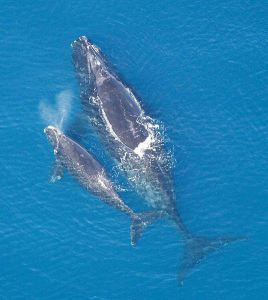
A North Atlantic right whale and calf. PHOTO COURTESY NOAA.