Search for wounded bear shot by bowhunters under way in Kitsap Co.

http://www.komonews.com/news/local/Wildlife-officials-search-Kitsap-County-for-wounded-aggressive-bear-328448541.html

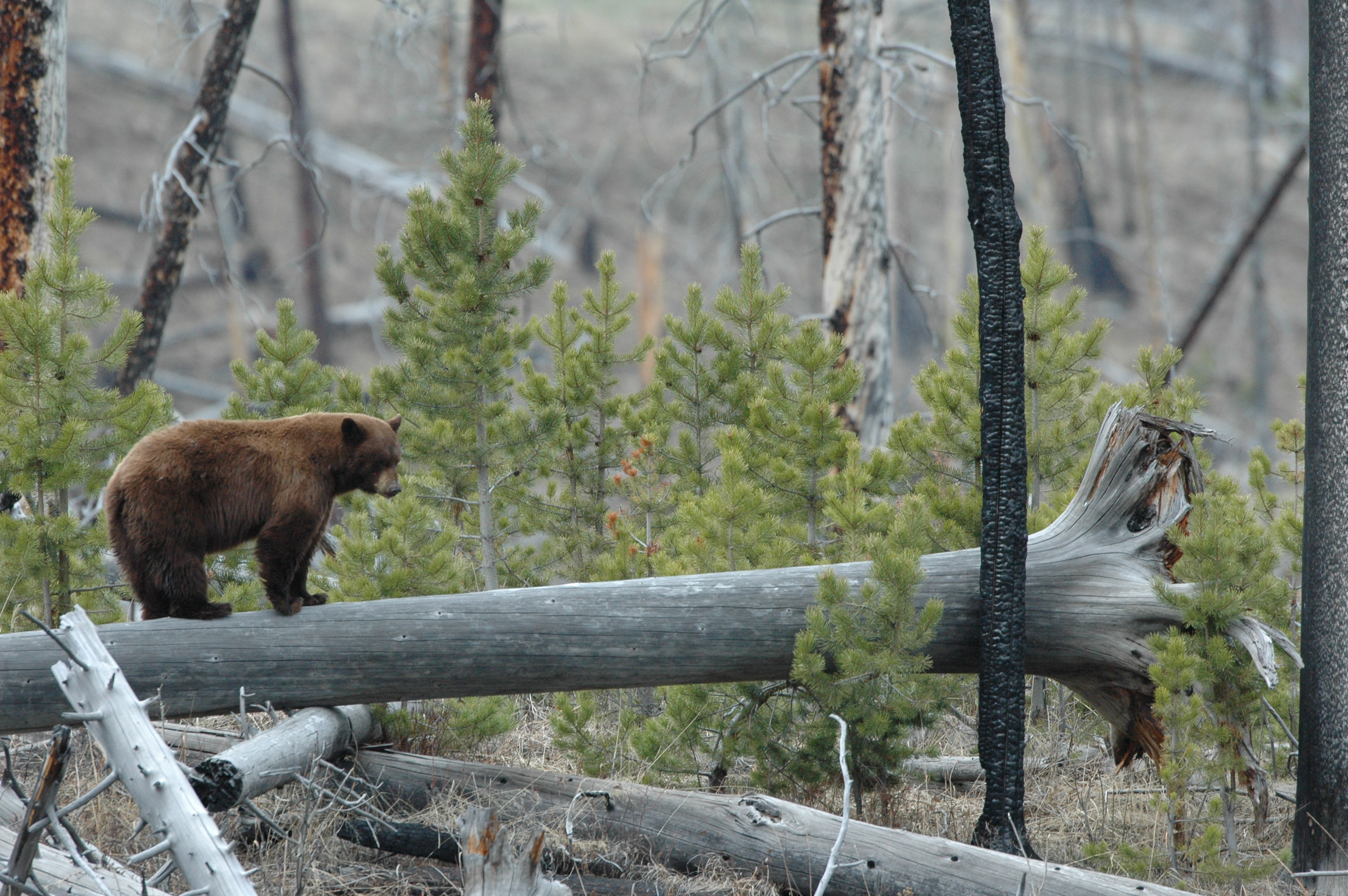
KITSAP COUNTY, Wash. — Officers with the State Department of Fish and Wildlife are searching the residential area of Port Orchard for a wounded 300-pound bear.

The animal attacked two men after they tried to kill it, and search dogs have been brought to a gravel road just off Berry Lake Road to help track it down.

“This bear has just been frequenting this area according to the neighbors, and these gentlemen had a hunting license, and they decided to do it,” Sergeant Ted Jackson with the State Department of Fish and Wildlife said.

After the bear was shot with a bow and arrow on Saturday, the animal went dashing back into woods. Hours later, the men found the bear not far away and that’s when the situation turned dangerous.

“The bear started to turn near the father and son, the father again shot it with his bow, the bear went after him, and then turned and went after the son,” Jackson said.

Both men were treated for scratches and puncture wounds.

Meanwhile, the injured bear is still lurking around the area only a mile away from Sidney Glen Elementary.

“We’d like to get this thing out of here before schools starts,” said Jackson.

Area resident Ken Bruney is keeping a close eye out while working on his property.

“If you wound an animal you better call somebody, or do something about it,” Bruney said.

Fish and Wildlife officials say the bear hunters did not break the law, but they should have contacted authorities sooner since the animal is dangerous.

“We don’t want a wounded bear out there,” Jackson said. “You could walk through the brush and it could be sitting out here and somebody else could get attacked. We need to get it out of here and make sure we can find it.”

Officials say to never approach a wounded bear, and they are asking residents to be cautious and call 911 if you see the bear.

The search will continue until they find the wounded animal.

Cougar Advocates File Appeal to Reverse Undemocratic, Arbitrary Quota Increase by Wildlife Commission

http://www.humanesociety.org/news/press_releases/2015/09/cougar-advocates-file-appeal-wa-gov-091815.html

In response to dramatic increases in cougar hunting quotas, eight organizations and a wildlife research scientist have submitted an administrative appeal to Gov. Jay Inslee to return cougar hunting quotas to scientifically justifiable levels. The petitioners include The Humane Society of the United States, Center for Biological Diversity, Mountain Lion Foundation, Wolf Haven International, The Cougar Fund, The Lands Council, Predator Defense, Kettle Range Conservation Group and Gary Koehler, Ph.D., a former research scientist with the WA Dept. of Fish and Game.

At their April meeting, in a two-minute exchange and without prior notice to the public, members of the state’s Fish and Wildlife Commission voted to raise the cougar quota by 50 to 100 percent in areas of Washington also inhabited by wolves.

On June 30, the parties filed a formal petition asking the Commission to reverse its controversial decision. On Aug. 21, the Commission voted 7 to 1 to keep its decision in place, ignoring public outcry and a 13 year Washington-based scientific study that cost taxpayers approximately $5 million dollars. The study shows such quotas will harm cougar populations and increase mortality of cougar mothers and their dependent cougar kittens.

Washington-based cougar studies also show that killing cougars may exacerbate conflicts with people and livestock and does nothing to prevent future cougar attacks or make people safer. Furthermore, a 2010 poll of Washingtonians found that more than 90 percent of residents appreciate and value cougars.

Dan Paul, Washington state director for The HSUS, said: “Washingtonians care deeply about cougars and the role that these iconic animals play in maintaining healthy wild lands in our state. We urge Governor Inslee to reverse this misguided and arbitrary decision that is biologically unsound, has wasted millions of tax dollars and left stakeholders out of the public rulemaking process.”

In 1996, Washington voters approved I-655 with 63 percent of the statewide vote, to protect cougars and other wildlife species from inhumane and unsporting methods of trophy hunting. This expansion of cougar killing is contrary to the wishes of Washington voters for cougar protections.

Gov. Inslee has 45 days to respond to the filing.

Bill Maher to Hunters: ‘There’s Something Wrong With You’

New Rule: If you’re delighted to take a life, there’s something wrong with you.

Exposing the Big Game's avatarExposing the Big Game

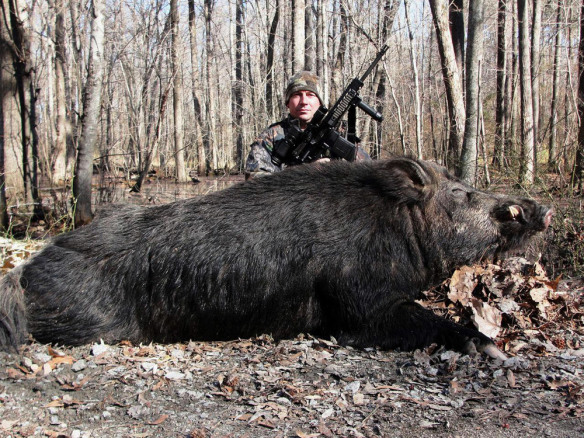
MONSTER HOG SHOT DEAD IN NORTH CAROLINA

http://www.real-time-with-bill-maher-blog.com/index/2014/3/27/bloody-funday

March 27, 2014/

By Bill Maher

[By the way, the wild boars are escapees from canned hunting compounds, like the kind that raises deer and elk for fenced-in hunting that I posed on earlier.]

New Rule: If you’re delighted to take a life, there’s something wrong with you. This photo has gone viral on the Internet because, well, just look at the size of the wild boar Jett Webb bagged in the woods of North Carolina. That’s some specimen of a pig. And the boar’s pretty big too.

It’s an 8-foot, 500-pound beauty that just moments ago was roaming proudly in the wild, and now it’s dead and I’m holding up my gun and pressing my cock against it! “This might be the best day ever!”

Now, I don’t want to blame this guy too much, because I think, if you’re from rural North Carolina and you have a…

View original post 332 more words

“I’m Mad as Hell and I’m Not Going to Take This Any More!”

Many of you may recognize that title as a line from a movie. It was one of the two great movies I’ve seen in the past few days, which seem to go together yet are completely different in style and content.

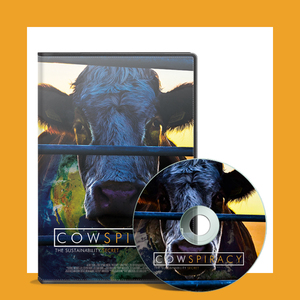
The first was an excellent documentary, Cowspiracy, which just came out in streaming1442633447556 Netflix form, in addition to DVD as well as a downloadable version on their website. This absolutely-must-see is not just an expose of the kind of cruelty that the human species is capable of and complicit in toward animals on a daily basis (as if that weren’t enough). It mainly focuses on the massive carbon footprint of animal agriculture (51% of all anthropogenic greenhouse gas emissions) and the fact that no one—not the powers that be, not the industry chiefs and spokesmen, not the current cattle flesh-food purveyors, not even the heads of major corporate environmental, household-name, supposed green groups, like Greenpeace, the Sierra Club, NRDC or the rainforest action group—is willing to take a stand on or even acknowledge it. They were all too busy laying the blame for climate change on unstoppable oil companies, pinning all their hopes on renewable energies for everyone—all 7.4 billion and counting.

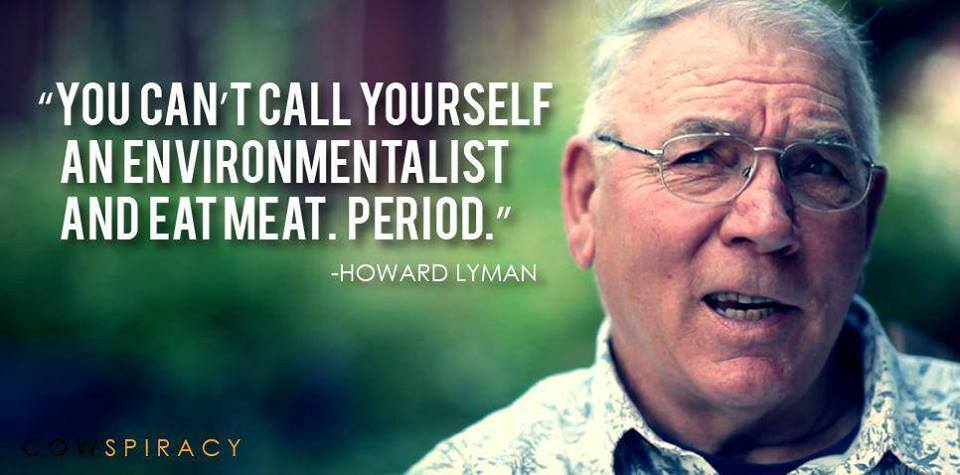
But as one interviewee pointed out, those energy sources won’t see the light of day in a big way for at least 20 years (sorry, we don’t have 20 years, people) and not until after 43 trillion dollars have been invested. Yet all we have to do, as this movie shows us (through the words of ex-rancher Howard Lyman and others) is stop eating animals today. (And stop breeding, I might add.) Problem solved. Then we just have to wait for the feed-back loops to play themselves out and hope that Mother Nature forgives us for our avariciousness in reducing all other animal life to fodder for our one-species-takes-all, suicidal free-for-all.

The issue of hunting was quickly laid to rest with the statement that back when humans may have been “sustainably” killing other species for their sustenance, there were only around 10 million people. Now there’s over 500 million on this continent alone. This is no time for a resurgence in popularity of the mindset that got us into this mess in the first place. We need to move forward, not back.

Meanwhile, a mouthpiece for the fishing industry tries to deny the ongoing collapse of fisheries across the globe by invoking a feeble economic analogy, hoping we’ll believe that every time they kill thousands of fish, they are replaced by even more new fish as if by some miraculous, infinite, deep-sea upwelling—like they’re only taking the interest, not the principal. The fact is, climate change is already warming ocean waters so fast that toxic algae blooms are rapidly replacing the traditional, edible phytoplankton—the basis of the ocean’s food chain. At the same time, run-off from animal agriculture is creating dead zones wherever once-fresh water meets the sea.

The other movie I saw recently (although it came out in 1977), Network, was also inspirational, in its own way. It summed up how I felt after watching Cowspiracy. Worked into the middle of the script were the lines of a newscaster run amok, who was trying to get the brain-washed, brain-dead sleepwalkers riled up by telling it like it is. It was the kind of shaking into reality that people need about what’s really going on nowadays.

Here are is a sequence from the movie wherein Howard Beale, a network anchorman played by Peter Finch (in an Oscar-winning performance), has mysteriously disappeared before he’s scheduled to go on the air with the evening news. He shows up just in time, stepping in from the pouring rain, wearing only his pajamas under a raincoat………………………………..

Still of Peter Finch in Network (1976)Still of Peter Finch in Network (1976)Still of Faye Dunaway in Network (1976)Still of Faye Dunaway and Peter Finch in Network (1976)

“—and, suddenly, the obsessed face of Howard Beale, gaunt, haggard, red-eyed with unworldly fervor, hair streaked and plastered on his brow, manifestly mad, fills the monitor screen.

HOWARD (on monitor):

I don’t have to tell you things are bad…shopkeepers keep a gun under the counter, punks are running wild in the streets, and there’s nobody anywhere that seems to know what to do, and there’s no end to it. We know the air is unfit to breath and our food is unfit to eat, and we sit and watch our tee-vees while some local newscaster tells us today we had fifteen homicides and sixty-three violent crimes, as if that’s the way it’s supposed to be. We all know things are bad. Worse than bad. They’re crazy. It’s like everything’s going crazy. So we don’t go out anymore. We sit in the house, and slowly the world we live in gets smaller, and all we ask is, please, at least leave us alone in our own living room. Let me have my toaster and my tee-vee and my hair dryer and my steel-belted radials, and I won’t say anything, just leave us alone. Well, I’m not going to leave you alone. I want you to get mad. I don’t want you to riot. I don’t want you to protest. I don’t want you to write to your Congressman. Because I wouldn’t know what to tell you to write. I don’t know what to do about the depression and inflation and the defense budget and the Russians and crime in the street. All I know is first you got to get mad. You’ve got to say, ‘I’m mad as hell and I’m not going to take this any more. I’m a human being goddamn it. My life has value.’ So I want you to get up now. I want you to get out of your chairs and go to the window. Right now, I want you to go to the window, open it, and stick your head out and yell. I want you to yell: ‘I’m mad as hell and I’m not going to take this any more!’

[This is going out live to 67 stations across the country.]

HOWARD: (on monitor)

Get up from your chairs. Go to the window. Open it. Stick your head out and yell and keep yelling—First, you have to get mad.

(They’re yelling in Baton Rouge.)

HOWARD: (on monitor)

Things have got to change. But you can’t change unless you’re mad. You have to get mad. Go to the window, stick your head out and yell. I want you to yell: ‘I’m mad as hell and I’m not going to take this anymore!’ Right now.

(A distant thunderclap crashes somewhere off and lightning shatters the dank darkness. In the sudden hush following the thunder, a thin voice can be heard shouting.)

THIN VOICES: (off screen)

I’m mad as hell and I’m not going to take this any more!

HOWARD: (on TV set)

…Open your window…

(An occasional window opens and from his apartment house, a MAN opens the front door of a brownstone—)

MAN: (shouting)

I’m mad as hell and I’m not going to take this anymore!

(OTHER SHOUTS are heard.)

VOICES:

I’m mad as hell and I’m not going to take this any more!”

—————————————————————————————————

Now, substitute Howard Beale’s name for mine and exchange whatever he’s mad about for the issue we should all be talking (SHOUTING) about: the selfless message of animal rights and the conspiracy of silence that keeps 70 billion cows and other animals captive, as slaves, constantly bred and butchered as products of an industry that won’t even fess up to their enormous carbon footprint. To paraphrase Howard Lyman, it’s time to change—or else.

But first, you may have to get mad. If you’re not already mad—as hell—watch Cowspiracy.

1508517_10155698578665314_6658310035003500226_n

Program offers bear hunt to sick kids

They’re going to die, but why not kill a bear before it’s over? A “sick” kid in more ways than one…

http://wiat.com/2015/09/17/program-offers-bear-hunt-to-sick-kids/

(WBAY) — A program in Oconto County is assisting children with life-threatening illnesses by giving them a chance to hunt bears and spend more time outdoors.

“It’s very special, they get to bond,” said Bruce Watruba, Secretary of Oconto River Kids, “most people never expect to be able to bear hunt with their child.”

Bruce “Bearman” Watruba is part of Oconto River Kids, a program that brings kids with life-threatening illnesses into the woods, and gives them a chance to bear hunt.

“Most of these kids haven’t hunted before,” said Watruba, “and when they come up hunting, when they do tip a bear over, they are so excited.”

Kids like 16-year-old Lexie Joly, who has brain cancer.

“At first it [cancer] was scary,” said Lexie, “but now I just, go through every day and I fight. I’m all good.”

While she’s never been hunting until now, she’s glad she decided to head into the blind with her mom, and a guide.

“I came here first to bait, then we can here again to practice shooting the gun I’d be using,” said Lexie. “Now I’m here again for the bear hunt.”

Oconto River Kids is run completely on donations, and the generosity of local businesses.

“We’ve got area taxidermists that help us out,” said Watruba, “they give us discounts on the mounts, and we have a pretty good reputation in the area, with all the area businesses.”

This program wouldn’t be able to keep running if it weren’t for the 80-some volunteers and all the donations. Every bear tag used by one of the kids, has been donated by a hunter.

“In Zone B, it takes 10 years to get a tag,” said Watruba, “and yet, we’ve got these people that are giving us their tags to use to hunt.”

“They’re selfless, they don’t ask for anything,” said Robyn Joly, Lexie’s mom, “they just do it because they want to, and that’s the biggest thing.”

Lexie didn’t see a bear on her first day, but hopes to get one when she heads out with a guide later this week. She says, she’s grateful for the opportunity.

“It’s really cool that people just donate the bear tag, and all this, sponsors,” said Lexie, “I really thank them for this opportunity, I’ll probably never get this again.”

If you’d like to be part of Oconto River Kids, you can request information by sending a letter to:

Oconto River Kids
P.O. Box 288
Mountain, WI 54149

You can also visit their website at www.ocontoriverkids.org

 Wildlife Photography© Jim Robertson

Wildlife Photography© Jim Robertson

Why We Can’t Compromise With the Whale Killers

A whale's eye peeks out of the sea.

Commentary by Captain Paul Watson
Response to Arizona State University News Article

A Professor at the University of Arizona wants save the whales by advocating the killing of whales.

Just another one of these wishy-washy, self-proclaimed academic experts pandering to the whaling industry by posing as a conservationist. The same kind of mind-set as Texas big game hunter Corey Knowlton who justifies killing rhinos because he calls himself a conservationist.

Leah Gerber is a marine conservation biologist and professor at Arizona State University’s School of Life Sciences. She wants a compromise with the whale killers.

She is one of those academics who seem to know everything about whales except for what is really important. She has advocated “culling” (killing) whales to increase fisheries which in my opinion is a very ignorant approach to ocean ecology. She has also advocated placing a value on whales saying that conservationists should be willing to buy their lives. In addition she tends to use other utilitarian wordage like “take” and “harvest instead of kill and “stocks” instead of population. She most definitely lacks empathy for the whales themselves or an understanding of the true value of the whales to the oceanic eco-systems. Leah Gerber boasts of being a sushi lover and is an advisor to the seafood industry which explains her commercially oriented viewpoint on whales.

This is my point-by-point response to this “expert” on whales who lives in that “maritime” state of Arizona.

Arizona State University

ASU: Is it time to cut a deal with Japan on whaling?

Captain Paul Watson: Why is it time to cut a deal with Japan on whaling? Because a professor in Arizona says so.

ASU: The three-decade international moratorium on commercial whaling isn’t working. Animal-rights activists insist the ban remain absolute, while the three rogue nations still pursuing the world’s largest mammals refuse to quit hunting.

Captain Paul Watson: Yes they are rouge nations and they should be dealt with like rogue nations. Japanese whaling has already been condemned by the International Court of Justice. When nations violate international agreements the solution is not to simply legalize their activities because they refuse to stop. Gerber reveals her bias here by referring to whale conservation activists as animal tights activists. This is the mindset that sees only animal rights activists as opposing whaling. Gerber works with WWF, NOAH and other utilitarian groups that see whales as a commodity and thus they see conservation as management, that includes lethal exploitation.

ASU: Leah Gerber, a marine conservation biologist, professor at Arizona State University’s School of Life Sciences and founding director of ASU’s Center for Biodiversity Outcomes, floated the idea of a compromise in the September issue of scientific journal Frontiers in Ecology and the Environment.

Captain Paul Watson: She may have floated the idea but it’s an idea that needs sinking.

ASU: Rebounding whale populations, the predominance of other threats, and stubborn stakeholders make the moratorium a “failed management system,” Gerber said. The past 30 years of the International Whaling Commission’s conversation has been stalled by disagreement on the ethics of killing whales.

Captain Paul Watson: The laws to enforce the moratorium exist. There is simply a lack of political and economic will to do so. The moratorium needs strong leadership from the conservation oriented majority members of the International Whaling Commission. The USA should invoke economic sanctions as provided by the U.S. Department of Commerce specifically to uphold the moratorium. This is like saying it is illegal to rob a bank but the bank robbers continue to rob banks despite the law therefore we should allow them to rob some small banks to satisfy their greed.

ASU: “It really boils down to an ethical argument: that it’s not right to kill a whale,” Gerber said. “Personally I don’t like the idea of killing a whale, but that’s my value, and other people have other values. Insisting on our values in discussions about whaling has resulted in a global stalemate.”

Captain Paul Watson: It is both an ethical argument and an ecological argument. Plankton has been diminished by some 40% since 1950 and this has happened in part because of the removal of a very large part of whale biomass. When you consider that one Blue whale defecates 3 tons of iron rich, nitrogen rich feces every day and we removed some 300,000 Blue whales since 1946 alone and whale feces provides a nutrient base for plankton, what whaling has done is to diminish these farmers of the sea. Lower whale populations means lower plankton populations means lower oxygen production and diminished carbon sequestering by plankton. We need to revitalize bio-diversity in the sea and to do that we need to bring back whale populations to pre-exploitation levels.
And there is an ethical argument. Slavery was abolished and was no acceptable compromise that allowed some people to own slaves so that other slaves could be freed. Whales and dolphins are highly sophisticated, intelligent social, self aware, sentient beings. They communicate on a very high level and they have their own cultural units. There cannot be any justification for killing whales or dolphins by any group of humans for any reason, anywhere. The very idea of a compromise is unethical when you consider that to a great many people the idea of killing a whale is simply murder. There is no global stalemate. Commercial whaling is illegal. It just needs to be enforced.

ASU: Changing course and allowing Iceland, Japan and Norway to legally hunt under regulations and monitoring might break the current stalemate. Currently Japan whales under a loophole allowing for scientific research. The other two countries hunt whales commercially in protest of the ban

Captain Paul Watson: Since 1974 my course has been set on 100% abolishment of the slaughter of whales and dolphins. I have no intention of changing course because a professor in the desert somewhere has decided that Japan, Norway, Iceland and Denmark should be allowed to kill whales.

ASU: “If our common goal is a healthy and sustainable population of whales, let’s find a way to develop strategies that achieve that,” Gerber said. “That may involve agreeing to a small level of take. That would certainly be a reduced take to what’s happening now.”

Captain Paul Watson: I have a major problem with anyone who refers to killing as taking. You don’t take a whale’s life, you kill an intelligent sentient being. A so-called “small level of killing” simply keeps an industry alive that should be tossed onto the dustbin of history. Whaling needs to be abolished 100% by everyone, everywhere for any reason. Sea Shepherd has seen to it that the Japanese kill quota has been substantially reduced.

ASU: Since the moratorium was declared in 1982 and begun in 1985, whale populations have rebounded across the board, Gerber said.

Captain Paul Watson: First Gerber says the moratorium in not working then in the same breath she says the moratorium has caused whale populations to rebound. Whale populations are indeed slowly recovering but there is still a long way to go before returning to pre-industrial whaling levels. We need more whales to address climate change and the health of the Ocean. We do not need whale meat on anyone’s plate. Economically whales are more important alive than dead both to what the contribute to the ecology of the Ocean and in terms of the revenue generated by the whale watching industry which is far more lucrative than commercial whaling.

ASU: “Overall the whaling that’s happening is not threatening any population,” she said.

Captain Paul Watson: I disagree. The loss of every whale is a loss to the planet in a world where whales and dolphins are dying from pollution, reduced fish populations and habitat destruction.

ASU: “With the exception of the J stock (a population that lives in the East China Sea, the Sea of Japan and the Yellow Sea) of minke whales, current levels of take are fairly sustainable.”

Captain Paul Watson: Gerber has not provided any evidence to back this ridiculous statement up. To say that Bowheads, Southern and Northern Right whales, Humpback whales, Fin whales, Blue whale populations can be sustainably slaughtered is absurd. The Icelanders want Fin whales. The Greenlanders want to kill Bowheads, Humpbacks, Fins and Minke’s.

ASU: The appetite for whale meat has been on the decline in Japan. An April 2014 poll by Asahi Shimbun,Japan’s newspaper of record, revealed that 14 percent of respondents occasionally or rarely ate whale meat. (Thirty-seven percent said they never ate it.) Consumption in Japan peaked in the 1960s and has steadily decreased; today, whale-meat consumption is about 1 percent of its peak, according to the International Fund for Animal Welfare.

Captain Paul Watson: Having stated this, it is a puzzle as to why Gerber feels there is a need to allow a legal return to whaling.

ASU: The Japanese have argued that it’s part of their cultural heritage. They also call American protests hypocritical because Alaskan Inuit tribe members hunt whales every year.

Captain Paul Watson: Whaling is not part of Japanese culture historically. It was an activity that took place in a few isolated communities. It was never a national traditional activity. 95% of Japanese people never ate whale meat until General Douglas MacArthur introduced the modern whaling fleet in 1946 to provide cheap protein for post war Japanese populations. Whaling was part of Ainu culture but Japan passed laws to ban whaling by the Ainu. It is hypocritical of Gerber to compare Inuit whaling allowed by the U.S. government to Japan where aboriginal Ainu whaling has been banned.

ASU: Norwegians have eaten whale meat since medieval times, but that habit has slowed in more recent times. Whale was served in school cafeterias and as military rations during the 1970s and 1980s, making it the mystery meat for a generation who won’t touch it anymore. It’s seen as something your grandparents ate. (Oddly, it’s enjoying a renaissance among young Norwegian foodies.)

Captain Paul Watson: Norwegian whaling is a blatant violation of IWC regulations and the global moratorium and economic sanctions should be invoked against Norway, Japan and Iceland by the signatory members of the IWC.

ASU: The 2015 catch netted about 700 tons of whale meat, while the Norwegian market won’t bear much more than 500 tons.

Captain Paul Watson: Norway’s whaling operations are illegal under international conservation law. The killing of these whales is not only illegal but ecologically senseless and economically unnecessary.

ASU: “Good catch is all very well, but we have challenges in the market,” Åge Eriksen, CEO of a seafood supply company, told Norwegian public broadcaster NRK last year. “We’ve got more meat on land than we can sell, and it is not a desirable situation.”

Captain Paul Watson: Unfortunately that is the situation with the commodity market over all – over production resulting in huge wastage.

ASU: Minke whales in the Southern Hemisphere have such a large population that taking a few wouldn’t be a big deal, Gerber said.

Captain Paul Watson: Gerber lacks the data to make such an assumption. In fact in a paper she wrote Minke whale populations are not as large as they need to be. We need a great increase in whale populations in order to repair the ecological instability in the Ocean, Also from an ethical point of view, killing (not taking) of a highly intelligent sentient being should not be allowed. In one of her papers she stated that the moratorium failed to increase whale populations and now she contradicts herself.

ASU: The media perception of whaling is often that it’s evil, but there are worse threats to the whales’ livelihoods, Gerber said. For instance, she said that whale mortality numbers are also driven by the mammals being hit by ships. For instance, blue whales off the coast of Long Beach, California, simply didn’t know to get out of the way of ships, according to a Stanford University study released in April. Because they are the biggest creatures in the sea, they’ve never had to avoid threats.

Bycatch entanglement, where whales are snagged in nets, and contaminants in seawater are two other serious threats.

Captain Paul Watson: To say that there are worse threats is like saying that murder is not the worst evil because more humans die in auto accidents so we should allow for a few murders. Stopping ship strikes is something that must be worked on and there is the technology to address this threat. There are many other threats to the whales like radiation, chemical and plastic pollution, climate change and diminishment of plankton and fish. These other threats to the survival of the whales cannot be used to justify the slaughter of whales.

ASU: “For most populations, whaling actually makes up a pretty small fraction (of whale deaths),” she said, pointing out that International Whaling Commission members know this. “We don’t have to agree on everything, but let’s take some baby steps.”

Violent action by animal-rights groups has not had an effect, either.

Captain Paul Watson: Baby steps may be fine for the whalers but the whales need abolition of whaling now. The prejudice of Gerber can be seen in her reference to “violent action.” There has been no violent action by anti-whalers. Not a single whaler has ever been injured by a whale defender. Japanese whalers have violently attacked whale defenders and have caused injury. Sea Shepherd may be aggressive but certainly not violent. You cannot describe the saving of the lives of whales from harpoons as violent. Whaling is violent, saving whales is not. Blocking a weapon of violence is a non-violent act.

ASU: “A lot of the (non-governmental organizations) like Greenpeace and Sea Shepherd raise a lot of money in advocating for saving whales by chasing whaling vessels in the open ocean,” Gerber said. “What success has that had?”

Captain Paul Watson: Gerber needs to do some research. Over 6,000 whales saved in the Southern Ocean is what I call success. The Japanese have failed to get their quotas every year since 2007 and in most years they took less then 30% and sometimes as low as 10% and in the last season (2014/2015) they took zero whales. The ICJ ruled against them. The IWC ruled against them. The campaign has been quite successful Leah Gerber, thank you very much. As for collecting money, Sea Shepherd has raised a fraction in donations to oppose whaling compared to the profits that whalers made before Sea Shepherd intervened.

ASU: Japanese whaling delegates have said they’re open to compromise arrangements, Gerber said.

“The animal-rights groups, on the other hand, are like, ‘Nope. My deal or nothing.’ To me, it’s not the best way to lead to change.”

Captain Paul Watson: You do not compromise with lives. We will not compromise on the lives of whales. One position is to kill whales. The other position is to not kill whales. The only possible compromise is to allow the killing of some whales which means killing whales, but if our position is against killing whales how can that be justified? To get what they want in a compromise the whalers can agree to accept lower profits. However we cannot morally agree to accept lower deaths. Whales are not a commodity to us. They are distinct individual living sentient beings. It would be extremely cold hearted for us to barter their lives in exchange for allowing whalers some profit.

My position is clear I cannot respect any scientist who advocates the killing of whales or dolphins. There is nothing scientific about killing whales. Advocating lethal exploitation benefits only those who profit economically. It does not benefit the species and it does not benefit science. All my life I have had to battle these scientists who act as apologists for the exploitation industries. Many years ago I coined a name for them. Biostitutes, the appeasers of those who profit from inflicting cruelty, death and diminishment.

Trapping in the 21st Century

by Stephen Capra

How is it as a society that in this day and time, understanding as we do the connection between a healthy, vibrant community of wildlife and true biodiversity, that we allow something as unfathomable as trapping? The cruel and twisted nature of this form of legal torture has changed little since its advent, one that defined the early days of our nation.

What remains the true insanity is that as our nation has evolved and positions have matured on race, women and so many other issues of inequality, but our positions on animals and wildlife have evolved at a far slower pace. So that today in New Mexico, being a bobcat is more than a death sentence, it is almost a guarantee that your life will be cut short in a barbarous manner, so that you can be sold for your fur.

We all know the term, “the more things change, the more they stay the same.” It rings so true on the issue of trapping. We all know the reality of this cruel and sickening action, yet despite all our knowledge and emotions, the Game and Fish Department and the ranching community remain steadfast in their support of the practice. Many sportsmen also remain solid in their support; even though they acknowledge that it is a very cruel fate for any animal.

Some liken it to a tradition. They speak of their connection to nature as though we should simply understand that allowing an animal to wither in pain for hours, days or weeks is somehow something we want to condone or even pass on to a new generation. We seem to allow a giant loophole in the regulations of public lands that forbids killing for profit. Trappers it seems can use the lands, basically put them off-limits for our enjoyment, kill and torture animals and then sell their pelts for profit.

At the last Game and Fish meeting the green light was given to trapping cougars. We know all the wildlife that is impacted by traps, the bycatch of these animals remains tremendous, from eagles to our pets; yet rather than diminish the practice, our commission wants to ramp it up!

As we ponder as a nation our next steps on issues such as climate change and face the stiff and relentless pressure of republican politicians who refuse to even admit its legitimacy, it’s worth noting that as a nation, we remain unable to put the issue of trapping behind us. We continue to fight over whether it should be banned; we fight over the idea that it is a tradition or what animals should be allowed to suffer. Some even argue that the animals do not suffer. This all speaks to the ignorance of man, to the real selfish nature of those that see nature as a place not to revere, but as a place for profit.

That basic concept seems ingrained in our Manifest Destiny mindsets and grinding it out is the challenge we face as we come in contact with our own mortality as a species. Ending trapping is about more than ending suffering. It is about compassion, changing our view of animals from foe to friend. It is about changing ourselves from those who conquer to those willing to share the bounty we have been blessed with. Seeing the forest not for the trees, but rather as a living organism that gives life to wolves, bears, cougars and species as small as ants, a place where man is a visitor, not the owner.

There is a freedom in letting go. If we can begin to see ourselves not as the owner, but as yet another renter of this life giving force, we may begin to better understand the value of the commons. In this shared commons, we are a part of a much larger and more varied unit. Here many species share a space and regulate that space as they have for millions of years. They have done so without our input with a grace and balance that man remains a long way from perfecting.

Washington: Urge Gov. Inslee to Protect Cougars

https://secure.humanesociety.org/site/Advocacy?cmd=display&page=UserAction&id=7042&autologin=true&s_src=sh_fb

<!–
Replace this text and uncomment out to include a photo caption –>

Last spring, the Washington Fish and Wildlife Commission increased cougar-hunting quotas from 50 to 100 percent in areas where wolves also reside. These hugely-increased quotas will allow trophy hunters to devastate Washington cougars. Even worse, the Commission changed Washington’s wildlife policy without giving the public any notice of this change or an opportunity to comment.

The Humane Society of the United States and our conservation colleagues asked the Commission to reverse their unscientific course of action that will harm cougars, but they ignored us. Now, we need you to join us in our formal appeal to Gov. Jay Inslee to protect Washington’s iconic cougars from over-persecution by trophy hunters.

TAKE ACTION
Please call Gov. Inslee’s office today at 360-902-4111 and ask him to reverse this harmful decision made by the Fish and Wildlife Commission.

After making your call (please do not skip that crucial step!), fill in and submit the form below to send a follow-up message. Legislators receive a lot of email; be sure to edit your message so it stands out.

Share to Facebook Twitter

Guide: Walter Palmer knew Wis. black bear ‘was illegally shot and killed’

KMSP) – Before Cecil the lion, there was this unnamed Wisconsin black bear. Minnesota dentist Walter Palmer let his guides know he wasn’t interested in any bear, but the largest they could find. He paid his guides more than $2,500, but was allegedly willing to pay so much more if they would lie about where the kill went down.

http://www.fox9.com/news/19925713-story

How to Save the World? James Cameron says Go Vegan

http://www.shellethics.com/environment/how-save-world-james-cameron-says-go-vegan/

How-to-Save-the-World-James-Cameron-says-Go-Vegan

Oscar-winning director James Cameron is promoting the best way to fight climate change—eliminating animal meat and dairy from one’s diet.

James Cameron is a famed director, a well-known climate change activist and he has a message for the masses: go vegan to fight climate change. Cameron spoke at the US-China Climate Leaders Summit in Los Angeles on 15th of September. During the summit, leading cities from both countries will share city-level experiences with planning, policies, and use of technologies for sustainable, resilient, low-carbon growth.

Cameron conducted his talk titled “Food for Sustainable Nations”, with Sam Kass, the former White House senior nutrition policy adviser. Cameron, who went completely vegan four years ago along with his family, focused on food systems (consumption and production) and the relationship between food and climate change. He explained how cutting out meat and dairy products can help lower carbon emissions in an interview with Fortune.

The thing that became abundantly clear to us when we met with the experts who are working in nutrition and energy sustainability and climate change is that we can’t actually meet our emission goals if we don’t address animal agriculture, and that’s the thing that’s been left out of the conversation. Everybody’s focusing on the energy sector, which of course is huge, and to a lesser extent the transportation section, but they’re missing the second biggest single contributor to greenhouse gas emissions. This is a thermostat that we can turn down just by our personal choices. We can do it instantly.
— James Cameron

This message is crucial because many people who care about the environment still have no idea that raising animals for food is so incredibly destructive. Animal agriculture is actually responsible for a much higher amount of global greenhouse gas emissions than what is most commonly quoted. At the 2014 UN Climate Summit, startling new estimates by the UN Conference on Trade and Development (UNCTAD) put the estimates of agriculture being responsible for 43-57% of global emissions.

It takes 2,500 gallons of water to produce just one pound of beef. Agriculture operations on land have created more than 500 nitrogen flooded dead zones around the world in our oceans. Farmed animal production accounts for 70% of all agricultural land and 30% of the land surface of the planet. 80% of land deforested in the Amazon is for raising cattle. The rapid deforestation of the Amazon Rainforest is actually causing a drought in many major urban communities in South America.

Droughts-In-Brazil

Our world is in a big feedback loop where climate will effect food security among many things because of drought, desertification, saltification, loss of acreage and deltas, which are some of our most fertile areas because of sea water rise. It’s going to negatively impact our food supply and our food security at exactly the same time that we need to increase our food production by 70%. By 2050 we’re supposed to have 9 billion people on this planet. These two things are moving in the wrong direction and yet the second biggest way we can control climate change is by reducing our reliance on animal meat and dairy.

While the outlook may look grim, James Cameron’s advice echoes that of many people:

The simple resounding message is you can be healthier and your planet can be healthier based on a very simple thing that you can do today. It’s cheaper to produce plants. It’s less carbon footprint, less water footprint, less money footprint and better for you.