Exposing the Big Game

Forget Hunters' Feeble Rationalizations and Trust Your Gut Feelings: Making Sport of Killing Is Not Healthy Human Behavior

Exposing the Big Game

Demonizing Wolves

Not to mention the thousands of cows (and probably a few wolves) killed by fires over the past few years in Washington…

Nabeki's avatarHowling For Justice

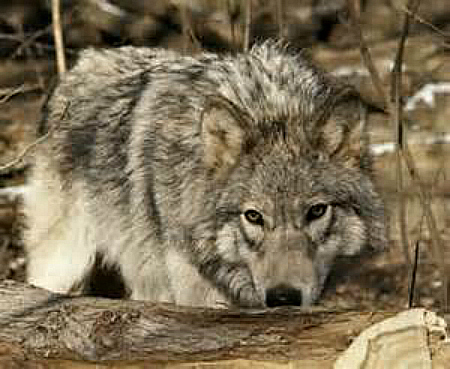
gray wolf dnr wi.gov

September 19, 2015

Here we go again, a wolf supposedly killed a cow in Washington state, on federal land and it makes headlines but what the media never reports on is how well-behaved wolves are and what a non threat they are to ranching or farming.

In 2010, 51,200 cows died in Oregon from non-predation causes. (NASS 2010). That’s right, FIFTY ONE THOUSAND! This should be front page news, right? When wolves are involved in miniscule livestock losses they make the front pages of local media. So what about those 51,200 cows that weren’t killed by wolves? Where are the headlines?

In a state like Montana, with around 2.5 million cows, ranchers may lose 50 to 60 THOUSAND cattle  annually to non-predation and on average between 60 to 80 to wolves. That is what we’re talking about here folks. Wolf predation on cattle is so overblown it’s ridiculous. Except the…

View original post 527 more words

Endangered Species Act Under Threat/Challenging New Mexico’s War on Wolves, Bears and Cougars

From Project Coyote Newsletter:

Wildlife Killing Contests Featured at Speak for Wolves Conference

In August at the Speak for Wolves Conference in West Yellowstone, Project Coyote Founder and Executive Director Camilla Fox led a team of panelists to discuss the pervasive and cruel practice of “wildlife killing contests” that award prizes to those who kill the most and largest animals including coyotes, bobcats, foxes and even wolves – often on public lands. Conference attendees also got a sneak peek of Project Coyote’s film trailer that will help expose this unconscionable practice and empower citizens to take action to end it.

Watch the Trailer »

Challenging New Mexico’s War on Wolves, Bears and Cougars

In late August, Science Advisor Dave Parsons spoke out on behalf of Project Coyote at a rally and a public hearing as part of a coalition opposing the New Mexico Game Commission’s new rule allowing increases in cougar trapping and bear hunting. The Commission also denied a federal request to release more Mexican Gray Wolves into New Mexico.

Watch the Video »

Federal Endangered Species Act Under Threat

The U.S. Fish and Wildlife Service has proposed draconian changes to the long standing regulations for citizen petitions for adding species to the Endangered Species Act’s list of threatened and endangered species. The proposed changes would make it difficult if not impossible for most citizens and conservation organizations to file petitions. Project Coyote will submit a comment letter endorsed by members of our Science Advisory Committee opposing the proposed changes. The deadline for comments is September 18.

Read the Comment Letter

Wildlife managers assessing fire impacts

http://methowvalleynews.com/2015/09/18/wildlife-managers-assessing-fire-impacts/

Scorched landscape threatens many animal species

By Ann McCreary

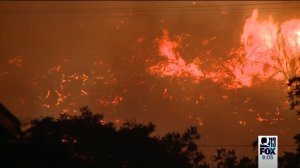
For a second consecutive year, state wildlife managers are scrambling to assess the damage caused by massive wildfires that scorched four state wildlife areas in north central Washington, including the Methow Valley.

Since mid-August, this year’s record-setting wildfires in Okanogan County have burned more than 505,000 acres, destroyed about 200 residences, and killed three firefighters.

As of early this week the largest fires included the Tunk Block Fire, burning 10 miles northeast of Omak and listed at 167,840 acres and 79 percent contained; the North Star Fire, 25 miles north of Coulee Dam, which had consumed 215,406 acres and was 47 percent contained; and the Okanogan Complex Fire, west of Omak and Okanogan,Featured Image -- 10312which was 133,142 acres and 85 percent contained. The Twisp River Fire, fully contained, burned 11,211 acres in August.
The Washington Department of Fish and Wildlife (WDFW) estimates that wildfires have scorched more than 25,000 acres of wildlife lands maintained by the department for wildlife and outdoor recreation in Okanogan and Chelan counties.

That exceeds the amount of state wildlife land burned by last year’s massive Carlton Complex Fire by about 1,000 acres, said Jim Brown, WDFW regional director for north central Washington.

“Several wildlife areas are completely burned over,” Brown said. “The vegetation that supports deer, sharp-tailed grouse and other wildlife is gone. I’d call it déjà vu, except that this year’s fire took a different path and has aggravated the problems we’ve been working to address since last year.”

This year’s damage to WDFW lands was concentrated in the Scotch Creek Wildlife Area, east of Conconully; the Methow Wildlife Area where the Twisp River Fire burned; the Chelan Wildlife Area, primarily around Chelan Butte; and the Sinlahekin Wildlife Area between Loomis and Conconully, Brown said. In some areas, trained department staff worked alongside regular firefighters to control the blaze.

Those four wildlife areas support thousands of deer, many of which will seek food outside the areas scorched by wildfires, said Matt Monda, WDFW regional wildlife manager. Like last year, the department plans to work with landowners to protect their crops from deer displaced by the fire, he said.

“We are looking at the carrying capacity of habitat for wintering deer,” Monda said. “We know we need to take additional steps to align the herds with available habitat. That effort will involve allowing the habitat to recover and minimizing conflicts between deer and agricultural landowners.”

Drought having impact

The statewide drought, one of the most severe on record, is both causing and compounding the wildfire damage, Monda said. “The drought is going to have an effect on vegetation recovery. That’s why we had the big fires and it’s going to make things more difficult for wildlife.”

Hunting seasons for archers are now underway, and WDFW may draw from its existing list of special-hunt applicants to increase the number of modern-firearms permit hunts in October, Monda said.

Brown said WDFW encourages hunters to take advantage of those hunting opportunities, but recommends that they check local access restrictions before they leave home. Key contact numbers are included on the state governor’s website at www.governor.wa.gov/news-media/washington-wildfire-resources.

In the months ahead, the department will consider setting up localized deer-feeding stations and other measures to protect agriculture crops on a case-by-case basis, Brown said.

“There are a lot of good reasons not to feed wildlife, but we’ll assess each situation on its merits once we have a better idea of the environmental conditions in fall and winter,” he said.

In the meantime, the department will continue to update its damage assessment as a first step toward qualifying for federal disaster relief. Besides burning thousands of acres of wildlife habitat, the fire has destroyed 90 miles of WDFW boundary fencing, several outbuildings, and hundreds of informational signs.

“This fencing serves two purposes: to keep livestock where they’re supposed to be — either on or off wildlife areas — and to identify the boundaries of wildlife areas,” Monda said.

It is very important — and expensive — to restore the lost fencing, he said. “A mile of fence costs many thousands of dollars to replace,” he said.

Also damaged were two of the three pastures in Okanogan County that WDFW leased to livestock producers displaced by last year’s fires.

“We want to help our neighbors whenever we can, but I don’t know whether we’ll have any grazing areas available this year,” Brown said.

Looking ahead to the fall rains, Brown recommends that area landowners promptly assess their own properties to determine whether fire damage has clogged culverts, destabilized slopes, or created other dangerous situations. If so, landowners may qualify for an emergency permit — called a Hydraulic Permit Approval (HPA) — to address risks in or around state waters.

Landowners in north central Washington seeking more information on emergency HPAs can contact WDFW at (509) 754-4624.

“These record-breaking fires will have a major impact on both the wildlife and the human residents of north central Washington for years to come,” Brown said. “The vegetation will eventually grow back and the wildlife will return, but we all need a break from these massive fires.”

Bianca Jagger | President Obama’s Gravest Error: Trusting Shell to Drill in the Arctic

Tuesday, 15 September 2015 00:00


Written by 
Bianca Jagger By Bianca Jagger, Truthout | Op-Ed

President Obama is the first incumbent US president to cross the Arctic Circle. The purpose of his expedition was to “witness first-hand the impact of climate change on the region” and to announce new measures to address it. Speaking at the Glacier climate summit in Anchorage, Alaska, Obama recognized the role of the United States “in creating this problem.” He also stated, “we embrace our responsibility to help solve it” because failure to do so will “condemn our children to a planet beyond their capacity to repair.” Yet less than one month ago, his administration gave the green light to Shell to drill for oil in the Arctic.

President Obama must know that it is impossible to protect the Arctic while allowing Shell to drill for oil 70 miles off the coast of Alaska. He cannot have it both ways. His policies and proclamations are irreconcilable.

During his three-day excursion to the Arctic Circle, he climbed a receding glacier, saw the melting Alaskan permafrost, met vulnerable coastal communities and addressed the Glacier climate summit.

On the first day of his trip, Obama participated in a roundtable discussion with Indigenous people from Alaska. At the Glacier summit, he urged fellow world leaders to reach an agreement at the UN Framework Convention on Climate Change (UNFCCC) Paris climate summit, COP21, in December that “protects the one planet … while we still can.”

On day two, Obama hiked the Exit Glacier in the Kenai Fjords National Park. He knows the Arctic is warming twice as fast as the rest of the United States and he is aware that the Exit Glacier has receded more than a mile since the start of the Industrial Revolution, with the rate of melting accelerating in the last few decades. He called the glacier “as good of a signpost as any when it comes to the impacts of climate change” and said he wanted his grandchildren to be able to see it one day. If President Obama really means this, how can he justify his approval of Shell’s plan to drill for oil in the Arctic?

On the third day of his trip, Obama met with local fishermen and families and attended a cultural performance by the children of Dillingham Middle School. The president joined the children in their last dance, saying: “I’ve been practicing.” He visited Kotzebue’s sea wall to see the effects of rising sea levels and the devastating impact of increased storm severity. President Obama must know that even if the world agrees to keep temperature rises to 2 degree Celsius, sea levels, due to the melting of the ice, may still rise by 20 feet (6 meters) by 2100.

The Arctic

In his weekly address on August 29, Obama tried to defend his approval of Shell’s Arctic drilling. He said that Americans “are concerned about oil companies drilling in environmentally sensitive waters” and he had the audacity to say “that’s precisely why my administration has worked to make sure that our oil exploration conducted under these leases is done at the highest standards possible, with requirements specifically tailored to the risks of drilling off Alaska.”

President Obama must know that no safeguards or standards will be enough to prevent an oil spill. According to a February 2015 report by his Department of the Interior Bureau of Ocean Energy Management (Alaska OCS Region), drilling in the Arctic has a 75 percent chance of a spill of more than 1,000 barrels of oil.

Shell's Arctic drilling unit Kulluk run aground in December 2012.Shell’s

More: http://www.truth-out.org/opinion/item/32810-president-obama-s-gravest-error-trusting-shell-to-drill-in-the-arctic

Arctic drilling unit Kulluk run aground in December 2012. (Photo: National Oceanic Atmospheric Administration, NOAA)

“America Is Not a Planet”: The Only Accurate Thing Said About Climate Change at GOP Debate

http://www.truth-out.org/buzzflash/commentary/america-is-not-a-planet-the-only-accurate-thing-said-about-climate-change-at-gop-debate

2015.17.9 BF mellino(Photo: DonkeyHotey)COLE MELLINO OF ECOWATCH FOR BUZZFLASH AT TRUTHOUT

Unlike last month’s GOP primary debate, where climate change was not mentioned at all during the prime time debate and only briefly mentioned in the so-called “happy hour” debate, the topic finally received some airtime at last night’s debate. Held at the Ronald Reagan Presidential Library in Simi Valley, California, the debate was hosted by CNN. Over the course of the three-hour debate, there was one question on climate change. It lasted about four minutes, which is only slightly longer than the amount of time devoted to candidates picking out their secret service names.

“We received a lot of questions from social media about climate change,” says CNN moderator Jake Tapper. One group, NextGen Climate pushed very hard ahead of the debate for the candidates to talk about climate change. They rolled out a three-figure ad campaign ahead of the debate, invoking Ronald Reagan’s “Common Sense” speech to urge CNN moderator Jake Tapper to ask candidates how they would address climate change—specifically what their plans are to get the country to 50 percent renewables by 2030.

More: http://www.truth-out.org/buzzflash/commentary/america-is-not-a-planet-the-only-accurate-thing-said-about-climate-change-at-gop-debate

Speciesism up Next?

From the chapter “Homo sapiens, Pinnacle of Evolution?” of Richard Leakey’s 1995 classic, the Sixth Extinction—Patterns of Life and the Future of Humankind:

Homo sapiens was soon to represent the ultimate product of evolution and to be separate from the rest of nature in some important sense, with the gradation of increasing superiority through the geographical races, from Australian to European.

For instance, Alfred Russel Wallace, the co-inventor of the theory of natural selection, believed that evolution had been working “for untold millions of years…slowly developing forms of life and beauty to culminate in man.”

382304_10150410245381489_1896442457_nIn 1933, Robert Broom stated the following: “Much of evolution looks as though it had been planned to result in man, and in other animals and plants to make the world a suitable place for him to dwell in.” Broom clearly saw humans as special and separate, and the rest of the natural world ours to exploit as we please. Broom’s was not an isolated opinion; it accurately portrayed the contemporary thinking. Anthropologists of the time were in awe of the human brain and saw it as lord of all. Human progress through pre-history, according to the prominent British anthropologist Sir Arthur Keith, had been “a glorious exodus leading to the domination of earth, sea and sky.”

Examples of what by today’s standards we would condemn as blatant racism were legion in scholarly writings of the early decades of the century, which placed in an evolutionary framework what had been seen as the product of creation in earlier times. One citation will suffice by way of illustration. In his Essays on the Evolution of Man, the imminent British anatomist Sir Grafton Elliot Smith wrote the following in 1923:

“The most primitive race now living is undoubtedly the Australian, which represents the survival with comparatively slight modification of perhaps the primitive type of the species. Next in order comes the Negro Race, which is much later and in many respects more highly specialized, but sharing with it the black pigmentation of the skin, which is really and early primitive characteristic of the Human Family of Primitive Man shares with the Gorilla and Chimpanzee. After the Negro separated from the main stem of the family, the amount of pigmentation underwent a sudden and very marked reduction and the next group that became segregated and underwent its own distinctive specialization was the Mongrel Race…”

Overt racism of this kind disappeared from text by mid-century, with curious effect. Viewed as more primitive than white Caucasians, the “inferior races” formed something of a bridge between the ultimate expression of Homo sapiens and the rest of the animal world. When all races were regarded as equal, the bridge disappeared, and a gap opened up, making modern humans even more separate from the world of nature.

______________________

[In other words, speciesism became even more entrenched. The question now is, how many more centuries will the animals have to wait before examples of overt speciesism disappear from the texts and ultimately from people’s minds?]

Zimbabwe man who helped U.S. dentist kill Cecil the Lion arrested on new wildlife smuggling charges

http://www.nydailynews.com/news/world/african-hunter-helped-kill-cecil-lion-arrested-article-1.2361421

Professional hunter Theodore Bronkhorst, who helped in the killing of Cecil the lion, has been arrested by Zimbabwean authorities for allegedly smuggling antelopes.

A professional hunter in Zimbabwe who helped an American dentist kill a well-known lion named Cecil has now been arrested for allegedly trying to smuggle sable antelopes into South Africa, Zimbabwean police said Tuesday.

Theo Bronkhorst, a Zimbabwean, is in police custody in the southern city of Bulawayo following his arrest a day earlier and will appear Wednesday in a court in Beitbridge, a town on the border with South Africa, police spokeswoman Charity Charamba said.

Police and Zimbabwe National Parks officials also caught three South African men after the vehicles carrying the sables got stuck along the Limpopo River which marks Zimbabwe’s border with South Africa, the Zimbabwe National Parks and Wildlife Management Authority said in a statement.

“Bronkhorst will be charged for trying to move wild animals without a permit. He faces an additional charge of being an accomplice in a smuggling racket involving the sables,” Charamba told The Associated Press in a telephone interview.

The scheme involved trying to smuggle 29 sables worth $384,000 into South Africa, according to the parks authority.

NORTH AMERICA OUT; AP PROVIDES ACCESS TO THIS HANDOUT PHOTO TO BE USED SOLELY TO ILLUSTRATE NEWS REPORTING OR COMMENTARY ON THE FACTS OR EVENTS DEPICTED IN THIS IMAGE. THIS IMAGE MAY BE USED ONLY FOR 14 DAYS FROM THE TIME OF TRANSMISSION; NO ARCHIVING; NOPaula French/AP

Cecil the Lion was killed in July.

The South Africans had no capture and translocation permits authorizing them to move the sables — seven males, 16 females and six calves — from a private sanctuary in Zimbabwe to a private conservancy in South Africa, the parks authority said.

Bronkhorst had been out on bail after being charged for the allegedly illegal hunt of Cecil by dentist James Walter in July.

He is due to go on trial in that case on Sept. 28. Authorities say Cecil was lured out of a national park with an animal carcass before he was shot.

The lion’s death sparked an international outcry, prompting some airlines to ban the transport of parts of lions and other animals killed by hunters.

“The Sorrow and the Fury”

tiger_tween_alert

Back in 1980, the late Canadian naturalist, John A. Livingston, wrote the following on the loss of wildlife habitat………


There was behind my parents’ house a city ravine, with a little stream running through it. On one end, before the stream disappeared into a large pipe, there was a little marshy area where the water spilled shallowly to one side. There were toads and frogs and newts. If you lay very quiet in the grass at the water’s edge, you could observe them. The longer you looked, the more deeply you were mesmerized…possessed. There was no world whatever, outside that world…nothing beyond shimmering light on water, smooth clean muck, green plants, trickling sounds, flickering tadpoles, living, being. That was when the pain started.

The knife of separation is cruel. I not only remember in factual sense but I can feel to this day the anguished frustration, the knowledge that I could never—not ever—be more than a boy on the grass, excluded from that world wholly and eternally. But why? Why pick on me? I wished it no harm; I only wanted to be part, to join, to “plug in.” The denial was impersonal and cold and final. It had gnawed at me ever since—not all the time, mercifully—but much of it.

I wept over it, in a dogwood thicket. In the certainty that through no apparent fault of my own I was being unjustly denied something that was as fundamentally important as air, I felt much anguish at times. Unpredictably, of course, as it is with pre-adolescents, there would be unexpected moments of pure inexpressible joy and happiness when the “free flow” between nature and myself was unobstructed and open. Such moments always seemed to happen accidentally: why couldn’t I will them? Always there was a mix of sadness and pleasure. My early experience with nature was bittersweet; it still is. I rejoice in wildlife and I despair, in equal measure.

That is one side of it. Plans were revealed for the construction of a storm sewer through “my” ravine. Shock, dismay, and all the rest of it were mine early. The ten-year-old mind is not subtle: how can I warn the frogs and toads and newts? Can I get them out of there, take them away somewhere? They are defenseless; it is wrong to hurt them. What right do we have to hurt them when we cannot warn them? They don’t know what is happening, or why. There was much puzzlement here. All logic seemed to be backwards or upside down; nothing made sense. I could do nothing but watch, with sorrow and fury. But why the sorrow and the fury? What is compassion, after all, and where does it come from? And why do so many other people feel nothing at all? Those questions are as germane today as they were when I was ten. It seems clear now that, although there was no gainsaying the intensity of my emotion, my feeling for the wildlife beings involved, the sorrow and fury, were perhaps entirely on my own behalf, I was responding intensely because I was being impinged upon.

I think that through these moments of “free flow,” in the grass by the pond243beneath the dogwoods, the toads and the frogs and the newts and their hypnotic sunlight had been irreversibly incorporated into my world, literally into me. My world was being tampered with…Next spring I would have a piece missing, chewed out of me by the ditch diggers. The hurt was much more than resentment and sympathy. It was real, and I would feel it always.

…Despite repeated attempts, and despite even having heard and smelled him, and having photographed his fresh footprint, I have never seen a wild tiger. At this late date—meaning both my own chronology and the status of the tiger population—I probably never will. That is not as important now to me as it used to be, because the fortunes of the tiger are no less close to me for that. The tiger is already an integral part of me and his fate is mine. He entered me with the toads and frogs and newts.


Man hunting falls out of tree stand near Monocacy River, suffers severe injuries

50-year-old Knoxville man now recovering in Montgomery Co.

By WHAG

Published 09/13 2015 12:31PM

Updated 09/13 2015 12:31PM

A 50-year-old man is in the hospital after a hunting accident near the Monocacy River in Frederick County Saturday evening.

According to the Maryland Department of Natural Resources Police, Patrick Knight from Knoxville, Md. was hunting near the 2800 block of Monocacy Bottom Road, when we fell nearly 20 feet from his tree stand and landed on his back.

Frederick County Fire and Rescue, as well as Carroll Manor Fire Company, brought Knight by air boat to the nearest access point for him to be taken to the Suburban Hospital in Montgomery County.

Knight is currently in the hospital with severe injuries.

The Maryland Department of Natural Resources Police are continuing to investigate.

A Disgraceful Era In Our Treatment Of Chimps Ended Today

https://www.thedodo.com/hope-arrives-for-chimpanzees-1348050214.html?xrs=RebelMouse_fb

After decades of being forced to endure pain and suffering in the name of science and entertainment, hope has finally arrived for our closest primate cousins.

As of Monday, September 14, all chimpanzees are now protected as “endangered species” — bringing an end to the most shameful era of normalized exploitation and abuse against these animals.

Wikimedia

Under an earlier ruling from the U.S. Fish and Wildlife Service, effective as of today, it is now against the law to harm, harass, kill or cause injury to chimps, both in captivity and in the wild. The significance of this classification is beyond measure for hundreds of chimps used in biomedical research across the United States, who from this moment forward, have been given reprieve from their lives of misery. Research labs were given the opportunity to apply for exceptions, but none chose to do so.

Prior to this ruling, the U.S. was the only developed country where chimps were still used as laboratory test animals, subjected to painful procedures and denied the most basic semblance of a normal life. Now, many, if not all of these animals will be sent into retirement at sanctuaries.

Additionally, chimps held captive as props for entertainment or sold in the exotic wildlife trade finally have relief as well. Under the new distinction, it is now “illegal to sell chimpanzees in the interstate pet trade or to engage in commercial transport of the animals across state lines,” as the Humane Society notes. Permits are now required for anyone wishing to deviate from the new protections, but will only be issued if it will benefit the survival of the species.

The closing of this shameful chapter couldn’t have come soon enough — especially for those who know the true nature of chimpanzees better than most:

“This decision gives me hope that we truly have begun to understand that our attitudes toward treatment of our closest living relatives must change,” said noted primatologist Jane Goodall. “I congratulate the U.S. Fish and Wildlife Service for this very important decision.”