Bernie Sanders and the Sport of Cowards

Letter from Rosemary Lowe
Dear Mr. Sanders:
Shame on you for bowing down to the Hunting Industry, which slaughters millions of defenseless animals every year in the name of  fun and games. I had hoped you would take a different stand on this issue, but apparently you really are no different from all the other unthinking, compromising politicians, who bend whichever way you think will get votes.
I would suggest you think about the ramifications of your decision to get in bed with the Hunting Industry–it most likely will backfire on you in the long run, as it has for other politicians who sell themselves out.
This was your opportunity to show the people (the majority of citizens do not hunt) that you are a compassionate, enlightened man, who is aware of how unjust, cruel and greedy the Hunting Industry is. Most hunting is done for Trophy—the most selfish, barbaric activity towards unarmed animals there is.
Since the majority of the populace does Not Hunt, your decision to go to the Dark Side, will leave you with a legacy of disgrace, for years to come.  A vote for you is just another waste of time.
Rosemary Lowe, M.A., RN

Wild horses, On the Eve of Destruction?

http://wildhorseeducation.org

Are We On The Eve of Destruction?

FREEDOM, A Fight Worth Fighting
Our opposition, the ranching and the mining industries, is well-organized, well-connected and extremely well-funded. They strike at animal protection laws, animal welfare advocates and pervert laws meant to protect all wild animals. Our wild places, and everything that lives and grows on them,  is under threat as new policies loom large on the horizon that will “make or break” the ability of wild horses to stay free on the ranges they now occupy.
2016 is a big election year bringing “political season” into the forefront now.
Learn to dig deep and ask questions.  Write letters and make telephone calls.  The answer is NOT roundups or wiping wild horses off the range!  The answer is NOT field spaying and surgical sterilization. The answer is NOT a resumption of “mustanging” and the resumption of selling wild horses to slaughter.
The answer IS accountability. The answer IS keeping them in protected areas on the range, supporting them in place, especially in rough times.  The answer lies deep in management practices that fail miserably to hold other interests like livestock in check. We must protect the very range our wild horses and wildlife depend on to survive.
Without you, this work cannot be done and our wild horses and burros
will become a thing of the past, just a distant memory. We are headed into a time where very soon we will see herds zeroed out or sterilized permanently under the guise of protecting rangeland.
Will YOU suit up and take the challenge?  Make one phone call every week to your Representatives. YOU must make your voice known. CLICK HERE and learn about what is on the horizon and take the challenge.
Wild Horse Education is a small effective force. What we have been documenting shows us that we are heading for very difficult times as big interests push to consume more of our battered rangeland for private profit. Our wild horses and burros are in trouble. We are truly standing at a crossroads that may lead to an “Eve of Destruction” of our wild places and our American wild horse. Please consider a donation to keep us in the fight.
Donations of $30.00  or more will receive 5 vinyl  4×8 “bumper stickers” as a thank you gift. (If you want to place a direct order for 50 or more stickers drop us an email at WildHorseEducation@gmail.com We wish we had the funding to preorder a lot of these for the coming year, but we do not operate with a budget that allows us that luxury). Please allow 3-6 weeks for delivery of your stickers.

WHE WORKS

Wild Horse Education has a track record you can depend on.
WHE works against inhumane treatment http://bit.ly/1GQ5Y8U
WHE works to gain transparency http://bit.ly/1H00QPz

Dangerous Times

As tensions increase in the fight over dwindling resource, it is not only our wild horses and burros that face danger, it is those that advocate for them.
Please CLICK HERE to learn more and add your name by this Wednesday, September 16.

PETITION: NO shutdowns and NO cuts to Planned Parenthood

Tell Republicans, NO shutdowns and NO cuts to Planned Parenthood >>

Right-wing extremists are coming after Planned Parenthood harder than ever. Republicans are even going as far to say that they will SHUT DOWN THE GOVERNMENT again if Planned Parenthood isn’t defunded.

Add your name to tell Congress to reject any efforts to defund Planned Parenthood and shut down the government:

The GOP is threatening yet ANOTHER government shutdown. This time, Senator Ted Cruz, the ringleader of the defund Obamacare campaign that led to the 2013 government shutdown, is determined to defund Planned Parenthood. Cruz and 27 other Republican men stated that they would oppose ANY bill that continues funding for Planned Parenthood.1

They are planning cuts. BIG cuts that would wipe out the funding Planned Parenthood relies on to provide affordable, critical, and lifesaving healthcare to MILLIONS of women — particularly leaving low-income and uninsured women with nowhere left to turn.

Republicans are determined to continue their attacks on women’s health care, and they are even willing to shut down the government to get their way. 28 Republican men are willing to inflict major damage to the economy unless women are denied critical healthcare services. We can’t stand for this. We only have 18 days to take action. We need to act NOW.

Please, sign the petition and tell Congress to STOP a government shutdown and to continue funding Planned Parenthood:

1451324_650954518277931_1616731734_n

Petition: Abolish hunting and trapping nationwide

11745736_133221767014660_4760726275278076498_n

Costa Rica has made hunting illegal. We need to do the same. They will also eventually free all animals from their zoos into safe habitats. While out hiking I came across a mother moose caught in a trap – terrified and yelling with pain. Her baby was right beside her – confused and in shock. All animals have emotions. (just take a look at any pet dog). They have emotions like we have because they have souls just like we do. They want to be treated with love and respect just like us. They want their freedom just like we want ours. They have a nervous system just like we do enabling them to feel pain and sorrow and happiness also. Animals are here to experience life and develop their souls just as we are. We now have the capability to feed ourselves without eating animals. And more and more studies are showing the health benefits of a plant based diet. Ex-President Bill Clinton has switched to a vegan diet. When we look at animals as objects of consumption we lose. Our soul is diminished because we lose the ability to have compassion and love for other life forms. If we are at peace with nature and it’s wildlife we expand our consciousness and awareness and are more at peace with ourselves! I ask President Obama to make this huge step forward and leave this as a memorial to his term in office. Let this be a “Trigger of Conscience” that the President has recently been talking about.

Letter to
President Barack Obama

Bernie Sanders Promotes Vermont’s Next Generation of Hunters

…on his official site: http://www.sanders.senate.gov/

Vermont’s Next Generation of Hunters

Every time I consider getting behind a politican, they end up exposing their true selves and end up pissing me off…
Featured Image -- 10139

Cecil The Lion’s Killer Says Animal Activists Have Made His Life A Misery

Walter Palmer caused outrage after he killed the famous beast during a poaching expedition in Zimbabwe in July.

cecil

Speaking for the first time since the incident, the US dentist showed little remorse for his actions and hit out at critics who forced him into hiding.

Palmer, 55, was adamant he followed “the proper procedures” and claimed the hunting party had no idea the lion was so special. He said: “If I had known this lion had a name and was important to the country or a study, obviously I wouldn’t have taken it.

“Nobody in our hunting party knew before or after the name of this lion.

“This has been especially hard on my wife and my daughter.

“They’ve been threatened in the social media. I don’t understand that level of humanity to come from people not involved at all.”

But Palmer, from Minnesota, did not rule out returning to Africa to add to his trophy collection. There was worldwide fury after pictures emerged of him with the skinned lion he shot with a crossbow arrow. Animal rights groups called for his extradition to Zimbabwe to face charges. Others sent death threats and protesters spent days gathered outside his dental practice.

But on Tuesday he said he would be returning to work the following day.

“I’m a health professional,” he said.

“I need to get back to my staff and my patients. I’m a little heartbroken at the disruption in their lives.

http://vbetweenthelines.com/index.php/2015/09/11/cecil-the-lions-killer-says-animal-activists-have-made-his-life-a-misery/

Ocean warming puts fish, orcas in peril

http://www.dailyastorian.com/Local_News/20150910/salmon-nightmare-ahead-pending-ocean-warming-puts-fish-orcas-in-peril?utm_source=Daily+Astorian+Updates&utm_campaign=f6f6c5539f-TEMPLATE_Daily_Astorian_Newsletter_Update&utm_medium=email&utm_term=0_e787c9ed3c-f6f6c5539f-109860249
It’s too early to say for certain, but this year’s warm weather could have a big impact on future salmon runs as well as the animals that rely on the fish for food.
LONG BEACH, Wash. — Oregon and Washington will experience two big El Niño-like events in combination this year, scientists and fishery managers say. This has never happened before and the events could have major impacts on commercial and recreational fisheries — and ocean species from salmon to orcas — for years to come.

One of these events is a true El Niño — a big one — and brings with it the likelihood of less precipitation and warmer temperatures in the Pacific Northwest.

The other event, the “Blob,” is a warm expanse of water that has persisted off the West Coast for more than a year and only resembles El Niño.

It is an anomaly, a mystery. Formed by a completely different set of circumstances, it has brought about similar results as an El Niño. Scientists believe it could be one reason why Washington has experienced such unusually mild weather since spring 2014. It has certainly warmed the water off the West Coast, driving various ocean species farther north in search of cold water and drawing tropical species to the area.

So there is what everyone knows: The ocean is unusually warm right now and has been for the last two years. When El Niño arrives in full force, the ocean will likely continue to be warm. And warm water is never good for salmon.

Then there are the questions no one can answer yet.

Oregon and Washington are already beginning to see the effects of this big El Niño cycle, though the event itself has yet to arrive in full here in the North Pacific. When the Blob and El Niño meet — as scientists believe they will — what will happen?

And, after this year’s drought, record-breaking heat, massive toxic algal blooms off the West Coast and no snowpack in the mountains, what will life in the ocean look like next year?

Bill Peterson, an oceanographer with National Oceanic and Atmospheric Administration Fisheries, has a guess: “It’s going to be a nightmare, is what I suspect we’re going to see. … It’s kind of beyond our experience and all we can say is it’s not going to be good.”

Delicate chains

Heat up the ocean and many West Coast species begin struggling almost immediately.

Coho salmon, for example, have been “acting strange” this year, said Doug Milward, ocean salmon fishery manager for the Washington Department of Fish and Wildlife. He and others believe the fish are staying out in deeper water, waiting until the very last minute to enter Washington’s river systems where they will spawn. They are waiting for cooler water.

Sockeye, among the first salmon to run from the ocean to rivers and streams, were in trouble early on this season.

In July, more than a quarter million sockeye, approximately half of the 500,000 sockeye expected to return from the ocean, were dead or dying in the Columbia River and its tributaries due to warm water temperatures.

Meanwhile, salmon that were ocean-bound this spring and the ones that will head out next spring will face unknown conditions when they return several years later, but biologists say they are going into conditions that do not favor their survival; warm temperatures mean the salmon’s regular food sources may not be thriving either. The fish leaving next spring, reared in these conditions, may be even worse off. As for fish laid as tiny eggs in stream and river beds this year — no one knows.

Young salmon were certainly in trouble this summer, though. The warm temperatures led to outbreaks of bacterial diseases in hatcheries, killing off hundreds of thousands of young fish in Washington, Oregon and California.

Trouble for orcas?

Beyond salmon, biologists worry what this all could mean for the ocean species that rely on these fish for food.

Orcas often visit the communities near the Columbia River, but this year it seemed like people were spotting them constantly — NOAA wildlife biologist Brad Hanson says the number of sightings are probably not much higher than any other year; people are just paying more attention.

But, he added, salmon are an important part of an orca’s diet, likely one big reason why orcas flock to the region.

“With this year, with the drought occurring coastwide, it certainly is going to have an impact down the road. If not in the next couple of years, certainly in three or four years,” said Hanson, who was the chief scientist for a NOAA killer whale research cruise this spring. “… We are going to enter a period here in the not too distant future where we’re going to have reduced (salmon) run sizes. So the question is: How will the whales respond?”

Orcas must eat continuously. They can’t starve for extended periods of times the way other ocean mammals can, such as gray whales, living off fat reserves.

Orcas eat many kinds of fish, so Hanson and other biologists believe the large mammals could travel elsewhere for food. As the salmon change where and when they travel, the orcas might follow.

Still, Hanson added, if orcas are eating fish other than salmon, as the data suggests, how abundant is this other prey?

“It’s going to be critical for us to monitor that as best we can in the coming years,” he said.

Inland troubles

In the meantime, salmon fishing has been strong this summer. The Buoy 10 sport fishery near the mouth of the Columbia River ended with record catch rates, surpassing last year’s total catch within the opening weeks. Commercial fishing on the ocean has been brisk and conditions near shore have been normal, or as normal as the ocean, a shifting, swirling black box, ever is.

“When I look at this, I don’t see the warning signs I saw in the ’90s,” Milward said.

In the early ’90s, it was quickly becoming obvious that they were fishing on a very small pool of fish and that there were issues in the wide world beyond: climate shifts and damaged freshwater habitat.

“It’s been a wonderful fishing year in the ocean where I manage,” Milward said.

But it is in the areas beyond his management where he begins to worry.

From a human point of view, communities in Oregon and Washington had a beautiful spring and summer, the best longtime locals can remember.

For many, though, the summer’s beauty was marred by massive wildfires and drought. And with no snowpack to fuel streams and rivers in Washington and little rain, streams and rivers are running at an all time low. In June, the Washington Department of Ecology reported that the state’s snowpack was at zero percent of normal. Though there was still snow at higher elevations and in the glaciers, rivers and streams did not receive the boost they’d normally get from melting snow high in the mountains.

State and tribal fishery managers went into the summer worried about the effects of low-flow conditions on salmon-bearing streams and rivers in the Columbia Basin, conditions that can hamper fish passage and lead to high water temperatures (adding another stress on fish already stressed from their migration inland from the ocean). High temperatures and low flow can lead to less oxygen and put salmon more at risk of bacterial or fungal infection.

“I mean, those fish in the ocean now have no idea that we had no snowpack in the winter and no rain in the summer,” Milward said. The salmon are headed toward areas where “their native stream looks more like a creek than river.”

Red light, green light

Each year, Peterson and other NOAA scientists gather information that informs how fisheries will be run in the next season. They look at more than a dozen different indicators of ocean and fish health. They look at what is in the water, and they note what is missing. For each indicator, they put a red light or a green light next to it. Just like with traffic signals, green light means go. In the 1998 El Niño, all the indicators were red: Stop! In 2008, everything was green. In years where there’s a mix of red and green, it means, Peterson said, “basically we don’t know what’s going on (in the ocean).”

This year, he and state and federal fishery managers are ready for everything to come back red.

“I’m guessing redder than anything we’ve seen before,” Peterson said.

But the ocean is vast, he added, and scientists’ predications have been wrong before. “This could be an environmental disaster, or a blip on the screen that we forget in a couple of years.”

This year, sockeye — the salmon that had half of its total run wiped out by warm water when returning to the Columbia River and its tributaries — found other places to spawn. They ran up streams they’d never used before, streams where the water was still cold, where their young might survive.

To Peterson, salmon are a metaphor for resiliency.

“If you think about what they’ve put up with for the last 50 years and we still have them,” he said. “… They will find a way.”

Bear shot dead by NINE-YEAR-OLD boy at a children’s birthday party

Wildlife Photography ©Jim Robertson, All Rights Reserved

Wildlife Photography ©Jim Robertson, All Rights Reserved

Looking through the scope of a high powered hunting rifle, an excited boy of nine celebrates his birthday by shooting dead a majestic brown bear.

Reed Sutley shouted “yeah” after firing the fatal shot.

The delighted lad and four pals then giggled at the grisly birthday party as they chatted about the killing.

Reed boasted: “We saw eight bears – one down and seven more to go.”

The boys were taken on the trip by Reed’s dad, Greg, who filmed the killing and posted the footage online.

The video – which has emerged as part of a Mirror investigation – shows Reed and his school friends perched in a lair high above the ground.

Whispering and waiting on the wooden platform in a tree, they watched the bears that were lured to the area with bait provided by Mr Sutley.

An adult then took the gun from a collection of weapons and passed it to Reed.

The boy can hardly contain his glee as he prepared to kill.

Reed took aim as two bears gorged on the food.

His dad gave encouragement and told the lad to shoot the animal that was lying on the floor while it ate.

A single bullet is fired and the animal collapses as Reed celebrates the slaying and the other bear runs away.

After filming the birthday party in Alberta, Canada, hunter Mr Sutley posted the harrowing three-minute video – called “9 Year Old Shoots First Bear at Birthday Party” – on YouTube.

The proud dad bragged on his YouTube page: “Reed took his first bear with a perfect shot!”

His footage has attracted outrage, with one YouTube user saying: “Words cannot describe how disgusting this is.

“Greg mate, you should be ashamed of yourself bringing kids out on a road trip for the soul purpose of killing an innocent animal… Why the f*** are these kids laughing… after they killed it?”

Canadian Mr Sutley runs a hunting company in Alberta which charges up to £5,500 for those wanting to follow in the footsteps of Walter Palmer, the US dentist who killed Cecil the lion and has shot dead black bears with a bow and arrow.

The Mirror’s probe into Canada’s cruel hunters found the use of the term “hunter” in parts of North America is not a true reflection of these sickening expeditions.

Images of people tracking animals for days were shown to be myths.

In fact, companies like Mr Sutley’s lure their quarry to their death using barrels filled with beaver tails, doughnuts and maple syrup.

Hunters sit comfortably in hides or trees waiting to kill their prey. The animals are shot dead from yards away.

As part of our investigation we watched as eager trophy hunters descended on Alberta to kill baited bears.

US beauty queen Brittany York, who describes herself on her social media pages as an “animal lover”, is among those who have recently been to the region to hunt.

Last month the 25-year-old along with her dad Richard, 49, travelled more than 2,000 miles via Dallas to Edmonton.

It was her second hunting trip this year to Alberta after killing a bear three months earlier.

Often boasting about her skills she regularly posts graphic pictures and videos of her hunts on Facebook, Instagram and Twitter.

After practising with her bow, Miss York and her party drove in convoy, taking two 4×4 trucks and towing two off-road vehicles to Halliards Bay where her guide and his team bait the area.

For four days the group sat as bears weighing up to 30st and standing 7ft tall ate in front of them, waiting until they found what they thought would make an acceptable kill.

Last Thursday Ms York, who was crowned Miss North Carolina in 2011, published a photo of her dad on Instagram, holding the paw of one of their kills. “Great job, Daddy!” she wrote.

The beauty queen justifies her hobby by claiming she only hunts to eat. But she has been slammed.

One critic said on Facebook: “You call yourself an animal lover when your own cover picture is you smiling disgustingly with a dead animal? You’re despicable.”

Despite repeated attempts to contact Mr Sutley and Miss York, both were unavailable for comment.

The hunts are licensed and there is no suggestion that anything illegal has been done.

Mr Sutley runs his Smoky River Outfitting business from his home in Debolt, Alberta.

The video of his son was published online last year but it has only just been unearthed.

Our probe has also found that hunters can kill bears for as little as £67.

More: http://www.msn.com/en-gb/news/world/bear-shot-dead-by-nine-year-old-boy-at-a-childrens-birthday-party/ar-AAeasJk?li=AA9SkIr&ocid=mailsignout


Cage-Free Eggs Are Good News for Chickens

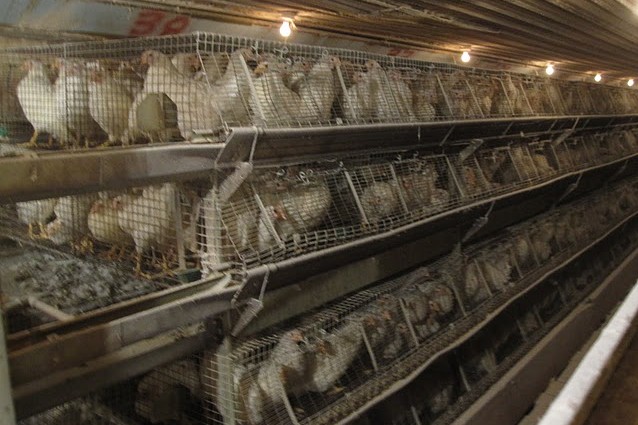
For 15 days in February 2010, an HSUS investigator worked inside 3 factory farms owned by Rose Acre Farms, the country’s second-largest egg producer. These facilities, located in Winterset, Stuart, and Guthrie Center, Iowa, confine nearly four million laying hens and about one million young hens (pullets). At the Guthrie Center location, battery cages are stacked eight high and hold more than two million birds. At the Stuart and Winterset locations, battery cages are stacked four high. This investigation revealed the below findings. Broken bones: Workers roughly yank young hens (pullets) from their cages in the growing sheds and load them into mobile cages for transport to battery cages, resulting in a mass of twisted bodies. Extremely rough handling: The HSUS investigator videotaped workers pulling young hens from the mobile cages and stuffing them into battery cages. Cruel depopulation methods: The HSUS investigator documented workers grabbing hens by their legs, then cramming them into gassing carts where they're killed with carbon dioxide. Prolapsed uteruses: Hens suffer from "blow-outs" that go unnoticed and untreated due to the cage crowding. Trapped birds unable to reach food and water: Battery cages can trap hens by their wings, necks, legs, and feet in the wire, causing other birds to trample the weakened animals, usually resulting in a slow, painful death. High mortality in layer and pullet sheds: The HSUS investigator pulled dead young hens, some of them mummified (meaning they'd been rotting in the cages for weeks), from cages every day. Failure to maintain manure pits: According to one worker, the manure pit under a pullet shed had not been cleaned in two years. Rose Acre workers claimed that some hens are blinded because of excessive ammonia levels. Abandoned hens: Some hens manage to escape from their cages and fall into the manure pits below. Keywords: Chicken, Animal Abuse, Animal Cruelty, Caged Farm Animals, Cruel Confinement of Farm Animals, Campaigns, Factory Farming, Farm Animal Welfare, Investigations, Protect Farm Animals

For 15 days in February 2010, an HSUS investigator worked inside 3 factory farms owned by Rose Acre Farms, the country’s second-largest egg producer. These facilities, located in Winterset, Stuart, and Guthrie Center, Iowa, confine nearly four million laying hens and about one million young hens (pullets). At the Guthrie Center location, battery cages are stacked eight high and hold more than two million birds. At the Stuart and Winterset locations, battery cages are stacked four high. This investigation revealed the below findings.
Broken bones: Workers roughly yank young hens (pullets) from their cages in the growing sheds and load them into mobile cages for transport to battery cages, resulting in a mass of twisted bodies.
Extremely rough handling: The HSUS investigator videotaped workers pulling young hens from the mobile cages and stuffing them into battery cages.
Cruel depopulation methods: The HSUS investigator documented workers grabbing hens by their legs, then cramming them into gassing carts where they’re killed with carbon dioxide.
Prolapsed uteruses: Hens suffer from “blow-outs” that go unnoticed and untreated due to the cage crowding.
Trapped birds unable to reach food and water: Battery cages can trap hens by their wings, necks, legs, and feet in the wire, causing other birds to trample the weakened animals, usually resulting in a slow, painful death.
High mortality in layer and pullet sheds: The HSUS investigator pulled dead young hens, some of them mummified (meaning they’d been rotting in the cages for weeks), from cages every day.
Failure to maintain manure pits: According to one worker, the manure pit under a pullet shed had not been cleaned in two years. Rose Acre workers claimed that some hens are blinded because of excessive ammonia levels.
Abandoned hens: Some hens manage to escape from their cages and fall into the manure pits below.
Keywords: Chicken, Animal Abuse, Animal Cruelty, Caged Farm Animals, Cruel Confinement of Farm Animals, Campaigns, Factory Farming, Farm Animal Welfare, Investigations, Protect Farm Animals

Cage-Free Eggs Are Good News for Chickens—but They Won’t Save McDonald’s

| Wed Sep. 9, 2015

One week after McDonald’s announced that its breakfast menu was going to be an all-day thing, the fast-food chain gave customers a reason to feel a bit better about it: Soon your Egg McMuffin will be made with cage-free eggs.

Because of the recent, massive outbreak of avian flu, egg prices are now sky high, with no signs of dropping—and cage-free eggs are typically more expensive than conventional.

Today McDonald’s said its 16,000 franchises in the United States and Canada will make the transition over the next 10 years (even though competitor Burger King has committed to going cage-free by 2017). The company already buys around 13 million cage-free eggs every year but will soon source all 2 billion eggs purchased annually from cage-free farms.

It’s worth noting that “cage-free” isn’t always all it’s cracked up to be. Earlier this year my colleague Tom Philpott wrote about how USDA regulations that animals must have “year-round access…to the outdoors, shade, shelter, exercise areas, fresh air, clean water for drinking, and direct sunlight, suitable to the species, its stage of life, the climate, and the environment” can be subject to interpretation. Animal rights activists who investigated cage-free egg producer Petaluma found hens were still in poor condition:

Footage taken from within the Petaluma facilities shows lots of birds wallowing tightly together, often amidst what looks like significant buildup of their own waste. The narrators use words like “stench, ” “filth,” and “misery” to describe the scene; and show several birds in obvious bad health—birds with blisters, missing feathers, one clearly caked with shit—along with birds that appear to be in decent shape. The crew dramatically rescues one pathetically injured bird, handing her over the fence, one activist to another, and whisking her to a vet in Berkeley, who declares her in dismal shape.

McDonald’s has been trying hard lately to rebrand itself, succumbing to consumer demands for healthier fare in the face of a increasingly dismal business outlook. Today’s announcement also included details about new menu items, including a new salad containing baby kale (an ingredient the company once said it would never use), and plans to replace liquid margarine with real butter. McDonald’s has also stopped serving chicken raised on antibiotics. It sells milk from cows not treated with artificial growth hormones, and last year it launched a campaign that utilized behind-the-scenes videos to prove it was serving real food.

It’s hard to say whether McDonalds’ efforts will give the company the boost it needs—even all-day breakfast is not a sure win, the Motley Fool recently argued. What’s more, the company still has an image problem: It continues to face criticism over low pay for workers, employee safety, and ads that target children.

Another wrinkle: The timing of McDonald’s all-day breakfast launch is not exactly ideal. Because of the recent, massive outbreak of avian flu, egg prices are now sky high, with no signs of dropping—and cage-free eggs are typically more expensive than conventional. (McDonald’s claims it won’t raise prices.)

Still, animal rights advocates herald today’s announcement as a step in the right direction. “This is a watershed moment in a decades-long effort to eliminate the cruelest confinement from our food supply,” Wayne Pacelle, president and CEO of the Humane Society of the United States, said in a press release. “McDonald’s admirable move makes clear that egg production’s future is cage-free.”

Hundreds of wild animals to be slaughtered in Limpopo, South Africa

http://www.telegraph.co.uk/news/worldnews/africaandindianocean/southafrica/11848103/Hundreds-of-wild-animals-to-be-slaughtered-in-Limpopo-South-Africa.html


New hunting controversy – two months after Cecil the lion was shot – which will see animals shot from specially erected platforms rekindles debate on big game hunting

In what is known as a “driven hunt”, the animals will be corralled into a two kilometre (1.2 mile) stretch of land close to the town of Alldays

In what is known as a “driven hunt”, the animals will be corralled into a two kilometre (1.2 mile) stretch of land close to the town of Alldays Photo: Alamy

Animal welfare groups in South Africa on Monday failed to prevent the opening of a week-long “driven hunt”, in which foreign hunters pay to shoot wildlife that is herded past them for easy dispatch.

More than 20 Belgian and Dutch hunters took part in the hunt on a farm near the town of Alldays, in the northern province of Limpopo.

Taking aim from purpose-built platforms overlooking a bush strip, hunters are able to shoot at hundreds of wild animals including baboons, warthogs and antelope as they pass.

Just two months after the global furore surrounding the slaughter of Cecil the lion in Zimbabwe, the hunt has rekindled controversy over the killing of wildlife for sport.

Cecil greets one of the lionesses in the Linkwasha Camp, within the Hwange National Park Cecil greets one of the lionesses in the Linkwasha Camp, within the Hwange National Park   Photo: Brent Staplecamp

Such was the anger over the death of Cecil, who was being tracked by Oxford University as part of a research project, that the hunter – Walter Palmer, a dentist from Bloomington, Minnesota – was forced into hiding, emerging only this week to make a public statement.

The National Council of SPCAs, the South African animal welfare group, appealed for the driven hunt to be stopped.

Ainsley Hay, the group’s manager of wildlife protection, said that it was trying to obtain a warrant to prevent the hunt from the magistrates court in the town of Louis Trichardt.

“Our team is trying to get the warrant, but the hunters are there already and the shooting is about to start,” she said.

Later reports said 18 animals were killed on Monday.

She said an indigenous community in the area had claimed the land and was renting it out to “individuals” who were hosting the hunt as a way of earning income.

“They have built platforms that line the bush for the hunters to stand on and have employed locals to walk in a straight line beating metal drums to chase the animals into the slaughter strip.

“The hunters then take pot shots at the animals. The animals have no chance of evading the onslaught and the hunters have no way of ensuring a clean shot or a humane death.

“From past hunts like these we have seen that much of the kill can’t be eaten or used as trophies because the dead animals are so full of bullets.”

The hunt, at Braam Farm outside Alldays, is due to last for one week. Hundreds of animals could be killed each day.

Hermann Meyeridricks, president of the Professional Hunters’ Association of South Africa, said he did not have enough information about the hunt to comment.

“There is a media frenzy around hunting at present and we don’t know enough about this this kind of hunting, which has been going on for centuries in Europe.

“I have no mandate to investigate activities of citizens of this country.”

More: http://www.telegraph.co.uk/news/worldnews/africaandindianocean/southafrica/11848103/Hundreds-of-wild-animals-to-be-slaughtered-in-Limpopo-South-Africa.html