Deer with arrow lodged in face is saved

Deer with arrow lodged in face is saved
http://www.app.com/story/news/local/western-monmouth-county/marlboro/2015/09/01/deer-arrow-lodged-face-saved/71520410/
“The New Jersey Division of Fish and Wildlife successfully removed
most of the arrow from the deer’s face after tranquilizing her Tuesday
morning at a private property off Suffolk Way. The doe, whom activists
have named Grace, was in good health and released back into the wild
with her fawn, wildlife officials said.”

also:

Bear hunting quota to be set at Fort Lauderdale meeting
http://www.sun-sentinel.com/local/broward/fort-lauderdale/fl-bear-hunting-meeting-20150901-story.html

1441225_10151990537383491_1309889797_n

Shell exec: ‘I have an issue’ with protests, ‘good progress’ in Arctic

ANCHORAGE, Alaska (AP) – The president of Shell Oil Co. said exploratory drilling off Alaska’s northwest coast is going well despite stormy weather last week that caused the company to halt operations for a few days.

And in an interview Tuesday with The Associated Press, Marvin Odum said he expects further protests against the company’s plans for Arctic drilling like the ones in Seattle and Portland where activists in kayaks tried to block Shell vessels.

Arctic offshore drilling is bitterly opposed by environmental groups that say a spill cannot be cleaned in ice-choked waters and that industrial activity will harm polar bears, walrus and ice seals already harmed by diminished sea ice.

In Seattle, Shell faced protests on the water by “kayaktivists” upset over the company staging equipment in the city. In Portland, Oregon, Greenpeace USA protesters hung from the St. Johns Bridge to delay a Shell support vessel, from heading to the Arctic.

“I think the right assumptions for me to make are, it’s not going to go away,” Odum said. “We saw quite a bit of very public opposition when we were in the Pacific Northwest.”

Odum said he’s “110 percent ready” to work with people who want to find ways to improve drilling.

“I do have an issue with those that oppose who use illegal means or put the safety of themselves or the safety of anybody associated with this operation at risk,” he said.

Odum said good progress is being made on the first well off Alaska’s northwest coast.

“We had a few days in the last week where we couldn’t operate because of the weather,” he said. “Now we’re coming out of that and it looks like we’re moving into a time period of good weather.”

President Barack Obama this week is in Alaska rallying support for measures to combat climate change, such as limits on carbon emissions.

Odum is staying in the same hotel as the president – the Hotel Captain Cook.

While environmentalists praise the president for curbing greenhouse gases, they pillory him for granting Shell permission to drill in the Chukchi Sea for the first time in 24 years.

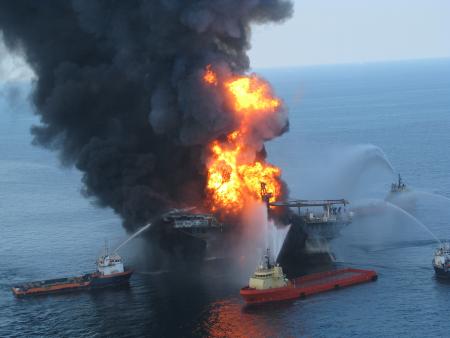
The U.S. Geological Survey estimates the Chukchi and Beaufort seas hold 26 billion barrels of [“recoverable”?] oil.Deepwater-Horizon-CDVIDS oil.

Oil will continue to be needed as the United States transitions to more renewable energy, Odum said.

“Oil will be required for a long time,” Odum said. “Let’s take a really close look at developing our own resources, control how it’s done and get all the benefits that go along with it.”

Shell in two years of exploratory drilling and with up to six wells hopes to confirm a vast reservoir of oil. If it’s found, Shell could apply for production permits and move oil by undersea pipe to the Alaska shore and then overland across northern Alaska to the trans-Alaska pipeline. That could take more than a decade.

Odum is confident exploration can be done safely, and the overriding factor dictating whether Shell completes an exploratory well this year will be safety.

Shell is operating under strict Arctic rules put in place after the Deepwater Horizon disaster in the Gulf of Mexico. Arctic offshore drilling has been scrutinized in the courts in lawsuits brought by drilling opponents, Odum said.

“It’s probably fair to say, this is the most scrutinized, analyzed project – oil and gas project – probably anywhere in the world. I’m actually sure of that,” he said.

All the scrutiny, along with Shell’s own internal review, have gone into safety considerations. It’s in the company’s best interest, he said.

“We can’t afford to have a problem here,” Odum said.

Patricia Randolph’s Madravenspeak: Jane Goodall condemns trophy hunting as sadistic

dvoight09's avatarWisconsin Wildlife Ethic-Vote Our Wildlife

55e32c9527b49.image

Indeed, Palmer is not the only hunter deserving of our contempt and anger. Far from it.” ~ Jane Goodall

Trophy hunting should be stopped in Wisconsin today, with an emergency stop to the September bear slaughter. This You Tube video shows a Wisconsin bow hunter, safely hidden, killing one of our bears over bait. His sadistic thrill, glorying in the blood trail, is followed by the usual triumphant trophy pictures.

Jane Goodall posted a strong condemnation of trophy hunting Aug. 20 after learning that Cecil the lion’s brother, Jericho, had abandoned Cecil’s cubs and one had already been killed by a rival male. “Almost certainly the other cubs will be killed as well,” she lamented.

She expresses the grief and outrage being felt worldwide as men and women serially kill our world’s wildlife: “And the question we should ask ourselves is this: Just because he was named, and loved…

View original post 982 more words

Tell Congress to pass the CECIL Act to fight trophy hunting of rare wildlife

Tell Congress to pass the CECIL Act to fight trophy hunting of rare wildlife

 https://www.change.org/p/tell-congress-to-pass-the-cecil-act-to-fight-trophy-hunting-of-rare-wildlife?recruiter=58625131&utm_source=share_petition&utm_medium=facebook&utm_campaign=autopublish&utm_term=des-md-action_alert-no_msg&fb_ref=Default

Alene Anello

Cambridge, MA

16,481

Supporters

When I heard an American killed Cecil the lion, I felt sick to my stomach. I also felt embarrassed for our country. I know I am not alone in feeling concern, because people around the world reacted with horror to the needless killing of such an iconic African lion. A movement is building to protect rare wild animals, and I’m asking for your support to prevent future tragedies like what happened to Cecil. Please sign my petition telling Congress to pass the CECIL Act into law, which would place restrictions on trophy hunting of animals considered for endangered or threatened wildlife protections.

The Conserving Ecosystems by Ceasing the Importation of Large (CECIL) Animal Trophies Act may be our best chance to protect rare wild animals from getting killed for trophies and shipped here to the United States. Without this law, we leave animals around the world vulnerable to trophy hunting.

Right now, the Endangered Species Act prevents the import and export of wildlife already listed as endangered. The CECIL ACT would extend those protections to animals proposed for addition to the list. The CECIL ACT would prohibit the import of such hunting trophies into our country.

I’m at Harvard Law School right now to learn the most effective ways to protect animals from abuse and neglect. I know it’s important to show Congress that the public demands better laws. We must work together to make this change right now. Otherwise, big money from wealthy trophy hunters will drown out the compassionate voices of regular Americans like us.

By signing my petition, we can send a loud message to Congress that Americans want to protect rare wildlife. Tell Congress to pass the CECIL Act into law to protect animals like Cecil from trophy hunting.

Record-Breaking Wildfires, Greenland Melting and Earth’s Hottest Month Ever

The following article from Truthout.org covers all that I was going to go over in Part 2 of Global Warming: the Future is Now, so here’s this instead:
Featured Image -- 10312

Dahr Jamail | The World on Fire:

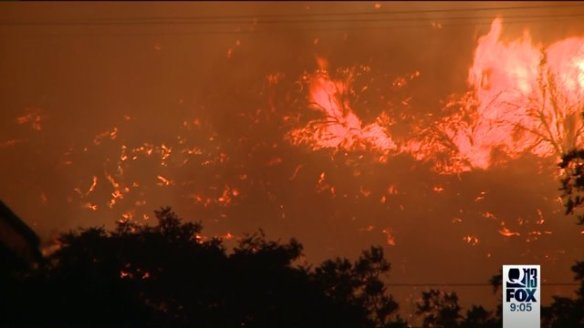
The US is now officially in the worst wildfire season in its history, as almost 7.5 million acres across the country have burned up since spring.

Articles about ACD’s impacts are now being published in more mainstream outlets, carrying titles that include verbiage like “the point of no return,” and it is high time for that, given what we are witnessing.

A recently published study by the UK-US Taskforce on Extreme Weather and Global Food System Reliance revealed that “major shocks” to worldwide food production will become at least three times more likely within the next 25 years due to increasingly extreme weather events generated by ACD. One of the coauthors of the report warned of a “very frightening” future due to the synthesis of ACD and food demands from a constantly growing global population.

Meanwhile, July officially became the hottest month ever recorded on the planet, setting 2015 on course to easily become the hottest year ever recorded.

This month’s dispatch is replete with evidence of our growing crisis, including record-breaking amounts of ice being released from Greenland, more species under threat of extinction, and millions of acres of the planet burning up in wildfires across North America alone.

Earth

A trove of papers recently released in the journal Science have warned that the planet’s forests are all under major threat of being annihilated, due to the ever-expanding human footprint, coupled with ACD. The introduction to the studies reads: “These papers document how humans have fundamentally altered forests across the globe and warn of potential broad-scale future declines in forest health, given increased demand for land and forest products combined with rapid climate change.”

Speaking of which, another recent report, this one coming from the Center for Global Development, showed that the planet is on a trajectory to lose an amount of tropical forest land equivalent to the size of India by 2050.

Meanwhile, geologists with the US Geological Survey and researchers from the University of Vermont recently showed that Washington DC is, quite literally, sinking into the sea. “It’s ironic that the nation’s capital – the place least responsive to the dangers of climate change – is sitting in one of the worst spots it could be,” senior author of the paper, Paul Bierman, said. “Will the Congress just sit there with their feet getting ever wetter?”

At the moment, the answer to his question is obvious: The lawmakers that frequent our capital city are making no bold moves to address that city’s flooded future.

Food production, as aforementioned, is being dramatically undermined by ACD. In Nigeria, the country’s ability to feed itself is rapidly diminishing due to higher temperatures and shifting rainfall patterns. At least half the farmers there had been unable to even plant their crops at the time of this writing.

Animal species continue to bear the brunt of ACD all over the globe as well.

A recent study showed that in the UK, ACD is generating severe droughts that have placed several species of butterflies there at risk of extinction.

Another report showed how a disease spreading rapidly across the planet’s tadpole populations is now threatening the global frog population. Scientists who authored the report warn that this is further evidence of the sixth great extinction event the earth is now experiencing.

Another dismaying development: The ever-shrinking area of sea ice is deleteriously impacting the Arctic’s walrus population. This season could see another dramatic beaching event like that of last summer, in which 35,000 walruses dragged themselves out of the sea and onto a beach due to lack of sea ice.

Meanwhile, the ongoing drought in California has caused an “emergency situation” for trees in that state, as lack of water is causing unprecedented die-offs. The drought there is also wiping out several of the native fish populations, of which many are expected to disappear within the next two years if the drought persists.

Lastly in this section, unprecedented heat coupled with an intense drought has caused “glacial outbursts” on Washington State’s Mount Rainier. “Outbursts” occur when large pools of ice-melt form within the glaciers, then plunge from within the glacier, sending torrents of silt-filled water, boulders and trees down the slopes of the mountain, wiping out anything in its path.

While these outbursts have happened periodically throughout history, they are expected to increase in both frequency and severity as ACD progresses.

Water

As usual, circumstances on the water front continue to worsen around the planet.

In the Pacific Northwestern region of the US, over a quarter million sockeye salmon heading up the Columbia River have either died or are in the process of dying due to warmer water temperatures. Biologists warn that at least half of this year’s returning fish will be wiped out, and ultimately as much as 80 percent of the total fish population could perish. Both Oregon and Washington states have already instituted closures of sport fishing due to the warmer waters and drought conditions persisting in both states.

In the Eastern Pacific Ocean, a giant bloom of toxic algae that is a threat to the health of both ocean species and humans alike spans from southern California all the way up to Alaska. Researchers are linking the size and intensity of the bloom to ACD. The bloom is already killing off sea lions that inhabit the coast and is still not showing signs of going away. Researchers said it was the largest bloom they had ever seen.

A report showed how ACD is in the process of rapidly reversing a natural phenomenon of 1,800 years of ocean cooling, while another study revealed that ocean acidification will continue and likely worsen, even if carbon sequestration and cleanup efforts were to begin in an immediate and dramatic fashion.

Back on land, droughts around the globe continue to make headlines.

One in Puerto Rico, that continues to worsen, has caused that country’s government to extend its dramatic water rationing measures, which have now been ongoing for weeks.

A study published in Geophysical Research Letters unequivocally linked California’s severe drought to ACD, saying that ACD has already “substantially increased” both the frequency and intensity of future droughts.

More news around the California drought emerged, showing that the river that runs through San Jose, the 10th largest city in the US, has dried up completely, severely harming fish and wildlife dependent on the water for their survival.

NASA released findings showing that California’s Central Valley, where the bulk of all the farming in the state takes place, is literally sinking, due to how much groundwater is being drawn out to compensate for the drought conditions. It is yet another destructive feedback loop: ACD has caused the drought to be far more severe than normal, which has caused humans to over-pump groundwater, leading to the sinking of the land.

The world’s glaciers are in peril. A disturbing report has shown that they have shrunk to their lowest levels ever witnessed in the history of record-keeping. They are melting at an accelerating rate – two to three times faster than the 20th century average melt rate.

As if to punctuate the findings of the report, the world’s fastest-melting glaciers, located in Greenland, recently lost the largest amount of ice on record in just a 48-hour period.

As a result of the incredible melting rates of glaciers, snowpack and ice fields around the globe, sea levels are now rising faster than ever.

Thus, as recently released research shows, global communities and cities located on river deltas – which includes over a quarter of a billion people – are at risk and will have to relocate.

Fire

Given the extensive record-breaking drought that has afflicted most of the western US, the fact that this summer’s fire season came in with a roar came as little surprise. Hardly halfway through the summer, fires across California, Washington, Colorado and in Glacier National Park in Montana were making headlines.

By early August, nearly 10,000 firefighters in California alone were battling at least 20 wildfires that had already forced more than 13,000  people to evacuate their homes.

Shortly thereafter, thousands of wildfires were raging across drought-plagued California, and before the middle of the month, a staggering 300,000 new acres were burning each day up in Alaska, where fires had scorched over 6 million acres thus far in the year, and hundreds of fires continued to burn. That makes this year already the second-largest wildfire season in Alaska’s history, with more of the summer remaining.

Reports have emerged warning of the impact of the fires upon Alaska’s permafrost: They have removed millions of acres of the tundra and forest that previously protected the frozen ground.

In early August, the US Forest Service announced that for the first time in the history of that department, it needed to spend over half of its entire budget on fighting wildfires.

Despite this, given the record-breaking drought conditions across the west, large numbers of the fires were left to burn out of control, due to high winds, dry conditions, and lack of fire-fighting capabilities and resources.

Air

In case anyone had any doubt about how hot the planet is already becoming, the Iranian city of Bandar Mahshahr experienced a heat index of 165 degrees in August, nearly setting a world record for heat index measurements, which factor in humidity along with temperature.

In July, incredibly hot temperatures in Tajikistan caused a rapid melting of glaciers, which triggered flooding and mudslides that generated nearly 1,000 ACD refugees.

Meanwhile, across the Middle East in August, more than 20 people died and nearly 100 had to be hospitalized due to incinerating heat that baked the region, along with intense humidity levels. Basra, Iraq, saw 123 degrees, and the Iraqi government had to instate a four-day “holiday” so people wouldn’t feel obliged to work in the stifling heat.

Lastly in this section, a recent report stated that Texas will likely see a dramatic escalation in heat-related deaths and coastal extreme storm-related losses in the upcoming decades due to escalating ACD impacts.

Denial and Reality

There is never a dull moment in the “Denial and Reality” section.

Democratic Party candidate Hillary Clinton’s stated plan to address abrupt ACD, which amounts to federal subsidies for solar panels, was immediately labeled as “silly” in early August, just after Clinton’s plan was announced, by leading climate scientist James Hansen, who headed NASA’s Goddard Institute for Space Studies for more than three decades.

“You cannot solve the problem without a fundamental change, and that means you have to make the price of fossil fuels honest, “Hansen said of her plan. “Subsidizing solar panels is not going to solve the problem.”

During a recent forum, Republican presidential candidate Ted Cruz went on the record expressing full-on denial of ACD, saying that the debate about ACD was a “device” used by liberals to appeal to “environmentalist billionaires and their campaign donations.”

On another front, builders in San Francisco are moving forward with plans to construct major bay-front developments of office space and homes worth more than $21 billion, in areas that are extremely susceptible to flooding – despite dire warnings of imminent sea-level rise.

On the bad news front for the deniers, however, a recent study showed there is absolutely no link between sunspot activity and ACD … a fabricated argument the deniers enjoy trotting out to try to “disprove” reality.

More bad news for the deniers comes, once again, from the Pope, who set up an annual Catholic Church “day of care” for the environment. The Pope said the day would be a chance for the world’s 1.2 billion Catholics to “thank God for the wonderful handiwork which he has entrusted to our care, and to implore his help for the protection of creation as well as his pardon for the sins committed against the world in which we live.”

And Catholics aren’t the only faith leaders working to do something to address ACD.

Islamic religious and environmental leaders from around the world recently issued a call to rich countries, along with those that are oil producers, to end all fossil fuel use by 2050 and to begin rapidly ramping up the institution and use of renewable energy sources.

The Islamic leadership, which issued “The Islamic Climate Declaration,” said the world’s 1.6 billion Muslims have “a religious duty to fight climate change.”

The final blow to ACD deniers in this month’s dispatch comes from none other than the US Department of Defense, which issued a report to Congress that said that ACD poses a “present security threat” that is not only a “long-term risk,” but poses immediate short-term threats as well.

http://www.truth-out.org/news/item/32556-the-world-on-fire-record-breaking-wildfires-greenland-melting-and-the-hottest-month-ever-recorded-on-earth


Facebook deletes photos of slain rhinos, leopards and lions killed by Texas cheerleader after outcry

http://www.dailymail.co.uk/news/article-2680742/Facebook-deletes-photos-rhinos-elephants-lions-killed-Texas-cheerleader-violate-websites-standards.html

    • Kendall Jones, 19, has drawn the ire of thousands with her Facebook photos showing her smiling alongside rare African beasts
    • But Facebook has now removed her images of dead elephants, hippos and lions, among others, because they violate their standards
  • The website removes ‘reported content that promotes poaching of endangered species’, Facebook said in a statement
  • Jones, a cheerleader at Texas Tech who is gunning for a reality show, claims her hunting is actually a conservation effort


Facebook has deleted trophy photos showing rhinos, elephants, lions and leopards killed or tranquilized by a Texas Tech cheerleader.

Kendall Jones, 19, has sparked outrage across the social media site for sharing images of herself with the big game she has hunted through Africa.

On Thursday, Facebook removed some of the images that violated their standards.

In a statement, it said it removes ‘reported content that promotes poaching of endangered species, the sale of animals for organized fight or content that includes extreme acts of animal abuse’.

Conserving by killing? 19-year-old Texas cheerleader Kendall Jones really likes to kill rare animals in Africa. While she pays for her legal hunts, her critics says she's not the conservationist she claims to be

Following the removal of the images, she shared a Fox News Channel montage of the deleted photos but by Friday, there was no sign of the montage.

It came after more than a quarter of a million animal lovers signed a petition urging Facebook CEO Mark Zuckerberg to take down the photos in which Jones smiles proudly over the corpses of her prey she claims to be saving from extinction.

‘For the sake of all animals,’ the petition against Jones reads as it implores animal lovers to sign, ‘especially the animals in the African region… where hunters are going for fun just to kill an animal!’

Read more: http://www.dailymail.co.uk/news/article-2680742/Facebook-deletes-photos-rhinos-elephants-lions-killed-Texas-cheerleader-violate-websites-standards.html#ixzz3kVyIzGMC
Follow us: @MailOnline on Twitter | DailyMail on Facebook

NM Game Commission: No “Game” for Wildlife

from Rosemary Lowe:

At the NM Game Commission hearing on August 27th, Opponents of increased mountain lion and bear killing outnumbered the hunters, trappers, ranchers, at least 4 to 1. Yet, while some of the environmental/animal groups were allowed to speak, many of us individual citizens were not. It was obvious to many that the commission was changing the rules to fit their biased needs. Not only are numerous ranchers & hunters on this commission, but there are 2 Safari Club International members as well.

Anyone surprised that the “vote” was unanimous in favor of more killing?

We cannot help wildlife by changing these game department’s names, or funding structure, or by continuing to accept their barbaric “game management policies” as something worthy of support.

Game agencies were started in the early 1900’s.  Aldo Leopold (a long-time wolf killer), literally wrote the textbook on game management. Yes, he was “sorry” for killing one wolf too many, but he was responsible for the atrocious model of today’s “modern game management” which views wild animals as “commodities and resources.”

Terms such as “harvest” and “game quotas” are designed to artificially maintain wild species for trophy/trapping–-keeping just enough of them for human exploitation/killing.

The NM Game Dept comes up with pseudo-statistics to rationalize their use of wildlife. Some so-called wildlife groups are collaborating with the enemies of wildlife – the hunting, trapping and livestock industries– to establish a so-called sustainable level of wildlife killing. The wildlife of New Mexico have enough to contend with, without wildlife organizations joining the killing machine.

The World Wildlife Living Planet Report says: “Populations of fish, birds, mammals, amphibians and reptiles measured for the report have declined by 52 per cent since 1970; and freshwater species have suffered a 76 per cent decline – an average loss almost double that of land and marine species.”

We are developing a campaign against trophy hunting, and the state game departments which support it, on our EARTH for Animals website.

Wildlife Photography ©Jim Robertson

Wildlife Photography ©Jim Robertson

Viewpoint: Uncomfortable realities of African big game hunting

[Definitely not my view.]

http://www.bbc.com/news/science-environment-34116488

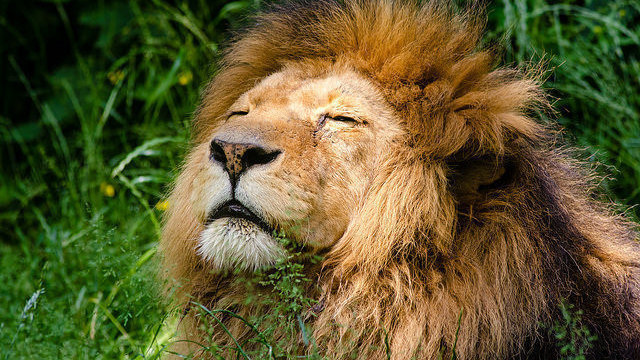
Lion
Image caption For those who are so inclined, it is possible to legally hunt virtually any African animal

Trophy hunting has been the subject of much media attention amid the backdrop of declining populations of big game animals in Africa. But is a blanket ban really the answer?

At the end of June 2015, a Zimbabwe lion known as Cecil was wounded by a crossbow bolt shot by American dentist Walter Palmer.

Sometime later [40 HOURS!!] Cecil was shot and finally killed.

The media attention that followed made it clear that many people were unaware of the realities of modern-day African hunting.

In fact, if you have enough money and are so inclined, you can legally hunt pretty much any African animal, including lion, leopard, elephant, buffalo and hippo.

You’ll need the right permits and it’s subject to quotas and regulations but if you do it by the book, then it’s perfectly legal. And once you’ve killed it you can export the “trophy” home.

‘Moral objection’

Following Cecil’s death, many have called for a blanket ban on trophy hunting. Calls for a ban come from a number of different directions.

For some, there is a moral objection to the killing of animals for pleasure, for others an understandable emotional response to images of hunters posing with their kills or concerns over conservation.

But calls for a blanket ban on trophy hunting fail to take into account the complex relationship between hunting and conservation.

Some trophy kills are hard to justify no matter which side of the fence you sit on. Leopard for example are a CITES (Convention on International Trade in Endangered Species of Wild Fauna and Flora) Appendix I species.

Namibia
Image caption As the human population in Africa expands, conflict between humans and wildlife increases

Such species are threatened with extinction and the commercial trade in wild-caught specimens is illegal. Despite this, it is still possible to hunt one “on trophy” (subject to quotas) for personal, non -commercial purposes.

Another hunting practice that has come under the spotlight is “canned hunting” of lions. There is considerable confusion between, and conflation of, trophy hunting and canned hunting. Canned hunting, where captive bred lions are released into small enclosures to be hunted in a “no kill no fee” arrangement, “hits the bottom of the barrel” according to Will Travers, President of wildlife charity the Born Free Foundation.

Poor welfare

Largely based in South Africa, the welfare issues involved in canned hunting, which include severe over-crowding and inadequate access to food and water, have recently been exposed by environmental film maker Ian Michler in his film Blood Lions.

However, as lion conservation expert and author of Lions in the Balance: Man-eaters, Manes and Men with Guns, Professor Craig Packer, says: “These animals are not part of the wild population and so, there’s no real immediate impact on conservation… I view canned hunting mostly as an animal welfare issue.”

Many sought-after trophy animals, such as kudu and impala, are maintained in large numbers across Southern Africa, especially South Africa, within large, fenced, privately-owned reserves.

Kudu
Image caption Many prized trophy animals such as kudu are maintained in large, fenced reserves

Animal numbers need to be controlled to prevent over-stocking and over-grazing. Surplus animals are harvested for meat but larger males can generate far more revenue if they’re taken by a trophy hunter.

The taking of trophy animals in such reserves is of limited conservation concern and the money generated helps to pay for the management that is required to keep reserves in good condition.

In fact, the impact of trophy hunting depends on the species and the region being considered. So the past few decades in South Africa have seen a landscape-level replacement of cattle farming with wildlife farming.

As a consequence: “Southern Africa’s seen large scale recoveries of wildlife in the 20th century, built around hunting,” says Rosie Cooney, who heads the IUCN Sustainable Use and Livelihoods Specialist Group.

Trophy hunting of many species was, and continues to be, vital in funding this reversal and a blanket ban there is neither needed nor desirable.

It pays, it stays?

This “consumptive utilisation of wildlife” model (“it pays it stays”) also works well in some other regions. The Bubye Valley Conservancy in Zimbabwe for example has more than 400 lions and one of the most important populations of rhino still in existence.

The Conservancy is funded entirely by hunting and, according to the reserve manager Blondie Leathem, a ban would be “devastating”.

However, trophy hunting is not always beneficial for wildlife. Over-harvesting can clearly have a detrimental effect on numbers.

Also, trophy hunters select large males and this can have more profound effects on the breeding dynamics of animals in that region. These problems are greatest when land is not stably owned and a “tragedy of the commons” (when everyone harvests as much as they can for short-term gain) can result.

It is tempting to suggest that hunting could be replaced by tourism and in some places this is indeed the case. However, as Rosie Cooney points out, tourism is only possible in regions that “are accessible…a few hours generally from a major hub…with good roads”.

They also need to be safe, “lacking in dangerous diseases….and politically stable”. There needs to be the infrastructure to look after tourists and you need capital to invest in it. Many hunting concessions operate successfully in areas where none of these conditions are in place, at least for now.

The pro-hunting argument is simple. Hunting provides revenue that directly funds conservation. Anti-hunters often claim that this hunting-conservation link doesn’t stand up to scrutiny. The problem in deciding whether hunting is beneficial or not is that both sides are right.

How can both sides be right? The answer to that lies in the fact that Africa is not a single entity.

Different countries and even regions within those countries have different histories, geography, politics, governance, infrastructure, economics, population demographics and tribal politics. In some regions hunting is vital for conservation. In such regions “it pays it stays” works and a ban would be detrimental to wildlife.

In other regions, hunting could be replaced or at least supplemented by tourism. In still other regions, and certainly for some species, a ban on hunting could be a sensible move for conservation. A “one size fits all” solution is not what is required.

Last wilderness

In fact, Prof Craig Packer says that across Africa overall “neither trophy hunting nor phototourism is sufficient to cover the costs [of conservation]”.

Whilst these activities can and do work in some places, he thinks that “we need to move away from the standard model of wildlife conservation in Africa, which has always been ‘wildlife must pay its own way'”. Overall, the approach doesn’t generate enough money and consequently, “we’re seeing dramatic losses of wildlife numbers throughout a lot of Africa.”

It is interesting that the killing of a single lion by a wealthy, white, American attracted so much attention.

As Will Travers explains: “I don’t think we should fool ourselves that it’s all about trophy hunting. Lions are threatened by habitat loss, habitat fragmentation…human activities that disperse and displace lions [and] the loss of prey species.”

There are few true wildernesses left, and as the human population in Africa expands, conflict between humans and wildlife gets ever greater. Far more lions are killed by cattle herders defending their livestock and their families than by trophy hunters. Don’t forget, in the UK, we long ago killed our apex predators so that we could sleep soundly.

To conserve wildlife we need to find ways to protect animals from people and people from animals. We also need to find ways to ensure animal populations are more valuable alive in the long-term (even if that means sustainable harvesting) than dead in the short-term.

Conservation is an extraordinarily complex problem but it is also one of the most significant problems we now face. The solution will not be found in knee-jerk responses driven by emotion and fuelled by social media.

Prof Adam Hart is professor of science communication at the University of Gloucestershire. He presents Big Game Theory on BBC Radio 4 at 20:00 on Tuesday 1 September.

http://www.bbc.com/news/science-environment-34116488