Exposing the Big Game

Forget Hunters' Feeble Rationalizations and Trust Your Gut Feelings: Making Sport of Killing Is Not Healthy Human Behavior

Exposing the Big Game

Man survives tragic accident and then despite odds, hunts again

Nels Hadden may have lost use in his hands, arms, and legs, but he never stopped fighting the good fight for what makes him happy…hunting.

“You go to the mountains and the air seems cleaner and fresh,” said Hadden. “You don’t have all the noise and cars.”

Six years ago an act of kindness almost cost him his life.

He was driving home from work on an icy freeway when he saw a car hit a patch of black ice on the road.

“They had went upside down into the ditch and I witnessed all of it so I pulled over and ran back to assist those people,” said Hadden.

However it was not safe.

Moments later a car going almost 60 miles per hour slid on the ice and ran right into him.

After that he spent almost a year in hospitals.

For the rest of his life, he would be a prisoner in a wheelchair, tied down to only homelife.

Never would he smell the fresh mountain air again.

“I never thought I was gonna be able to do it again,” said Hadden.

Hadden can do different tasks ranging from using his computer to hunting in the mountains.

He blows or sucks from the straw to work this system.

The technology is put to great use with his hunting crossbow.

Allowing him to shoot down animals on his own.

However, a few people wanted to help him become even more capable on the hunt.

So someone he had never met before decided to spend their time and money to build him a hunting blind that would accomodate his wheelchair.

“I’m blessed to have somebody that cares and you know has helped me do that,” said Hadden.

Hunting, something that used to be as easy as walking to Hadden has become a challenge.

However the fact that he can still do it makes him happy.

“When you spend a year in bed you have a great appreciation for just getting up and being able to get out and be outside,” said Hadden.

Wildfires take toll on hunting season

No mention of how fires are effecting wildlife…

http://www.usatoday.com/story/news/nation-now/2015/09/04/wildfires-take-toll-hunting-season/71741134/

Molly Trotter, KREM-TV 9:51 a.m. EDT September 5, 2015

SPOKANE, Wash. — Wildfires have burned almost one million acres in Washington, leaving destruction in its wake. One of lesser known impacts of the fires is the toll on the hunting season.

There are several closures that hunters will have to deal with across Washington and Idaho from the numerous blazes.

“This is an unprecedented drought year.” Washington Department of Fish and Wildlife’s Madonna Lures said. “We have unprecedented fires burning and people fighting them and people losing their lives and their homes over them.”

Both the Idaho Fish and Game and Washington Department of Fish and Wildlife have made several closures. A lot of private land in the panhandle in Idaho has been closed from fears of fires sparking from gun fire.

Several popular forest roads are closed so Idaho and Washington are working with hunters to find an agreement on which lands they can hunt on.

“Outdoor recreation is great but we got to use common sense then,” Lures said.

The cooler weather has helped contain wildfires and improve the dry conditions. It has not improved them enough for Washington and Idaho to open up all the closed lands and forest roads for hunting. It needs to last a little longer for that to happen.

700 Walrus Seen Near Shell Oil Rigs in Arctic as Obama Visits Alaska

 August 31, 2015 10:39 am 

James MacCracken, supervisory wildlife biologist, U.S. Fish and Wildlife Service said in an Aug. 28 press conference call, “We are getting reports from Shell daily” of walrus near the ships and rigs and the talley so far is “700 walrus” seen by observers. When asked if all operations around the walrus by Shell are within the guidelines set by Interior Department regulation, MacCracken said, “Yes.” This is the first confirmation that protected sea mammals are swimming through the Burger oil leases which Shell just got permission to deep drill. Observers, paid by Shell, are required by Shell’s permit to perform drilling and other activities which might disturb or injure sea mammals. More information to come on this.

First aerial views of thousands of Pacific walrus hauling out Aug. 23 on Alaska Arctic shore.  Photo credit: Gary Braasch / World View of Global Warming
First aerial views of thousands of Pacific walrus hauling out Aug. 23 on Alaska Arctic shore. Small detail of telephoto image of 2015 haul out. Photo credit: Gary Braasch / World View of Global Warming

The press conference was also the first direct acknowledgement by the U.S. agencies in charge of studying and protecting the mammals that a new haul out had begun—nearly a week after the event actually started and only three days before President Obama begins his tour of Alaska focusing on rapid climate change. Gary Braasch made the first photos of the haul out at about 7 p.m. on Aug. 23, after seeing on USGS maps of locations of geotagged walrus that several were stationary in the Point Lay area.

Thousands of Pacific walrus coming ashore in northwest Alaska as sea ice melts recedes from habitat. Photo credit: Gary Braasch / World View of Global Warming

Toxic Algal Bloom Causes Another Sea Lion Crisis

Latest News
Sea Lion

California sea lions are having a tough year. As you know, starving sea lion pups were stranding along the California coast in record numbers earlier this year. Now, sea lions are facing another crisis: a dangerous neurotoxin called domoic acid.

Researchers say the massive algal bloom producing this toxin is the biggest and most toxic they’ve ever seen, extending from southern California all the way up to Alaska. And it’s leaving sick sea lions in its wake. About three-quarters of our current sea lion patients are suffering from the effects of this toxin, including lethargy, disorientation and seizures.

Since discovering this condition in sea lions in 1998, our researchers have learned a lot about domoic acid toxicity and how to treat it effectively. Thanks to support from people like you, we’ve been able to successfully release hundreds of healthy patients over the years that had stranded due to this toxin.

Toxic Algal Bloom Causes Another Sea Lion Crisis
Sea Lion

California sea lions are having a tough year. As you know, starving sea lion pups were stranding along the California coast in record numbers earlier this year. Now, sea lions are facing another crisis: a dangerous neurotoxin called domoic acid.

Researchers say the massive algal bloom producing this toxin is the biggest and most toxic they’ve ever seen, extending from southern California all the way up to Alaska. And it’s leaving sick sea lions in its wake. About three-quarters of our current sea lion patients are suffering from the effects of this toxin, including lethargy, disorientation and seizures.

Since discovering this condition in sea lions in 1998, our researchers have learned a lot about domoic acid toxicity and how to treat it effectively. Thanks to support from people like you, we’ve been able to successfully release hundreds of healthy patients over the years that had stranded due to this toxin.

Japanese town’s controversial dolphin hunt begins

SeaWorld says it won’t take beluga whales captured in Russia
http://www.orlandosentinel.com/business/os-seaworld-georgia-aquarium-belugas-20150903-story.html

Japanese town’s controversial dolphin hunt begins
http://news.yahoo.com/japanese-towns-annual-dolphin-hunt-begins-104914360.html
“In the annual hunt, people from the southwestern town corral hundreds
of dolphins into a secluded bay and butcher them, turning the water
crimson red. The scene was featured in “The Cove” documentary, drawing
unwanted attention to the little coastal community.”

11214207_829677830435133_118593585578390559_n

Emergency Stop to Killing 4,750 Black Bears Mostly Cubs over Dogs in WI Sept.9 – Oct. 13

dvoight09's avatarWisconsin Wildlife Ethic-Vote Our Wildlife

URGENT: Please sign and enroll at least 10 friends in signing Wildlife Ethic’s petition against slaughtering 4,750 Wisconsin bears, mostly cubs, NEXT WEEK:

ELgLNrCpBSzwYzK-800x450-noPad

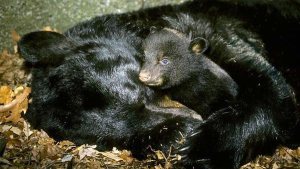
In one week, Sept. 9 – October 13, will start the slaughter of 4,750 black bears, mostly cubs less than 2 years old, over unlimited packs of dogs and bait. These bears will be run to exhaustion in this late summer heat, as they have been all summer ( for the entertainment of “families”) and when they climb the trees they love thinking themselves safe, they will be shot with multiple arrows or gunshots and fall 60-70 foot to the dogs below. Then the “hunters” who have followed the radio-collared dogs in their trucks, will “let the dogs have some fun” with the dying or wounded bear, attacking the bear, and then take home a baby bear rug for their man cave to their “glory”.

Children 10-11…

View original post 289 more words

Letter on The Gila River

Rosemary Lowe
Jeff  Sussmann’s comments opposing the Gila River Diversion make sense. This diversion proposal is  an ecological nightmare waiting to happen.
One of the major supporters of this anti-environmental scheme  is the grazing industry lobby, which not only vehemently opposes wolf reintroduction in the Gila bio- region, but also has a long history of demanding the slaughter of wolves, coyotes,  mountain lions and other native wild animals, for  livestock. The livestock associations  want wild & scenic rivers like the Gila excluded  from any further wilderness designation discussions.
Ecologist, author,& grazing activist, George Wuerthner, said: “Livestock production, which includes irrigation of livestock feed crops, accounts for the greatest consumption of water in the West. Such a water intensive industry is poorly suited to the arid West…and is a major cause of species decline throughout the region.”
The Gila River is a desert river, increasingly  under stress due to human-caused climate change, and public lands grazing. The  birds, mammals,  & other native species depend upon the Gila for their continued existence. Are we going to allow tax-payer- subsidized public lands ranchers to decide the fate of this ecosystem? We taxpayers will foot the bill, but the flora and fauna, & the  fragile river system, will pay the ultimate price: A dead river, and species extinctions.

Tell Governor Martinez and her Game Commission: it’s time to end the war on New Mexico’s wolves and other carnivores

Please sign the petition today and stand for wolves and wildlife at the rally and  commission meeting in Santa Fe on Thursday, August 27th!
none

351px-CMM_MexicanWolfCMorrison

New Mexico Governor Susana Martinez and her hand picked Game Commission are clearly out of touch with the majority of New Mexico voters, who support wolf recovery.

Please stand with us for wolves, cougars and bears on August 27th.

In the past few months, the New Mexico Game Commission has repeatedly sought to undermine the recovery of endangered Mexican gray wolves, first by denying, without justification, the 17 year old permit for Ted Turner’s Ladder Ranch to continue assisting with the Mexican wolf reintroduction and more recently by denying the U.S. Fish and Wildlife a permit to release Mexican gray wolves into New Mexico, which is necessary to boost the wild population’s declining genetic health.

This is particularly troubling given that Representative Steve Pearce (R-NM) recently introduced legislation to remove Mexican gray wolves’ federal Endangered Species Act protections, which would leave them at the mercy of states clearly hostile to their recovery.

The U.S. Fish and Wildlife Service’s appeal of the Mexican wolf permit denial is on the agenda for the August 27, 2015 Commission meeting. Members of the public will not be allowed to speak during the Mexican wolf agenda item, but we intend to make our voices heard at a rally at 8:00 am before the meeting begins and to stand in silence for wolves in the meeting during these agenda items.

The commission will also vote on its proposals to allow cougars to be cruelly trapped and to expand bear hunting in NM. Those who wish to speak for cougars and bears should plan to be at the meeting by 8:30 am to fill out speaker cards.
 

Please join us on August 27th to give wolves, cougars and bears a voice.


NM Game Commission Meeting and Rally
Santa Fe Community College
Jemez Room
6401 Richards Ave.
Santa Fe New Mexico
Click here for map
Got to the west side of the main entrance and gather at the front of the building.
You can see a flagpole at the front entrance as you drive up the hill to the front entrance-go towards the flag.
The rally is at 8 am

Please RSVP for the rally here.

The Game Commission meeting begins at 8:30 a.m.
The bear and cougar rules and wolf agenda items are numbers 7-8
For more information about the rally and meeting, email info@mexicanwolves.org
You’re also invited to join us tonight for a pre-rally presentation: Key Predators in Wildlife

Wolf supporters are invited to learn more and get inspired at an event hosted the night before the rally by conservation groups, including the Sierra Club, Center for Biological Diversity, Mexicanwolves.org, Animal Protection of New Mexico, Sandia Mountain BearWatch, Southwest Environmental Center and Great Old Broads for Wilderness.

August 26, 2015
Santa Fe, NM
August 26, 2015
6 – 7:30 pm
Santa Fe Public Library Community Room – 2nd Floor
145 Washington Avenue
Santa Fe, NM 87501

Michael Robinson from the Center for Biological Diversity will give a Mexican wolf presentation. Mexicanwolves.org representatives will introduce the Santa Fe Packtivist program for area wolf activists. Sierra Club’s Mary Katherine Ray will talk about the Game Commission’s proposals to expand bear hunting and cougar trapping.

For more information about this event, email tc.seamster@gmail.com

Cows Killed in Washington Fires

SUNDAY, AUG. 30, 2015

Ranchers face loss of livestock, livelihoods in Washington fires

Doug Grumbach, a fourth-generation Ferry County rancher, stands Wednesday in the charred Colville National Forest near the Canadian border, where the Stickpin fire killed 12 head of his cattle. This cow became wedged between two trees trying to flee the flames. (Tyler Tjomsland)

DANVILLE, Wash. – The burned carcasses blend into the scorched landscape, just more black and ash among the haunting outline of trees. “There she is,” rancher Doug Grumbach says, pointing up the steep slope near his ranch. “It looks like she was trying to run and froze in that mode.”

The cow is now obvious: A perfectly shaped head, a body covered in skin that’s become cured leather – taut and solid like a drumhead. She’s upright, wedged between two burned trees, ribs exposed, a flurry of maggots working furiously. Her calf lies in a heap nearby.

Grumbach is silent. He rubs his jaw and points to another carcass farther up the hill on the grazing land in the Colville National Forest, just south of the Canadian border. The land recently burned in the Stickpin fire.

Grumbach, like cattle ranchers across fire-ravaged north-central Washington, isn’t sure of his total losses. The devastation includes not only body counts but hundreds of miles of fence, grazing land and water sources on his family’s fourth-generation ranch. So far, he knows of eight dead cows and four calves, a loss of about $35,000. Thirty more of his Angus herd is missing. In his corrals at home are a cow and several calves with burned hooves.

Livestock toll still ‘a wild guess’

For some ranchers, this is the second year of hardship – first stemming from drought and now another round of deadly fire.

Chris Bieker, of the federal Farm Service Agency in Spokane, doesn’t know how many cattle died in the fires. There are places livestock owners haven’t been able to get into because of fire and road closures.

“At this point, anything is just a wild guess,” he said.

That’s especially true about the numerous ranches located in the Okanogan Complex of fires in north-central Washington. Together, the Okanogan Complex has burned about 475 square miles and is considered the largest wildfire in state history.

Cattle production is Washington’s fifth-largest commodity with about 1.1 million cows and calves valued at $706 million in 2013, according to the Washington state Department of Agriculture. Behind wheat, hay is the state’s second-most-productive field crop.

Bieker said the Farm Service Agency still is trying to process payments for lost livestock from last year’s brutal Carlton Complex fires in the Methow Valley, which was until this year the largest wildfire recorded in Washington. More than 1,000 cattle burned along with 500 miles of fencing. Some fear this year’s losses are worse.

Bieker added that it’s important for ranchers to report their losses within 30 days, under the federal Livestock Indemnity Program – an often difficult task when they still are digging fire lines and trying to rescue cows. That program, part of the 2014 Farm Bill, allows cattle owners and others to recoup 75 percent of the market value of livestock that died because of “adverse weather.”

Obama Is a Climate Hypocrite. His Trip to Alaska Proves It.

By Eric Holthaus

Was574466
The dangerous gulf between Obama’s words and actions on climate change is growing wider. Above, a home in the the Alaskan village of Shishmaref is destroyed by beach erosion in 2006. The entire village is facing evacuation because of global warming.

Photo by Gabriel Bouys/AFP/Getty Images

On Monday morning President Obama headed to Alaska—the front lines of climate change—for a trip the White House is calling “a spotlight on what Alaskans in particular have come to know: Climate change is one of the biggest threats we face, it is being driven by human activity, and it is disrupting Americans’ lives right now.”

Problem is, those words fall flat when compared with Obama’s mixed record on climate. The widely publicized trip comes at a delicate moment for the president. Barely two weeks ago, his administration gave Royal Dutch Shell final approval to drill for oil offshore Alaska’s northwest Arctic coast—not exactly the sort of thing you’d expect from someone who professes to be “leading by example.”

ADVERTISING

The leases that allow Shell to drill in the Arctic were awarded by the George W. Bush administration, and the president had limited options to block them. Still, as ThinkProgress notes, Obama could have outright canceled Shell’s lease, or begun a process to declare the region a marine protected area, making future leases nearly impossible. Neither of these actions would be easy to do, but either would have sent a powerful message to industry: Starting now, climate change concerns trump energy exploration, period.

Climate activists vociferously opposed the approval of Shell’s permit: Last month a group of protesters in kayaks briefly blockaded an Arctic-bound Shell support ship while it was in a Portland, Oregon, port. In recent days Hillary Clinton, the leading Democratic candidate for president, has also voiced her opposition.

One progressive activist group, Credo Action, has called the unfortunate juxtaposition of Obama’s words and actions his “Mission Accomplished” moment, in reference to Bush’s declaration of victory in the Iraq war. I agree.

…  For many environmental activists, Obama’s approval of Shell’s Arctic drilling permit is the icing on an extremely hypocritical cake.

More: http://www.slate.com/blogs/the_slatest/2015/08/31/obama_trip_to_alaska_stark_difference_between_rhetoric_and_action_on_climate.html