Exposing the Big Game

Forget Hunters' Feeble Rationalizations and Trust Your Gut Feelings: Making Sport of Killing Is Not Healthy Human Behavior

Exposing the Big Game

Want to Do Your Part to Tackle Climate Change? Go Vegan

by Jason Best is a regular contributor to TakePart who has worked for Gourmet and the Natural Resources Defense Council.

Can we eat our way out of climate change? That question has come to the forefront again with the Monday release of yet more research connecting global dietary patterns and global warming. While no one’s arguing diet alone can stop the world from warming, there’s now more evidence that changing the way we eat could have a big impact.

Building on similar groundbreaking studies published during the past couple years, scientists at Oxford University tackled a big question: If the whole world adopted a healthier diet, could that significantly combat global warming.

Even though the agricultural sector accounts for a substantial share of our collective greenhouse gas emissions—almost 15 percent worldwide—it’s long been more or less ignored when it comes to international climate negotiations, including the landmark climate conference in Paris at the end of last year. Yet with the international community finally starting to take serious action to cut emissions from power plants and transportation, the total share of emissions from agriculture is only expected to rise—so much so that experts say it could essentially cancel out the cuts in other sectors.

RELATED:  Are We All Going to Be Vegetarians by 2050?

The biggest culprit? Livestock, particularly cattle. As past research has shown, raising beef generates between nine and 27 times the amount of global warming pollution that producing an equivalent number of calories growing things like beans, nuts, and vegetables does. As just about everyone knows by now, red meat consumption has been linked to a host of health problems, including heart disease, type 2 diabetes, and certain cancers.

In the Oxford study, published in the journal PNAS, researchers peered into the future to 2050 and asked what might happen in four different diet scenarios. In the first, the world keeps eating the way we are now, with a predicted rise in meat consumption. The other three put everyone on a diet, so to speak, each with an increasingly restricted amount of meat, all the way to global veganism.

The upshot? The less meat the world eats, the better it is for our collective health, the health of our climate, and the global economy.

A worldwide shift to a vegetarian diet, for example, was shown to save 7.3 million lives and cut global warming pollution from the agricultural sector by 63 percent. Going vegan saved an estimated 8.1 million lives, cut climate pollution by 70 percent, and saved a whopping $31 trillion between now and 2050.

The study’s authors openly admit that’s not going to happen, but it’s important that the world’s growing penchant for American-style bacon burgers and meat lovers’ pizza become part of the climate debate.

“We do not expect everybody to become vegan,” the study’s lead author, Marco Springmann of the Oxford Martin Program on the Future of Food, told Reuters. “But climate change impacts of the food system will be hard to tackle and likely require more than just technological changes. Adopting healthier and more environmentally sustainable diets can be a large step in the right direction.”
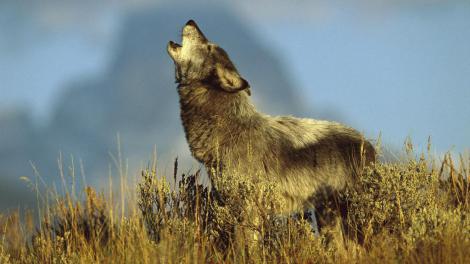
Wolf population in Washington continues to grow

freewallpapersdotcom golden-wolf

http://www.maplevalleyreporter.com/news/372191731.html

Washington state’s wolf population continued to grow last year and added at least four new packs, according to the Washington Department of Fish and Wildlife’s (WDFW) annual survey. By the end of 2015, the state was home to at least 90 wolves, 18 packs, and eight breeding pairs.

The recently completed survey shows the minimum number of wolves grew by 32 percent last year, despite the deaths of at least seven wolves from various causes. Since 2008, when WDFW documented just one pack and five wolves, the population has increased by an average of 36 percent per year.

“Wolf populations in Washington are steadily increasing, just as we’ve seen in the upper Midwest and Rocky Mountain states,” said WDFW Director Jim Unsworth. “This increase – and the wolves’ concentration in northeast Washington – underscores the importance of collaboration between our department, livestock producers, and local residents to prevent conflict between wolves and domestic animals.”

Donny Martorello, WDFW wolf policy lead, said the new Beaver Creek, Loup Loup, Skookum, and Stranger packs were confirmed in Ferry, Okanogan, Pend Oreille, and Stevens counties, respectively.

However, researchers found no evidence of the previously documented Wenatchee Pack, and the Diamond Pack shifted its activity to Idaho and is no longer included in Washington state totals.

Martorello said the minimum number of breeding pairs in Washington increased from five to eight – the first increase since 2011.

WDFW conducted the research using aerial surveys, remote cameras, wolf tracks, and signals from 22 radio-collared wolves from 13 different packs. Twelve wolves were fitted with radio collars during the year, while one pup was marked and released without a collar due to its small size.

Despite their growing numbers, wolves were involved in fewer conflicts with livestock than in 2014. Martorello said the department determined wolves from four packs were responsible for killing a total of seven cattle and injuring one guard dog.

Three of the seven wolves that died in 2015 were killed legally by hunters on the reservation of the Spokane Tribe of Indians, which authorized the harvest up to six wolves per year by tribal members. The four other deaths included one wolf killed in a collision with a vehicle, one shot in self-defense by a property owner, and one that died during an attempt to capture it. One wolf’s cause of death is unknown.

Unsworth said WDFW took several steps in 2015 to expand public involvement in wolf conservation and management. He said the most important actions were doubling the size of the department’s Wolf Advisory Group to 18 members, and initiating a “conflict transformation” process to improve working relationships among the members and the groups they represent and the department.

Martorello said WDFW will continue to emphasize the importance of preventive actions to minimize wolf attacks on livestock and domestic animals. For example, WDFW wildlife conflict specialists are available to work with residents of communities where wolves are present.

WDFW has also adopted a “range rider” program to provide an increased human presence in grazing areas. WDFW continues to offer cost-sharing agreements for ranchers through a program designed to help them reduce their expenses for preventive measures.

Gray wolves, all but eliminated from western states in the last century, are protected under Washington law throughout the state and under federal law in the western two-thirds of the state.

Because of the difficulty of confirming the presence of every single wolf, survey results are expressed in terms of the minimum number of individuals, packs, and breeding pairs. The state Wolf Conservation and Management Plan defines a pack as two or more wolves traveling together in winter and a successful breeding pair as an adult male and female with at least two pups that survive to the end of the calendar year.

Under the state management plan, wolves can be removed from the state endangered species list once 15 successful breeding pairs are documented for three consecutive years among the three designated wolf-recovery regions.

WDFW’s complete wolf survey for 2015 will be available by the end of March on the department’s website: (http://wdfw.wa.gov/conservation/gray_wolf/).

My Horse Is Healing But It’s Been Slow Going…

Nabeki's avatarHowling For Justice

Sunset1

March 30, 2016

I want to thank all the wonderful readers of this blog for your kind words of support concerning my horse. I can’t tell you how much it means to me.  Please know your encouragement and well wishes boosted my spirits tremendously!

Howls to all,

Nabeki

====

Hello Warriors,

Finally, after 2 1/2 months, my horse’s wound is finally healing. I hope the picture doesn’t gross you out but wanted to share with you how devastating a wound it was. It’s been a long road, I didn’t know if he would recover from such an injury but hoped with good vet and nursing care he would heal. With every 3-4 day dressing changes, that were quite involved and antibiotic therapy he finally turned the corner. It’s really a miracle he was able to come back from this.

Then

Initial wound 1_16_16

Dressed Wound 1-31-16

Dressed wound 1_31_16

Three Weeks Ago

Injury March 2016

===

Unfortunately today he…

View original post 31 more words

Sea Shepherd Intercepts Fleet of Illegal Fishing Vessels in the Indian Ocean – High Seas Pursuit Now Underway. .

– High Seas Pursuit Now Underway.

The Sea Shepherd ship, under the command of Captain Siddharth Chakravarty, has now engaged in a pursuit of on…Show more

Sea Shepherd Global - Sea Shepherd Intercepts Fleet of Illegal Fishing Vessels in the Indian Ocean preview image

Sea Shepherd Global – Sea Shepherd Intercepts Fleet of Illegal Fishing Vessels in the Indian Ocean

High Seas Pursuit Now Underway The Fu Yuan Yu 076, currently on the run from the Steve Irwin. Photo: Tim Watters Sea Shepherd’s


Remove hunters from conservation departments like USFWS

dvoight09's avatarWisconsin Wildlife Ethic-Vote Our Wildlife

https://exposingthebiggame.wordpress.com/2015/10/10/remove-hunters-from-conservation-departments-like-usfws/ (reblog)

Remove hunters from conservation departments like USFWS. More transparency in wildlife conservation through DOJ

Request the Department of Justice and Office of Inspector General to implement changes that bring transparency in wildlife conservation. Conservation organizations like USFWS are being used to further the interests of hunting groups.

This could be considered fraudulent use of taxpayer funds. Taxpayers assume that USFWS is protecting wildlife, not sustaining hunting.

Transparency measures are urgently required to purge hunters from conservation organizations funded by taxpayers.

https://exposingthebiggame.blog/wp-content/uploads/2015/10/1383590_10202451372112407_1424997098_n.jpg

View original post

Dr James Hansen — Human Warming Pushing Seas Toward Exponential Rise of Several Meters This Century

robertscribbler's avatarrobertscribbler

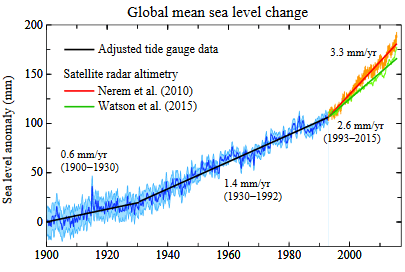
Continued high fossil fuel emissions this century are predicted to yield … nonlinearly growing sea level rise, reaching several meters over a timescale of 50–150 years. Statement from a new scientific study led by Dr James Hansen entitled Ice Melt, Sea Level Rise, and Superstorms.

******

This week, Dr James Hansen and colleagues published one hell of a groundbreaking bit of scientific research. It’s a multi-disciplinary study incorporating the work of 19 top climate scientists, glaciologists, paleoclimatologists, and other Earth Systems researchers. Scientists from NASA, GEOMAR, JPL, and other top research agencies including recognized names like Dr Eric Rignot and Dr Makiko Sato all appear on the contributors list.

Global mean sea level change

(Rates of sea level rise since 1900 and associated with a 1.1 C jump in global temperatures have already shown a non-linear progression. Ice Melt, Sea Level Rise, and Superstorms attempts to pin down just how fast glacial melt…

View original post 1,229 more words

Hot Winds Fan Massive, Unprecedented March Wildfire Burning 40 Mile Swath Through Kansas and Oklahoma

robertscribbler's avatarrobertscribbler

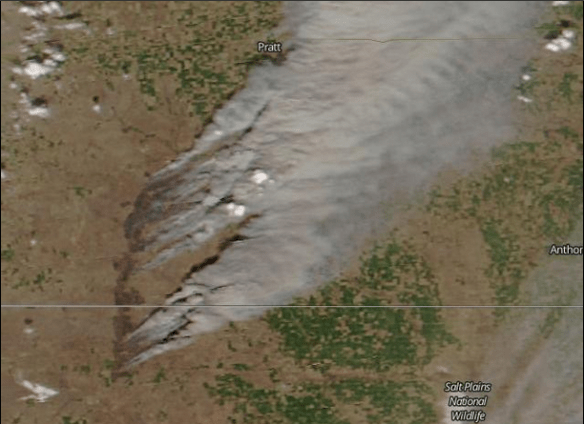
It’s likely that we’ve never seen a March wildfire like the beast that just ripped through Kansas and Oklahoma over the past day. But in a world that’s now exploring a new peak temperature range near or above 1.5 C warmer than pre-industrial averages, a level of heat not seen in the past 110,000 years, we’d be out of our minds to expect the weather and climate conditions to behave in any kind of manner that could be considered normal.

We’re Probably Looking at the Worst Wildfire on Record for Kansas and Oklahoma

Kansas Oklahoma Wildfire March 2016

(Massive, unprecedented, wildfire burns along a 40 mile swath across Kansas and Oklahoma on Wednesday. Image source: NASA/MODIS.)

And abnormal absolutely describes what happened in Oklahoma and Kansas yesterday and today.

The first sign of trouble was a warning of severe fire risk by weather officials for a multi-state region of the Central US on Wednesday

View original post 789 more words

Groups sue to halt hunting at Grand Teton

CHEYENNE, Wyo. – Environmental groups filed a pair of federal lawsuits on Wednesday to stop hunting that is now allowed on hundreds of acres within Grand Teton National Park in Wyoming and has claimed three bison.

The National Parks Conservation Association and Greater Yellowstone Coalition, Defenders of Wildlife and Wyoming Wildlife Advocates claimed in the lawsuits other species could be hunted.

Hunting generally isn’t allowed in national parks, though Grand Teton for decades has hosted an annual elk hunt in coordination with state wildlife officials.

The hunt — formally known as an elk reduction program — was part of a state-federal compromise that enabled the park to be established in its current boundaries in 1950.

A 2014 agreement between Grand Teton and Wyoming Game and Fish Department officials improperly allows hunting dozens of species on private and state land within Grand Teton, the groups claim.

The groups worry that grizzly bears and wolves could soon be targeted by hunters if the U.S. Fish and Wildlife succeeds in removing the animals from federal protection as threatened and endangered species.

“For more than 65 years, the National Park Service rightfully and lawfully exercised authority to protect all park wildlife,” said Sharon Mader, Grand Teton program manager for the NPCA. “It should continue to do so moving forward.”

Interior Department spokeswoman Jessica Kershaw declined to comment, citing agency policy on pending litigation.

The lawsuits involve dozens of parcels of state and private land called inholdings located within the park. National park land completely surrounds most inholdings, which total well under 1 percent of Grand Teton’s 485 square miles.

Significant inholdings include two state parcels, each measuring a square mile, and a pair of relatively small ranches of 450 and 120 acres.

National Park Service and state officials began discussing whether federal or state laws would be enforced on Grand Teton inholdings after a wolf was shot on a private inholding in the park in 2014.

Federal prosecutors declined to charge the shooter, finding that park officials had erred in determining that federal wildlife law for national parks took precedence on the private land.

Park officials agreed later that year that state law would take precedence on all inholdings. The four environmental groups are contesting that agreement with the lawsuits.

“Wildlife obviously don’t pay attention to title records and move around on all of those parcels,” said Tim Preso, an Earthjustice attorney representing Defenders of Wildlife and Wyoming Wildlife Advocates. “You cannot maintain the park, the integrity of the park as a preserve for wildlife protection, when you have these islands where wildlife can be killed.”

The number of Grand Teton inholdings dwindled after decades of buyouts by the National Park Service. Wyoming officials have been trying for years, with limited success, to get the Interior Department to acquire all remaining state inholdings.

The last two inholdings, together worth perhaps $100 million, command prime views of the Teton Range. In 2010, Wyoming Gov. Dave Freudenthal threatened to sell to the highest bidder if the federal government didn’t get serious about taking them off the state’s hands.

Recent negotiations between state and federal officials have focused on possibly trading the sections for federal land and mineral rights elsewhere in Wyoming