Exposing the Big Game

Forget Hunters' Feeble Rationalizations and Trust Your Gut Feelings: Making Sport of Killing Is Not Healthy Human Behavior

Exposing the Big Game

No apologies: Why ARA writers should not fear accusations of “Anthropomorphism!” “Sentimentality!”

An Animal Rights Article from All-Creatures.org

FROM

Heidi Stephenson
June 2016

Man is not the pedestalled individual pictured by his imagination – a being glittering with prerogatives, and towering apart from and above all other beings. He is a pain-shunning, pleasure-seeking, death-dreading organism, differing in particulars, but not in kind, from the pain-shunning, pleasure-seeking, death-dreading organisms below and around him.
– (J. Howard Moore, The Universal Kinship)

First they ignore you, then they laugh at you, then they fight you, then you win.
– (Mahatma Gandhi)

Animals have no voice in our wilfully deaf and conveniently anthropocentric, speciesist culture. Despite their clearly having consciousness (for those with eyes to see and ears to hear) and high levels of sapiency as well as sentiency, (which any of us who have had any sort of genuine relationship with a non-human being cannot fail to recognize,) their many languages are not understood by the majority of our fellow humans.

The failure is not on the animals’ part; it is on ours. Not even familiar canine, feline and equine languages, or methods of communication, are comprehended by the vast majority, after all these many aeons of loyal, devoted companionship, friendship and service. And this despite the fact that our fellow beings, (and especially those who are in close relationship with us) have more than managed to learn our own languages. They understand and interpret not only our many, different verbal requests, whether in French, Russian, Japanese, Arabic or Spanish, (all too frequently delivered as arrogant, dominionist commands, unfortunately) but also our physical body languages and our energetic, non-verbal (if you like, telepathic) communications. They read our emotions.

But, tragically, our determined, utilitarianist habits of exploitative thinking and living, deny them any right of response or recognition. We have reduced our highly evolved, non-human kin to mere “things,” to “livestock”, to “experimental subjects,” to “specimens,” – to commodities, to so many “its.” Our blatantly self-serving reductionism has deliberately negated their individuality, their conscious existence and experience, their personalities and their souls. We have disingenuously dismissed all their emotional, psychological and spiritual complexities (which we have barely even begun to fathom, having not wanted to look for so long,) to a simplistic, mechanized “instinct.”

Ours is the herd mentality.

How guilty and remorseful we would all feel if they spoke back to us in a language we couldn’t fail to understand, and we were actually forced to listen! (The Bible’s story about Balaam’s ass makes just this point. And the Divine is clearly on the poor ass’s side.)

It is here that the enlightened writer needs to come in. Our moral and our creative duty is to convey their point of view; to translate it for those who seem unable (or unwilling) to comprehend it otherwise.

The writer is by nature and disposition an empath. The writer is sensitive, observant and importantly able to engage with the experience of another. The writer’s heart is mostly wide open. (Very few respond to the writings of a closed heart. Clever, clever, mind-only writings simply don’t touch us. They pass through our own minds as just another load of ego-centric baloney; ‘intelligent’ perhaps, but abstract, cold. The world is not transformed by them in any way at all.) A good writer feels, sees fully, hears everything, actually dares to bear witness to what is, on all levels – and thus, thankfully, has a different, more developed lens of perception to share.

Writers who write about animals, about their fellow beings, care. We care very deeply. Our compassion and understanding, our capacity to connect, are highly developed. That is why we write. Because we cannot just remain silent. Having uncovered, having discovered, having born witness to the living hell that is most animals’ experience at our hands, we have to make use of so often inadequate, man-made words to pierce through the cold walls of human indifference.

We have to touch. We have to bring viscerally to life. We have to use the power of truthfully observed detail, noticing everything (inside and out) feeling everything, to rekindle the embers of better being in us all, to remind us of our tragically long-forgotten inter-species unity, of our sameness, (and not our petty differences). We have to break down centuries of hardened, calloused indifference.

Abstractions and vast statistics simply don’t touch the majority. If they cannot, as readers, imagine themselves inside the experience of the suffering other, if they cannot identify, they will not be motivated to make personal changes, and to fight for change. Reading is a co-creative process – and it requires the writer to have gone there fully first; to powerfully evoke.

Writers who have the conscience, kindness and commitment to actually write about animals, who have the courage to look their suffering directly in the eye (a tough, torturous path, though very necessary) who have the devotion to their animal brothers and sisters to dedicate themselves to ending all the terrible oppression, all the atrocity, abuse and pain – must never be held back by that old, bitter and selfishly motivated accusation of “anthropomorphism!”

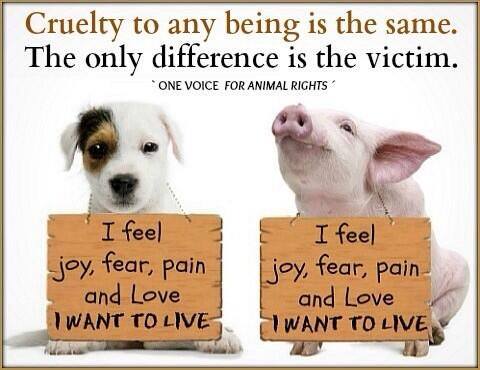
To empathise is not to fantasize or to project at all – but rather to recognise fellow suffering when we see, hear, smell, know and touch it. To empathise is to connect to the vivid reality of another. It is to make real, to embody the cosmic Golden Rule to “Do as you would be done by” and the Silver Rule to “Not do as you would not be done by.” It is love in action.

There is nothing sentimental whatsoever about this compulsion at all. It is, in fact, our highest calling. And there should be no apologies for it either.

Where would we be if we had failed to empathize with the many victims of the slave-trade, of vicious, racist and sexist attacks, of war, terrorism and famine? Where would all the children be, all the people with learning difficulties and mental health problems, all the political prisoners who suffered so long at human hands, if we had failed to finally empathize with their plight, to bring it to light so that others could feel it for themselves – and thus demand change?

By contrast, sentimentality is to imagine what is not there. It is to dump idealized longings onto others for our own selfish sakes. It is to bypass reality.

That is not what writers who empathize with their fellow beings do at all. Writers who empathize connect again, (where most have disconnected,) and report back. We do this in order to wake ourselves and others up, to shake us all out of our self-centred reveries, to pour a cold bucket of water over our conveniently slumbering consciences. We cry out with everything we have in us: “Have you seen what’s going on here? Will you please look! How can you bear it? Do something! We each have a moral responsibility! They are just like us – how can you not care?”

Writers who empathize force us all to look at what we each are doing, what we are colluding in, what weare contributing to. We are forced to take responsibility for our negative day-to-day choices that directly correlate, incrementally, to immense, unimaginable, abominable animal suffering. Empathic writing cuts through all those guilt-filled attempts at avoidance and dismissal, the desperate pleas of “don’t tell me, don’t tell me – I don’t want to know!”

I say it again, there must be no apologies. It is our violent culture that is so wrong, not the courageous writers who dare to expose this violence. It is not the writer who should modify his or her approach for fear of upsetting the oppressors, the animal abusers, the exploiters and the colluders, for fear of public ridicule – but rather the oppressors, the animal abusers, the exploiters and the colluders who should hang their heads in shame.

The time will come when we will look back on this longest of struggles, this most devilish of slaveries – the enslavement of our vulnerable, innocent, animal kin, (who should have had our protection,) as we now do on human slavers, on human murderers, on rapists and paedophiles. (Let’s not forget all the ‘licensed’ animal brothels currently open across the world, and the crush video sadists who are making a fortune in this twenty-first century.) It is the unenlightened who need to apologize and repent for their cruel abominations – not the empathic writers who seek to understand and communicate the hidden truth.

I would rather be accused of “anthropomorphism!” and “sentimentality!” any day, than of animal rape or animal murder. I would rather care too deeply (is there such a thing?) than not enough. I would rather be accused of being over-soft, than over-hard. I would rather love, than hate. And I would far rather be defined as a bunny-hugger than a bunny vivisector, a bunny killer, a bunny torturer, an angora wool-puller, a blood-covered, live animal skinner.

Let us never be ashamed. Let us write passionately and movingly on behalf of our suffering, animal kin, in order to shine the most powerful light we possibly can, the Divine light of creativity, on the world’s man-made darkness. Let us break open hearts in the process, so that healing can begin. As Francis of Assisi said, “A single sunbeam is enough to drive away many shadows.”

Let us write without any fear of retribution or of societal reprimand. Let us remember the billions of animal victims instead, and forget our human accusers.

One day they will thank us for it. One day they will try and claim they too were part of the resistance.

http://www.all-creatures.org/articles/ar-no-apologies.html

“There’s more than one way to feed a phytoplankton bloom in the Gulf of Alaska”

aooscjanzen's avatarAlaska “Blob” Tracker

This is not really directly related to the Blob; however, it is likely these kinds of phenomena will vary from the norm during years experiencing events like warm pools similar to the Blob. Having a series of imagery throughout time will prove highly valuable at helping assess large-scale impacts on the oceanography of regions during anomalous years.

From NASA’s Earth Observatory website, check out this story on phytoplankton dynamics in the Gulf of Alaska! The image is amazing!

NASA image by Norman Kuring, NASA’s Ocean Color web.

Caption by Kathryn Hansen.

Instrument(s): 
Suomi NPP – VIIRS

View original post

Gigantic Gravity Waves to Mix Summer With Winter? Wrecked Jet Stream Now Runs From Pole-to-Pole

robertscribbler's avatarrobertscribbler

It’s as if global warming were ringing the Earth’s atmosphere like some great, cacophonous alarm bell. The upper level zonal winds are swinging wildly from record high positive anomalies to record low negative anomalies. Gravity waves — the kinds of big atmospheric waves that tend to move air from the Tropics all the way to the Poles and are powerful enough to cause the Caribbean Sea to ‘whistle’ in the satellite monitors — are growing larger. And the Jet Stream now has redefined all boundaries — flowing at times from the East Siberian Sea in the Arctic across the Equator and all the way south to West Antarctica.

Jet Stream Runs from Pole to Pole

(Northern Hemisphere Jet Stream runs from near 80 degrees North Latitude across the Equator in this Earth Nullschool screen capture to merge with the Southern Hemisphere Jet Stream and eventually reach West Antarctica. It’s the very picture of weather weirding due…

View original post 1,086 more words

Britain Succumbs to Fear — Europe Shattered by Deteriorating Physical and Political Climate

robertscribbler's avatarrobertscribbler

In Central India, during 2016, millions of farmers who have lost their livelihoods due to a persistent drought made worse by climate change are migrating to the cities. The climate change induced monsoonal delays and ever-worsening drought conditions forced this most recent wave of climate change refugees to make a stark choice — move or watch their families starve.

It’s a repeat of a scene that happened in Syria during 2006 through 2010, but on a much larger scale. A scene that will repeat again and again. In Bangladesh and the other low lying coastal and delta regions of the world, hundreds of millions will be uprooted by sea level rise. In the US Southwest, India, Africa, South America, the Middle East and Southern Europe hundreds of millions more will be uprooted by drought. All because we, as a global civilization, failed to work together to halt fossil…

View original post 1,689 more words

Concern Over Catastrophic Methane Release — Overburden, Plumes, Eruptions, and Large Ocean Craters

robertscribbler's avatarrobertscribbler

The amount of methane in the Arctic hydrates alone is estimated as 400 times more than the global atmospheric CH4 burden. The question is timescale of the methane liberation: gradual, abrupt, or something in between. Satellite monitoring of methane over the Arctic Ocean is necessary. — Dr. Leonid Yerganov

*  *  *  *

Depending on who you listen to, it’s the end of the world, or it isn’t. A loud and lively debate that springs up in the media every time a new sign of potential methane instability or apparent increasing emission from methane stores is reported by Arctic observational science.

On one side of this debate are those declaring the apocalypse is nigh due to, what they think, is an inevitable catastrophic methane release driven by an unprecedentedly rapid human warming of the Arctic. A release large enough to wipe out global human civilization. These doomsayers are fueled by…

View original post 3,706 more words

When Whales Cannot Hear: Ocean Noise Doubling Every 10 Years

http://www.alternet.org/environment/when-whales-cannot-hear-ocean-noise-doubling-every-10-years#.V1bsREbsrUw.facebook

“Marine species need sound for everything they do,” says Dr. Kenneth Balcomb. “But now the sounds of ships is ubiquitous in all of the open oceans.”
By Dahr Jamail / Truthout June 7, 2016

A blue whale is able to communicate with another blue whale across the breadth of an entire ocean basin, and can hear storms more than 1,000 miles away.

“Whales are reliant upon their hearing to live,” Dr. Sylvia Earle, a marine biologist, author and lecturer who has been a National Geographic explorer-in-residence since 1998 says in the documentary Sonic Sea.

Earle, who has logged more than 7,000 hours underwater, refers to the oceans as “the blue heart of the planet,” and has dedicated her life to researching and protecting them.

Part of this is due to the fact that the amount of sound humans are injecting into them is so intense and frequent that it is, at times, literally killing whales, dolphins and other sea life.

I attended a screening of Sonic Sea in Port Townsend, Washington, where Michael Jasny, the director of the Natural Resources Defense Council’s (NRDC) Marine Mammal Protection, and Dr. Kenneth Balcomb, the executive director and senior scientist at the Center for Whale Research were present.

The film, which aired last week on the Discovery Channel, states that, “We are acoustically bleaching our oceans,” and underscores several deeply disturbing facts about the ever-increasing level of noise in the sea, including that:

Sounds can travel 17,000 kilometers underwater and still be audible
There have been several documented instances of US Navy sonar causing brain hemorrhaging, organ lesions and bleeding from the ears in whales.
Whale calls are literally being drowned out by ship noise
There are 60,000 commercial ships in the oceans at any given moment.
According to the US Navy, noise levels in the oceans are doubling every 10 years, and have been doing so for decades.
Navy Acting “Lawlessly”

Jasny has done critical work like providing the California Coastal Commission detailsof scientific studies that confirm the harmful impacts of Navy sonar training and testing on marine mammals, and fighting on the winning side of a settlement that required the Navy to take measures to protect endangered blue whales and other marine mammals during Naval training exercises and testing operations off the coasts of Hawai’i and Southern California.

In Sonic Sea, Jasny states, “The Navy was acting lawlessly until we took them to court.”

The first time the NRDC did that was roughly 20 years ago.

After the screening, Jasny told me, “At that time, the Navy was in complete non-compliance on every level. There were no environmental assessments, or environmental impact statements being carried out.”

“The NRDC has gone to court at least seven times against the Navy,” Jasny explained, “And we’ve won every case except one that went to a conservative Supreme Court.”

“But the Navy continues to do a lousy job of safeguarding the environment, and their consistent activities have deep impacts on whales and other species, [which] are experiencing significant impacts in both the Pacific and Atlantic Oceans,” Jasny told me.

The Navy has been reluctant to comply, every step of the way. When asked what improvements the Navy has made, Jasny said, “Only after we started applying legal pressure did they at least start paying lip service to the law.”

Oceans at Risk

Balcomb, a zoologist who went on to serve as an oceanographic specialist in the Navy then before going on to become a leading whale researcher, is also featured in the film.

After witnessing a mass stranding of whales in the Bahamas in 2000, he went on to help prove that naval sonar kills whales.

In Sonic Sea, Balcomb told a moving story of a Vietnam War veteran he knew who had multiple injuries from the war who simply wanted to see a whale. Balcomb watched as two men took the vet out in an inflatable boat, and were paid a visit by a whale.

“I watched with binoculars as the whale floated beside their small boat, and reached a fin out of the water, and rested it atop the head of the wounded vet,” Balcomb told me later. “And the veteran started picking barnacles off the whale and they just stayed that way awhile.”

The whale went on to follow the small boat back to the ship from which it had launched, at which point Balcomb said he and several other people slipped into the water, “And the whale just came up and visited each one of us.”

Back in Port Townsend, Jasny spoke to the large audience that had assembled for the screening, and asked them to imagine themselves underwater.

“Imagine dynamite going off in your neighborhood every 10 minutes, and going on and on and on,” he said of seismic testing methods used for oil-and-gas exploration off the coasts of most of the oceans around the world.

“Marine species need sound for everything they do, and have exquisite hearing,” he added. “But now the sounds of ships is ubiquitous in all of the open oceans. The average noise levels in Admiralty Inlet [in the Pacific Northwest] is higher than the maximum allowable threshold by the National Marine Fisheries Service.”

“We’re putting the oceans at risk,” concludes the film. “And if you put the oceans at risk, you put all of us at risk.”

Sonic Sea has been screening for several months across the US and internationally, with more screenings scheduled.

Claws for concern: Hillary Clinton is conveniently vague when it comes to animal rights

Claws for concern: Hillary Clinton is conveniently vague when it comes to animal rightsDemocratic presidential candidate Hillary Clinton waits to speak at a get out the vote event at La Gala in Bowling Green, Ky., Monday, May 16, 2016. (AP Photo/Andrew Harnik)(Credit: AP/Andrew Harnik/photo_master2000 viaShutterstock/Photo montage by Salon)

Americans more than ever are concerned about animal welfare, but it’s hard to suss how much Hillary cares about it

Hillary Clinton’s campaign has wisely caught on to an evolving voter dynamic by crafting a position paper outlining her support for protecting animals. But is she for animal rights or for animal welfare?

In addition to being good policy, courting the animal protection vote is good politics. Americans’ concerns about humane treatment of animals is stronger than ever before.

If this trend continues – and there is no reason to expect that it will not – the issue will likely play an even larger role in future elections.

Evidence of society’s rapidly evolving focus on animal protection abounds. In March,SeaWorld announced that it will stop breeding orcas and will phase out its orca shows, which are its signature attraction. Last month Ringling Brothers put on what it called its last elephant show ever. Last year McDonald’s joined Burger King, General Mills, Sara Lee and several other corporations that have announced they will only use cage-free eggs in their food products. In 2014 South Dakota became the 50th state to upgrade animal cruelty to a potential felony. Only 20 years earlier, all but a few stateshad only misdemeanor penalties for animal cruelty.

A 2015 Gallup poll addressing animal rights may be even more compelling. According to the poll, almost one in three Americans – 32 percent – now believe that “animals deserve the exact same rights as humans to be free from harm and exploitation.” In an identical poll Gallup conducted in 2008 only 25 percent of respondents expressed this view.

Clinton’s position paper does not go this far. It provides a vaguely worded list of mainstream animal welfare concerns such as “strengthening regulation of ‘puppy mills’” and “encouraging farms to raise animals humanely.”

More: http://www.salon.com/2016/06/26/claws_for_concern_hillary_clinton_is_conveniently_vague_when_it_comes_to_animal_rights/

The most interesting aspect of  Clinton’s position paper is its description of the candidate as having “a strong record of standing up for animal rights.” “Animal rights” is a loaded term, and even animal rights supporters cannot agree as to what it means. Some animal rights advocates interpret the term loosely, and view animals as already having some rights because laws exist to protect them.

But other animal rights supporters assert that animals presently do not have rights, because our legal system views animals as property and does not allow them to be represented in judicial proceedings. Highly publicized lawsuits are underway in New York seeking to change this for chimpanzees by demanding that they be considered “legal persons” for purposes of protecting their “bodily liberty” and their “bodily integrity.”

Beaufort Sea polar bears are spending more time ashore. And it may be a wise move.

http://www.adn.com/arctic/2016/06/12/beaufort-sea-polar-bears-are-spending-more-time-ashore-and-it-may-be-a-wise-move/

by    June 12


A polar bear walks along the beach in Kaktovik, Alaska, at sunset on Sept. 7, 2012.

As Arctic sea ice dwindles, polar bears are spending more time on land. Now a long-term study tracks the dramatic change in behavior over the recent warming in the Beaufort Sea off northern Alaska and northwestern Canada.

Polar bears in the beleaguered southern Beaufort Sea population are now three times as likely to come ashore in summer and fall as they were in the mid-1980s, according to the study, by scientists from the U.S. Geological Survey, the U.S. Fish and Wildlife Service and two universities. The bears that come ashore are also staying there much longer than bears did in the past, according to the study.

The big changes, the study found, have happened over the past decade and a half — corresponding to big reductions in summer and fall sea ice.

“That’s where we found a turning point in the data series. Prior to 2000, there really was no trend,” said Todd Atwood, a USGS wildlife biologist and the study’s lead author.

Since the late 1990s, the open-water season in the southern Beaufort Sea has expanded by 36 days on average, and polar bears have responded in kind, said the study, published online in the journal PLOS ONE. Since that time, the study said, the polar bears that swim to shore are spending 31 more days a year there.

Before then, the polar bears that went ashore in the late summer and fall tended to make brief exploratory forays, not the extended stays that are happening now, Atwood said.

The study uses data from movements of 228 adult female polar bears that, over the period from 1986 to 2014, were fitted with 389 radio collars. Only adult females can wear the tracking collars; males’ necks are too wide to allow collars to stay in place.

The study also uses data from aerial surveys conducted from 2010 to 2013. Those surveys tracked all polar bears — male and female, adult and subadult.

The newly open Beaufort Sea water, a trend continuing this year, is forcing polar bears in summer and fall to make a choice — swim north to the receding edge of the pack ice, or swim south to land, Atwood said.

The bears that come ashore still make up only a minority of the population, but they may be making the better choice, Atwood said. They seem to be making a beeline for piles of meat- and blubber-laden bones left after local Inupiat hunters butcher bowhead whales on the beaches, according to scientists’ data.

More: http://www.adn.com/arctic/2016/06/12/beaufort-sea-polar-bears-are-spending-more-time-ashore-and-it-may-be-a-wise-move/

Florida wildlife commission postpones bear hunting in 2016

http://www.treehugger.com/conservation/florida-wildlife-commission-postpones-bear-hunting-2016.html

Max Carol
Science / Conservation
June 24, 2916

Black bear sow with cub

Public Domain Neal Herbert

After a controversial hunt last year, Florida officials spare the bears.

In 2015, Florida held its first bear hunt in over 20 years. The Florida Fish and Wildlife Conservation Commission (FWC) considered the hunt to be a necessary tool for curbing Florida’s growing black bear population, but the hunt did not go exactly as planned. FWC sold 3,776 hunting permits, and its 2015 Summary Report shows that 304 bears were killed in just two days. Although hunters did not exceed the overall statewide harvest objective of 320 bears, bears were over-hunted in two of the four designated hunting regions, referred to as Bear Management Units. In the East Panhandle, 114 bears were killed despite a harvest objective of only 40 bears, and in Central Florida, 143 bears were killed instead of the expected harvest of 100 bears.

Furthermore, despite regulations that bears with cubs could not be targeted, FWC allowed both male and female bears to be hunted. Controversy arose when the commission discovered that a majority of the bears killed were females and that of those females, 21% were lactating. FWC justified these statistics, stating that most bear cubs would be at least 8 months old at the time of the hunt and that orphaned cubs are generally able to survive on their own at that age.

After a controversial hunt last year, the commission has spent the past several weeks debating whether or not to hold another hunt in 2016. Many animal-rights activists and conservationists oppose bear hunting, arguing that it puts black bear populations in danger. The Florida black bear was considered an endangered species until 2012, and opponents of the hunt worry that progress might be reversed if hunting is promoted.

Those in favor of the hunt argue that bear populations need to be controlled as there are 4,350 black bears in Florida today, compared to several hundred in the 1970s when the species was first declared endangered. With this rise in population also comes a rise in bear-human conflict. According to The Palm Beach Post, the number of bears killed by vehicles has increased sevenfold from 1990 to 2015. In addition, only 99 phone calls concerning bears were made to FWC in 2000 as compared to a staggering 6,094 phone calls in 2015.

On Wednesday, FWC heard addresses from over 80 people concerning the hunt. After several hours of deliberation, the commission voted to postpone black bear hunting for the rest of the year by a slim margin of 4-3. In a news release on the agency’s website, Nick Wiley, the executive director of FWC, explained the decision.

Although hunting has been demonstrated to be a valuable tool to control bear populations across the country, it is just one part of FWC’s comprehensive bear management program. I am proud of our staff who used the latest, cutting-edge, peer-reviewed science to develop a recommendation for our Commissioners to consider. Our agency will continue to work with Floridians, the scientific community and local governments as our focus remains balancing the needs of Florida’s growing bear population with what’s best for families in our state.

With the anti-hunt vote now finalized, FWC has promised to employ purely nonlethal methods of reducing bear-human conflict this year. Using its budget of $825,000, the commission hopes to promote bear safety programs in communities statewide, including the addition of bear-proof trashcans in areas that are particularly affected by the animal. The agency recently hired additional staff members who focus on bear management and has also funded scientific studies on Floridian bear populations. The commission will hold another vote in 2017 to determine if bear hunting should be reintroduced next year.