With ‘Warm Storm’ at Its Heart and Heatwaves Rushing in From The Sides, Arctic Sea Ice Braces for Major Blow

robertscribbler's avatarrobertscribbler

Over the past month, warmth and energy have been building in the Arctic. All around, from Siberia to Scandinavia to Alaska, heatwaves have flared beneath anomalous long-wave patterns in the Jet Stream. Patterns, that in many cases have persisted for months. The Alaskan heat dome sent temperatures there to 98 degrees (Fahrenheit). Temperatures in Siberia flared to the low 90s. And heat built and flared again in Scandinavia and Northeastern Europe, sending Arctic temperatures first into the 80s and then to 92.

This building and highly anomalous heat was coupled by another unusual event — a long duration series of Arctic storms that have thinned and weakened large sections of sea ice near the North Pole. This Persistent Arctic Cyclone has flared and faded, remaining in the Arctic since late May.

Now, with central sea ice weakened and with heat circling in from all around, the Arctic appears to…

View original post 1,238 more words

Siberian Heatwave Wrecks Sea Ice as Greenland High Settles In

robertscribbler's avatarrobertscribbler

We’ve never seen Arctic sea ice extents that are as low as they are now in early June. And with Arctic heatwaves, warm winds, warm storms, and a Greenland High all settling in, something had better change soon or otherwise the ice cap over the northern Polar Ocean is basically screwed.

*****

On the shores of the Arctic Ocean’s East Siberian Sea (ESS), near the town of Logashinko, temperatures today are expected to rise to near 80 degrees Fahrenheit. Readings that are about 40 to 50 degrees (F) above normal for this near-polar region during this time of year.

image

(Welcome to increasingly ludicrous climates. Temperatures near 80 F at Logashinko, Russia are at least 40 degrees F above average for this time of year. A place well north of the Arctic Circle, but whose temperatures are predicted today to match those of St. Martin Island in the tropics. Image source:

View original post 854 more words

Demanding Justice for Over 4,200 Dead Gray Wolves/Rallying Loudly Against Idaho’s Ongoing Wolf Slaughter

Spring 2016  newsletter from Predator Defense


It hurts tremendously to have to report ever-increasing kill numbers for gray wolves.  But these indefensible losses are the natural and predictable result of the political gamesman-ship that occurred five years ago when wolves were stripped of federal endangered species protection and management was turned over to state wildlife agencies.  Since 2011 over 4,200 wolves have been senselessly slaughtered by sport hunters and trappers alone.  Nowhere is the killing worse than Idaho, but Oregon recently took a very bad turn, removing protections for their fledgling population of around 100 wolves (see pg. 2).

Thankfully, we also have good news to report—a legal victory for wolves in Washington state, as well as two wolf protection lawsuits we’re part of in Idaho and Oregon.  In April we returned to Idaho for the fourth time in 12 months, meeting with attorneys and other activists to strategize a way to stop Idaho Fish and Game’s out-of-control killing program.  We also rallied against the wolf slaughter at the Idaho state capitol in February.  (See feature on pgs. 2-3.)

Speaking Out for Imperiled Grizzly Bears in Greater Yellowstone Ecosystem

As we went to press, the public comment period closed on a proposal to delist grizzly bears in the area around Yellowstone National Park.  Hunters are now chomping at the bit to buy a $50 license to kill a bear to adorn their wall and floor.

The delisting debate has been heated, but opposi-tion has been strong, with the majority

of the public and scientists against removing protections.  Over 63,000 people submitted comments to the U.S. Fish & Wildlife Service (USFWS).  We signed on to an official comment letter with 80 other environmental organizations urging USFWS to keep grizzly bears protected, and 58 top scientists joined Jane Goodall in an anti-delisting campaign.  We have all forcefully stated that grizzlies have not recovered, and the decision to …Hunting and livestock interests control 99% of wildlife policy.

The Wolf Wars

Over 4,200 gray wolves have been killed since federal protections were removed in April 2011.  The slaughter won’t stop until wildlife “management” policies reflect science and the public will, rather than the tiny minority— hunting and livestock interests.  Our work to raise awareness and demand change continues.

PREDATOR DEFENSE  |  Spring  2016  |  page 2

Oregon Takes Giant Step Backward, Delisting Wolves

Until recently, Oregon was thought of as a progressive state in terms of wolf “man-agement.”  While wolves were driven out over 50 years ago and never reintroduced, those who migrated to Oregon from Idaho in recent years were allowed to coexist.  As of March 2016 Oregon’s wolf population numbered around 100, a recovery that was considered a great start.  And contrary to what the agricultural interests expected, depredation on livestock decreased during the time the wolf population increased.

But Oregon’s “honeymoon with wolves” appears officially over.  When the population reached the benchmark established by the Oregon Wolf Plan, classifying it as Phase 2, hunting and livestock interests won the day.  Circumventing both best-available science and public will, the Oregon Fish & Wildlife  Commission removed state endangered species protection in November 2015.  In March 2016 Governor Kate Brown caved to special interests and signed the delisting bill (HB 4040) into law.  This delisting decision makes the future for Oregon wolves look increasingly grim.  If the current trend continues, Oregon could soon look a lot like Idaho and Montana, which have been wolf-slaughtering fields since 2011, with grisly sport hunting and trapping seasons.

While Oregon’s current wolf management plan does not permit hunting or trap-ping seasons, wolves can be killed if seen predating on livestock and in recent years ranchers have pushed their political clout.  The ink had barely dried on the Governor’s signature when wildlife agents in a helicopter gunned down a family of four from Oregon’s first established pack, the Imnaha. They killed legendary 10-year old alpha male, OR-4, his mate, and two yearling pups for allegedly preying on livestock on a rancher’s land.  Contrary to what the media and state wildlife officials say, nonlethal methods were not used correctly, nor were all the appropriate methods attempted.

The existing Oregon Wolf Management Plan is in early stages of being rewritten.  We will comment on the new draft as soon as the comment period opens.  We are also co-plaintiffs in the wolf protection lawsuit described below.

Wolves Win Legal Victory in Washington State

Wolves in Washington state were given reason to celebrate in December 2015, when a federal judge put a hold on a plan to kill more wolves to reduce livestock predation. The judge found that the federal agency proposing the killings (Wildlife Services) violated the law, which requires an Environmental Impact Statement. He also found their plan to be highly controversial and unlikely to work.

So Washington state is actually requiring that science be considered.  This is fab-ulous news!   We’re proud to have been co-plaintiffs in this important case, and we’d like to thank our friends John Mellgren and Andrea Rodgers at the Western Environ-mental Law Center for handling it so expertly.

Oregon Wolf Protection Lawsuit Filed; Idaho Soon to Follow

We have reason to hope that two new lawsuits in Oregon and Idaho will produce similarly positive results to Washington’s.  We are co-plaintiffs in a suit filed in February that challenges Wildlife Services’ authority to kill any of Oregon’s fledgling population of around 100 wolves.  We are contending that Wildlife Services failed to explain why killing wolves on behalf of livestock interests should replace common-sense, proactive and nonlethal alternatives, such as those already reflected in the Oregon Wolf Management Plan.  We have joined a similar lawsuit against Wildlife Services that will be filed in Idaho shortly.

As you likely know, Idaho is the nation’s biggest wolf-killing state.  Over 1,500 wolves have been slaughtered there by hunters and trappers alone since the 2011 delisting.  This does not include the scores slaughtered by state and federal predator control agencies.  Adding insult to this outrage, early this year federal agents secretly aerial gunned 20 wolves from helicopters in the Lolo Zone of Clearwater National Forest, one of the most pristine native predator habitats in the country.

Since Idaho is a state run amok in brutality against wildlife and denial of sci-entific reality, they can only be stopped if enough of us speak out and demand wholesale change incessantly, from now until we succeed.

We rallied in protest of Idaho’s ongoing slaughter at the state capitol build-ing in Boise on Feb. 15, 2016. Our numbers were not huge, but our voices were loud.  Over 70 people showed up during the course of the rally to demand an end to Idaho’s wasteful Wolf Control Board and the termination of the USDA Wildlife Services aerial gunning program.  We will also bring legal action soon, along the same lines as the wolf protection lawsuits described on pg. 2.

Alpha female mom and pup

Say No to Climate Change

SAY NO TO COAL IN THE PACIFIC NORTHWEST 


When we think about the Pacific Northwest, we think about the unsurpassed beauty of the natural environment and the independent spirit of the people who live there. What we don’t think about is coal and climate change.

But in the coming months, Millennium Bulk Terminals plans to build the largest coal export terminal in the US near Longview, Washington, right on the Columbia River. The terminal would bring 16 new trains a day to Longview, add 840 additional ships on the Columbia River each year, and send out up to 44 million tons of coal annually.

We don’t have to tell you how bad this project would be for our health, our environment, and our climate. We know trains would choke up local communities across the Northwest with dangerous coal dust, polluting our air and water. Just as dangerous, the coal they carry would accelerate the climate crisis devastating our planet.

It’s time to put our environment and planet before coal company profits – and today, you can help make a difference. The Washington State Department of Ecology is collecting comments until June 13 when it will draft an environmental impact statement and decide if Millennium’s coal export proposal should move forward.

ADD MY NAME

In 2011, there were six proposed Pacific Northwest coal export terminals to ship coal to Asia. Today, only two remain. Help us get one step closer to defeating all of these proposals and send a strong message that the Pacific Northwest supports expanding clean energy and protecting our environment and communities. Not coal mining and polluting our air, rivers, and towns with dangerous dust.
 
In the upcoming environmental impact statement, we need to make sure the Department of Ecology presents a clear picture of the harmful environmental impacts of Millennium’s coal export terminal plans. Add your name today and say no to coal and yes to a clean energy future for the Pacific Northwest.
– Your friends at Climate Reality

The Rains of Climate Change, Voracious Locust Swarms Wreck Crops in Russia

robertscribbler's avatarrobertscribbler

This year was supposed to set new records for Russian grain production. But that was before a persistent trough in the Jet Stream funneled storm after storm over the Ukraine through Western and Central Russia setting off record extreme rainfall events. Before a swarm of locusts invading further north earlier than is typical ravaged over 170,000 ares of corn in Southern Russia. Now the combined insect plague and stormy weather has put cereal crops at risk of shortfalls.

Planting Season Disrupted by Severe Rains

image

(A big polar amplification enhanced dip in the Jet Stream over Central and Western Russia set off record heavy rains during May, putting the cereal growing season in jeopardy. Image source: Earth Nullschool.)

For Western and Central Russia, May was a terrible month for planting season. Warming in the Arctic aided in the generation of numerous high amplitude Jet Stream waves. These waves, in turn…

View original post 705 more words

All the World’s a Stage: Thoughts on the Death of Harambe, the Cincinnati Zoo Gorilla

All the World’s a Stage: Thoughts on the Death of Harambe, the Cincinnati Zoo Gorilla


June 1, 2016

by Lee Hall

It’s a SeaWorld moment for the Cincinnati Zoo.

A gorilla named Harambe has been shot and killed.

And just as Blackfish—the film exposing everything wrong with using orcas for human observation and fun—reverberates beyond SeaWorld and challenges the existence of aquaria generally, so will Harambe force the public to rethink gorillas wherever we look at them. Harambe’s life, we now must note, was marked by isolation from this gorilla’s own parents, and by alienation, transit and objectification.

And like the great killer whales, a zoo gorilla, alive or dead, has lost a lifetime, missing everything that makes a free life possible: viable habitat, and interactions with the living communities they’ve co-evolved with.

To redeem the wrong done to Harambe is impossible—as it was ever since the day, 17 years ago, Harambe was born between walls.51eRDCUPvGL._SX331_BO1,204,203,200_

What did it take for us to notice? At the Cincinnati Zoo, a little kid slipped through the fence and into the exhibit. Keepers shot the gorilla dead in the rush of panic, amidst the screams of spectators. As the zoo explained: “The Zoo’s Dangerous Animal Response Team responded to the life-threatening situation and made the difficult decision to dispatch the gorilla (Harambe).“

A captive animal such as Harambe will always be at risk of paying the ultimate price for a safety breach, though such a scenario is the fault of captivity itself. If we think it appropriate to hold conscious beings in exhibits for ticketholders in the first place, we have already made the assessment that their lives are not as valuable as ours.

We should know better. And nowhere, save possibly in the case of orcas, is the wrong more blatant. We’ve made cultural archetypes of the dangers visited upon us when we bring large beings into exhibits. King Kong, in New York to be displayed, died falling off a building, attention focused on the screaming Fay Wray. The audience was made to sympathize with Kong—or, rather, Kong’s humanlike emotions.

Whether Harambe, if not shot, could have related to the child will be debated in the flow of critiques of the Cincinnati Zoo. But whether a being has an anthropophagic nature or not hardly matters.

We perceive other animals as risky; indeed, an element of these exhibits’ allure is the natural force of the animal contained. Regardless of their supposed virtues, zoos permit the ticket-holders to act out dominance over other beings in a staged environment.

Let the Untamed Be

As I write, the zoo’s Gorilla World page still shows a bio of Harambe, along with the bios of several remaining gorillas. They, captive and unable to safely return to their lands, should not be exhibited, but should instead be offered private refuge. No captive breeding. No public viewing or cognitive research.

One of the Cincinnati Zoo’s survivors is Mondika—named, disturbingly, after an area in the Republic of Congo that habituates western lowland gorillas as research specimens and for ecotourism—thus making a zoo-like destination out of this being’s ancestral habitat.

At a U.S.-sponsored conference, Rwanda’s minister of Trade and Industry spoke of gorillas as a “common resource” of three countries including the Democratic Republic of Congo. Meanwhile, we advocates discuss the matter of whether non-human apes should actually be deemed persons and assigned rights of their own. The best we can do for them today, though, is to release them from the traps our laws have constructed for them. This includes undoing regulatory facilitation of the habituations and public displays of these beings. We need to get out of our own way and our dominion-loving minds to shield them—and their habitat—from the human gaze.

For if rights would mean anything real, at their core is the simple right to be let alone, to flourish on their terms.

Here it’s worth noting an 1890 Harvard Law Review article, The Right to Privacy. Troubled by the distress caused by intrusive reporters, authors Samuel Warren and Louis Brandeis proposed a new tort: the invasion of privacy.

Their aim was to shield the individual from “popular curiosity” and to respect the “inviolate personality” as “part of the more general right to the immunity of the person.” For Harambe and other primates of the other-than-human kind, there’s something to that.

And time, for gorillas and all primates, is of the essence, with around half of all communities of primates at risk of extinction spurred by human intrusions that include hunting, clear-cutting, and resource-guzzling animal agribusiness as well as tourism.

Our honest expression of responsibility for what we have done to Harambe needn’t be legally complicated, but it won’t be easy. What’s needed is a humanity capable of respecting the interests of other members of Earth’s biological community in simply being let alone, in flourishing in their habitats free from our intrusions and control. Such a paradigmatic shift will enable us to gain an authentic respect for the ethic beneath our outrage over Harambe’s death, and to grasp that we are actors within our biosphere, not spectators.

Lee Hall, a Widener University adjunct, holds an LL.M. in Environmental Law, and has authored the new book On Their Own Terms: Animal Liberation for the 21st Century. Follow Lee on Twitter: @Animal_Law

More articles by:Lee Hall

Toledo paper calls for boycott of Cincinnati, firing of zoo official

http://www.journal-news.com/news/news/toledo-paper-calls-for-boycott-of-cincinnati-firin/nrYqf/

By News Staff
An editorial from an Ohio newspaper today calls for the firing of the head of the Cincinnati Zoo after the death of an endangered gorilla.

An editorial in the Toledo Blade blasts Cincinnati Zoo Director Thane Maynard, saying his public statements that he made the right call to shoot the gorilla because of the possibility of it harming a 3-year-old boy who climbed into the exhibit warrant his firing.

Excerpts from the editorial state:

“Experts say that the animal would have beaten its breast and approached the child peripherally had he meant him harm.

But the zoo decided to shoot and kill the gorilla.

Zoo officials should not have done that. They misjudged the animal’s actions. Moreover, zoo and law enforcement officials could have used a tranquilizer dart, which, if employed properly, would have put the animal down quickly. The tranquilizer and someone who knew how to shoot the dart, and in the proper dosage, should have been readily available.

The zoo director, Thane Maynard, says he would do the same thing if he had it to do over again. And for that, above all else, he should be fired.”

The editorial goes on to say that Toledoans should boycott the Cincinnati Zoo and all things Cincinnati — “even its poorly performing baseball team.”

After Harambe’s Senseless Death It’s Time To Phase Out Zoos….

Nabeki's avatarHowling For Justice

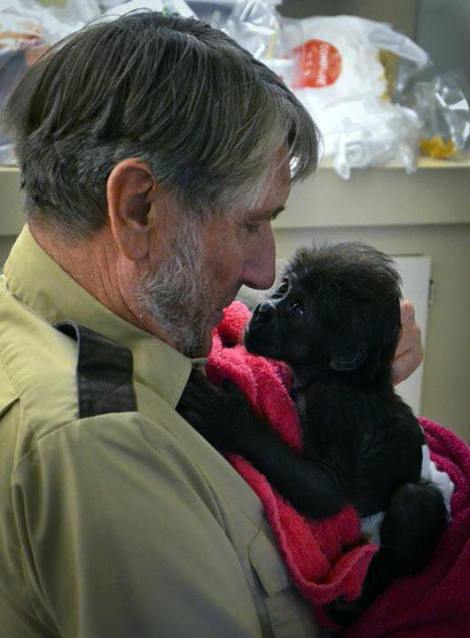
Baby Harambe imgur

Baby Harambe (imgur)

The time for zoo’s has come and gone. They are prisons where animal captives live out sad lives. Zoo’s always use the excuse they are protecting endangered species but Harambe is the perfect example of the truth to that lie. Why are they breeding gorillas who will never be free or live in the wild?  If  we want to help the critically endangered lowland gorillas survive why not invest in protecting their habitat from human encroachment, from the bushmeat trade and from poachers, using armed rangers as many national preserves in Africa do.

 It”s not going to happen overnight but eventually zoo’s can be phased out and as Marc Bekoff says, turned into sanctuaries for the remaining captive animals.

 Zoo’s are relic’s of the past and I for one would not mind to see them gone.

For Harambe,

Nabeki

===

====

Why Was Harambe the Gorilla in…

View original post 68 more words

Jeff Corwin Speaks Out on Harambe’s Death – “Zoo’s Aren’t Your Babysitters”

Nabeki's avatarHowling For Justice

Here’s beautiful Harambe when he first entered his enclosure at the Cincinnati Zoo, which turned out to be fatal for him 😦   R.I.P

May 30, 2016

It’s the responsibility of parents to be vigilant when caring for their small children. Harambe, the critically endangered lowland gorilla, didn’t have to die!!

After Gorilla Death, Animal Expert Jeff Corwin Says Zoos ‘Aren’t Your Babysitter’

By Jack Phillips, Epoch Times

‘Take a break from the cell phone, the selfie stick and the texting’

Jeff Corwin, an animal and nature conservationist, who is the host and executive producer of TV programs “The Jeff Corwin Experience” and “Corwin’s Quest,” has spoken out after a gorilla was shot and killed at the Cincinnati Zoo.

A 4-year-old boy fell into the gorilla’s enclosure. Zoo officials said the gorilla, a 17-year-old named Harambe, was dragging the boy around. They opted to shoot and kill the great…

View original post 222 more words

Renewables are Winning the Race Against Fossil Fuels — But Not Fast Enough

robertscribbler's avatarrobertscribbler

We have to reverse global warming urgently, if we still can. — Stephen Hawking

The world is dangerous not because of those who do harm but because of those who look at it without doing anything. — Albert Einstein.

*****

Whether you realize it or not, you’ve been drawn into a race. A race against time to swiftly reduce carbon emissions in order to prevent ramping climate harms on the path to a fifth hothouse extinction. For the current burning of fossil fuels and the ongoing dumping of carbon into the atmosphere at the rate of 13 billion tons each year is an insult to the global climate system that has likely never been seen before in all of the deep history of planet Earth. And the swifter we draw that emission down to zero and net negative, the better.

In the early part of this race, there is one…

View original post 2,030 more words