IDA-Africa Baby Gorilla Rescue!

Last week In Defense of Animals-Africa was asked by its Cameroon government partner, the Ministry of Forestry and Wildlife (MINFOF), for help capturing a juvenile gorilla who was frequently eating from village farms. Farmers had been frightened by the gorilla, who did not seem to be afraid of them, and a young boy had broken his arm running away. IDA-Africa was not eager to take a free-living gorilla captive, but a team from its Sanaga-Yong Chimpanzee Rescue drove four hours to meet the MINFOF representative for a collaborative investigation. The team feared that the gorilla’s mother and others in his group had been killed by poachers.
They soon realized that the sweet six-year-old gorilla was not only unafraid of humans, he was actually seeking their company. He must have been captured as a baby by poachers, raised among humans who bought him as a pet, and dumped or “set free” near the forest when he became unmanageable. But this little lonely boy couldn’t fend for himself in the forest and would have been killed had his visits to the farms continued. The team had no choice but to capture and transport him back to Sanaga-Yong for temporary care. Since Sanaga-Yong only provides long-term care for chimpanzees, the gorilla was transferred a few days later to Ape Action Africa’s Mefou Sanctuary.
Tragically, each year thousands of baby chimpanzees, gorillas and monkeys are stolen from Africa’s forests by bushmeat poachers seeking extra profit in the pet and zoo trades, and rarely can these orphans be returned to a free life in the forest. Forest sites that meet criteria for reintroduction are nonexistent in many countries, and while there are a few success stories, released great apes endure stress and suffer high mortality. In well run sanctuaries, like Sanaga-Yong and Mefou, these surviving victims of poaching can usually find friendship and some happiness among other rescued orphans, but what they’ve lost is irreplaceable. Along with their mothers’ love and carefree childhoods, their freedom to self-determine and eventually have families of their own is gone forever.

TICKETS ON SALE NOW!

IDA-Africa Annual Gala

Saturday, September 10th 2016 from 6-10pm

The University Club in Downtown Portland Oregon

Please join us for our Sixth Annual Gala to benefit the chimpanzees of Sanaga-Yong Rescue Center. The evening’s festivities will feature Dr. Sheri Speede with an update on our rescue and conservation efforts in Africa including forest protection, sustainable agriculture, our education program and of course, a heartwarming update on the chimpanzees of Sanaga-Yong Rescue! And… get a sneak peek at a BBC pilot featuring our adorable and adventurous chimpanzees!

Purchase Your Tickets Today!: https://app.etapestry.com/cart/InDefenseofAnimals-Africa/default/category.php?ref=1165.0.75650093

India’s Monsoon is Delayed For Third Year in a Row — Climate Change is Likely Cause

robertscribbler's avatarrobertscribbler

“It has been observed that since 2001, places in northern India, especially in Rajasthan, are witnessing a rising temperature trend every year. The main reason is the excessive … emission of carbon dioxide.” — Laxman Singh Rathore, the director general of the India Meteorological Department.

*****

The reduction in India’s monsoon rains is a big deal. It generates systemic drought, creates a prevalence for heatwaves, and locally amplifies the impacts of human-caused climate change. For three years now, the Indian monsoon has been delayed. India is experiencing its worst heatwaves ever recorded and water shortages across the country are growing dire. The monsoonal rains are coming, again late. And people across India — residents as well as weather and climate experts — are beginning to wonder if the endemic drought and heat stress will ever end.

Historically, there was only one climate condition known to bring about a delay in…

View original post 681 more words

If Gorilla’s Death Moves You, Consider Other Animals’ Plights

http://www.npr.org/2016/06/04/480671964/if-gorillas-death-moves-you-consider-other-animals-plights

Zoo visitors look at protesters and mourners from a walk bridge during a vigil for the gorilla Harambe outside the Cincinnati Zoo & Botanical Garden. John Minchillo/AP hide caption

toggle caption John Minchillo/AP

Zoo visitors look at protesters and mourners from a walk bridge during a vigil for the gorilla Harambe outside the Cincinnati Zoo & Botanical Garden.

Zoo visitors look at protesters and mourners from a walk bridge during a vigil for the gorilla Harambe outside the Cincinnati Zoo & Botanical Garden.

John Minchillo/AP

The shooting death of Harambe, the 17-year-old western lowland gorilla, after a 3-year-old boy fell into his cage at the Cincinnati Zoo, is a tragedy in all ways.

Harambe delighted zoogoers, and may have meant the boy no harm.

The little boy’s parents say they are grateful their son survived and is doing well. But many people on social media platforms have attacked the mother as neglectful.

Wayne Pacelle, president of the Humane Society, said on his blog that the debate over how Harambe died reminds him of old dorm room discussions where people would pose imaginary questions that weighed the life of an animal against a human being’s.

But if some of the people who snarl at the boy’s parents on social media want to do something more for animals, they may need to look no further than their own dinner.

We have heard a lot in recent years about the 8.5 billion chickens that are slaughtered for food in the United States every year. The ones that live on factory farms are kept in cages about as large as a sheet of copy paper. Their feet never touch the ground. They never see the sun or sky. They never play or mate. Their beaks are often snipped or burned off to keep them from pecking each other to death in those cramped, congested cages.

Harambe’s death might also remind us how more than 100 million pigs are raised for food in the United States. The ASPCA points out that pigs, who are known to be as intelligent as dogs, are one of the few animals Americans both keep as pets and raise for food.

Most pigs are kept in windowless sheds on factory farms, in cages so small they cannot turn around; so they will grow fat. They live in their own manure, and the air is so heavy with ammonia that many pigs develop lesions on their lungs.

Female breeding pigs are put into what are called gestation crates, where they are artificially inseminated. They give birth, then are inseminated time and time again; and when they can longer get pregnant, they’re slaughtered.

We could go on. But it is not necessary to become a vegetarian to change what we eat to consume fewer animals, which is probably healthier anyway.

What happened to Harambe was a catastrophe, but one so rare as to be almost unprecedented. The treatment of so many millions of animals raised for food can be just business as usual.

James Hansen and the Three Categories of the Runaway Greenhouse: Earth Uninhabitable for Humans at ~5,000 Gigatons Fossil Fuel Burned

robertscribbler's avatarrobertscribbler

( Image source: Arctic News)

Forget for a moment that we can still emit about 530 gigatons of CO2 and still keep human warming in the ‘safe range’ of less than 2 degrees (Celsius) temperature increases this century. Forget for a moment how important to the sustenance of human civilization and the prevention of ever-worsening conditions this strict limit on carbon emissions is. Now think for a moment what will happen if Republicans in Congress and fellow conservatives aligned with fossil fuel companies across the country and around the world get their way.

In the past month, Republicans in the House of Representatives have pushed to increase US coal burning, approve the Tar Sands Keyston XL Pipeline, remove energy efficiency standards, and to slash US government (ARPA -E) R&D funding for new renewable energy technology by 80 percent. Fully 55% of all Republicans in the…

View original post 2,008 more words

Record Drop in Coal Burning Raises Question — Is Peak Fossil Fuel Use Happening Now?

robertscribbler's avatarrobertscribbler

Peak oil, gas, and coal.

It’s a possibility that many who believe the fossil fuel industry’s false dependency mantra look at with fear and trembling. Because, for years, that industry, through various public relations efforts, has perpetuated a myth that a loss of access to fossil fuels would ruin the modern global economy. That fossil fuels were so high-quality no other energy source could effectively replace them.

It’s a myth that, in many ways, competes with the threat of human-caused climate change for space in the public’s collective imagination. One that is not without a few valid supports. For the shifting of energy use away from one set of sources and on toward another set is a massive, disruptive undertaking even in the case where the new energy sources are superior to the old.

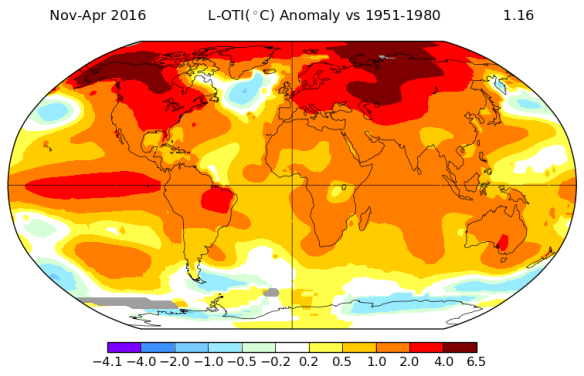
November Through April 2015 2016

(This is what a real existential threat to global civilization looks like. From the 1880s to…

View original post 1,305 more words

L.A. Times Op/Ed: Harambe the gorilla dies, meat-eaters grieve

Harambe the gorilla
Peter Singer and Karen Dawn

Last weekend at the Cincinnati Zoo, a child got curious and a gorilla got shot. The 4-year-old boy crawled past a barricade and fell into a moat surrounding the enclosure housing Harambe, whose 17th birthday had been celebrated the day before. In the 10 minutes the two spent together, Harambe showed no intention of harming the boy…

Zoo officials chose to shoot Harambe as the only way to guarantee the child’s safety.

Full Story: http://www.latimes.com/opinion/op-ed/la-oe-singer-dawn-harambe-death-zoo-20160605-snap-story.html


Anti-wildlife, pro-hunting act reaches U.S. Senate; you can help stop it

These are some of the animals who will be affected - you can help stop this!

These are some of the animals who will be affected – you can help stop this!
Courtesy: Mark Kolbe, John Moore, Bill Pugliano/Getty Images

Norway, India and Netherlands May Ban Fossil Fuel Driven Vehicles by 2025-2030

robertscribbler's avatarrobertscribbler

New national policy proposals from the four ruling parties of Norway spurred a flurry of headlines this week as leaders explored the possibility of banning all fossil fuel based vehicle sales by 2025.

The country, which already has a 24 percent national all-electric vehicle sales rate — is pursuing ways to ensure that number grows to 100 percent in very short order. Note that these vehicles are of the all-electric, battery-driven variety and do not include hybrids or plug in hybrids like the Chevy Volt.

Norway’s Push Implies a Big Shift for Fossil Fuel Exporter

Leaders from both parties within Norway were considering the ban which, if enacted, would dramatically reduce Norway’s vehicle fleet carbon emissions. Fully 90 percent of Norway’s electricity is generated by renewable hydro-electric power. And hooking vehicles up to this energy source would push their use and chain of fuel emissions to zero.

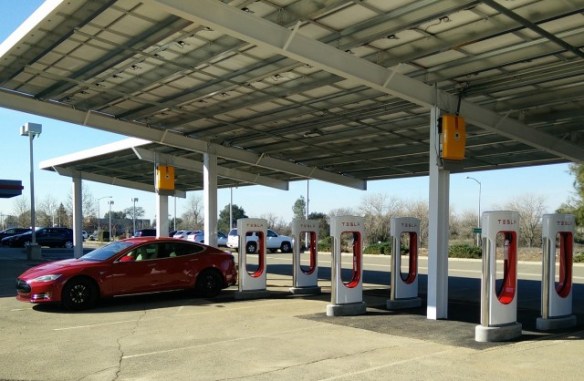
Tesla Model S Supercharger

(A Tesla…

View original post 699 more words

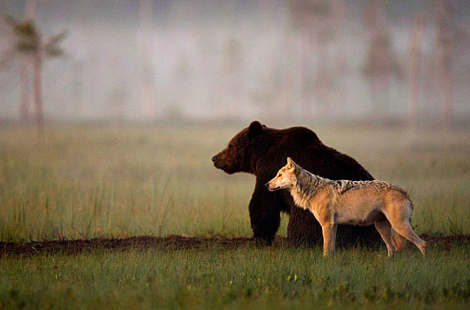
Wolf and Bear

from Defenders of Wildlife:

It’s supposedly an energy bill, but the “North American Energy Infrastructure Act of 2016” contains a lethal dose of anti-wildlife amendments that will lead to dead wolves, dead bears and the destruction of many important wildlife protections.

And while the pro-oil, pro-coal, climate change-denying provisions of the bill are despicable, the anti-wildlife measures are equally catastrophic.

Tell your senators to oppose this bill’s wide array of anti-wildlife provisions.

This bill has incorporated the so-called “Sportsmen’s Heritage and Recreational Opportunity Act,” with all of its horrific attacks on wildlife and public lands that we have spoken about before.

The deadly wildlife provisions include:

  • Forced delisting of Wyoming and Great Lakes gray wolves – you might recall that before the federal courts reversed a premature delisting of Wyoming wolves, over 85 percent of the state had been declared a “predator zone,” where anyone could kill a wolf, at any time and for any reason;
  • Gun lobby-endorsed language that would hasten the extinction of African elephants by hindering U.S. efforts to crack down on the illegal ivory trade;
  • Provisions that would allow the most extreme forms of wolf and bear hunting on over 100 million acres of federally-protected wildlife habitat in Alaska, including baiting, snaring and killing mothers and young; and
  • Language that would severely undermine wildlife safeguards and encourage increased logging in the national forests that millions of creatures rely on for survival.

The anti-wildlife forces just won’t give up. It’s up to you and me to stop them.

Tell your senators to protect wildlife by opposing this harmful House Energy Bill!

Thanks for your tireless help on behalf of the wildlife we love.