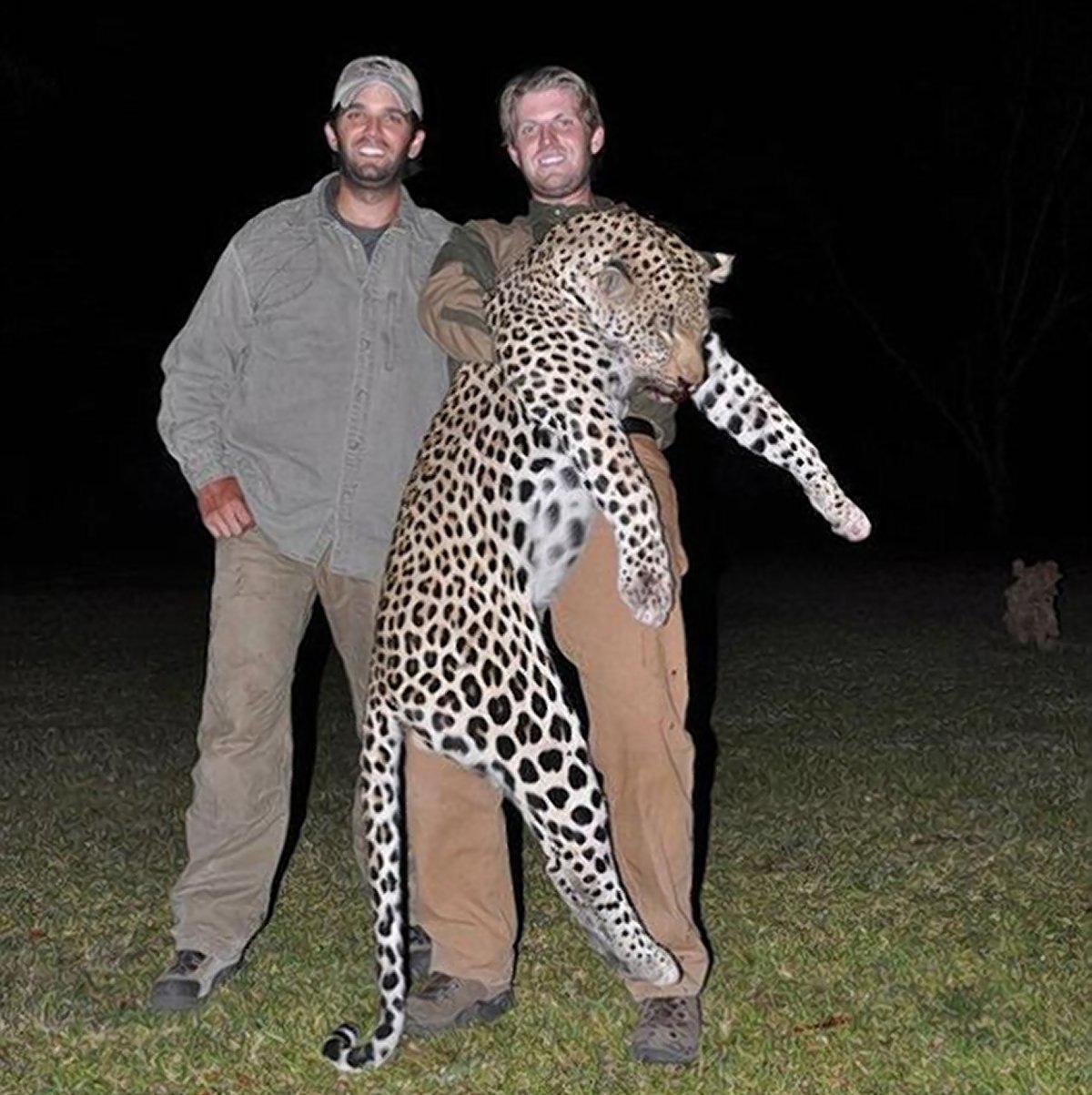
Exposing the Big Game

Forget Hunters' Feeble Rationalizations and Trust Your Gut Feelings: Making Sport of Killing Is Not Healthy Human Behavior

Exposing the Big Game

” Climate Change May Doom the Baby Seals “, by Captain Paul Watson.

Exposing the Big Game's avatarThe Extinction Chronicles

Commentary by Sea Shepherd’s Captain Paul Watson,

Forty years ago on March 15th, 1977, French film star Brigitte Bardot traveled to the ice floes off the Eastern Coast of Canada to focus attention on the slaughter of baby whitecoat seals.

Her arrival was met with hostility by Newfoundland sealers and by the Canadian government, yet despite harassment and ugly threats she rode in my helicopter far offshore to meet the seals.

She was fearless. We flew through blizzard conditions with very poor visibility to over a hundred miles off the coast.

Upon arrival in the midst of thousands of seals, she posed cheek to cheek with a baby seal for photos that circulated around the globe and brought the issue of the slaughter of the seal pups to a global audience.

For the two previous years, we had worked to get media attention to this atrocity on the Eastern Canadian icefloes…

View original post 388 more words

Researcher files complaint against WSU

WSU’s leading wolf expert Robert Wielgus filed a complaint today detailing harassment and threats from WSU administrators following his public statements about wolf killings in the fall.

Wielgus is a WSU professor and director of the Large Carnivore Conservation Laboratory. Wielgus’ research has been considered in the drafting and implementation of the Washington Department of Fish and Wildlife’s (WDFW) Gray Wolf Conservation and Management Plan and he is an adviser to the state’s Wolf Advisory Group, according to the complaint.

The 12-page complaint, sent to the WSU Faculty Status Committee by the Public Employees for Environmental Responsibility (PEER) on Friday, urges the Faculty Senate committee to investigate the actions of WSU administrators against the professor’s academic freedom and recommend disciplinary actions for the administrators.

Adam Carlesco, PEER staff counsel and the author of the complaint, said he has not yet received a response from the committee. Robert Rosenman, co-chair of the Faculty Status Committee, said all investigations by the committee are confidential, according to their bylaws.

Faculty Senate Chair A.G. Rud said he plans to talk to the Senate executive committee about this next week.

“I am not holding out a tremendous amount of hope that the Senate will do its job [in evaluating the complaint],” Carlesco said.

Carlesco said that according to the WSU Faculty Manual, there must initially be internal discussions in this process, which Wielgus already had with College of Agriculture, Human and Natural Resource Sciences (CAHNRS) Dean Ron Mittelhammer.

“[Wielgus’s] protestations fell on deaf ears,” Carlesco said.

WSU News Director Rob Strenge declined to comment and said this is a CAHNRS faculty issue.

Marta Coursey, CAHNRS communication director, said this is a personnel matter and, according to policy, the college doesn’t publicly discuss personnel issues in order to protect WSU faculty and staff confidentiality and privacy.

“CAHNRS administration is currently reviewing Dr. Wielgus’ communications and performance with respect to his roles and responsibilities as a WSU faculty member,” Coursey said.

Carlesco said WSU officials and the Washington Department of Fish and Wildlife (WDFW) researchers had a verbal agreement to shut down Wielgus’s lab and give the research funding to the University of Washington.

“Litigation is not out of the picture on this matter,” Carlesco said.

The official complaint alleges 10 violations committed by WSU President Kirk Schulz, Mittelhammer and CAHNRS Associate Dean Jim Moyer, mainly following two public statements Wielgus made in the past year about wolf pack killings in Northeast Washington.

The first statement was about the killing of a gray wolf pack by the WDFW at Profanity Peak in August. Wielgus criticized a rancher in the area, whom the professor said released his cattle on top of the Profanity Peak wolf pack’s den. Wilegus argued that the wolf pack’s death could have been avoided, and that the rancher refused to cooperate with his lab or the WDFW in avoiding such confrontations, according to the complaint.

Wielgus said his comments about this created a “firestorm,” according to a Daily Evergreen article. WSU disavowed his comments, stating the rancher did not release his cattle onto the wolf den, but four miles from it, and that the rancher cooperated with WDFW. The university publicly accused Wielgus of “inaccurate and inappropriate” statements in a news release.

Wielgus made the second statement when recommending wolf preservation pratices to the Wolf Advisory Group in March. The university alleged that this qualified as illegal lobbying activity because he sent it from his WSU email address.

One of the 10 violations listed in the complaint states that CAHNRS administrators and Schulz approved funding restrictions denying Wielgus summer funding or grant research money for his lab.

According to the complaint, there is no reasonable way under the Faculty Manual’s academic freedom policy to reconcile the administrators’ actions, which the complaint alleges were motivated by political pressure.

In 2013, Moyer made it clear that Wielgus was considered a political target of state Rep. Joel Kretz (R), the livestock industry, and possibly the WSU College of Agriculture, according to the complaint.

On Aug. 23, 2014, a female member of the Huckleberry wolf pack in Northeast Washington was shot and killed by a WDFW-hired marksman, as the pack had been preying on a flock of 1,800 sheep, according to the WDFW website.

According to the complaint, Gov. Jay Inslee then asked Wielgus for clarification on the inconsistencies in the reports published by the WDFW on the matter and others who were involved. In briefing Inslee’s office on his findings, Wielgus showed the misrepresentations the WDFW made in its reports, causing several of the department’s officials to resign.

After Wielgus presented his research to the legislature in 2015, Kretz told former WSU President Elson S. Floyd that he wanted to shut down Wielgus’ lab and stop its research, according to the complaint. Kretz introduced a provision to a bill that led to less funding for the lab, according to the complaint.

Brendon Wold, Kretz’s public information officer, declined to comment.

Carlesco said there is “ample precedent” for WSU suppressing a professor’s first amendment rights, bringing up a case filed in 2013, according to the case publication.

Wielgus stated in the complaint that he would like the matter settled amicably without resorting to litigation. For now, Wielgus said he is not commenting on the matter himself.

Also:

http://thehill.com/policy/energy-environment/331068-trump-starts-rollback-of-obamas-offshore-drilling-restrictions

Trump expands offshore drilling with executive order

President Trump signed an order Friday to kick off the process of undoing former President Obama’s restrictions on offshore oil and natural gas drilling.

In a White House signing ceremony joined by energy industry officials and lawmakers from coastal states, Trump pitched his executive order as a massive job and economy booster.

“We’re unleashing American energy and clearing the way for thousands and thousands of high-paying American energy jobs,” Trump said at the ceremony.

He said Obama had closed off 94 percent of the country’s outer continental shelf, which “deprives our country of potentially thousands and thousands of jobs and billions of dollars in wealth.”“Renewed offshore energy production will reduce the cost of energy, create countless new jobs and make America more secure and far more energy independent,” he said, calling the order “another historic step toward … a real future with greater prosperity and security for all Americans, which is what we want.”

The order came on Trump’s 99th day in office, during a week in which he signed numerous executive orders. He has now signed more executive orders in his first 100 days than any recent president.

The offshore drilling policy goes further toward fulfilling Trump’s promise to enable the production and use of more domestic energy, with an emphasis on fossil fuels. He promised on the campaign trail repeatedly to unleash the United States’ energy potential.

The order immediately repeals most of Obama’s ban on drilling in large parts of the Arctic Ocean, north of Alaska, which Obama intended to be indefinite.

It also asks Interior Secretary Ryan Zinke to revise Obama’s plan for offshore drilling rights sales between 2017 and 2022. Zinke is asked specifically to consider drilling in the Arctic and Atlantic oceans, which haven’t had new drilling rights sales in years.

Trump is also asking Zinke to consider repealing or changing “burdensome regulations that slow job creation,” including safety rules put in place after the 2010 BP Deepwater Horizon disaster in the Gulf of Mexico.

“This executive order starts the process of opening offshore areas to job-creating energy exploration,” Trump said at the ceremony.

The oil industry and its allies cheered Trump’s order as a major shift in federal policy toward their priorities.

“We are pleased to see this administration prioritizing responsible U.S. energy development and recognizing the benefits it will bring to American consumers and businesses,” American Petroleum Institute President Jack Gerard said in a statement.

“Developing our abundant offshore energy resources is a critical part of a robust, forward-looking energy policy that will secure our nation’s energy future and strengthen the U.S. energy renaissance,” he said.

House Natural Resources Committee Chairman Rob Bishop (R-Utah) welcomed the policy as “a thorough review of the morass of bad policies developed and imposed by the prior administration.”

Environmentalists were joined by leaders, including governors of Democratic coastal states, in blasting the order.

“No matter how much money it spends or how many lobbyists it places inside the Trump administration, Big Oil can never nor will never drown out the voices of millions of Americans across the country who speak out against dangerous offshore drilling,” said Michael Brune, executive director of the Sierra Club.

The governors of California, Oregon and Washington called the move shortsighted. The order doesn’t specifically call for Pacific drilling — where there have been no new leases in decades — but doesn’t rule it out.

“We still remember what happened in Santa Barbara in 1969, Port Angeles in 1985, Grays Harbor in 1988 and Coos Bay in 1999. We remember the oil soaked beaches and wildlife and the devastating economic impacts to local communities and the fishing industry,” California Gov. Jerry Brown, Oregon Gov. Kate Brown and Washington Gov. Jay Inslee, all Democrats, said in a joint statement.

“Now is not the time to turn back the clock. We cannot return to the days where the federal government put the interests of big oil above our communities and treasured coastline.”

Mass Die-Off of Whales in Atlantic Is Being Investigated

Photo

Workers inspecting a dead humpback whale that washed up on Rockaway Beach in Queens this month.CreditSpencer Platt/Getty Images

Humpback whales have been dying in extraordinary numbers along the Eastern Seaboard since the beginning of last year. Marine biologists have a term for it — an “unusual mortality event” — but they have no firm idea why it is happening.

Forty-one whales have died in the past 15 months along the Atlantic coast from North Carolina to Maine. In a news conference on Thursday, officials from the National Oceanic and Atmospheric Administration Fisheries said that they had not identified the underlying reason for the mass death, but that 10 of the whales are known to have been killed by collisions with ships.

The agency is starting a broad inquiry into the deaths.

These whales “have evidence of blunt force trauma, or large propeller cuts,” said Deborah Fauquier, a veterinary medical officer at the agency’s Office of Protected Resources. These collisions with ships were “acute events,” Dr. Fauquier said, and were being treated as the “proximate cause of death.”

Dr. Fauquier said that the number of whale strandings was “alarming,” and that she hoped the investigation might give a sense of what kind of threat this presents to this population of humpback whales and those around the world.

COn average, eight humpback whales are stranded each year from Maine to Virginia, and fewer than two are hit by ships, according to data from NOAA.

An unusual mortality event is a specific designation under the Marine Mammal Protection Act, and is defined as “a stranding that is unexpected, involves a significant die-off of any marine mammal population, and demands immediate response.”

Whale or other marine mammal die-offs are often poorly understood by scientists, and this case is no exception. Officials from NOAA Fisheries could not explain why the animals were coming into greater contact with vessels, or if there were any human-caused or climate-related disturbances that had changed their behavior.

Gregory Silber, marine resources manager in the agency’s Office of Protected Resources, said that there had not been any increase in ship traffic in the region, and that the whales might be following their prey — they mostly eat krill and small fish — to areas where there could be more shipping.

Ten whales other than those killed by ships have been examined, but officials have not yet determined the cause of death. There is no indication that they were killed by disease.

Humpback whales — which can be as long as 60 feet, weigh as much as 40 tons and can live for 50 years — are found in all of the world’s oceans. There are 14 distinct population segments — groups that follow certain migration and breeding patterns — of humpback whales, some of which are classified as endangered or threatened. The population along the Atlantic coast, which winters in the Caribbean and summers in the North Atlantic or Arctic regions, is not now considered threatened under the Endangered Species Act.

Around the world, there are an estimated 30,000 to 40,000 humpback whales, about a third of its original population. The Atlantic population is around 10,000.

Scientists have suggested that some whale deaths could be a result of marine noise, often a result of military activity, offshore drilling or exploration, which can disorient the animals and send them in the wrong direction, possibly toward beaches where they get stuck instead of into the deeper ocean. Mr. Silber, the NOAA manager, said he was not aware of a connection between ocean noise and these strandings.

A recent study has shown that dolphins, when escaping predators or the source of marine noise, might shoot up from a dive more quickly than they otherwise would, switching from slow, deliberate strokes to faster, longer ones, which can cause them to use double the energy they normally do, and exhaust them.

The last major mass casualty event for marine mammals in this part of the world took place from 2013 to 2015, when a resurgence of the morbillivirus killed thousands of bottlenose dolphins on the Eastern Seaboard.

Among humpback whales, there was an unusual mortality event in 2006, following others in 2005, which involved other large whales, and 2003, which was primarily humpback whales. In each investigation, the cause was undetermined, officials said.

NOAA officials said members of the public looking to help could report stranded or dead floating whales to numbers listed on their website.

Donald Trump is first president to address the NRA in 34 years

http://abcnews.go.com/Politics/donald-trump-president-address-nra-34-years/story?id=47080710

  • By MEGHAN KENEALLY

Apr 28, 2017

President Donald Trump is following in the footsteps of former President Ronald Reagan by speaking at a National Rifle Association event.

Today’s speech, at the NRA’s Leadership Forum in Atlanta, won’t be Trump’s first talk to the gun rights group. He was endorsed by the NRA in May and spoke at their convention at the time.

But his appearance later today marks the first time that a sitting president has addressed the group since Reagan did so in 1983.

The NRA is known for their sizable lobbying operation and by raising money for — and against — candidates. The group made over $52 million in donations to candidates during the 2016 election, according to the Center for Responsive Politics. They spent $30.3 million in support of Trump, the CRP reported.

Trump campaigned on the pledge to support and protect the Second Amendment, which he said during his May NRA appearance, was “under a threat like never before.” He pointed to his then-rival Hillary Clinton as the basis for that threat.

“Hillary Clinton wants to abolish the Second Amendment, not change it; she wants to abolish it,” Trump said at the time, although Clinton had never made such claims.

“The Second Amendment is on the ballot in November. The only way to save our Second Amendment is to vote for a person you know: Donald Trump,” he said.

Trump has noted that his two eldest sons, Donald Jr. and Eric, have been longtime members of the NRA, and during the May speech, he said that “they have so many rifles and so many guns, even I get concerned.” 

During the second presidential debate, Trump promised to appoint Supreme Court justices that will “respect the Second Amendment and what it stands for and what it represents,” and said that the list of 20 judges that he released as possible picks all fit that bill. Judge Neil Gorsuch, who he later nominated and has since been appointed to the Supreme Court, was on that list.

The Atlanta Journal-Constitution reports that hundreds of protesters and gun control advocates are reportedly gathering near the convention site this morning. Part of the protest will feature a “die-in,” where 93 people will lie down in a local park to represent the number of people who die from gun violence every day, the paper reports.

There will be another protest on Saturday, and Rep. John Lewis of Georgia is scheduled to attend. Lewis and Trump have a turbulent history. Lewis did not attend the inauguration and said he did not see Trump as a “legitimate president.” Trump returned the favor by criticizing the civil rights leader, saying that he was “all talk, talk, talk — no action or results.”

Hunter takes down massive elk in Idaho desert

Exposing the Big Game's avatarThe Extinction Chronicles

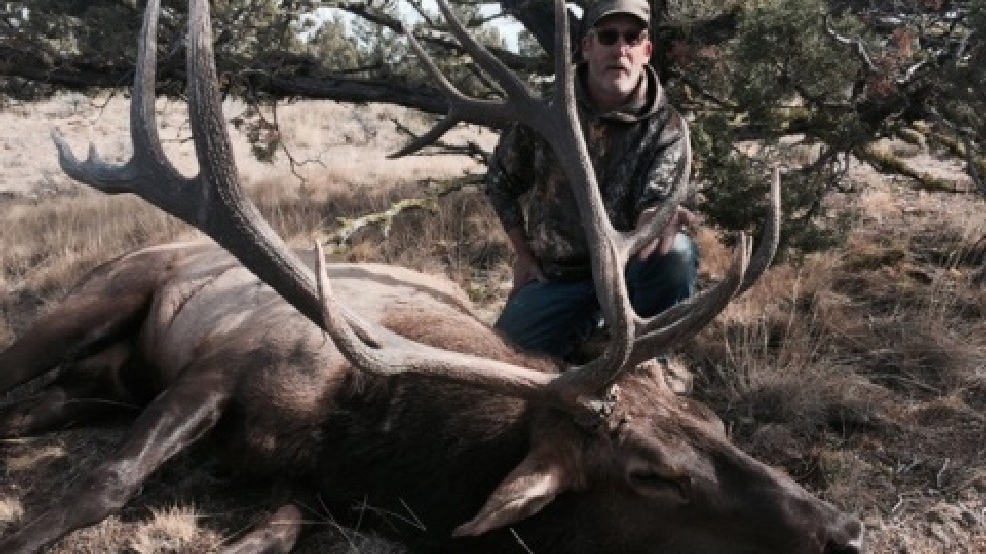
Boise hunter Gavin Moody of Boise took down this elk in the Owyhee Desert. (Photo courtesy Gavin Moody via Idaho Fish and Game).

BOISE, Idaho (KBOI) — Gavin Moody still can’t believe his eyes.

The Boise hunter was on a scouting trip in the Owyhee Desert when he noticed a juniper tree had been stripped of bark 10 feet up (with two branches broken off).

He quickly realized it was an elk rub, and he later spotted a bull elk that may have been responsible for abusing the tree.

“Oh my God, the biggest bull I’ve ever seen in Idaho steps out,” Moody told the Idaho Fish and Game. “He’s got tips on the tail, and I was speechless…

View original post 188 more words

The right to hunt and fish is called barbaric

http://georgesoutdoornews.bangordailynews.com/2017/04/27/environmental-issues/the-right-to-hunt-and-fish-is-called-barbaric/

April 27, 2017

A proposed Constitutional amendment to “Establish the Right to Hunt and Fish” drew angry testimony from the anti-hunting and anti-trapping crowd.

“This bill is barbaric,” testified John Glowa of China, who called LD 11 “the worst piece of legislation I have seen in more than twenty years of coming before this committee, and I have seen some bad ones.” Glowa also called the bill “the poison fruit of the paranoia seed planted by the out-of-state gun lobby and by radical extremist consumptive users.”

And yes, that was way over the top. Katie Hansberry of the Humane Society of the United States, who is always well-prepared and courteous in her work at the legislature, testified “The Humane Society of the United States has worked with wildlife management agencies across the U.S. to combat poaching. And in recent years, we joined sportsmen and the Department of Inland Fisheries and Wildlife to crack down on poaching by helping Maine become the first state in New England to join the Interstate Wildlife Violator Compact.

“We are concerned that putting a right to hunt in our constitution could amount to an open invitation for poachers to exploit it to their advantage, and could subject longstanding conservation laws to legal challenge from those arguing that this constitutional right exempts them from existing restrictions like bag limits or prohibitions on spotlight or road hunting. Unnecessarily putting this existing right into our constitution could invite lawsuits from individuals who want to argue that conservation laws on quotas, season closures, or land area closures could infringe upon their constitutional right to hunt and fish,” said Katie.

Karen Coker of WildWatch Maine joined in the criticism of the bill, testifying that, “It’s intent… is to silence Maine citizens concerned about unethical practices and to prevent citizens from initiating ballot initiatives on wildlife issues.” She said “This proposal’s vague terms open the door to inhumane, unethical trapping and hunting practices,” and called the bill “a legal nightmare.” She also insisted that “hunting and trapping and fishing are not fundamental rights.”

She might have a disagreement with Katie Hansberry on that, because Katie testified that “Mainers already have the right to hunt and fish.”

DIF&W’s Testimony

Tim Peabody, Deputy Commissioner of the Department of Inland Fisheries and Wildlife, surprised some supporters by testifying “neither for nor against” the bill. He called hunting and fishing “significant privileges” here in Maine.

Tim also noted that last year the legislature amended the Department’s mission statement to include the direction to “use regulated hunting, fishing and trapping as the basis for the management of these resources whenever feasible.” That was a significant victory for hunting, trappers, and anglers.

Tim questioned “How would this bill, and the resulting constitutional rights affect existing hunting laws, landowner’s rights, or the Department of Health and Human Services ability to enforce child support obligations by suspending licenses? The precise answer to these and many more unanticipated questions likely will not be supplied until these issues are tested in court. In the face of the unknown, I hope the Committee and the Legislature as a whole proceeds with caution.”

He summed up his testimony with this statement: “We urge careful consideration of the possible impacts of the current privilege enjoyed by all law abiding sportsmen and women. There is a distinct difference between a privilege and a right,” he said.

Supporters

Supporters of LD 11 including the Sportsman’s Alliance of Maine, National Rifle Association, and Maine Professional Guides Association.

Rep. Steve Wood, a member of the IFW Committee, sponsored and spoke for the bill, testifying “I’ve proposed this bill as an attempt to join 21 other states around the country which guarantee the right to hunt and fish in their constitutions; most recently Kansas and Indiana.”  Steve distributed a fact sheet about state constitutional amendments and the right to hunt and fish.

Dave Trahan emphasized that LD 11 is a SAM bill, not an NRA bill as some opponents charged. He took the committee through a bit of history of wildlife management in this country, noting that “conservationists and sportsmen of conscience” supported the Pitman-Robertson Act which established an excise tax on outdoor gear, a tax that has directed $3 billion to wildlife management agencies including Maine’s Inland Fisheries and Wildlife Department.

“Hunting, trapping and fishing regulations have existed for less than half the life of this country,” testified Dave. “They were not put in place by the courts or a constitutional ruling and certainly not established to give governments the sovereignty over wild creatures; to the contrary, sportsmen and conservationists willfully placed these limits on wildlife consumption because they recognized the value in our natural world and wanted to insure that they would be around for future generations.

“This Constitutional Proposition is before you because animal rights organizations are trying to change that narrative and history… They believe hunting and fishing are cruel and inhumane, but readily accept the slow, vicious and terrifying death of wild animals through starvation, disease or to be torn apart by wild predators.” Said Dave.

Rep. Karl Ward testified for the bill, reporting that, “As of today, twenty two states now guarantee the People’s Right to Hunt and Fish in their State Constitutions. Vermont enacted this in 1777. The other seventeen – Alabama, Arkansas, Georgia, Idaho, Kentucky, Louisiana, Mississippi, Minnesota, Montana, Nebraska, North Dakota, Oklahoma, South Carolina, Tennessee, Virginia, Wisconsin, and Wyoming have passed amendment to their Constitutions since 1996. Indiana and Kansas passed this amendment last year. Texas and Nevada the year before.”

What’s Next?

It will take a 2/3 vote in both the House and Senate to place this Constitutional amendment on the ballot, and the people will make the deciding decision.

I am concerned about the amount of money that will need to be raised to win this ballot fight, but there’s a long way to go before we have to be concerned about that.

The human factors contributing to extinction

Exposing the Big Game's avatarThe Extinction Chronicles

Thu Apr 27, 2017 9:11AM

The world is getting warmer and climate change has already had a serious influence on habitat loss. Scientists believe that as many as one billion people could lose their homes by 2050 because of the devastating impact of global warming.

But it’s not just human beings who are affected by Climate Change. Plants and animals across the globe are already facing extinction.

In this Episode we will discuss how humans can contribute to this global epidemic.

http://www.presstv.ir/Detail/2017/04/27/519647/extinction-habitat-loss-global-warming

View original post

Scientists are underestimating many species’ risk of extinction

Exposing the Big Game's avatarThe Extinction Chronicles

“We were extremely surprised by how much the IUCN ranges overestimated what we deem the true ranges to be,” said researcher Don Melnick.
By Brooks Hays   |   April 26, 2017
Researchers found the geographical range of the Nilgiri flycatcher, Eumyias albicaudatus, is 65 percent smaller than estimates used by IUCN scientists. Photo by Adesh Shivkar/Columbia University

April 26 (UPI) — The extinction risks of many species are greatly underestimated, according to new research by ecologists at Columbia University.

The underestimation can be explained by overestimation, the new study — published in the journal Biological Conservation — shows. Researchers have been systematically overestimating the geographical range in which vulnerable species can thrive, the new study argues, suggesting extinction risk for many species is far greater than thought.

Maps featuring overly generous geological ranges are used by conservation organizations like the International Union for Conservation of Nature to determine a…

View original post 361 more words

A teenager on a Gambell whaling crew scored the village’s second successful strike of the season

Exposing the Big Game's avatarThe Extinction Chronicles

Image may contain: text

Someone commented that they didn’t think whaling was even legal in today’s world. Unfortunately, for some it’s still legal and in places like Alaska and northern Canada it’s reported on as if it’s business as usual:

https://www.adn.com/alaska-news/rural-alaska/2017/04/24/a-teenager-on-a-gambell-whaling-crew-scored-the-villages-second-successful-strike-of-the-season/

  • Author: Davis Hovey, KNOM
  • Updated: 2 days ago
  • Published 2 days ago
This 200-year-old female bowhead whale was caught off Gambell. Sixteen-year-old Chris Apassingok was credited with the strike. (Karen Trop / KNOM)

This 200-year-old female bowhead whale was caught off Gambell. Sixteen-year-old Chris Apassingok was credited with the strike. (Karen Trop / KNOM)

Families and community members on St. Lawrence Island are eating bowhead whale after a local hunter caught Gambell’s second whale of the season last week.

Chris Apassingok, a 16-year-old who would normally be spending his days in high school, was the “striker,” or hunter credited with catching the 57-foot-long female bowhead whale for the community.

Apassingok introduced himself by his Yupik name when recounting his successful hunt:

“My Yupik name is Agragiiq. The girls on top of the beach saw a whale, and…

View original post 284 more words