
Unfortunately, it’s just a U-tube; I’d like to see a transcriptpt…
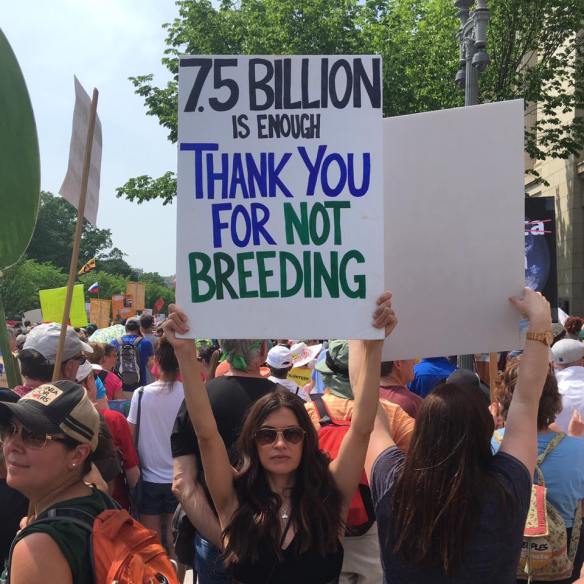

Unfortunately, it’s just a U-tube; I’d like to see a transcriptpt…
You can apply for a permit to hunt alligators in South Carolina this fall starting Monday.
The S.C. Department of Natural Resources will accept gator hunting permit applications online from May 1 through June 15 for the season that runs from Sept. 9 through Oct. 14.
A random computer drawing will award a select number of permits, with notifications being sent out in July. Selected hunters must then go back online to purchase their permit and a tag for $100. Non-SC residents will have to pay an additional $200 fee.
Each selected applicant may harvest only one alligator and may hunt only in the area they are selected for.
Permit applicants must be 16 or older at the time of the hunt, but hunters of any age may participate with the hunter selected for a permit.
Each selected hunter can have as many helpers with them as they like, as long as each person in the boat has a South Carolina hunting license.
If you’re already getting excited about bagging a gator this fall – or want to stay far away but are curious about what it’s like – here are a few technique tips the DNR provides:
▪ Alligators are usually hunted after dark, although some hunters use snatchhooks on animals during day and twilight hours.
▪ Alligators are located at night by their reflective eye shine, which has a characteristic red glow.
▪ Alligators should be approached quietly keeping the beam of the spotlight directly in or just above their eyes.
▪ Do not shoot an alligator between the eyes or on the top of the skull. The skull is very thick and a bullet may ricochet off of the skull. To humanely kill an alligator, a shot must be directed to the portion of the neck/head juncture where the neck meets the top of the skull plate and angled slightly toward the skull.
▪ Never assume any alligator is dead.
For more information about alligator hunting in SC and applying for permits, visit www.dnr.sc.gov/wildlife/alligator.
– The Liberals, NDP and Greens all plan to allow trophy hunting of Grizzlies to continue! The Greens and NDP are just giving sport/trophy hunters loopholes.
~ If we want to save the lives of Grizzlies and all wild animals, now, during election time, we must get our message through to every candidate!
The Greens and the NDP are playing coy with the issue by allowing Grizzlies to be hunted as long as the entire body is packed out, or the body is supposedly used for meat; green-washing the Grizzly hunt by making sport and trophy hunting look like subsistence hunting.
This is simply a loop-hole that will allow any trophy hunter to use a guiding service who will take care of the bear’s body for them, leaving them to thrill-kill Grizzlies and keep the heads and hides as…
View original post 76 more words
… Is A Celebrity Death Hoax
Read more at http://www.business2community.com/entertainment/ted-nugent-murdered-killed-montana-hunting-accident-celebrity-death-hoax-01833295#CLffGmQbC1S84Eji.99
Shawn Rice — April 28, 2017
Ted Nugent killed or murdered in a Montana hunting accident is just another celebrity death hoax. Despite rumors that the rocker was killed in a hunting accident in Montana, he remains alive and well. Nugent is an American musician and political activist. Nugent initially gained fame as the lead guitarist of the Amboy Dukes, a band formed in 1963 that played psychedelic rock and hard rock. Where did this false rumor originate?
On April 28, 2017, a number of unreliable web sites began publishing stories reporting that the rock musician and conservative icon had been killed in a hunting accident in Montana. You can read text from that fake story below.
“Ted Nugent, 70’s rocker turned hunting guide and conservative icon, was shot and killed early this morning in a tragic hunting accident. While setting up his tree stand just outside a wildlife reserve in Montana, Nugent was fired on and hit in the chest by a hunter with a scope nearly a quarter of a mile away who believed he was a brown bear.”
However, there are no legitimate news reports of Nugent’s death. Just recently, Nugent made a Facebook Live video with his wife Shermane on the same afternoon the death hoax starting circulating social media. They confirmed he is indeed alive and well. You can see that video below.
If that were not enough, Shermane posted another live video a few minutes later in which her husband’s voice could be heard while she played with the couple’s dogs. You can check out that video below as well.
Nugent’s spokeswoman Linda Peterson confirmed to Snopes that reports of Nugent’s untimely death were nothing more than “fake news.” Here are some examples of people discussing Nugent’s alleged death on social media.
Nugent is famous for his rock career, but has also become an outspoken supporter of conservative political figures, such as former Alaska Governor Sarah Palin and President Donald Trump. Nugent recently made news when he was pictured alongside Palin and fellow rock singer Kid Rock at the White House, where they all dined with Trump. The trio also were pictured in front of a painting of former Secretary of State Hillary Clinton mocking her.
Nugent is also a divisive figure due to comments he has made about former President Barack Obama and Clinton that have been characterized as racist, sexist and potentially inciting violence. Nugent hunts and is an ardent Second Amendment advocate who sits on the board of the National Rifle Association..
What did you think of the fake news about Nugent’s alleged death? Did you see people sharing it falsely on social media? Have you seen any other celebrity hoaxes recently? Let us know in the comments section.
Read more at http://www.business2community.com/entertainment/ted-nugent-murdered-killed-montana-hunting-accident-celebrity-death-hoax-01833295#CLffGmQbC1S84Eji.99
<http://www.bornfreeusa.org/weblog_canada.php>
Born Free USA Canadian Blog
by Barry Kent MacKay
28 Apr 2017
How bad does it have to get before sanity dictates action? For every 100 Pacific Bluefin tuna who were in the ocean at one time, there are only about two-and-a-half left! Certain ideologues continue to claim that the value of living resources, such as ivory, big game species, timber, or Bluefin tuna, guarantee their protection. But, the situation with species of wild fauna and flora with high commercial value too often illustrates the reverse… and none more so than the Pacific Bluefin tuna.
Members of the Western and Central Pacific Fisheries Commission, including Japan, agreed to significantly reduce their catch of young Bluefins weighing under 30 kg (66 pounds), giving them a chance to breed and to thus contribute to restoration of the severely depleted population. However, The Guardian reported that Japan will reach its quota…
View original post 219 more words
http://climate.org/archive/topics/ecosystems/seals-battle-climatechange.html
With the rapid ice loss in the Arctic and Antarctic regions, many subspecies of seals are currently racing against the ticking clock of climate change. The worldwide status of seal population is alarming. According to the Union of Concerned Scientists, “almost no seal pups, dependent on sea ice, survived in Canada’s Gulf of St. Lawrence during the ice-free years of 1967, 1981, 2000, 2001, and 2002.” The southern hemisphere seal population has been likewise affected by ice loss. Environmental scientists, Dr. Clive McMahon and Dr. Harry Burton of the Australian Antarctic Division, have concluded that warming climate is changing the ocean’s ecology to such a degree that the survival of seals and their young has increasingly become a concern for marine biologists.
Scientists have continued to monitor the decline in seal numbers considering also what is known about climate in the Southern Ocean and conclude that the…
View original post 751 more words

Atlanta (CNN)Guns are not a part of the culture of my homeland, except perhaps for the occasional Bollywood movie in which the bad guy meets his demise staring down the wrong end of a barrel.

.From Captain Paul Watson’s FB Page:
My post from a couple of days ago on this page deploring the killing of a 200 year old Bowhead whale by some 16 year old who was joyfully boasting of his snuffing the life from such a majestic creature seems to have ruffled some feathers.
Some are calling me racist. Others are demanding an apology.
There will be no apology. Not now, not ever.
And there is nothing racist about it. I condemn all whaling by anyone, anywhere for any reason. I don’t care for nor accept any justifications of any kind.
It’s our culture! It’s a tradition! Bullshit. In my eyes it is murder and I make no exceptions.
Whales are self aware, socially complex, highly intelligent, sentient beings and they are my clients. They come first in my eyes. I have no sympathy for their killers nor would I ever apologize…
View original post 44 more words
My Trip to the Ice: Visiting Baby Harp Seals with Sea Shepherd
By Camille Labchuk, Executive Director
The commercial seal slaughter has long been a bloody stain on Canada’s reputation. Every spring, the Canadian government lets sealers club, shoot, and skin baby seals in Atlantic Canada—most of them only a few weeks or months old—simply so their fur can be turned into luxury products for foreign markets.
I was pleased to team up this year with our friends at the Sea Shepherd Conservation Society as a crew member for Operation Ice Watch 2017. Sea Shepherd and its founder Paul Watson have been fighting to save seals for over 40 years. On this trip our mission was to visit seals on the ice with Hollywood actress Michelle Rodriguez, and remind the world to keep pressuring Canada to end the bloody slaughter of baby seals.
The seal slaughter has always been devastating to me. I grew up in Prince Edward Island—not far from where the killing takes place—and I can still remember the shock and sadness I felt as a child when I first saw footage of gentle baby seals seals being chased and clubbed by sealers.
Since then, I’ve been lucky enough to meet harp seals in their icy nursery. Spending time with these creatures is an incredible experience, but meeting them makes it even more heartbreaking to return to the ice a few short weeks later when sealing season opened. Working with Humane Society International/Canada, I’ve helped document the slaughter, expose its cruelty to people around the world, and push other countries to ban seal product imports. Fighting to save seals helped inspire me to become a lawyer and use the law as tool to protect animals.

© Bernard Sidler
Ten years after my first visit to the ice, I returned. On our first day the Sea Shepherd team took off from the Charlottetown airport and flew out to the Gulf of St. Lawrence, hoping to find the seal nursery. Searching for seals is akin to finding a needle in a haystack. The Gulf is around 155,000 square kilometres, and spotting a patch of seals that may be only a few kilometres wide can sometimes feel impossible.
But as I looked down from the helicopter, not only did I not see seals, I didn’t even see any ice. I saw large expanses of dark, open water instead of the solid, packed sea ice that should be there at that time of year. Harp seals are an ice-dependent species; they need thick sea ice to give birth to their babies on, nurse them, and let them learn to swim and fish on their own. If mother seals can’t find enough ice to give birth on, or if it melts from underneath them, seal pups will drown.

Camille Labchuk, Yana Watson, Brigitte Breau, Clementine Palanca. © Bernard Sidler
After hours of flying, we finally found a small patch of packed ice and a harp seal nursery with only a few thousand seals—a far cry from the tens of thousands we expected. We landed on the ice and stepped out into the icy wonderland in the midst of hundreds of baby whitecoat seals—newborn animals who were still nursing their mothers.

Whitecoat harp seal. © Camille Labchuk
No matter how many times I visit seals, it always feels magical. Baby seals are incredibly trusting; they have never seen humans before and don’t fear us. They look up with black, liquid eyes, make soft noises, and if you lay still on the ice they may even come up to have a closer look. It’s especially incredible to watch them doze in the sun, warm in their thick fur.

Beater seal. © Camille Labchuk
We also saw a few “beater” seals—still babies, but slightly older as they have shed their white fur in favour of a silvery, spotted coat. (They’re called beaters because they beat their flippers in the water while learning to swim.) Whitecoats are protected from being killed, but once they begin to moult at only a few weeks of age and become beaters, they will be clubbed and shot. Their silver, spotted fur is what sealers are after.
On our second day, we returned to the area where the nursery had been only to find the solid ice was broken up by warmer weather and strong storm winds. After hours of zigzagging back and forth in search of the nursery, we feared the worst—that the babies drowned when the ice smashed and melted beneath them.
On our third and final day, we cheered after finally spotted a small scattering of seals, but the ice was still broken and thin. The helicopters couldn’t land on the precarious ice pans, so they dropped us off and hovered nearby. Our worst fears were confirmed—the larger patch of seals we saw on the first day was still nowhere to be found, suggesting they likely perished in the melting and broken ice.

Sealing, 2009, © Camille Labchuk
Harp seals have endured centuries of being clubbed and shot to death for their fur, but now they’re also facing global warming, which is literally melting their habitat out from underneath them. Sea ice has declined drastically over the past few decades, yet even with so many drowned seal pups, the Canadian government opened the hunt up early. It’s heartbreaking to think of the peace and beauty of the harp seal nursery being shattered by industrial sealing boats, gunfire, and hakapiks, with the baby seals bloodied and dead.
The good news is that dozens of countries around the world, including the entire European Union, have closed their borders to products of the cruel commercial seal slaughter. With markets shrinking, pelt prices are lower and fewer seals are being killed.
The seal hunt is an outdated, dying industry that is being kept on artificial life support by massive cash subsidies from taxpayers—even though most Canadians oppose commercial sealing. Please ask Prime Minister Justin Trudeau to end the East Coast seal hunt, buy back sealing licenses, and support humane ecotourism instead of brutal seal killing.
ttps://www.theguardian.com/vulcan-partner-zone/2017/mar/14/six-women-who-work-to-save-the-worlds-most-endangered-wildlife?
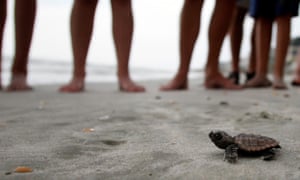
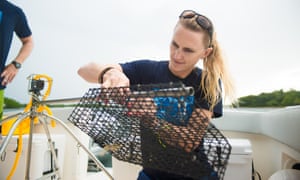
Elizabeth Whitman is a doctoral candidate in the department of biological science at Florida International University. She has developed a research programme focusing on the factors influencing habitat use of green turtles and the role of this endangered species in marine ecosystems.
Whitman says that her upbringing played a significant part in her decision to pursue a career in conservation. “My mother always encouraged me to explore my surroundings and I was fortunate enough to be able to travel and experience a variety of environments at a young age. These experiences inspired me to pursue a career in science, to assist conservation and management of marine…
View original post 889 more words
 Exposing the Big Game

