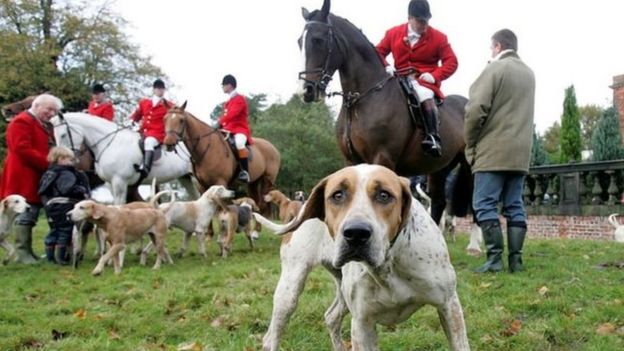
Hunting-store owner accused of shooting at turkey hunters east of Greeley

Hunting-store owner accused of shooting at turkey hunters east of Greeley

By Tommy Simmons, Greeley Tribune

Jim Arnold, 38, the owner of Waterfowl Haven Outfitters in Greeley, faces two counts of felony menacing after Colorado Parks and Wildlife officers say he fired a gun at two hunters and yelled racial slurs at them.

Arnold owns property on the South Platte River just east of Kersey. A few years ago, the report states, Kevin Dunnigan bought property next to Arnold’s. Dunnigan often let Arnold use the property for hunting as well as business, since Arnold also worked as a hunting guide.

Problems began when the Dunnigans began to hunt turkey on the property themselves, along with a few friends, the report says.

The report states Arnold would “harass” the Dunnigans and their friends from time to time, and the situation was tense enough for Dunnigan’s son, Taylor, to expect trouble when he was out hunting with a friend. But things escalated on April 22 when two family friends of the Dunnigans were using the property to hunt turkeys, the report states. Arnold “came out and harassed them by screaming…and shooting his guns,” the report states.

Arnold reappeared the next day, when Taylor was on his family’s property hunting with a friend. They had set up a hunting blind — a camouflaged tent with holes through which to shoot — in the bottom of a riverbed and were waiting for turkeys. Taylor later told officers he was about 70-80 yards from the border of Arnold’s property.

The two were in the tent when they saw Arnold’s 2000 Ford Excursion appear on the property line, the report stated. The driver’s side window was rolled down, and Arnold was looking at them through binoculars, according to the report.

The two recorded a video of what happened next, which served as evidence for police. In the video, Arnold, in front of his truck, fired a round into the air, flushing a group of turkeys from nearby trees. He then reloaded his shotgun.

The report states Arnold fired multiple shots at the small tent where Taylor and his friend remained huddled. Taylor later told officers the shots were hitting bushes between 5 and 20 yards from the tent, and said he was afraid for his life.

Whale calf died after getting tangled in crab lines

http://www.dailyastorian.com/Local_News/20170511/whale-calf-died-after-getting-tangled-in-crab-lines?ct=t(DA_Updates)&mc_cid=9595e17d2d&mc_eid=e8e1dd5a65

Migrating north to Arctic waters
 Last changed on May 11, 2017 10:20AM
A dead whale calf was examined by researchers on May 4 after being towed to an island in the Columbia estuary.

CASCADIA RESEARCH

A dead whale calf was examined by researchers on May 4 after being towed to an island in the Columbia estuary.

LONG BEACH, Wash. — An entangled gray whale calf died after being caught in crab pot lines, Olympia-based science group Cascadia Research Collective reported following an examination.

The whale, a 20-foot-7-inch male born this calving season, was initially reported dead in late April, anchored in place half a mile off of the Seaview beach approach. On May 1, it was discovered the whale was entangled in apparent commercial crab pot gear, researchers said.

The whale was towed to a remote island inside the mouth of the Columbia River.

A necropsy last week showed the whale was at the age when mothers with calves migrate north from their winter breeding and calving grounds in Baja to feeding areas primarily in Arctic waters. This migration is often close to shore and through commercial crabbing grounds.

“The whale was entangled in numerous areas including through the mouth and showed bruising around these areas indicating it was alive when it became entangled (and) had died as a result of the entanglement,” researchers said. “The whale was in excellent body condition with a large and oily blubber layer and even fat reserves around the heart all indicating it had been in good health prior to experiencing a more sudden death. Many of the internal organs were decomposed likely as a result of rapid decomposition due to the insulating blubber layer.”

Whale entanglements have increased in recent years along the West Coast, most dramatically with humpback whales off California, and have been of growing concern, according to Cascadia Research. Authorities are on the lookout for another gray whale first spotted off California that has its head stuck in a metal framework.

These incidents have prompted increased efforts to identify solutions as well as help disentangle whales when encountered still alive, the scientists said. Another threat to whales was highlighted by a boat strike on a well-known adult gray whale in Puget Sound, caught on video in April. Fortunately, that whale survived, though the full extent of its injuries are not yet known, researchers said.

There are an estimated 26,000 gray whales that migrate off the West Coast, according to the World Wildlife Fund, which calls their recovery “a great conservation success story.”

Gray whales were removed from the Endangered Species List in 1994.

Grizzly bear that approached hikers in Banff won’t be relocated: Parks Canada

© 2017 Global News

Parks Canada says they will not be relocating a grizzly bear that approached three people in Banff National Park over the weekend.

The three hikers were on the Cascade Trail near Mount Norquay when they were chased by a female grizzly — known as Bear 148.

READ MORE: Grizzly crossing: grizzly bear stops traffic in Kananaskis

“I was terrified, that’s for sure,” Kenzie Campbell said Tuesday, remembering the encounter.

“We just ran up on a bear — we were about 20 feet away and we walked away, but the bear comes charging, comes closer to us.”

The hikers’ dog, Momo, is being hailed with saving their lives, after she chased away the bear.

“[Momo] actually chased the bear away from us and then came back to us,” Campbell said. “I know that’s not usually how it’s supposed to go with grizzly bears, but it worked in this case.”

WATCH: Parks Canada will not relocate grizzly that charged three people and dog in Banff – Gary Bobrovitz reports

 Parks Canada says the six-and-a-half-year-old bear has had hundreds of encounters with humans in the park, all without serious consequences, therefore, she won’t be relocated.

“She will do bluff charges to protect her space or indicate she needs some room, then she typically wanders off or heads off in the other direction,” said Bill Hunt, from Parks Canada.

READ MORE: ‘It’s an experience you hope nobody has’: Grizzly encounter in Banff prompts bear warning

Parks Canada says this encounter doesn’t warrant a warning, because “she moved through the area,” and nothing is tying her to the particular location.

The hikers say the bear followed them to the parking lot from the trail they’d been hiking on, leading them to get into a Parks Canada truck to be safe.

The hikers took video while sitting in the Parks Canada truck, and in it the grizzly can be seen strutting back into the woods nearby.

“That bear just chased us!” they can be heard saying. “That bear just chased us through the woods. We’re in a Parks Canada truck right now.

“And this little dog right here, saved our life!”

They say Momo was on a leash while they were hiking, which is required by Parks Canada, but they took her off the leash when the bear continued to approach them.

Last month, Parks Canada issued a warning after a grizzly bear followed a woman kick-sledding with her two dogs in Canmore.

Parks Canada recommends you always travel in groups in the mountain parks, and that you carry bear spray.

— With files from Global’s Gary Bobrovitz

Illegal trade of parrots rampant in China

http://www.ecns.cn/cns-wire/2017/05-10/256844.shtml


2017-05-10

Scarlet macaws in an exposition park. (Photo/Beijing News)

Scarlet macaws in an exposition park. (Photo/Beijing News)

(ECNS) — The illegal trade of parrots is rampant in China, with the price of highly popular rare species exceeding 1,000 yuan ($145), Beijing News reports.

Chinese law only allows for the purchase of parrots by zoos or the exchange of the birds between breeding bases and forbids any other form of transaction, so it is illegal to sell parrots to customers, said an industry insider.

In 2009, the sun conure or sun parakeet was listed by the International Union for Conservation of Nature (IUCU) as one of the most endangered species globally, being under second class state protection in China. China doesn’t allow artificial breeding of sun conures, not to mention trade of the bird on the market.

However, it is hugely popular among Chinese bird keepers.

Many Taobao vendors sell sun conures at a price of around 50 yuan, while the bird is usually sold for between 300 and 500 yuan on other e-commerce platforms and via online flea markets, the paper said.

In a market near Beijing’s 3rd Ring Road, a vendor suggested an underground trade of sun conures, because “the bird isn’t allowed to be traded here in the market”.

It usually took the vendor a week to source the bird, at a price of 2,000 yuan a pair. “Because transport costs are high and supervision has now been beefed up, prices will naturally be higher,” said the vendor.

Zou Chuangqi, general manager of a parrot-breeding company in South China’s Fujian Province said parrots for exhibition or appreciation need frequent disinfection by spraying liquid medicine on their beaks and noses to prevent bird flu.

Li Li, head of Beijing Heibao Wildlife Protection Station, said poor disinfection or epidemic protection could cause the spread of bird flu as cases are increasing.


Theresa May: I’m in favour of fox hunting

http://www.bbc.com/news/election-2017-39861011?SThisFB

  • 9 May 2017

Media captionTheresa May is asked about her views on fox hunting

Theresa May has indicated she will allow Conservative MPs a free vote on whether to bring back fox hunting.

The PM, who says she has always been in favour of fox hunting, said it was up to Parliament to take the decision.

Tony Blair’s Labour government introduced the Hunting Act, which bans the use of dogs to hunt foxes and wild mammals in England and Wales, in 2004.

Tory Sir Roger Gale, seeking re-election in North Thanet, said many young party members were anti-hunting.

Mrs May was asked why she was committed to bringing back fox hunting during an election event in Leeds.

She replied that this was a situation “on which individuals will have one view or the other, either pro or against”.

“As it happens, personally, I’ve always been in favour of fox hunting and we maintain our commitment – we had a commitment previously – as a Conservative Party to allow a free vote and that would allow Parliament to take a decision on this,” she said.

Her comments followed a Daily Mirror report that it had seen a leaked email from Conservative peer Lord Mancroft, chairman of the Council of Hunting Associations, in which he outlined how a Conservative landslide at the general election could result in changes.

According to the newspaper, Lord Mancroft wrote: “A majority of 50 or more would give us a real opportunity for repeal of the Hunting Act.

“This is by far the best opportunity we have had since the ban, and is probably the best we are likely to get in the foreseeable future.”

HuntingImage copyrightAP

The peer reportedly said Mrs May had offered assurances that the party’s manifesto would include a pledge to give MPs a free vote on repealing the act – something her predecessor David Cameron had also offered in 2015, but which had not yet happened.

Sir Roger Gale, president of Conservative Animal Welfare, said he would oppose any attempt to repeal the Hunting Act.

He said he understood there were around 30 to 50 anti-hunt Conservative MPs in the last Parliament, with the potential for the 2017 intake to have similar views.

“I cannot see many Conservative votes for fox hunting in marginal seats we are hoping to win,” he said.

He believed a “huge amount of parliamentary time and effort” had already been spent on the issue, with the existing law “probably as good as we can get” given the difficulty in satisfying everyone.

“We have more than enough to occupy parliamentary time with Brexit and all that follows,” he said. “In my view, it’d be folly to waste further time on the issue.”

Countryside Alliance chief executive Tim Bonner said the act had “failed”, adding that he would wait and see what was contained in the Conservative manifesto.

“The case of hunting and the case against the Hunting Act remains strong – and we will continue to make the case to politicians of all parties,” he said.

Bad Selfies: 5 Places Not to Pose in Yellowstone

http://www.yellowstonepark.com/bad-selfies/


Yellowstone National Park is an untamed wilderness area. Don’t pose too close to hazards… Ouch! Here are five bad locations to pose along with suggestions on how to take pain-free photos.

1. Right next to a geyser

Couple taking a selfie next to a geyser.

Yes, Yellowstone’s most famous thermal features are amazing. Yes, a photo standing alongside one of the biggies—Grand Geyser, Steamboat Geyser, Old Faithful—would surely impress your friends back home. But when geysers erupt, superheated water powered by steam can blast hundreds of feet into the air, and there’s no telling exactly in which direction it will spray.

Even if you escape a scalding, the ground in Yellowstone’s thermal areas is thin and fragile; people who have stepped off trails and boardwalks have broken through the crust into boiling pools and died.

Better idea: Keep a safe distance from geysers by sticking to the boardwalks and trails. That way, your photo will capture a better sense of the geyser’s size and power.

2. In Yellowstone Lake

Girl taking a selfie in Yellowstone Lake

Those lapping waves, that deep blue water: North American’s largest highest-altitude lake definitely makes for a refreshing backdrop. But think twice before you dive into its depths for a photo: The water temperature usually hovers between 40°F and 50°F. That’s so cold that the survival time for someone immersed in the water is only about 20 minutes, and why many people have drowned in Yellowstone Lake.

Don’t even think about jumping into the deep water—if you can’t get back in your boat easily, your clock is ticking.

Better idea: Shoot from the shore, from the viewing platforms in front of Lake Hotel, or from the safety of a boat or kayak.

3. In a hot spring

Hiker taking a selfie near a hot spring in Yellowstone.

Like the sound of a natural hot tub? What about a hot tub that exceeds 200°F? A dip in that kind of water can quickly scald a person to death; even if you’re pulled right back out, third-degree burns will likely finish the job.

And just in case you need another reason to steer clear of boiling hot springs: Touching them could damage the delicate bacterial colonies that give features like Grand Prismatic Spring its beautiful colors.

Better idea: If you must have a soaking selfie, head to two places in the park where the water is safe to sit in: the Boiling River (near Mammoth) or Mr. Bubbles (in the backcountry Bechler area).

4. On the edge of the canyon

Man taking selfie in the Grand Canyon of the Yellowstone

What a dramatic shot: You, a thundering waterfall, the bright walls of the Grand Canyon of the Yellowstone all around you. But this enormous canyon is more than 1,000 feet deep in places, and the cliff walls leading down to the river are sheer. It would only take one wrong step—or one bit of crumbling soil—to plummet straight down.

Better idea: Snap your shot from safe overlooks at Uncle Tom’s Trail, Artist Point, or Point Sublime.

5. With a bison—or bear, or wolf, or elk…

Family taking a selfie next to a wild bison.

All together now: Wildlife at Yellowstone is wild.

These large, unpredictable animals are not pets. They’re not domesticated. They can and will injure, maim, or kill you if you get too close. Sounds like common sense, but in just the summer of 2015, 5 different people were gored by bison—4 of them trying to take a selfie with one when the bison gave them its horns.

Better idea: You were lucky enough to spot one of Yellowstone’s incredible animals: Train your camera on it, not yourself! And know the rules about how far to stay away from wildlife.

Linked from:

http://www.foxnews.com/travel/2017/05/11/yellowstone-doesn-t-want-tourists-endangering-wildlife-with-selfies.html

An Urgent Appeal to Reject Planet-Destroying “Environmental” Organizations’ Counter-Productive Activities & Actually Do What’s Necessary to Stop Climate Change Before It’s Too Late!

Exposing the Big Game's avatarThe Extinction Chronicles

Climate March Follow-Up: An Urgent Appeal to Reject Planet-Destroying “Environmental” Organizations’ Counter-Productive Activities & Actually Do What’s Necessary to Stop Climate Change Before It’s Too Late!

This is the most important information that you will ever hear about Climate Change – a truth so inconvenient that “environmental” groups hide it from the public, which pretty much makes them guilty of knowingly destroying the planet. The Sierra Club, 350.org, Greenpeace, NRDC, and others are engaging in a conspiracy of ecocide and a cover-up of both the leading cause of Climate Change and the ONLY solution before it’s too late. They are as guilty as Exxon covering up its knowledge of Climate Change for four decades. They are as guilty as Trump. They are a menace to Mother Earth and a threat to our…

View original post 2,396 more words

Man That Claimed Woman Was Killed In Deer Hunting Accident Charged With Murder

http://www.northescambia.com/2017/05/man-that-claimed-woman-was-killed-in-deer-hunting-accident-charged-with-murder

May 10, 2017

A Flomaton man who told authorities he was trying to shoot a deer when he shot and killed a woman last December has been indicted for murder by a grand jury.

Shannon Bell, age 31 of Upper Creek Road, was taken into custody following the indictment by the Escambia County (AL) Sheriff’s Office for the death of 36-year old Donna L. Martin.

About 6:30 Friday night, authorities received a call about a gunshot victim near the Pollard Boat Landing. The caller was experiencing problems with his phone connection, but was eventually able to relay that he wanted medical units to meet him at the intersection of Foshee Road and Highway 31. First responders arrived to find Martin suffering from a gunshot wound to her side. She was transported to D.W. McMillan Hospital in Brewton where she was later pronounced deceased.

Bell claimed that he was trying to shoot a deer at night and a struggle ensued over the gun. The gun went off killing Martin.

The Escambia County (AL) Sheriff’s Office was assisted by Alabama Game & Fish Division. At the time, Bell was arrested for manslaughter and a night hunting violation. But after further investigation, the charge was upgrade to murder. Bell remains in the Escambia County (AL) Detention Center with bond set at $150,000.

Darwin apparently right about the first life on Earth

May 10, 2017

Tara Djokic
Posted with permission from Newsweek

This article was originally published on The Conversation. Read the original article.

Fossil evidence of early life has been found in old hot spring deposits in the Pilbara, Western Australia, that date back almost 3.48 billion years.

This extends the known evidence of life at land-based hot springs on Earth by about three billion years.

Not only is the find exciting for what it might say about the evolution of early life on Earth, but it also has implications for the search for life on Mars.

Our understanding of these deposits would not be possible without the foundations laid by earlier researchers.

Ancient stromatolites

In the late 1970s, fossilised stromatolites—rock structures built by communities of microorganisms—were discovered within these Pilbara deposits.

These were interpreted as once living in a quiet, shallow water coastal environment much like we see in the modern setting of Shark Bay.

But extensive research over the past 20 years has led to a much better understanding of the environment that suggests it was actually part of an ancient volcano.

In modern volcanic settings, hot fluids circulate in the rocks underground and manifest as hot vents at the bottom of the salty ocean, such as the black or white smokers, or terrestrial hot springs on land where fresh rainwater is available.

What was unclear about the volcanic setting in the Pilbara was whether these hot circulating fluids were indeed discharging on land, producing hot springs—such as those we see in Rotorua, New Zealand—and could we link these hot springs to signs of life?

The smoking gun

Our recent findings from the Pilbara, published today in Nature Communications, provide a smoking gun to a terrestrial hot spring scenario in the form of a particular rock type called geyserite. This was found alongside a variety of textures that indicate life.

Geyserite only forms around the edges of terrestrial hot spring pools and geysers. These are found actively forming today in New Zealand, Yellowstone National Park and Iceland to name a few.

The biological signatures that we’ve found include stromatolites, but also some newly identified microbial textures. This includes a microbial texture (called palisade fabric) that represents microbes that grew upon the ancient sinter terraces —the rocks that form around hot spring pools.

We also found evidence of gas bubbles that must have been trapped in a sticky substance (microbial) in order to be able to preserve the bubble shape.

Importantly, all of these textures are comparable to fossil textures found in modern hot spring settings such as Yellowstone National Park or Rotorua, New Zealand.

Ancient life on land

The Earth’s geological and fossil record is like a thousand-piece puzzle, but we only have a few pieces. Every missing piece we discover helps us to better shape our understanding of life.

But these new findings don’t just extend back the record of geyserite and life living in hot springs on land by three billion years, they also indicate that life was inhabiting the land much earlier than previously thought, by up to 580 million years.

Before these findings, the world’s oldest evidence for microbial life on land was from ancient, organic matter-rich soils from South Africa, aged between 2.7 billion and 2.9 billion years.

The new discovery has implications for the evolution, and perhaps even the origin, of life on Earth.

Scientists are currently considering two hypotheses regarding the origin of life: that it began in the ocean in hot vents, or alternatively that it began on land in a version of Charles Darwin’s “warm little pond” which was connected to a hot spring system.

The discovery of biological signatures and fossil preservation in such ancient hot springs provides at least a geological perspective of the types of environments available and inhabited by life very early on in Earth’s history.

This may lend weight to the hypothesis that life originated on land and then took a downhill adaptive evolutionary pathway to the salty ocean, whereas the opposite is typically proposed.

Life on Mars

These findings have major implications regarding the search for life elsewhere in the universe, or at least our solar system. Our neighbouring planet, Mars, has long been a target in the search for extraterrestrial life.

It is widely accepted that the red planet was likely similar to Earth once upon a time, in that it had liquid water flowing on its surface and active volcanoes.

Recent data from the Spirit rover has even identified ancient hot springs, of a similar age to early Earth, in an area called Columbia Hills.

In fact Columbia Hills is one of the top three potential landing sites chosen for NASA’s upcoming Mars2020 rover that’s includes a primary objective to search for fossil life on Mars.

Our findings imply that if life ever developed on the red planet, and it is preserved in ancient hot springs on Earth, then there is a good chance it could be preserved in ancient hot springs on Mars too.

Tara Djokic is a PhD Candidate studying Earth’s earliest evidence of life at the University of New South Wales

Deadly Bird Flu Strain H7N9 Could be Next Pandemic

Exposing the Big Game's avatarThe Extinction Chronicles

http://www.laboratoryequipment.com/news/2017/05/deadly-bird-flu-strain-h7n9-could-be-next-pandemic

A CDC Scientist harvests H7N9 virus that has been grown for sharing with partner laboratories for research purposes. Photo: CDC

It’s been a century since the last worldwide influenza pandemic. The Spanish Influenza of 1918 spread across the globe in the waning days of World War I, killing tens of millions of people.

The next pandemic-level strain could be brewing in China, according to health officials. It’s a bird flu strain that has demonstrated 41 percent mortality in recent epidemics. Currently in its fifth epidemic, it’s become more widespread than ever – and it’s changing, according to world health officials.

The good news is that the H7N9 virus has so far shown limited human-to-human transmission. The bad news is that this fifth epidemic of the influenza strain, though mostly transmitted by poultry, is the…

View original post 353 more words