

ASSOCIATED PRESS/FILE
Gray wolves in Minnesota, Wisconsin, and Michigan could find themselves in the cross-hairs of hunters once again.
View original post 139 more words

ASSOCIATED PRESS/FILE
Gray wolves in Minnesota, Wisconsin, and Michigan could find themselves in the cross-hairs of hunters once again.
View original post 139 more words
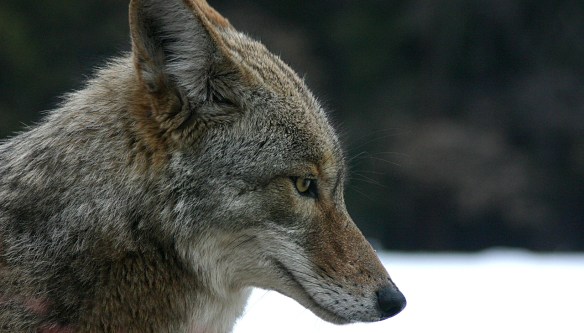 Coyote photo via Wikimedia Commons
Last week I wrote about a hounder by the name of Michael Wood from Amery, Wisconsin that received $5000 from the Wisconsin DNR in 2016 for two hounds that were allegedly killed by wolves. In the post we pointed out that a subject with the same name out of Amery had a conviction on three counts of intentionally mistreating animals in 2009 out of Bayfield County.
 Screenshot of OPEN RECORD from the Wisconsin Court System Circuit Court Access
Upon further research we found that the same subject was also under open charges for poaching a bear and resisting a warden in September of 2016, two months after the alleged “depredation” of his hounds.
 Screenshot of OPEN RECORD from the Wisconsin Court System Circuit Court Access
Through an open records request we were able to obtain the original criminal complaint for the 2009 incident that…
View original post 707 more words
September 22, 2015
Today the U.S. Fish and Wildlife Service announced that the Greater Sage-grouse, an iconic bird of the American West, does not warrant listing under the Endangered Species Act.
Conservationists, ranchers, politicians, and industry have been on edge for months in anticipation of the decision, which was announced just days before a court-ordered September 30 deadline. The possibility of a listing had sparked fears of huge economic losses in the sage-grouse’s expansive habitat out West, as it would have restricted energy development, livestock grazing, and residential construction. States and federal agencies that control public lands have scrambled to create updated sage-grouse recovery plans in order to avert a listing. And many conservationists worried that a formal listing could undermine the serious—and pioneering—voluntary efforts taken to protect the bird’s sagebrush habitat in recent years.
Indeed, Secretary of the Interior Sally Jewell confirmed in a video released on Twitter this morning that a major factor in the determination was the cooperative efforts of federal agencies, states, private landowners, industry, and green groups to safeguard the chubby, chicken-sized bird. That includes the Bureau of Land Management’s 14 new sage-grouse recovery plans—consolidated from 98 distinct land use plans, all of which were officially formalized today—that will conserve 35 million acres of federal lands across 10 states. In total, the collective plans to protect the bird “significantly reduced threats to the Greater Sage-grouse across 90 percent of the species’ breeding habitat,” enabling the organization to conclude that the bird did not warrant listing, FWS stated in their release announcing the decision.
“This is truly a historic effort—one that represents extraordinary collaboration across the American West,” Jewell said in FWS’s statement. “It demonstrates that the Endangered Species Act is an effective and flexible tool and a critical catalyst for conservation—ensuring that future generations can enjoy the diversity of wildlife that we do today.”
“This is a new lease on life for the Greater Sage-grouse and the entire sagebrush ecosystem,” said National Audubon Society President and CEO David Yarnold. “Unprecedented cooperation by private landowners, states, and the federal government has created a framework for conservation at a scale unique in the world.”
When FWS first announced that the bird would be considered for a federal listing in 2010, regional conservation efforts had already been underway. “This is exactly what Audubon has been working toward for 10 years,” says Brian Rutledge, VP and Central Flyway policy advisor for Audubon. Rutledge and his team helped create a science-based approach to sage-grouse protections that significantly reduces disturbance in core habitat—an approach that’s been adopted in state and federal plans alike. “This is the kind of cooperation the Endangered Species Act was designed to encourage,” he says. “It wasn’t intended to list everything under the sun; it was to motivate conservation before listing became necessary.”
Photo: Daly Edmunds
The sagebrush steppe is an old-growth forest in miniature, with some species of the fragrant shrubs living for more than a century. Development has cut the habitat to half its historical size, and today it spans 173 million acres across 11 states. The sage-grouse is inextricably linked to this sagebrush ecosystem: The plants provide cover from raptors and other predators, serve as shelter for nesting birds in the summer, and supply the grouse’s sole source of food in the winter—in fact, the birds actually gain weight eating the leaves during the harsh winter months. But as the habitat has shrunk, the birds’ numbers have plummeted, from millions a century ago to between 200,000 and 500,000 today. (Scientists count males at leks, or mating grounds, to extrapolate a rough population estimate; obtaining an exact count is impossible because the birds are essentially invisible in the vast sagebrush sea.)
A sunset view on the sagebrush-covered top of Pinedale Mesa and the magnificent Wind River Range. Sublette County, Wyoming. Photo: Dave Showalter
The Greater Sage-grouse is an indicator species of the health of this entire ecosystem. The desire to keep the bird off the list—and stave off the many restrictions that come with a threatened or endangered status—has generated a rare show of cooperation from those interested in using the habitat for drilling, ranching, or other economic endeavors. In consultation with conservation groups and government agencies, they have made ambitious commitments to protect enough space for the bird while still permitting some development. Today’s announcement is a ratification that the approach is working. “We’re seeing landscape-scale conservation like we’ve never seen before,” says Audubon’s Rutledge.
See a timeline of Audubon’s involvement in this critical conservation issue.
Rutledge helped create a Wyoming sage-grouse management plan that allows sage-grouse and industry to co-exist. The state is home to 37 percent of the sage-grouse population, and is also a major producer of coal, natural gas, and beef—all of which rely on the same sagebrush habitat. Under Wyoming’s plan, surface disturbance—from roads to wind turbines to gas wells—in areas critical to sage-grouse are limited to a maximum of 5 percent per square mile. Since Wyoming adopted the scheme in 2010, it has successfully protected 15 million acres of sagebrush habitat. Following this success, other states put similar plans in place, thus reducing threats to birds on tens of millions of acres while still allowing for development.
More: http://www.audubon.org/news/unprecedented-conservation-efforts-keep-greater-sage-grouse-endangered-species
*What*: Join CompassionWorks International (CWI) and Friends of Animals
(FoA) for our anti-trophy hunting protest/rally outside the Safari Club
International’s (SCI) New York Tri-State Chapter’s annual fundraiser dinner
and auction in Manhattan. Informational postcards to hand out to the public
as well as posters will be provided.
*When and Where*: May 13, 2017. Begins promptly at 5:30 p.m. as cocktail
hour for the annual fundraiser begins at 6 p.m. Outside the Columbus
Citizens Foundation, 8 East 69th St. New York, NY, 10021. (We will be there
until at least 6:30…probably 7 p.m.)
*Why*: To raise awareness about legislation drafted by FoA currently moving
through the New York legislature. Cecil’s Law (S1883/A4010) would ban the
importation, possession, sale or transportation in New York of the African
elephant, lion, leopard, and black and white rhinos—all threatened and
endangered species.
And to dispel the myth perpetuated by SCI, that without trophy hunters,
African governments would have no money for conservation. The newest data
reveals that trophy hunting is economically useless. So if the reason for
trophy hunting is “conservation,” but it is not contributing to
conservation, it’s time for a ban. Plain and simple, we as a society know
better.
If you have any questions, email Nicole Rivard at
nrivard@friendsofanimals.org. And please let us know you are attending by
emailing Nicole directly so we know how many posters to bring. You can also
join us on Facebook
<http://friendsofanimals.us9.list-manage.com/track/click?u=a24d24c0c4cbf4161c94e9212&id=6781822246&e=df8e76c45e>
to stay updated about this event.
*Join us May 13th outside the Columbus Citizens Foundation in NYC to
protest the Safari Club International’s NY fundraiser! Learn more.
<http://friendsofanimals.us9.list-manage1.com/track/click?u=a24d24c0c4cbf4161c94e9212&id=de601c88e5&e=df8e76c45e
Throughout history, humans have existed side-by-side with bacteria and viruses. From the bubonic plague to smallpox, we have evolved to resist them, and in response they have developed new ways of infecting us.
We have had antibiotics for almost a century, ever since Alexander Fleming discovered penicillin. In response, bacteria have responded by evolving antibiotic resistance. The battle is endless: because we spend so much time with pathogens, we sometimes develop a kind of natural stalemate.
However, what would happen if we were suddenly exposed to deadly bacteria and viruses that have been absent for thousands of years, or that we have never met before?
We may be about to find out. Climate change is melting permafrost soils that have been frozen for thousands of years, and as the soils melt they are releasing ancient viruses and bacteria that, having lain dormant, are…
View original post 2,265 more words
May. 1, 2017, 02:00 PM
WHITEHORSE, May 1, 2017 /CNW/ – Atlantic Walrus and Eastern Migratory Caribou are at risk of extinction. So concluded the Committee on the Status of Endangered Wildlife in Canada (COSEWIC), which met in Whitehorse, April 23-28. The number of Canadian northern wildlife species considered to be at risk now stands at 62.
View original post 12 more words

As humanity hurtles toward catastrophe, our legislators turn a blind eye to reality and continue to pander to forces of destruction and death. Instead of caring for the fragile life of this earth, legislators like state Sen. Tom Tiffany and U.S. Sens. Tammy Baldwin and Ron Johnson continue to ignore the science of the Endangered Species Act, pushing to kill our endangered wolves.
And the hunters want to kill cranes. They apparently are bored with killing other wildlife. Maybe they want a wolf with a crane in his mouth to hang on their walls.
It is not that difficult to connect the dots between the status quo and certain trajectory toward an unlivable and desolate home planet. The skies are emptying, as are woods and oceans — not through any natural force, but only by the violence of man. Chris Hedges writes in his recent “Reign of Idiots”: “Europeans and Americans have spent five centuries conquering, plundering, exploiting and polluting the earth in the name of human progress. … They believed that this orgy of blood and gold would never end, and they still believe it.”
Tiffany held yet another wolf hate conference, in early April, that was completely skewed to myth, lies, and fearmongering. He should be reminded that Richard Thiel, retired DNR wolf biologist, said on Wisconsin Public Radio, “I have worked with wolves in Wisconsin for 30 years. I have pushed them off of deer carcasses and had them walk right up to me. I never felt the need to carry a firearm and I never did.” Tiffany has been informed that only 2/10ths of 1 percent of livestock deaths can be attributed to wolves, whereas 90 percent of pre-slaughterhouse death is due to horrific farm conditions.
Yet Tiffany, Baldwin, Johnson and many other Republicans are bloodthirsty in pursuit of wolf-hater votes.
The Center for Biological Diversity describes the acceleration of extinction: “Because the rate of change in our biosphere is increasing, and because every species’ extinction potentially leads to the extinction of others bound to that species in a complex ecological web, numbers of extinctions are likely to snowball in the coming decades as ecosystems unravel.”
Yesterday, May 6, the DNR held a Wisconsin hunter education convention “on the future of hunter education with statewide experts in the field of hunter recruitment, retention, and reintroducing people of all ages to the outdoors and hunting.” For years, the DNR has offered $5 licenses to entice new hunters and trappers, especially targeting women and children, to bolster its power base of hunters and trappers.
The DNR has recruited and trained another 10,000 trappers over the past five years, deregulated lead shot and weapons and massively extended and liberalized seasons, shooting ranges, and access to public lands. It is paying for private land access. It is permitting the use of dogs to chase our wildlife without mercy or licenses, anytime, anywhere, with little or no oversight. It is paying $2,500, from the Endangered Species Fund, for each dog killed by wolves or bears defending themselves and their young.
In 2015-16 the DNR’s self-reported survey documented 284,395 wild animals crushed in traps throughout the state. Prices were down in that time period, with prices ranging from 71 cents for possums to $75 for bobcat skins. The total monetary value comes out to $1,258,651 or $4.42 per wild animal killed. Trappers are the only citizens who can destroy unlimited wild animals for profit, indiscriminately, and self-report.
Nonhunters have zero say.
If the 4.4 million voting-eligible citizens each put in 29 cents, we could buy back our 284,395 innocent wildlife and save them from such suffering and needless death. We are not given the option. Only death has a price tag and license.
The Center for Biological Diversity warns, “(C)onserving local populations is the only way to ensure genetic diversity critical for a species’ long-term survival.” That means wolves, bears, bobcats, beavers, coyotes, and all wild life.
As Chris Hedges writes in “Reign of Idiots”: “There is a familiar checklist for extinction. We are ticking off every item on it.”
In November, Stephen Hawking warned that humans needed to colonize another planet within 1,000 years. Now, six months later, he’s saying we have to do it within 100 years in order to avoid extinction. There’s a problem with this plan: under almost no circumstances does is colonizing another planet the best way to adapt to a problem on earth.

Shutterstock
Let’s start with Mars, which is a favorite planet for colonization scenarios, including for Elon Musk who thinks we should colonize Mars because earth will eventually face a “doomsday scenario”. The problem with this is that there is almost nothing that could happen to earth that would make it less hospitable than Mars. Whether it’s nuclear war or massive global warming, post disaster earth would be way more habitable than Mars.
For example, we worry that…
View original post 688 more words

WILDLIFE — A professor who filed a complaint alleging his employer, Washington State University, has retaliated against him for making remarks critical of a cattle rancher and the state’s killing of a wolf pack appears to have been cleared of accusations by the university that he misused state resources by using his WSU email for lobbying activities.
Robert Wielgus filed a complaint about his treatment by the university last week.
Other news stories related to the wolf researcher’s work and opinions include:
Here’s the latest from Shanon Quinn of the Moscow-Pullman Daily News via AP:
While professor Wielgus was not mentioned by name, an internal audit report included in today’s WSU Board of Regents meeting packet appears to have cleared Wielgus of the accusation. The report, however, states investigators did discover evidence that his use of email may have been a misuse of state resources in “regard to the content of the messaging and repeated recommendations from management to use private resources related to the activity in questions.”
In his April 27 complaint, Wielgus alleged the university seriously damaged his academic career through the unwarranted use of suppression, condemnation and reprisal after he told the Seattle Times and other media outlets that rancher Len McIrvin intentionally released his livestock directly on top of a wolf den site, leading to cattle loss and the state responding by eliminating the pack. He later repeated the accusations to the Wolf Advisory Group in March.
Wielgus alleged the investigations into lobbying and improper use of state resources were “erroneous and arguably malicious.”
The WSU report findings did not mention Wielgus by name, but his attorney, Adam Carlesco of Public Employees for Environmental Responsibility, said the item appeared to be Wielgus’ case.
According to a document from the Washington State Executive Ethics Board, uses of email are restricted for state employees, with misuse defined as conducting an outside business; engaging in political or campaign activities; advertising or selling products; solicitation on behalf of other persons unless approved by the agency head; and illegal or inappropriate activities, including harassment.
Carlesco said he takes issue with the charge of misuse of state resources.
“Dr. Wielgus sent over a single email containing data concerning wolf depredation … to the Washington Wolf Advisory Group, a group that he has been professionally involved with for 4 years, on a subject matter where he was appointed by the WA Legislature as the primary researcher through WSU,” Carlesco wrote in an email to the Daily News.
Carlesco said the email contained a recommendation from a rancher to the Washington Department of Fish and Wildlife on how to avoid conflict between wolves and livestock.
“He included a blatant disclaimer that his comments did not represent WSU and got approval from the Dean of the College of Agriculture and the school’s media affairs office to send out the message,” Carlesco wrote.
He wrote it was not until after the email was sent that Wielgus was instructed by the university to use his personal email address for such matters.
“We have the email chain showing as much,” he said.
Since the dark ages of Descartes, certain people have tried to keep non-human animals down and justify their exploitation with the absurd and arrogant allegation that animals don’t really care what happens to them because they aren’t capable of feeling, choosing, or perceiving—they aren’t “conscious”.
Say what? What are they, unconscious?
To borrow a redneck phrase I promise I’ll never resort to again, that dog don’t hunt!
Of course, neither does our yellow lab, Honey. But she definitely can think and feel, and on Wednesday night she felt bad, clearly perceiving that things weren’t right. She must have eaten something unsavory that didn’t sit well. Normally Honey sleeps like a log, choosing to sleep on the bed, but that night she didn’t sleep a wink and instead lay on the floor with a pained expression and a hang-dog look (sorry, again, but it seemed to fit); she was worried, fearful…
View original post 274 more words

 Exposing the Big Game