‘There’s been many places where grizzly bears have gone extinct,’ says biologist Tom Jung
By Paul Tukker, CBC NewsPosted: May 25, 2017 7:22 PM CT Last Updated: May 25, 2017 7:22 PM CT
‘Even within the Yukon, there are areas where they may be doing better than in other areas. And part of the plan is trying to look at ways that we can monitor the situation,’ said government biologist Tom Jung. (Government of Yukon)
(Note: CBC does not endorse and is not responsible for the content of external links.)
Grizzly bears are generally doing “quite well” in Yukon, according to government biologist Tom Jung — and wildlife officials are aiming to keep it that way.
The territorial government is developing a conservation and management plan for the species, and it’s asking Yukoners to weigh in on what that plan might look like.
The goal, Jung says, is to ensure that Yukon’s grizzlies don’t go the way of their cousins down south.
“Their populations often decline, and there’s been many places where grizzly bears have gone extinct — a lot of the lower 48 [states] for example, some of the prairies provinces,” he said.
The goal, Jung says, is to ensure that Yukon’s grizzlies don’t go the way of their cousins down south. ‘Their populations often decline,’ he said. (Mike Rudyk)
“So, the writing’s on the wall that this is a species that if we’re not careful … we could be in that situation.”
The plan would apply only to grizzlies, not black bears which are also common in Yukon.
Grizzly bears once ranged as far east as the Mississippi River, and as far south as central Mexico. Today, it’s considered a threatened species in much of the U.S., and the Committee on the Status of Endangered Wildlife in Canada (COSEWIC) lists Western grizzlies as a species of special concern. The prairie population is considered extinct in Canada.
A 2013 status report by COSEWIC estimated there were about 26,000 grizzly bears in Western Canada, with the majority of them in B.C. (approximately 15,000). Yukon had an estimated 6,000 to 7,000 grizzlies.
The federal government says loss and fragmentation of habitat is one of the biggest threats to Canada’s grizzly population. A naturally low reproductive rate adds to the population’s vulnerability.
“Even within the Yukon, there are areas where they may be doing better than in other areas. And part of the plan is trying to look at ways that we can monitor the situation,” Jung said.
“So we’re trying to be proactive here.”
A 2013 status report by the Committee on the Status of Endangered Wildlife in Canada (COSEWIC) estimated there were about 26,000 grizzlies in Canada, about a quarter of them in Yukon. (Government of Yukon)
Online survey
Environment Yukon, along with the Yukon Fish and Wildlife Management Board, is asking Yukoners to fill out an online survey about grizzlies. It asks about people’s experiences hunting the bears, or seeing them in the wild. It also asks opinions about bear conservation and protection.
“Grizzly bears are kind of a species of national interest, and so if there’s going to be a national recovery plan — as it’s a species of special concern — then we want [Yukon’s] plan to be able to inform the national discussion,” said Tecla Van Bussel of the Fish and Wildlife Management Board.
“We’re hoping to hear from folks across the territory … and make sure it’s representative of everyone’s perspectives.”
The survey asks about specific issues, such as roadside hunting and camping restrictions, but Jung said the resultant management plan “may not get down into the weeds”.
“It’s meant to really be a foundation, or framework, piece that we can use to manage bears from, so that when we do hit certain issues that we want to discuss … that we have this piece and we can [look] back and see whether our actions are consistent with our overall management direction.”
The deadline to fill out the online survey is Saturday.
Two men were charged with harassment of wildlife after posting photos of beer being forced down the throat of an alligator. (South Carolina Department of Natural Resources via CNN Newsource)
0527_gatorbeer1.JPG0527_gatorbeer4.JPG0527_gatorbeer5.JPG
VIEW PHOTO GALLERY
6 photos
AA
JASPER COUNTY, S.C. (WPEC) – Two men in South Carolina are facing criminal charges for forcing beer down the throat of a young alligator, according to the South Carolina Department of Natural Resources.
Investigators said the men posted a photo of the alligator chugging the beer to social media. A short time later, the SCDNR started getting calls, messages and screenshots related to the incident.
Authorities said the two men, after forcing the juvenile gator to drink the beer, released the reptile back into a pond and watched it swim away.
Wildlife investigators went out to a dirt road near Hardeeville in Jasper County and caught up with the two men. Both admitted to harassing the alligator after seeing it cross the road.
Joseph Andrew Floyd Jr., 20, and Zachary Lloyd Brown, 21, are facing a misdemeanor charge of harassing wildlife.
“Wildlife conservation is a big part of what SCDNR officers do each day,” SCDNR 1st Sgt. Earl Pope said. “This case is a good example of why we strive to educate people about wildlife in hopes that they will respect it.”
The men face a maximum fine of $300.
The US state of Georgia reported its first-ever outbreak of bird flu this week, bringing the total number of US states affected by the disease this month to four.
On Sunday, May 21, Ringling Bros. and Barnum & Bailey Circus will hold its final “greatest show on earth,” at the Nassau Coliseum on Long Island.
For the last time, Ringling’s lions, tigers, camels and other captive animals will enter the ring and be forced to perform demeaning and unnatural tricks. It’s a momentous occasion that took the animal rights movement more than three decades to achieve.
I personally led some of the earliest rallies outside Ringling Bros. shows, back in the late 1980s. As the outcry from activists and advocacy groups grew, Ringling willfully ignored it. Instead of switching exclusively to human performers — who perform by choice rather than force — the 146-year-old institution continued to bully animals. This was its downfall.
The reason is simple: When it comes to animal rights, the tide of public opinion has turned. A 2015 Gallup poll found that a majority of Americans — 62 percent — believe that animals deserve protection, and 32 percent believe animals should have the same rights as people. In recent years, many businesses have been forced to change their practices.
SeaWorld announced it would end its orca breeding program last March, and the state of California outlawed such programs a few months later. Several years ago, the Los Angeles City Council voted unanimously to ban the use of bullhooks on elephants, and the city of West Hollywood banned the sale of fur products. Many pet stores have stopped selling dogs from puppy mills.
But while the end of Ringling is a victory for every activist who wrote a letter, signed a petition or protested outside the circus doors, the fight to free animals from cruelty, including in the entertainment industry, is far from over. Other circuses continue to exploit animals for profit, as do zoos, aquariums and rodeos.
For instance, in 2002, an investigator for my organization, Last Chance for Animals, captured footage of elephant training at the Carson & Barnes Circus in Oklahoma. The video showed violent training methods in which elephants were abused with bullhooks, electric prods and blowtorches. At one point, a trainer yelled, “Make ‘em scream!” The footage shook the circus industry to its core. Yet the Carson & Barnes Circus still features animal performers.
The simple truth is that animals should not be used for human amusement. The process often is unnatural and cruel from start to finish. Many are taken from the wild as babies and watch as their parents are slaughtered. Others are born in breeding facilities and never know freedom.
Life for these animals is one of isolation, boredom and trauma — this is why they so often exhibit abnormal behaviors, such as pulling out their own fur, incessant swaying and bar biting.
As we have seen with the demise of Ringling, the power of sustained activism is strong, but legislation could help hasten and strengthen this hard-won progress.
In March, federal legislation was introduced into the House to ban the use of wild and exotic animals in traveling circuses and exhibitions, the Traveling Exotic Animal and Public Safety Protection Act. We urge Congress to pass it. In April, the Los Angeles City Council voted unanimously to draft a ban on the use of animals for circuses and other live shows, including private parties. We urge the council to write a final version of the bill and enact it.
It took more than three decades for the animal rights movement to put an end to the cruelty Ringling Bros. and Barnum & Bailey Circus inflicted on animals. It shouldn’t take another three decades to eliminate similar animal mistreatment elsewhere.
Chris DeRose is president and founder of Last Chance for Animals (@LC4A), an international nonprofit organization dedicated to eliminating animal exploitation.
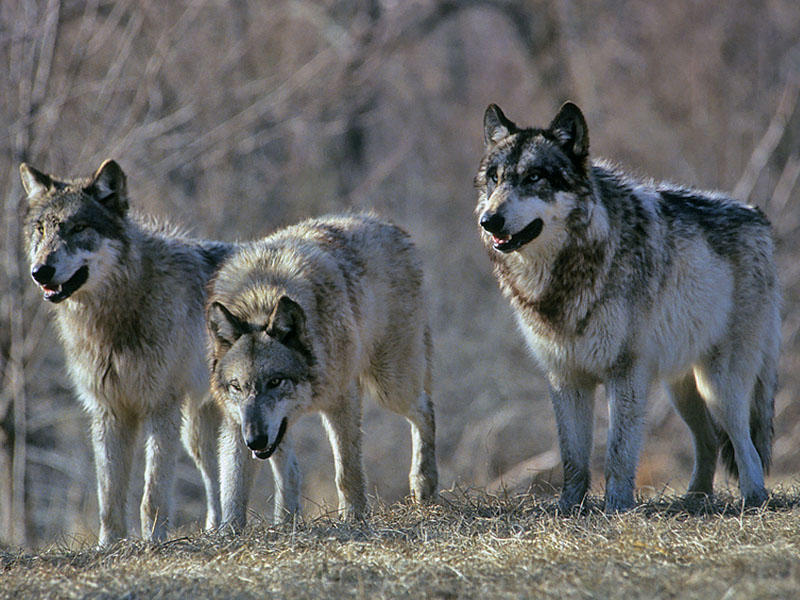
Wolves mostly make the news when they are in conflict with livestock and that’s part of the reason they were once removed from the Western landscape. But a new study shows wolves play an important role, whether we like it or not.
It’s not just wolves that prey on livestock.
“Worldwide, smaller meso-predators like coyotes, jackals and such, actually themselves prey pretty heavily on livestock and can cause a lot of economic damage,” Aaron Wirsing of the University of Washington said.
Wirsing co-authored a new study in the journal Nature Communications. He said current land management policies don’t offer apex predators enough space, but that doesn’t mean he wants to see wolves roaming rampant across North America.
“We need to allow predators to occupy more landscapes than just remote, protected areas,” Wirsing said. “On the other hand, we also need to heavily manage them, recognizing that they do conflict with people.”
That conflict made headlines last summer, when members of the Profanity Peak wolf pack killed four calves in Northeastern Washington. In response, Washington’s Department of Fish decided to shoot members of that pack from a helicopter.
“Historically, our model has been almost a postage stamp model where we protect certain areas and try to maintain intact assemblages of animals,” Wirsing said. “But we have a problem of scale.”
So, for example, areas protected for wildlife and public use might seem large from a human perspective, but what humans ay not consider is wolves can range up to 1,000 miles.
And it’s not only in the forest. Wirsing said wolves also roam the sage brush landscape in the central Northwest.
The study made use of bounty hunting data to show ecosystems function similarly in both Europe and Australia as well.
A man was indicted after shooting and killing his friend during a hunting trip last year, according to the Volusia County Sheriff’s Office.
Leeshawn Sutton, 58, turned himself in to the Volusia County Jail on Wednesday, a day after a grand jury indicted him on a manslaughter charge and hunting violation, according to the Sheriff’s Office.
Deputies say Sutton and his friend Bruce Best, 65, were hunting in a swampy section of Oak Hill, north of Maytown Road, on Jan. 20, 2016, when the accident happened.
Sutton opened fire and hit Best with a 12-gauge shotgun, officials said.
The Sheriff’s Office needed a helicopter to help direct deputies on the ground to the two men. When they arrived, Best was dead.
Sutton was booked on one count of manslaughter with a firearm and one count of violation of game rules and regulations.
The future of Texas hog hunting is oddly adorable.
As state lawmakers gut major bills in the last days of the 85th legislative session, it’s become clear where many of their priorities lie. Child welfare. Religious freedom. Women’s health.
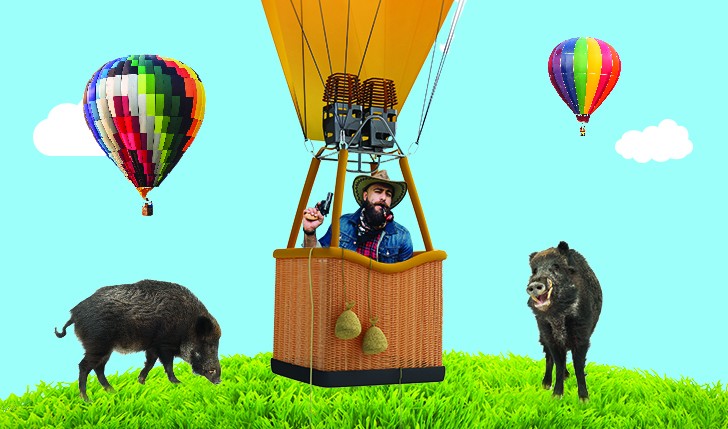
Oh, and hunting feral hogs from hot air balloons.
That last one, oddly enough, is one of the few issues that have managed to float through both chambers unscathed. Thanks to a Wednesday vote by the Texas Senate, a bill allowing landowners to shoot wild hogs and coyotes from the safety of a hot air balloon basket has now landed on Gov. Greg Abbott’s desk.
The state’s estimated 2 million feral hogs have long-tormented Texas farmers, leaving destroyed crops and pastures in their wake. This bill is only the latest strategy in a growing list of legal ways to kill these invasive hogs under Texas Agriculture Commissioner Sid Miller’s watch. Balloon-hunting, actually, is a fix to a bill then-Representative Miller passed in 2011, which allowed property owners to shoot hogs from helicopters (he called it the “pork chopper” bill). But according to aerial hog hunters, their prey have become familiar with the buzzing helicopter motor and often scatter when they hear a chopper approaching. Plus, they complain, it’s near impossible to keep a steady aim on a bumpy helicopter ride.
Enter, the hot air balloon.
“We’ve got a problem here, and we are willing to fix it ourself. We have that Western, swashbuckling, cowboying type of way to deal with things,” Representative Mark Keough, a Woodlands Republican, told the Texas Observer in April. “It’s part of the culture, it’s different than any other state.”
Keough has never tried the kind of “swashbuckling” hunting his bill allows. That’s probably because it’s illegal — but also because absolutely no one hunts hogs from hot air balloons. It seems to be an idea Keough basically invented himself. The bill provides no information on how a person can rent a hot air balloon for a hunting excursion (unless you’re throwing down some $22,000 on a personal huntin’ balloon), or if they need to take a certain certification class before taking flight.
Either way, the majority of Texas legislators apparently think it’s a good idea.
Commissioner Miller’s office didn’t return calls for comment Thursday and his wildly active social media accounts lack any acknowledgement of Keough’s bill. This silence, coming from a man who once called for a Texas-sized “hog apocalypse,” is a bit surprising.
It could be Miller’s still sulking after his own hog eradication scheme fell flat in April. Miller was met with quick opposition after legalizing the use of posion-laced hog kibble in February. An unusual coalition of hog hunters, meat processing plant owners, and environmentalists filed a joint lawsuit against the state, claiming too little was known about the toxic chemical’s affects of humans and the environment to approve. The law has been put on hold, and the one toxic hog kibble provider decided to stop selling to Texas after being slammed with a barrage of lawsuits.
If signed by Gov Abbott, Keough’s bill will go into effect in September.
Golden jackals, similar to small grey wolves, have been making their way across Europe into new territory. A German farmer is claiming compensation after the protected, wolf-like predator killed a sheep.
A golden jackal was photographed by a camera trap in Bavaria in 2012
For the first time, golden jackals have been detected in the northern German state of Schleswig-Holstein, which borders Denmark, authorities announced this week. The animals are originally native to the Balkans, but have slowly spread to areas they never previously settled, such as northern Italy, eastern Austria and Hungary.
After three sheep were attacked by an animal in the region of Dithmarschen on the North Sea coast this month, authorities first suspected a wolf. A DNA sample, however, revealed the culprit to be a golden jackal (Canis aureus), the state ministry for the environment announced.
The predators are smaller and more slender than gray wolves and normally weigh 8 to 10 kilograms (17 to 22 pounds), while especially large specimens can reach 15 kilograms, according to the ministry. They are protected by German federal regulations.
One of the sheep died following the incident, meaning the farmer can claim compensation. Authorities pay farmers damages when wolves, which are also protected in Germany, kill their livestock.
Spreading north
Despite the name, golden jackals are believed to be more closely related to gray wolves and coyotes than to the black-backed and side-striped jackal species native to Africa.
Golden jackals have been spreading through Europe to regions where they never previously lived
Individual specimens have been sporadically detected in Switzerland and Germany over the past few years, the ministry said. In the summer of 2000, evidence of their presence was first discovered in a southern part of Brandenburg state. Specimens popped up in Bavaria in 2012, in Hessen in 2013 and in Mecklenburg-Vorpommern and Lower Saxony in 2016, gradually moving north.
Europe’s northernmost population of golden jackals is in Denmark. The ministry said it could not accurately determine if the latest findings were evidence of Danish jackals colonizing Schleswig-Holstein.
The animals usually live in pairs and occupy fixed territories of about 3 square kilometers (1 square mile).
They tend to feed on insects, rodents, birds and amphibians but can also eat smaller mammals such as hares and rabbits, rare deer, and their offspring.
This week in southern Germany a golden jackal was struck on the highway near Freising, which is close to Munich airport.
Alberta Fish and Wildlife needs to seriously rethink how it manages injured and orphaned wildlife.
Last week, a woman in Sherwood Park had a young moose limp into her yard with a broken ankle. She tried to get Fish and Wildlife out to assess whether it could be rehabilitated and, if not, at least euthanized humanely.
Fish and wildlife did neither, and the homeowner watched in despair over 10 days as the moose slowly got weaker and died. Not exactly what you expect when you call government wildlife officers for help.
They had to be shipped out to Ontario via BC, after it was revealed Alberta has a policy against releasing rehabilitated bears back into the wild. I guess we should be thankful the bears were found in a federal park. Presumably if mama bear was killed by hunters, or run over on provincial crown land, the official policy would be to just let her cubs starve to death.
I’ve also received several stories from listeners who report widely different responses when they’ve called in injured animal reports, mostly for deer.
Typically they are told to “let nature run its course,” no matter how cruel that is. If the caller asks if they can put down the animal themselves, they are told no. If they want to call in a rehabilitation centre for help, the centres are forbidden to in most cases, with the threat of losing their permits to operate.
It didn’t always used to be this way. Alberta has seven rehabilitation centres and Clio Smeeton has been involved with operating the Cochrane Ecological Institute for over 50 years. She told me stories of the success they have had in saving and releasing moose and bears back to the wild. But starting in 2010 the rules changed.
WATCH BELOW: Bear encounter in Banff highlights issue of human activity in animal habitat
They are now forbidden from accepting for rescue and release bighorn lambs, mountain goats and pronghorn antelope kids, elk calves, grizzly bears, black bears, wolf fox, coyote cubs, lynx, bobcats, skunks, raccoons and cougar kittens. With all these exclusions, you have to wonder if the government wants to save any distressed wildlife at all.
Considering most animals become orphaned or injured due to human causes, it seems preposterous that these private agencies, who operate with no government funding, wouldn’t be allowed to give these animals a fighting chance to survive.
What can you do to get the government to change its policy? Listen to my full interview with Clio Smeeton to find out.
If you want to know know more about reporting injured wildlife in Calgary click here.
A hunting practice banned by Washington voters two decades ago continues to this day. Hound hunters are used to protect stands of commercial timber from the destructive habits of black bears. But a year-long KING 5 investigation shows the bears, killed for tree damage, may not be causing any problems whatsoever.
Hunting bears with dogs, outlawed in 1996 by the voter-approved Initiative 655, happens every spring in Washington. Animal rights advocates who backed I-655 decried the practice as cruel and unsportsmanlike. Hounds chase bears over long distances, exhausting them and allowing hunters to zero in for a final kill. Dogs are then rewarded by chewing on the bear. Bears are typically already dead or near dying.
Hunting bears with dogs is perfectly legal under an exception built into I-655. The provision in the law allows hound hunting to continue for the protection of property, but critics and experts say the legal loophole is being abused by the state and timber farmers against the letter and spirit of the law.
The official codification of I-655 – RCW 77.15.245 – includes the following allowance: “Nothing in this subsection shall be construed to prohibit the killing of black bear, cougar, bobcat, or lynx with the aid of a dog or dogs by employees or agents of county, state, or federal agencies while acting in their official capacities for the purpose of protecting livestock, domestic animals, private property, or the public safety. A dog or dogs may be used by the owner or tenant of real property consistent with a permit issued and conditioned by the director.”
The controversy centers on an interpretation of what it means to to protect private property. It’s pitting the Washington Department of Wildlife against its own staff and the backers of I-655.
“I think it’s disgusting and it’s frankly quite surprising to me that the Department of Fish and Wildlife would be so open violating a state initiative that the people of this state resoundingly approved,” said Lisa Wathne, who spearheaded the I-655 campaign 20 years ago while working for PAWS. Today, she is the Captive Wildlife Specialist for The Humane Society. Her group’s efforts to ban recreational hound hunting in Washington won with 63 percent of the vote.
Wathne was comfortable with the loophole in I-655 that allowed hound hunting to protect property by removing problem animals.
“They were to be very specific and for specific animals, not for a wholesale thinning of a population by any means,” she said.
In the case of bears, the allowance is used every spring on timber farms. Bears are hungry when they come out of hibernation, and trees offer a quick, high-calorie snack thanks to syrup underneath the bark. When the bears peel the bark, though, they can damage or even kill trees. Trees between the age of 12 and 25 years old are the most vulnerable. The Washington Forest Protection Association (WFPA) blames bears for millions of dollars in damage every year.
Timber farmers argue they need to protect their trees from bears that are damaging their product. But KING 5 found the springtime bear hunts on timber farms are not focused on targeting problem bears. Hundreds of internal staff emails and documents obtained by KING 5 show that the program centers on reducing the overall number of bears in vulnerable tree stands, not – as state law requires – removing specific bears known to be damaging trees.
A man who has hunted for the Bear Timber Depredation Management Program (BTDM) for decades said the program is being abused, at the expense of non-offending bears. He describes a system that has evolved into an elite hunting club rather than a damage-control program. It didn’t start that way, he says. He’s noticed a trend that’s taken the program away from its original intent.
“The idea was to take the problem bear and there was no pressure on you to get out there and kill as much as they are now,” the man said. He asked us not to disclose his identity for fear of retaliation against his family and his dogs.
For decades the man has used his dogs to hunt bears, helping kill hundreds of them. But he said he’s concerned that both large industrial timber foresters and small forest landowners are no longer concerned with targeting problem bears. They just want to kill bears, he says, and WDFW enables it while clouding the hunts in secrecy.
In recent years, declared kills on timber farms have resulted in the reported death of about 100 bears. Other years, the number of bears removed has hovered around 200. But a year-long KING 5 investigation concludes those official tallies could be considerably inaccurate, as the bear hunts on private lands have historically occurred with little oversight. Even the state’s wildlife enforcement officers say the system is so broken that there’s little they can do to enforce hunting rules.
This hunter says he’s never once crossed paths with wildlife police.
“The old saying is, if you don’t see it, you don’t have to think about it,” he said. “It’s just like, OK, it’s all-out war guys.”
When foresters find one damaged tree, WDFW grants a permit to kill two bears. Permits are also granted on what’s called “historical damage” from the previous year. That means a forester can get a renewed permit to kill bears the year after they find fresh damage. They do not have to prove bears are causing any new issues. It doesn’t matter if several bears were already killed for the damage in the year prior.
Stacks of emails KING 5 obtained through public disclosure show state employees are also alarmed about the program. In a late 2016 internal email, a WDFW biologist wrote about timber giant Weyerhaeuser, “They are viewing the bear damage program as a means to suppress the overall bear population and therefore, reduce damage. I get why, as a timber company, they would want to do that but that is not the way this program was designed.”
In another 2016 staff report, a wildlife specialist argues Weyerhaeuser is creating a large hunting area. Several complaints KING 5 uncovered show that timber companies stack permits beside each other to maximize land areas for the hunt. The wildlife specialist who wrote the report says it goes against the program’s intent “to avoid killing more bears than necessary.”
AWDFWbiologist wrote in one email dated November 7, 2016: “It seems like the system in place is just being manipulated by those who want to be able to run their dogs and to some extent by timber owners/individual foresters who are facilitating it…it seems like they don’t even want the bears, just the chance to pursue them.”
Another WDFW biologist wrote in a 2014 email, “Only one-quarter of bears killed have bark in their stomach.” An additional 2016 internal report to WDFW management says the system is “purposely being abused,” but staff are discouraged from revoking privileges.
The hunter we interviewed believes the program has turned into a secret fraternity where power and politics provide an exclusive bear hunting season – the only one left in Washington for hunters who want to use dogs. Timber farms benefit by reducing the potential for damaged trees, he says, while hunters get to run their hounds. They’re chosen by the timber companies and approved by Georg Ziegltrum, the longtime head of WFPA’s Animal Damage Control Program.
“If given opportunity they all girdle trees and they all are ‘problem’ bears in damage areas,” Ziegltrum said.
For Ziegltrum, every bear has the potential to peel.
“Intraspecific stress (too many bears in one given area) may have more to do with timber damage than one ‘guilty’ ingenious bark peeler,” he said. “I-655 is doing exactly what it is supposed to do. The WDFW understands our problem and is closely and effectively working with our industry. Regulations for bear removal are plentiful and heavy. All damage is witnessed and approved by WDFW. I have a 100 percent compliance record with the agency for years and I’m proud of it.”
KING 5 learned that foresters often tell hunters not to discuss the hunt, for fear of public outrage.
“Some of the foresters want you to kill, kill, kill – no matter what. Even the foresters have kind of a game between ‘em to who gets the trophy every year for the most bear killed,” the hunter said. “Just like one forester said, ‘All I want to know is about the first bear and the last bear. In between, I don’t care.’”
Internal WDFW emails and reports reveal that kill permits are given to timber farms before wildlife specialists verify damage. A program administrator wrote in a 2014 email, “Timber companies have put pressure on the program to issue first, then verify.” Another staffer wrote in 2015, “Often times the permit has been filled before the Conflict Specialist has gone out to the site to even verify.” In another 2015 email, a wildlife specialist said, “I have not been able to verify the preliminary damage prior to them taking two bear.”
Sources told KING 5 that procedures like this, aimed at speeding up the permitting process, are unique to the bear damage program even though elk damage, for instance, is far more common statewide. Reports also show that, sometimes, staff arrive to alleged damage sites only to find “no significant damage at all.” But it’s too late, as bears authorized for kill might already be dead.
One state biologist wrote in a 2016 email, “This is not the way this program was designed.”
WHY BEARS ARE TARGETED
For Ken Miller, the damage is anything but insignificant.
“Brown spots all over the hillside and those were dead trees,” he said while pointing toward a ridgeline in Oakville, southwest of Olympia.
Miller is a small forest landowner, which means he farms far less land than an industrial company like Weyerhaeuser. His tree farm borders the Capitol State Forest near Olympia, which is prime bear habitat. He took us on a long and bumpy drive to see his trees, though land he says foresters protect from development. He thinks his profession is often the object of unfair negativity, criticized for killing trees and sometimes the wildlife that hurts profit. He argues, more often than not, bears benefit from tree farming.
“It really is cool to be a tree farm,” he said. “We’re doing great stuff for the environment.”
Miller and his wife saw their farm as an investment in their retirement or grandchildren’s education. The couple and their son planted 18,000 trees by hand in three months. They each planted 500 a day.
“I made bags we wore around our waist,” said Ken’s wife, Bonnie. “We were really proud of ourselves. We had some nice trees. Then all of a sudden, we found something.”
What they found alarmed them – dozens of trees damaged by bears.
“I was desperate, in a panic, because our financial wherewithal for our retirement years was on the line,” Ken said. “That’s big money. That’s like someone stealing money out of your 401(k).”
Ken admitted that he was so desperate that he asked a hunter to kill bears in secret. He says that was 15 years ago, and he hasn’t broken any rules since.
“Maybe I’m not totally proud of it, but I would do it again if I was in that same situation and that was the only option I had to protect my property,” Ken said.
He said there are too many bears for available habitat, and he believes he is drowning in a permitting process that prevents him from killing bears fast enough to protect his trees. For Miller, small forest landowners suffer unduly from bear damage and need more help from the state, given that a few damaged trees represent a much greater percentage of lost investment compared to industrial farms.
If the program is about population control as critics argue it is, he says, WDFW is failing.
If there were fewer bears, and the state eased the path toward removing them, Miller believes he would have fewer problems.
Ninety-percent of the damage is typically reported in Regions 5 and 6, which includes Pierce, Cowlitz, Lewis, Wahkiakum and Clark Counties. The bear harvest during timber hunts tends to be about 35 percent of the bears harvested in those regions during the general season. WDFW does not include the timber hunt harvests in the information shared with the public on its website.
“I think we under harvest bears, probably, in this state as a whole,” said WDFW Game Division Manger Anis Aoude.
In an interview that lasted two hours, KING 5 asked Aoude and his WDFW colleague, Stephanie Simek, about the Bear Timber Depredation Management Program. A couple years ago, the program’s oversight was handed from Enforcement to the Wildlife Program. Aoude and Simek created a subcommittee comprised of biologists, conflict specialists, enforcement officers, and foresters in order to forge new paths toward better management.
It was the moment when many staffers hoped chronic abuses of the program would finally see change, internal sources told KING 5. Today, that hope has turned into increased frustration. As one employee wrote in a November 2016 email, “Wow, I am blown away that the same issues keep occurring over and over with absolutely no consequences. It seems absolutely crazy that we have taken the time to careful (sic) develop all of these rules and they aren’t being followed.”
“We’re trying to find a way where folks can still grow timber and harvest it and bears can still be on the landscape,” Aoude said. “We hear the criticism. We take it to heart. We are working to improve things.”
For Aoude, any bear that lives near vulnerable trees is a potential problem.
“You’re never going to know what bears are peeling and what bears are not,” he said.
He pointed to efforts at tightening restrictions like reducing the hunt zone from a 5-mile radius to a 3-mile radius. That way, he and Simek said, hunters don’t kill bears far away from damage.
In an email Simek sent on April 15, 2015, she told several foresters, “Remember that the presence of a bear on your property does not mean it has or will cause any damage.”
And yet, Simek and Aoude support allowing hunters to use hounds for killing bears before damage ever occurs. When trees are between 15 and 30 years old, they are most susceptible to bear peeling. Aoude says it makes for efficient property protection to reduce the number of bears in timber stands of that age class.
“Once the damage has occurred, you’re almost too late,” he said. “So if you had damage the year before, you can almost guarantee you’ll have damage the year after. Because not only are those trees peeled and could be peeled further, there are trees next to them that are the same age.”
The hound hunting ban allowed bear populations to grow problematically and hurt the state’s ability to manage the carnivores, Aoude said.
“It’s unfortunate that the tool was removed by legislation, because it is one of the most effective ways to pursue and harvest bears,” he said.
Aoude defended the practice of killing two bears per permit as well, even if no fresh damage was found, by calling it an efficient way to give good customer service.
“And at this point, bears are doing fine in the state. Their populations are doing just fine and there’s really no need for us to be concerned with individual woodlots,” he said.
As for allegations the system is abused by foresters, Simek says, it’s an unfair characterization.
“I think it’s an overgeneralization. People say what they want to say and what they want to believe,” Simek said.
Still, people like Wathne and others are concerned WDFW’s approach violates the law. That’s because they believe the spirit of I-655 only allowed for hound hunting when animals are actively causing damage. They believe voters wanted to ban the practice for population control, and allow for it only when an animal proves it’s a problem.
About 40 hunters participate in the program annually, but the vast majority of bears are taken by a few dozen. By comparison in the same regions, the recreational bear season sees about 3,500 hunters buying licenses to harvest bears later in the year. Their success rate is far lower than the hound hunters.
If someone wants to know how many bears are killed on tree farms, though, it’s not so easy to find. WDFW does not include the data on its website with other bears harvested in general seasons.
That’s why KING 5 filed a request for the number of bears killed each year since 2004. Our research shows, in some years, the state’s authorized the killing of as many as 334 bears for timber damage alone. That was in 2011. It was the highest number of permits granted in the records we obtained. The total amount of bears harvested on the 2011 permits was 182, with 66 females and 116 males killed. The lowest year for permits written was 2016, with 162 bears authorized for removal. Of the total allowed, 86 were reported killed; 27 were females and 59 were males.
Without exception, male bears are killed far more often than females. Typically, hunters kill nearly double the amount of male bears as female bears. For WDFW bear expert, Rich Beausoleil, that’s concerning since data shows the offending bears are more often hungry females, many with new cubs. Male bears, however, may be targeted for their size.
“What we’re finding from the removal statistics that are coming in is that males are being targeted. Females are dying too, but more males than females. That makes us wonder, are we targeting the right bear?” he said.
Beausoleil said the state has used hunter data to estimate the bear population until recently. Hunters are supposed to turn in a tooth from the bear for research, but they only do that 20 percent of the time. That’s why Beausoleil’s recent research project is showing that the long-held belief Washington has 35,000 bears is wrong. He estimates the number is much closer to 20,000. The average bear has an annual survival rate of about 80-90 percent, but on timber farms, that number drops to 60 percent.
Though the number of bears killed for causing timber damage typically totals only 10 percent of the bears killed every year statewide, Beausoleil says the number is much higher when considered from a more localized perspective.
“We could see harvest rates at 40 percent, and that’s higher than we’d like to see. That can cause a population decline, if that’s not what we want to do as an agency,” he said. “So, it’s really important not to look at it on a washed-out statewide view or even on a regional view, but to zoom and see what’s going on, because this could be your backyard, and you might have an interest in knowing the bears are OK where you live.”
Timber farms are invaluable assets for protecting wildlife in the state, Beausoleil says. That’s why he hopes collaboration with foresters and better program management will provide opportunity for change.
“These lands that private timber provide, provide habitat in a big way. There’s a lot of land out there that’s helping wildlife,” he said.
KING 5 told former state legislator Hans Dunshee about its investigation of the bear depredation program. Dunshee, a Democrat from Snohomish, served as the 44th District state representative for two decades and was a fierce supporter of I-655 and opposed several attempts to repeal it.
“You’re not authorized by the will of the people to just exterminate all bears in an area, because they might be a problem,” he said. “This program violates the initiative because it focuses on population. It assumes population is a problem not a problem animal.”
Dunshee believes the state’s abusing its power and violating voter trust, all while setting a bad example.
“We’re all supposed to follow the law. If government doesn’t follow the law, then citizens say, ‘We don’t have to,’” he said. “The department is destroying the trust of everybody, and it’s creating lawlessness.”
And that’s exactly what we found WDFW staff are concerned about, as well.
“I’ve had more than one officer tell me, ‘I’m not going to work these anymore,’” said retired WDFW Captain Murray Schlenker.
Schlenker retired from WDFW police last year. He calls the rules confusing and inconsistent.
“You can go out and knock yourself out as a law enforcement officer, but cases aren’t going to get anywhere,” he said.
Our investigation found hunters caught breaking the rules aren’t held accountable. They’re almost always allowed to keep on hunting. In a 2014 case involving one of the program’s most prolific hunters, an enforcement officer recommended the state ban an offending hunter from killing bears on timber farms.
Here’s what happened: Hunters get one yellow tag per bear they’re allowed to kill. That tag is supposed to be immediately clipped onto the bear’s ear so that it cannot be reused, a policy aimed at preventing hunters from taking more bears than allowed. This particular hunter was located nearly four miles from the kill site, the bear gutted and packed in a box used to transport dogs. But the hunter had the tags in his pocket.
Though the officer who filed the case told management the hunter should not be allowed to hunt on timber permits any longer, WDFW management did nothing. That hunter continues to be one of the most active in the program
KING 5 obtained an email written by the enforcement officer at the time. He complained, “My frustration level is at an extreme,” because hunters “pick and choose” what rules to follow.
“That level of frustration is there for them and they don’t want to try good faith, conscientious effort and have it thrown back at them. That’s very demoralizing from an employee standpoint,” Schelnker said.
“It’s becoming harder to get good people out there, but we still have the good people: the good hound hunters, the ethical hound hunters, the people who play by the rules. We still have them working for us,” Ziegltrum said.
Ziegltrum, director of WFPA’s Animal Damage Control Program, is the one who gives final approval or denial of all hunters allowed on the BTDM permits. Aoude said that if hunters are legally allowed to harvest bears in Washington, WDFW has no power to deny their participation in the program. Ziegltrum does that.
“There is a very strong incentive for these people to stay in line,” he said. “They recognize we are the only game in town.”
As for the hunter caught with tags in his pockets, Ziegltrum says it was an honest mistake.
“This guy is still hunting, because we explained the situation to the state agency, and this young gentleman did not get himself into trouble,” he said.
Last year, WDFW Wildlife Program Manager Sandra Jonker wrote a letter of commendation to honor a hound hunter for exceptional efforts. “In particular I want to thank you and your hunting party for your help over the years…for ethically responsible hunting behavior,” she wrote.
It belongs to the same hunter who said the timber hunts are so mismanaged that ethical hunters are being forced out, leaving behind those willing to bend the rules.
“And, the way the foresters think, is that they will have to do it our way because we’re the biggest employers in the state,” he said.
He’s not against hound hunting. He thinks dogs, with their keen sense of smell, are the best way to target problem bears. But dogs only do what their handler wants, and he says too often, foresters and hunters just want blood.
“These guys don’t have no respect for wildlife. The more they get, they think the better hunter they are,” he said.
Dunshee believes WDFW’s management of the BTDM program could set the agency back in its efforts to unite culturally and politically disparate groups in Washington, often divided over wildlife.
“I think it destroys the trust in the agency. The agency is doing good things on wolves and cougars. I think this destroys the good will that’s been built between rural communities and animal welfare advocates,” Dunshee said. “I think the legislature should do an investigation. The evidence you have should be laid out for the public to see. I think it ought to be dealt with and if there are people in the upper management who have been burying this story, I think they ought to be held accountable.”
For Wathne, it’s criminal. She believes WDFW has turned a problem bear into a hunting season. She calls that poaching.
“And the department is enabling it. They are putting their stamp of approval on it apparently. You bet it’s poaching. It’s a violation of the law,” she said. “The initiative itself is very clear. So, perhaps it’s time to go to the Governor.”
In a staff report filed by a WDFW animal conflict specialist concern is voiced over the long-term effects of the timber farm hunts. In some Game Management Units, between a quarter and a third of the bears are killed because of tree damage. The report said, “During a conference call it was brought up that conflict staff in Region 5 does not support killing 2 bears per permit because we do not know the population effects. That statement was countered with the argument that if we don’t know the populations (sic) effects then why not allows (sic) two bears per permit? Is this consistent with this agency’s mission?”
In other documents KING 5 obtained, employees expressed concern that the bear hunts on timber farms reduce the available bears for harvest during recreational seasons, when hunters are paying for licenses that support the budget of WDFW.
“I think that as an agency we should be concerned with the fact that in the south Cascades in 2015 we had a recreational bear harvest of 99, but in 2016 we had a depredation harvest of 37. That is 27 percent of the recreational harvest, and we are talking about 3,600 recreational bear hunters versus a handful of hound hunters. The success rate for recreational hunters was 2.7 percent. I can’t help but wonder if taking these bears through the depredation hunt it isn’t taking away an opportunity from thousands of other recreational hunters who are purchasing a bear tag,” a WDFW biologist wrote in 2016.
Another staffer wrote in the same thread, “the system in place is just being manipulated.”
“We are not providing people with recreational opportunity,” Ziegltrum said.
Wathne met with Ziegltrum in the 1990s to discuss I-655. She met with many stakeholders as they molded the allowance for hound hunting to reduce tree damage. She believes the intention of the law was clear, not just for her but for WDFW and the timber industry. There should be no misunderstanding, she says, the loophole was never meant to cull bear populations.
“And what does it say to the people of Washington state?” Wathne said. “The Department of Fish and Wildlife doesn’t give a damn about what you voted for or about the bears of this state.”
Watch the TV version of this story with closed captioning: Part 1 | Part 2
A conversation with Alison Morrow on outlawed bear hunting
UP NEXT:
08:36Hound hunting for bears continues despite ban: Part 1
WATCHED BYof viewers like you
Possible new leak at Hanford nuclear site
WATCHED BYof viewers like you
Every dog can have his day in a box
IN TOPNew Videos
25:13Should the Seahawks sign Colin Kaepernick
WATCHED BYof viewers like you
Season’s first Copper River Salmon flies into Seattle


9(MDAyNTQ1NzQ1MDEyMjk0OTcxNTI4MzljZQ001))


 Banff bears arrive in Ontario despite red tape from Alberta government

 Exposing the Big Game