The first case of a human contracting the H7N9 strain of avian influenza has been registered in China’s northern province of Shanxi, local media reported Wednesday.

https://sputniknews.com/asia/201705171053685264-china-bird-flu-human/

BEIJING (Sputnik) — A 66-year-old woman from the city of Datong was diagnosed with the avian virus and has since been hospitalized, the Xinhua news agency said, adding that the patient remains in grave but stable condition. Those who were in contact with the woman did not reportedly show any symptoms of infection.The first case of a human contracting avian influenza virus was registered in China in March 2013. In January and February, the outbreaks of the H7N9 strain were recorded in a number of Chinese regions, while in March alone, a total of 47 died and 96 were infected from the disease, the news agency detailed, citing the national health and family planning commission.

According to the World Health organization (WHO), avian influenza H7N9 is a subtype of influenza viruses detected primarily in birds, but human cases have been recorded since 2013. The asymptomatic disease is particularly dangerous because it has the potential to make patients severely ill.

The NRA Wants “War” Against Animal Advocates….Bring it On

rali74's avatarOur Wisconsin, Our Wildlife

180px-Chickenhawks Image from rationalwiki.org.

When not shilling for money on the backs of ruthlessly murdered grade school children or giving dystopian filled fear mongering speeches about the dangers of the “left wing” to “real” Americans, the gun industry/far right front group, the National Rifle Association (NRA), has decided to “declare war” against animal advocates.

From the article:

The gun group is rolling out a new ad campaign geared toward hunters, a segment of firearm owners whose concerns have been eclipsed as the NRA transformed into a political powerhouse and threw its weight behind fights over self-defense and access to weapons. To sway its audience, the NRA is deploying its favorite tactic. It is trying to scare them.

“To save hunting, you must understand the terms of the battle,” a landing page for the campaign reads. “Because the animal rights extremists fighting to destroy hunting have an even more destructive goal: the…

View original post 481 more words

For Now, Being a Sniper is Futile. But Our Day will Come.

Roland Vincent's avatarArmory of the Revolution

Armory contributor Marcia Mueller articulates what we have all been thinking!

Transport Truck Drivers. The First Casualties of the Revolution!

by Marcia Mueller

Knowing the extent of the devastation and suffering human beings wreak on other animals, along with the realizing that we are powerless to stop it, tends to promote fantasies. We have all seen how far our tabling, leafleting, writing, and clicking have done. We got a handful of nearly useless laws passed, and they’re seldom enforced. Big Ag alone is responsible for incalculable suffering and billions of deaths.

My fantasies start with one of the things I hate most—transport trucks bearing their doomed victims to slaughter.

Then there are the killers who spend their days and years hammering and slashing the life out animals hauled to their workplace.

Being one sniper on a team of other activists and removing the guilty from their jobs is a favorite…

View original post 563 more words

Why I’m Vegan

Woz's avatarHungry Hungry Veganos

Another off-topic post here at HHV but this has been on my mind A LOT lately and writing it all down helps me remember exactly why I do what I do. When people talk about being Vegan, they will give a number of different reasons and all of them are completely valid. For me, though, it only has to do with one thing and one thing only: animals deserve to live their own lives free of pain and suffering.

It’s been nearly 3 years since I decided to be a Vegan and that decision wasn’t taken lightly; it made complete sense for me at the time and still does today. Lately, though, things have become difficult. Maybe it’s the holidays, maybe because I’ve started dating an amazing person who happens to be an omni, or perhaps maybe it’s just because I’ve become comfortable in my day to day routine that…

View original post 405 more words

Congress repeals a regulation limiting hunting in Alaska’s wildlife refuges

https://www.pri.org/stories/2017-05-15/congress-repeals-regulation-limiting-hunting-alaskas-wildlife-refuges

Bears in Alaska, including the Kodiak brown bear, could be affected by the repeal of a rule that limited hunting in Alaskan wildlife refuges.

Republicans in Congress, led by Alaska Rep. Don Young, have repealed Obama-era restrictions on hunting predators in national wildlife refuges in Alaska.

Restrictions still remain in national parks, but now Alaska’s state rules govern predator hunting in the refuges. These rules are designed to help hunters by reducing the number of predators that take the area’s game, such as deer, moose and caribou.

The Obama rule reversed by Congress gave the Fish and Wildlife Service ultimate control over hunting regulations on refuges and near refuges. The rule is one of many the new GOP Congress has reversed using the Congressional Review Act.

Tensions are high on both sides of this issue and the Center for Biological Diversity is challenging the legality of the repeal, saying the law requires that regulation of refuges benefit nature, not hunters.

“For many, it’s an argument over states’ rights, over who gets to be in charge,” says Erica Martinson, an Alaska Dispatch News reporter in Washington, DC. “On another, it’s about something they call ‘predator control.’”

The Board of Game in Alaska wants to allow, at certain times, the hunting of wolves and bears in order to maintain the population of moose, deer and caribou, so that people who want to hunt them for meat can do so, Martinson explains. The federal government, on the other hand, isn’t in favor of bolstering populations for hunting reasons.

Martinson says there has been “a lot of hyperbole on both sides” of this issue. “Overall, there hasn’t been much predator control activity on refuges, [though] it’s often near those areas. And the shooting of wolves from helicopters is pretty rare … All in all, 1,100 wolves are killed every year in Alaska, and about 12 percent of those come from predator control. So, [only] a small amount are affected by this, especially since this only impacts refuges and not state lands.”

Many Alaskans are in favor of the federal regulations and plenty of others are opposed to it, Martinson says. “Most often, these federal Fish and Wildlife regulations were set by federal workers in Alaska. It’s a decadeslong history of disagreement over this in the state.”

The Congressional Review Act allows a new Congress to overturn with a simple majority any rule that was made in the last six months of a previous administration, but it has only 60 legislative days to do so. Until the Trump administration, the CRA had only been used once since it was created in 1996. The current Congress has already used it 13 times. This makes the outcome of the Center for Biological Diversity’s lawsuit hard to predict.

The center is arguing that the rule in question was created over many, many years and isn’t just the product of the last days of the Obama administration. A nearly identical rule for National Parks in Alaska was issued by the Park Service but has not been overturned, since it was issued over a year ago, Martinson points out, so the refuge rule was “certainly not something that was done at the last minute.”

In addition, the center is arguing that the CRA is a blunt instrument because anytime it is used to overturn something, nothing substantially similar can ever be passed again. “It means there’s no chance for the Fish and Wildlife Service to tweak this rule or do something similar,” Martinson says. “It means that they’ve lost all ability to write any kind of regulation about this [issue].”

Some of the Alaska refuges that may be affected by the rule’s repeal include the Arctic National Wildlife Refuge, Izembek National Wildlife Refuge, Kenai National Wildlife Refuge and others in Yukon and Kodiak. There are 16 refuges in Alaska, which take up about 77 million acres.

Martinson points out that, even with the rule change, the Alaska Board of Game still maintains significant rules for hunting all over Alaska.

“This doesn’t wipe out the existence of hunting rules entirely. People aren’t allowed to just hunt whatever, with these actions,” she explains. “It just sort of alters the lay of the land for how they decide each year’s hunting allotments — who can hunt where and what.”

This article is based on an interview that aired on PRI’s Living on Earth with Steve Curwood.

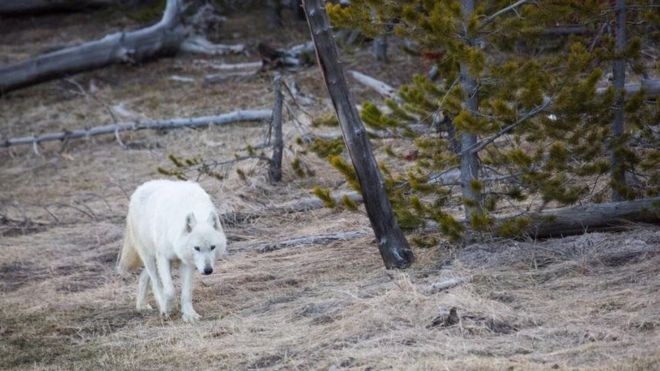
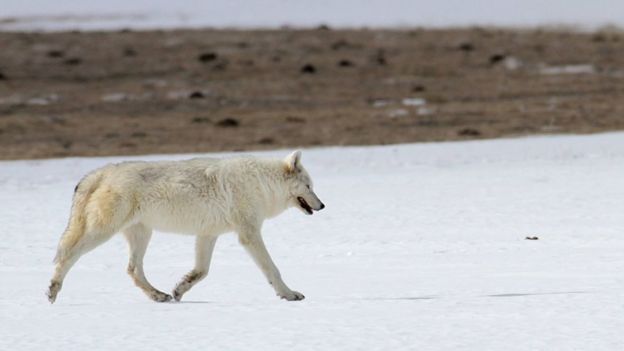
‘White Lady’ wolf shot dead prompts Yellowstone reward

http://www.bbc.com/news/world-us-canada-39930372

  • 15 May 2017
  • White LadyImage copyrightYELLOWSTONE NATIONAL PARK
Image captionThe so-called White Lady was a hit with tourists

A $5,000 (£3,900) reward has been put up for information on how a rare white wolf at Yellowstone National Park was shot dead.

The female was one of three white wolves in the park and had 14 living pups, wildlife officials say.

The reward comes after initial results of a necropsy show the so-called White Lady was shot around 10 April.

“She was one of the most recognisable wolves and sought after by visitors to view and photograph,” the park said.

“Due to the serious nature of this incident, a reward of up to $5,000 is offered for information leading to the arrest and conviction of the individual(s) responsible for this criminal act,” said Yellowstone National Park Superintendent Dan Wenk.

At 12 years old, she had lived for more than twice the average lifespan of a wolf in Yellowstone, officials say.

The Canyon Pack Alpha, as she was known to wildlife researchers (and as The White Lady to tourists), was found by hikers on 11 April.

Wildlife officials were not able to save its life, and the wolf was put down.

Her remains were brought to a US Fish & Wildlife Service Forensics Laboratory in Oregon for a necropsy, where officials determined that it had been mortally wounded by a hunter’s rifle.

As of 2014, researchers had documented at least 104 wolves in 11 packs located within the park.

White wolfImage copyrightYELLOWSTONE/ FACEBOOK
Image captionShe had birthed 20 cubs, 14 of which lived past the age of one

The wolves were reintroduced in Yellowstone in 1995, having been eradicated by hunters.

Advocates of wolves say the presence of predators helps balance the ecosystem, and leads to healthier populations of other wild animals.

Opponents say they are a threat to humans, pets and livestock.


Read more

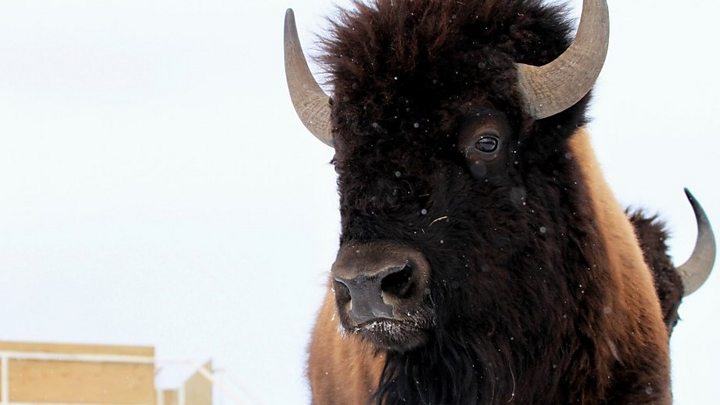
Media captionHere’s how the bison have been reintroduced into the wild

Canadians Killed More Than 750 Million Animals For Food in 2015


66947
Slaughter reports from Agriculture and Agri-Food Canada reveal that we killed at least 750,409,569 land animals for food in 2015.This is an increase from previous years, mostly due to an increase in the number of chickens killed. In recent years, we’ve killed roughly 620 million chickens each year. This number jumped to 640 million in 2014 and 660 million in 2015.

Here are the total number of animals slaughtered in Canada in 2015 by species:

Meat chickens: 660,959,987

Egg-layer hens: 36,526,578

Turkeys: 21,477,602

Ducks and geese: 5,989,919

Pigs: 21,186,243

Adult cows: 2,672,806

Calves: 225,530

Sheeps and lambs: 557,851

Goats: 61,048

Bisons: 14,186

Rabbits: 669,873

Horses: 67,946

These numbers don’t include:

  • More than 90 million tonnes of fin fishes like salmons (they are only counted by weight) killed in Canadian fish farms.
  • Tens of millions of male chicks killed at birth in the egg industry.
  • Millions of animals who died of disease or injuries on farms or en route to slaughter.
  • Thousands of deers, elks, and wild boars killed in Canadian slaughterhouses for which 2015 data is not available.

Photo: Louise Jorgensen, taken outside a chicken slaughterhouse in Toronto.

Poultry farmers threaten to sell flu infected birds

Exposing the Big Game's avatarThe Extinction Chronicles

http://www.graphic.com.gh/business/business-news/poultry-farmers-threaten-to-sell-flu-infected-birds.html

Poultry farmers threaten to sell flu infected birds

Poultry farmers threaten to sell flu infected birds

Poultry farmers across the country have threatened not to report any cases of bird flu incidence on their farms for fear that their birds will be culled and compensation will not be paid to them.

This follows the inability of the government to pay the farmers about GH¢11 million as compensation for culling 111,000 birds during the Avian influenza (bird flu) outbreak two years ago.

Already, some of the farmers have carried out their threat and are rushing infected birds to the market for sale as soon as they detect signs of bird flu on their farms.

The Parliamentary Select Committee on Food, Agriculture and Cocoa Affairs approved GH¢11 million as compensation for the poultry farmers whose birds were culled (destroyed). Out of the amount, the farmers claim only GH¢1 million was paid as compensation to…

View original post 823 more words

These are the most climate-damaging foods

Exposing the Big Game's avatarThe Extinction Chronicles

http://www.cnn.com/2017/05/15/world/gallery/climate-damaging-foods/index.html

View original post 182 more words