Exposing the Big Game

Forget Hunters' Feeble Rationalizations and Trust Your Gut Feelings: Making Sport of Killing Is Not Healthy Human Behavior

Exposing the Big Game

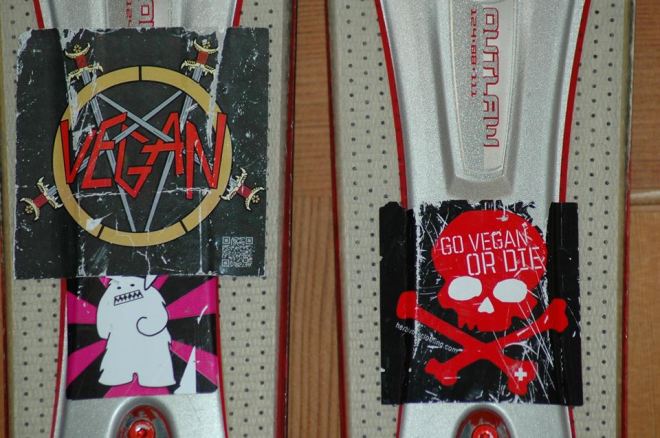
Go Vegan or Die

Exposing the Big Game's avatarExposing the Big Game

10959824_10152683692271188_8744564479023804055_n

On the tip of one my K2 Apache Outlaw skis is a sticker of a skull and crossbones with the shocking statement, “Go Vegan or Die.” That sentiment might seem mean-spirited unless taken as fair warning about the very real health risks associated with eating meat—such as the greatly increased risk of cancer.

Like the anti-smoking campaign slogan, “Quit Smoking or Die,” “Go Vegan or Die” is simply good advice for people seeking longevity. (Stone-age meat-eaters seldom lived past 30, after all.)

There’s also a less-charitable motive for the slogan on the sticker. Anybody who has been the victim of thoughtless mockery from a meat-eater for the selfless act of eschewing animal flesh would be tempted to use the slogan, “Go Vegan or Die,” as would anyone frustrated by the results of their futile attempts to help others see that animal slaughter is cruelty and humans can live quite happily on…

View original post 190 more words

Infamous ‘Lion Killer’ Perishes After Falling 100 Feet During Hunting Trip

https://animalchannel.co/hunter-dies-trip/

written by Britanie Leclair on October 9th, 2017

According to Google Dictionary, karma is a belief based in Hinduism and Buddhism that says a person’s actions dictate their future. It’s also a term that a number of animal lovers have been using to describe the following story.

In November 2015, an Italian hunter named Luciano Ponzetto drew the wrath of the internet after the public got a hold of photos of him smiling next to the body of a hunted lion.

According to Safari Club Italy (of which Ponzetto was a member), the photos were originally posted to the club’s Facebook page to showcase the winners of its annual Chapter Trophy Award competition— a competition in which Ponzetto had won a 3rd place prize.

The photos and subsequent media coverage made Ponzetto infamous. He was criticized and ultimately forced to resign from his role as the medical director of a business kennel.

The Sun also quoted him as saying, “I am being criticized by people who do not know me. I have always loved my work and I have always loved animals… I will carry on hunting until the law changes.”

Source: ATI

But Luciano no longer hunts. It isn’t because the laws have been changed, however— it’s because he died in a manner that many are calling an act of karmic retribution.

One year following the initial controversy, media outlets reported that Ponzetto had died as a result of falling into a 100-foot ravine during one of his regular hunting trips. According to ATI, Ponzetto was hunting wild birds with friends in the Colle delle Oche hills near Turin, Italy, when he slipped on a patch of ice, ultimately falling to his death.

According to sources, prior to the incident, Ponzetto had recently returned from Canada and had bragged about catching a number of kills. An Italian spokesperson (via The Sun) said, “His body was recovered by helicopter and taken to a local hospital… He died instantly and there was nothing that could be done.”

Now, I’m not one to talk ill of the dead, but I can say that the news of Ponzetto’s death received very little sympathy. As mentioned, people considered the circumstances ironic, believing the hunter had finally paid the price for his hunting ways.

Care2 March in London to Protest Badger Culling, Fox Cubbing, Grouse Shooting

http://www.care2.com/causes/care2-march-in-london-to-protest-badger-culling-fox-cubbing-grouse-shooting.html

Last June, animal rights activists celebrated the news that the U.K. ban on fox hunting would remain in place. The Queen’s speech for the opening of a new Parliament made no mention of Prime Minister Theresa May’s plan for a vote on the fox hunting ban, meaning that it cannot be repealed until at least 2019.

One of the events leading up to this success was a huge demonstration held on May 29 when thousands of people, including Care2 activists, marched through London in protest against the government’s decision to re-open the debate on fox-hunting.

That was a huge victory, but there is still much work to be done. Saturday, August 12, will see another protest, “Make Badger Culling & Hunting History,” headed up by Care2 along with the Badger Trust, the League Against Cruel Sports and the Born Free Foundation. 

Thousands of animal lovers united in their determination to stop the government from playing politics with British wildlife will gather in London’s Cavendish Square at 1:30 pm and conduct a peaceful protest march to Theresa May’s Downing Street home. 

Grouse shooting season begins on August 12, according to the Facebook group, and badger culling season also begins in August.

badgerPhoto Credit: thinkstock


‘Massive backwards step for justice’ as National Trust fails to ban ‘trail hunting’

https://www.league.org.uk/News/massive-backwards-step-for-justice-as-national-trust-members-vote-to-support-trail-hunting

Updated:

Animal lovers have been left distraught today after National Trust members failed to pass a motion to ban ‘trail hunting’ on Trust land.

A group of National Trust members, supported by the League Against Cruel Sports, put forward a motion calling on the charity to stop fox, hare and stag hunts from illegally killing animals on Trust land under the cover of ‘trail hunting’, exempt hunting or just exercising their hounds.

In the result out this afternoon, the number of people voting against the motion to ban Trail hunting was 30,985. Those for the motion was 30,686. This means that the motion failed by 299 votes. It is worth noting that the National Trust was given discretionary votes by some members, meaning that those votes were used by the National Trust to vote against the motion. Without those discretionary votes, the number of people who voted for the motion was actually greater than those who voted against. So the decision was swung against  the motion by the National Trust board.

The result means that 67 hunts which have previously been issued with licences to hunt on Trust land will be able to continue doing so in the future.

Philippa King, Acting CEO of the League Against Cruel Sports, said:

“The Trust claims to protect our countryside but they have singularly failed to do that. This is a massive backward step for justice and a shot in the arm for cruelty. The fact that more people actually voted to ban trail hunting than voted not to is very telling and we are extremely proud of that. But the vote was lost because the National Trust decided to ignore the popular vote and side with the pro-hunt lobby. This is both sad and very worrying and we hope that the Trust will have taken on board and listened very carefully to the points made by members. We want to see them bring in the new licensing rules they have introduced and do everything in their power to ensure the hunts are properly monitored.

“The National Trust could have played a major role in curtailing illegal hunting in this country, but they chose to ignore 400 pages of evidence and instead mislead their members into voting against this motion. Their justification is that there have been no prosecutions of hunts on National Trust land – but if you let a burglar wander round your house without supervision, then he’s unlikely to be arrested.

“Hunts will now claim that people believe they are hunting legally. If so, they shouldn’t mind if the National Trust now invites independent monitors onto their land to ensure that the hunts follow their rules, as the Trust officials don’t normally monitor hunting on their land as they should. We’ll then see how many accidents, how many chases and how many deaths occur in the name of ‘trail’ hunting.”

Helen Beynon, National Trust member who was one of those proposing the motion, said:

“I started this with some other National Trust members because I witnessed the deceit of hunts which are claiming to follow trails but are actually chasing animals, and I couldn’t abide the thought of them getting away with it on National Trust land. I believe the only reason our motion has failed is because most National Trust members haven’t seen it with their own eyes. If they’d have seen what I’ve seen, then I have no doubt they would have voted with us.

“I was surprised, that despite all the evidence available to the National Trust Trustees, and the fact that we were given no opportunity to respond to the terms of any new licence, they advised members to vote against our proposal. By doing this, they have led people to believe that there is no problem. But there is a problem, hunts will now be able to continue their barbaric hobby on land which is meant to be protected for people and animals. It’s disgraceful, and the National Trust should be ashamed.”

TRAIL HUNTING, NOT DRAG HUNTING

The motion did not attempt to ban ‘drag’ hunting which has existed as a legitimate sport for 200 years and uses non-animal based artificial trails in areas without foxes or hares. ‘Drag’ hunting offers a genuine alternative to illegal hunting, as the huntsmen have full knowledge of where the trail is being laid, so ‘accidental kills’ are practically unheard of. However, no fox or hare hunt converted to drag hunting after the Hunting Act passed in 2004, and they invented ‘trail’ hunting instead.

“This was not an attempt to kill off ‘tradition’, it was an attempt to stop the killing of animals for fun,” said Philippa King. “Drag hunts follow an artificial trail and rarely catch an animal ‘by accident’, and will not be affected by this ban. Trail hunting was invented after the Hunting Act came in, but there was no genuine reason to invent a new version of drag hunting unless there was an ulterior motive – to carry on killing foxes, deer and hares, and get away with it.

“This deception has been recognised by many National Trust members, but not by the Trust themselves. Today the hunts will be laughing at the National Trust – or at least those in the National Trust who are opposed to hunting.”

Last year the National Trust issued 79 annual licences granting hunts access to their land in England and Wales to trail hunt.

The League believes there is no such a thing as the ‘sport of trail hunting’ and it is simply a temporary, false alibi to cover for illegal hunting while the hunting fraternity hopes for the hunting ban to be repealed or weakened.

Invented following the enactment of the Hunting Act 2004, trail hunting was created to mimic traditional hunting. Hunts are said to follow a pre-laid trail in areas where the ‘once’ hunted animals would naturally occur. However those controlling the hounds are not told where the scent has been laid, so if the hounds catch the scent of a live animal instead – resulting in a chase and often a kill – this is then classed as an ‘accident’.

Reports from more than 30 hunt monitors across ten years from different organisations covering the majority of hunts in England and Wales (157), have reported witnessing someone laying a possible trail only in an average of around 3% of the occasions they monitored hunts. Worse, they believed that they may have witnessed a genuine trail hunting event, rather than a fake one, on an average of around 0.04% of occasions.

Find out more about the National Trust vote at www.league.org.uk/nationaltrust

Coexistence between wolves and livestock is a delusion

http://www.hcn.org/articles/opinion-coexistence-between-wolves-and-livestock-is-a-delusion?utm_source=wcn1&utm_medium=email

When it comes to public lands, native wolves should get preference.


It is a popular notion among some conservationists that the way to win acceptance for predators like wolves is to work with rural communities and ranchers. Gaining their support certainly helps wildlife managers justify killing packs or individual wolves whenever they prey on cattle.

But these control tactics have limited application. At best, they reduce conflicts in targeted areas and have no significant effect on the distribution or survival of native predators. At worst, they add to the delusion that widespread co-existence between predators and livestock is possible.

The killing of seven members of the Profanity Peak pack in Washington illustrates how a wolf pack paid the ultimate price for merely trying to eke out a living in a place where unfenced domestic livestock had been released to graze.

Hundreds of cattle were released on the allotment, and salt blocks used by cattle were placed near the den site. That led to wolf depredation on cattle followed by the killing of pack members. (More on the Profanity Peak pack here.)

A growing body of scientific research now shows that killing problem wolves often begets yet more conflicts. Whether the killing is done to protect livestock or for “sport” by hunters, it tends to skew wolf populations towards younger animals less skilled at hunting. Loss of individual pack members can also result in changes in a pack’s ability to hold a territory, pushing the animals into new areas where they are less familiar with native prey. Both outcomes often lead to livestock getting killed by wolves.

Even “predator-friendly” operations harm native wildlife. When ranchers use noisemakers like boat horns or firecrackers, shoot at predators to scare them, or otherwise harass wolves and other predators, this hounding and stressing of our wildlife is considered legitimate. But why should conservation organizations pay for range riders or organize volunteers to harass public animals like wolves to protect someone’s private livestock?

The gray wolf is protected as endangered and threatened in some states, and considered a keystone species.

In effect, these groups are saying that wolves, coyotes and other native wildlife do not have a “right” to live on public lands that are being exploited by ranchers. Cows, not native to the West, have preference.

If I were to harass elk on a winter range, force bald eagles away from their nests or in other ways harass our wildlife, I would likely risk a fine. If I were to go out into the midst of a herd of sheep grazing on public lands and start shooting guns or firing off firecrackers to stampede the herd, I would risk imprisonment. But when it comes to harrying wolves, somehow this kind of harassment has become legitimate.

The negative impacts of livestock on our native wildlife go even further than harassment or lethal control — something that none of the “collaborative” groups ever mention to their membership or the press. Just the mere presence of domestic livestock often results in the social displacement and abandonment of the area by native ungulates such as elk.

If one assumes that elk select the best habitat for their needs, then displacement to other lands reduces their overall fitness. And we cannot forget that on many public lands, the vast majority of forage is reserved and allotted to domestic livestock, leaving only the leftovers for native wildlife.

If we assume that one of the limiting factors for native wildlife is high-quality forage, and that less nutritious feed means fewer elk, deer and bighorns, then we are literally taking food out of the mouth of our native predators.

When there is a conflict between private livestock grazing public lands and the public’s native wildlife, such as grizzlies, coyotes and wolves, just which animals should be removed? That is a question that “collaboratives” never ask. It is always assumed that if predators are causing problems for ranchers, the predators, not the livestock, should go.

This assumption adds up to direct and indirect subsidies for the livestock industry. As long as the dominant paradigm is that a rancher’s livestock has priority on public lands, we will never fully restore native predators to our lands. That is why we need to reframe the narrative and recognize that domestic livestock are the “problem” for our native wildlife.

Next time one of these collaboration groups asks for your money, consider giving your funds elsewhere. Look for organizations that challenge the dominance of livestock on public lands through grazing allotment buyouts or that promote the notion that public predators have priority on our public lands.

ACTION ALERT: GOVERNMENT ACCEPTING COMMENTS ON GRIZZLY HUNT POLICIES

http://thefurbearers.com/blog/action-alert-government-accepting-comments-grizzly-hunt-policies

10/04/2017 – 12:48

ACTION ALERT: Government accepting comments on grizzly hunt policies

The province is changing the way grizzly bears are hunted in British Columbia, and it’s your opportunity to let them know what you think about their policy papers, and what the future of grizzly killing will look like.

In August the government announced that all hunting of grizzlies in the Great Bear Rainforest would end (not including First Nations), as would taking traditional trophies from grizzlies hunted throughout the province (but still allowing a hunt for “meat”). This now means that policies surrounding the hunting of grizzly bears need to change, and the Ministry of Forests, Lands, and Natural Resource Operations is asking for public input.

Specifically, they are seeking feedback on:

  • Changes to manage the ban in hunting areas that overlap the Great Bear Rainforest;
  • Changes that will prohibit the possession of “trophy” grizzly bear parts;
  • Changes that will manage prohibited grizzly bear parts;
  • Changes to prohibit the trafficking of grizzly bear parts; and,
  • New reporting requirements for taxidermists.

We encourage everyone to submit their comments via email to grizzly.bear@gov.bc.ca, and if they’re residents of British Columbia, to copy their MLA. Here are our tips for writing a letter:

  • Keep it short and specific. You want to make sure your points are straight-forward and easy to read so there’s no mistaking your opinions, and that it isn’t confused with other, unrelated comments.
  • Be polite and mindful of language. You may feel a great deal of anger, sadness, or even hate over what you need to write. But when communicating with politicians and government bureaucrats, using hateful language, veiled or indirect threats, or cursing, your points can be more easily ignored, and sometimes even result in resources being redirected as a security measure.
  • Provide citations and links. It’s a lot harder to dismiss an argument if there’s clear evidence through citations to reputable documents or media, and links to existing policy or examples. Providing these makes your letter more impactful.
  • Request follow up. If you want answers, make sure your questions are clear, and that you expect responses within a certain time period. Remember that in the case of policy input there may not be any systems in place for responses, and to follow up with bureaucrats or politicians.

Sample Letter

It is my opinion that managing the hunting of grizzly bears and the harvesting and trafficking of the various trophies, parts, or meat of their carcasses cannot be effectively accomplished within British Columbia at this time. Without significant increases to the resources of the Conservation Officer Service and their counterparts at the Ministry of Forests, Lands, and Natural Resource Operations, there is simply no manner of ensuring any policy allowing for some harvesting of grizzly bear trophies, parts or meat. Additionally, long-standing questions regarding the models and research used to make policy decisions on grizzly bear hunting have not been answered (see recommendations from the Scientific Review of Grizzly Bear Harvest and the yet-to-be delivered report from the Auditor General).

How this will interfere with the thriving grizzly bear viewing industry is also not included in your policy papers – a critical oversight.

In conjunction with these vital issues on the conservation and science side, the lack of resources to properly manage the hunt, and the overwhelming shift in societal views on hunting grizzly bears, all grizzly hunting should cease in the province.

Signed

Your name and address


Join The Fur-Bearers today and help us provide alternatives to fur and non-lethal solutions to wildlife conflict. We receive no government funding and rely entirely on donations from supporters like you. To become a monthly donor (for as little as $10/month – the cost of two lattes) please click here and help us save lives today.

Americans’ Appetite for Cheap Meat Linked to Widespread Drinking Water Contamination

http://www.truth-out.org/news/item/42326-americans-appetite-for-cheap-meat-linked-to-widespread-drinking-water-contamination?key=0

Friday, October 20, 2017By Mike Ludwig, Truthout | Report

Scientists recently announced that the “dead zone” in the Gulf of Mexico, an area the size of New Jersey where oxygen levels are too low to sustain most forms of life, is larger than ever. For years, environmentalists have used annual surveys of the dead zone to bring attention to large amounts of agricultural pollution from the nation’s breadbasket that flows down the Mississippi River and fuels oxygen-depleting algae blooms in the Gulf.

This year, the message is hitting much closer to home, especially for those living near farmlands.

A new report from the Environmental Working Group shows that the agricultural pollution causing the dead zone is also contaminating drinking water supplies for millions of Americans with potentially dangerous chemicals. Environmental groups particularly blame large-scale meat production, which require huge supplies of industrially grown corn and soy to raise animals to satisfy the nation’s appetite for cheap meat.

The US leads the world in meat production. One-third of all land in the continental US is used to grow feed and provide pasture for animals that will be killed for meat, according to the environmental group Mighty Earth. Now that agricultural pollution’s impact on drinking water is coming into focus, meat producers such as Tyson Foods are under pressure to set standards that would require large farms in their supply chains to clean up their acts.

“People just naturally pay more attention to the pollution issue in their own backyard than they do [to] pollution issues thousands of miles away,” said Matt Rota, senior policy director at the Gulf Restoration Network, a group that works to reduce pollution in the Gulf South.

Chemicals called nitrates and other pollutants can contaminate drinking water sources when fertilizer and manure drain from poorly protected agricultural fields. Drinking water supplies for roughly 200 million Americans in 49 states have some level of nitrate contamination, but the highest levels are found in rural towns surrounded by industrial farms, according to the Environmental Working Group.

Runoff from farm fields finds its way from rural watersheds to the Gulf, providing nutrients for summertime algae blooms that force fish to migrate and kill off smaller creatures at the bottom of the food chain. The dead zone spanned 8,777 square miles off the coast of Louisiana and Texas when marine scientists measured it over the past summer.

Agricultural Pollution Is a Threat to Public Health

Nitrates are naturally found in soil and water, but high levels of exposure have been linked to birth defects, cancer and a dangerous condition known as blue baby syndrome in infants, which results from low levels of oxygen in the blood. Few water supplies in the US have levels of nitrates above the federal limit of 10 parts per million, which was set 25 years ago to prevent blue baby syndrome, but studies have found that the risk of cancer increases at levels as low as 5 parts per million.

Treating polluted water is expensive, and drinking water utilities often use chlorine and other disinfecting treatments when agricultural pollution contaminates sources of drinking water with manure and other pollutants. When these treatment chemicals interact with plant and animal waste, they create potentially dangerous byproducts such as trihalomethanes (THMs), a group of chemicals linked to liver, kidney and intestinal tumors in animals, according to the Environmental Working Group.

The EPA sets limits on the amount of THMs allowed in drinking water, but environmentalists say those limits were based on the technical feasibility of removing the chemicals, not concerns over their long-term toxicity. In 2010, state scientists in California estimated that levels 100 times lower the legal limit would pose a one-in-a-million lifetime risk of cancer.

Nationwide, water supplies in 1,647 communities, serving 4.4 million people, are contaminated with THMs in amounts at least 75 times higher than California’s one-in-a-million cancer risk level. In 2014 and 2015, 411 of those communities had levels of THMs at or above the EPA’s limits, and two-thirds were found in five states with high levels of agricultural pollution — Louisiana, California, Oklahoma, Missouri and Texas. (You can find out if THMs and other pollutants are in your water supply using this database.)

Craig Cox, the Environmental Working Group’s vice president for agriculture and natural resources, said farmers can take simple steps to reduce agricultural runoff, but too few farmers are taking action. Agricultural trade groups have considerable political clout in Washington, and farmers are exempt from many state and federal environmental regulations. A federal program pays billions of dollars a year to farmers that adopt conservation practices; however, that money does not always support the best pollution control methods.

“Decades of ill-conceived federal farm policy has been a driving factor in this situation we have today that puts millions of American families at risk of drinking tap water contaminated with these dangerous pollutants,” Cox said in a statement.

Activists Target Meat Mega-Producers

Environmentalists in the Gulf spent years fighting for tougher regulation of industrial farming to protect waterways from runoff and ultimately reduce the size of the dead zone, even filing an unsuccessful lawsuit against the Environmental Protection Agency (EPA) for failing to act during the Obama administration. The EPA did introduce eight policy guidelines to help states reduce fertilizer pollution in 2011, but no states have implemented more than two of them because the program is largely voluntarily, according to the Mississippi River Collaborative.

Now that the Trump administration is in charge, prospects for establishing tougher standards are slim at best.

“I don’t have a whole lot of confidence that the feds will be taking stronger steps to make sure that nitrogen pollution isn’t getting into our drinking [water] supply,” Rota told Truthout.

Unable to change farming practices with regulation, activists are now focusing on brand-name companies that buy from industrial farms. Mighty Earth recently mapped high levels of nitrates in Midwestern waterways and found that supply chains for major meat companies were responsible for much of the fertilizer pollution. Tyson Foods, which produces roughly 20 percent of the country’s meat supply through brands, such as Jimmy Dean, Hillshire Farms, Ball Park and Sara Lee, stood out from the rest, with major processing facilities in all five states that are top contributors to pollution in the Gulf.

Activists across the country are now calling on Tyson directly, demanding that the company pressure its subsidiaries and suppliers to clean up their acts. Audrey Beedle, a community organizer with the Clean It Up Tyson campaign in Louisiana, said that Tyson’s new CEO has shown interest in sustainability, and activists see an opening to hold the company to task. Unlike individual farmers, large companies like Tyson are more responsive to pressure from consumers.

“They are a household name; everybody knows Tyson,” Beedle said in an interview. “People want to know what’s in their food. They are sick of unchecked corporations.”

Activists say there are several methods farms can use to prevent agricultural runoff, including rotating crops with small grains, planting cover crops, optimizing fertilizer applications to prevent runoff and using conservation tillage practices. They are also calling for a moratorium on the further clearing of native prairie ecosystems for industrial farming.

Tyson, which runs meat packaging and processing plants, not farms, claims it’s “misleading” to single out one company when water pollution is a problem across the agriculture industry. Nearly 40 percent of corn, for example, is grown to produce ethanol, not meat. In a statement to Truthout, Tyson said that real change on this issue requires “a broad coalition of stakeholders,” and the company is working with trade associations and researchers to “promote continuous improvement in how we and our suppliers operate.”

Rota said individual farmers generally don’t want to cause problems in their own communities or downstream. He thinks they will do the right thing if they are provided with the right solutions and held accountable.

“Farmers aren’t bad people, and I don’t know of any farmer who goes out to say, ‘I’m going to pollute other people’s drinking water,'” Rota said. “But they are business people, and they need to be responsible for their businesses.”

Petition ~ 2017: Stop Dropping Turkeys from Planes at Annual Festival

Nancy's avatar"OUR WORLD"

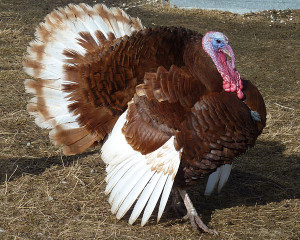
For years, a town has thrown turkeys from planes and watched them plummet to their deaths at an annual festival. This tradition is both horrifically violent and an illegal act of animal cruelty. Prevent turkeys from being killed at this year’s festivities by signing the petition.

Source: Stop Dropping Turkeys from Planes at Annual Festival

View original post

A CWD meeting: The few who heard about the herd, Illinois deer

Exposing the Big Game's avatarThe Extinction Chronicles

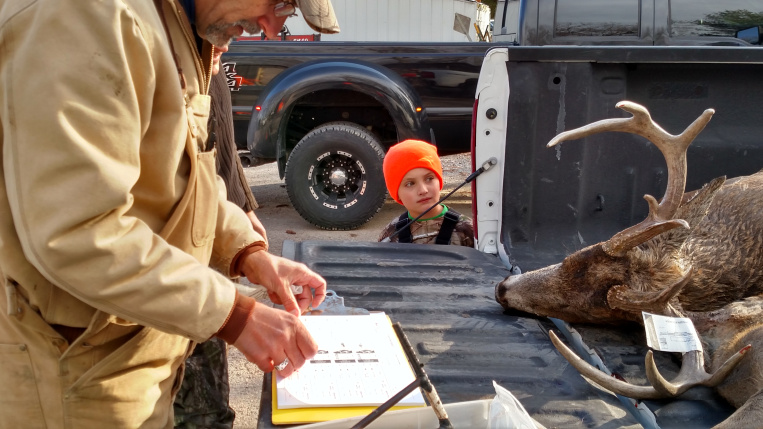
One advantage of having deer check-in stations in counties with chronic wasting disease is the ability for Illinois Department of Natural Resources staff to answer questions of natural curiosity, such as Joey Patyk watching fisheries biologist Rob Miller work on a buck at the LaSalle County check station in 2015.
Credit: Dale Bowman

BONFIELD, Ill. — ‘‘Environmental contamination’’ struck me most at the chronic wasting disease meeting Tuesday at the Illinois State Rifle Association Shooting Range.

That, and how few people showed up. Considering the complaining and rumor-mongering I’ve read and listened to since CWD was found in Illinois, you would think hundreds would show up instead of a dozen.

CWD, an always-fatal neurological disease, first was documented in whitetail deer in Illinois in 2002 near Roscoe. In the 15 years since, it…

View original post 538 more words