Exposing the Big Game

Forget Hunters' Feeble Rationalizations and Trust Your Gut Feelings: Making Sport of Killing Is Not Healthy Human Behavior

Exposing the Big Game

Earth to Humanity: Go Vegan or Die

Roland Vincent's avatarArmory of the Revolution

A brilliant observation by Armory contributor George Martin.

Earth to Humanity: Go Vegan or Die


by George Martin

Nature is blackmailing humanity into going vegan—and it’s a blackmail I fully support.

There are 2 parts to this blackmail:

1. Antibiotic resistance due to antibiotics given to animals in farming: If humans continue to eat animals and the things that come out of them, strands of resistant bacteria will continue to evolve and spread, and gradually kill off humans, with science helpless to defeat it because those bacteria are already resistant to the drugs science has. By 2050, it is estimated that 10 million humans will die each year as a result of antibiotic resistance, with animal agriculture playing the largest part in this, as that’s the industry where the most antibiotics are used. Check out the short documentary ‘Swine’: https://www.youtube.com/watch?v=mUYhAJ6MDrc

2. Resource war: Human population is growing and growing…

View original post 151 more words

New H7N9 bird flu strain in China has pandemic potential-study

Exposing the Big Game's avatarThe Extinction Chronicles

CHICAGO, Oct 19 (Reuters) – Lab experiments on a new strain of the H7N9 bird flu circulating in China suggest the virus can transmit easily among animals and can cause lethal disease, raising alarms that the virus has the potential for triggering a global human pandemic, researchers reported on Thursday.

The H7N9 virus has been circulating in China since 2013, causing severe disease in people exposed to infected poultry. Last year, however, human cases spiked, and the virus split into two distinct strains that are so different they no longer succumb to existing vaccines.

 One of these has also become highly pathogenic, meaning it has gained the ability to kill infected birds, posing a threat to agriculture markets.

U.S. and Japanese researchers studied a sample of this new highly pathogenic strain to see how well it spread among mammals, including ferrets, which are considered…

View original post 262 more words

37 Percent

by Stephen Capra 

BOLD VISIONS CONSERVATION

 
We live in a country that I sometimes no longer recognize. It is a place where a large segment of our population has decided that wild nature and the conservation of our precious resources have no value. Let’s be clear, they still hunt, hike and visit our National Parks, but they are angry, religiously distorted, ignorant or devoid of caring, but they have put their faith in a monster that calls himself President. Their reasoning is varied, but it comes back to money and the delusion of grandeur that spills from the lips of a man that has made exploitation of our natural world a driving force in his presidency.

In less than a year, this White House in concert with the Republican majority have rammed through legislation that has allowed the killing of wildlife in their dens, pushed to open wild oceans to drilling, opened public lands to more fracking and drilling, opened wildlife refuges to trapping, while removing protections for our precious National Monuments. They have also set their sights on the priceless Arctic National Wildlife Refuge, in their endless genuflecting to the dying oil industry.

Perhaps even more alarming is the selection of people to fill positions designed to protect the environment. Using the Republican playbook, most selections are those with strong ties to the industries doing the most harm. From the EPA to Interior, from Department of Agriculture to anything based in science, this White House and Congress have made clear, its war!

Yet across our nation, 37 percent of the public is content with this direction. Recent months have made clear that this year’s- Time Person of the Year, will not be a person, but once again a raging planet that is showing, without question, the impacts of such kamikaze policies and the crushing of bi-partisan efforts at sanity for the earth.

What is it like to be that 37 percent? How can you use our public lands and then ignore their peril? How can you sit on a beach and disregard the discharges in Florida that support Big Sugar, or live in southeast Alaska and not see the destruction of your beautiful and vital rainforest? How can you flock to Yellowstone to see and experience wolves and stand by silently as they are destroyed for ranching interests and Republican fundraising?

How can you perceive the world as us against them, rather than we are one? We are a divided nation like never before and it seems clear that those who support this President will allow him full reign and support even while it destroys the places and quality of life that they clearly take for granted. When will the drape finally be opened to expose the incompetence that we have created, a man devoid of empathy and emotion, a child leader that will destroy all that defy him and his interests. He sees our natural resources as a profit pool to be plundered for his personal enrichment.

It’s like a Jim Jones flashback to listen to supporters as they defend the undefendable. As we pull away from the Climate accords and the world watches they see a nation that no longer pretends to care. We have devolved into a nation that has sucked the world of its natural resources and now has made clear that it will continue to plunder and steal the right to life on this planet. When, many are asking, will we have the maturity and moral guidance to stop corporate special interests that are determined to drain the life out of our planet, for short-term profit.

What world does this 37 percent want to live in? They seem to believe in code words like cutting regulations, refusing to acknowledge that that means filthy water and foul air, less bees and more cancer. It is a Monsanto free world, more oil spills and mountains blown apart for cheap coal. Who wins in such a scenario, certainly not people or communities, not any part of our country or the world.

For our country to move forward we must use any measure possible to block the oil and gas industry. Time is on our side, not theirs. We must demand of our leaders that this President be removed from office. We must stop spending more on our military and focus on clean, renewable energy, not as an option, but as a human right. We must respect wildlife and stop their slaughter and we must fill positions in our federal agencies with qualified people who put our wild lands and the planet first and can never again have ties to corporate interests. Democrats must push for strong environmental goals, no matter the majority; they must use this time to stand on the principle of defending the morality of a healthy planet and its importance to our quality of life, communities and the peace and stability of our world.
We know so much more about our natural world than we did even fifty years ago. We must use our knowledge to defend and rewild our planet, not exploit it any further.

But perhaps the most important thing we can do is to awaken the 37 percent and if nothing else, shame them into making the protection of our natural resources a priority for Republicans. If they continue to ignore the reality before them, they are accomplices to destroying our nation’s best ideals- our land, water and wildlife. They are cheerleaders of their own ruin.

37 percent is not a majority, but they remain a voice filled by fear, ignorance has historically reared its ugliness, but this fight goes beyond a people or a nation, it’s about life and the planet that has been so giving.

Ignorance in this case cannot be tolerated. We fight for life, for beauty and for the freedom that comes from true wildness.

We are in a real fight now.

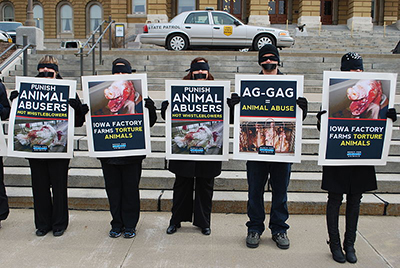
Stop Silencing Animal Welfare Advocates With ‘Ag-Gag’ Law

Nancy's avatar"OUR WORLD"

Animal abusers are currently protected under a potentially unconstitutional law in Iowa that prohibits animal rights advocates and employees from filming or photographing unsafe or inhumane conditions on factory farms. Sign this petition to challenge the agricultural industry’s desire to keep potential abuse out of the public eye and demand that this law be overturned.

Source: Stop Silencing Animal Welfare Advocates With ‘Ag-Gag’ Law

View original post

How to keep your tree stand from killing you

http://www.delmarvanow.com/story/life/outdoors/2017/08/11/tree-stand-safety-inspection/560969001/

August is an odd month. It’s too hot to start most hunting chores, the actual hunting seasons are weeks away and even the fishing is stuck in the summer doldrums. Yet we’re so close, calendar-wise, to so many things that everyone is itching to start doing something. With the archery deer seasons being some of the first hunting in September one smart thing to do now is take care of those minor but important details on your tree stands.

Whether you use a climbing, hang-on, ladder or tripod stand while deer hunting, take this time to go over your stands and check for things like rusted metal, worn bolts and loose pins. Replace anything that looks questionable because it’s certain to break at the most critical time. With tree stands that will likely be when you’re 20 feet in the air, which is not the place you want an equipment malfunction.

Pay close attention to the strap that secures the stand to the tree. On many stands this is simply a heavy nylon belt and those have a tendency to wear and rot over the years. Look closely if your stand has a metal band or cable for the tree attachment, too, as even those can deteriorate over time. I use a climber for much of bow season and a few years ago I noticed the metal cable was beginning to show rust and corrosion. In the trash it went, replaced by a brand new cable from the factory. Don’t take any chances.

Protect the Colorado River From Big Oil’s Fracking

Nancy's avatar"OUR WORLD"

The Trump Administration is about to allow oil and gas companies to conduct drilling and fracking operations along the majestic Colorado River. This not only threatens the drinking water of 40 million people, but also the habitat of countless wild animals. Sign this petition to demand these dirty plans be stopped.

Source: Protect the Colorado River From Big Oil’s Fracking

View original post

‘Not a perfect law’: But new deer tag program in place

http://thetandd.com/not-a-perfect-law-but-new-deer-tag-program-in/article_fa14bb78-7ecd-11e7-8676-7757413d9ee7.html 

‘Not a perfect law’: But new deer tag program in place and will work

From the Collection: The 2017 Hunting Special Edition series
  • DAN GEDDINGS
Matt Geddings

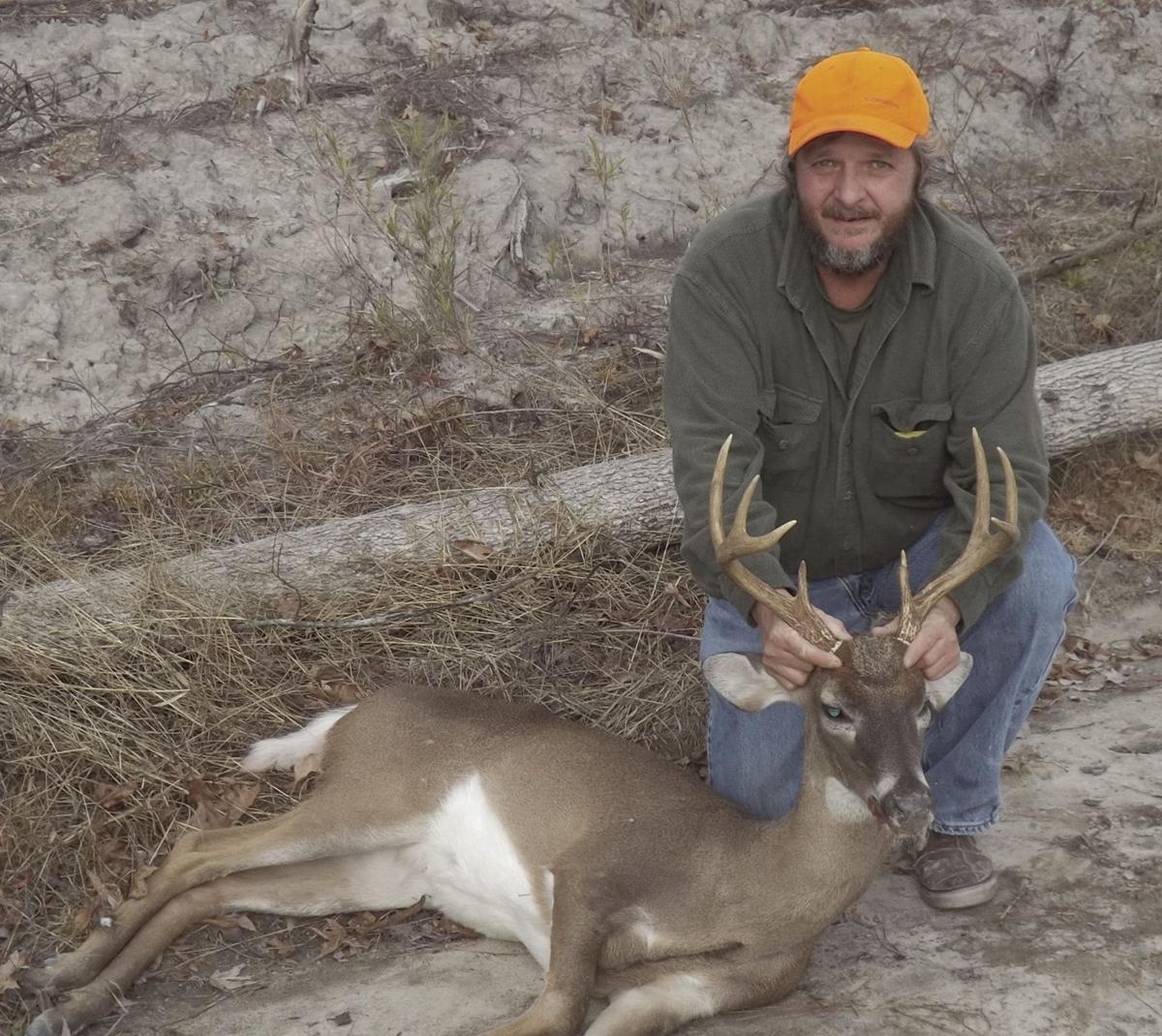
Matt Geddings with a nice buck taken on a Lowcountry deer drive.

The e-mail on July 18 from the South Carolina Department of Natural Resources said that I would be getting my deer tags in the mail soon. I was a little bit surprised, and somewhat confused. Wouldn’t I need to apply for the tags online or pick them up at one of the regional offices? I had not bought my new hunting license yet, but the tags arrived in the mail a few days later.

I had been to the meetings and read all the articles that I saw in magazines and local newspapers. I had talked to people at SCDNR and other hunters. I thought that I understood the new tag program completely, but I was wrong. Apparently the DNR intended all along to mail tags to current license holders and anyone purchasing a new license beginning July 1.

OK, I know that any new program can have some confusion and a few snafus. It’s to be expected, so I’ve gone back to the DNR website and reviewed all the information that I could find. I think I’m up to speed with the info now.

 The Deer Tag Program in South Carolina has been a long time coming. Passage of the “Deer Management Bill” was the culmination of years of effort on the part of the DNR, deer hunters and the Legislature. It’s not a perfect law but probably the best we could get under the circumstances.

The lack of a reasonable limit and enforcement effort on buck deer in the past have been a function of history, tradition and politics — not science.

Under the new law, all deer will be required to be tagged at the point of the kill. The deer only has to be tagged from the point of kill, during transport and until it is processed or cut up. Once the deer is quartered, or boned out, the tagging requirement goes away.

Some hunters have asked how a tagging system can be enforced. If someone chooses to take the risk of not tagging a deer, and he or she is caught, fines can reach more than $1,000. Also, processors will not take untagged deer because taking possession of an illegal deer is a violation. Most hunters are good and honest people. Good people police themselves, and no law can persuade bad people to do the right thing.

Under the new law, South Carolina residents will automatically receive a set of deer tags at no cost when they purchase a hunting license, or if their license will be valid when the hunting season begins. Tags will not be available at over-the-counter vendors, such as sporting goods stores. They became available after Aug. 1 at DNR regional offices. The base set of tags consists of three unrestricted buck tags and eight date-specific antlerless deer tags. Residents can purchase two additional restrictive buck tags for $5 each.

Youth hunters under the license age of 16 must request the free base set of tags annually. Tags will be available over the counter at DNR regional offices in Charleston, Clemson, Columbia, and Florence. Tags can also be ordered by phone at 1-866-714-3611 or via the internet. Contact information will be required to include date of birth and SSN. The youth will be given a customer ID number for future use. The additional tags may also be purchased.

Lifetime/ Senior/ Gratis/ Disability hunters must also request the free base set of tags annually. Not all of these 200,000 license holders are deer hunters and it would wasteful to send tags to all. Additional deer tag purchases are the same as resident and youth hunters.

Many hunt clubs, especially in the Lowcountry, may be enrolled in the Deer Quota Program. The new Deer Quota Program is similar to the old Antlerless Deer Quota Program. The only difference is that all deer must be tagged to include bucks, and the number of deer, to include bucks, that can be harvested will be determined by the DNR.

On dog drives, the person killing a deer must tag it with a personal tag, or if the property is enrolled in the quota program, one of the tags issued to the property should be used to tag the deer.

I haven’t even touched on the nonresident requirements, and some of you may still have questions. If so, you can email the DNR at Deer Tags@dnr.sc.gov or go online to www.dnr.sc.gov. Select “deer” under the hunting tab and click onto the New Deer Tag Information.

Dan Geddings is a native of Clarendon County currently residing in Sumter. He is founder and president of Rut and Strut Hunting Club in Clarendon County and a member of Buckhead Hunting Club in Colleton County.

Editorial: Conservation success story continues to soar

Exposing the Big Game's avatarThe Extinction Chronicles

http://www.riverfallsjournal.com/opinion/editorials/4309414-editorial-conservation-success-story-continues-soar

The United States nearly pushed its national symbol to extinction in the 20th century. Yet 10 years ago today, the bald eagle officially came off the endangered species list. John Flicker, president of the National Audubon Society in 2007, proclaimed the rescue “among the greatest victories of American conservation.”

Indeed it was. Consider how close we came to losing the bald eagle.

Eagles were targeted by hunters for their feathers. So coveted were these birds (and reviled, in some cases) that fanatics took to airplanes to shoot them out of the sky.

Finally, Congress passed the Bald and Golden Eagle Protection Act in 1940, which prohibits “pursuing, shooting, shooting at, poisoning, wounding, killing, capturing, trapping, collecting, molesting, or disturbing” a bald or golden eagle. The act also makes it illegal to “possess, sell, purchase, barter, offer to sell, offer to purchase” any part…

View original post 363 more words

Blood and Beauty on a Texas Exotic-Game Ranch

Photo

A giraffe named Buttercup moved closer to Buck Watson, a hunting guide, as he looks on from a vehicle at the Ox Ranch in Uvalde, Tex.CreditDaniel Berehulak for The New York Times

UVALDE, Tex. — On a ranch at the southwestern edge of the Texas Hill Country, a hunting guide spotted her cooling off in the shade: an African reticulated giraffe. Such is the curious state of modern Texas ranching, that a giraffe among the oak and the mesquite is an everyday sort of thing.

“That’s Buttercup,” said the guide, Buck Watson, 54.

In a place of rare creatures, Buttercup is among the rarest; she is off limits to hunters at the Ox Ranch. Not so the African bongo antelope, one of the world’s heaviest and most striking spiral-horned antelopes, which roams the same countryside as Buttercup. The price to kill a bongo at the Ox Ranch is $35,000.

Continue reading the main story

Photo

Water buffaloes walked across a dam at the Ox Ranch. CreditDaniel Berehulak for The New York Times

Himalayan tahrs, wild goats with a bushy lion-style mane, are far cheaper. The trophy fee, or kill fee, to shoot one is $7,500. An Arabian oryx is $9,500; a sitatunga antelope, $12,000; and a black wildebeest, $15,000.

“We don’t hunt giraffes,” Mr. Watson said. “Buttercup will live out her days here, letting people take pictures of her. She can walk around and graze off the trees as if she was in Africa.”

The Ox Ranch near Uvalde, Tex., is not quite a zoo, and not quite an animal shooting range, but something in between.

Continue reading the main story

Photo

Mr. Watson points out a Roan on the Ox Ranch. Roan, originally from Africa, never shed their horns, making them attractive trophies for hunters any time of year.CreditDaniel Berehulak for The New York Times

The ranch’s hunting guides and managers walk a thin, controversial line between caring for thousands of rare, threatened and endangered animals and helping to execute them. Some see the ranch as a place for sport and conservation. Some see it as a place for slaughter and hypocrisy.

Continue reading the main story

The Ox Ranch provides a glimpse into the future of the mythic Texas range — equal parts exotic game-hunting retreat, upscale outdoor adventure, and breeding and killing ground for exotic species.

Ranchers in the nation’s top cattle-raising state have been transforming pasture land into something out of an African safari, largely to lure trophy hunters who pay top-dollar kill fees to hunt exotics. Zebra mares forage here near African impala antelopes, and it is easy to forget that downtown San Antonio is only two hours to the east.

Continue reading the main story

Photo

A worker replaces a light bulb at the Ox Ranch. CreditDaniel Berehulak for The New York Times

The ranch has about 30 bongo, the African antelopes with a trophy fee of $35,000. Last fall, a hunter shot one. “Taking one paid their feed bill for the entire year, for the rest of them,” said Jason Molitor, the chief executive of the Ox Ranch.

To many animal-protection groups, such management of rare and endangered species — breeding some, preventing some from being hunted, while allowing the killing of others — is not only repulsive, but puts hunting ranches in a legal and ethical gray area.

“Depending on what facility it is, there’s concern when animals are raised solely for profit purposes,” said Anna Frostic, a senior attorney with the Humane Society of the United States.

Continue reading the main story

Photo

Mr. Watson inspects an Axis buck shot the day before by an 8-year-old boy. Trophy carcasses are hung in a cooler room before being transported from the ranch.CreditDaniel Berehulak for The New York Times

Hunting advocates disagree and say the breeding and hunting of exotic animals helps ensure species’ survival. Exotic-game ranches see themselves not as an enemy of wildlife conservation but as an ally, arguing that they contribute a percentage of their profits to conservation efforts.

“We love the animals, and that’s why we hunt them,” Mr. Molitor said. “Most hunters in general are more in line with conservation than the public believes that they are.”

Beyond the financial contributions, hunting ranches and their supporters say the blending of commerce and conservation helps save species from extinction.

Continue reading the main story

Photo

Various bovine species, including Watusi cattle and buffalo, eat from a hay drop at the Ox Ranch. CreditDaniel Berehulak for The New York Times

Wildlife experts said there are more blackbuck antelope in Texas than there are in their native India because of the hunting ranches. In addition, Texas ranchers have in the past sent exotic animals, including scimitar-horned oryx, back to their home countries to build up wild populations there.

“Ranchers can sell these hunts and enjoy the income, while doing good for the species,” said John M. Tomecek, a wildlife specialist with the Texas A&M AgriLife Extension Service.

Animal-rights activists are outraged by these ranches. They call what goes on there “canned hunting” or “captive hunting.’’

Continue reading the main story

Photo

To ensure a healthy herd, the Ox Ranch introduces fresh blood lines using animals bred on other ranches. April Molitor watches with her father, Jason Molitor, the chief executive of the Ox Ranch, as newly arrived blackbuck antelope are released from a trailer. CreditDaniel Berehulak for The New York Times

“Hunting has absolutely nothing to do with conservation,” said Ashley Byrne, the associate director of campaigns for People for the Ethical Treatment of Animals. “What they’re doing is trying to put a better spin on a business that they know the average person finds despicable.”

A 2007 report from Texas A&M University called the exotic wildlife industry in America a billion-dollar industry.

At the Ox Ranch, it shows. The ranch has luxury log cabins, a runway for private planes and a 6,000-square-foot lodge with stone fireplaces and vaulted ceilings. More animals roam its 18,000 acres than roam the Houston Zoo, on a tract of land bigger than the island of Manhattan. The ranch is named for its owner, Brent C. Oxley, 34, the founder of HostGator.com, a web hosting provider that was sold in 2012 for more than $200 million.

Continue reading the main story

Photo

Three kangaroos that live in front of the Ox Ranch lodge are mainly for attraction purposes and are not hunted. They greet arriving guests and are often fed corn by the newcomers and by guides. CreditDaniel Berehulak for The New York Times

“The owner hopes in a few years that we can break even,” Mr. Molitor said.

Because the industry is largely unregulated, there is no official census of exotic animals in Texas. But ranchers and wildlife experts said that Texas has more exotics than any other state. A survey by the state Parks and Wildlife Department in 1994 put the exotic population at more than 195,000 animals from 87 species, but the industry has grown explosively since then; one estimate by John T. Baccus, a retired Texas State University biologist, puts the current total at roughly 1.3 million.

Continue reading the main story

Photo

A hunting blind stands among trees near a game feeder at the Ox Ranch. CreditDaniel Berehulak for The New York Times

The Ox Ranch needs no local, state or federal permit for most of their exotic animals.

State hunting regulations do not apply to exotics, which can be hunted year-round. The Fish and Wildlife Service allows ranches to hunt and kill certain animals that are federally designated as threatened or endangered species, if the ranches take certain steps, including donating 10 percent of their hunting proceeds to conservation programs. The ranches are issued permits to conduct activities that would otherwise be prohibited under the Endangered Species Act if those activities enhance the survival of the species in the wild. Those federal permits make it legal to hunt Eld’s deer and other threatened or endangered species at the Ox Ranch.

Continue reading the main story

Photo

Mr. Watson petted Buttercup the giraffe. Hunters are not allowed to shoot the ranch’s giraffes. CreditDaniel Berehulak for The New York Times

Mr. Molitor said more government oversight was unnecessary and would drive ranchers out of the business. “I ask people, who do you think is going to manage it better, private organizations or the government?” Mr. Molitor said.

Lawyers for conservation and animal-protection groups say that allowing endangered animals to be hunted undermines the Endangered Species Act, and that the ranches’ financial contributions fail to benefit wildlife conservation.

“We ended up with this sort of pay-to-play idea,” said Tanya Sanerib, a senior attorney with the Center for Biological Diversity. “It is absolutely absurd that you can go to a canned-hunt facility and kill an endangered or threatened species.”

Continue reading the main story

Photo

Wildebeest run free on the Ox Ranch’s rangeland. CreditDaniel Berehulak for The New York Times

The creatures are not the only things at the ranch that are exotic. The tanks are, too.

The ranch offers its guests the opportunity to drive and shoot World War II-era tanks. People fire at bullet-ridden cars from atop an American M4 Sherman tank at a shooting range built to resemble a Nazi-occupied French town.

“We knew the gun people would come out,” said Todd DeGidio, the chief executive of DriveTanks.com, which runs the tank operation. “What surprised us was the demographic of people who’ve never shot guns before.”

Continue reading the main story

Photo

A World War II-era M4 Sherman tank. The ranch also has a shooting range built to resemble a Nazi-occupied French town. CreditDaniel Berehulak for The New York Times

Late one evening, two hunters, Joan Schaan and her 15-year-old son, Daniel, rushed to get ready for a nighttime hunt, adjusting the SWAT-style night-vision goggles on their heads.

Ms. Schaan is the executive director of a private foundation in Houston. Daniel is a sophomore at St. John’s School, a prestigious private school. They were there not for the exotics, but basically for the pests: feral hogs, which cause hundreds of millions of dollars in damage annually in Texas.

“We are here because we both like to hunt, and we like hunting hogs,” Ms. Schaan said. “And we love the meat and the sausage from the hogs we harvest.”

Continue reading the main story

Photo

Joan Schaan takes a photo of her son Daniel Schaan, 15, as he prepares for a night boar hunt. CreditDaniel Berehulak for The New York Times

Pursuing the hogs, Ms. Schaan and her son go off-roading through the brush in near-total darkness, with a hunting guide behind the wheel. Aided by their night-vision goggles, they passed by the giraffes before rattling up and down the hilly terrain.

Daniel fired at hogs from the passenger seat with a SIG Sauer 516 rifle, his spent shell casings flying into the back seat. Their guide, Larry Hromadka, told Daniel when he could and could not take a shot.

No one is allowed to hunt at the ranch without a guide. The guides make sure no one shoots an exotic animal accidentally with a stray bullet, and that no one takes aim at an off-limits creature.

One of the hogs Daniel shot twitched and appeared to still be alive, until Mr. Hromadka approached with his light and his gun.

Continue reading the main story

Photo

Larry Hromadka, a hunting guide, fires his pistol to end the suffering of a feral hog shot and wounded during a night boar hunt. CreditDaniel Berehulak for The New York Times

Hundreds of animals shot at the ranch have ended up in the cluttered workrooms and showrooms at Graves Taxidermy in Uvalde.

Part of the allure of exotic game-hunting is the so-called trophy at the end — the mounted and lifelike head of the animal that the hunter put down. The Ox Ranch is Graves Taxidermy’s biggest customer.

“My main business, of course, is white-tailed deer, but the exotics have kind of taken over,” said Browder Graves, the owner.

Continue reading the main story

Photo

Many trophy carcasses from the Ox Ranch are taken to Graves Taxidermy in Uvalde for mounting. Meg Rowland, a newly hired assistant, works on a customer order in the workshop.CreditDaniel Berehulak for The New York Times

He said the animal mounts he makes for people were not so much a trophy on a wall as a symbol of the hunter’s memories of the entire experience. He has a mount of a Himalayan tahr he shot in New Zealand that he said he cannot look at without thinking of the time he spent with his son hunting up in the mountains.

“It’s God’s creature,” he said. “I’m trying to make it look as good as it can.”

Continue reading the main story

Photo

White stags and white elk graze on the ranch at sunset. CreditDaniel Berehulak for The New York Times

Small herds passed by the Jeep being driven by Mr. Watson, the hunting guide. There were white elk and eland, impala and Arabian oryx.

Then the tour came to an unexpected stop. An Asiatic water buffalo blocked the road, unimpressed by the Jeep. The animal was caked with dried mud, an aging male that lived away from the herd.

“The Africans call them dugaboys,” Mr. Watson said. “They’re old lone bulls. They’re so big that they don’t care.”

The buffalo took his time moving. For a moment, at least, he had all the power.