The Sierra Club Chooses Killers over Advocates for Life and Nature

The Sierra Club Chooses Killers over Advocates for Life and Nature By Paul Watson

May 20, 2011

 By Paul Watson

[Translate]


On April 21st, 2006, Captain Paul Watson, founder of the Sea Shepherd Conservation Society, commemorated John Muir’s 168th birthday by saluting Muir’s anti-hunting philosophy in an article that accompanied his resignation as Sierra Club National Director, only a few days prior. We have decided to reawaken Paul’s article, as we feel that it is a profound piece, which echoes the feelings of many environmental, conservation and animal rights activists, alike. Thank you for allowing us to post this. Please click on Paul’s photo above to visit the Sea Shepherd Conservation Society’s website. In Unity…

The Sierra Club Chooses Killers over Advocates for Life and Nature By Paul Watson

My resignation from the Sierra Club received more letters of support for condemning hunting than criticisms and this was to be expected considering that more than 80% of Sierra Club members do not hunt.

Of the few who were critical of my anti-hunting position, they reportedly took offense to my remarks as being anti-hunting(of course they were) and they insisted that hunters were a strong conservation lobby and thus essential to protecting wildlife and wildlife habitats.

I probably should have been more definitive of my position. Instead of stating that I was anti-hunting or opposed to hunters, I should have said that I am anti-killing and opposed to killers.

The choice is really between endorsing the infliction of pain, suffering and death or opposing the infliction of pain, suffering and death.

Pro-killers will say that those people like me who are opposed to killing are alienated urbanities, of the privileged class, and insensitive to the traditional rationale that supports hunting.

That argument does not work with me because I was raised as the eldest of seven children by a single mother in a small fishing village in a rural area of Eastern Canada. My father was abusive and he was a hunter.

I have spent a large part of my life in third world nations and on the ocean. I oppose the killing of wildlife not because I am alienated from nature but because I happen to believe that you can’t love or respect nature with a gun.

I walked the trap lines in the Eastern bush as a child. I walked them to free captive animals from leg hold traps and to destroy the traps. I destroyed hundreds of these vicious contraptions between the ages of 11 and 18.

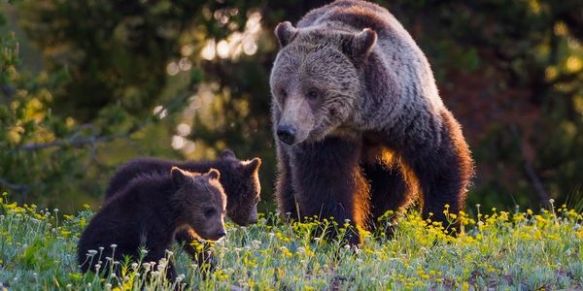
I have seen the suffering. In Kenya I watched a mother elephant literally weep for the loss of her calf. In Michigan I witnessed a Canada goose sit for days without eating beside the body of its mate who had been shot and not recovered. In Alaska I saw a Grizzly cub sitting confused beside the skinned body of its mother who was killed only for her hide. In the Yukon, I followed a trail of blood for over a mile to discover an aerial gut-shot wolf staring at me in fear and bewilderment.

What I have observed in the wild is suffering. It was plainly evident and I felt remorse for the arrogance of our species for justifying the taking of lives for sport, for enjoyment, for fun, and for pleasure.

In Zimbabwe I spent time with big game hunters, some of whom reluctantly led rich trophy hunters into the bush because they had lost their jobs as rangers and President Mugabe had ruled that unless wildlife made money the animals would be eliminated. These hunters described most of their clients as slob hunters, arrogant and ignorant and expressed their shame at being forced to participate in the murder business.

I was amazed to discover that a Texan accountant had won a prize from the Boone and Crocket Club for bagging a trophy whitetail deer and then he was exposed when it was discovered that the rack of an animal stolen from a taxidermist in Alberta had been surgically grafted onto a smaller animal on a game farm in Mexico where they flushed it out from cover into the sights of the great hunter’s rifle.

It was John Muir, the founder of the Sierra Club who first described hunting as the murder business.

In a few places in the world people hunt for survival. In the past, people were forced to hunt for survival. The constituency the Sierra Club is now courting through its killer outreach program are not people who have a need to hunt for survival.

They are people who spend more money on weaponry, travel and related expenses than the value of the meat they obtain. It is not the meat they are after but the thrill of the kill.

Dick Cheney, when not shooting lawyers, describes how he loves to see the ducks tumble from the sky. I’ve heard hunters describe how pulling the trigger gives them an erection.

These are men who slaughter for pleasure. I call them perverse death deviants and I have no apologies for labeling them as such. Killing for pleasure is a sickness, no different than child molestation or rape.

There is no sport in killing an animal from a distance with a sophisticated tool designed to inflict death. The name sportsman implies that there is a fair contest. There is nothing fair about being ripped apart by high powered bullets.

Hunters target the biggest, the strongest and the best of the species they pursue. This is behavior outside the laws of ecology. It is unnatural predation and certainly cannot be condoned by credible conservationists.

Hunters defend their perverse desire to extinguish life by saying it is traditional. Unfortunately many barbaric practices are traditional. However, modern day hunting bears little relation to so called traditional hunting. Hunters today are more akin to those who eradicated the bison and took only the tongues.

Hunters were responsible for the extinction of the Labrador duck, the Passenger Pigeon, the Eastern Bison, the Plains Wolf and the extirpation of the Grizzly from most of the lower 48 states. They were not only killers they were involved in the act of specicide, the complete eradication of entire species. This was not conservation.

Hunters cite Theodore Roosevelt as a big game hunter who was also a conservationist. This is true, he was both. He lived in a time when killing for pleasure was accepted but it was also a time when racism was accepted as normal and it was considered abnormal for women to have any rights, especially the right to vote. Roosevelt did set aside land to conserve much in the same way that the British aristocracy set aside land as exclusive hunting preserves to keep out the lower classes.

The Sierra Club is spending hundreds of thousands of dollars to reach out to invite killers to join the Club. The leadership of the Club believes that the over 80% of Club members who don’t take pleasure from killing must be tolerant of the less than 20% who do. They want to bring in more killers into the Club.

There is a big difference between hunting and killing. Photographers and film makers can hunt wildlife. It actually takes more skill to hunt a Mountain sheep with a camera than with a rifle. Any nimrod can pull a trigger and send a high velocity bullet unexpectedly into living tissue to shatter organs and induce shock. The photographer brings back nobility, a creature caught in its natural habitat in harmony with the world around it.

The killer watches his victim tumble from the air or crash to the ground as it chokes and gurgles on its own life blood. The photographer brings back life. The hunter brings back death.

I have been a hunter myself. I’ve never killed anything but I have stalked and hunted human poachers. I have destroyed their ships, their rifles, their nets, their longlines and their harpoons. I have snatched clubs from the bloody hands of sealers and defended myself from their attacks. My form of hunting is much fairer and gutsier than these killers who prey upon their unsuspecting and innocent victims. I target the guilty not the innocent.

Once I trekked with Kenyan rangers across the plains of Tsavo on the track of poachers. We followed their trail of elephant carcasses rotting on the ground with only their tusks removed. We found the criminals. They fired on us and killed one of our rangers. We did not kill them. We wounded two and arrested seven. They were armed with AK-47 rifles and our rangers were armed with British Enfield 303’s. We were up against a superior foe and we beat them. It was not sport. It was not fun. It was dangerous and necessary work and the objective was to save lives, not to extinguish lives.

That is the only kind of hunting that makes sense today in a world with a human population approaching seven billion. If every American exercised their right to kill, the ducks, geese, quail, elk, deer and other creatures would disappear quite quickly. There are simply to many of us and not very many of them.

It can hardly be an egalitarian sport if only a minority of citizens can realistically participate. Instead of encouraging hunting, groups like the Sierra Club should be discouraging the number of hunters. The nation and the world needs fewer killers of wildlife, not more.

In Europe over a hundred million songbirds are gunned down every year. Elephant populations have been reduced by 70% in East Africa since I worked on poaching patrols there in 1978. World fisheries are in a state of collapse. Wildlife is getter scarcer and there is more need now than ever for protection.

Why can’t we protect wetlands simply because wetlands need to be protected? Why is there this demand that killers are needed to help protect wetlands simply because they want to slaughter ducks? Canada geese mate for life. Shouldn’t it bother us that we shatter tens of thousands of these relationships every year? Why should we tolerate the accumulation of lead and steel shot in the marshes and estuaries? Why should we tolerate the legal murder of human beings that we label as hunting accidents, especially when the victim is a non-killer, perhaps a child some nimrod has mistaken for a deer.

The son of Sigmund Freud was walking on his own property in Quebec when a hunter shot and killed him. The killer was found not guilty because the death was ruled an accident.

When a stranger can kill you on your own land and get away with it, it demonstrates that our tolerance for this legal killing has gone over the top of acceptability.

One killer wrote me to say that my radical anti-hunting ideas were unacceptable for a member of the Board of the Sierra Club. When did opposition to killing, to the taking of life, to the extinguishment of a living creature, to the wasting of a sentient being become a radical idea?

Sometimes I think we live in such a bizarre world where advocates for life are considered radical and proponents of death are considered normal, where violence is considered acceptable and non-violence is dismissed as unpatriotic or cowardly.

Few killers question the morality of their actions. Once you have reached a stage where you can inflict cruelty and death, thoughts of morality, empathy and respect have long since vanished.

For if a killer of a deer could feel the pain and anguish of his victim or see the fawn starve because of a mother that did not return they would have little appetite for the meat.

Humans who have crossed the line into dealing death and inflicting misery have become alienated from the wonderment of life and no longer see or appreciate the magic of being alive.

Life is to be cherished, protected, defended and championed, not to be wantonly and cruelly destroyed, and certainly not for so frail an excuse as pleasure or sport.

This essay may be freely distributed and published.

Captain Paul Watson
Founder and President of the Sea Shepherd Conservation Society (1977-
Co-Founder – The Greenpeace Foundation (1972)
Co-Founder – Greenpeace International (1979)
Director of the Sierra Club USA (2003-2006)
Director – The Farley Mowat Institute
Director – http://www.harpseals.org

Whom when I asked from what place he came,
And how he hight, himselfe he did ycleepe,
The Shepheard of the Ocean by Name,
And said he came far from
the main-sea deepe.
– Edmund Spenser
A.C.E. 1590

http://www.Seashepherd.org
Tel: 360-370-5650
Fax: 360-370-5651

Address: P.O. Box 2616
Friday Harbor, Wa 98250 USA

“ECO-PIRATE: THE STORY OF PAUL WATSON” is a feature-length documentary about a man on a mission to save the planet and its oceans. Currently being screened at the prestigious Cannes Film Festival to wide acclaim, this documentary is the first of it’s kind to follow the life of Captain Paul Watson’s tireless battle to save our oceans. Do not miss this film!


France overturns ban on captive dolphin breeding. Money Means More Than The Environment !

Serbian Animals Voice (SAV)'s avatarSerbian Animals Voice (SAV)

France overturns ban on captive dolphin breeding

Reproduced from  https://phys.org/news/2018-01-france-overturns-captive-dolphin.html#jCp

France’s highest administrative court on Monday (22/1/18) overturned a ban on the breeding of dolphins in captivity, a victory for marine parks which had argued the move could put them out of business.

The previous Socialist government ordered the ban, which also applied to killer whales, last May after complaints from animal rights groups hoping to end marine and aquarium shows.

But former environment minister Segolene Royale had tightened the ban at the last minute, and failed to consult the public and others on a measure that could have forced aquariums to close.

Aquariums and parks such as Marineland in southern France—the biggest attraction of its kind in Europe—have faced growing criticism in recent years over their animals’ living conditions.

“This is excellent news for our animals and animal parks in France,” said Pascal Picot, managing director at Marineland…

View original post 138 more words

Meigs County man charged in operating ‘bearbaiting’ event

https://www.10tv.com/article/meigs-county-man-charged-operating-bearbaiting-event

Clinton J. Bailey. (Photo/Meigs County Sheriff)
PUBLISHED: 
UPDATED: 

MEIGS COUNTY — A Meigs County man has been charged after the sheriff said he was suspected to have been operating a “bearbaiting” event.

Clinton J. Bailey, 51, is charged with 16 counts in connection with the event, three of which are unclassified felonies for animal fighting.

He also has two fourth-degree misdemeanor charges for animal fighting, two misdemeanor charges for falsification and nine dangerous animal misdemeanor charges.

He was arraigned on Jan. 24 and released on a personal recognizance bond, according to Meigs County Common Pleas Court online court records. His next appearance will be Feb. 26.

In November, the Ohio Department of Agriculture Enforcement Division executed a search warrant on Bush Road in Long Bottom, according to the Meigs County Sheriff. Bailey owned a bear and possessed a Dangerous Wild Animal Permit.

At that location, Bailey is alleged to have been operating a “bearbaiting” event whereby several hunting dogs were released inside an enclosure, attacking the bear. Officers received information Bailey was charging admission of $20 per dog to participate.

In addition to Bailey, and his juvenile son, seven males, two females and eight children were present at the event with the majority of participants being from West Virginia.

At least one child was observed inside an unapproved enclosure while dogs were attacking the loose bear. Two of the males had handguns.

Bearbaiting is defined under Animal Fights, Section 959.15 of the Ohio Revised Code.

Assistance was provided by the Franklin County Sheriff’s Office Drone Team, who obtained significant video footage of the illegal activity as well as the Washington County and Jackson County Sheriff’s Offices who provided tactical assistance.

The Ohio Department of Natural Resources and Ohio State Highway Patrol provided significant assistance as well.

The bear was seized pursuant to the warrant by DWA program personnel.

Big Game Hunter Gets Shot Dead While In Africa Hunting Lions

 http://www.ladbible.com/news/animals-big-game-hunter-gets-shot-dead-while-in-africa-hunting-lions-20180129

A Croatian trophy hunter who’d hunted ‘everything that could be hunted in Europe’ has been shot dead in a freak accident while taking part in a South African hunting expedition.

Pero Jelinic, a 75-year-old hotelier from the Croatian island of Pag, had already killed one lion and was about to shoot another when he was struck and killed by a stray bullet on a remote farm this past Saturday.

Jelinic’s friend Slavko Pernar said Jelinic was a ‘passionate’ hunter who travelled to Africa to land a lion trophy after he found himself seeking a new challenge, the Daily Mail reported.

Credit: Facebook/Pero Jelinic

It is not yet clear who was responsible for firing the shot that killed Jelinic, police said.

Jelinic was shot while he was in the North West province of South Africa, having travelled there with two friends to hunt big cats ‘to complete his extensive trophy collection’.

According to Pernar, a close friend of Jelinic’s and a fellow hunter, Jelinic was particularly keen on claiming the head of a lion ‘to crown his rich hunting career’. For the past year he had even leased his hotel out so he could commit fully to his ambition and enjoy his retirement.

“Pero was a passionate hunter of big and small game, and in search of that he travelled most of the world,” Pernar told Croatia’s Jutarnji List newspaper.

“For the past year he had leased his hotel to dedicated himself to the things he planned to accomplish and enjoyed a deserved retirement.

“He, unfortunately, received the ugliest end – he died in South Africa doing what he loved. His office, a hunting hall, was full of trophies, deer and bear specimens and everything that could be hunted in Croatia and Europe.”

Jelinic was killed at Leeubosch Lodge, a property a four-hour drive from Johannesburg and 40 miles from the border with neighbouring country Botswana.

The property is known for keeping lions in captivity for the sole purpose of their being hunted – a controversial industry known as ‘canned’ lion-hunting.

The owner of Leeubosch Lodge, Dr Gideon Engelbrecht, told News24 that he was not at the farm when Jelinic was shot dead.

‘I was at my surgery when I received the call. I arranged for a helicopter to take the man to hospital, but that’s all I am going to give you at this stage, because the case is still under investigation,’ he said.

South Africa’s ‘canned’ lion-hunting industry, which legally breeds lions in captivity to be killed by hunters, is known for being a lucrative business which is also highly controversial among animal lovers and hunters alike.

Lions at Lion Park in Johannesburg, South Africa. Credit: PA

Hunts in this industry keep lions in a confined space using fences, giving them a zero chance of escape and giving the hunter the best possible chance of claiming his trophy.

In November 2015, the Professional Hunters’ Association of South Africa (PHASA) voted to disassociate itself from canned lion hunting in the country and banned its members from taking part in such expeditions, calling them ‘vanity hunting’.

However, PHASA reversed the ruling last year, a decision which received severe criticism from animal rights groups across the globe.

Police have confirmed that they have opened a case of culpable homicide into Jelinic’s death. They are also investigating charges of illegal possession of a firearm and ammunition.

However, they ‘do not suspect any foul play’ in the shooting and investigations into the death are ongoing.

Featured Image Credit: PA

HUMANS TAKE UP TOO MUCH SPACE — AND IT’S AFFECTING HOW MAMMALS MOVE

Study found that human-modified landscapes shrink mammal movements by up to half

FIELD MUSEUM PUBLIC RELEASE: 25-JAN-2018

Human beings take up a lot of real estate — around 50-70 percent of the Earth’s land surface. And our increasing footprint affects how mammals of all sizes, from all over the planet, move.

A study recently published by Science found that, on average, mammals living in human-modified habitats move two to three times less far than their counterparts in areas untouched by humans.

What’s more, this pattern persists globally: from African forest elephants to white-tailed antelope squirrels in North America, the human footprint infringes upon the footprints of mammal species both big and small. The study, led by Marlee Tucker of the Senckenberg Biodiversity and Climate Research Centre in Germany, is the first of its kind to log movement behaviors for such a wide range of mammals globally.

“All organisms need space,” Bruce Patterson, a co-author of this study and MacArthur Curator of Mammals at The Field Museum in Chicago, explained. “They need space to gather their resources, find mates, and perform their ecological services.” For instance, bats need room to find and consume insects and pollinate plants (which amount to $3.5 to 50 billion worth of agricultural labor annually in the US alone), and apex predators need room to hunt and control other species’ populations.

In the study, more than 100 researchers contributed information on 803 individual mammals representing 57 species in total. Patterson offered up data on the movement of lions in a pristine wilderness area of Tsavo, Kenya. From 2002-09, he followed three lions using high-tech collars that continuously tracked individuals’ movement via GPS — the data he contributed to the Science study. One of those lions, in its natural habitat, patrolled an area twice the size of Chicago (1400 km2) to find food, attract mates, and repel intruders.

But habitat loss and fragmentation disrupt these critical animal behaviors. Clearing rainforest is an example of habitat loss — the destruction and loss of usable area for a given species. Constructing a road through the savannah, on the other hand, constitutes habitat fragmentation — the division of habitat area into smaller, discontinuous spaces. When suitable habitat spaces become too small or too isolated, animals can no longer afford to visit them, changing their space use.

As habitats become compromised, resources like food and living space that animals rely on become scarce. Sometimes, when resources are limited, animals traverse larger areas to get what they need — if there’s not enough food in a five-mile radius, they might move to a ten-mile radius. However, this study shows that on the whole, that sort of additional movement tends not to be an option — if there’s no uninterrupted landscape available, then the affected animals simply can’t live there.

To that end, the Science study found “strong negative effects of the human footprint on median and long-distance displacements of terrestrial mammals.” Patterson put it more simply: “Human dominion over Earth’s landscapes gets in the way of animals doing their thing.” Some species, like mice, can make do with less room, but animals that need lots of space, like lions, tigers, and elephants, simply can’t live in areas with lots of humans.

“It is important that animals move, because in moving they carry out important ecological functions like transporting nutrients and seeds between different areas. Additionally, mammalian movements bring different species together and thus allow for interactions in food webs that might otherwise not occur. If mammals move less this could alter any of these ecosystem functions,” says lead author Marlee Tucker.

Across the wide array of species its data encompasses, the study points to a singular, and grim, conclusion: For mammal species, the effects of habitat loss and habitat fragmentation don’t discriminate by geographic location, body size, or where that species sits on the food chain — the human footprint threatens most other mammals.

Still, Patterson remains hopeful that the Science study can guide further research and change our approach to human land use. “Ultimately, it would be good to know whether there are critical thresholds in the human footprint for the species living around us. Are there specific points beyond which resources become limiting and species are excluded?” he asked. “As we continue to transform the landscape and as the human population expands, we’re limiting the space and resources that other mammals need to live.”

Patricia Randolph’s Madravenspeak: Pushing babes to violence to bolster flagging hunter numbers

dvoight09's avatarWisconsin Wildlife Ethic-Vote Our Wildlife

BING IMAGES

“The human failing I would most like to correct is aggression….The quality I would most like to magnify is empathy.” ~ Stephen Hawkings speaking at London’s Science Museum

Stephen Hawkings explains, “It (aggression) may have had survival advantage in caveman days, to get more food, territory or a partner with whom to reproduce, but now it threatens to destroy us all.”

It is illegal to have sex with a child less than 16 years old. By law, they are protected because they are morally too immature to engage in sex or bring life into the world. Similarly, a child does not understand death or who animals are and should be encouraged to develop a conscience, not “mentored” to destroy life.

There is no way to disguise it — killing is violence. Aggression is a human failing. Encouraging children to kill as they develop is an immersion technique that…

View original post 700 more words

Ban Shock Collars Worldwide!

Cicci's avatarOne Person, One World.

As Scotland now has taken the step to finally ban shock collars just as Wales have already done, it is now time for England, Ireland and rest of the world to follow.

These collars are not needed for dogs or any kind of animal for that matter. Many who approve of them claim to use them for dogs with “behavioral problems” or to remove “unwanted behaviour”. For example a dog thats barks. Zap them and they soon learn to be quiet? A dog that constantly run away from you. Zap it so it learns to accossiate not listening with pain. It does NOT work that way! A dog needs to be trained with patience, awarding good behaviour and positive methods.

With a shock collar you use fear to control your dog. It causes the animal stress and anxiety, and increase the risk of the dog to bite thinks Ilana R…

View original post 128 more words

Meat Eaters and Pedophiles. Kindred Spirits

Roland Vincent's avatarArmory of the Revolution

pedophile

It is difficult to make a practical or a moral distinction between someone who satisfies their sexual appetite at the expense of an innocent child and someone who satisfies their dietary appetite at the expense of an innocent animal.

Indeed, a rational case can be made that the meat eater is the more cruel and callous of the two, as his victim is murdered so he may satisfy his appetite.

The outrage such a comparison evokes from meat eaters is as predictable as their victims are dead.

Were I able to choose a world of meat eaters or a world of pedophiles, I would infinitely prefer the latter. Such a world would be infinitely kinder than the one in which we live.

Meat eaters are only able to continue their barbarity because of human societal norms and man made laws.

An alien observing human society would no doubt be as…

View original post 846 more words

Should Your Dog Be Vaccinated Against The Canine Influenza Outbreak? | Care2 Causes

Nancy's avatar"OUR WORLD"

By: Laura Goldmanh
January 25, 2018

We’re all aware of the H3N2 flu epidemic that’s made tens of thousands of people sick, but did you know the highly contagious canine influenza (CI) is also spreading across the United States and parts of Canada?

Dogs are becoming infected with the canine influenza virus (CIV) through direct contact with other dogs, nasal secretions, contaminated objects like food bowls and leashes, and by people moving between infected and uninfected dogs, according to the American Veterinary Medical Association (AVMA). It’s important to note that dogs rarely get sick from humans with the flu, and there’s no evidence (for now, at least) that dogs with the virus can transmit it to humans – but cats in an Indiana shelter became sickened with it in 2016.

There are currently two strains of the canine influenza virus (CIV) in the U.S.: H3N8 and H3N2. The H3N8 strain…

View original post 547 more words