Exposing the Big Game

Forget Hunters' Feeble Rationalizations and Trust Your Gut Feelings: Making Sport of Killing Is Not Healthy Human Behavior

Exposing the Big Game

Petition · Canadian Food Inspection Agency: Shut down Ryding Regency Slaughterhouse! · Change.org

Nancy's avatar"OUR WORLD"

‘No more silence about the torture of animals.’

Toronto Star published an article on Dec 21 2017 by journalist Linda McQuaig exposing horrific cruelty at Ryding-Regency Meat Packers captured by Len Goldberg, Chris McGinn and Toronto Cow Save activists.

https://www.thestar.com/opinion/star-columnists/2017/12/21/no-more-silence-about-the-torture-of-animals.html

See the complete graphic footage which was shared in the Toronto Star article:

https://www.dropbox.com/s/uc0fnc0vwq4wdbe/RYDING%20MEDIA%20REVISED.mp4?dl=0

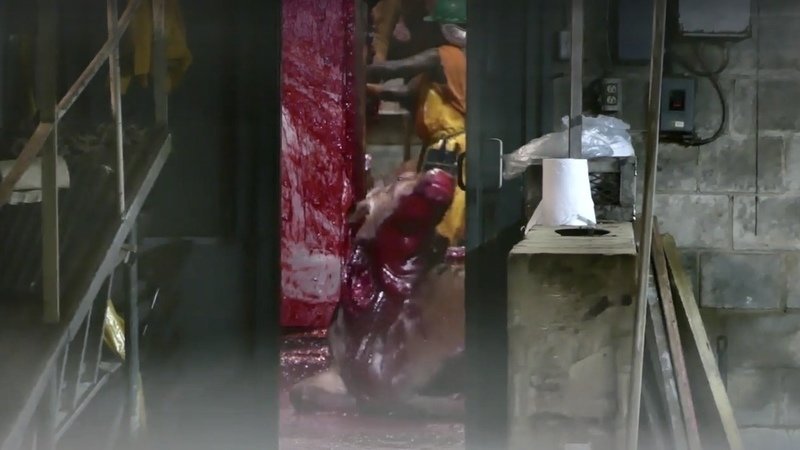
Filming through an open window at the back of the Ryding-Regency slaughterhouse, footage obtained clearly shows a large brown cow thrashing about on the floor, trying to get up, as blood gushes out of a gaping wound on her neck. A black-and-white cow similarly struggles on the floor, while a worker bends over and cuts her throat. Cows hoisted upside down, dangling from one leg, appear to be still conscious with their eye lids opening and closing, while workers tear off the skin from their faces with knives. It is illegal to hoist a conscious cow…

View original post 324 more words

Petition update · TODAY: For National Cheese Lover’s Day, ask Little Caesars for vegan cheese! · Change.org

Nancy's avatar"OUR WORLD"

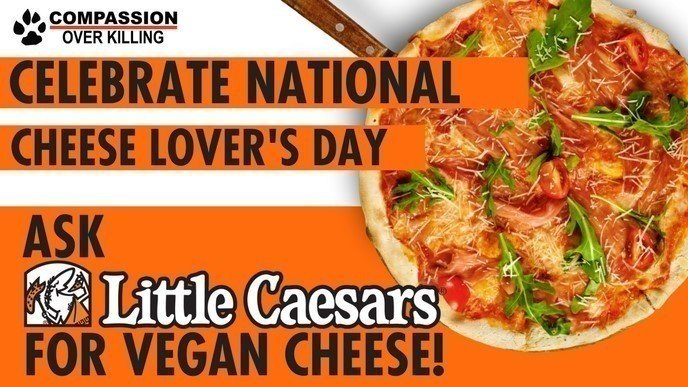
Jan 20, 2018 — Help make National Cheese Lover’s Day fun for everyone by asking Little Caesars for vegan cheese TODAY! Just submit a comment to the company at http://bit.ly/LCvegancheese — use our sample text below!

Millions are going dairy-free for their health, animals, and the environment — but Little Caesars has yet to catch up with its competitors, including Pizza Hut UK, Domino’s Australia and US-based chains like Mellow Mushroom and Blaze Pizza, that are already dishing up dairy-free cheese. The chain has a huge opportunity to get a slice of a massive, growing consumer market by offering vegan cheese, but it needs to hear from YOU first!

TODAY, tell Little Caesars to celebrate National Cheese Lover’s Day by opening up its menu to non-dairy cheese lovers, too! Just visit http://bit.ly/LCvegancheese and use our sample comment below or a polite one of your own.

SAMPLE COMMENT: Happy National Cheese…

View original post 179 more words

Migratory Bird Treaty Act under threat

1/18/2018 | 0

The declining Golden-winged Warbler is one of many species protected by the
Migratory Bird Treaty Act. Photo by By Jayne Gulbrand/Shutterstock

In 1916, the United States and Canada reached a landmark agreement to
protect migratory birds, many of which were being hunted to the brink for
fashion or food. The Migratory Bird Treaty became U.S. federal law in 1918
as the Migratory Bird Treaty Act, one of the nation’s earliest and most
influential pieces of environmental legislation. Passed in the nick of time,
the act saved herons, egrets, waterfowl, and other birds from going the
route of the Passenger Pigeon and other now-vanished species.

Now the act itself is under attack, facing proposed changes that would undo
the safeguards it provides for birds. The U.S. House of Representatives is
considering an amendment eliminating protection for migratory birds that
fall victim to oil spills, wind turbines, and other energy infrastructure.
The language is part of a bill called the SECURE Act, HR 4239. In addition,
the Department of the Interior has drafted a new legal interpretation of the
law, changing a long-standing policy that the act covers these deaths.

The act does not put too heavy a burden on industry. It encourages energy
companies to adopt best-management practices, like covering oil pits with
screens to keep birds from being trapped and killed. In practice,
enforcement of the act has only occurred when companies failed to adopt such
practices — and ignored government warnings.

In a remarkable show of support for keeping the act strong, a bipartisan
group of 17 high-ranking officials from previous administrations sent a
letter to the interior secretary opposing the change. The new interpretation
“needlessly undermines a history of great progress, undermines the
effectiveness of the migratory bird treaties, and diminishes U.S.
leadership,” they wrote.

Migratory birds have inherent value. They also drive economic growth.
Birders spend millions of dollars on wildlife-watching equipment, backyard
birding supplies, and birding tours. Birds also provide essential services
to people, from natural control of insect pests to crop pollination.

According to the 2016 State of the Birds Report, a third of North America’s
bird species are in decline. Now is the time to increase protections for
migratory birds, not undercut the Migratory Bird Treaty Act and other
bedrock laws that sustain them.

Sign the American Bird Conservancy’s petition opposing changes to the
Migratory Bird Treaty Act

A version of this article will appear in the April 2018 issue of
BirdWatching magazine.

This story was provided by American Bird Conservancy, a 501(c)(3),
not-for-profit organization whose mission is to conserve native birds and
their habitats throughout the Americas.

https://www.birdwatchingdaily.com/blog/2018/01/18/migratory-bird-treaty-act
threat/

The Endangered Species You Have Never Heard of and May not Care About.

Exposing the Big Game's avatarThe Extinction Chronicles

Targeting Wildlife Services

Canadian Blog

by Barry Kent MacKay,
Senior Program Associate

Born Free USA’s Canadian Representative

Published 01/16/18

The welcome arrival of Volume 7 of the Handbook of Mammals of the World last week, hot off the press, reinforced my view that most animal protectionists and conservationists share a bias in favor of the “charismatic megafauna,” like pandas, whales, apes, and elephants, which precludes knowledge of both just how incredibly diverse the animal kingdom is and how many species are at risk due to the accelerated rates of endangerment and extinction we now see.

The book covers just nine families of rodents. Volume 6 covered the rest, plus the lagomorphs (rabbits, hares, pikas).

Of the 14 species of birch mice, one is endangered, one vulnerable; of 35 species of jerboa, one is vulnerable; of the five species…

View original post 369 more words

Thai Police Arrest Suspected Kingpin of Wildlife Trafficking

Exposing the Big Game's avatarThe Extinction Chronicles

https://www.usnews.com/news/world/articles/2018-01-20/thai-police-arrest-suspected-kingpin-of-wildlife-trafficking

Thai police have arrested a suspected kingpin of wildlife trafficking who allegedly fueled much of Asia’s illegal trade for over a decade.

Jan. 20, 2018, at 2:22 a.m.

The Associated Press

Police process suspected wildlife trafficker Boonchai Bach, a 40-year-old Thai of Vietnamese descent, Saturday, Jan. 20, 2018, in Bangkok, Thailand. During a press conference Saturday, police announced the arrest of Boonchai who allegedly fueled much of Asia’s illegal wildlife trade for over the last decade. (AP Photo/Tassanee Vejpongsa) The Associated Press

By TASSANEE VEJPONGSA, Associated Press

BANGKOK (AP) — Thai police have arrested a suspected kingpin of wildlife trafficking who allegedly fueled much of Asia’s illegal trade for over a decade, officials said Saturday.

Boonchai Bach, a 40-year-old Thai of Vietnamese descent, was arrested Friday in the northeastern border province of Nakhon Phanom in connection with the with smuggling of 14 rhino horns worth over $1 million from Africa into Thailand…

View original post 570 more words

How Climate Change is Fueling Iran’s Political Instability

robertscribbler's avatarrobertscribbler

Drought.

Year after year after year for the past 15 years, it’s been the reality for Iran.

As with recent severe droughts in places like Syria, Nigeria, India and in other parts of the world, Iran’s drought impacts have forced farmers to abandon fields and move to the cities. It has enhanced economic and physical desperation — swelling the ranks of the poor and displaced. It has produced both food and water insecurity with many families now living from hand and cup to mouth. And it has served as a catalyst for political unrest, protest, and revolt.

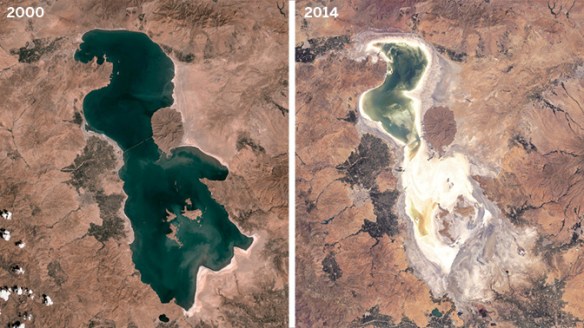
(Iran’s Lake Urmia shrinks to ten percent of its former size following a 15 year long drought. Image source: U.S. Department of the Interior.)

Perhaps the most visible sign of this drought’s epic severity is the drying up of the 5,200 square mile expanse of Lake Urmia. The sixth…

View original post 557 more words

Activists debate Native hibernating bear hunting (including CUBS!!!)

FAIRBANKS — Congressional debate about Alaska hunting rules in April brought a spotlight on a little-understood Alaska Native technique of hunting bears in dens.

At a November meeting in Anchorage, the issue pitted Alaska Native students fresh from a class on how to defend traditional hunting practices against animal rights activists from Florida drawn to Alaska by an obscure piece of law that says it’s permissible under certain conditions to kill bear cubs. 

Harvesting a bear during its winter hibernation is a way to get fresh bear meat in the winter. It is recognized under Alaska subsistence hunting rules as a “customary and traditional use” of black bears in six Alaska game management units in the western and northern Interior.

 The hunt used to be more widely practiced, including in the Tanana Valley. In his 1986 oral history autobiography, Minto Chief Peter John — who was born in 1900 — described hunting bears in dens with a .22-caliber rifle and even with an ax.

Today, finding bears in dens remains important along the Koyukuk River, said Ricko DeWilde, the owner of HYDZ, an Alaska Native-inspired clothing design business in Fairbanks. DeWilde grew up outside of Huslia and returns to the Koyukuk River area for fall hunts, including the search for denning bears.

“We start hunting them around when the leaves fall and they den up. Later on, we’ll check around the rivers for places we think they might be in,” he said.

“Families might check 80 to 100 dens and they might get lucky and maybe get one to five bears.”

Bears are among the most respected of animals among the Koyukon Athabascan people, and there are rules for what parts of the bear women are allowed to the eat, he said. Even talking about bears is frowned upon among some people, he said.

In November, DeWilde was one of 20 students who took a class, Introduction to the Board of Game, offered by the University of Alaska Fairbanks and Tanana Chiefs Conference during the meeting. At the meeting, he testified against a proposal from animal rights organization OneProtest that would have made it illegal for hunters to kill bear cubs, which in practice would have ended den hunting.

The proposal, according to DeWilde and others who testified, was based on the misconception that hunters target young bear cubs. In fact, hunters try not to get dens with cubs, but are obligated to kill the cubs if they find them in a den with a sow.

In April 2017, animal rights advocates around the world turned their attention to Alaska because of an act of Congress that removed some hunting restrictions on federal wildlife refuges in Alaska. The law didn’t affect subsistence, so it actually didn’t change the rules for killing bear cubs.

Volunteers with OneProtest, which is based in Jacksonville, Florida, researched the issue and learned that under a few conditions it’s legal to kill sows with cubs in Alaska, an idea the activists found particularly “barbaric.” A petition organized by the group to outlaw cub hunting in Alaska received nearly 30,000 signatures.

OneProtest was founded to ban bear hunting in Florida, and now has several animal welfare campaigns across the country. In addition to its Alaska campaign, the group has tried to stop bear hunting in New Jersey and to close Mexico’s San Juan de Aragon zoo for poor treatment of animals.

Two OneProtest volunteers traveled to Anchorage in November to ask Alaska’s Board of Game to eliminate the two exceptions for Alaska’s prohibition on killing bear cubs: Alaska’s rules allow the killing of cubs in the Yukon Flats north of Fairbanks under a provision the OneProtest volunteers learned was created because of nuisance bears. In a second, and geographically larger area, the rules allow the killing of cubs in bear den hunts.

The Board of Game voted OneProtest’s proposal down unanimously, which is the board’s usual reaction to proposals from environmental groups. But in a scene unusual in the long and contentious history between animal rights activists and Alaska hunters, the two groups met and found some common ground.

DeWilde, who shook his head and dismissed the OneProtest activists as “super bunny huggers” during their testimony, later talked to them in the hotel lobby.

“They were really open-minded, it turned out. You could tell they really respected the way we live and the respect we had for the animal. There’s a lot that goes into harvesting that animal (bears). That is the most respected animal.”

After the meeting, OneProtest updated its campaign website (oneprotest.org/

bearcubs) with information about its Alaska trip, and created a video apology. The OneProtest activists said they were moved not only by UAF students, including DeWilde, but also by the regional advisory committees from Yupik communities in western Alaska.

“To the Alaskan Native peoples, pitsaqenrita (Yupik for ‘I’m sorry’). We apologize for any offense our initial misunderstanding caused,” a message at the end of the video stated..

Alaska Fish and Game Commissioner Sam Cotten noticed the interaction between the groups and wrote about it in an opinion column published last month in the Daily News-Miner and newspapers in Anchorage and Juneau. He praised the work of students from the UAF Introduction to the Board of Game class.

“They’ve earned lasting respect from the Alaska Board of Game — and from an Outside group representing different cultural values that … may have received the greatest education of all,” Cotten wrote.

Back in Florida, one of the OneProtest activists who came to Anchorage said it’s true their trip to Alaska was educational but disagreed with Cotten’s carpetbagger characterization of their group. The group has supporters in Alaska, including a woman in Anchorage who testified with them at the Board of Game meeting, he said.

“Unfortunately, Sam Cotten’s article was factually correct but it left out some important information,” said OneProtest activist Robert Evans. “There were other Alaskans who were supporting this.”

Evans said he’s still interested in working to change Alaska hunting rules in the future, but might take on a different topic, such as Alaska’s predator control policies. If he could do it again, he said, he’d also try to work with Alaska’s regional advisory committees instead of writing his own proposal.

“We would have done more at the grass roots to have the advisory panels do the proposal rather than us,” he said. “It’s got to be coming from Alaskans. There can’t be any perception, even though that wasn’t the case here, that it’s coming from an outside source.”

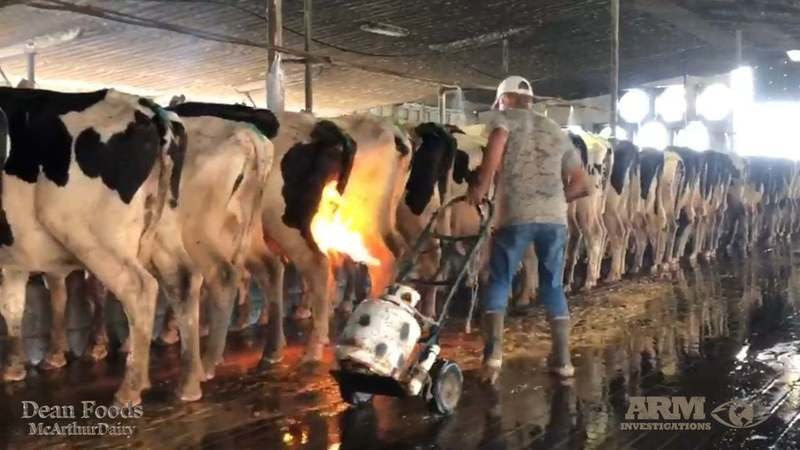
Petition · Publix Super Markets: Stop McArthur Dairy Farms from torturing cows by terminating their contracts now. · Change.org

Stop Abuse of Working Animals in Ancient Tourist City

Nancy's avatar"OUR WORLD"

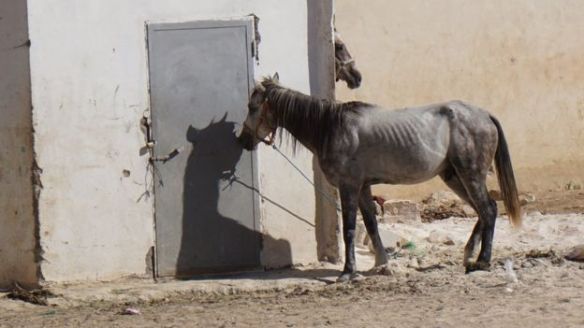
Horses, camels, and donkeys are beaten and forced to work without shade or water at a popular tourist destination, according to PETA. The animals are reportedly forced to carry tourists and carts up steep eroding staircases in intense heat. Demand humane treatment for these animals.

Source: Stop Abuse of Working Animals in Ancient Tourist City

View original post