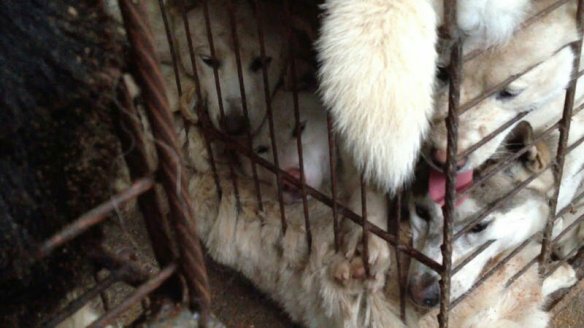
Three dogs allegedly starved to death in a gruesome case of animal cruelty. Deputies reportedly found a fourth dog decapitated inside of a black plastic tote. Demand justice for these innocent dogs.
As dog musher Mel Omernick slipped nylon harnesses over her Alaskan huskies’ lithe bodies, the dogs were already straining with forward momentum. Pogo pressed her paws into the ground below, the sound of her yelps joining with those of the three other dogs that Mel and her husband, Keith, were hooking up to their tuglines. The cries melded with the barking of a hundred other dogs at the Redpaws Dirty Dog Dryland Derby in northern Wisconsin.
It was the first weekend of November, and race participants had come from all over Wisconsin and neighboring states, and as far away as New Hampshire and Quebec, to run their dogs. All year, they had fed and watered and trained and cleaned up after their teams, awaiting the moment they could let their dogs loose across the starting line.
Now the race weekend had finally arrived, though it had gotten off to a rocky start. Once again, the weather was to blame.
Northern Wisconsin is still a frigid place come winter. But as the state has warmed, the certainty of snow gradually vanished, leaving the traditional winter dogsledding races frequently cancelled for lack of good powder. Organizers responded by adapting the sport itself, from dogsledding to “dryland” racing.
The Dirty Dog Derby was the first of its kind in the area, started in 2006 to extend the racing season into spring and fall so that mushers like Mel and Keith could have more chances to compete, and dogs like Pogo more chances to run. Swapping out sleds, dogs instead pull mushers on unmotorized rigs or a cart with four to 10 dogs or modified bicycles (bikejoring) pulled by two dogs: in some cases, a single musher simply lashes herself by bungee cord to a single dog and runs behind him in an event called canicross. Dryland variations tend to be shorter events, sprints of a few miles instead of the hundreds of miles of the iconic long-distance sled races often associated with the sport.
With snow becoming less reliable, many dogsled racers have turned to dryland racing, with rigs on wheels replacing traditional sleds. Credit: Meera Subramanian
In the weeks before their race, the Dirty Dog organizers had been worried they’d have to cancel it if the warm weather they were experiencing into late October—still hitting 70 on some days—continued. Since dogs can’t sweat—the only means they have to release heat from their bodies is through their tongues and the pads of their paws—mushers won’t run their dogs if there’s a risk they’ll get “fried” by overheating.
But by the time the derby arrived on Nov. 4, race organizers were pining for a little heat. The race grounds—and the carefully groomed trails—were blanketed in nearly three inches of snow. The day’s races were cancelled. Mushers kept their spirits up but weren’t finding much humor in the irony: a dryland race, the sport’s creative solution to a paucity of snowfall, cancelled because of snow. Some mushers loaded up their trailers with their pent-up dogs and made their way back home, while others—usually those who had traveled greater distances—hung around, eating chili from the Dirty Dog Diner set up in the open-air lodge and taking shifts by the fireplace as they waited to see if the weather would change.
By the second day, the snow had melted just enough to turn the trails into a muddy, but navigable, quagmire. When the organizers announced early Sunday morning that the race was on, the grounds erupted in excitement and movement. Mel and Keith headed to their truck to get the team hooked up, and soon the dogs were pulling on their lines, amped to do what they seemed born to do: run.
Dogsledding, Without the Sleds
Today, dogsledding is undergoing a transformation. Or threat, depending on your viewpoint.
The first hit came with the advent of snowmobiles in the 1960s, when dogsledding began slipping away as the standard form of transportation for many of the world’s northernmost inhabitants. Instead it became recreational, one of those activities that meld sport, hobby and lifestyle into one expensive, obsessive pastime.
Champion sprint musher Jan Bootz-Dittmar has been racing dogsleds for four decades and has several sponsors. She took up dryland racing, but finds the loss of reliably snowy winters frustrating. Credit: Meera Subramanian
Now the ideal image of dogs, humans and a sled careening silently across snow is facing a new challenge as the climate warms and the weather weirds. The Iditarod, a thousand-mile race across Alaska that is the most famous of sled dog races, had to be rerouted two of the last three years as its organizers chased snow-covered terrain. In Wisconsin, since 2001, about one-third of the sled races failed to happen, primarily because of lack of snow.
“I definitely see a trend where things are not like they used to be,” said Jan Bootz-Dittmar, a champion sprint musher on snow and dry land who’s been running dogs for 40 years. Last year, insufficient snowfall caused half of the snow races in Wisconsin to be cancelled.
“That affects me,” she said in the cafe as she munched on potato chips in lieu of lunch, “and it pisses me off.”
The Accidental Life
Mel races drylands, but skijoring is what she loves most: the quiet “shwooosh shwooosh” of her skis gliding through a snow-silenced world but for the sound of her dog’s movement.
She lives in Lincoln County, in north-central Wisconsin, and we were talking in the kitchen of the home she and Keith share, a long green metal building divided into a utilitarian shop and a capacious, wood-ceilinged living space with a wall of windows looking out upon a stand of trees. Her parents’ home lies just beyond. Mel, 40, sees both of her parents nearly daily, but when it comes to dogsledding, she’s closer to her father, Ron Behm, who is approaching 70. The kennel of Alaskan huskies and hounds that was once Ron’s is now cared for by Mel and Keith, and they all train the dogs together.
The frequency of winter freezes that plunged the thermometer below average has been declining in Wisconsin since the 1980s, and the sport has had to change with the climate. Credit: Meera Subramanian
Father and daughter have been running sled dogs for more than 25 years, since they entered the sport by an accident of canine lust. Mel was still in junior high when the neighbor’s Malamute wandered over and found their Labrador mix, which was Ron’s hunting dog. One lone pup was the result, and they kept him and named him Tiny. He was no bird dog, but Mel and her three siblings kept him running all the time. When the neighbor’s dog got loose again the next year and a litter of four was born, the Behm kids had a team. The family was friends with Jan Bootz-Dittmar, who gave them some harnesses to try out.
Mel and her two younger brothers hooked up Tiny and the team to their red Radio Flyer wagon, and the boys would take turns riding while Mel, who was a gymnast at the time and wanted the exercise, darted in front, leading the dog. As the dogs grew, they swapped out the wagon with an old lawn mower, engine removed. Mel’s older sister Ginnie, daunted by the speed, would cheer them on, snapping photographs. Ron mowed a path through the grass so the children could holler “gee!” for right and “haw!” for left as the dogs learned commands.
Mel’s brother Adam was the first to enter a formal dogsledding race, with Ron joining him a few years later. By the time she was in college, Mel had quit gymnastics and started racing, too. Mel’s mother, Gail, stitched harnesses and kept the mushers supplied with baked goods and the fresh perch she caught while ice fishing, her preferred sport.
Dynamics of Differing
Despite all this family togetherness, there was one crucial split in the Behm household: politics.
At first, Mel told me, she was a Republican because her father was. “I didn’t pay attention to politics,” she said. But that changed when she became an emergency room nurse. Working 12-hour shifts with people in crisis, she suddenly realized that “some of the decisions that politicians were making were affecting my patients.”
She also saw how not just politics but also science affected them, from the medicines she could offer them to how their bodies responded. She saw science in her sport, too, where the principles of genetics were used to breed dogs for speed, endurance and tougher paws.
The length of the frost-free season has increased by as much as three weeks in some parts of Wisconsin since 1971, the state’s assistant climatologist said. Credit: Meera Subramanian
“I love science,” she said, “and I believe in evolution.” Evolution was one of the science-based subjects she’d argued with her dad about most fiercely when she was in college. “I feel like we’re an example of it, and our sled dogs are too. So, it’s logical. It just makes sense … our planet is changing.”
These were not conversations Mel and Ron had easily, or often. Usually they just avoided politics—and science—altogether, focusing on the thing that bound them, their love of dogs and dogsledding, their family life.
The world of dog mushers draws racers and trainers from across the political spectrum, and there’s a hesitation to talk about potentially divisive issues, such as climate change. Credit: Meera Subramanian
Within the contained world of dog mushers, there’s a similar hesitation to talk about potentially divisive issues. The entire political spectrum finds representation at the Dirty Dog Dryland Derby, from the young women showing up in a Prius with two dogs tucked in back, to the Trump supporter in a trailer emblazoned with “To the victor the spoils.” But as with Mel and her father, conversations among the mushers veer away from the political, to the point that many mushers don’t even know each other’s leanings or affiliations. Better to talk dogs than politics, and weather before climate. Even Ron, once I pressed him, was adamant that he was a “constitutionalist,” not a Republican. That was a distinction even his own daughter didn’t know.
Just a Blade of Grass
The second weekend in November, a second dryland derby was scheduled. Ron was slated to be a race marshal for that one, known as the Willow Springs Round Barn Fall Rally, and Keith was scheduled to compete; Mel planned to swing by after an all-night ER shift. But the skies stayed heavy most of the week, and, looking at the forecast of more snow, organizers cancelled the race by Tuesday night.
With his weekend freed up, Ron was willing to continue a conversation we’d started earlier in the week about what was happening to the climate and the sport he and his daughter both loved. Instead of race marshaling, he joined me at Mel’s house, laying down his coyote fur cap upon the kitchen table as Mel fixed coffee after her 12-hour shift.
While Mel Omernick sees the climate changing around her, her father, Ron Behm, is skeptical of any human role in climate change and leans on counter-arguments that scientists say aren’t major drivers of the changes. Credit: Meera Subramanian
Sitting side by side, Mel and Ron are two generations delighted in the world. Ron is still fit from his 30 years as a mail carrier, from which he retired in 2012; he now devotes himself to the Wisconsin Trailblazers race dog club, the Lions and a one-acre market garden that he tends with his wife. His white beard is trimmed, and Mel’s blonde hair is cut in a bob that falls in soft curls. They both default to easy smiles, even when their viewpoints clash.
Which they do, when it comes to climate change.
Mel feels that the winters of her youth are gone. Where was ice skating at Thanksgiving, like she remembers from her grandma’s when she was a kid?
“It always seemed harsh in the winter,” she said. But Ron had an explanation that had nothing to do with climate change. A trick of perception, he said as Mel listened respectfully, since in those days there was none of the high-tech clothing and efficient snow plows of today. He likened it to other mythic stories about one’s childhood, à la walking to school, uphill, both ways. “Probably that was a part of it,” Mel responded, nodding thoughtfully, both of them disagreeing in a way that was unfailingly polite.
There are 19 dogs out in the kennel, but six are allowed in the house, and they periodically came up to Mel and Ron, who stroked their heads. One dog took a brief interest in Ron’s coyote-skin hat—it’s roadkill, Ron told me—before venturing off again.
“One thing about weather,” Ron said, “we can all comment about it, but we can’t change it.” He sees climate changes as cyclical, pointing to the fact that long before humans were contributing any sort of emissions to the atmosphere, the state had “gone through three major warming trends, and also, three major freezing trends.” He mentioned the nearby Ice Age Trail that marks the edge of the last glaciation, 10,000 years ago.
Dogsledding in Wisconsin has been changing for other reasons as well, including the cost of the sport and loss of sponsorship. Credit: Meera Subramanian
But even as he referred to deep time and geological history, Ron expressed his strong skepticism of science. He trusts the Old Farmer’s Almanac before the weather report. Weather is cyclical, he insisted, listing off a catalog of counter-arguments to climate science that I’ve heard around the country, including from many of the Dirty Dog mushers. The current warming can be attributed to volcanoes, they’ve told me. And sunspots. And solar winds. And the media doesn’t report these things. None acknowledged that climate scientists account for these variables in their studies and readily accept the planet’s natural climate fluctuations.
What the planet has not seen is as rapid a rise in temperatures, predicted to become warmer than they’ve been for millions of years, long before humans settled into their spaces and their sports.
“I still don’t believe that man has been given the ability, no matter how proud they think of themselves, to completely control something that they’re only on its surface for a very short time,” Ron told me. “We’re here, a blade-of-grass scenario,” meaning that there might be seven billion of us, but we simply cannot have the impact that climate scientists are saying we have.
But while Mel politely agreed with her father that her recollection of colder winters in the past might be a trick of the mind, the truth is, data backs up her belief that Wisconsin winters are objectively milder than they used to be.
Mel Omernick enjoys bikejoring with her race dogs when there isn’t enough snow to ski with them. She also works as an emergency room nurse, where she sees how politics and science affect all of our lives. Credit: Meera Subramanian
Starting in the 1980s, the frequency of winter freezes that plunged the thermometer below average was declining. By the mid-1990s, when Ron and his kids were running with the Radio Flyer and Tiny’s team, the cold autumnal spikes had nearly vanished. Ed Hopkins, Wisconsin’s assistant state climatologist, told me that winters continue to be highly variable, with lots of snow some years and bare ground others, but he recently tallied up the length of the frost-free season since 1971 and found that in some parts of the state, it’s increased by as much as three weeks.
And Now, a Word from …
Dogsledding in Wisconsin has been changing for the past two decades for reasons aside from weather: the cost of dog food, the difficulty of finding long trail systems unimpeded by development or liability-averse landowners, the cost of fuel for the trucks to haul large teams. And one additional, significant change: the loss of sponsorship. It was sponsorship that had been keeping the races afloat, but sponsors started falling away as early as the late 1990s—often for weather-related reasons.
Dryland races involve plenty of mud, as Jan Bootz-Dittmar is evidence of after a race. Credit: Meera Subramanian
Ron spoke of one sponsor, the North Star Mohican Casino Resort over in Bowler, Wisconsin, that sponsored a dogsled race with a huge purse. “Then someone says … we can make more money with a polka band,” he said. “Bowler started to bring in live entertainment at the casino, instead of doing the race.”
How infinitely appealing an indoor, climate-controlled event must be for a sponsor. The complete opposite of the iffy one-day mudfest that ended up being the Dirty Dog Derby this year.
“This is a weather sport,” Ron said. “Your sponsors are expecting this much viewing of their product name, and if the weather is not conducive to that, you don’t get the viewership.”
“So if it’s too cold, too windy, rainy,” Mel continued, their conversation fluidly moving between them, “there are no spectators.”
The prizes for the long-distance snow sled races can still be substantial—the Iditarod winner takes home $75,000—but as the purses have shrunk, sprint mushers are lucky if they win enough for gas money home.
Traditional racing sleds hang on a shop wall near the kennels. Credit: Meera Subramanian
The move from dogsledding to dryland racing to casino polkas is enough to make you wonder if we’re doomed to become an indoor nation, seeking collective escape from an unpredictable world.
Many sports are suffering from the extremes in weather. Just as the sled dogs have their window where they can comfortably and safely compete, so do we two-legged athletes. It’s difficult to play tennis when it’s so hot your sneakers are melting on the court or you start hallucinating that you’ve seen Snoopy, as happened at the Australian Open a couple of years back. A study by the University of Waterloo’s Interdisciplinary Center on Climate Change found that, unless carbon use plummets soon, a third of past Winter Olympics cities will be unable to host the event in the future because they won’t get cold enough. Winter recreation sports are estimated to be a $12 billion industry in the country.
Even snowless tracks still draw young dogsled racers excited by the thrill of the sport. Credit: Meera Subramanian
Loss of sponsorship and other factors are contributing to the decline in snow mushing in Wisconsin, but the greatest factor seems to be climate change. How long can the sport survive when the specter of uncertain weather is added to all the others? What is the fate of this sport—a healthy, life-affirming sport that people play instead of watch, that involves working in concert with animals instead of against them? Did the founders of the Iditarod think about the double meaning of their tag line, the “Last Great Race on Earth”?
When there isn’t enough snow for a sled but too much for a dryland cart, Mel and Keith Omernick take the dogs out with an ATV. Credit: Meera Subramanian
Mel and Ron and I had talked enough. There were dogs outside, eager in waiting. Ron donned his coyote fur hat, its tail draped between his shoulder blades as the rest of it blended with the color and cut of his beard. Mel slipped on her Carhartt jacket and we headed out to the kennel where Keith had been setting out the lines to run the dogs with an ATV. It was too snowy for a cart and not snowy enough for a sled, so a motor would have to suffice. The dogs were rowdy with expectation, fervent to bound through the whitened forest, past Ron and Gail’s garden, so recently put to bed, past the neat lines of the neighbor’s fields, crisp in sepia tones.
“I love to watch them run, and run with them,” Mel had said expectantly before we headed out. “To have them pull me and to be part of that team. And we’re out there in nature, whether it’s a beautiful sunny day, 20 below, raining, icing. We’re appreciating what the planet has given us, and God’s blessings that we’re healthy enough to do this.”
She was proving what her father had told me earlier about dog racing. “Nostalgia,” Ron had said, “is a big part of this sport.”
Top photo: Mel Omernick races dogsleds in Wisconsin, but lately the winter races have shiftrf to dirt tracks as the winter snow becomes less reliable. Credit: Meera Subramanian
A defenseless dog was allegedly dragged, choked, and beaten on the head with a hard, plastic leash handle. Demand justice for this animal by signing the petition to assure the alleged cruel perpetrator receives the maximum sentence provided by law.
Thank you, Martin Rogers and USA Today for covering this story of heart breaking plight of millions of Korean dogs and the appalling and shameful cruelty perpetrated by South Korea!!
Vegan and vegetarian diets are not just the latest trend. According to climate experts, these diets could actually help mitigate the effects of climate change.
“From a greenhouse gas standpoint and a climate standpoint, there are many advantages to a vegetarian diet and a vegan diet,” Rob Jackson, chair of the Department of Earth System Science at Stanford, said.
Transitioning towards a more plant-based diet could reduce food-related greenhouse gas emissions by up to 70 percent, according to the Proceedings of the National Academy of Sciences of the United States of America.
The agriculture industry has major anthropocentric impacts, which are impacts originating in human activities. Reduction of greenhouse gases is the most prominent effects of vegan and vegetarian diets; others include reduced destruction of rain forests, increased efficiency of food production and cleaner, more abundant water.
Reduction of greenhouse gases
Methane is generated in the guts of animals, according to Rob Jackson. The livestock sector of agriculture emits 37 percent of anthropogenic methane, which has 23 times the global warming potential of carbon dioxide, according to the Food and Agriculture Organization of the United Nation’s “Livestock’s Long Shadow” report.
The livestock sector is also responsible for 64 percent of anthropogenic ammonia emissions, which contribute to acid rain and acidification of ecosystems.
Agriculture’s effect on land
According to the Food and Agricultural Organization of the United Nations (FAO), the livestock sector is the single largest anthropogenic user of land. Livestock production accounts for 70 percent of all agricultural land and 30 percent of the land surface of the planet.
According to Jackson, the most extreme example of animal agriculture’s effect on land is tropical deforestation. Chopping down forests, and especially rain forests, releases carbon dioxide from the trees and soil into the atmosphere.
The greatest amount of deforestation is occurring in Latin America, where 70 percent of previous forested land in the Amazon is occupied by pastures, according to the FAO. About 20 percent of these pastures and rangelands have been degraded through overgrazing, compaction and erosion created by the livestock sector.
A bull stands in its paddock in Neu Anspach, Germany, Tuesday, Nov. 7, 2017. Cattle produce methane gas, which is a potent greenhouse gas. (AP Photo/Michael Probst)
Efficiency of food production
This effect boils down to the logic that we can feed the animals the food we would have eaten or we can eat that food directly, which saves resources and reduces emissions during production.
In addition, a plant-based diet would reduce the amount of land used and the amount of food needed to be produced.
Cleaner, more abundant water
According to the FAO, freshwater shortage, scarcity and depletion are becoming an increasing world problem. Accounting for over 8 percent of global human water use, the livestock sector plays a key role in increasing water use.
In addition to water use, the livestock sector also is a huge source of water pollution. Pollutants come in the form of animal wastes, antibiotics and hormones, chemicals, fertilizers and pesticides and sediments from eroded pastures.
In the United States, livestock are responsible for an about 55 percent of erosion and sediment and 37 percent of pesticide use, according to the FAO.
“Even as we green up our energy use, which we’re doing with solar and wind, one area where we are going to massively increase both greenhouse gas emissions and water use is from our diet,” Dana Hunnes, assistant professor in the Community Health Sciences Department, said.
Some argue that other dietary changes, such as purchasing only locally sourced food, can reduce one’s carbon footprint but only to some extent.
According to a Carnegie Mellon study, greenhouse gas emissions associated with food are mainly created by the production phase which contributes 83 percent of a U.S. household’s carbon footprint for food consumption. Transportation as a whole represents on 11 percent of life-cycle greenhouse gas emissions.
The authors of the study suggest that a plant-based diet can be a more effective dietary shift compared to “buying local.”
“Shifting less than one day per weeks’ worth of calories from red meat and dairy products to chicken, fish, eggs or a vegetable-based diet achieves more GHG reduction than buying all locally sourced food,” the study says.
“People are better off eating meat if they can’t get what they need from a vegan diet, but certainly in a country like the U.S. that’s not really the issue,” Jackson said.
A manslaughter charge was dismissed this week against a Sherman man who shot and killed his neighbor in a hunting accident in November.
In a four-page ruling, Chautauqua County Court Judge David Foley said the District Attorney’s Office erred when it presented its case in front of a grand jury against Thomas Jadlowski in the death of Rosemary Billquist. Specifically, Foley said District Attorney Patrick Swanson failed to answer a question of a grand juror regarding a lesser charge against the Sherman man.
Jadlowski was indicted by the grand jury on charges of second-degree manslaughter and hunting after dark.
Swanson said he did not agree with Foley’s ruling
“It’s a decision I disagree with,” Swanson told The Post-Journal. “There were some legal hyper-technicalities that I don’t agree with. At this point we have to decide whether to appeal the decision or bring it back to the grand jury.”
However, Swanson said appealing the decision to an appellate court presents “logistical issues” as rulings could take several months. He said his office has 30 days to re-submit the case to another grand jury.
“We have to decide what’s best moving forward,” Swanson said. “The reality is the appeal would take a lot longer, and there are resources that have to be considered.”
According to Foley, the issue began after Swanson gave the grand jury instructions on second-degree manslaughter. A juror asked the district attorney, “What is the next step down? Manslaughter three, if there is such a thing?”
Swanson replied: “The next step down is criminally negligent homicide.”
The district attorney paused before continuing, “I’m going to ask for your consideration on manslaughter second. And I may be back in to ask you to consider on criminally negligent, but I’m asking you to consider manslaughter second first.”
In his ruling, obtained by The Post-Journal, Foley said Swanson should have instructed the grand jury regarding the lesser charge. The judge did note, however, that there was enough evidence to support the original indictment.
“It was clear from the above referenced exchange that the grand jury had an interest, or at least being instructed on, a lesser degree of homicide,” Foley wrote. “It is the opinion of the court that the district attorney, as the grand jury’s legal advisor, had an obligation to answer their questions accurately and to comply with their request, by instructing them on criminal negligent homicide.”
The decision comes not long after an August trial date had been set for Jadlowski, who is being represented by Dunkirk attorney Michael Cerrie. Jadlowski told police he thought he saw a deer Nov. 22 when he fired a single shot, striking Billquist.
Billquist was rushed to an Erie, Pa., hospital where she was later pronounced dead.
Swanson said he spoke to Billquist’s family Thursday evening after learning of Foley’s decision. He said he will thoroughly review his options before moving forward.
“Judge Foley found we had sufficient evidence for the indictment,” Swanson said. “This was a hyper-technicality that we should have discussed the lesser offense.”
“This is part of the system,” he continued. “We are still learning our new court.”
Those previously rare instances of above freezing temperatures in the Arctic north during winter time are happening more and more often.
(February 20 NASA satellite imagery shows Bering Sea with mostly open water as highly atypical above freezing temperatures drive far north. Note that patches of open water extend well into the Chukchi Sea. Image source: NASA.)
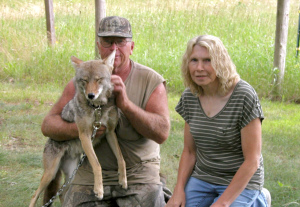
“Knowing him changes you.” ~ Larry, a Wisconsin trapper who adopted a coyote pup
It was June of 2016. I had a call from a Wisconsin trapper – and it was déjà vu all over again. Larry, a Wisconsin trapper and cattle rancher, had adopted an orphan coyote pup, then 4 years old. A DNR warden had shown up at their door to tell Larry’s wife, Cheryl, “We will be back to pick up your coyote to kill him.”
In February 2013 I wrote about a similar situation. Rick Hanestad and his two children had sought and found a coyote den after the mother was killed by a turkey hunter. She had been nursing, so they knew she died close to her den. A year later, with his then 7-year-old daughter and 14-year-old son bonded to the coyote as a family pet, a boundary…
From Donald Trump Sr.’s 2017 Financial Disclosures:
“In India, Trump Project Buyers Offered Dinner with Trump Jr.
February 19, 2018 8:37 AM, by Anjana Pasricha NEW DELHI —
Potential customers of high end property in India are being enticed by an unusual offer: the chance to spend an evening with the son of the American president if they decide to invest in residential projects licensed by the family’s company. Donald Trump Junior’s week-long visit to India starting Monday could not escape attention: full, front page newspaper advertisements in the country’s most prominent newspapers have posed the question: “Trump is here. Are you invited?” and “Trump has arrived. Have you?” Trump Jr. has been in charge of the Trump Organization along with his brother Eric since their father became president.
The advertisements, which featured large photos of Trump Jr, said that those signing up before 22nd February to buy apartments could…


 Three dogs allegedly starved to death in a gruesome case of animal cruelty. Deputies reportedly found a fourth dog decapitated inside of a black plastic tote. Demand justice for these innocent dogs.



 Duke Marine Robotics and Remote Sensing Lab (NOAA Permit 14809-03, ACA Permit 2017-034)