Exposing the Big Game

Forget Hunters' Feeble Rationalizations and Trust Your Gut Feelings: Making Sport of Killing Is Not Healthy Human Behavior

Exposing the Big Game

Hunter attacked by grizzly bear near Ennis

BILLINGS- A man is recovering in the hospital after he was attacked by a grizzly bear while hunting with a friend near the Dry Gulch, Cascade Creek area south of Ennis.

The two hunters were bugling for elk on Monday morning when they came upon a grizzly bear eating a carcass, said Montana Fish, Wildlife, and Parks Chief Information Officer Greg Lemon.

The two men yelled at the bear, and it began to charge, according to a post from the victim’s friend.

The two men attempted to spray the animal with bear spray, but only one man’s spray deployed.

Story continues below

The grizzly bear then attacked Tom Sommer, scratching at the man’s head and shoulders as he tried to shoot the bear.

The bear bit through Sommer’s thigh and then put the victim’s head in its mouth, according to Sommer’s friend.

Sommer was then able to spray the animal with bear spray from about two feet away and escaped.

Sommer was taken to the hospital, where his friend said he received 90 stitches in his head.

It’s unclear where Sommer is from.

Facebook

Lemon said the area where the two men encountered the bear is a very remote section near the headwaters of the west fork of the Madison River.

In the past few years, Lemon said there’s only been a handful of bear encounters in that area.

Lemon said FWP would not attempt to capture the bear because it’s believed the bear attacked in self-defense.

Sommer’s friend posted the photos to Facebook said Sommer was being released from the hospital on Tuesday, though the Madison Valley Medical Center would not confirm that information.

-Aja Goare reporting for MTN News

Tigers’ Travis Wood almost lost his finger in a hunting accident

https://www.blessyouboys.com/2018/2/14/17011876/detroit-tigers-travis-wood-hunting-accident-spring-training-finger-splint

Photo by Brace Hemmelgarn/Minnesota Twins/Getty Images

When Travis Wood arrived at spring training camp Tuesday with a splint on his finger, it caused a few eyebrows to rise. The lefty pitcher was signed to a minor league deal by the Tigers in late January and is a non-roster invitee to the spring camp. A pitcher showing up with his hand in a splint is usually a pretty bad sign.

Turns out the story Wood had to go along with the splint is even more incredible. About a month prior to spring training, Wood was preparing to go bow hunting, when a mishap with the crossbow he was using nearly caused the index finger on his non-pitching hand to be cut off.

Wood, who knew spring training was fast approaching and was hoping to fight for a spot on the Tigers Opening Day roster, had the most insane and badass response to the injury.

Tigers non-roster invite Travis Wood has a pin in right index finger after a bow hunting accident. He said he asked doctor if chopping finger would get him back to pitching sooner. Fortunately, he’s left-handed. He’s throwing in camp but not catching yet.

Yes. He actually asked his doctor if amputation would be a faster route back to pitching. Sure, that’s crazy, but talk about being devoted to the sport.

Since the injury is to his right hand, and Wood is a lefty, he will still be participating in spring training workouts and will, presumably, continue to pitch through spring. His dedication may pay off with a place on the 40-man roster if he has a good camp.

New Tigers manager Ron Gardenhire had a sense of humor about the injury.

“He’s got a split-finger now,” Ron Gardenhire said of Travis Wood.

Inside the grim scene of a Korean dog meat farm, just miles from the Winter Olympics


MARTIN ROGERS  |  USA TODAY SPORTS

WONJU, South Korea – A short drive from the burning Olympic torch and the excited throng of Winter Games spectators, there was no cheering outside the place where hundreds of dogs are packed in cages until they are killed for their meat.

In the rural region of Wonju, down a winding country lane, sits a farm that provides dog meat to some of the thousands of South Korean restaurants where patrons order things such as dog salad, dog ribs, dog stew and dog hot pot.

The grim surroundings of the farm pains the senses. The first thing to be noticed is the sound, pitiful whines and yelps of about 300 animals being kept in filthy cages until their execution.

Step closer and the stench fills the nostrils, a sickening waft that spreads over two long rows of cramped cages.

Some of the dogs do not survive long enough to be slaughtered. Lying discarded on the mud floor by the plastic awning, the carcass of a dead Tosa – a rare breed that originated in Japan. Also in the cages were Jindos, St. Bernards and golden Labradors.

Most were emaciated. Many had gaps in their fur where huge sores grew on their bodies. The cages are elevated, set up so dog feces drops through gaps in the wire bottom, collecting in huge piles beneath.

More: Olympics shine spotlight on dog meat trade in South Korea

USA TODAY video journalist Sandy Hooper and myself filmed the gruesome scene for 15 minutes on Saturday morning, using GoPros and iPhones. When we approached the front of the property in an attempt to speak to the owners, a man screamed in Korean: “Turn it off, otherwise I’m going to throw it down!”

The Winter Olympics is supposed to be one giant commercial for South Korea and its winter tourism industry, but no public relations effort can cast a favorable light on the Korean dog meat industry. Pyeongchang organizing officials were aware enough of the likely international reaction to Korean dog meat eating practices that they paid nearby restaurants to take down signs advertising the product’s availability and pleaded with them to take it off the menu – at least during the Olympics.

It didn’t work. Two miles from Jinbu station, the main hub serving the primary mountain cluster of the Games, a trio of restaurants openly served dog products. They had amended their frontage signs to remove the word “bosintang” (dog meat stew) and promote goat meat instead, but that was only outside.

Walk inside and glance up at the giant white board and the first four menu items, in English and Korean, are derived from man’s best friend. An elderly Korean man removed his shoes, entered the room, ordered the stew and sat down at a row of tables on the floor. Soon, he was served the thick brown concoction and began slurping down the soup until it was all gone.

In Korean culture, dog meat is said to have mythical properties that boost restorative powers and increase virility. Fearing a backlash from traditionalists, the Korean government won’t amend the law, despite president Moon Jae-In having adopted a dog saved from the meat industry.

Pyeongchang organizers wish government officials would take action.

“We are aware of the international concern around the consumption of dog meat in Korea,” an organizing committee statement read. “This is a matter which the government should address. We hope that this issue will not impact on the delivery or reputation of the Games and the province and we will support the work of the province and government on this topic as needed. Also, dog meat will not be served at any Games venue.”

Eating dog meat is a custom here and it is hard to dispute that. In the United States millions of animals of countless varieties are slaughtered each year for meat. To some, the plight of Korean dogs is scarcely any different to that of American chicken, cows or pigs. To others, there is something vastly different about a dog, given its relationship to humans.

Activists in Korea don’t like the use of dogs for meat but mainly focus their protest efforts on the methods of killing the animals and their conditions in captivity.

“If the Korean people stop eating dog meat there will not be the market for it,” Kim Jun-Won, president of the Dasom animal rights organization said, fighting back tears when shown photographs of our footage as we returned to our vehicle. “But this is wrong and it breaks my heart. The people who keep animals this way and kill them? They are the devil.”

Demand is decreasing, with dog meat meals not particularly popular with younger members of Korean society. As well as the one described above, USA TODAY Sports visited two other farms in the area that showed signs of being operational recently. Both were closed, with the dried feces and even bones of deceased dogs still visible.

“The problem is that while smaller facilities close due to lack of business, larger, better organized ones are popping up,” Kiana Kang, director of programs and special projects of American non-profit rescue organization Animal Hope and Wellness said. “This is the two Koreas. There is the beauty and the culture, and then there is this.”

Korean dog farmers claim their sole intention is to try to make a living and insist the animals are the same as livestock.

A group of Winter Olympic athletes, including Canadian figure skater Meagan Duhamel, freestyle skier Gus Kenworthy and snowboarder Lindsey Jacobellis took part in a recent public service announcement in a bid to raise awareness about the Korean dog meat trade. Duhamel already owns a rescue Korean dog.

The United States and Canada are leaders in trying to rescue Korean dogs and provide them with a new life. In a recent USA TODAY Sports interview, Californian couple Lana Chung Peck and her husband Kevin Peck described how many of the animals they foster and rehabilitate through the Save Korean Dogs organization have significant issues.

Chung Peck said her dogs cannot initially walk properly on grass or firm ground, because most of their lives had previously been spent in the cages, scrambling to get firm footing on the hard thin metal.

Meanwhile, at the Games, the first medals were being doled out. The plight of Korea’s dogs isn’t going to be the major narrative of the Games, the events themselves and the lingering political turmoil dominate the headlines.

But it is here, happening not far from the Olympics, and it’s tough to stomach.

Dog Meat Still on the Menu at South Korea Olympics

A handful of South Korean restaurants near the venues of the Winter Olympics are defying a government push to take dog meat off menus for the duration of the games, Channel News Asia reported.

The opening ceremony takes place on Friday in Pyeongchang county, with athletes from over 90 countries and tens of thousands of tourists from  South Korea and abroad expected to flock to the region. In a bid to avoid controversy over the culinary customs of eating dog meat, local authorities have tried to curb the serving of canine delicacies by offering nearby restaurants subsidies to temporarily alter their menus.

Related: U.S. war with North Korea would be a catastrophe, says Russia

Trending: Olympians Are Arriving During South Korea’s Flu Season—Are They at Risk?

But only a small minority appear to have taken up the government on the offer, Pyeongchang County government official Lee Yong-bae told AFP.

“We’ve faced a lot of complaints from restaurant operators that we are threatening their livelihood,” he said. Of the 12 dog meat restaurants in the county, only two have complied, Lee said on Thursday. According to him, a handful entertained agreeing to scrap dog meat from the menu but have already seen a drop in sales.

02_08_dog_meat
02_08_dog_meat
More

Puppies are seen in a cage at a dog meat market in Yulin, in China’s southern Guangxi region on June 21, 2017. China’s most notorious dog meat festival opened in Yulin on June 21, 2017, with butchers hacking slabs of canines and cooks frying the flesh following rumours that authorities would impose a ban this year. STR/AFP/Getty Images

Don’t miss: Could an Antibiotic Treat Autism? Medication to Reduce Brain Cell Inflammation Could Treat Widespread Disorder

“Some of them initially shifted to selling pork or things instead of dog meat only to find their sales plunging sharply,” he said. “They then switched back to dog meat.”

Signage advertizing dog meat dishes has nonetheless become less prominent, as the restaurants are seeking to avoid giving “a bad impression to foreigners” during the Games, he added.

The custom of treating dogs as livestock and using them for sustenance is increasingly becoming a taboo in South Korea, with the country’s government branding them a “detestable” kind of meat. There are, however, no explicit legal punishments for the cooking of dog meat and a minority of South Koreans still do so.

Last year, authorities closed Moran market in Seongnam, the largest dog meat venue, which sold over  80,000 dogs a year. It accounted for about a third of South Korea’s dog meat consumption, according to local media estimates.

This article was first written by Newsweek

WAN’s Exclusive With Detroit Police Officer About Sickening Case Of Dog Found With Metal Hook Embedded In His Neck – World Animal News

Nancy's avatar"OUR WORLD"

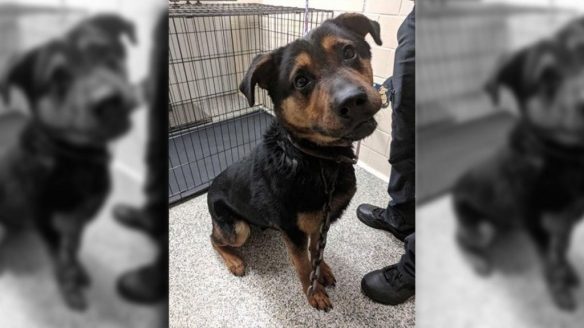
WAN’s Quest For answers began after learning that a three-year-old German Shepherd Rottweiler mix was found by Detroit animal care and control with a carabiner, a hook used for mountain climbers pierced underneath his chin towards lower part of his neck. Attached to the hook which was reportedly embedded in the poor dog’s neck for weeks, was a 15 pound tow chain.

http://worldanimalnews.com/wans-exclusive-detroit-police-officer-sickening-case-dog-found-metal-hook-embedded-neck/

View original post

Kitten Allegedly Frozen, Squeezed, and Thrown Off Balcony Deserves Justice

Nancy's avatar"OUR WORLD"

A young kitten suffered serious injuries when she was allegedly frozen, squeezed, and thrown off of a balcony. The kitten reportedly fell two stories and landed on concrete. Demand justice for this innocent kitten.

Source: Kitten Allegedly Frozen, Squeezed, and Thrown Off Balcony Deserves Justice

View original post