Exposing the Big Game

Forget Hunters' Feeble Rationalizations and Trust Your Gut Feelings: Making Sport of Killing Is Not Healthy Human Behavior

Exposing the Big Game

A Federal Court Could Save Yellowstone’s Grizzlies From the Trump Administration

http://www.truth-out.org/news/item/43181-a-federal-court-could-save-yellowstone-s-grizzlies-from-the-trump-administration

Wednesday, January 10, 2018    By Mike Ludwig, 

A grizzly bear and cubs play in Yellowstone National Park in Wyoming, on June 3, 2017. (Photo: Wolverine 9 5)A grizzly bear and cubs play in Yellowstone National Park in Wyoming, on June 3, 2017. (Photo: Wolverine 9 5)

The Northern Cheyenne Tribe and a coalition of environmental groups are asking a federal court in Montana to throw out the Trump administration’s decision to remove grizzly bears in and around Yellowstone National Park from the endangered species list — a move that has paved the way for trophy hunts of the iconic animals.

Delisting the Yellowstone bears opened the door for Montana, Idaho and Wyoming to allow grizzly bear hunting on vast areas of land.

Grizzly bears in the lower 48 states are endangered and qualify for special federal protection. However, last year, the US Fish and Wildlife Service finalized a rule that carved out the bear population in the Yellowstone region and removed it from the endangered species list. Interior Secretary Ryan Zinke, a Trump appointee who oversees the wildlife agency, personally announced the change in June 2017.

Delisting the Yellowstone bears opened the door for Montana, Idaho and Wyoming to allow grizzly bear hunting on vast areas of land outside of the national park system, and Wyoming officials are already making plans to propose grizzly bear hunts later this year.

“We’re not anti-hunting, but we are certainly not excited about trophy hunting of grizzly bears in one of the last few places where they continue to exist,” said Timothy Preso, an attorney with Earthjustice who filed the legal request, in an interview with Truthout.

“Nobody needs a grizzly bear in the freezer to get through the winter.” — Timothy Preso, Earthjustice

Preso said some hunters in the region hunt elk and other large game for food, but grizzly bears are likely to be hunted as trophies. Yellowstone grizzlies are much more valuable as icons that draw tourists to the region and as “ambassadors of wildness,” as Preso put it, than as trophies in a big-game hunter’s private collection.

“Nobody needs a grizzly bear in the freezer to get through the winter,” Preso said.

A number of environmental groups and nine Native tribes sued Zinke and the Interior Department last year for removing the Yellowstone grizzly bears from the endangered species list, a designation that has helped protect their habitat from logging and oil and gas development. Zinke is aggressively working to lift restrictions on development and fossil fuel extraction on public lands.

US Fish and Wildlife is now reviewing its decision to delist the Yellowstone grizzlies and is asking for public comment in light of a recent court ruling that returned federal protections to wolves in the Great Lakes region. Officials have left the rule delisting the bears in effect while they reconsider it, allowing state game wardens to move ahead with hunting plans.

Preso said the move by US Fish and Wildlife to reconsider the decision without withdrawing it altogether is unusual. His coalition is asking a federal judge in Missoula to restore the endangered species protection to the Yellowstone grizzly bears while federal wildlife officials complete a review of their delisting decision, which they have promised to do by March 31.

Taking some Yellowstone grizzlies out of the gene pool could put the entire population at risk.

“The Yellowstone region’s grizzlies deserve better than to be subjected to trophy hunting based on a half-baked government decision,” Preso said in a statement.

The environmental coalition argues that US Fish and Wildlife’s effort to review its own rulemaking is proof that the agency “did not complete its homework” before removing Yellowstone grizzly bears from the endangered species list. For example, conservationists say officials must research how delisting could impact the total population of endangered grizzly bears across the West.

Grizzly bears have made a comeback in the Yellowstone region, where the population has grown from 136 when the bears were originally listed as endangered in 1975 to about 690 today, according to the National Park Service. However, environmentalists warn that grizzlies across the rest of the lower 48 states have not done as well, and taking some Yellowstone grizzlies out of the gene pool could put the entire population at risk.

Noah Greenwald, endangered species director at the Center for Biological Diversity, said grizzly bears occupy less than 5 percent of their former range in the lower 48 states, so they clearly have not recovered.

“Attempting to delist the Yellowstone bears and expose them to trophy hunting without considering grizzlies’ poor status overall is simply ludicrous,” Greenwald said in a statement.

Hunting is not allowed in Yellowstone and Grand Tetons National Parks, but it is allowed outside the park boundaries, where wildlife is managed by state agencies in Wyoming, Montana and Idaho. Wyoming officials are currently considering public input on a management plan for bears that would potentially include hunting within federal limits, according to local reports.

As predator populations slowly recover from deforestation and loss of habitat caused by human development, their territory increasingly butts up against ours. In 2016, wildlife managers captured 39 grizzly bears in Wyoming to resolve “conflicts” with humans, according to a state report. These “conflicts” typically involved bears killing livestock, eating pet food or foraging in someone’s garbage. Twenty-two of the captured bears were killed, often for having a history of “conflicts” with people and their property.

Wildlife Organizations Sue Trump Administration for Failing to Protect “El Lobo,” the Mexican Wolf

JOHN SCHLOSSBERG FOR BUZZFLASH AT TRUTHOUT

Lobo 0131wrp opt(Photo: Joel Cristian / Flickr)Environmental organizations filed a lawsuit on January 30, 2018, in U.S. District Court in Arizona against the U.S. Fish and Wildlife Service (USFWS), alleging the agency violated the Endangered Species Act (ESA) by ignoring science relevant to the recovery of the beleaguered Mexican wolf (Canis lupus baileyi), a.k.a. “el lobo.” The legal action comes on the heels of USFWS’ November release of its long-anticipated Mexican Wolf Recovery Plan — a strategy conservation groups say appeases red state ranchers and falls flat in the face of science.

The lawsuit, filed by attorneys at the Western Environmental Law Center (WELC) on behalf of Western Watersheds Project and WildEarth Guardians (Guardians), names Department of the Interior Secretary Ryan Zinke and USFWS Acting Director Greg Sheehan. The complaint asserts the USFWS, an ancillary arm of the Interior Department, turned a deaf ear to its own scientists’ recommendations for the minimum number of wolves and the amount of habitat needed for recovery and removal from the endangered species list.

“This recovery plan was designed by politicians and anti-wolf states, not by independent biologists,” said Matthew Bishop of the Western Environmental Law Center. “It’s an affront to the ESA and Congress’ directive [is to] make decisions solely on the best available science.”

The Mexican wolf, a subspecies of the endangered gray wolf (Canis lupus), was granted endangered species status in 1976 after being hunted to near-extinction. At one point, el lobo almost blinked out entirely after plunging to a low of only 15 animals remaining in the wild. In 1982, the USFWS initiated the original Mexican Wolf Recovery Plan to determine a course of action for keeping the species alive. It included a captive breeding program, which in 1988, released three distinct lineages of the animal into the ecosystem.

In 2011, the USFWS’ Science and Planning Subgroup of the Recovery Team (the Subgroup), staffed by independent scientists, recommended that delisting only occur after a 750-wolf total is achieved in the wild. Additionally, the Subgroup recommended that lands in eastern Arizona/western New Mexico, the Grand Canyon region of northern Arizona and southern Utah, and the southern Rockies region of northern New Mexico and southern Colorado be allotted as Mexican wolf habitat for recovery efforts.

Despite these recommendations, state governments in Colorado, Utah, New Mexico, and Arizona have set substantial roadblocks in the way of recovery, including a demand that no wolves set foot north of I-40, which runs east-to-west across northern New Mexico and Arizona — meaning no wolves would be allowed to exist in Utah or Colorado whatsoever.

Today, the lobo population in the United States has rebounded slightly, hovering at around 113 animals, with an additional 31 living in Mexico. Yet, instead of following the scientists’ recommendations, the USFWS’ First Revision of the Mexican Wolf Recovery Plan concluded that 320 wolves would be sufficient for recovery, and in terms of habitat, it left out the Grand Canyon and southern Rockies regions for “geopolitical reasons,” a move environmental lawyers say is a fundamental violation of the ESA.

“The ecosystems in this region need wolves and the people in this region want wolves — polls overwhelmingly suggest that. So, to eschew the science-based pathway for recovery and instead implement a politically-driven and extremely flawed plan is an affront to people and place,” said Christopher Smith, Southern Rockies Wildlife Advocate for WildEarth Guardians, in an email to EnviroNews.

Conservation groups are suing on four causes of action they say violate the ESA and APA (Administrative Procedure Act), including having “no reasonable explanation for departure” from the Subgroup’s recommendations, “failure to provide objective, measurable criteria necessary for delisting” the wolf, “failure to utilize the best available science,” and “failure to provide site-specific management actions necessary for conservation.”

“The U.S. Fish and Wildlife Service needs a plan that guarantees a large enough population of Mexican wolves to be viable over the long term, with sufficient habitat [for] wolves to flourish,” said Greta Anderson of Western Watersheds Project. “But the current recovery plan doesn’t do that, and instead the federal government seems more intent on appeasing anti-wolf political interests than in doing its job, which is recovering endangered species to healthy and secure population levels.”

The three aforementioned NGOs, which will be joined in the suit by the New Mexico Wilderness Alliance and the Wildlands Network, want the court to force the USFWS to have another go at the plan, but this time around, they want it to follow the law as stated by the ESA and ensure that science alone, not politics, guides the recovery of the Mexican wolf.

http://www.truth-out.org/buzzflash/commentary/wildlife-organizations-sue-trump-administration-for-failing-to-protect-el-lobo-the-mexican-wolf

“Something is Askew Here”

Exposing the Big Game's avatarExposing the Big Game

The following is from Preface of the late Canadian naturalist, author and part-time misanthropist, John A. Livingston’s, book, Rouge Primate: “Having spent the greater part of a lifetime absorbed in the appreciation and the attempted understanding of living phenomena that are not human, while at the same time ceaselessly advocating their protection, preservation and ‘conservation,’ it was not easy to pause and evaluate the effectiveness—and logic—of that advocacy…But for my own peace of mind it needed doing. So in 1977 I did a critical analysis and wrote it up, then looked at what I had wrought for almost four years before publishing it. It was going to cost me, and it did.

“At the time of its publication, the American environmental teacher and essayist Joseph Meeker observed that my Fallacy of Wildlife Conservation appeared to be a book written in blood. It was indeed painful to have to acknowledge that…

View original post 1,133 more words

Mexico enacts measures to save endangered ‘little cow’ whales

The ocean update's avatarThe ocean update

Vaquita, the world’s most rare marine mammal, is on the edge of extinction. Photo : World Wildlife Fund

February 9th, 2018. With less than 30 left in existence, the vaquita, or little cow, falls prey to poachers for their bladders which are considered a delicacy in the Chinese market.

View original post 274 more words

South African lions eat ‘poacher’, leaving just his head

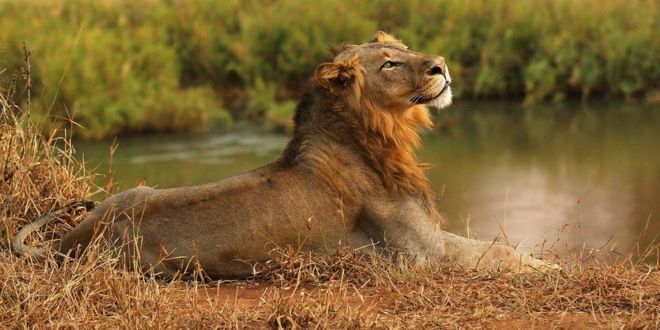
A lion stretches out by the Luvuvhu river in Kruger National Park, South AfricaImage copyrightCAMERON SPENCER/GETTY IMAGES
Image captionLocal police said the lions ate almost all of the man’s body (file picture)

A suspected big cat poacher has been eaten by lions near the Kruger National Park in South Africa, police say.

The animals left little behind, but some body parts were found over the weekend at a game park near Hoedspruit.

“It seems the victim was poaching in the game park when he was attacked and killed by lions,” Limpopo police spokesman Moatshe Ngoepe told AFP.

“They ate his body, nearly all of it, and just left his head and some remains.”

Police have not yet established the victim’s identity. A loaded hunting rifle and ammunition were found next to the body, South African website Eyewitness News reports.

Lion poaching has been on the rise in Limpopo province in recent years.

The big cats’ body parts are sometimes used in traditional medicine, both within Africa and beyond.

Wildlife charity the Born Free Foundation says lion bones and other body parts are increasingly sought-after in South East Asia, where they are sometimes used as a substitute for tiger bones.

In January 2017, three male lions were found poisoned in Limpopo with their paws and heads cut off.

‘Poacher hunting big cats’ mauled to death by lions in South Africa

https://www.standard.co.uk/news/world/poacher-hunting-big-cats-mauled-to-death-by-lions-in-south-africa-a3764096.html

Poacher: It is thought the man was hunting lions when they mauled him to death
Poacher: It is thought the man was hunting lions when they mauled him to death AFP/Getty Images

Police are investigating if a man killed and eaten by a pride of lions at a private game reserve in South Africa was a poacher who had been hunting big cats.

His screams for help raised the alarm but the lions quickly killed the man and devoured most of his body before being chased off.

The head was left untouched and is the only means available to police of identifying the man who was carrying no documents.

It comes just months after poacher Luteni Muhararukua was charged and killed by a rhino he was hunting for its horn in nearby Namibia.

At first police thought the dead man was a tractor driver who worked at the game reserve but when he turned up alive realised it may be a poacher.

Killed: The lions quickly ate the man, leaving just his head (EPA/Dai Kurokawa)

A hunting rifle was found close to what was left of the blood drenched body which police believe belonged to the victim of the lions.

Police in Limpopo have called in the Department of Home Affairs to help them to try to find out who the dead man is.

Police Lieutenant-Colonel Moatshe Ngoepe said: “The person who who we first thought it was believed to be an employee who was driving a tractor.

“It was thought his tractor broke down and the lions got him as he walked back to the compound but he was found to be alive.

“The process of identifying this body has already commenced and it might be made easier as his head was amongst the remains found at the scene”.

Mr Ngoepe confirmed police were investigating the possibility the deceased might have been a poacher after a hunting rifle was found near the scene.

Lions kill up to 250 people a year in Africa and a male weighs 190kg and a female 130kg and they can ran at over 80kph and there are less than 20000 left in the wild in Africa.

Their bones are worth a small fortune in the Far East with a skeleton fetching up to £7000 and the skin £3000  teeth can fetch £500 each.

Their bones have become highly prized in the the Far East as tiger bones are becoming rarer and rear with their threat of extinction.

The lions attacked the suspected poacher at the Ingwelala Private Nature Reserve in Hoedspruit outside Phalaborwa.

The owner of the reserve, who identified himself as Josh, said he was told not to speak to the media because the police investigation was still under way.

A local worker, who works at a nearby nature reserve, described the area as lion territory and added:”The head was still there but the lions had eaten most of the rest.

“A scream was heard and the lions were scattered by the sound of gunshots but it was too late to do anything for him. He was eaten”.