Exposing the Big Game

Forget Hunters' Feeble Rationalizations and Trust Your Gut Feelings: Making Sport of Killing Is Not Healthy Human Behavior

Exposing the Big Game

Big game hunter defends slaughter of endangered animals

Exposing the Big Game's avatarCommittee to Abolish Sport Hunting Blog

by Brad Hunter
Big game hunter Olivia Opre went on a British morning show to defend killing endangered animals. ITV THIS MORNING
SHAREADJUSTCOMMENTPRINT

A big game hunter is defending her wanton slaughter as helping to preserve endangered animals.

American Olivia Opre, 41, told a British TV show she hunts so she can be close to nature. She’s killed more than 100 different species and had them stuffed.

“I think what it is, it’s bringing me to a place where I get to be a part of these wild places. And amongst the people of these areas, it’s the adventure, it’s the pursuit,” Opre told ITV This Morning.

“It’s something that pushes you to a limit you are not comfortable with and it takes you out of your comfort zone and for…

View original post 266 more words

Shell and Exxon’s secret 1980s climate change warnings

Exposing the Big Game's avatarThe Extinction Chronicles

Newly found documents from the 1980s show that fossil fuel companies privately predicted the global damage that would be caused by their products.

A Royal Dutch Shell logo.
 A Royal Dutch Shell logo. Photograph: Anna Gowthorpe/PA

One day in 1961, an American economist named Daniel Ellsberg stumbled across a piece of paper with apocalyptic implications. Ellsberg, who was advising the US government on its secret nuclear war plans, had discovered a document that contained an official estimate of the death toll in a preemptive “first strike” on China and the Soviet Union: 300 million in those countries, and double that globally.

Ellsberg was troubled that such a plan existed; years later, he tried to leak the details of nuclear annihilation to the public. Although his attempt failed, Ellsberg would become famous instead for leaking what came to be known as the Pentagon Papers – the US government’s secret history of…

View original post 851 more words

Stop the rock-stacking

A writer calls for an end to cairns.

Note: the opinions expressed in this column are those of the writer and do not necessarily reflect those of High Country News, its board or staff. If you’d like to share an opinion piece of your own, please write Betsy Marston atbetsym@hcn.org.

Stones: We’ve built pyramids and castles with them and painstakingly cleared them out of farm fields, using them to build low walls for fencing. We marvel at the rocks in the Grand Canyon, Arches and Grand Teton national parks. Yet a perplexing practice has been gaining ground in our wild spaces: People have begun stacking rocks on top of one another, balancing them carefully and doing this for unknown reasons, though probably as some kind of personal or “spiritual” statement.

These piles aren’t true cairns, the official term for deliberately stacked rocks. From middle Gaelic, the word means “mound of stones built as a memorial or landmark.” There are plenty of those in Celtic territories, that’s for sure, as well as in other cultures; indigenous peoples in the United States often used cairns to cover and bury their dead. Those of us who like to hike through wilderness areas are glad to see the occasional cairn, as long as it’s indicating the right way to go at critical junctions in the backcountry.

Stone piles have their uses, but the many rock stacks that I’m seeing on our public lands are increasingly problematic. First, if they’re set in a random place, they can lead an unsuspecting hiker into trouble, away from the trail and into a potentially dangerous place. Second, we go to wilderness to remove ourselves from the human saturation of our lives, not to see mementoes from other people’s lives.

We hike, we mountain bike, we run, we backpack, we boat in wilderness areas to retreat from civilization. We need undeveloped places to find quiet in our lives. A stack of rocks left by someone who preceded us on the trail does nothing more than remind us that other people were there before us. It is an unnecessary marker of humanity, like leaving graffiti –– no different than finding a tissue bleached and decaying against the earth that a previous traveler didn’t pack out, or a forgotten water bottle.  Pointless cairns are simply pointless reminders of the human ego.

I’m not sure exactly when the practice of stacking stones began in the West. But the so-called Harmonic Convergence in 1987, a globally synchronized meditation event, brought a tighter focus on New Age practices to Sedona, Arizona, just south of my home. Vortexes, those places where spiritual and metaphysical energy are reputed to be found, began to figure prominently on national forest and other public lands surrounding Sedona. Hikers near these vortexes couldn’t miss seeing so many new lines of rocks or stacks of stones.

Since then, the cairns, referred to as “prayer stone stacks” by some, have been multiplying on our public lands.  Where there were just a dozen or so stone stacks at a much-visited state park on Sedona’s Oak Creek 10 years ago, now there are hundreds.  What’s more, the cairn craze has mushroomed, invading wilderness areas everywhere in the West.

Why should we care about a practice that can be dismantled with a simple foot-push, that uses natural materials that can be returned quickly to the earth, and that some say nature will remove eventually anyway?

Because it’s not a harmless practice: Moving rocks increases erosion by exposing the soil underneath, allowing it to wash away and thin soil cover for native plants.  Every time a rock is disturbed, an animal loses a potential home, since many insects and mammals burrow under rocks for protection and reproduction.

The multiplying rock stacks.
Robyn Martin

But mainly, pointless cairns change the value of the wilderness experience by degrading an already beautiful landscape. Building cairns where none are needed for route finding is antithetical to Leave-No-Trace ethics.  Move a stone, and you’ve changed the environment from something that it wasn’t to something manmade. Cairn building might also be illegal, since erecting structures or moving natural materials on public lands often comes with fines and/or jail time. Of course, I doubt the Forest Service will hunt down someone who decided that his or her self-expression required erecting a balanced stone sculpture on a sandstone ridge.  Yet it is an unwelcome reminder of humanity, something we strive to avoid as we enjoy our wild spaces.

Let’s end this invasive practice.  Fight the urge to stack rocks and make your mark.  Consider deconstructing them when you find them, unless they’re marking a critical trail junction. If you must worship in the wild, repress that urge to rearrange the rocks and just say a silent prayer to yourself.  Or bring along a journal or sketchpad to recall what you felt in the wild.

Let’s check our egos at the trailheads and boat launches, and leave the earth’s natural beauty alone. Her geology, as it stands, is already perfect.

Robyn Martin is a contributor to Writers on the Range, the column service of High Country News. She is a senior lecturer in the honors program at Northern Arizona University in Flagstaff.

Global warming hikes risk of landslide tsunamis: study

Exposing the Big Game's avatarThe Extinction Chronicles

September 6, 2018 by Hazel Ward
Almost all mountain glaciers in the world are retreating with the thinning ice caused by warming on a global scale

With a wave runup of nearly 200 metres, the tsunami that ripped through an Alaskan fjord in 2015 was one of the largest ever documented. But with no-one killed, it almost went unnoticed.

It was triggered by a massive rockfall caused by melting of the Tyndall Glacier, which experts say has given them the clearest picture to date of landslide-generated tsunamis.

With global warming causing glaciers to shrink at an unprecedented rate, there is an increased risk of tidal waves triggered by the collapse of rocky slopes weakened as ice retreats, a study in Scientific Reports said Thursday.

“As glaciers thin around the world, they are modifying their landscapes dramatically. In the case of Taan Fjord, the result was a massive tsunami,”…

View original post 518 more words

Seven new rules every Washington hunter should know this fall


Thhttp://www.spokesman.com/stories/2018/sep/20/seven-new-rules-every-washington-hunter-should-kno/u., Sept. 20, 2018, 5 a.m.

Paul Degel, 39, fires his 54-caliber Leman Trade Rifle, a common flintlock from the early 1800s, in early Oct., 2005, near his home west of Sheridan, Montana. Degel killed his first deer with a muzzleloader at age 14 and was hooked. Twenty-five years, nearly a dozen elk and more than two dozen deer taken with a flintlock later, Degel said his passion for the only type of weapon he hunts big game with has only grown. (NICK GEVOCK / AP)
×

New rules. New regulations. A new fall hunting season.

Each year the Washington Department of Fish and Wildlife examines its hunting rules and regulations and makes changes. Making sense of those changes can be hard. We’re here to help. Below are seven important changes every hunter should know. Changes include increased deer opportunities in Northeast Washington, new black powder primer options, more fall turkey opportunities (and regulations) and new requirements for black bear hunters.

Turkey hunters must wear orange

Turkey hunters must now wear hunter orange while hunting during a modern deer or elk firearm season.

In the past, turkey season did not overlap with the modern firearm season. An extended turkey season now means there is considerable overlap. With all other species, hunters must already wear orange when hunting during a modern firearm season.

Not including turkey hunters on that list was an oversight, said Kevin Robinette, WDFW regional wildlife manager in Spokane

Of the hunters who commented on this change, 37 supported it while 21 opposed. Those who opposed worried that the bright color would make it harder to successfully hunt the keen-sighted birds.

“When it comes to turkey hunting, if you sit still, if you’re doing what you’re supposed to do as a turkey hunter, it shouldn’t matter,” said Matt Mimnaugh, a board member of the Inland Northwest Wildlife Council and the chairman of the big game committee. “And on the bright side of that very small inconvenience, we are now able to hunt turkeys all fall.”

Turkey season extended

Which brings us to the next change. The fall turkey season now runs Sept. 1 through Dec. 31, Robinette said. That’s significantly longer than in the past, when the season ran from Sept. 23 to Oct. 31.

The extended season is partially in response to continued conflicts between turkeys and farmers and an ever-increasing population, Robinette said.

“This will be an opportunity for sport hunters to actually help out with that problem,” he said.

Antlerless deer opportunities in NE Washington

Archers and black powder hunters now have early- and late-season opportunities to hunt antlerless deer in Game Management Units 101 through 121 (Northeast Washington), Robinette said.

Although it’s too late to apply this fall, modern rifle hunters are now able to apply for an antlerless deer tag.

“That’s something we haven’t had in a long time,” he said.

Montana, Mississippi added to list of CWD-positive states

In the ongoing effort to halt the spread of Chronic Wasting Disease, the WDFW has banned the importation and retention of “specific parts of dead nonresident wildlife that could contain CWD” from Montana and Mississippi.

Specifically, hunters may only bring meat that has been deboned, skulls and antlers from which all soft tissue has been removed, and hides or capes without heads attached.

The rule change comes on the heels of Montana confirming the existence of the deadly neurological disease in 2017. WDFW received 20 comments supporting the change. Five hunters opposed the change.

“I think any restrictions they put on that (CWD) is a good thing,” Mimnaugh said. “We obviously don’t want to see that spreading into our state.”

Modern primers allowed on muzzle-loaders

More modern primers will be allowed during black-powder season. The WDFW Commission requested that the agency survey hunters on the proposal. The majority of hunters who responded favored the change.

Hunters will now be allowed to use primers for modern centerfire cartridges during muzzle-loader season. Those primers are more moisture-resistant, Mimnaugh said. Although some purists believe a more modern primer goes against the spirit of a primitive hunt, Mimnaugh doesn’t see it that way and believes it could help hunters make cleaner, more ethical kills.

He imagines a situation in which a hunter shoots, but does not kill, an animal. With a traditional black-powder primer, it may not be possible for the hunter to get another shot off and cleanly finish the kill if it’s raining or damp out.

“I don’t think it’s giving them an unfair advantage,” he said.

Of those hunters surveyed, 148 supported the proposal, 77 opposed it and five were neutral.

Grizzly bear ID test required

Starting in 2018, black bear hunters will need to take an online grizzly bear identification test if they want to hunt in Game Management Units known to have grizzly bears.

Idaho and Montana require black-bear hunters to take the short test, Robinette said.

After successfully taking the test, hunters must print out a card certifying their completion and carry the card during their hunts.

Although some might grumble at the increased regulation, Mimnaugh said the new rule is nothing but good.

“I fully support that,” he said. “Any time you’re given an opportunity to educate yourself, and someone is willing to give you that information and make you a better hunter, why not do that?”

Drones added to list of prohibited aircraft

WDFW added drones to the list of aircraft that hunters are not allowed to use during a hunt. Using aircraft, boats or other vehicles to assist in a hunt is already prohibited under Washington’s administrative code.

Drones are now added to that list. WDFW may still authorize certain individuals or organizations to use drones.

Eighty-two hunters supported the change in written comments, while 14 opposed it.

1 death during Florence: A hunter keeping watch on his dogs

Exposing the Big Game's avatarCommittee to Abolish Sport Hunting Blog

https://wcti12.com/weather/hurricane-stories/1-death-during-florence-a-hunter-keeping-watch-on-his-dogs

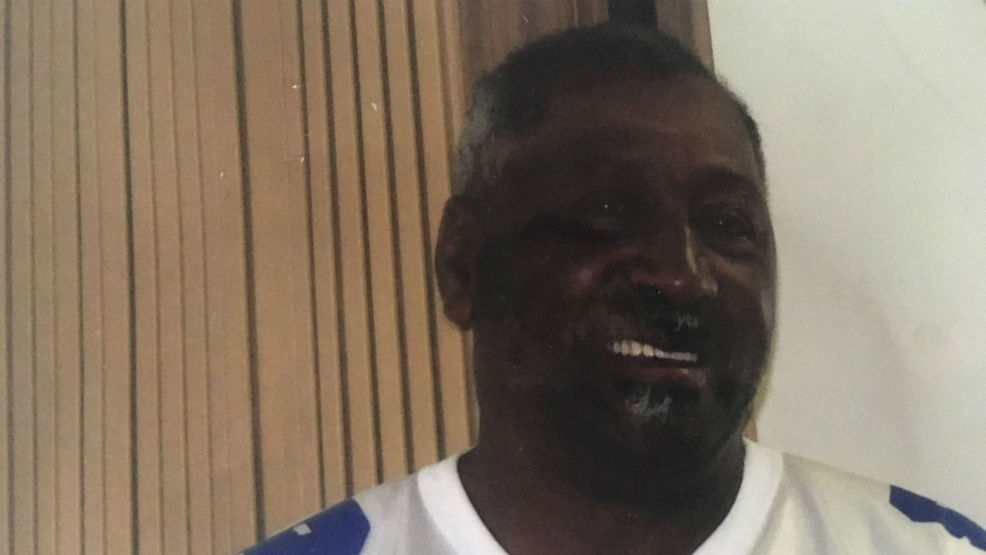
Bernie Lee Scott (Tameria Lee Sutton photo via AP)

AA

Hurricane Florence was blowing across eastern North Carolina hours before making landfall, and Bennie Lee Sutton’s hunting beagles were howling in their backyard kennel. So he was up in the middle of the night doing what he knew would quiet the pack of more than a dozen hounds: parking his pickup nearby and shining the headlights into their pen.

Sutton could be heard talking to someone, probably the dogs, shortly before dawn Friday as winds swirled 70 miles north of where the hurricane was about to make landfall near Wilmington, said his daughter, Tameria. But hours later when she and her mother looked outside for the avid hunter, he was gone and some of his dogs were outside their pens, roaming their small neighborhood surrounded by…

View original post 604 more words

REPORT: S.D. road hunting laws most permissive in the Great Plains

Exposing the Big Game's avatarCommittee to Abolish Sport Hunting Blog

The ring-neck pheasant is the most common game for South Dakota road hunters. SDWN photo.

SIOUX FALLS, S.D. (SDNW) — No neighboring state is as liberal as South Dakota when it comes to allowing loaded guns in moving vehicles and engaging in so-called road hunting. Some states allow hunting in the road right-of-way, or loaded guns in vehicles, but not both.

Despite accidents in which hunters have been killed or maimed, it remains legal in South Dakota to drive with a loaded firearm and hunt pheasants and small game from the roadside or ditch, and even shoot at birds flying across highways. Interstates are off limits, and hunters cannot fire within 660 feet of most buildings or livestock, and generally not from inside a vehicle.

State game wardens and hunter safety teachers have safety concerns about carrying loaded guns in vehicles or shooting across travel lanes.

View original post 110 more words

Watch: Courageous orangutan confronts loggers’ bulldozer destroying its jungle home

Exposing the Big Game's avatarCommittee to Abolish Sport Hunting Blog

. More than 1,000 orangutans living in the region have been threatened by illegal actions in the forest

https://www.ibtimes.co.uk/watch-courageous-orangutan-confronts-loggers-bulldozer-destroying-its-jungle-home-1666004

An orangutan was seen in a video released by International Animal Rescue apparently confronting a bulldozer that was destroying its habitat in the West Kalimantan province of Borneo, in Indonesia.

The great ape is seen rushing towards a mechanical digger along a fallen tree trunk and trying to grab the huge steel bucket as it descends, before grabbing the bucket’s claws in a vain attempt to stop the destruction of its age-old jungle home. Eventually, it flees through the upturned roots of smashed trees.

The incident happened in 2013 but the footage has only just been released by IAR to show the extent of the devastation caused to the endangered…

View original post 297 more words

AN OPEN LETTER TO PEOPLE WHO LEFT ANIMALS TO DROWN DURING HURRICANE FLORENCE

The following is an open letter to those who left animals to drown in the wake of Hurricane Florence.
Dear North Carolinians,
How dare you! You had ample time to pack up your most precious belongings, gas up your car, and flee the state with your loved ones. And you still chose to leave animals behind.
For most of last week, I watched the updates about where Florence would land, how much flooding could occur, and how it would affect farmed animals in the area. As an animal rights activist, I felt helpless knowing people would choose to leave animals behind with no way to survive. And just “hoping animals would survive the worst of the storm” is the biggest disgrace. Sorry, not sorry.
Now that rescue teams are in the area, my Facebook feed is filled with videos of people rescuing dogs trapped in waist-high floodwaters and dogs left crying for help, some barely able to swim and on the brink of death. And these are the lucky ones.
For every dog rescued by teams in North Carolina, thousands of pigs have already drowned.
Unlike companion animals, who by law must be included in government evacuation plans during natural disasters, farmed animals are afforded no legal protections. So while farmers fled for safety, animals drowned in cages and crates with absolutely no chance of survival.
Drowning is one of the worst things one can experience. Submerged underwater, fully conscious, you panic, unable to call for help. After a few minutes, your body doesn’t get enough oxygen and you lose consciousness, allowing your airways to relax and your lungs to fill with water. Your body eventually shuts down from brain damage and cardiac arrest. It’s easily one of the most terrifying ways to die.
And this is what you did to them. As floodwaters rushed in, pigs and piglets would have panicked, just like anyone fighting to survive. We’ve seen such panic time and time again when animals are being slaughtered. Most likely, they would have bitten the bars of their crates, hoping to break free. But many were unable to escape. Imagine if you were in their place.
You let them die because they were nothing more than property to you, and the insurance money was probably worth more than the hassle of moving thousands of pigs to safer areas.
I’ve heard on some news sites that there was “nothing we could do about the animals.” That is a sheer lie. You can stop torturing them.
As a people, we need to take a serious look at ourselves and decide whether we truly want to be such monsters. Then we need to change the laws. Immediately.

And while that happens, all of us can stop supporting the disgusting meat industry by refusing to buy its products. Learn more here.

Hurricane Florence Highlights the Cruel Reality of Factory Farming

KENNY TORRELLA FOR BUZZFLASH AT TRUTHOUT

chickenBroiler chickens (chickens raised for meat) are the top agricultural commodity in North Carolina. In 2015, 823 million broiler chickens were raised in the state. (Photo credit: North Carolina Department of Agriculture)

In 1999, Hurricane Floyd tore through North Carolina, killing 74 people and causing $6.5 billion in damage. But it didn’t just destroy towns and claim human lives; it also claimed the lives of millions of farm animals. The images are impossible to forget: lifeless pigs floating in flood water, thousands of dead chickens inside a factory farm and a few live pigs huddling on top of a barn almost completely submerged under water.

Hurricane Floyd also caused 55 pig manure lagoons to flood, pushing out hog waste into nearby estuaries, which killed fish and caused algae blooms.

Now, early reports show Hurricane Florence’s similar devastating impact on animals and the environment. The North Carolina Department Agriculture and Consumer Services said Tuesday that the storm has claimed the lives of 3.4 million chickens and turkeys, as well as 5,500 hogs. About 1.7 million of those chickens perished at Sanderson Farms, the nation’s third-largest poultry producer, according to Reuters. The numbers are expected to rise.

The Associated Press says several manure lagoons have failed and are now spilling out pollution. The Waterkeeper Alliance has shared photos of manure lagoon breaches and factory farms turned into underwater tombs.

While natural disasters can spotlight and heighten the risks of factory farming to public health, the environment and animals, we’ve long known about the dangers it poses, which raises the question: Why are we raising and killing animals for food in the first place?

From overuse of antibiotics, which could render our own antibiotics ineffective, to leaking manure lagoons, to high saturated fat and cholesterol in meat, eggs and milk, animal farming is one of the most pressing global public health risks.

That’s why last year, more than 200 public health experts, environmental scientists, ethicists and others signed an open letter — featured in The New York Times — calling on the World Health Organization to take concrete steps to mitigate factory farming’s harmful effects. Some of those steps include banning growth-promoting antibiotics, stopping factory farm subsidies, educating consumers on the health risks of meat consumption and financing research into plant-based alternatives to meat.

Also, it’s well known that the meat industry is horrible for the environment. Livestock production is not only resource-intensive but a leading cause of climate change — the second-largest contributor of human-made greenhouse gases after the combustion of fossil fuels — as farmed animals emit vast amounts of methane and carbon into the atmosphere.

What’s more, it’s extremely cruel. North Carolina’s more than 850millionfarmed animals — mostly chickens raised for meat — experience short, brutal lives filled with constant misery and deprivation. Nearly all of these chickens are bred to grow so large, so fast, that many cannot even walk without pain. They live in their own waste, packed into dark, windowless warehouses. And North Carolina’s pig population — about 9 million — is almost as high as its human population. Mother pigs in the pork industry are confined for virtually their entire lives in crates so narrow the animals can’t even turn around.

But the factory farm industry is inured to the abject cruelty that millions of sentient beings must endure under their watch. In a press release, Sanderson Farms described the estimated 1.7 million chickens who perished in their factories as being “destroyed as a result of flooding” — as if they were merely inanimate objects. What’s more shocking is that in the same press release, the company states, “We are fortunate that Sanderson Farms sustained only minimal damage and no loss of life as a result of the storm.” No loss of life? The company completely ignores the fact that those chickens were even alive, let alone thinking, emotional individuals, each with their own unique personalities and social systems, just like humans, dogs, cats and other animals.

But unlike companion animals, who are required by law to be part of government evacuation plans during natural disasters, farmed animals are not afforded such legal protections. Far from being protected, factory farmed chickens are arguably the most abused animal on the planet. And most people probably aren’t even aware of chickens’ incredible cognitive abilities, which rival that of dogs and cats, or that pigs are the world’s fifth-most intelligent animal.

North Carolina lawmakers have fought tooth and nail to protect factory farming corporations over their fellow citizens — often rural communities of color — who have long suffered serious health problems because they happen to live near hog or chicken farms.

Instead of protecting the factory farm industry, lawmakers should instead strengthen — not restrict — citizens’ ability to file nuisance lawsuits against polluting factory farms. Because water and air regulations on factory farms in North Carolina are so lax, suing these facilities for harming people’s quality of life and health is often their last resort. And as public health experts urged the World Health Organization to fund research into plant-based alternatives to meat, so should our federal government.

We take precautions to minimize the harm of natural disasters, but we should also proactively accelerate alternatives to our broken and inhumane food system, rather than wait for it to collapse. We hold the power to do so — now the question is, will we act?