Two zebra doves were crammed in separate socks and placed in two drawstring pouches hidden in a man’s pants during a foiled attempt to smuggle in the birds.PHOTO: AVA
SINGAPORE – A 46-year-old man was sentenced to six weeks in jail on Wednesday (Sept 19), after he was convicted of animal cruelty and illegally importing two birds.
Abdul Rahman Husain tried to smuggle two live zebra doves into Singapore on May 12 without an import licence from the Agri-Food and Veterinary Authority (AVA), said a joint statement from AVA and the Immigration and Checkpoints Authority (ICA).
ICA officers had stopped Rahman for checks at Woodlands Checkpoint when they detected the two doves crammed in separate socks and placed in two drawstring pouches hidden in his pants.
The birds were found to be in poor condition, and Rahman’s action was deemed by AVA to have caused unnecessary suffering to the birds. The birds were seized and placed under the care of Wildlife Reserves Singapore.
Rahman was sentenced to six weeks’ jail for illegal import of the birds, and another six weeks’ jail for failing to ensure that the birds were not subjected to unnecessary suffering.
Both sentences will run concurrently.
Anyone convicted of smuggling animals and birds into Singapore can be fined up to $10,000, and jailed for up to a year.
Animals that are smuggled into Singapore may introduce exotic diseases, such as bird flu, into the country.
Published Tuesday, September 18, 2018 7:52PM EDT Last Updated Wednesday, September 19, 2018 6:01PM EDT
OTTAWA – File this under: Useful federal trivia.
The number one issue raised by the general public in correspondence with Prime Minister Justin Trudeau? Seal hunting.
More than 2 million messages about seal hunting have been sent to the PMO since Trudeau took office on Nov. 4, 2015, according to documents tabled in the House of Commons.
Prime Minister Justin Trudeau at a community barbecue at Chinguacousy Park in Brampton, Ont. on Saturday, September 15, 2018. THE CANADIAN PRESS/ Tijana Martin
Though it in no way has been a major issue dogging this government, a quick search shows several groups and high-profile celebrities have been pushing Trudeau to end the commercial hunting of seals.
Inuit hunters and non-Indigenous hunters in Newfoundland and Labrador have defended the practice, and Trudeau and his caucus voted in favour of, and passed, Bill S-208 to mark May 20 as “National Seal Products Day” last year.
The documents do not specify how much of the correspondence on this subject was either for, or against seal hunting.
The response to a June Order Paper Question from Conservative MP Kevin Waugh listed the top 10 topics in terms of volume, not all of which came in a mail bag — it includes electronic form emails that campaigns can encourage people to stick their names on and send in.
Overall, environmental and energy issues appeared repeatedly on the list, including climate change, which was the second-most communicated issue, and pipelines, which was the fifth hottest topic.
Other matters that amassed the most mail? Terrorism and legal settlements, which could potentially be connected to Trudeau’s controversial $10.5 million settlement to Omar Khadr in the summer of 2017.
The top 10 issues amassed a total of more than three million pieces of correspondence.
Here’s the full rundown of what Canadians are writing to the Prime Minister about:
Seal hunt: 2,013,389 pieces of correspondence
Climate change: 240,376 pieces of correspondence
Test on animals: 227,229 pieces of correspondence
Site C dam: 148,005 pieces of correspondence
Pipelines: 140,859 pieces of correspondence
Falun Gong: 138,273 pieces of correspondence
Natural gas: 127,294 pieces of correspondence
Legal settlements: 126,606 pieces of correspondence
Terrorism: 86,451 pieces of correspondence
Renewable energy: 65,984 pieces of correspondence
Total for the top 10 was 3,314,466 pieces of correspondence.
If there’s a burning issue you want to raise with Trudeau, his office hosts an online submission form, or if the classic postal mail is more your style, you can address him at: Office of the Prime Minister, 80 Wellington Street, Ottawa, ON K1A 0A2.
The most remarkable thing about Judge Dana Christensen’s Aug. 30 order to temporarily block the first grizzly bear hunts in the Greater Yellowstone area in four decades was that he acknowledged “the threat of death to individual bears.” Wildlife issues are notorious for bringing out the “population management” banter in all but the most-avid animal advocates. Perhaps through these noble bears we can finally address a nonhuman issue with something other than depersonalization and disinformation.
Over the hundreds of hours I’ve spent photographing grizzly bears, I never thought of them as anything less than individuals with their own thoughts, concerns and will to live. Anyone objectifying them as trophies is using twisted thinking and doesn’t deserve a say in their future.
No one can honestly claim they have an unmitigable hankering for grizzly bear meat these days. As world-renowned primatologist Jane Goodall recently put it, if a grizzly bear like those living near Grand Teton National Park is shot “so…
Dead, decomposing animal carcasses that drown and laid in water for days are accepted in North Carolina to be rendered and sold as pet feed ingredients.
One of you wonderful pet owners out there sent me a serious concern. She read a story in the Charlotte Observer that stated “So far 3.4 million chickens and turkeys, and 5,500 hogs are dead in North Carolina from Hurricane Florence wind and floods. The numbers are expected to increase this week.” She was very worried “where all these dead animals will end up.”
Her worry was justified.
Hurricane Florence came ashore on September 14, 2018 according to an ABC News timeline. The next day – September 15, 2018 – “Florence is expected to dump another 14 to 20 inches of rain on southern and central parts of North Carolina into far northeast South Carolina. This will continue to produce “catastrophic flash flooding and prolonged significant river flooding,” the National Weather Service said.”
The “catastrophic” flooding has resulted in the death of at least “5,500 pigs and 3.4 million chickens” according to the North Carolina Department of Agriculture and Consumer Services – published in the Charlotte Observer newspaper September 18, 2018. The animals drowned.
The FDA told me the following (regarding disposal of drowned livestock in North Carolina):
FDA doesn’t “approve” the disposal method in these circumstances. As stated in the mass mortality guidance, “Owners may choose to dispose of their mortality from storms and may do so, but catastrophic loss mortality must be reported to the State Veterinarian and the proposed method of disposal must be approved prior to disposal.” Evaluating and potentially approving a proposed method of disposal would fall under the NC Department of Agriculture/State Veterinarian’s purview.
North Carolina tells the livestock industry that “when flooding is an issue” the primary options to dispose of millions of drown animals are (in order of NC Dept of Ag preference):
Rendering North Carolina Department of Agriculture states (bold added): “Rendering is a preferred off-site option with some limitations due to timing challenges and access to carcasses during flooding events. It is low cost and results in a product of value from rendered carcasses.”
Landfill
North Carolina landfills – per their documents – accept pigs and chicken carcasses…but will North Carolina landfills accept decomposing carcasses of pigs and chickens that have been laying in flood waters for days?
Composting “Composting is the best on-site carcass disposal option. Site allowing for heavy equipment to form the compost pile and move carcasses.” Will flooded farms be able to compost the millions of dead animals?
Will those decomposing animal carcasses become rendered pet food ingredients? Chances are – they will.
And worse yet – no pet owner will know which pet food will contains rendered decomposing drowned animals from Hurricane Florence.
Become a member of our pet food consumer Association. Association for Truth in Pet Food is a a stakeholder organization representing the voice of pet food consumers at AAFCO and with FDA. Your membership helps representatives attend meetings and voice consumer concerns with regulatory authorities. Click Here to learn more.
What’s in Your Pet’s Food?
Is your dog or cat eating risk ingredients? Chinese imports? Petsumer Report tells the ‘rest of the story’ on over 5,000 cat foods, dog foods, and pet treats. 30 Day Satisfaction Guarantee. Click Here to preview Petsumer Report. www.PetsumerReport.com
The record-breaking rains that started with Hurricane Florence are continuing to strain North Carolina’s hog lagoons.
Because of the storm, at least 110 lagoons in the state have either released pig waste into the environment or are at imminent risk of doing so, according to data issued Wednesday by the North Carolina Department of Environmental Quality. That tally more than tripled the Monday total, when the department’s count was 34.
When a pig in a large-scale farm urinates or defecates, the waste falls through slatted floors into holding troughs below. Those troughs are periodically flushed into an earthen hole in the ground called a lagoon in a mixture of water, pig excrement and anaerobic bacteria. The bacteria digest the slurry and also give lagoons their bubble gum-pink coloration.
North Carolina has 9.7 million pigs that produce 10 billion gallons of manure annually, mostly on large-scale farms and primarily in low-lying Sampson and Duplin counties. Both counties were affected by Florence.
When storms like Florence hit, lagoons can release their waste into the environment through structural damage (for example, when rains erode the banks of a lagoon and cause breaches). They can also overflow from rainfall or be swept over by floodwaters.
Whatever the cause, the result when a lagoon leaks can be environmental trouble. If the untreated waste enters rivers, for example, algal blooms and mass fish die-offs can happen, as they did in 1999 during Hurricane Floyd. That year, many animals drowned in lagoon slurry.
Hog lagoons and the associated large-scale farms, also known as concentrated animal feeding operations, or CAFOs, have been a sore spot in the eastern part of the state, where residents say that the operations harm their health and well-being.
“Life expectancy in North Carolina communities near hog CAFOs remains low, even after adjusting for socioeconomic factors that are known to affect people’s health and life span,” Dr. H. Kim Lyerly, a professor of cancer research at Duke, said in a statement. The Duke study stops short of drawing a causal link.
Last week, Andy Curliss, chief executive of the North Carolina Pork Council, said that the pig producers had learned a lot from Hurricane Floyd. In 2016, Hurricane Matthew caused 14 lagoons to flood but none breached, according to the pork council.
“A lot of the farms that were flooded were bought out and closed,” he said. “That’s why you didn’t see the same impact in Matthew — we had maybe 15 floods, no breaches.”
The North Carolina Pork Council said in a statement Wednesday afternoon that while most of their 2,100 hog farms were resuming normal operations, a small number of farmers have had to take extreme measures like using boats to reach their barns.
As Florence approached, farmers tried to free up more space in lagoons by spraying manure onto fields, said Heather Overton, a spokeswoman for the North Carolina Agriculture Department.
Will Hendrick, a staff attorney with the environmental nonprofit group Waterkeeper Alliance, said that manure sprayed on fields could run off into rivers, streams, and groundwater supplies if the fields flooded.
A livestock farm in eastern North Carolina photographed by Waterkeeper Alliance on Monday. Credit Rick Dove/Waterkeeper Alliance
Excess nitrates in groundwater, such as those associated with pig manure, are linked with health problems like blue baby syndrome. In some cases of the syndrome, nitrogen binds to the hemoglobin in a baby’s blood and makes red blood cells unable to carry oxygen. The syndrome’s name comes from the fact that the lack of oxygen causes the baby’s skin to take on a bluish tint. The syndrome can also be caused by heart defects
Part of the problem, said Alexis Andiman, an associate attorney with the environmental nonprofit law firm Earthjustice, is that storm standards for pig lagoons currently date from the 1960s.
As part of a settlement in a lawsuit that Earthjustice levied against the state, “the storm standard will be tied to a National Oceanic and Atmospheric Administration standard from 2006,” Ms. Andiman said. “But that’s still kind of old.”
As for the animals, most of them were relocated before the storm. As of Wednesday the North Carolina Department of Agriculture reported that an estimated 5,500 pigs had died because of Florence. Chickens and turkeys, however, weren’t so lucky. An estimated 3.4 million birds were killed. The poultry producer Sanderson Farms said in a news release that they’d lostan estimated 1.7 million broiler chickens.
The Department of Environmental Quality’s data is self-reported by farmers, many of whom may have left their farms to avoid the storm surge and floodwaters. The number of spills reported could increase as more farmers make their way back to their farms. But luckily, in a region that has struggled with too much rain, the rest of the week’s forecast is mostly sunny.
If you want to read an exceptional book, or share it with your friends or acquaintances who aren’t yet convinced that hunting and the management of our wildlife has got to go, then please give them this book.
EXPOSING THE BIG GAME: Living Targets of a Dying Sport
BY JIM ROBERTSON
You can purchase the book by emailing us at wildwatch@verizon.net or by calling us at 914-388-5221. For a donation to C.A.S.H. of a Basic Plus membership, you will receive a copy in the mail.
Excerpt from EXPOSING THE BIG GAME: LIVING TARGETS OF A DYING SPORT:
Every place I have lied in the West, I’ve been fortunate enough to locate or stumble upon the rare or secretive creatures native to the locality, be they cougars, wolves, grizzly bears, lynx, otters, fisher, mink…
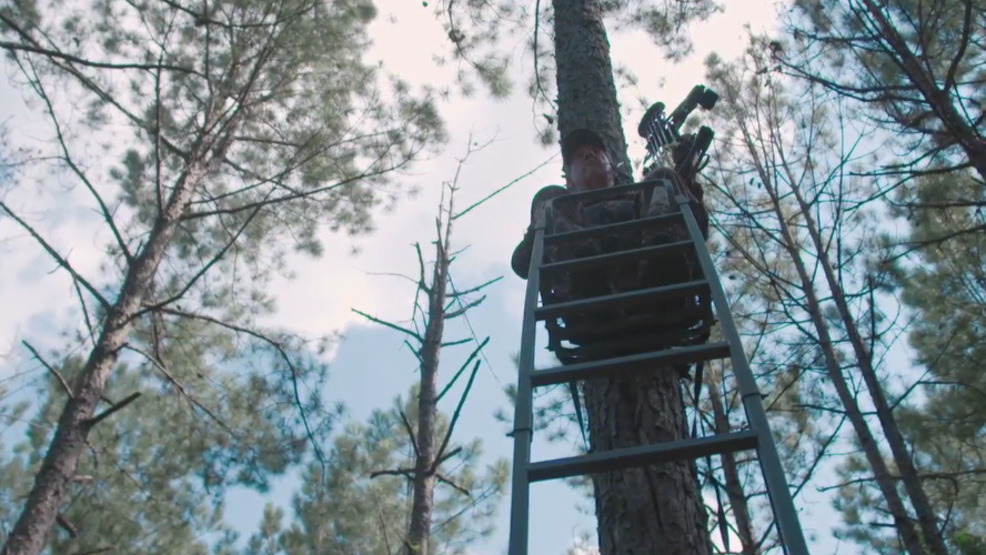
Please post to Outdoors. Suggested Photo Caption: In spite on continual warnings and easily available safety equipment, some Tennessee deer hunters will likely fall from a treestand this hunting season. Watch Tim Crawford’s compelling story and perhaps you’ll be inspired to keep yourself safe. (Photo courtesy Summit Treestands)
AA
TENNESSEE — The 2018 deer archery-only hunting season opens statewide in Tennessee on Saturday, Sept. 22. That is the day we are likely to start seeing news releases about hunters injured, or even killed, following a fall from a tree stand.
Hunters all the way back to prehistoric times, have always known that hunting from an elevated position gives the hunter an advantage. Anytime a hunter is in an elevated position, he or she can become “un-elevated” in an instant due to a simple slip or equipment malfunction. Last hunting season there…
Call it “The Great Stall.” Hurricane Florence lingered over the Carolinas for four days, dumping some 30 inches of rain. Flood waters are still rising, even as Typhoon Mangkhut, a superstorm 500 miles across, rakes the Philippines and Hong Kong and crashes into China. Florence is just the latest in a long series of catastrophic events generated by stalled weather patterns — slow-moving systems which occur when one of the jet streams that flow around the Earth pinches off a massive section of air from normal wind flows for a prolonged period of time. The National Oceanic and Atmospheric Administration (NOAA) has compiled a long list of severe weather events in the US, and most of them are linked, in one way or another…
In 2013 and 2014, a mass of warm water formed off the West Coast. The Blob, so named by Washington State Climatologist Nick Bond, persisted through 2015 and 2016 after a massive El Nino event hit and kept it alive. Temperatures inside the Blob were recorded at nearly 3 degrees C warmer than normal.
These were years marked by drought, sea bird and salmon die-offs, marine mammal starvation, extensive harmful algal blooms, razor clam and Dungeness fishery closures and beautiful warm summer days for North Coast residents.
The effects of each single event have bled into the following year…






 Exposing the Big Game
