Exposing the Big Game

Forget Hunters' Feeble Rationalizations and Trust Your Gut Feelings: Making Sport of Killing Is Not Healthy Human Behavior

Exposing the Big Game

CO2 Concentration Is Higher Than Ever in Human History

Exposing the Big Game's avatarThe Extinction Chronicles

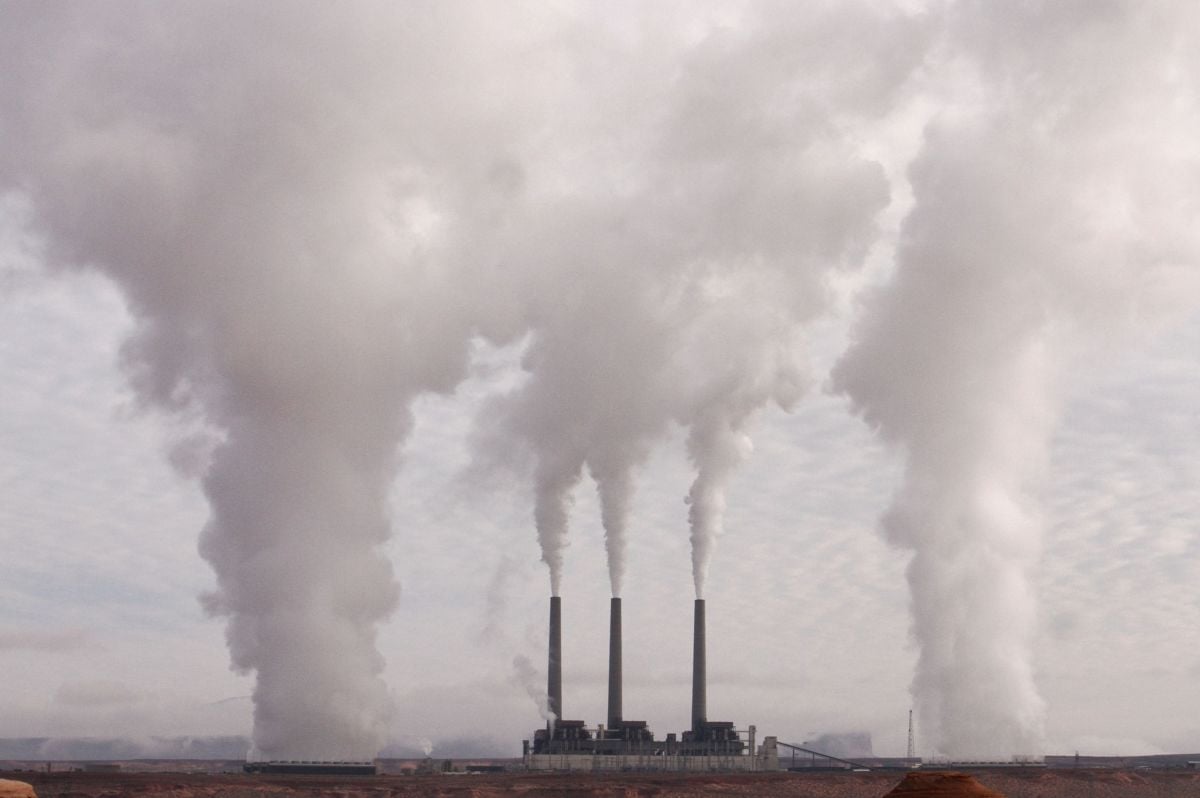
For the first time in human history, on May 13, Earth’s concentration of carbon dioxide (CO2) reached 415 parts per million ( ppm). Before the 19th century’s industrial revolution, the CO2 concentration was at about 280 ppm.

Meteorologist and Grist staff writer Eric Holthaus tweeted the following shocking data, derived from historical records, about global atmospheric CO2 levels:

270 → 280 ppm: ~5000 yrs

280 → 290: ~100

290 → 300: ~40

300 → 310: ~30

310 → 320: ~23

320 → 330: 12

330 → 340: 8

340 → 350: 6

350 → 360: 7

360 → 370: 6

370 → 380: 5

380 → 390: 5

390 → 400: 5

400…

View original post 342 more words

After nearly going extinct, Washington’s pygmy rabbits need room to grow

Exposing the Big Game's avatarThe Extinction Chronicles

Recovering the endangered rabbits will test society’s willingness to let nature reclaim a landscape.

In the rolling hills of the Columbia Basin in central Washington, a tractor kicked dust from a wheat field as an early May breeze filtered down from the Cascade Mountains rising in the west. In a patchwork of sagebrush and bunchgrass, Jon Gallie searched for the newest generation of North America’s smallest rabbit, the state and federally endangered Columbia Basin pygmy rabbit.

When not moving by memory through this reclaimed farmland, Gallie, an endangered species project leader for the Washington Department of Fish and Wildlife, traced his footsteps to dots on his phone marking den sites. In a city, he could easily pass for a Pokémon Go player, chasing fictional creatures in an imaginary digital realm. But the grapefruit-sized…

View original post 1,571 more words

Extreme weather in Midwest could impact your grocery bill

By OpinionFOXBusiness

The extreme weatherOpens a New Window. and record flooding that has been hammering the Plains and Midwest will likely impact everyone’s walletOpens a New Window..

Eight states along the Mississippi have been hit by the longest stretch of flooding since the Great Flood of 1927. Across the grain belt, farm fields are flooded. This is already having a big impact on grain prices as farmers can’t get into the field to plant, leading to the slowest pace of grain planting in recorded history.

MORE FROM FOXBUSINESS.COM…

According to the USDA, only 58 percent of the corn crop was planted as of May 26, compared to 90 percent at this time last year. Soybean planting is also well behind, as only 29 percent of the soybean crop was planted, below the average of 66 percent. Now it looks like over 6 million acres will go unplanted.

Because of this slow pace, grain market sentiment has shifted from fears of an oversupply due to the U.S.-China trade war, to now thoughts of shortages in just a few weeks. If the U.S. does not get its crop planted, there is a real risk of a global shortfall of grain.

Feed costs could rise dramatically, and eventually that will mean higher food costs on everything from meats, breads, pastas and poultry. But it is not just food prices that will rise. Floods are already impacting gasoline prices.

Just when you thought it was safe to go back to the gas pump, the floods are pushing gasoline prices higher. As a direct result of the floods, we are seeing prices in ethanol, a major gasoline additive, spike by over 10 percent in just a few weeks.

That has happened not only because the cost of corn is rising, but also because ethanol plants have slowed production and the flooding has shut down multiple pipelines and some ethanol producing plants.

Oil supply to refineries has been constrained as flooding has shut down major pipelines, even impacting the country’s biggest oil storage hub in Cushing, Oklahoma. The Ozark pipeline that is an artery out of Cushing was shut down this week due to the floods. This all translates to higher prices.

Yet, at the same time the floods are having a dampening effect on demand. Diesel demand is a far cry from what it could have been because farmers cannot get into the field to plant. If the rain doesn’t stop soon, those acres may never get planted and that expected bump in diesel demand may be gone forever.

CLICK HERE TO GET THE FOX BUSINESS APPOpens a New Window.

Gasoline demand may fall short of expectations as well. Memorial Day travelers may have stayed home as bad weather and flooding ruined many plans. So, while we are definitely seeing upward price pressures because of the damage to the supply side, the price spike may be delayed because of the hit to the demand side.

Phil Flynn is senior energy analyst at The PRICE Futures Group and a Fox Business Network contributor. He is one of the world’s leading market analysts, providing individual investors, professional traders, and institutions with up-to-the-minute investment and risk management insight into global petroleum, gasoline, and energy markets. His precise and timely forecasts have come to be in great demand by industry and media worldwide and his impressive career goes back almost three decades, gaining attention with his market calls and energetic personality as writer of The Energy Report. You can contact Phil by phone at (888) 264-5665 or by email at pflynn@pricegroup.com.

Botswana brings back trophy hunting

https://theecologist.org/2019/may/31/botswana-brings-back-trophy-hunting

Ross Harvey


31st May 2019

Elephant
Botswana has now committed to a policy built on myths, while the rest of the world takes stock of the implications ecological crisis.

Botswana’s Ministry of Environment, Natural Resources Conservation and Tourism has recently announced that “the Government of Botswana has taken a decision to lift the hunting suspension.”

The country’s new president, Dr Mokgweetsi Masisi, recently hosted a summit in Kasane for five southern African heads of state whose countries are home to roughly half the world’s remaining elephant population.

The purpose was to forge a common regional strategy for elephant conservation in the Kavango Zambezi Transfrontier Conservation Area (KAZA). Though the strategy does not explicitly mention hunting, it paves the way for justifying it. The conference itself was in large part an exercise towards that end.

Consumptive use

Since Masisi took over the reins from Ian Khama – a lone voice in the region against trophy hunting and trading ivory – he has been angling to rescind the hunting moratorium.

Critics suggest that this is an attempt to retain the rural vote for the Botswana Democratic Party (BDP) in this year’s elections, as the party has been struggling over the last decade to retain this vital element of the electorate.

Under the banner of ‘consumptive use’ – the idea that an animal will only be conserved if it is hunted or its parts are traded for cash – hunting was defended at the Kasane Conference as a silver bullet for elephant conservation. Speakers and ministers expounded myths that the world – and most African Elephant range states – have largely turned their backs on.

First, Kitso Mokaila, Botswana’s Minister of Environment and Tourism, claimed that Botswana’s elephant population has surged to 160,000, from 55,000 in 1991.

This is the subtext for the claim that there are ‘too many elephants.’ But it is false on both fronts.

Carrying capacity

In 1983, Botswana’s elephant population numbered between 70,000 and 75,000. It had certainly not dropped to 55,000 by 1991.

The minister may have done well to consult the latest scientific survey of Northern Botswana, which estimates the population to be roughly 126,114. This is where the majority of elephants reside, so a generous reading of the entire country might be just above 130,000.

This figure is not materially different from the 2014 figure. In other words, the population is stable, not growing.

A second myth: Botswana has exceeded its ‘carrying capacity’ of 54,000 elephants.

This has become an expedient cover under which to justify elephant trophy hunting and even culling. The entire concept of ‘carrying capacity’ is arbitrary. It has no relevance for vast, unfenced wilderness landscapes that adapt and maintain integrity without human intervention.

Ecological benefits 

Ian McDonald has stated that the idea of a carrying capacity of 0.4 elephants per square kilometre derives from an outdated “Hwange Game Reserve management policy that had no scientific basis”.

Scholars Phyllis Lee, Keith Lindsay and Katarzyna Nowak write: “Much of the research community, and many managers, accept that ecosystem structure and function are not about elephant numbers but instead about elephant distribution across a landscape and in relation to plant communities.”

A large number of scientists wrote in Ambio that they did not see “any ecological reason to artificially change the number of elephants in Chobe National Park, either through culling or opening new dry season ranges.”

What matters is not “carrying capacity” but dispersion and concentration. A high density of elephants in one area may prove to result in some ‘undesirable’ vegetation transformation, which is a good reason for keeping migratory corridors open (no fences).

Even where apparent vegetation transformation occurs, however, the ecological benefits of keeping elephants as keystone herbivores should never be underestimated. They deposit seeds up to 90km away from areas in which they feed, regenerating vegetation elsewhere and creating corridors for other animals to use.

Transferring knowledge

A third myth: hunting will solve the “population explosion problem”. Ignoring for a second that the population is stable – and potentially in decline – the truth is that hunting only decimates the big tuskers, reducing genetic diversity.

Trophy hunting is typically rationalised on the grounds that it only eliminates old bulls that are ‘surplus’ to herd requirements. Such small-scale elimination is, however, incapable of controlling an ‘exploding’ population, especially given that Botswana’s annual trophy export quota was only ever between 420 and 800 elephants in the decade preceding the moratorium.

Moreover, there is no such thing as ‘surplus’ bull elephants. Dr Michelle Henley writes that “in the past, bulls over 50 years of age were considered redundant but more recent studies have found that bulls do not reach their sexual prime until they are over 45 years old.”

She also notes that older bulls, because they have protracted musth cycles, “often suppress the musth cycles of younger bulls, thereby maintaining social stability and lowering younger bulls’ aggression towards other species such as rhinoceros.”

They are thus critical for ensuring functional herd sociology, transferring knowledge and disciplining delinquent behaviour among juvenile males.

Arbitrary quotas

Hunting is a fundamentally unsustainable activity, as the incentives are loaded in favour of over-consumption and rule-breaking.

As Botswana veteran Mike Gunn puts it: “Anyone who knows anything about hunting cannot honestly claim that a hunter, tracking a trophy bull with his client, upon finding a young bull carrying large tusks, would try to dissuade his client from shooting it.”

Hunting quotas tend to be arbitrarily determined by the hunters themselves and over-exploited, which violates the ‘maximum sustainable yield’ principle.

Hunting will therefore never solve a population problem, but it does destroy herd sociology and ensures that big tuskers are being shot out.

In this respect, hunters are aiding the poachers – undermining, not supporting, conservation.

Colonial hunting 

Fourth, it’s simply not true that bringing back hunting will solve human and elephant conflict (HEC) and increase benefits to local communities.

The fact is that hunting would only solve HEC if it were able to keep elephants within protected areas and reduce the scarcity of resources, such as water, especially during prolonged drought.

Part of the argument is that hunting generates revenue that accrues directly to local communities and thus disincentivises both poaching and the killing of errant crop-raiders. Ironically, however, hunting is rooted in a colonial anthropology that castigated indigenous people groups as ‘poachers’ and colonialists as ‘hunter-conservationists’.

So, the colonial hunting fraternity established fortress conservation, which displaced and disempowered local communities, but now paints itself as the saviour of conservation and communities.

HEC can be mitigated through bee and chilli solutions, or some combination thereof. Safe migratory corridors can also be established in which human settlement is limited.

Marginal lands

Ultimately, if communities are empowered to earn and receive benefits from elephants being alive, HEC might become negligible. Hunting is not the answer, as the global hunting industry is in decline and is fundamentally unsustainable in open systems.

While the hunting lobby argues that photography is not viable in ‘marginal lands’, Mike Gunn reports that the establishment of Thobolo’s Bush Lodge has falsified this hypothesis.

Hunting makes elephants skittish and herds them, in large numbers, into small safe areas. To the contrary, photography-based lodges present no threat to elephants, provide water during drought, and therefore allow dispersion that results in reasonable population growth and broad-based revenue for communities that would otherwise be reliant on dwindling hunting income.

Instead of allocating previous hunting concessions to photographic, non-consumptive businesses, the Botswana government has been accused of sitting on them despite high levels of interest. Idle land is an invitation to poachers.

The bottom line here is that hunting tends to increase elephant aggression, which exacerbates HEC instead of resolving it.

Poaching

A fifth myth: the hunting moratorium led to increased poaching.

This argument only works on confirmation bias and sequence ignorance. The logic is that poaching has increased in the wake of hunting’s absence, and the latter must therefore be the cause of the former.

However, poaching only started to increase in 2017, three years after the moratorium was imposed. Poaching is therefore more likely to be a function of scarcity elsewhere – south-western Zambia and south-eastern Angola have experienced high poaching rates recently – and density within. It’s no surprise that poachers have moved south.

Moreover, poaching may well have been minimised if former hunting concessions had been re-allocated timeously to allow photographic expansion.

In the final analysis, Botswana appears intent on moving against science and cogent argument through lifting Khama’s hunting moratorium.

Ecological integrity 

As a physical emblem of President Masisi’s rejection of the prevailing global view, he gifted his fellow heads of state at the Kasane conference with elephant footstools.

UN report released at the same time as the conference showed that human society is in jeopardy from the accelerating decline of the Earth’s natural life-support systems. No less than one million species are at risk of extinction, in large part because of our unsustainable ‘consumptive-use’ doctrine.

While the rest of the world takes stock of the implications of having destroyed the planet, Botswana has now committed to a policy built on myths, one that may generate short-term revenue and political gain.

But it comes at the expense of elephants, ecological integrity and future eco-tourism revenue.

This Author 

Ross Harvey studied a B.Com in Philosophy, Politics and Economics at the University of Cape Town (UCT), where he also completed an M.Phil in Public Policy. At the end of 2018, he submitted his PhD in Economics, also at UCT. Ross is currently a freelance independent economist who works with The Conservation Action Trust.

These are the 21 ingredients that make an Impossible Burger look and taste like meat

Exposing the Big Game's avatarThe Extinction Chronicles

impossible burger woman eating hands red nails
There are 21 ingredients in an Impossible Burger, including soy protein, salt, and lots of vitamins.
 Impossible Foods

Plant-based “meat” is poised to become a $140 billion industry, with Impossible Foods and Beyond Meat leading the way.

With commitments from major chains like Burger King, which is set toroll out the Impossible Whopper across America by the end of 2019, Impossible Foods seems closer than ever to its goal of starting a plant-based “meat” revolution.

So what’s…

View original post 399 more words

11-foot gator breaks into Florida home by crashing through window

Imagine waking up in the middle of the night, walking into the kitchen to get a midnight snack — and then almost becoming a snack yourself. That’s what happened to one family in Clearwater, Florida, when they woke up in the middle of the night to find an alligator in their kitchen.

The 11-foot gator broke into the family’s home through a low window in the kitchen, the Clearwater Police Department said on Facebook. The homeowner immediately called the police and a trapper responded to the scene to remove the gator.

untitled-collage-5.jpg
An 11-foot alligator broke through a window, at left, into a Florida family’s kitchen.CLEARWATER POLICE DEPARTMENT

The beastly reptile was captured and there were no injuries, the police said. The department shared several photos of the unwanted visitor on Facebook. One shows the gator sticking its head through the broken glass window. Another photo shows the mess he made in the kitchen, knocking over a table and chairs.

It’s unclear what drew the gator inside the family’s kitchen. It seems he wanted in so badly, he was willing to smash through glass.

In 2017, a Florida golf course made headlines after a massive 800-pound alligator moseyed across the green. Last year, a gator was spotted walking across the tarmac at Orlando International Airport. Luckily, passengers who spotted the creature were safely inside the plane, although they were briefly delayed, as the gator prevented the plane from taxiing to its gate.

While burglars are usually not gators, Florida has seen more than its fair share of gators in odd places. Last month in Sarasota, Florida, another family had a middle-of-the-night encounter with an 11-foot gator. It didn’t break into their kitchen, but it did take a dip in their pool. 

If you happen to encounter a gator in the wild — or in your kitchen — your safest option is to keep your distance. Jack Hanna, director emeritus of Columbus Zoo and Aquarium, advises staying at least 40 to 50 feet away from any potential alligator hazard. At 20 feet, Hanna says an alligator could “outrun any human.”

But if you can’t get away, wildlife experts recommend you fight back. If an alligator bites you, make a commotion by hitting or kicking it or poking it in the eyes. Gators will retreat from prey they can’t easily overwhelm.

Facebook Post Mischaracterizes Cow Study


Quick Take

A picture of a cow used for a research project in 2008 has been circulating on social media with a false claim that “fringe leftist[s] are now advocating for cow fart bags to capture farts as a way to help prevent ‘global warming.’”


Full Story

A cow used in an Argentine research project in 2008 has become the star of a misleading post on social media in 2019.

The cow, which is shown wearing an inflatable pink cylinder on its back, has had its pictureshared more than 35,000 times on Facebook with this text: “I wish this was a joke but fringe leftist [sic] are now advocating for cow fart bags to capture farts as a way to help prevent ‘global warming.’ You can’t make this stuff up folks.

But that claim is made up.

The backpack was used to collect gas produced during the cow’s digestive process so that scientists could study the effect its diet has on the production of methane and other volatile organic compounds in ruminants that contribute to climate change. The backpack was connected to the cow’s stomach through a hole in its ribs, and was collecting what would have been burps, not “farts,” as the Facebook post claims.

But, most importantly, the backpack was not intended as a device to keep methane out of the atmosphere. Rather, it was used to help scientists study how cow’s digest what they eat.

The same researchers who worked on that project used a similar gas collection system a year earlier to study the methane produced in the digestion of dairy cows. That study, which lasted 28 days and included six cows, found that the addition of tannins (an additive derived from plants) to the cows’ diet led to a 28 percent decrease in methane production.

A later project by the same researchers, done in 2013, used the collection system to transform the methane into biofuel.

According to the Environmental Protection Agency, between 50 percent and 65 percent of methane emissions around the world come from human activity, including the use of livestock, and the impact on the global climate is 25 times greater than the impact of carbon dioxide over 100 years.

The agriculture sector was responsible for about 9 percent of total U.S. greenhouse gas emissions in 2017, according to the EPA.

Editor’s note: FactCheck.org is one of several organizations working with Facebook to debunk misinformation shared on social media. Our previous stories can be found here.

Sources

Brindicci, Marcos. “Cows Burp for Science in Argentina.” Reuters. 9 Jul 2008.

Associated Press. ARGENTINA METHANE. AP Archive. 19 Apr 2010.

Berra, Guillermo, et al. “Use of Tannins to Mitigate Methane Emission in Grazing Dairy Cows.” Accessed 29 May 2019.

United States Environmental Protection Agency. “Overview of Greenhouse Gases.” Accessed 29 May 2019.

Share The Facts
Viral photo
A photo caption claims: “I wish this was a joke but fringe leftist [sic] are now advocating for cow fart bags to capture farts as a way to help prevent ‘global warming.’ You can’t make this stuff up folks.”

The climate renegade

Exposing the Big Game's avatarThe Extinction Chronicles

What happens when someone wants to go it alone on fixing the climate?

Deep in the ocean west of British Columbia, salmon eat fish and plankton before they head inland to spawn. Well-fed enough to make it upriver, they swim back toward the coast and past the islands of Haida Gwaii, where the area’s indigenous population fishes them.

That’s how it was for decades. But in the 2000s, fish populations were declining, and unemployment among the Haida was high.

Enter an eccentric San Francisco-based entrepreneur named Russ George. He had spent much of his career bouncing between ambitious environmental projects: cold fusion, reforestation, and, most recently at the time, a startup called Planktos, which focused on something called “ocean restoration.”

In 2011, George told the Haida residents of the village of Old Massett that he could bring back the salmon. The plan? To drop…

View original post 2,270 more words

Wolf-dog hybrids taking over Europe, study warns

Wolf-dog hybrid walks along woodland path
© diary_of_a_wolfdog – Instagram

Researchers from the University of Exeter have warned that European wolf populations are at risk of being wiped out by a surge of wolf-dog hybrids.

By Nick WhittlePublished on 28 May 2019

https://wamiz.co.uk/news/12178/wolf-dog-hybrids-taking-over-europe-study-warns?fbclid=IwAR3Af_CCbBJDNlMMOttxfSThfPhlDkWxhInMffkxnheg4LqTFpwQ01UAFBg

Lead author Valerio Donfrancesco from the Centre for Ecology and Conservation at the University of Exeter warns that wild populations of wolves will soon give way to wolf-dogs if nothing is done to manage the interactions of the two species.

Wolf-dogs are a hybrid species that results from the mating of wolf and dog. The study states that wolf-dog offspring are most commonly found in areas where human territory borders wolf territory and where domestic dogs are allowed to roam free.

Publicité

Habitat destruction is also cited as a cause of wolves edging ever closer to urban areas.

The interbreeding ‘threatens the genetic identity’ of wolves, writes Harry Cockburn for the Independent.

Study reveals disagreements between scientists

In the journal Frontiers in Ecology and Evolution Donfrancesco writes: ‘We need to address this issue before wolf-dog hybrids backcross with wolves to the extent that wolf populations will be lost to hybrid swarms, and the conservation of wild populations will become unfeasible.’

The study scrutinised the approach of numerous scientists and concluded that disparate opinions endangered any forthright restorative action. The lack of agreement among those ‘best placed to tackle the problem‘ was cited as a hindrance to proper manangement of the growing numbers of wolf-dogs.

A rescue bid is also hampered by a lack of research of wolf-dog hybrids. ‘The fact that we know so little about the ecology, behaviour and social acceptance of the wolf-dog hybrids adds a layer of concern to the issue,’ Mr Donfrancesco told the Independent.

Should the number of wolf-dog hybrids continue to rise, the long-term survival and evolution of the lupine species are threatened.

Despite the research it seems inevitable that in some parts of northern Europe wolf populations will cease to be, due to the steady encroachment of humans into wilderness and the vast numbers of domestic dogs that accompany human habitations.

Co-author Dr Nibedita Mukherjee, from the University of Exeter, said: ‘We hope that by highlighting areas of disagreement and why they occur, we will be able to build a more unified scientific opinion, and aid an effective management of this urgent issue.’