US energy department rebrands gas exports ‘molecules of freedom’

Exposing the Big Game's avatarThe Extinction Chronicles

Natural gas is flared off at a plant in TexasImage copyrightGETTY IMAGES
Image captionThe US has announced its plans to “spread freedom gas throughout the world”

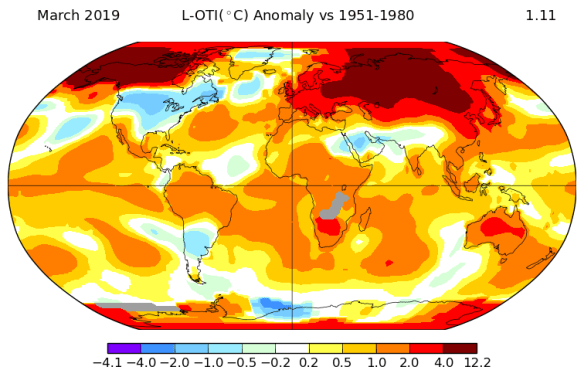
US energy officials appeared to rebrand natural gas produced in the country as “freedom gas”, in a statement announcing an increase in exports.

The US Department of Energy said the expansion of a Texas facility meant more “molecules of US freedom” could be produced and exported worldwide.

The facility, based in Quintana, produces liquified natural gas (LNG).

The move was a clear indication of US commitment to promoting clean energy, the statement said.

But the rebranding comes amid a Trump administration push to roll back climate change legislation introduced by Mr Trump’s predecessor, Barack Obama, which targeted vehicle emissions.

Shortly after taking office, Mr Trump announced the US would withdraw from the 2015 Paris climate change agreement, saying that he wanted to negotiate a new “fair” deal…

View original post 190 more words

Newhouse heads bipartisan contingent in seeking to delist gray wolf as endangered

Newhouse heads bipartisan contingent in seeking to delist gray wolf as endangered

U.S. Rep. Dan Newhouse (R-WA) this week headed a bipartisan contingent in supporting the U.S. Fish and Wildlife’s proposed rule to delist the gray wolf from the Endangered Species Act (ESA) in the contiguous United States.

“The gray wolf should be considered a success story of the Endangered Species Act,” Rep. Newhouse said on Tuesday.

Because gray wolves now are found across the United States and globally, their populations should be managed in America at the local level by individual states, wrote Rep. Newhouse and 33 other bipartisan members of Congress in a May 28 letter sent to U.S. Department of the Interior Secretary David Bernhardt and Margaret Everson, principal deputy director of the U.S. Fish and Wildlife Service (USFWS).

“State and local governments, tribes, and other stakeholders are best suited to develop effective, local management plans for gray wolf populations,” the members wrote. “We should be empowering them to do so — not hindering them with unscientific, burdensome federal regulations.”

Among the 33 members joining Rep. Newhouse in signing the letter were U.S. Reps. Cathy McMorris Rodgers (R-WA), Tom Emmer (R-MN), Greg Walden (R-OR), Ken Calvert (R-CA), Sean Duffy (R-WI), Mark Amodei (R-NV), Bill Flores (R-TX) and Collin Peterson (D-MN).

Rep. Newhouse and his colleagues wrote that a USFWS 2013 review determined gray wolf recovery goals had been achieved, but the agency’s proposed rule to remove them from the ESA was stalled by objecting environmental groups.

Now, according to their letter, “We cannot let scientific findings fall victim to politically motivated attacks. As the proposed rule demonstrates, the gray wolf is a success story of the ESA.”

The lawmakers want the USFWS proposed rule finalized swiftly, they wrote.

“Federally delisting the gray wolf will allow Washington state to implement the comprehensive wolf management plan that will give relief to farmers, ranchers and communities that are affected by growing wolf populations,” Rep. Newhouse said.

SPCA prosecutes man for using illegal leg traps, leaving native pukeko without leg

Exposing the Big Game's avatarCommittee to Abolish Sport Hunting Blog

https://www.reformer.com/stories/letter-stop-torturing-defenseless-animals,574901

The serrated traps Witty set to capture animals outside his property in Christchurch.
The serrated traps Witty set to capture animals outside his property in Christchurch. Photo credit: SPCA.

The SPCA has prosecuted a Canterbury man for using an illegal trap for the purpose of capturing an animal.

Graham Witty was convicted on Wednesday, 29 May after a one-day trial at Christchurch District Court. He must pay $500 towards the SPCA and has been ordered to come up for sentence if called upon for one year.

The case started on June 27, 2017, when a City Care labourer noticed a noisy, flapping pukeko while working in Christchurch’s styx drain.

The SPCA said: “The labourer saw the bird’s leg was stuck in a serrated edge, size [1.5] long spring leg hold trap, secured to the defendant’s boundary fence in an area of…

View original post 293 more words

Letter: Stop torturing defenseless animals

Exposing the Big Game's avatarCommittee to Abolish Sport Hunting Blog

Posted 

Editor of the Reformer,

It’s hard to know where to begin in fact-checking Jerry D’Amico’s glorification of leg hold trapping (“The truth about the foothold trap,” Letters to the Editor, May 24). Let’s start with the fact that traps are totally indiscriminate — their steel-toothed jaws slam shut on dogs, cats, coyotes, otters, bobcats, threatened species like American Pine Martens and whatever else happens upon them, inflicting such horrible pain that the creatures will sometimes chew their own limbs off to escape. To see the reality of leg hold trapping, I’d encourage Reformer readers to view this video of a beautiful river otter flopping around in agony as it dies of thirst and hunger: https://www.facebook.com/watch/?v=1213645272103610.

Beavers helped create the landscape that we enjoy and years of research has documented the contribution they make to our environment. A recent study illustrated how beaver dams are helping to clean pollution…

View original post 303 more words

Escalating Iran crisis looks a lot like the path US took to Iraq war

Exposing the Big Game's avatarThe Extinction Chronicles

The United States and Iran have been lobbing threats, fighting proxy wars, and imposing sanctions for decades. USA Today looks at over 60 years of this back-and-forth. Just the FAQs, USA TODAY

LINKEDINCOMMENTMORE

The U.S. military’s guided bombs brought “shock and awe” to Baghdad in 2003 when American forces invaded Iraq 16 years ago to hunt for weapons of mass destruction. They never found any. Many observers, today, consider that war a failure.

Now, half of all Americans believe the U.S. will go to war with Iran “within the next few years,” according to a Reuters/Ipsos public opinion poll released in late May amid increased tensions between the two countries, longtime geopolitical foes.

The escalating Tehran-Washington crisis comes as the White House claims, without providing detail or public evidence, that Iran poses an…

View original post 2,138 more words

Thousands of seabirds starved to death in the Bering Sea — and scientists see evidence of climate change

Exposing the Big Game's avatarThe Extinction Chronicles

Thousands of seabirds starved to death in the Bering Sea — and scientists see evidence of climate change
In a paper published Wednesday, researchers theorize the die-off is at least partially attributable to the changing climate.

https://www.washingtonpost.com/climate-environment/2019/05/29/thousands-seabirds-starved-death-bering-sea-scientists-see-fingerprint-climate-change/

View original post

Lawsuit Launched to Protect Endangered California Salmon Harmed by Federal Beaver-killing

SACRAMENTO, Calif.— The Center for Biological Diversity today launched a lawsuit against the U.S. Department of Agriculture’s Wildlife Services program for killing California beavers and harming native salmon, southwestern willow flycatchers and other endangered wildlife that uses habitats created by beavers.

In California last year, Wildlife Services killed nearly 1,000 beavers using firearms, traps and snares.

“California’s beavers need to be protected, not persecuted,” said Collette Adkins, a Center attorney and biologist. “Beavers are nature’s engineers, building dams and ponds that help endangered fish and frogs. Our federal government needs to stop shooting and trapping native beavers whose ponds are safe havens for other wildlife.”

Last year, in response to a similar litigation threat, Wildlife Services agreed to stop killing beavers, river otter, muskrat and mink in Oregon.

Numerous studies show beavers benefit endangered salmon and steelhead by building ponds with natural cover and food for the fish. Endangered frogs and birds, including Oregon spotted frogs and southwestern willow flycatchers, rely on wetland habitats formed by beaver dams.

But Wildlife Services kills beavers without considering the impacts to other animals that rely on their dams and ponds to survive.

For example, over a 10-year period in Sacramento County, Wildlife Services killed more than 1,000 beavers, even though federally protected Chinook salmon and steelhead live there and use habitats created by beavers.

“Not only are beavers ecologically important, they’re smart, hardworking and adorable,” said Adkins. “My heart breaks for the thousands of beavers needlessly shot and trapped by Wildlife Services.”

Wildlife Services has never analyzed how its killing of beavers affects California’s endangered wildlife, even though the Endangered Species Act requires such study.

Today’s notice letter starts a 60-day clock until the Center can file its lawsuit to compel Wildlife Services to comply with the Endangered Species Act.

Beaver
Beaver photo by Larry Palmer, USFWS. Images are available for media use.

Hunter “Etiquette” [?]

Exposing the Big Game's avatarCommittee to Abolish Sport Hunting Blog

Publication Number: P3366

View as PDF: P3366.pdf

Text file for accessibility: File p3366_accessible.docx

Hunting is an enjoyable pastime for many Mississippians, but some situations can be annoying or even dangerous. Practicing good hunting etiquette can help prevent problems with landowners, law enforcement officers, other hunters, and nonhunters.

Sometimes hunters, especially on public land, tend to be possessive of certain areas. If they have hunted an area for an extended period of time, they begin to think of it as “theirs.” Some hunters have the attitude of “if I can’t have it (turkey, deer, duck, etc.), then no one will.” These hunters will intentionally ruin a hunt for another person by coming into the hunting area when they know someone else is already there. They may even fire a gun in order to scare the game away.

These are examples of extremely poor sportsmanship. If you…

View original post 363 more words

Letter: Arguments for trapping obscure facts, stir fears

Exposing the Big Game's avatarCommittee to Abolish Sport Hunting Blog

Posted 

To the Editor:

More than 100 countries have banned trapping. It is cruel, inhumane, ineffective, and unnecessary. Best Management Practices that trappers cite is just a euphemism to mask trapping’s inherent cruelty.

Coyote attacks are extremely rare. Only when cornered, or fed by humans, or when suffering from rabies do coyotes attack. The Montreal incident resulted in only minor injuries, and the city opted for a policy of co-existence. In contrast, 4.7 million dog bites occur annually in the U.S, resulting in 30 to 50 deaths. We don’t vilify dogs yet trappers vilify species like coyotes by highlighting rare occurrences, like the one in Montreal.

The hunting, fishing, and trapping industry is more dangerous to humans than all the wildlife it exploits — 40 fatalities in 2017 (BLS).

Cat-killing coyotes? Fact: On average, 42 percent of a coyote’s diet is made up of rodents (23 percent fruit, and…

View original post 340 more words

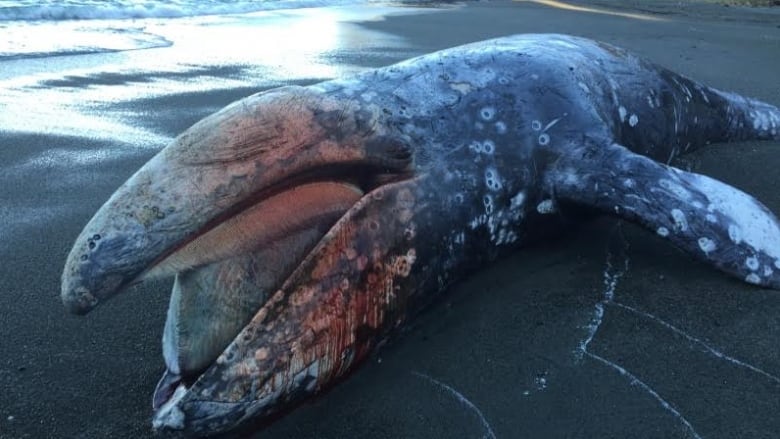
Grey whale deaths on West Coast linked to warmer Arctic waters

Exposing the Big Game's avatarThe Extinction Chronicles

A grey whale washed up on Ucluelet Beach on Vancouver Island’s west coast in 2016. The species is not considered endangered, but is listed as a species of special concern. (Les Doiron)

Dozens of grey whales have been found dead along the West Coast in recent weeks and some scientists believe the cause lies in the heated-up Arctic waters off Alaska.

Fifty-eight grey whales have been found stranded and dead so far this year in sites stretching from California to Alaska, according to the U.S. National Oceanic and Atmospheric Administration (NOAA).

The latest discovery announced on Wednesday by NOAA was a dead grey whale in Turnagain Arm, a narrow glacier-fed channel off Anchorage where grey whales rarely venture.

“They’re moving north from their wintering grounds in Mexico and appear to be running out of steam,” Michael Milstein, a spokesman for NOAA’s Fisheries Service, said on Thursday.

View original post 408 more words