More natural gas isn’t a “middle ground” — it’s a climate disaster

Exposing the Big Game's avatarThe Extinction Chronicles

To tackle climate change, natural gas has got to go.

A liquid natural gas (LNG) receiving terminal.
 Shutterstock

Expert opinion on climate change policy has been evolving quickly. The opinion of policymakers has not always kept up. One area where this split is particularly notable is around the role of natural gas in a clean energy future.

For Democrats, support for natural gas has always been a signifier of moderation on climate policy. President Obama encouraged natural gas production and proudly took credit for the emission reductions it produced when substituting for coal. It was en vogue during the Obama years to refer to natural gas as a “bridge fuel,” a fossil fuel that could help reduce emissions while truly clean alternatives were developed.

To this day, there are “centrist” Democratic groups pushing the line that embracing natural gas (and nuclear…

View original post 2,158 more words

After Years of Abuse, the Earth Has Sent Its Bill Collectors

Does Mother Nature have a sense of irony?

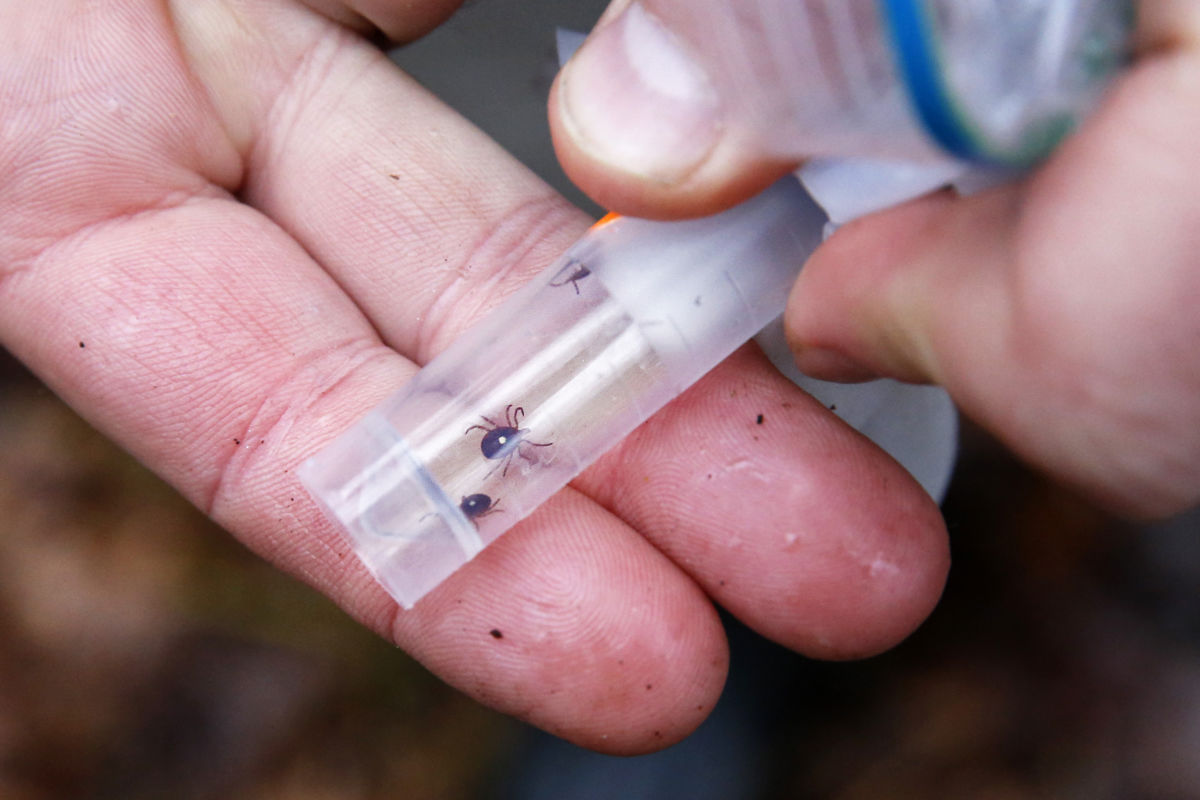
To answer that question, look no further than the lone star tick. Although the tick’s traditional range in the Southeast and Mid-Atlantic includes the eastern half of the Lone Star State of Texas, it gets its name from a white, star-like “splotch” on its back. But thanks to climate change, this nettlesome little critter is on the move. It’s moving into the Northeast as far as Maine. And it’s gone well past its usual bailiwick in the Ohio Valley to make its way into the upper Midwest and into Wisconsin.

It’s not surprising that ticks, like half of all species, are moving with the changing climate. What is surprising is what the lone star tick brings with it. No, it’s not Lyme disease, although warming-catalyzed deer ticks arespreading that debilitating malady into new areas. Instead, the lone star tick carries another little-known disease—alpha-gal syndrome.

That’s because alpha-gal syndrome often expresses itself hours after the infected person eats a big, juicy steak. Or pork chops. Or a cheeseburger. Yup, the lone star tick is spreading a meat allergy. It’s severe, too. One unfortunate victim profiled in Mosaic cannot risk eating the “meat of mammals and everything else that comes from them: dairy products, wool and fibre, gelatine from their hooves, char from their bones.” Alpha-gal’s delayed trigger also makes it hard to diagnose. People often don’t connect their symptoms with eating a meal they’ve eaten without consequence throughout their whole lives.

That’s a big deal in the U.S., where meat is king and it’s cheap and plentiful, thanks in no small part to industrial-grade agriculture. In 2018, Americans broke their previous record for meat consumption, gobbling down 222.2 pounds of meat and poultry per person, according a United States Department of Agriculture estimate. Americans’ beef consumption is four times higher than the world average, according to the World Resources Institute. The consumption of dairy was also on track to hit an all-time high in 2018.

To meet this insatiable demand for meat, Big Ag deploys heavily subsidizedindustrial-grade agriculture with massive feedlots that gobble up megatons of grains. These factory farms also suck up huge amounts of water. They generate epic amounts of ecosystem-denuding, water-contaminating runoff. And they produce billowing gigatons of greenhouse gases — both carbon dioxide (CO2) from the industrial complexities it takes to fuel these factory farms and methane from the noxious flatulence produced by many millions of animals. Then those animals are transported to die on increasingly mechanized slaughter-lines that whirl along at faster and faster speeds. Their carcasses get chilled or frozen and then shipped out by fleets of fossil-fueled trucks on their way to energy-sucking processing factories, to suburban supermarkets and to fast-food chains, where people often sit in running cars awaiting their share of the U.S.’s seemingly endless bovine bounty.

So, here’s where Mother Nature steps in.

Industrial agriculture — and meat production in particular — is a significant source of greenhouse gases. Americans trail only Uruguay and Argentina in per capita beef consumption, and the U.S. is by far the leader in climate-disrupting factory farming practices that, in turn, stoke anthropogenic climate change. But the changing climate across North America is catalyzing the expansion of tick populations. And now tick populations are spreading diseases like the alpha-gal red meat allergy to meat-gorging Americans.

How’s that for putting some irony in our diets?

The “Capitalism One” Credit Card

For most scientists, that’s a bridge too far. They’d understandably reject assigning “Mother Nature” with an anthropomorphic trait like a sense of irony. But this planet’s macro-ecological system does have an undeniable sense of accounting … and it keeps a running tally. From alpha-gal syndrome to herbicide resistance, from rising seas to superstorms, we’re watching Mother Nature’s accounting system repeatedly expose the fatal flaw driving economic growth during the Anthropocene era. That flaw is the fallacy of externalities.

The simple Wikipedia definition of an “externality” is a “cost or benefit that affects a party who did not choose to incur that cost or benefit.” Up to now, we’ve thought we were only imposing it — externalization, that is — to other human beings. Usually, externalities impact those who are too politically or economically powerless to fight back. That’s why they’re targeted. Whether through offshoring polluting factories; or dumping toxic waste into the commons like the rivers, lakes, the seas or the air; or locating poisonous industries in political and financially disempowered neighborhoods and towns, externalization is a quick, easy and profitable way to take the true cost of doing a business and make someone else pay for it.

Aren’t humans grand?

The idea of “externalities” doesn’t just reflect our willingness to abuse others for profit. It also reflects a collective delusion held by those with power — the belief that they can exempt themselves from the closed loop that is Earth’s accounting system.

In the case of climate change, think of it like a CO2 credit card. Let’s call it the “Capitalism One” card. We’ve been charging our skyrocketing carbon emissions to that card for many decades. Every car purchased, every plane ride taken, every Amazon Prime Delivery selected and every Big Mac picked up at the drive-through has externalized the true cost of that purchase. Missing are the greenhouse gases that never get calculated into the purchase price of anything. Instead, we charge that cost onto our collective Capitalism One card.

Just consider lone star ticks to be one of nature’s little bill collectors. Alpha-gal is the cost, with interest. The same goes for the earthquakes and contaminated water that come from fracking reinjection wells. We use hydraulic fracturing to forcefully break open natural subterranean formations, to release oil and gas that we blithely burn into climate-altering CO2 while also leaking climate-altering methane. Then, in an externality twofer, we take the wastewater from the process, which can become radioactive, and we “dispose” of it by re-injecting it into the ground through wells, which, in turn, Mother Nature “bills us” with contaminated waterearthquakesand health problems.

All the while our mantra remains “out of sight, out of mind and onto our Capitalism One card.”

Now think of the many trillions of dollars of wealth that has been charged on that card since the start of the Anthropocene era and, more directly, throughout the great acceleration of the industrial age. We’ve voraciously taken — and taken for granted — resources from the Earth and processed them to our own ends. Thanks to a toxic combination of convenient ignorance and willful, short-sighted indifference, we’ve simply loaded the true costs of those processes right back onto our de facto credit card, a.k.a. into the land, the air and the water.

Welcome to the Due Date

Have you heard of balloon payments? That’s kind of what bomb cyclonesare — big, one-time payments on a long-deferred account. These extreme, climate-fueled events also exhibited a tragic symmetry with the alpha-gal allergy when this spring’s bomb-cyclone-stoked flooding inflicted up to $3 billion worth of damage on livestock and farmland in the Midwest. This year saw two bomb cyclones — previously thought to be extremely “rare” weather events — within a few weeks’ time. They affected 25 states around the Midwestthe Great Plains and the Mountain West.

An AccuWeather analysis estimates the total cost of all the flooding will rise to $12.5 billion. It also led to government resource-draining “state of emergency” declarations in Wisconsin, Minnesota, Iowa, Missouri and Nebraska, with the last two being hit particularly hard. Beef Magazinecalled the bomb cyclone “devastating” because the “timing couldn’t be worse as many [farmers] are in the middle of calving season.” Some in Nebraska compared the devastation to the Dust Bowl, which, not coincidentally, happened to be a human-made disaster.

And that’s just the tip of a rapidly melting iceberg. The 2018 Pacific typhoon season hammered nations around Asia to the tune of $18.4 billion in damage. In 2018, natural disasters generated $80 billion in insured losses, which is “well above the inflation-adjusted average for the last 30 years of $41 billion,” according to the Munich Reinsurance Co. In 2017, the Munich Reinsurance Co. also found that insurance claims spiked to a record $135 billion due to the combination of Hurricanes Harvey, Irma and Maria with the wildfires in California, which also “created overall economic losses” of $330 billion. The U.S. Air Force is struggling with a $4 billion shortfall as it struggles to find the $5 billionit needs to remediate the massive damage done by 2018’s Hurricane Michael and this year’s bomb-cyclone-fueled flooding. New Orleans is now facing a $14 billion bill to counter the combo of rising sea levels and sinking levees that were rebuilt by the U.S. Army Corps of Engineers after Hurricane Katrina wiped them out in 2005.

The Government Accountability Office estimated in 2017 that climate change had already cost U.S. taxpayers over $350 billion during the preceding decade.

Even more dauntingly, researchers at the Pentland Centre for Sustainability in Business at Lancaster University in the United Kingdom estimated that the “climate-change-driven feedbacks in the Arctic” currently driving up the rate of warming could add “nearly $70 trillion to the overall costs of climate change — even if the world meets the Paris Agreement climate targets,” according to a report in National Geographic. To put that in perspective, global GDP in 2017 was $80 trillion.

Even the staid Bank of England recently warned of a “sudden and severe” loss of up to $20 trillion if and when “stranded assets” like “unburnable carbon” become worthless during the peak of the climate crisis. In other words, all the investments in hydrocarbons could be zeroed out by the maelstrom of climate change. The Bank of Canada recently echoed this warning and predicted both “fire sales” of these stranded assets and “transition risks” from climate-stoked decarbonization. The Bank of England also said climate change will trigger a “disorderly transition” to the new economic reality of a climate-altered world should the finance sector fail to “change investment and business practices to meet the needs of lower environmental impact,” according to a report in The Telegraph.

How’s that for a bill coming due?

Then in February of this year, analysts at Morgan Stanley said they expect climate change to “negatively affect dozens of industries like agriculture and oil-and-gas production in the short-term — and real estate, leisure and consumer retail in the long-term.” As Risk & Insurancereported, climate change is already “affecting food supply chains for products like chocolatevanillaavocadoscoffee and wine, changing how fine art is protected, and transforming the energy industry.”

Consumers and markets are adjusting, too. Even as ticks spread the alpha-gal meat allergy, Burger King is responding to growing demand for the plant-based Impossible Burger. It’s being “spread” nationwide, not by ticks but by franchisees, after a smashing test run in St. Louis. At the same time, Carl’s Jr. is featuring Beyond Meat’s plant-based meat-alternative. That success fueled its new initial public offering (IPO) to the tune of a $3 billion valuation. Essentially, IPOs are Wall Street’s first chance to render judgment on the viability of newly public business. In the case of Beyond Meat, it’s been dubbed the most successful IPO of 2019thus far. It even surpassed the much-anticipated IPOs of CO2-generatingrideshare companies Uber and Lyft. In fact, meat alternatives are becoming so popular that the meat industry is working at the state level to outlaw the use of the word “meat” on meat-alternative packaging.

That’s a sure sign tastes are changing.

Still, these are not the kind of shock-to-the-system changes some see as the only hope for averting the catastrophe predicted by Intergovernmental Panel on Climate Change if humanity does not meet the Paris Accord target of limiting global temperature increase to between 1.5 and 2°C. That, according to a report in Nature, would mean reducing our collective carbon emissions by almost half by 2030 and then achieving “carbon neutrality by 2050 to meet this target.”

But it is also not insignificant that elemental behaviors like eating are beginning to change, particularly as the people in the U.S. have finally crossed the tipping point from climate skepticism to climate dread. Like all human beings, Americans are starting to see, feel and pay for the impacts of our prolonged, supposedly externalized overuse of hydrocarbons.

Sadly, the distribution of the cost of human activity doesn’t always bend toward symmetry … or justice. This year, Mozambique suffered through two deadly cyclones — Idai and Kenneth — that left entire citiesunderwater, left many thousands stranded and racked-up billions in damage. In Mozambique and the Philippines and in climate-exposed places like Bangladesh, people who have contributed the least to the climate credit card often bear the brunt of our Capitalism One card’s unsettled account. They literally cannot afford it, either. It’s yet another example of the all-too-human cost of externalization.

The upshot, though, is that nature doesn’t just punish bad behavior with a huge bill. It pays dividends if and when we’re willing to settle our accounts. Mother Nature tends toward an ecologically balanced budget. The problem is that we are not just deeply in arrears, but, as Earth Overshoot Dayshows us each year, we are wantonly piling on even more debt. That’s the day when humanity “overshoots” what the planet can provide to us in one calendar year. Everything consumed after that threshold is crossed cannot be replenished and we are officially “in the red.” Last year, that day was August 1, the earliest ever. Those are debts we may never be able to repay. But that also means it is imperative that we begin paying as we go. We have to stop relying on our Capitalism One card to defer the true cost of what we exploit and consume.

And if not? Mother Nature will keep on tabulating the cost of our appetites and evolving new ways to collect on our debts. One way or another, our collective account will be settled because there are no externalities in nature.

The 9th National Animal Rights Day will be celebrated on Sunday June 2, 2019

,in 30 cities around the world!


Protesters solemnly holding out dead animals

Join Karen Davis and United Poultry Concerns at the 9th National Animal Rights Day (NARD) NYC! Karen will speak “For the Birds – From Exploitation to Liberation. How Do We Get There?”

http://upc-online.org/activism/190529_the_9th_national_animal_rights_day_will_be_celebrated_on_sunday_june_2_2019.html

Date:
Sunday, June 2, 2019 starting at 11:30am.

Place:
Union Square Park @ 17th Street between Broadway and Park Avenue South in Manhattan.

Call to Action:
NYC folks- we are just a few days away from the Ninth Annual National Animal Rights Day, which began in New York City 9 years ago!

Come join us as we stand in solidarity with 30 other cities around the world to commemorate the BILLIONS of animals who are killed at the hands of humans every year and honor them in their death in a respectful, silent and powerful ceremony. Following the ceremony there will be motivational speakers, performers, free vegan food, raffle prizes, and more to help educate the public about how we can protect our planet and change the world for animals starting with living a cruelty-free lifestyle. For more information about our mission and past events, please check out our website at www.thenard.org.

Gravestone for 64 billion land animals and one trillion water animals

Photo courtesy of Mary Finelli of www.fishfeel.org


Altered forests threaten sustainability of subsistence hunting

Woman attempting to shoot groundhog accidentally hits man fishing at park

Exposing the Big Game's avatarCommittee to Abolish Sport Hunting Blog

The bullet ricocheted off water and grazed man in right shoulder

SMITHSBURG, Md. – The Maryland Natural Resource Police are investigating an incident of a bullet that grazed a man in the shoulder on Sunday afternoon.

According to police, a 61-year-old woman was shooting a groundhog in her backyard, which borders the Smithsburg Lions Community Park.

The woman missed and the bullet ricocheted across the water and struck a 28-year-old man who was fishing.

Officials said there doesn’t seem to be any issues with limitation, however the shooter is responsible for anything in background, like in this case, the park.

However, under state law, residents can hunt groundhogs year round because they are an unprotected species.

“If you are groundhog hunting or shooting in general, just know what your target is and…

View original post 39 more words

Arctic Weather Extremes

Exposing the Big Game's avatarThe Extinction Chronicles

https://phys.org/news/2019-05-arctic-weather-extremes-latitudes.html

climate
Credit: CC0 Public Domain

Atmospheric researchers at the Alfred Wegener Institute, Helmholtz Centre for Polar and Marine Research (AWI) have developed a climate model that can accurately depict the frequently observed winding course of the jet stream, a major air current over the Northern Hemisphere. The breakthrough came when the scientists combined their global climate model with a new machine learning algorithm on ozone chemistry. Using the combined model, they demonstrate that the jet stream’s wavelike course in winter and subsequent extreme weather conditions like cold air outbreaks in Central Europe and North America are the direct result of climate change. Their findings were published in Scientific Reports on 28 May 2019.

For years, climate researchers around the globe have been investigating the question as to whether the jet stream’s winding course over the Northern Hemisphere—observed with increasing frequency in recent years—is a product of 

View original post 720 more words

A warming Arctic produces weather extremes in our latitudes

Exposing the Big Game's avatarThe Extinction Chronicles

climate
Credit: CC0 Public Domain

Atmospheric researchers at the Alfred Wegener Institute, Helmholtz Centre for Polar and Marine Research (AWI) have developed a climate model that can accurately depict the frequently observed winding course of the jet stream, a major air current over the Northern Hemisphere. The breakthrough came when the scientists combined their global climate model with a new machine learning algorithm on ozone chemistry. Using the combined model, they demonstrate that the jet stream’s wavelike course in winter and subsequent extreme weather conditions like cold air outbreaks in Central Europe and North America are the direct result of climate change. Their findings were published in Scientific Reports on 28 May 2019.

For years, climate researchers around the globe have been investigating the question as to whether the jet stream’s winding course over the Northern Hemisphere—observed with increasing frequency in recent years—is a product of climate

View original post 719 more words

Old-growth logging leaves black bears without dens: biologist

B.C. protects beaver lodges and occupied migratory bird nests, but there are no regulations protecting black bear dens in most parts of the province. On Vancouver Island, dens are vanishing along with old-growth forests. Meet biologist Helen Davis, who is on a mission to make sure female bears and their cubs have homes

Wildlife biologist Helen Davis has been fond of bears for as long as she can remember. She’s radio-collared black bears and tracked them on foot, squeezed into empty dens riddled with fleas and laughed at remote camera footage of bears sliding down plastic tubes in the forest, like children in a playground.

These days she hammers plywood roofs onto hollow stumps and builds plastic dens for black bears on Vancouver Island, where extensive clear-cutting of old-growth forests and the absence of rules to protect dens has left females with a severe housing shortage when it comes time to birth and nurture their cubs.

Eagle and osprey nests are protected in B.C. It’s illegal to cut down forests where songbirds are nesting before their young fledge. It’s also against the law to trash a beaver lodge or muskrat house.

But there are no such protections for black bears — denning trees can be logged even when cubs inside are tiny. It’s up to individual forestry companies and landowners to decide whether or not to leave a bear den standing.

In April, Davis filed a complaint with B.C.’s Forest Practices Board, hoping the board would launch a special investigation that would lead to the protection of bear denning trees — mainly large-diameter yellow and red cedar trees in vanishing old-growth forests — and save some old-growth stands for future dens.

A ‘dwindling supply’ of black bear dens

“Bears are still denning in stumps of trees that were cut down 80 plus years ago,” Davis told The Narwhal. “Those stumps are still sound, but they are rotting and they won’t be there forever. We aren’t allowing new forests to become large enough to become new dens. So there’s this dwindling supply.”

Female bears can fold into a cavity whose entrance is no bigger than 30 centimetres across and their dens are “like nests,” Davis said. The females carry moss, ferns, fireweed, tree boughs and shrubbery into their den, which can be used by different bears for decades, sometimes skipping years to avoid pestering fleas that wait inside.

One female bear caught on remote camera piles up fireweed outside her ground level den, squeezes in and “keeps reaching out the entrance and pulling the bedding inside” to make what Davis describes as a “very, very delicate” home for her cubs.

“Some of the nests are just incredible. It looks like a bird’s nest. They curl up into a little tiny ball. They’re so well insulated with their fat and hair.”

Biologist Helen Davis measures a bear den. Bear den cavities often contain a lot of bedding such as tree boughs, shrubs, ferns and mosses. They look like a big bird’s nest. Photo: Artemis Wildlife Consultants

Stumps now cut too low to the ground for bear dens

Sitka spruce and balsam fir stumps are also sometimes used for denning, along with the “root bowls” — the place where the roots and stem of the tree meet — of trees blown over in storms.

“When they cut old-growth now they generally cut trees very close to the ground,” Davis said.

“And in the old days a lot of the stumps were over my head — six foot to the ground from the top of the stump. They don’t waste that kind of wood any more so any old-growth that is being cut right now doesn’t generally leave stumps that can be used as dens.”

B.C. is home to one-quarter of Canada’s black bears and has more sub-species of black bear than anywhere else in the country. Black bears, still found throughout Canada, have been extirpated from much of their historic range in the U.S. and Mexico, largely due to persecution and habitat destruction.

Ten-thousand-year-old black bear skeletons have been found in caves on Vancouver Island, suggesting the black bears that arrived soon after glaciation were larger than modern-day black bears. According to the B.C. environment ministry, “scientists believe that bears on Vancouver Island and the Queen Charlottes have retained more of their ice-age characteristics than mainland bears because of a long period of isolation from continental populations.”

The sub-species of black bear on Vancouver Island is known as Ursus americanus vancouveri. Restricted to Vancouver Island and larger adjacent islands, this sub-species is similar to the subspecies found in Haida Gwaii — primarily black in colour and with a large skull — but the Vancouver Island black bears have smaller teeth.

B.C. currently protects black bear dens only on Haida Gwaii and in the Great Bear Rainforest.

“Dens are no less important to bears in the rest of coastal B.C.,” Davis wrote to the board in her notice of complaint, “but they continued to be removed and destroyed on Vancouver Island and other parts of the mainland coast where the supply is even lower due to extensive old-growth harvesting.”

About 80 per cent of Vancouver Island’s productive old-growth forests have been logged. Only eight per cent of the island’s original old-growth trees have some sort of protection, either in parks or because they are within a designated old-growth management area.

B.C. Forest Practices Board investigating complaint

The board rejected Davis’ request for a special investigation but agreed to look into her complaint.

Forest Practices Board spokesperson Darlene Oman told The Narwhal the board’s investigation is still on-going and it has not yet issued a report.

“I wanted to have the issue looked at as a whole and have the provincial government held accountable for more regulation to protect dens, as well as increased landscape level planning to allow some trees to grow large enough to become new dens,” Davis says of her complaint, which points out that black bears need secure and warm den sites for up to six months in order to survive winter on the coast.

She also started a petition asking the B.C. government to protect black bear dens and ensure that forest planners protect trees large enough for new dens.

Biologists examine a bear den in a balsam fir stump. When this stump rots, there are no trees large enough to replace it in this second-growth forest. Photo: Artemis Wildlife Consultants

Since 2014, Davis has had support from two forestry companies that operate in the Jordan River watershed — TimberWest and Queesto, a partnership between the Pacheedaht First Nation and Canadian Overseas Log and Lumber Ltd. — to put roofs on open old-growth stumps and build experimental black bear dens on logged land.

With funding from BC Hydro’s fish and wildlife compensation program, the wildlife biologist created artificial dens made of plastic culverts. Then, with help from an industrial designer, she built den pods, a molded form secured to the ground that mimics a natural den. “It’s kind of like an upside down plastic boat, with an entrance and a chamber.”

Molly Hudson, manager of stewardship and outreach for Mosaic Forest Management, which manages land for TimberWest, said the company was intrigued by the idea of taking a second-growth landscape and adding den structures to see if bears would use them.

The company gave Davis permission to access its private land holdings in the upper Jordan River watershed, donating about $25,000 during the past five years to help with the project.

“There are no regulatory requirements that we have to manage bear dens in any certain way,” Hudson said in an interview. “Neither the Crown land requirements nor the private land requirements specify that.”

“But we have had a long-standing internal commitment to identify those dens and retain them wherever we possibly can.”

Hudson said the company – the largest private forest landowner on Vancouver Island  – has maintained a bear den inventory for decades, taking measurements and photos of every bear den it finds. Hundreds of bear dens have been catalogued, she said.

“Certainly we realize the importance of these features long-term on our land-base…. How that would look in regulation is an interesting question. We believe as a company that these structures are worthy of protecting.”

‘I had no idea how goofy they are’: bears play on artificial dens

The dens are designed for female bears, who are most vulnerable when they are with their cubs, sometimes preyed upon by wolves, cougars and other bears. “They’re kind of sitting ducks in the dens. So we wanted it to be a small defensible entrance,” Davis said.

There are now about 20 den pods in the Jordan River watershed, including open hollow stumps with plywood roofs. Davis has also installed four den pods and covered a hollow stump in the Campbell River area on B.C. Timber Sales land where much of the forest was destroyed by wildfire in the 1960s.

“It was completely experimental,” Davis said. “You put the thing out in the middle of the forest. How do you know a bear’s going to find it, let alone consider using it as a den?”

Subsequent monitoring showed that bears look for dens year-round and will find “anything you put in the forest,” Davis said. She’s amassed hundreds of 15-second video clips from different den pods, including footage of bears who play on top of the pods and slide down the plastic tubing.

“It’s absolutely hysterical. They seem to find them quite entertaining … I thought I really knew black bears. And I had no idea how goofy they were.”

To make sure the bears spotted the artificial dens, Davis placed “horrifically stinky” weasel lure — a mix of skunk essence, anise oil and glycerine — on branches and roots near the dens to create an interesting smell.

She also tried putting bear hair — taken from a dead bear she found in the forest — inside the dens. Only two weeks later, she returned to the pod to find that a bear had crawled in. From then on, bear hair went into all the artificial structures.

Helen Davis standing near a black bear den. Photo: Artemis Wildlife Consultants

Black bear populations reported as declining, hunting licences up 45 per cent

Davis said no one knows how swiftly black bear populations are declining because the B.C. government doesn’t do any population census work on black bears.

“Loggers and First Nations tell me that they think there’s fewer black bears but there’s no data to base that on, at least on Vancouver Island.”

‘Namgis First Nation chief Don Svanvik told The Narwhal he and other nation members have seen a marked decline of black bears in their traditional territory on northern Vancouver Island.

Svanvik, who spent 15 years working on the nation’s culturally modified trees survey crew before he was elected as chief in 2017, said black bears were a “common sight” up to about seven years ago, easily spotted because there aren’t very many things in the forest that dark in colour.

“It started to get rarer to see a bear,” he said. “It became really noticeable. It just came to mind: ‘you know, we haven’t seen a bear.’ ”

Hudson said it would help Mosaic Forest Management, which also manages land for Island Timberlands, to know the status of black bear populations.

“Some work on the population status and trends would be really helpful for us as habitat managers.”

A recent 10-year period saw a 45 per cent increase in the sale of black bear hunting licences province-wide. In 2007, about 20,000 licences were issued, rising to 29,000 black bear hunting licences in 2017, according to Davis.

“It’s not on people’s radar,” Davis said.  “People don’t care about black bears. They think they’re all over the place and they’re fine.”

Should polar bear hunting be legal?

As hunters target bigger polar bears for their luxurious pelts, one researcher fears we are reversing natural selection.

Countries around the world agree that polar bears are in trouble: They’re considered threatened in the United States, of special concern in Canada, and vulnerable internationally. Yet in much of their icy habitat, it’s perfectly legal to pick up a gun and shoot one.

In Canada, home to nearly two-thirds of the world’s estimated 25,000 remaining polar bears, the animals are hunted both for their meat and for their thick, furry white pelts. The Canadian government and conservation groups alike have long held that polar bear hunting in Canada is sustainable. But in his new book, Polar Bears and Humans, Ole Liodden, a Norwegian polar bear researcher, argues that it’s not.

For decades, Canada has been the main hunting ground for polar bears. The Canadian government sometimes makes recommendations on how to hunt sustainably—for example, harvesting two males for every female—but Canada’s provincial and territorial governments establish their own annual hunting quotas.

Canada, home to nearly two-thirds of the world’s polar bears, is where most hunting occurs.

PHOTOGRAPH BY PAUL NICKLEN, NAT GEO IMAGE COLLECTION

Liodden believes that rationale is flawed because the polar bears in highest demand for the commercial pelt trade are the largest males—the strongest and healthiest animals. By removing those bears from the population, he says, hunters perpetuate what he calls “reverse selection”—the idea that instead of survival of the fittest, it’s survival of the weakest.

Polar bears use sea ice platforms to hunt for seals when they surface for air. But, Liodden says, as our warming planet melts more sea ice, perpetuation of the species may rest with the strongest bears—those that can swim farther, hunt better, or go longer without food.

By removing the biggest, healthiest bears from the population, researcher Ole Liodden worries that hunters perpetuate what he calls “reverse selection”—the idea that instead of survival of the fittest, it’s survival of the weakest.

Counting polar bears and assessing how well they’re doing is expensive and difficult. Of the 19 subpopulations that make up the worldwide estimate of 25,000 by the International Union for the Conservation of Nature (IUCN), the global authority on the conservation status of wild animals and plants, data on the number of bears, their health, or both are lacking for at least 10 of those populations. So it’s not surprising that experts disagree on the greatest threats facing polar bears.

Eric Regehr, a member of the IUCN’s polar bear specialist group, says “unequivocally” that climate change is their greatest threat. Iverson is more measured, saying that climate change could become a problem for polar bears in the future but that at present “the overall polar bear population in Canada is healthy.”

According to Iverson, evidence amassed over three decades shows that Canada’s hunting quota “is not endangering polar bears.” And because populations are assessed and quotas are adjusted every few years, future quotas will account for the effects of climate change. “It’s something that we have mechanisms in place to course correct, if in a given subpopulation there’s a concern.”

Drikus Gissing, director of wildlife management for Nunavut, Canada’s northernmost territory, agrees. He says that each subpopulation is evaluated by the relevant provincial or territorial government every five to 15 years and that hunt quotas are adjusted accordingly based on the best, most current research. “We can’t manage based on what might happen 50 years from now … If sea ice completely disappears in certain areas, the bears will disappear with it … We can’t change the ecosystem to accommodate those animals.”

“Like a Ferrari in your garage”

According to Liodden, between 1963 and 2016, an average of 991 bears were hunted worldwide every year, totaling about 53,500 bears. He calls that number “crazy high,” given how many polar bears are believed to be left and how slow they are to reproduce.

As the largest supplier of polar bear skins, Canada exports hundreds each year, which Liodden says often carpet customers’ floors or are mounted on the wall as the “ultimate status symbol … It’s like to have a Ferrari car in your garage … It’s an item you can have that not many other people have.”

Customers pay thousands of dollars for polar bear wall mounts or rugs as “the ultimate status symbol,” says researcher Ole Liodden.

PHOTOGRAPH BY OLE J LIODDEN

“It’s a status symbol, there’s no doubt about it,” says Calvin Kania, owner of FurCanada, a Canada-based company that sells polar bear rugs and taxidermied bears. “It’s no different than wearing a diamond or wearing a sable fur coat.” Customers pay thousands of dollars for a single pelt. Kania says his prices for a polar bear rug peaked between 2013 and 2015 at about $20,000 but that prices have since dropped to between $12,000 and $15,000 as demand has declined.

For decades, Japan had a big appetite for polar bear skins, but demand there fell during the mid-2000s after the Japanese economy crashed. In 2008, imports into the United States—formerly another major market for skins—became illegal after polar bears were listed as threatened under the Endangered Species Act.

Now it’s China: Between 2006 and 2010, the country imported 467 polar bear skins, but between 2011 and 2015, the number more than doubled, to 1,175, accounting for about 70 percent of Canada’s exports, according to Liodden.

In Liodden’s view, subsistence hunting—for meat and clothing—can be managed sustainably, but commercial trade is too risky and should be banned. “The market will always push for highest price and more killing,” he says.

“Endangered species should not be the subject of profit-driven commercial trade.”

ZAK SMITH, SENIOR ATTORNEY WITH THE NATURAL RESOURCES DEFENSE COUNCIL

Allowing commercial trade creates a system “inherently susceptible to corruption,” says Zak Smith, a senior attorney with the Natural Resources Defense Council, an international environmental advocacy group. Trading polar bear parts could influence the quota-setting process, he says, allowing the potential for profit to affect how many animals can be hunted in a given year. “This is a species that is threatened with extinction,” he adds. “Endangered species should not be the subject of profit-driven commercial trade.”

Lily Peacock, a former polar bear research and management biologist for Nunavut, says the indigenous Inuit in the upper reaches of Canada have hunted and eaten polar bears for thousands of years. Hunting should be regulated and studied, she says, but focusing on hunting—or even overhunting—ignores “the huge elephant in the room … In general, climate change is such a bigger issue than harvest, that it’s like, why take away part of someone’s culture?”

Jim Goudie is an Inuit. He’s also the deputy minister of land and natural resources for Nunatsiavut, a self-governing Inuit region. He says that when polar bears are in trouble, his people will be the first to sound the alarm—not researchers from far-off universities. “For me, if there’s no polar bears tomorrow, it’s part of my culture that just disappeared … We will be the ones to tell the world if we think there’s an issue with polar bear. We have the most to lose.”

“Just too many bears”

Nunavut’s Drikus Gissing says the situation for polar bears isn’t as dire as some make it out to be. With about 13,000 bears, he says, Nunavut, where more than 80 percent of Canada’s polar bear hunting takes place, now has more bears than ever before.

Bears and people sometimes cross paths disastrously: Last year two Nunavut men were mauled to death. One was unarmed. “We’re at a stage now where polar bears are basically overabundant,” Gissing says. “There are just too many bears.”

Indeed, shootings of so-called “problem bears” (animals killed in defense of life and property) have spiked during the past two decades, Liodden notes, up from 13 killings in 1999 to 91 in 2012—a 600 percent increase.

Nikita Ovsyanikov, a Russian behavioral ecologist and member of the IUCN’s polar bear specialist group, says that more sightings of bears doesn’t necessarily mean there are more bears but that the animals are losing sea ice and spending more time on land. “When we see many polar bears around us or close to us, close to our settlements and infrastructures in the Arctic, it is not an indication that polar bear numbers are increasing,” he says. “It is an indication that they’re in trouble.”

The IUCN’s Regehr says the claim that bears are encroaching more on humans because of sea ice losses may have validity, but it’s also a convenient explanation in the absence of precise numbers for the various bear populations. “It’s hard to know how many gophers are in your backyard,” he says. Similarly, “to count polar bears in an area of sea ice the size of Texas, I mean, that’s incredibly difficult and expensive.”

Looking to Svalbard

Liodden considers Svalbard, an archipelago between Norway and the North Pole, to be a model for the future. That’s because, despite its location on the Barents Sea, which has lost more than 50 percent of its ice since the 1980s, Svalbard’s polar bears are stable. Their numbers were estimated at 241 in 2004 and at 264 in 2015. The difference between Svalbard and other polar bear habitats, he says, is that hunting has been banned there since 1973.

Because polar bears depend on sea ice for hunting, some scientists say global warming is their greatest threat.

PHOTOGRAPH BY OLE J LIODDEN

Péter Molnár, a University of Toronto Scarborough researcher who forecasts the effects of climate change on polar bears, agrees that Liodden’s reverse selection theory is plausible. In western Hudson Bay, he says, there’s “clear evidence” that the bears are getting thinner as sea ice disappears. Polar bears rely on fat and protein reserves because they fast for months at a time, so when it comes to size, “the fatter your bear is, the better.” And, Liodden says, fatter, bigger bears are the ones hunters seek.

But according to Regehr, just because a polar bear is bigger or younger, it doesn’t mean it’s more fit. Studies have indeed shown that polar bears are getting smaller because of sea ice loss, but, he posits, it’s possible that smaller bears that don’t need to eat as much to survive may actually be better off.

For Molnár, though, the question is: “Can polar bears adapt to any of this?”

Recent estimates by U.S. Geological Survey scientists predict that because of melting sea ice, up to two-thirds of all polar bears will be lost by 2050. Even if polar bears are still around at the end of the century, Molnár says, that’s four or five generations at most, which is not enough time to evolve, whether it’s in response to climate change, hunting, or other threats.

“It doesn’t look like they’re going to be around for very much longer in most populations,” he says. “We have very strong evidence that these declines will just get worse as the climate changes. Unless we’re turning things around on that front, it’s a pretty grim and predetermined outcome.”