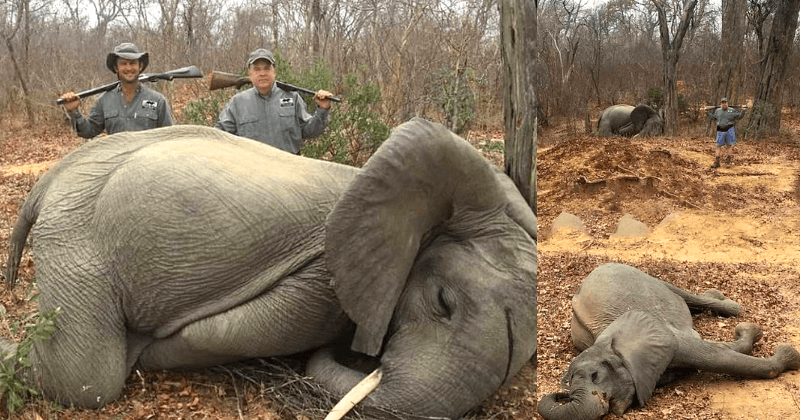
After receiving major backlash, Mike Jines, a partner of TopGen Energy, is claiming he did that for ‘self-defence.’
By Apeksha Nichrelay February 12, 2019
In the recent few years, humans have not only managed to disrupt the habitats of multiple animal species, but we have also completely wiped out some of them.
Day by day their numbers are declining and more and more animals are living with the constant threat to their existence.
While deforestation is sure a concern, one of the biggest reasons certain animals are endangered is because hunting is still a thing and people find pleasure in butchering innocent animals.
There’s apparently a sense of ‘pride’ in hiding and shooting animals from a distance which I’ll never understand. Pathetic losers.
A wealthy businessman from Georgia has made headlines for shooting and killing two baby elephants along with his hunting…
By Jillian Ryan Post-doctoral Research Fellow, CSIRO and Carla Litchfield, Senior Lecturer, School of Psychology, Social Work and Social Policy, University of South Australia
This article originally appeared on The Conversation, and is republished under a Creative Commons licence.
Wang Wang and Funi came to Australia from China a decade ago. Their relationship is best described as complicated. Despite considerable medical assistance, they have never managed to produce offspring. It has put a big question mark over whether they will be permitted to remain in Australia.
The fate of the two giant pandas may now depend on the outcome of the federal election on May 18. Keeping the couple at Adelaide Zoo includes paying about A$1 million a year to the Chinese government.
China currently has pandas on loan (or hire) to 26 zoos in 18 countries. The most recent zoo to join the select list was Ähtäri, Finland, which welcomed two pandas on a 15-year loan in 2018. Denmark’s Copenhagen Zoo is eagerly awaiting two pandas due to arrive in April.
Officially it’s all part of a captive breeding programme to help save the species from extinction. Though their conservation status is no longer “endangered” (improving to “vulnerable” in 2016), there are still just 500 to 1,000 adult pandas left in the wild, in six isolated mountain ranges in south-central China.
The overseas placements augment China’s own 67 reserves dedicated to panda conservation. Any cubs born overseas are the property of China and typically return to China to continue the captive breeding program.
There are still just 500 to 1,000 adult pandas left in the wild, in six isolated mountain ranges in south-central China
But the number of zoo births has been quite low. As the Smithsonian Institution’s “panda guy” Bill McShea has pointed out, pandas in the wild have fewer problems mating or breeding: “In the wild, aggregations of male pandas form along ridge tops in the spring, and a stream of visiting females in heat keeps the mating activity intense.”
Zoos can’t mimic these conditions. Since giant pandas are solitary animals, they are housed separately except for the few days of the year when the female is ready to mate. Because there is no mate choice in captivity, natural mating is rare. Most captive births are the result of IVF treatments.
Although no longer “endangered” there are still just 500 to 1,000 adult pandas left in the wild, in six isolated mountain ranges in China (Credit: Getty Images)
Trade considerations
This is not to say overseas zoo placements have no conservation value. But other strategic aims, such as improving China’s public image and consolidating trade relationships, loom large.
For example, the new panda enclosure at Berlin’s Tierpark zoo was opened just ahead of the 2017 G20 summit in Hamburg. The opening was attended by German chancellor Angela Merkel and Chinese president Xi Jingping. The event was intrepreted as a signal of China’s endorsement of Germany as a competitor to the United States for leadership of the western world.
The event was intrepreted as a signal of China’s endorsement of Germany as a competitor to the United States for leadership of the western world
As for the panda loan to Adelaide Zoo, it was announced by Chinese president Hu Jintao at the Asia Pacific Economic Cooperation (APEC) summit in Sydney in 2007. On the same day Australian prime minister John Howard and President Hu also announced plans for a yearly “security dialogue”.
Fu Ni the giant panda is treated to specially prepared panda treats for her birthday at the Adelaide Zoo in 2015 (Credit: Getty Images)
Furry ambassadors
Panda diplomacy is believed to date back to the 7th century, when the Empress Wu Zeitan sent a pair as a gift to Japan. In the 20th century Mao Zedong embraced the strategy, gifting pandas to fellow-travelling communist nations. When Richard Nixon went to China in 1972, Deng Xiaoping presented him with two pandas.
Since then the recipients have been well and truly weighted towards wealthy capitalist nations. There are two reasons for this.
This has been aptly described as an exercise in ‘soft cuddly power’
First, China uses the pandas to improve its image and deepen relationships with nations able to supply it with valuable resources and technology. This has been aptly described as an exercise in “soft cuddly power”.
Second, since the devastating 2008 Sichuan earthquake, China has used panda loans to pay for local conservation efforts, mend damaged panda conservation facilities and conduct giant panda research.
Edinburgh Zoo’s receipt of two pandas in 2011 was linked to trade deals worth billions of dollars (Credit: Getty Images)
Financial strings attached
For recipient zoos keeping pandas is an expensive business.
Consider Adelaide Zoo’s costs even with the federal government covering the pandas’ A$1 million annual rental fee. From the outset, the zoo went heavily into debt to build a specialist panda enclosure (at a cost of about A$8 million).
Looking after each panda also costs many hundreds of thousands of dollars a year. Pandas are the most expensive animal to keep in a zoo, costing about five times as much as an elephant.
Food alone is a logistical headache. Giant pandas are not biologically herbivores but for some reason they developed a taste for bamboo about 6,000 years ago and stopped eating a varied diet, including meat. Bamboo, however, is low in nutrients and difficult to digest, which means pandas have to eat a lot and then rest. Each day an adult panda can munch through about 12 kilograms of fresh bamboo – and because they’re fussy eaters, they need to be given more than double that amount.
All of this means a panda must be treated like a business proposition. Will there be a return on investment? Will their cost be justified by the extra visitors they draw to the zoo?
Adelaide Zoo had high expectations that were quickly dashed. Like other zoos, there was a large initial spike in zoo visits, but by 2010 visitor numbers had returned to pre-panda levels. It was clear Funi and Wang Wang would not add A$600 million to the South Australian economy over a decade as predicted. In their honeymoon year, research suggests, they brought in just A$28 million. Adding a baby panda would improve their attraction value considerably.
Beyond financial value
It’s therefore easy to see why some some call pandas white elephants.
But let’s not overlook the important contribution the panda diaspora has made to pandas moving off the “endangered” list. Part of this is due to the loan fees paid to China. The money has funded panda conservation research and projects at Bifengxia and Wolong, in China’s Sichuan province.
Let’s not overlook the important contribution the panda diaspora has made to pandas moving off the “endangered” list. Part of this is due to the loan fees paid to China
There is also value in Australian zoo keepers, veterinarians and scientists being part of a global knowledge network.
We still know so little about panda behaviour and the environmental effects that endanger them. We have made a small contribution with our own research into strategies to reduce stress in captive giant pandas. If Funi and Wang Wang remain in Adelaide, the zoo has the potential to provide for further valuable insights.
As scientists who care about animals and animal welfare, we believe it is important to also remember Funi and Wang Wang have helped connect hundreds of thousands of children and adults alike to nature.
These two giant pandas have their own personalities and close bonds with people who care for them everyday. Nature is not just an economic commodity but vital for our survival. If you have not yet visited Funi and Wang Wang, take the opportunity while you can.
To comment on this story or anything else you have seen on BBC Capital, please head over to ourFacebookpage or message us on Twitter.
If you liked this story, sign up for the weekly bbc.com features newsletter called “If You Only Read 6 Things This Week”. A handpicked selection of stories from BBC Future, Culture, Capital and Travel, delivered to your inbox every Friday.
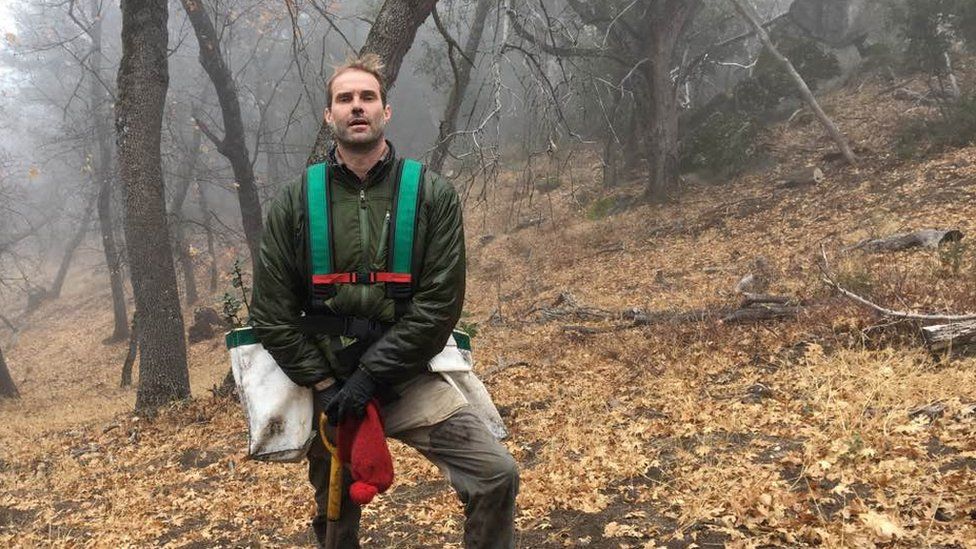
Image copyrightCODY PETTERSONImage captionCody, an anthropologist and environmentalist, bought a plot of land destroyed by wildfire in 2002
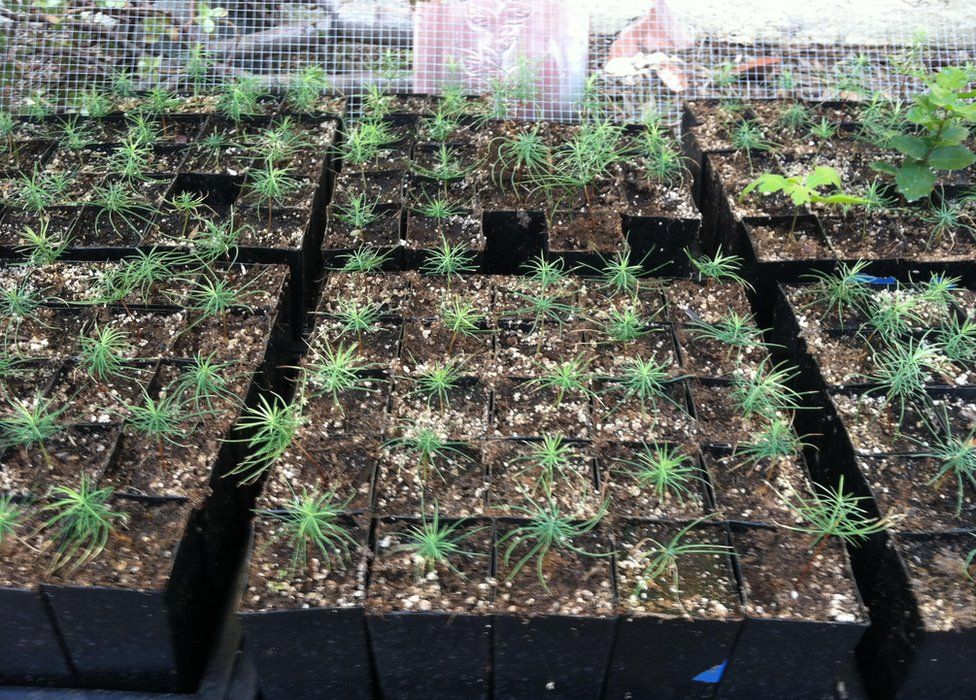
After a huge wildfire killed a forest in San Diego, California, in 2002, Cody Petterson set his heart on replanting the trees.
As a child, he had happily played and hiked among these statuesque conifers, which provide shelter to black bears and black-tailed deer. By the age of 37, he wanted to do his bit to conserve and repair the land.
A compassionate and shame-free approach could help encourage omnivores who are maybe not on board the vegan train to reduce their meat consumption, says bestselling author Kathy Freston.MIMAGEPHOTOGRAPHY / SHUTTERSTOCK
Kathy Freston is a New York Times bestselling author four times over. Her books on healthy eating and conscious living include The Lean, Veganist and Quantum Wellness. She considers herself a wellness activist and has appeared frequently on national television.
All this, and yet, she’s not strident or bossy. She wouldn’t dream of making me feel bad if I sprinkled parmesan on my pasta. She somehow understands that I can’t seem to give up my cow’s milk lattes.
“I’m a big believer in progress, not perfection,” says Freston. She offers easy, manageable ways to ease into a more plant-based diet. Freston takes a compassionate, no-guilt and shame-free approach to omnivores who try to reduce their meat consumption but who are maybe not on board the vegan train.
Leslie Crawford: You take an unusually gentle approach with people who aren’t vegetarians or vegans. Is this really an effective approach?
Kathy Freston: I realized that if someone lectured or shamed me, I’d probably reject the message and not have developed any of my own insights, whereas when I talk to people who are nonjudgmental, I’m an open receiver. So, I decided to share the message the way I like it to have done with me.
Your dog was instrumental in your conversion to becoming a vegetarian and then a vegan. Tell us about your “ah-ha!” moment.
I had received a pamphlet in the mail from some animal organization depicting a cow being dragged to slaughter. It hit me hard, and I didn’t know what to do with that. Later, I was playing with my dog Lhotse, and she was lying on her back and looking up at me. When I looked back at her, [I] suddenly imagined her being lined up for slaughter and considered how she’d feel. I thought, If I don’t want my dog to go to slaughter, why would I want any animal to go to slaughter? As you know, a dog is no better or worse than any animal.
You talk about how becoming vegan is a process. I think some people think it’s just too hard because they have to entirely change the way they eat in order to become one.
It’s a process for several reasons. One is that our culture has effectively numbed us to what’s happening to animals. We are told it’s normal, natural and necessary. From early childhood, we’ve been indoctrinated with the idea that it doesn’t matter how we treat farm animals. It takes a while to get over that indoctrination.
The second thing is that we like to eat what we like to eat. Certain habits and traditions are ingrained in us. For anyone who has a habit, it’s very hard to break it.
Finally, it’s about being resourceful. It takes a while to find your footing: what to make for dinner, how to shop, how to please your kids. All those things work in tandem. If you give yourself time and space to figure this out, anyone can do it.
I’m getting there, and this may sound silly, but I’m having trouble giving up cow’s milk lattes.
Try the 21-day rule. It’s easy to change a habit in that amount of time. So for 21 days, try soy milk or oat milk — whatever it is you want to use as a replacement. It might not be great the second or third day, but once you get in the habit of something, you can change.
We talked about how shaming people for eating meat doesn’t work. I’ve found that meat-eaters also try to shame vegetarians and vegans. Have you experienced this?
That happens all the time. I remember a dinner party with some VIP people. The host was serving meat and cheese, and I just quietly said, “No thank you. I’m good with what I have.” I’d already told the host I’m a vegan, so not to worry about getting an extra steak or fish. When I said “no thank you” to the third thing she offered, she told me, “You’re so boring!” I was so humiliated. The last thing I want to do is make a spectacle of myself.
That was a while ago. Now I just think, “Oh my goodness,” but I don’t get upset. I don’t like to get into arguments.
Any other tips for moving over to a more plant-based diet?
This is a movement about kindness. If you come from that place, the changes stick. But if you force yourself and hate it, it won’t stick. We are looking for long-term change.
Once you take the pressure off, you can lean into changing. My intention was to become someone who no longer eats animals. I knew it wouldn’t be easy. I grew up eating meat three times a day. But I allowed myself to become curious and went to see what I could find at the grocery store. All of this creates momentum, and I just leaned into it.
Plus, nowadays, there are so many plant-based meats — so many great products to choose from.
Many parents, including me, struggle with trying to raise kids vegetarian or vegan. Advice?
Find what a child actually likes rather than forcing something. Sometimes it’s Gardein chicken fingers or a vegan burger or [vegan] cheese. I’m a big lover of smoothies, and you do want to get good nutrition. You can put in frozen broccoli, blueberries, protein powder. But don’t worry about being uber-healthy right away. Start by finding some things they like and build from there.
Consider taking them to a farm animal sanctuary. There are great books to have on hand: Dr. Joel Fuhrman wrote one called Disease-Proof Your Child: Feeding Kids Right. Your books Sprig the Rescue Pig and Gwen the Rescue Henare wonderful. Brava! I can’t wait to see them in every kid’s hands.
***
Here’s further advice from Freston taken from her own writings:
Practice tolerance: That’s how you can change hearts and minds, and how you can change your own eating habits, too.
Lean into plant-based eating: Take it a step at a time. For example, you could start by abstaining from eating small animals such as chickens and fish, then cutting all large animals (cows and pigs) from your diet.
It’s also okay to be vegan-ish: So you eat cheese now and then, but you have cut out all other animal products. Allow yourself these small things, and applaud what you’ve already done.
Eat consciously: Conscious eating is being aware of where your food came from. Consider the 9.47 billion land animals who suffered and were killed for food in 2017. Think: 10 steps before it got to me, what did this single animal experience? It helps to think small as well because the vast number of animals slaughtered for our food can be so unfathomable. Think of that one chicken, that one animal. What did that creature experience on her way to my dinner plate? Am I all right with that just so I can have my chicken sandwich?
Jared Leone, Cox Media Group National Content Desk
TROY, MICH. — A dog’s leg was injured Thursday by a fox trap, one of many placed within a city park.
Some of the traps held live bait including ducks, WDIV reported.
“I started hearing this screaming that I’ve never heard in my whole life,” dog owner Jamie Sherman, told WDIV. “Every bit of strength I had, and the adrenaline rush, I pried the trap off his leg.”
Once the dog, a shepherd mix named Spirit, was freed, Sherman saw more traps along the fence line within the perimeter of Beach Road Park.
Isabelle Catherine Winder does not work for, consult, own shares in or receive funding from any company or organization that would benefit from this article, and has disclosed no relevant affiliations beyond their academic appointment.
Partners
Bangor University provides funding as a member of The Conversation UK.
Baboons are large, smart, ground-dwelling monkeys. They are found across sub-Saharan Africa in various habitats and eat a flexible diet including meat, eggs, and plants. And they are known opportunists – in addition to raiding crops and garbage, some even mug tourists for their possessions, especially food.
We might be tempted to assume that this ecological flexibility (we might even call it resilience) will help baboons survive on our changing planet. Indeed, the International Union for the Conservation of Nature (IUCN), which assesses extinction risk, labels five of six baboon species as…
An adorable friendship is blossoming in the town of Loomis, Washington. Meet the deer and bunny who resemble Bambi and Thumper.
Author: Emily Gilbert
Published: 5:20 PM PDT May 16, 2019
Updated: 6:05 PM PDT May 16, 2019
LOOMIS, Wash. — Perhaps the movie wasn’t the end for Disney’s Bambi and Thumper. A small herd of deer and their rabbit companion have been spotted in Loomis, Washington.
KING 5 viewer Darlene Wilbourn said the animals visit her mother’s yard every day. In the heartwarming video, you can see the bunny follows a few of the deer around as they lay in the sun.
There doesn’t seem to be any other bunnies as part of the group, but the deer don’t seem to mind. One deer chews peacefully as the bunny sits between its front legs. Another deer even appears to touch noses with the smaller animal.
It seems that Disney’s duo has come to life in Washington.
Share your photos and videos with KING 5 on our Facebook page, or by tagging your Twitter and Instagramposts with #k5spring.
Gordon Hempton searches for silence in the Hoh Rainforest of Olympic National Park.
Shawn Parkin
On a chilly March morning, acoustic ecologist Gordon Hempton and his assistant, Laura Giannone, hiked into a glade of moss-draped maples in the Hoh Rainforest of northwest Washington’s Olympic National Park. They set up a tripod topped with ultra-sensitive recording equipment to listen to the murmurings of a landscape just then awakening from winter dormancy.
Above the low rush of the nearby Hoh River, the melodic trills of songbirds rippled through a still-leafless canopy. Then, suddenly, the low thrum of a jet aircraft built in waves until it eclipsed every other sound. Within half an hour, three more jets roared overhead.
Hempton has spent more than a decade fighting for quiet in this forest — the traditional homeland of the Hoh Indian Tribe, who lived here before it was a national park and now have a reservation at the mouth of the Hoh River. In 2005, Hempton dubbed a spot deep in the Hoh “One Square Inch of Silence,” and created an eponymous foundation to raise awareness about noise pollution. But he couldn’t stop the sonic intrusions from ramped up commercial air traffic and the Navy’s growing fleet of “Growler” jets training over the Olympic Peninsula. “In just a few years, this has gone from one of the quietest places on Earth to an airshow,” he told me.
As the Hoh got noisier, rather than concede defeat, Hempton broadened his effort into a global crusade. In 2018, he launched Quiet Parks International (QPI), to certify places that are relatively noise-free, in a bid to lure quiet-seeking tourists and thereby add economic leverage to preservation efforts. For Hempton, the sounds of nature are as critical to a national park as its wildlife or scenic vistas, and as the world gets louder, the importance of protecting quiet refuges as places of rejuvenation grows. “Our culture has been so impacted by noise pollution,” he said, “that we have almost lost our ability to really listen.”
Gordon Hempton has spent over a decade raising awareness of noise pollution.
Shawn Parkin
EVERYWHERE, PEOPLE ARE BECOMING MORE AWARE OF THE NOISE IN THEIR LIVES.Food critics routinely carry noise meters to restaurants, towns are banning gas-powered leaf blowers, and noise-metering apps are providing crowdsourced guides to refuges of quiet in cities worldwide. As evidence mounts that the stress of noise raises the risk of heart disease and stroke, so does interest in escaping the clamor.
Hempton visited the Hoh in March with Giannone, an Evergreen State College senior majoring in audio engineering and acoustic ecology, to train her in data collection for the Quiet Parks International certification. After recording, they went over her notes. The ambient sound averaged 25 decibels (whisper-quiet) and the peak noise, from a jet, hit nearly 70 decibels (vacuum-cleaner loud). Mix in the distant hum of vehicles and a chainsaw’s whine, and the longest period of unadulterated nature was just three minutes. By contrast, a cornerstone of the Quiet Park certification will be a noise-free interval of at least 15 minutes. The Hoh met that requirement easily — until recently.
“This is really incredible,” Hempton said, after Giannone tallied the noise intrusions. “This is a national park, and natural quiet is on the list of protected natural resources,” along with native plants, historic sites and dark night skies, among other assets.
Noise pollution in wilderness is not about loudness per se, according to Frank Turina, a program manager with the National Park Service’s Natural Sounds and Night Skies Division. Rather, it’s about how unnatural sounds can shatter “the sense of naturalness” essential to a wilderness experience, he said. “One of the biggest ways that civilization creeps into wilderness is through noise.”
Noise has particularly severe effects on wildlife. Research shows that the din of humanity remains pervasive in protected areas. Intrusive sound disrupts animals’ ability to navigate, avoid predators, locate food and find mates — beaching marine life, altering birdsong and causing stress that’s linked to shorter lifespans. “Obviously, we aren’t the only ones listening,” Hempton told me. “But we are the only ones who can choose to listen; wildlife listen to survive.”
Hempton hopes that the “quiet park” standards, which are still being finalized, help. Similar certifications, or “ecolabels,” have helped boost other environmental causes, including the Blue Flag beaches, created to protect fragile coastal environments, and the Dark Sky Places of the International Dark-Sky Association, which battles light pollution. Much of the work of QPI will involve cultivating an appreciation of quiet through educational programs and partnerships. For example, QPI partnered with a virtual-reality education nonprofit to create a VR tour of the Hoh to teach kids about noise pollution and ecology. Furthermore, the label will give tourists information they currently lack. Hempton suspects many will favor noise-free options. “We know from history that underlying every social movement is a widespread need for something that’s valued, but not being provided,” he said. “I feel all the ingredients for a social movement for quiet.”
The U.S. Navy’s Growler, an aircraft designed for electronic warfare.
U.S. Navy
CERTIFICATIONS HIGHLIGHT WHAT PEOPLE VALUE, according to Rob Smith, northwest regional director of the National Parks Conservation Association, and “a quiet park label says that the sounds of nature matter.” If local communities and the managers of Olympic National Park bid for a quiet-park certification, he said, “it would give us something to point to with the Navy to say, ‘This needs protection, too.’ ”
A few weeks after Hempton and Giannone visited the Hoh, the Navy released a final environmental assessment for its plan to add even more Growler jet training over the Olympic Peninsula — from the current 82 jets to 118 by 2022. The Growlers, which specialize in jamming enemy radar and communications, are named for their very loud, low-frequency roar.
Residents across the Olympic Peninsula have forged the Sound Defense Alliance to fight the expansion, lobbying to spread the jets around the country rather than have them all at Whidbey Island in Puget Sound. Sherry Schaaf, a retired schoolteacher who lives in Forks, about 20 miles northwest of the Hoh Rainforest, and her boyfriend, David Youngberg, are two of the anti-noise locals. Schaaf sometimes rents her house to people visiting Olympic National Park, and she and Youngberg often chat up out-of-towners. “Many of them talk about the quiet and how beautiful it is,” Schaaf said. “But they also say, ‘We heard the planes, and it was so loud and rumbling that we couldn’t even hear ourselves talk.’ ”
Since 2000, the National Park Service’s Natural Sounds and Night Skies Division has helped park managers across the country minimize noise by, for instance, restricting snowmobiles. But overflights are the biggest noise threat in backcountry areas, and the Federal Aviation Administration, not the Park Service, controls airspace. While the Park Service can request flight-pattern changes, as it successfully did for Rocky Mountain National Park, it can’t force the issue.
For their part, Navy officials said they work to minimize the Growlers’ disturbance by, for example, using flight simulators and other virtual training tools. But spreading out the Growler squadrons would involve costly inefficiencies and logistical complications that “would degrade the Growler community’s overall effectiveness,” according to a 2018 environmental impact statement. And Michael Welding, the Navy’s public affairs officer on Whidbey Island, pointed out that the vast majority of noise complaints are from people living near the Growler airfields, where pilots do low-altitude training, rather than from visitors to Olympic National Park.
Still, the roar of the jets is clearly audible in the park. Whether visitor numbers will fall significantly if overflights intensify is an open question: Research on whether eco-certifications influence tourists’ destination decisions is mixed. But profits aside, Vinod Sasidharan, a professor at San Diego State University who specializes in sustainable tourism, said certifications are often more about “raising awareness and setting transparent standards” within the tourism industry.
And tourism is vital for the Olympic Peninsula, said Youngberg, who spent more than two decades in the Navy, including deployment on an aircraft carrier during the Gulf War. Every year, about 3 million people visit Olympic National Park, pumping $385 million into the local economy in 2017, according to the Park Service. The park also supports more than 3,500 jobs in a region where unemployment is about double the national rate. Youngberg pointed out the decline of the region’s timber and fishing industries. “We’re a pretty poor county,” he said, “and it’s going to crush us if we lose tourism and our reputation for beauty, and peace and quiet.”
This story was supported by a grant from the Solutions Journalism Network.
Chris Berdik is a freelance journalist in Milton, Massachusetts. He covers science and education, and he’s the author of Mind Over Mind, a book about placebos in medicine and beyond.
Despite the new measurement, it’s not as if humanity hasn’t been endlessly warned that it’s on a dangerous path.TRIDSANU THOPHET / EYEEM / GETTY IMAGES; EDITED: LW / TO
Atmospheric levels of carbon registered 415 parts per million over the weekend at one of the world’s key measuring stations, a concentration level researchers say has not existed in more than 3 million years — before the dawn of human history.
Taken at the Mauno Loa Observatory in Hawaii by the Scripps Institution of Oceanography, the measure continues the upward trend of atmospheric carbon concentration that lies at the heart of the global warming and climate crisis:










 Exposing the Big Game