ROVANIEMI, Finland — Under pressure from the United States, the Arctic Council issued a short joint statement on Tuesday that excluded any mention of climate change.
It was the first time since its formation in 1996 that the council had been unable to issue a joint declaration spelling out its priorities. As an international organization made up of eight Arctic countries and representatives of indigenous groups in the region, its stated mission is cooperation on Arctic issues, particularly the protection of the region’s fragile environment.
According to diplomats involved in the negotiations, at issue was the United States’ insistence not to mention the latest science on climate change or the Paris Agreement aimed at…
Several tourists from various countries were forced to stay in Mongolia after coming in contact with a couple killed by the Bubonic plague.
A Mongolian couple died of the bubonic plague — reportedly after eating raw marmot — prompting a six-day quarantine that left a number of tourists stranded in the region.
The couple had consumed the raw meat and kidney of a marmot, believed by some to be a folk remedy for good health, Ariuntuya Ochirpurev of the World Health Organization told the BBC.
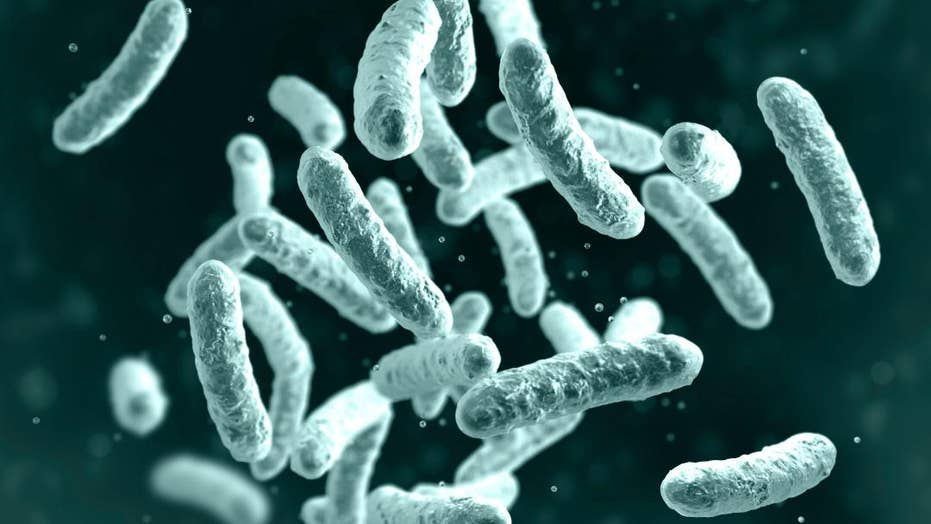
The rodent is a known carrier of Yersinia pestis, the bacterium commonly associated with the highly contagious bubonic plague.
Following the couple’s deaths on May 1, a quarantine was issued in Mongolia’s western Bayan Olgii province, which borders China and Russia.
More than 100 people, including foreign tourists from Switzerland, Sweden, Kazakhstan and South Korea, had come into contact with the couple and were isolated and treated with antibiotics, according to Ochirpurev.
The quarantine was lifted Monday after no other cases were reported.
The Centers for Disease Control and Prevention says modern antibiotics are effective in treating plague, but without immediate care the infection can cause serious illness or even death. Patients typically develop fever, headache, chills, weakness and painful swelling in the lymph nodes.
“The Black Death,” as it was known at the time, killed millions of people in the Middle Ages, but cases now are uncommon.
Human plague infections do continue to occur in the western United States, but significantly more cases occur in parts of Africa and Asia, according to the CDC.
Beyond Meat and Impossible Foods are among the companies making veggie patties that taste more like traditional beef burgers.
An Original Impossible Burger, left, and a Cali Burger, from Umami Burger, are shown in this photo in New York on May 3, 2019. A new era of meat alternatives is here, with Beyond Meat becoming the first vegan meat company to go public and Impossible Burger popping up on menus around the country.Richard Drew / AP
By Associated Press
If you want to skip meat, a new era of options is here.
Beyond Meat and Impossible Foods are among the companies racing to tap into the massive U.S. market of meat eaters by more closely mimicking the taste of beef than vegetarian patties of the past. Others are working to grow meat in labs.
So are the plant-based patties better for you or for the planet? Here’s…
Governor Kate Brown has signed bill to ban sodium cyanide devices used for predator control statewide, thus preventing the deaths of countless more dogs and wild animals, and likely a child.
EUGENE, OR – A bill eliminating a serious public safety threat that is commonly called a “cyanide bomb” was signed into law today by Governor Kate Brown. SB 580 bans all sodium cyanide-dispersing devices used for predator control in Oregon. The bill sailed through the state legislature with almost unanimous support (Senate vote 25-3 and House vote 53-6). SB 580’s passage could encourage the 13 other states currently using M-44s to see the importance of following Oregon’s lead.
“This is a vital public safety issue that has been addressed,” said Brooks Fahy, executive director of Predator Defense. “M-44s are planted like land mines around Oregon…
By MAhttps://www.foxnews.com/world/us-warns-china-russia-over-arctic-amid-environmental-shiftsTTHEW LEE | Associated Press
Secretary of State Mike Pompeo and Sen. Lisa Murkowski, R-Alaska, steps off a plane upon arrival in Rovaniemi, Finland, Monday, May 6, 2019. (Mandel Ngan/Pool Photo via AP)
ROVANIEMI, Finland – U.S. Secretary of State Mike Pompeo says the Trump administration is moving to assert America’s presence in the Arctic. He’s warning China and Russia that the U.S. won’t stand for aggressive moves into the region that’s rapidly opening up to development and commerce as temperatures warm and sea ice melts.
Pompeo says in a speech in Finland that the U.S. will compete for influence in the Arctic and counter attempts to make it the strategic preserve of any one or two nations. He says rule of law must prevail for the Arctic to remain peaceful.
The speech comes a day before Pompeo attends a meeting of the Arctic Council at a time of profound shifts in the region’s environment and widespread criticism of the Trump administration’s skepticism of climate change
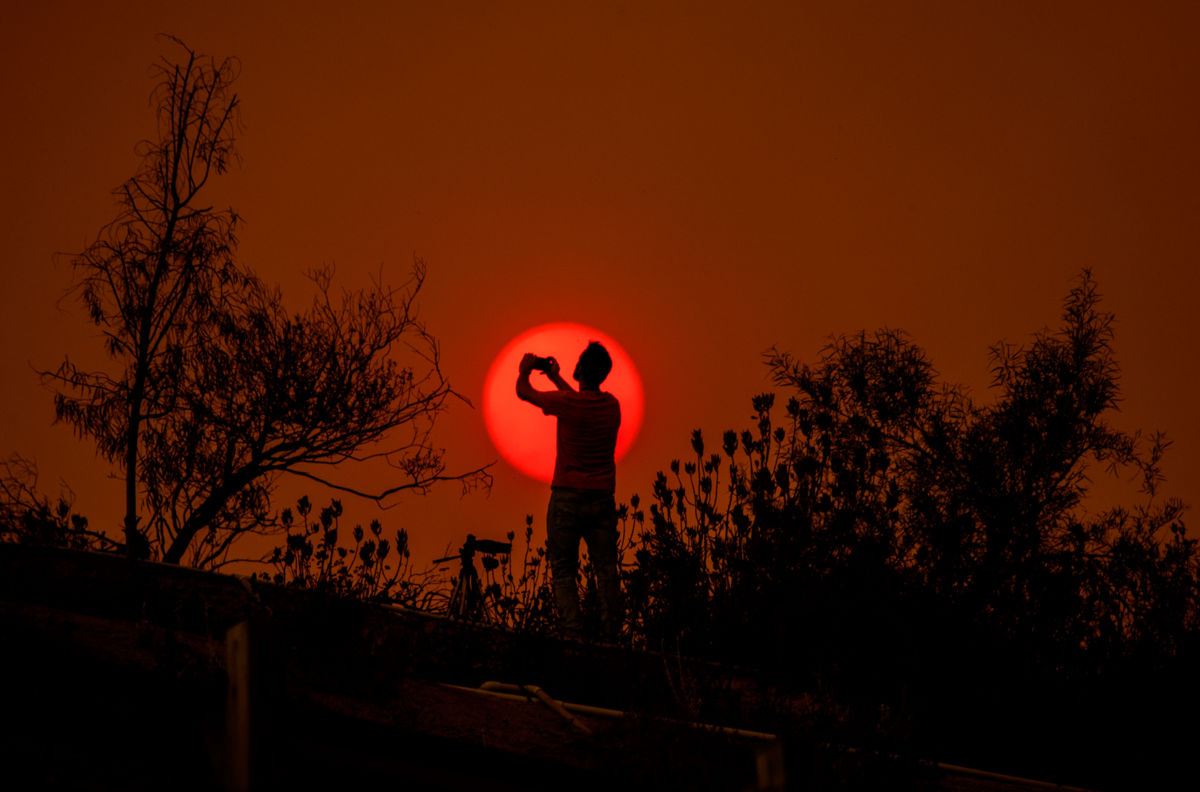
A video journalist is silhouetted by a smoke-obscured sun and sky as the Holy Fire approaches the McVicker Canyon neighborhood, which was under mandatory evacuation in Lake Elsinore, California, on August 8, 2018.ALLEN J. SCHABEN / LOS ANGELES TIMES VIA GETTY IMAGES
During the times when I’m being as emotionally honest with myself as I’m capable — when I truly ponder the idea that this industrialized version of our species may well have already baked enough warming into Earth’s life-supporting biosphere that all of us may very well be on the way out — I feel at a total loss as to what to do.
From that point of numbness, my life force begins to ask, “What next, then?” Cycling through this process for years since I’ve been reporting on the climate crisis, and most intensely during the research and field trips for my book The End of Ice: Bearing Witness and Finding Meaning in the Path of Climate Disruption, circumstances (namely my own grief and despair) have inevitably forced me into contending with my emotions.
I’ve learned, through a lot of pain and struggling, that the only way forward is to allow myself to deeply feel and express the fear, rage, shock, panic, sadness, anxiety and despair. Only then can I move into a place of taking some of the deep breaths which accompany acceptance of the grave situation at hand.
Do you feel the emptiness inside when you become aware of emperor penguin chicks drowning from collapsing ice resulting from planetary warming? Or the fear that comes when we understand our ability to feed ourselves is now very much under threat?
First: Accepting Reality
When you read of how 1.5 acres of rainforest are vanishing every, single, second, does your heart clench in fear? Or when the last of another of the rare frogs existing within said rainforest is lost from this world forever, do you shed the tears that come from a seemingly impotent sadness?
When you come to understand what co-founder of Extinction RebellionRoger Hallam, himself a former organic farmer, has previously told the public, all of these feelings set in even more deeply. In the aforementioned lecture, to paraphrase Hallam, he pointed out how we have already warmed the planet 1.2 degrees Celsius (1.2°C). Based on observational data, we are easily within a decade of losing the summer sea ice in the Arctic. Within another decade, Earth will warm another .5°C due to the melting ice alone. There is already another .5°C warming to come from CO2 that has already been emitted but we’ve yet to experience the warming. The water vapor effect from these events (and other processes already in motion) doubles the impact of warming from other sources, adding another 1°C warming. Hence, at 3°C warming, most of the Amazon rainforest is lost, which in itself adds another 1.5°C of warming. At this point, most likely, Earth is tipped into a hothouse state, possibly into conditions that render it uninhabitable by humans.
Perhaps you might think this sounds too extreme, the stuff of science fiction. If so, consider this: the level of CO2 in the atmosphere today hasn’t been seen in 12 million years, and this level of greenhouse gas is rapidly bringing Earth back into the state it was in during the Eocene Epoch, 33 million years ago, when there was no ice on either of the poles.
At that point, there was very little temperature difference between the poles and the equator, according to Harvard University Professor James Anderson, who is best known for establishing that chlorofluorocarbons were damaging the ozone layer, in an interview with Forbes magazine.
“The ocean was running almost 10ºC warmer all the way to the bottom than it is today,” Anderson said, “and the amount of water vapor in the atmosphere would have meant that storm systems would be violent in the extreme, because water vapor, which is an exponential function of water temperature, is the gasoline that fuels the frequency and intensity of storm systems.”
He warned of the folly of those who believe we can recover from this track we are on simply by reducing CO2 emissions — unless we undertake a deeply radical transformation of industry and the economic system, coupled with halting carbon emissions alongside removing what is already in the atmosphere, all within five years’ time.
“The chance that there will be any permanent ice left in the Arctic after 2022 is essentially zero,” Anderson said, while reminding us that 75 to 80 percent of the permanent ice has already melted in just the last 35 years.
Anderson warned that people have failed to come to grips with this, along with the pending collapse of the Greenland Ice Sheet, which by itself will raise sea levels seven meters.
“When you look at the irreversibility and you study the numbers, this along with the moral issue is what keeps you up at night,” Anderson said.
Second: How Shall We Be?
“My sense is that only seldom is the problem that we “don’t know” — or, at any rate, that we don’t know enough,” Chris Goode, author of The Forest and the Field, has written. “The real problem is that we don’t have a living-space in which to fully know what we know, in which to confront that knowledge and respond to it emotionally without immediately becoming entrenched in a position of fear, denial and hopelessness.”
On Earth Day I was part of a panel at the Brooklyn Historical Society. The panel discussion, titled “Chroniclers of the Climate Apocalypse,” was comprised of climate journalist Oliver Milman, climate and health reporter Sheri Fink, and myself.
During the Q and A session, someone asked me a question along the lines of this: “What do you do, Dahr, or how are you being, with the grieving that comes from how far along we already are?”
I laughed dryly, thought for a brief moment, and then answered honestly: “I don’t know? I get to figure it out all over each day. Each time I give one of my book readings, it is different, because I’m having to evolve every day.”
And that is my truth.
My unsettledness around the question arises for two reasons: One, it always forces me to look into my heart to answer, rather than my head, which means I must experience all of the emotions brought about by the crisis within which we all must live; secondly, when I do this the right way, each moment it shifts and I must live on those emotional front lines, caretaking myself alongside listening, deeply, for what I am called to do next for the planet.
For Roger Hallam, his 20 years of organic farming connected him deeply enough to Earth that when a series of climate-disruption-fueled floods made it impossible for him to continue, he knew what he needed to do: work on his Ph.D. research on the dynamics of political power with particular reference to radical campaign design.
He then co-founded Extinction Rebellion, a group that describes itself as “an international movement that uses non-violent civil disobedience to achieve radical change in order to minimize the risk of human extinction and ecological collapse.”
I asked Hallam why it is imperative for people to rebel.
“Life is short and all we really know is that it pays to live a good life — whatever happens,” he said. “And that means the golden rule — do unto others as you would have them do unto you. This rule is broken in the most grotesque way … particularly by way of what we are doing to our kids.”
To those who feel there is no point in rebelling or taking other actions for the betterment of the planet, who feel that all is lost, Hallam had this to say: “We are in this life to do good, not to bargain with outcomes that are out of our control, anyhow.”
In other words, it is imperative to do what we can to protect the planet, even without a guarantee of success.
Third: To What Are We Devoted?
By way of the corporate capitalist industrial growth culture within which most of us have been raised and immersed, we have become disconnected from the planet we are so deeply part of. This, I believe, is the root cause of the climate crisis we now find ourselves in. Hence, the first step toward answering the question of “how to be” during this time, which must be answered before any of us can decide “what to do,” is to connect ourselves back to the planet. For we cannot begin to walk until our feet are on the ground.
Each day I wake and begin to process the daily news of the climate catastrophe and the global political tilt into overt fascism. The associated trauma, grief, rage and despair that come from all of this draws me back to the work of Stan Rushworth, Cherokee elder, activist and scholar, who has guided much of my own thinking about how to move forward. Rushworth has reminded me that while Western colonialist culture believes in “rights,” many Indigenous cultures teach of “obligations” that we are born into: obligations to those who came before, to those who will come after, and to the Earth itself.
Hence, when the grief and rage threaten to consume me, I now orient myself around the question, “What are my obligations?” In other words, “From this moment on, knowing what is happening to the planet, to what do I devote my life?“
Each of us must ask ourselves this question every day, as we face down catastrophe.
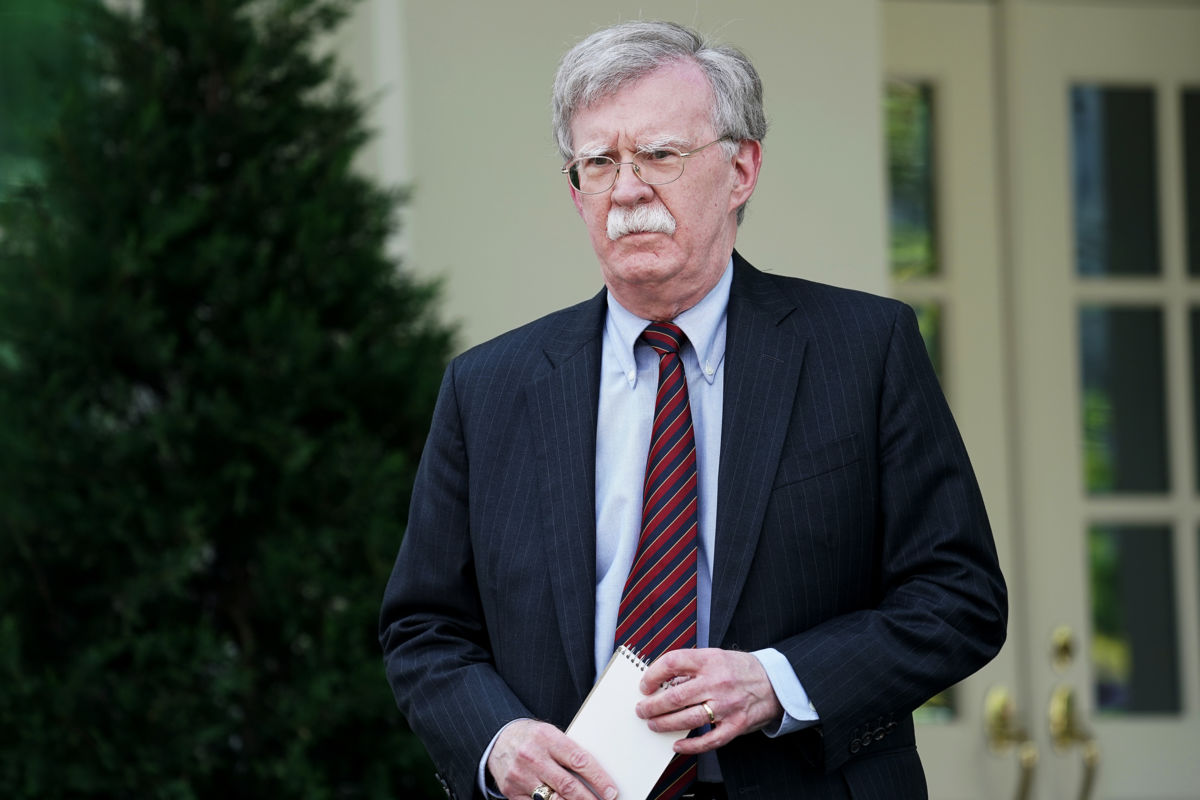
White House National Security Advisor John Bolton talks to reporters outside of the White House West Wing on April 30, 2019, in Washington, D.C.CHIP SOMODEVILLA / GETTY IMAGES
In a late Sunday statement warning — without any evidence whatsoever — of “troubling and escalatory” actions by the Iranian government, U.S. national security advisor John Bolton used the scheduled deploymentof an American aircraft carrier and bomber task force to the Middle East to threaten Iran with military action.
The United States, said Bolton, “is deploying the USS Abraham Lincoln Carrier Strike Group and a bomber task force to the U.S. Central Command region to send a clear and unmistakable message to the Iranian regime that any attack on United States interests or on those of our allies will be met with unrelenting force.”
Foreign policy analysts and international observers were quick…
I oppose wildlife killing contests, events where participants seek to kill as many animals as possible for prizes and entertainment. Coyotes are most frequently targeted by these events in Arizona, but bobcats, foxes, and others are sought out too. I grew up a hunter and any true hunter will not participate in these ghastly events.
Wildlife killing contests run afoul of the fundamental ethics of hunting, such as showing respect for the animal’s life. Wildlife killing contests are wasteful, as the coyotes aren’t killed for their meat and their bodies are often used in gratuitous photo shoots meant to inflate the egos of the killers. The bodies are tossed around and into piles with no regard for the life taken.
The ethics of hunting rely on hunters doing the right thing, whether or not the activity is legal. Hunting is already under intense public scrutiny, even without these killing…
The loss of animals, often due to unregulated or illegal hunting, has consequences for the carbon storage capacity of forests, yet this link is rarely mentioned in high-level climate policy discussions, according to a new study from Lund University in Sweden and the University of Copenhagen in Denmark.
Many wildlife species play a key role in dispersing the seeds of tropical trees, particularly large-seeded tree species, that on average have a slightly higher wood density than small-seeded trees. The loss of wildlife therefore affects the survival of these tree species – in turn potentially affecting the carbon storage capacity of tropical forests.
Forest fauna are also involved in many other ecological processes, including pollination, germination, plant regeneration and growth, and biogeochemical cycles. Empirical studies across the tropics have shown that defaunation (i.e., the human-induced extinction of wildlife) can have cascading effects on forest structure and dynamics.
The sustainability of hunting is questionable in many locations, and particularly larger species are rapidly depleted when hunting supplies urban markets with meat from wild animals.
The study assessed to which extent the link between defaunation and carbon storage capacity was addressed in contemporary forest governance, focusing on a particular mechanism reffered to as Reducing Emissions from Deforestation and forest Degradation (REDD+).
The results show that although higher-level policy documents acknowledge the importance of biodiversity, and sub-national project plans mention fauna and hunting more explicitely, hunting as a driver of forest degradation is only rarely acknowledged. Moreover, the link between fauna and forest ecosystem function were not mentioned in international or national level documents.
Rather than an oversight, this may represent a deliberate political choice to avoid adding further complexity to REDD+ negotiations and implementation. This may be attributed to a desire to avoid the transaction costs of taking on these additional “add-ons” in a negotiation process that has already been complex and lengthy.
“Although biodiversity has moved from a side issue to an inherent feature over the last decade, we show that the ecological functions of biodiversity are still only mentioned superficially,” says Torsten Krause, Associate Senior Lecturer at the Lund University Centre for Sustainability Studies in Sweden.
“At the sub-national level, fauna and hunting were much more likely to be mentioned in project documents, but we still found no explicit mentioning of a link between defaunation and carbon storage capacity”, he adds.
The study demonstrates that defaunation is virtually overlooked in international climate negotiations and forest governance.
“The assumption that forest cover and habitat protection equal effective biodiversity conservation is misleading, and must be challenged,” says Martin Reinhardt Nielsen Associate Professor at the Department of Food and Resource Economics under the University of Copenhagen, Denmark.
“The fact that defaunation and particularly the loss of large seed dispersers through unsustainable hunting have lasting repercussions throughout the forest ecosystem, must be acknowledged and considered in forest governance broadly, or we risk losing the forest for the trees”, he concludes.
###
About the study:
The researchers conducted a desk study searching relevant international decisions on forests by the conferences of the parties to the UNFCCC and recent national REDD+ strategies and program documents. They analysed 49 national REDD+ documents (e.g., national REDD+ strategies, and National Program Documents) in 20 countries, with a focus on Colombia, Ecuador, Nigeria, Tanzania and Indonesia. Finally, the researchers also analysed sub-national REDD+ project documents for verified REDD+ projects in Colombia, Indonesia and Tanzania.
May 5, 2019 at 6:56 PM CDT – Updated May 6 at 11:57 AM
JACKSON, MS (WLBT) – A teenager is dead after a gun accidentally went off while hunting in Morton Sunday.
Family identified the victim as 17-year-old Christopher Michael ‘Mikey’ Harrell.
The incident happened at the La Finca Trailer Park off of Hwy 41 South around 2 p.m.
Morton Police Chief Nicky Crapps says four juveniles were in the woods when Harrell was shot in the upper back left shoulder.
So far, no charges have been filed.
The victim’s aunt described “Mikey” in the GoFundMe post made for him.
She said, “He was always a happy-go-lucky kid with the biggest dimpled smile you have ever seen. He had dreams of someday playing in the NFL and had made a plan to go with his best friend and his brother to sign up to go into the US…




 Exposing the Big Game