Exposing the Big Game

Forget Hunters' Feeble Rationalizations and Trust Your Gut Feelings: Making Sport of Killing Is Not Healthy Human Behavior

Exposing the Big Game

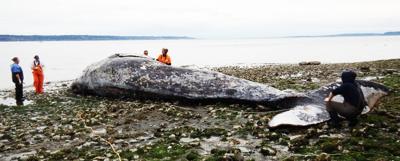
Gray whales washing up dead on Northwest beaches

Whale strandings
Responders examine a malnourished adult gray whale in April after it was towed to a remote beach after initially being found floating near downtown Seattle.

An unusually large number of gray whales are washing up dead on their northbound migration past the Oregon and Washington state coasts this year.

The peak stranding time for gray whales in the Pacific Northwest is normally April, May and June. But the federal agency NOAA Fisheries has already logged nine dead whales washed ashore in Washington state and one in Oregon. That’s on top of 21 strandings on California beaches since the beginning of the year.

There were 25 dead gray whale strandings on the entire West Coast in all of 2018.

One 39-foot-long dead adult whale was found floating in Elliott Bay this month, right in front of downtown Seattle.

“This is looking like it is going to be a big year for gray whale strandings,” said Jessie Huggins, stranding coordinator for the Olympia-based Cascadia Research Collective.

Since February, Huggins has participated in necropsies of malnourished, mostly adult, gray whales on Whidbey Island and the Key Peninsula to Ocean Shores and Long Beach, Washington.

“We’re seeing very thin whales with little to no food in their stomachs,” Huggins said. “This is kind of leading us to believe that this is an issue of nutritional stress with a few normal-type strandings mixed in.”

Huggins said these whales probably didn’t get fat enough on their summer feeding grounds in Alaskan waters last year.

Responders in rain gear and elbow-high rubber gloves cut into the massive carcasses to examine the animals’ fat reserves and internal organs. Multiple whales exhibited dry fibrous blubber. The responders noted ribcages and vertebra sticking out, measured healed scars and took tissue samples for later analysis for contaminants.

Despite the unusual number of dead whales found, NOAA Fisheries spokesman Michael Milstein said the overall population of gray whales is fine, “probably as big as it’s ever been” in modern times.

Eastern Pacific gray whales were taken off the endangered species list in 1994. The population is now estimated at 27,000, which may be around the carrying capacity of their ocean territory.

“They’ve been coming back strong,” Milstein said.

Gray whale and humpback whale casualties from entanglement in commercial and tribal fishing gear have been a growing concern for federal officials, certain environmental groups and the fishing industry lately. None of dead gray whales found this spring on Oregon and Washington state beaches were entangled in fishing or crabbing lines, however.

Crabbers and fishing boat owners are scheduled to meet with researchers and government representatives when two separate work groups convene next month along the Oregon and Washington state coasts to hear updates about entanglement risk reduction strategies.

Sometimes it takes a village to examine and pull samples from a decomposing whale. Huggins said she has worked alongside colleagues this winter and spring from Portland State University, Seattle Pacific University, the nonprofit SR3, Washington Department of Fish and Wildlife and World Vets.

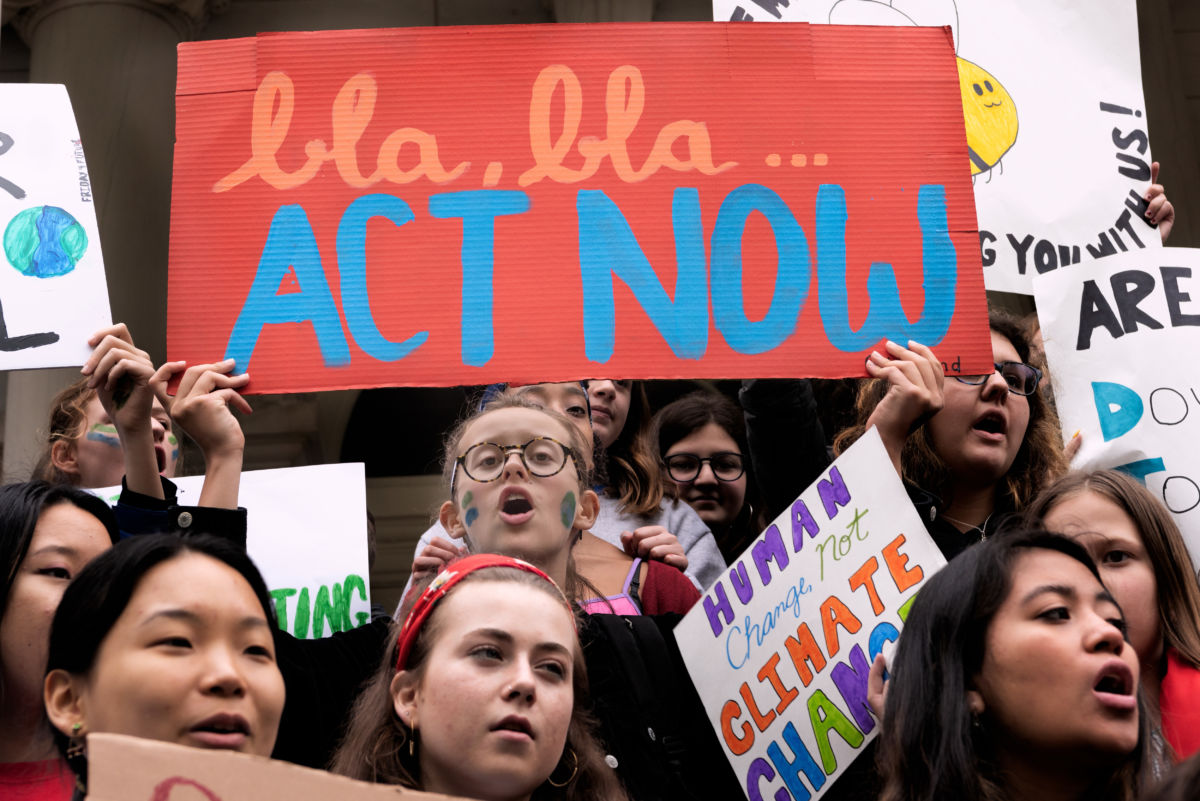
Affirming the Paris Accord Is Good — But Democrats Must Do Much More

Exposing the Big Game's avatarThe Extinction Chronicles

In January, House Speaker Nancy Pelosi stated that climate change is “the existential threat of our time” when announcing the formation of the new House Select Committee on the Climate Crisis, which was established to “spearhead Democrats’ work to develop innovative, effective solutions to prevent and reverse the climate crisis.”

Since then, the House has taken little action until this week: a bill passed Thursday directing President Trump to keep the U.S. in the Paris climate accord. As the first climate bill to pass the House in almost 10 years, it’s a largely symbolic gesture against Trump (especially since it will not pass in the Senate), but it does not elaborate…

View original post 937 more words

Tyson Chicken recalls almost 12 million pounds of frozen chicken


Photo credit: MGN

EDITOR’S NOTE: This release is being reissued as an expansion of the March 21, 2019 recall, which consisted of 69,093 pounds of frozen, ready-to-eat chicken strip products. The scope of this recall expansion now includes more information and an additional 11,760,424 pounds of product.

Tyson Foods, Inc., a Rogers, Ark. establishment, is recalling approximately 11,829,517 million pounds of frozen, ready-to-eat chicken strip products that may be contaminated with extraneous materials, specifically pieces of metal, the U.S. Department of Agriculture’s Food Safety and Inspection Service (FSIS) announced today.

The frozen, ready-to-eat chicken strip items were produced on various dates from Oct. 1, 2018 through March 8, 2019 and have “Use By Dates” of Oct. 1, 2019 through March 7, 2020. The chart contains a list of the products subject to recall.

The products subject to recall bear establishment number “P-7221” on the back of the product package. These items were shipped to retail and Department of Defense locations nationwide, for institutional use nationwide and to the U.S. Virgin Islands.

The problem was discovered when FSIS received two consumer complaints of extraneous material in the chicken strip products. FSIS is now aware of six complaints during this time frame involving similar pieces of metal with three alleging oral injury.

Anyone concerned about an injury or illness should contact a healthcare provider.

FSIS is concerned that some product may be in consumers’ freezers. Consumers who have purchased these products are urged not to consume them. These products should be thrown away or returned to the place of purchase.

FSIS routinely conducts recall effectiveness checks to verify recalling firms notify their customers of the recall and that steps are taken to make certain that the product is no longer available to consumers. When available, the retail distribution list(s) will be posted on the FSIS website at www.fsis.usda.gov/recalls.

Consumers with questions about the recall can contact Tyson Foods Consumer Relations at 1-866-886-8456. Members of the media with questions about the recall can contact Worth Sparkman, Public Relations Manager, Tyson Foods, Inc., at Worth.Sparkman@Tyson.com (479) 290-6358.

Consumers with food safety questions can “Ask Karen,” the FSIS virtual representative available 24 hours a day at AskKaren.gov or via smartphone at m.askkaren.gov.

The toll-free USDA Meat and Poultry Hotline 1-888-MPHotline (1-888-674-6854) is available in English and Spanish and can be reached from 10 a.m. to 6 p.m. (Eastern Time) Monday through Friday.

Recorded food safety messages are available 24 hours a day. The online Electronic Consumer Complaint Monitoring System can be accessed 24 hours a day at http://www.fsis.usda.gov/reportproblem.

India cyclone kills at least 33, hundreds of thousands homeless

Exposing the Big Game's avatarThe Extinction Chronicles

PURI, India (Reuters) – Hundreds of thousands of people were left homeless after a cyclone packing winds of about 200 km per hour slammed into eastern India, ripping out tin roofs and destroying power and telecom lines, officials said on Sunday.

Damaged houses are pictured following Cyclone Fani in Puri, in the eastern state of Odisha, India, May 5, 2019. REUTERS/Jatindra Dash

At least 33 people were killed after cyclone Fani struck the state of Odisha on Friday but a million people emerged unscathed after they moved into storm shelter ahead of landfall.

The death toll could have been much greater if not for the massive evacuation in the days before the storm made landfall, officials said.

The seaside temple town of Puri, which lay directly in the path of Fani, suffered extensive damage as winds gusting up to 200 kph (124 mph) tore off tin roofs…

View original post 313 more words

Marineland, Vancouver Aquarium shipping beluga whales out of the country

Two major Canadian tourist attractions are sending beluga whales outside the country as a new federal law looms that would ban exports on marine mammals, The Canadian Press has learned.

Fisheries and Oceans Canada said it has approved permits for Marineland to move two belugas from the Niagara Falls, Ont., facility to Oceanografic in Valencia, Spain. The Vancouver Aquarium says it owns the two marine mammals that are being cared for by Marineland, and operates the Spanish park where they’re being transferred.

“These two aquarium-born belugas will receive exceptional care at Oceanografic, where they will join a small social grouping of whales already in care there,” Vancouver Aquarium said in a statement, adding that the deal would not cost the Spanish facility any money.

Marineland has also applied to move five more belugas to the United States, but neither Fisheries nor Marineland would divulge where in the U.S. they’re headed if the permits are approved.

“Our Marine Mammal Welfare Committee, which includes independent, accredited experts, recently recommended that Marineland Canada re-home some of our beluga whales to accommodate belugas we expect to be born in 2019 and 2020,” Marineland said in a statement.

“Relocations to the United States are being undertaken to ensure that the best care possible is provided for our beluga whales.”

Neither facility would identify which belugas were being moved, nor how long the two facilities had this arrangement.

The moves come as a new bill banning whale and dolphin captivity is nearing law — its third reading in the House of Commons is set for debate next week.

“Our government agrees that the capture of cetaceans for the sole purpose of being kept for public display should be ended,” said Jocelyn Lubczuk, a spokeswoman for Fisheries Minister Jonathan Wilkinson.

The bill bans imports and exports of the mammals with exceptions only for scientific research or “if it is in the best interest” of the animal, with discretion left up to the minister, thereby clamping down on the marine mammal trade.

It will also change the Criminal Code, creating new animal cruelty offences related to the captivity of cetaceans. It also bans breeding.

The bill includes a grandfather clause for those animals already in facilities in Canada and permits legitimate research, as well as the rescue of animals in distress.

Both Marineland and Vancouver Aquarium said the anti-captivity bill had nothing to do with their decisions to move the whales.

“The decision to move them was made in their best interest, not because of politics,” the Vancouver Aquarium said.

The Vancouver Board of Parks and Recreation passed a bylaw amendment in 2017 banning cetaceans being brought to or kept in city parks after two beluga whales held at the aquarium died. The aquarium, which is located in Stanley Park, announced last year that it would phase out whale and dolphin display.

There are currently no whales at the Vancouver Aquarium.

“We do not believe that the passage of (the bill) will impact Marineland Canada’s ability to do what is right for our whales in the years to come,” Marineland said.

Marineland, which has more than 50 belugas, has taken issue with the breeding ban. The facility said in a letter to the fisheries minister that the park would be in contravention of the Criminal Code when the bill comes into force because some belugas are pregnant and set to give birth this summer after the bill becomes law.

“There is no easy or thoroughly effective birth control medication for beluga whales,” Marineland wrote in March. “In order to control breeding by Bill S-203, existing social family groups must be separated.”

The park wants more time to ensure it is in compliance with the law.

The United States is considering similar legislation and France has banned the captivity of all whales, dolphins and porpoises.

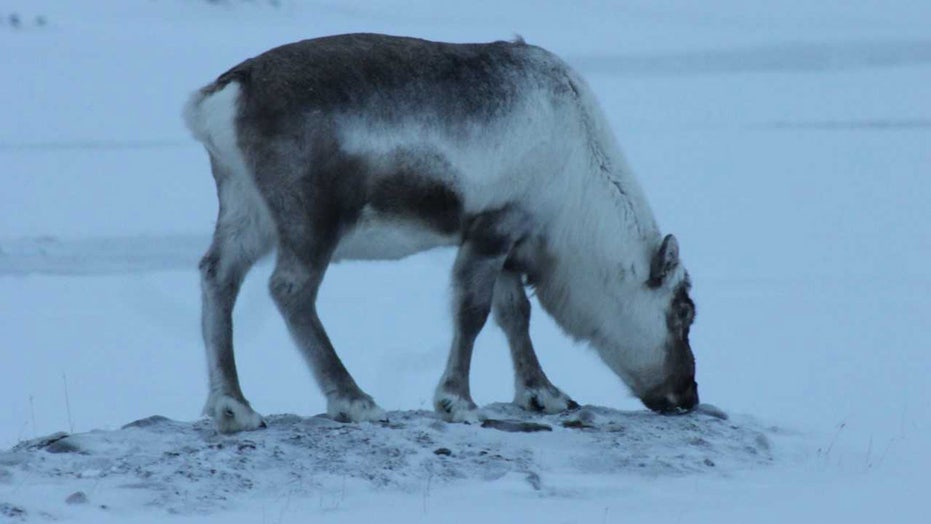
Reindeer are eating seaweed to survive climate change, scientists say

Exposing the Big Game's avatarThe Extinction Chronicles

As the planet warms due to climate change, the Arctic winters are seeing longer open water spells and less sea ice. It also now rains more often than snow during this period, something that is directly affecting wildlife like the Svalbard reindeer.

Named after the group of Norwegian islands they’ve lived on for 5,000 years, these 20,000–plus reindeer are now eating seaweed to survive the increasingly warm winters. According to researchers from the Norwegian University of Science and Technology’s Centre for Biodiversity Dynamic, the reindeer are turning to seaweed because the plants they normally eat are becoming harder to get to.

More rain is now falling instead of snow, which causes the snow on the ground to…

View original post 407 more words

Would You Change Your Eating Habits to Reduce Your Carbon Footprint?

What did you eat for breakfast, lunch and dinner yesterday?

Take this short quiz to find out how much your choices contribute to climate change. Then, tell us: How did you score? How do your eating habits compare with those of other Americans?

In “Your Questions About Food and Climate Change, Answered,” Julia Moskin, Brad Plumer, Rebecca Lieberman and Eden Weingart answer questions about the impact that food shopping, cooking and eating habits have on climate change:

Does what I eat have an effect on climate change?

Yes. The world’s food system is responsible for about one-quarter of the planet-warming greenhouse gases that humans generate each year. That includes raising and harvesting all the plants, animals and animal products we eat — beef, chicken, fish, milk, lentils, kale, corn and more — as well as processing, packaging and shipping food to markets all over the world. If you eat food, you’re part of this system.

How exactly does food contribute to global warming?

Lots of ways. Here are four of the biggest: When forests are cleared to make room for farms and livestock — this happens on a daily basis in some parts of the world — large stores of carbon are released into the atmosphere, which heats up the planet. When cows, sheep and goats digest their food, they burp up methane, another potent greenhouse gas contributing to climate change. Animal manure and rice paddies are also big methane sources. Finally, fossil fuels are used to operate farm machinery, make fertilizer and ship food around the globe, all of which generate emissions.

Which foods have the largest impact?

Meat and dairy, particularly from cows, have an outsize impact, with livestock accounting for around 14.5 percent of the world’s greenhouse gases each year. That’s roughly the same amount as the emissions from all the cars, trucks, airplanes and ships combined in the world today.

In general, beef and lamb have the biggest climate footprint per gram of protein, while plant-based foods tend to have the smallest impact. Pork and chicken are somewhere in the middle.

Is there a simple food choice I can make that would reduce my climate footprint?

Consuming less red meat and dairy will typically have the biggest impact for most people in wealthy countries. That doesn’t necessarily mean going vegan. You might just eat less of the foods with the biggest climate footprints, like beef, lamb and cheese. If you’re looking for substitutes, pork, chicken, eggs and mollusks have a smaller footprint. But plant-based foods like beans, pulses, grains and soy tend to be the most climate-friendly options of all.

How much would changing my diet actually help?

It varies from person to person. But a number of studies have concluded that people who currently eat a meat-heavy diet — including much of the population of the United States and Europe — could shrink their food-related footprint by one-third or more by moving to a vegetarian diet. Giving up dairy would reduce those emissions even further.

If you don’t want to go that far, there are still ways to shrink your individual footprint. Just eating less meat and dairy, and more plants, can reduce emissions. Cutting back on red meat in particular can make a surprisingly large difference: According to a World Resources Institute analysis, if the average American replaced a third of the beef he or she eats with pork, poultry or legumes, his or her food-related emissions would still fall by around 13 percent.

Students, read the rest of the green “Big Picture” section of the article, then tell us:

— What were the most interesting or surprising facts about climate change and food you learned? What questions do you still have?

— How climate-friendly is your diet? Do you tend to eat a lot of meat and dairy? Or do your meals mostly consist of plant-based foods? How do you feel about the impact your eating habits have on the environment?

— Why do you choose to eat the way you do? Do your parents do most of the meal planning, food shopping and cooking? Do you make any personal choices based on moral, religious, environmental or health reasons? Or, do you just simply eat what tastes good?

— After the “Big Picture” introduction, the article goes on to detail five specific areas that contribute to climate change: Meat, Seafood, Dairy, Plants, and Shopping and Food Waste. Choose one and read the related section. What did you learn about this topic? If you were to alter your diet in this area to make it more environmentally-friendly, what changes would you have to make? How difficult would these changes be for you and why?

— Now that you know more about the impact your eating habits have on the environment, would you actually be willing to change any of them to reduce your carbon footprint? If so, what specific changes would you make and why? If not, why not?

Students 13 and older are invited to comment. All comments are moderated by the Learning Network staff, but please keep in mind that once your comment is accepted, it will be made public.

READ 24 COMMENTS

Pets presumed dead from Boeing 737 plane that crash landed in Jacksonville, Florida

A charter plane carrying 143 people and traveling from Cuba to north Florida ended up in a river at the end of a runway Friday night, though no critical injuries or deaths were reported, officials said. (May 4) AP

LINKEDINCOMMENTMORE

All 143 people aboard a military-chartered plane survived after the aircraft skidded off a runway into a river in Jacksonville, Florida, on Friday night, but their pets weren’t as fortunate.

At least four pets were checked in the luggage department located in the bottom of the plane that left Guantanamo Bay, Cuba, to northern Florida.

Each is still on the aircraft and presumed dead, Kaylee LaRocque, a spokeswoman for the U.S. Navy in Jacksonville, confirmed to USA TODAY on Saturday.

Although the Boeing 737 plane is not completely submerged in the St. Johns River, the bottom portion, where the pets were positioned, is under water.

“There’s water in the cargo hold,” LaRocque said. “We are so sad about this situation, that there are animals that unfortunately passed away.”

Authorities have left the plane untouched as the National Transportation Safety Board conducts an investigation of the crash landing, meaning passengers’ possessions, including pets, are still on the plane.

LaRocque said the pets include dogs and cats. The flight’s manifest recorded a total of four pets on board, but she said it’s possible more could have been boarded.

“Unfortunately, they have not been retrieved yet due to safety issues with the aircraft, the Naval Air Station Jacksonville, where the crash landing occurred, tweeted early Saturday morning. “Our hearts and prayers go out to those pet owners during this terrible incident.”

NAS Jacksonville@NASJax_

Many people are asking about the pets aboard the aircraft that skidded off the runway into the St. Johns River last night at NAS Jacksonvilee. Unfortunately, they have not been retrieved yet due to safety… https://www.facebook.com/1394179337465396/posts/2217089441841044/ 

65 people are talking about this

The plane skidded off the runway at around 9:40 a.m. Cheryl Bormann, prominent defense attorney who was aboard the plane, described a chaotic landing in which the pilot appeared to lose control of the aircraft before it smashed into the water and screeched to a halt.

Woman admits to selling NC black bear parts prized in China for treating illnesses

Exposing the Big Game's avatarCommittee to Abolish Sport Hunting Blog

https://www.charlotteobserver.com/latest-news/article229973309.html?fbclid=IwAR3C6Rshgn9R9EqoOpakWe_FKovM6rF7twI67Pd1prjg4CovKeuraDwEkoc

Play Video
Duration 1:31
Hunting bear in the Carolinas

Bear hunting is a big tradition that attracts sportsmen from around the southeast to the Carolinas. 

A woman this week admitted she illegally bought and sold North Carolina black bear body parts that have been used for centuries in China, South Korea and other countries to treat illnesses.

Kathy Ann Cho acknowledged in a court filing signed by her lawyer that she illegally bought ginseng and bear gallbladders in the North Carolina mountains and sold them in Georgia, according to the court document obtained by The Charlotte Observer.

Cho acknowledged purchasing l3 black bear gallbladders in Franklin, NC, for $5,200, or $400 each, and selling one of them for $1,000, according to the document filed in U.S. District Court in Asheville by the Charlotte-based office of U.S. Attorney Andrew Murray.

Cho was charged…

View original post 490 more words