Exposing the Big Game

Forget Hunters' Feeble Rationalizations and Trust Your Gut Feelings: Making Sport of Killing Is Not Healthy Human Behavior

Exposing the Big Game

Warm on top, cold below: Unexpected greenhouse gas effect in lakes

Exposing the Big Game's avatarThe Extinction Chronicles

Date:
September 9, 2019
Source:
University of Basel
Summary:
A research team has examined how the ongoing climate warming affects the ‘behavior’ of lakes. The researchers found out why, in near-bottom waters, lakes may even cool down despite warming at the surface, and what the consequences are for the production and emission of greenhouse gases.
https://www.sciencedaily.com/releases/2019/09/190909104700.htm
FULL STORY

A research team led by the University of Basel and the University of Montreal examined how the ongoing climate warming affects the “behavior” of lakes. The researchers found out why, in near-bottom waters, lakes may even cool down despite warming at the surface, and what the consequences are for the production and emission of greenhouse gases. The results of the study were published in the most recent edition of the journal Limnology and Oceanography Letters.

Lakes play an important role in the global carbon cycle, acting as large natural bioreactors. The…

View original post 740 more words

Fracking may be a bigger climate problem than we thought

Exposing the Big Game's avatarThe Extinction Chronicles

The mysterious recent spike in methane emissions? It just might be US fracking.

a drilling rig at sunset.
A shale gas drilling rig, against the obligatory stock photo sunset.
 Shutterstock

As greenhouse gases go, methane gets less attention than carbon dioxide, but it is a key contributor to climate change.

Methane doesn’t stay in the atmosphere as long as CO2 and is reabsorbed into terrestrial cycles via chemical reactions within 12 years or so. But while it’s up there, it’s much more potent, trapping heat at roughly 84 times the rate of CO2. Scientists estimate that around 25 percent of current global warming traces to methane.

When it comes to reducing CO2 emissions, the chain between cause and effect is frustratingly long and diffuse. Reduced emissions today won’t show up as reduced climate impacts for decades.

But with methane, the chain of causation…

View original post 1,312 more words

What Is Nitrous Oxide and Why Is It a Climate Threat?

Exposing the Big Game's avatarThe Extinction Chronicles

Despite its increasing role in global warming and effect on the ozone layer, little has been done to rein in this climate pollutant. One big reason: agriculture.

The majority of nitrous oxide comes from agriculture, including microbes in fertilized soils and animal manure. Credit Moenkebild/Ullstein Bild via Getty Images

The majority of nitrous oxide comes from agriculture, including microbes in fertilized soils and animal manure. It is a potent greenhouse gas with about 300 times the heat-trapping power of carbon dioxide. Credit Moenkebild/Ullstein Bild via Getty Images

When it comes to the global climate crisis, carbon dioxide emissions represent a problem that’s massive, intractable and running short on time to solve. But it’s not the only problem.

Other pollutants are rapidly warming our climate, too, sending scientists on a race to understand their implications before it’s too late. For years, experts have warned about the risks from one pollutant in particular—nitrous oxide—and yet there’s been little global action on it.

The reason: “It is…

View original post 1,062 more words

Why methane emissions matter to climate change: 5 questions answered

natural gas line
REUTERS/Aaron Josefczyk
Natural gas can travel over 1,000 miles from the well to end use. During that long journey, gas has many opportunities to escape into the atmosphere.

The EPA on Aug. 29 unveiled a proposal to rescind regulations to limit methane emissions from the oil and gas industry. Critics said the rollback will worsen climate change and air quality. Reaction from energy companies varied, with some arguing the limits are unnecessary while others supported the federal regulations.

Colorado State University energy scholars Anthony Marchese and Dan Zimmerle last year published an extensive study on the extent of methane emissions from the oil and gas industry. They explain the sources of methane from natural gas and what this regulatory rollback could mean.

1. Once natural gas is extracted from the ground, how do the methane and other gases get into the atmosphere?

The U.S. natural gas infrastructure includes a million miles of pipes and millions of valves, fittings, tanks, compressors and other components that operate 24 hours per day, 7 days per week, to deliver natural gas to your home. Natural gas can travel over 1,000 miles from the well to end use. During that long journey, gas has many opportunities to escape into the atmosphere. This includes unwanted leaks from faulty components as well as intentional venting of gas from devices that use the high-pressure gas to open and close valves.

In addition, the compressors that are required to increase the pressure and pump the gas through the network are powered by internal combustion engines that burn natural gas; the exhaust of those engines includes unburned methane. Since the natural gas delivered to your home is 85% to 95% methane, natural gas leaks are predominantly methane. While methane poses the greatest threat to the climate because of its greenhouse gas potency, the other hydrocarbons present in the natural gas can degrade regional air quality and harm human health.

2. Why has it been difficult to determine the extent, or the rate, of methane emissions?

Because the natural gas infrastructure is so vast, it is not possible to measure every leak from every faulty valve or fitting. Indeed, we don’t even have accurate estimates of the total number of valves and fittings. The best way to estimate the total amount of methane emissions from the natural gas infrastructure is to perform as many measurements as possible from as many different types of components as possible. The reason that one has to perform hundreds or even thousands of measurements from each type of equipment is so that you can capture the high-emitting sources (the so-called super-emitters), which are low in number but their emissions are so high that they can account for 50% to 80% of the total emissions.

By making thousands of measurements, along with compiling our best estimates of the inventory of all of the types of equipment in the U.S. natural gas infrastructure, it is possible to estimate the total emissions from all U.S. natural gas operations with a reasonable degree of certainty, which we currently estimate to be 2.3%. That is, 2.3% of the natural gas that travels through pipelines is released into the air. We estimate that quantity of natural gas emissions represents a loss in revenue of over $1 billion per year for the industry, and it has the equivalent greenhouse gas impact as the annual tailpipe emissions from 70 million passenger cars.

3. What would the Obama-era regulations have required oil and gas companies to do?

The Obama-era regulations were put in place in 2016 to set emissions limits for methane from a variety of sources in the oil and gas industry. The 2016 regulations built upon previous regulations put in place in 2012 for emissions of volatile organic hydrocarbons (VOCs), which are nonmethane hydrocarbon gases produced by oil and gas operations. The companies that had installed controls for VOC emissions sources were not required to install any new controls because reduction in VOC emissions also reduce methane emissions.

The 2016 rule also included additional sources that were not previously covered in 2012, including hydraulically fractured oil wells, some of which can contain a large amount of gas along with oil; pneumatic devices at well sites and gas processing plants; and compressors and pneumatic controllers at transmission and storage facilities.

The 2016 rule required operators to periodically detect and repair methane leaks at new and modified facilities; older facilities that have not been significantly modified are not covered by the rule.

4. How do scientists determine whether natural gas is better for climate change than burning coal?

Methane is a highly potent greenhouse gas, with more than 80 times the climate warming impact of carbon dioxide over the first 20 years after it is released. Studies show that if methane leaked at a rate of greater than 3%, there would be no immediate climate benefits from retiring coal-fired power plants in favor of natural gas power plants. The good news is that a 2.3% leak rate suggests that natural gas power plants are slightly more beneficial to the climate in comparison to coal-fired power plants. However, the results of our studies also showed that power plants could show more substantial benefit to the climate if the industry reduced the total methane leakage rate to 1%, which many of our industry partners believe to be achievable.

In addition, natural gas power plants can change output more quickly than large coal plants, supporting the integration of variable renewable sources, such as wind and solar power. Industry, and some environmental groups, see natural gas as a “bridge fuel” that helps with the integration of renewable energy into electricity systems.

However, there is one additional, clear difference between coal and natural gas power plants. For coal plants, almost all of the climate impact is due to burning the coal, while for natural gas, the climate impact is a combination of combustion and methane emissions – both leaks and venting. Changing how coal burns is very difficult. Reducing natural gas leakage is a very real possibility.

5. Why were some oil and gas companies supportive of the tighter regulations on methane emissions?

The EPA estimates that the proposed new amendments would save the oil and gas industry $17 to $19 million per year. While this may sound like a lot of money, it pales in comparison to the economic value to be gained by minimizing leakage. We estimate that reducing methane emissions from 2.3% to 1% would result in an annual revenue of over a half billion dollars per year, which is more than 30 times the estimated savings from rolling back the regulations. Many oil and gas companies recognize this fact, and they also recognize that regulations are needed to ensure that all companies are held to the same standard.

Our experience working closely with over 20 industry partners has shown that industry can provide leadership in sharing best operational practices, developing comprehensive leak detection and repair programs, piloting these new technologies and constructively engaging with the regulatory process. Our experience in Colorado, which has developed some of the nation’s strictest methane emissions regulations, also strongly suggests that government regulations are needed to ensure that best practices become standard practices.

In the end, we believe the Trump administration’s efforts to roll back regulations, without regard to their efficacy, not only will worsen climate change but also will affect the health and safety of U.S. citizens and undercut the natural gas industry’s efforts to produce and promote natural gas as a clean fossil fuel – a fossil fuel that integrates well with renewable sources.

Anthony J. Marchese is an associate dean for academic and student affairs, Walter Scott, Jr. College of Engineering; director of the Engines and Energy Conversion Laboratory; and professor in the Department of Mechanical Engineering and Energy Institute Affiliate Faculty, Colorado State University. Dan Zimmerle is a senior research associate at the Energy Institute, Colorado State University.

WDFW offers online, interactive webinars on wolf post-recovery planning

Exposing the Big Game's avatarCommittee to Abolish Sport Hunting Blog

OLYMPIA- The Washington Department of Fish and Wildlife (WDFW) has scheduled three online, interactive webinars this September and October to discuss planning and management for wolf populations once they are no longer listed as endangered in the state.

“We know that wolves are a huge topic of interest to the public and we want to hear everyone’s input, in a respectful and productive way, on how to manage them,” said WDFW Director Kelly Susewind. “These digital open houses will allow anyone who is interested to learn about Washington’s wolves, ask questions, and find out how to provide feedback on the topic.”

While public comment won’t be accepted during the webinars, the goal is to both educate about wolves and share ways that people can voice their thoughts to WDFW concerning wolf management. This input will help to inform the State Environmental Policy Act (SEPA) process…

View original post 233 more words

The 105 year old hunter finally died

Exposing the Big Game's avatarCommittee to Abolish Sport Hunting Blog

https://wset.com/news/local/bedford-co-hunter-oldest-in-north-america-passes-away-at-105

You don’t hear all that much about 104-year-olds, perhaps since they’re usually squirreled away in some nursing home by then ‘for their own protection’ by then. Or perhaps because the average human life expectancy is 79.3 in the U.S. (both sexes combined), while in Sierra Leone it’s still only 50.1—the longest-lived people in the world these days, the Japanese, live an average of 83.7. But ironically I happened across articles about not

one, but two century+4-year-olds while leafing through the news today.

By now we’ve probably all heard of Australian scientist David Goodall, who decided to spare himself any future suffering and make the long trip to Switzerland to humanely end his own life (just as you would a beloved old dog or cat who had outlived his or her ability to know joy in life). “Why Would Anyone Oppose This 104-Year-Old Man’s Decision to Die With Dignity?” asks…

View original post 202 more words

Tanzania: ringleader in elephant poaching arrested, ivory tusks equivalent to killing of 117 elephants recovered

Exposing the Big Game's avatarCommittee to Abolish Sport Hunting Blog

Tanzania: ringleader in elephant poaching arrested, ivory tusks equivalent to killing of 117 elephants recovered

Tanzanian ministry of tourism has announced arrest of main suspect in the poaching of its elephant population and recovery of hundreds of ivory tusks that involved the killing of 117 elephants.

Hamisi Kigwangalla, minister for Natural Resources and Tourism last week announced on Twitter the arrest of poacher Hassan Shaban Likwema, aka Hassan Nyoni, and several of his accomplices, Reuters reports.

Nyoni has been on authorities’ wanted list as top “hardcore” poacher of elephants in the African country renowned for its wild life.

“The arrest of Nyoni has brought us to a stage where we can say we have taken into custody all the hardcore poachers on our wanted list, except for a few who have left the country,” Kigwangalla said.

View original post 164 more words

Top international biologists and planners call for an end to elephants in captivity

By Don Pinnock• 10 September 2019

Photo: Unsplash/ Timothy K
16 Reactions
An international conference of elephant experts has condemned the capture and confinement of elephants and has called on zoos to release and reintegrate them into the wild or relocate them to sanctuaries where they can live a more normal life.

Holding elephants in captivity causes them enormous stress and constitutes cruelty. Capturing wild elephants and removing them from their families is unacceptable. Captivity is simply unsuitable for elephants.

This was the overall agreement at a conference in Hermanus on 6 September 2019 attended by elephant specialists from Kenya, Zimbabwe, the United States, Great Britain, the Netherlands and South Africa. They were seeking to work out a framework and policy guidelines for dealing with elephants in captivity.

The conference, Taking the Elephant out of the Room, was organised by the EMS Foundation and followed the historic ruling by the United Nations wildlife trade organisation, CITES, prohibiting wild-caught elephants from being held in captive facilities.

The conference was opened by Chief Steven Fritz of the Khoi Council.

“Elephants are sacred to the Khoisan First Nation people,” Fritz told delegates. “What you do to them you do to us. If you enslave elephants you enslave the Khoisan nation. Like us, they are First Nations. They’re our rainmakers and have been with us from before memory. For this reason my people have resolved to unite to protect them from cruelty and killing.”

For Kenyan elephant ethologist and conservation biologist Dr Joyce Poole, who has conducted groundbreaking elephant research in Amboseli National Park, confinement even in the best facility constituted extreme cruelty.

“In a single day, an elephant may socialise with hundreds of individuals. Relationships radiate out from a mother-offspring bond through families, clans, subpopulations. Independent males form long-term friendships.

“Elephants communicate through more than 300 gestures, complex speech and glandular secretions. They contemplate, negotiate, collaborate, plan and are aware of death. They care about their lives and are more like us than we realise.

“What happens when we remove all intellectual stimulation? In confinement, without companions, an elephant has no purpose. Captive elephants lack the very foundation of elephant life. It is utterly wrong to confine them.”

Biologist Dr Keith Lindsay, whose conservation work began in Amboseli in 1977, outlined the centrality of elephants in ecosystem health.

“They’re a keystone species, essential components in an ecosystem. If you take the keystone out of an arch it collapses. They’re ecological engineers upon which many other species depend. They bring down trees to browse level, they open paths in the forest, they find salt licks, they open space for grazers and disperse seeds. The wild is where they belong.”
Pictures of African elephants taken at Karachi Safari Park in Pakistan in January 2019. Photo: Ban Animal Trading

Advocate Jim Karani of WildlifeDirect in Kenya said the important question is not “can animals reason or talk, but can they suffer?”. Our confinement of elephants shows they can and do.

“There’s a body of research that proves there’s no conservation-education value to the use of elephants in zoos,” he said.
“They are miserable and tell us nothing. Their only use is to take a selfie and walk away.

“The law has a duty to protect all sentient beings and in zoos there are serious welfare concerns about the treatment of non-human persons. An animal has a right of protection against needless pain and suffering.

“Confining and isolating an elephant is not the way to treat a sentient being. They’re not merely property. They should be granted rights as legal non-human persons, as corporations are.”

Marion Garai of the Elephant Specialist Advisory Group provided the statistics. There are presently 1,770 elephants worldwide in captive facilities, of which 1,491 are in zoos. Most of these are in the United States, followed by China, Germany and Japan. Just under 100 facilities hold a single, lonely elephant.

Several speakers detailed the extreme stress caused to elephants by capture and confinement.

Audrey Delsink of Humane Society International-Africa said capturing baby elephants – as Zimbabwe continues to do – causes post-traumatic stress disorder (PTSD) that can last decades. This was confirmed by Dr Gay Bradshaw of the Kerulus Centre for Nonviolence in the United States, whose work has led to the field of trans-species psychology.
Pictures of African elephants taken at Karachi Safari Park in Pakistan in January 2019. Photo: Ban Animal Trading

“There is an epidemic of PTSD among elephants in captivity,” she said.
“Elephants share with humans the same brain, same consciousness and the same vulnerability to trauma. They can experience psychological and social breakdown. Trauma spreads from parent to child, neighbour to neighbour.

“If we ‘save’ elephants from extinction by confining them, they will be elephants in body only but psychologically extinct. We have to end killing and captivity and restore ancestral habitats. That holds true for all wildlife on every continent and in every ocean.”

Wildlife management specialist Dr Yolanda Pretorius explained the negative effect humans have on elephants, from fencing, manipulation and noise to capture, confinement and cruel training.

“All this causes trauma and impacts on their welfare. The less people have to do with elephants the better it is for elephants. But there’s almost no place left on Earth for this to happen.

“In captivity elephants are less aware, they move slowly, they seem to droop. If you’ve worked with elephants you can see their depression, their sadness. So we have to work out our future relationship with elephants very carefully.”

Lynn James of SPCA Zimbabwe and environmental lawyer Lenin Chisaira outlined the traumatic impact of the live capture of baby elephants in Zimbabwe. Adults are driven off by helicopter and the exhausted babies grabbed and bundled into trucks for export, mainly to Dubai and China.
They showed heartbreaking undercover footage of terrified youngsters being pushed and kicked to “move up” while loading into trucks.

Professor David Bilchitz of Animal Law Reform SA explored the legal perspective of South Africa’s engagement with elephants. He noted that the way sustainable use of wildlife was used in South Africa was to focus on the species as a whole and allow for the sacrifice of many individuals. This allows individuals to be objectified and exploited rather than respected and well stewarded.

An integrative approach, on the other hand, he said, would focus on the individual and the species: showing respect for both the individual and the survival of the species.

“Trophy hunters, for example, would say it works to the benefit of the whole by bringing in revenue to conserve the species. However, can we justify serious harm for the individual animal for the greater good?

“An integrative approach would reject the view that this advances conservation. It would argue that respect for individuals advances their conservation.

“I would adopt this position as this is the only approach that ensures the long-term goals of both positions. Only our respect for animals will ensure their long-term survival.”

Elephant researcher Antoinette van de Water has been working on the value of elephants in society and searching for the narratives needed to make them more important in order to change exploitative practices.

“We have to find goals that are good for both humans and elephants. What are the drivers of peaceful coexistence? In this, cultural values are important and we must work with affected communities whose problems get heard. Putting a price tag on elephants is not the way.”

Kahindi Lekalhaile of the African Network for Animal Welfare insisted that captivity of elephants was not a method of conservation. Captivity isn’t just about space, he said. It denies them social interaction and that is a great injustice.

“Because elephants in zoos do not live long, however, there is a constant demand for replacements from the wild. This is a threat to wild populations.

“Worldwide, most captive elephants are still wild-caught. We can look into artificial insemination,” he said. “But capturing young elephants for export to zoos should never happen. There should be no international movement of elephants.

“But what do we actually do about elephants who are already in captivity? We should think deeply about releasing them into the wild.
Where are these wilds? They are diminishing. And should we be releasing traumatised elephants? Let’s keep them in natural sanctuaries.”

Brett Mitchell of the Elephant Reintegration Trust outlined the steps necessary to integrate captive elephants into the wild, a process, he said, that can take many years. For a few deeply traumatised elephants it may not be possible. But he mentioned a group of elephants which were released from a holding boma into the wild that never went back, not once.

In concluding discussions it was unanimously agreed that no new elephants should be placed in captivity and that elephants currently in captivity should be placed in as free and natural environments as possible and not penned for human pleasure.

A policy framework will be developed from the conference inputs and discussion. DM

The conference was live-streamed and can be viewed here:

https://youtu.be/eKvD7DOPx2U

https://youtu.be/yvvHYzXOsMs

https://youtu.be/Wpq8J3gISv4

https://youtu.be/u7L-9BIiyVM

https://www.dailymaverick.co.za/article/2019-09-10-top-international-biologists-and-planners-call-for-an-end-to-elephants-in-captivity/

Fukushima: Japan will have to dump radioactive water into Pacific, minister says

More than a million tonnes of contaminated water lies in storage but power company says it will run out of space by 2022

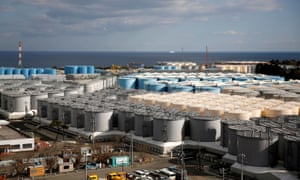
Storage tanks for radioactive water at the Fukushima Daiichi nuclear power plant.
 Storage tanks for radioactive water at the Fukushima Daiichi nuclear power plant. Photograph: Issei Kato/Reuters

The operator of the ruined Fukushima Daiichi nuclear power plant will have to dump huge quantities of contaminated water from the site directly into the Pacific Ocean, Japan’s environment minister has said – a move that would enrage local fishermen.

More than 1 million tonnes of contaminated water has accumulated at the plant since it was struck by a tsunami in March 2011, triggering a triple meltdown that forced the evacuation of tens of thousands of residents.

Tokyo Electric Power (Tepco) has struggled to deal with the buildup of groundwater, which becomes contaminated when it mixes with water used to prevent the three damaged reactor cores from melting.

Tepco has attempted to remove most radionuclides from the excess water, but the technology does not exist to rid the water of tritium, a radioactive isotope of hydrogen. Coastal nuclear plants commonly dump water that contains tritium into the ocean. It occurs in minute amounts in nature.

Tepco admitted last year that the water in its tanks still contained contaminants beside tritium.

Currently, more than 1m tonnes of contaminated water is held in almost 1,000 tanks at the Fukushima Daiichi site, but the utility has warned that it will run out of tank space by the summer of 2022.

“The only option will be to drain it into the sea and dilute it,” Yoshiaki Harada told a news briefing in Tokyo on Tuesday. “The whole of the government will discuss this, but I would like to offer my simple opinion.”

No decision on how to dispose of the water will be made until the government has received a report from a panel of experts. Other options include vaporising the liquid or storing it on land for an extended period.

Harada did not say how much water would need to be discharged into the ocean.

One recent study by Hiroshi Miyano, who heads a committee studying the decommissioning of Fukushima Daiichi at the Atomic Energy Society of Japan, said it could take 17 years to discharge the treated water after it has been diluted to reduce radioactive substances to levels that meet the plant’s safety standards.

Any decision to dispose of the waste water into the sea would anger local fishermen, who have spent the past eight years rebuilding their industry.

Nearby South Korea has also voiced concern over the impact it would have on the reputation of its own seafood.

Last month, Seoul summoned a senior Japanese embassy official to explain how Fukushima Daiichi’s waste water would be dealt with.

Ties between the north-east Asian nations are already at a low ebb following a compensation dispute over Koreans forced to work in Japanese factories during the second world war.

The government spent 34.5bn yen (£260m) to build a frozen underground wall to prevent groundwater reaching the three damaged reactor buildings. The wall, however, has succeeded only in reducing the flow of groundwater from about 500 tonnes a day to about 100 tonnes a day.

Japan has come under renewed pressure to address the contaminated water problem before Tokyo hosts the Olympics and Paralympics next summer.

Six years ago during the city’s bid for the games, the prime minister, Shinzo Abe, assured the international community that the situation was “under control”.

Trump Auctions Off 150,000 Acres of Public Lands for Fracking Near Utah National Parks

Exposing the Big Game's avatarThe Extinction Chronicles

Arches National Park. Chris Dodds / Flickr / CC BY-SA 2.0
On Tuesday the Trump administration offered more than 150,000 acres of public lands for fossil-fuel extraction near some of Utah’s most iconic landscapes, including Arches and Canyonlands national parks.

Dozens of Utahns gathered at the state Capitol to protest the lease sale, which included lands within 10 miles of internationally known protected areas. In addition to Arches and Canyonlands, the Bureau of Land Management leased public lands for fracking near Bears Ears, Canyons of the Ancients and Hovenweep national monuments and Glen Canyon National Recreation Area.

“Utahns have demonstrated their commitment to transition away from dirty fossil fuels through clean energy resolutions passed in municipalities across our state. Yet, these commitments continue to be undermined by rampant oil and gas lease sales, which threaten our public health, public…

View original post 398 more words