The U.S. Department of the Interior last week took a major step toward the first-ever oil drilling in the Arctic National Wildlife Refuge. In a decision that outraged but did not surprise environmentalists, the agency announced its final plan to develop one of the world’s last great wildernesses, acknowledging that its chosen course…
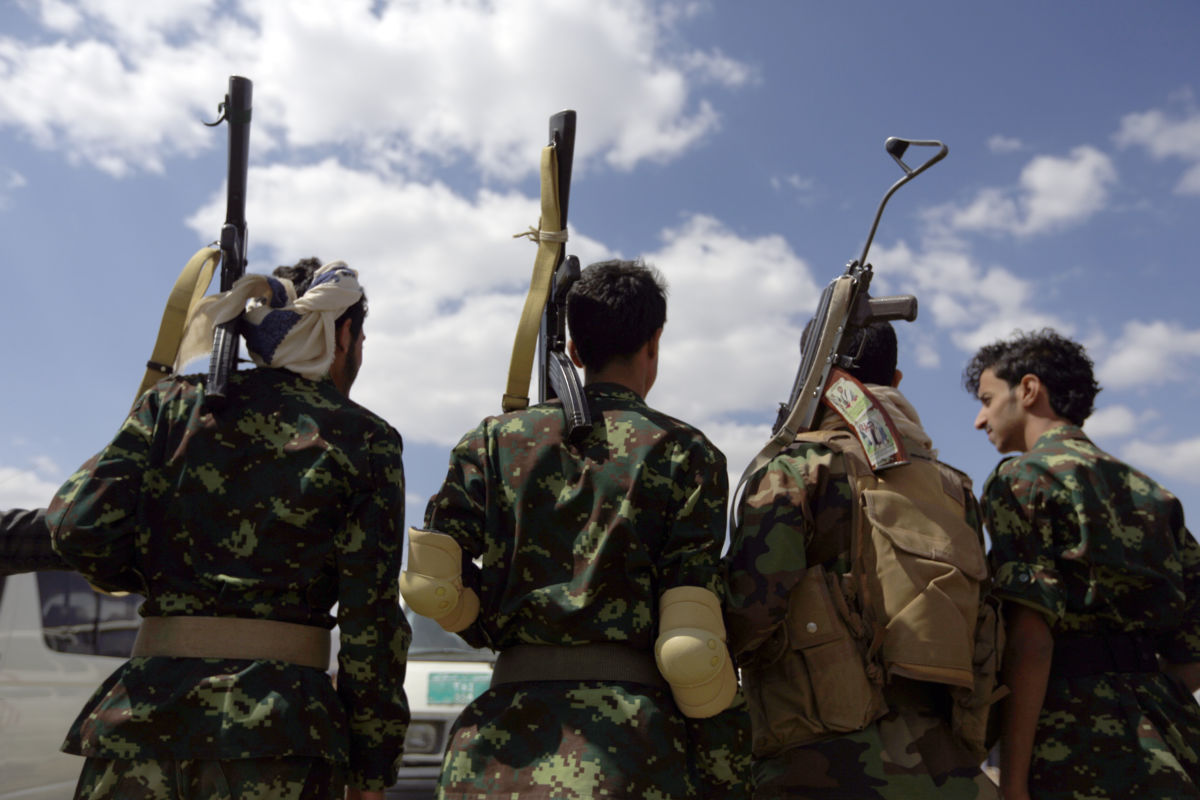
Members of the Houthi movement fighting against the Saudi intervention in Yemen are seen in Sana’a, Yemen, on September 17, 2019.MOHAMMED HUWAIS / AFP / GETTY IMAGES
John Bolton is gone from the White House, yet war with Iran is suddenly imminent. I had begun to believe irony was dead.
“[Bolton] calls for the preemptive bombing of Iran with dreary regularity during his many Fox News appearances,” I wrote after he became Donald Trump’s national security adviser in March of 2018, “and has labored for years to arrange the proper set of circumstances that would allow Tehran to be rendered into a pile of rubble.”
I was actually foolish enough to indulge in a brief moment of optimism after Bolton was unceremoniously shown the door last week. There was talk of Secretary of State Mike Pompeo taking on Bolton’s role like…
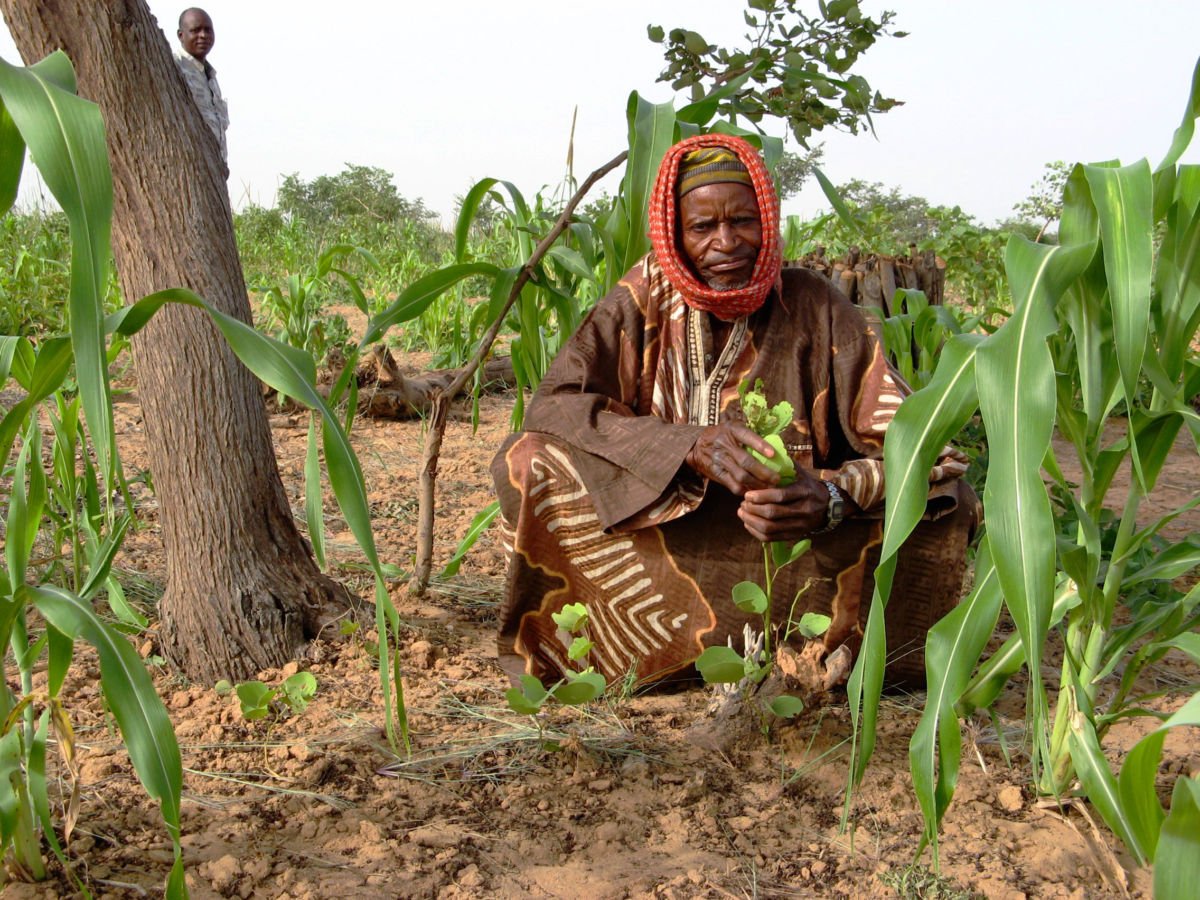
A farmer named Haladu grooms shoots to become new trees in a Farmer Managed Natural Regeneration zone in Gangara, a village in the Republic of Niger’s Maradi Region.TONY RINAUDO / FOOD SECURITY AND NATIONAL RESOURCES TEAM, WORLD VISION AUSTRALIA
Reading these headlines, I’m tossed back to the late ’60s when our culture was gripped by what I came to call the “scarcity scare,” as Paul Ehrlich’s ThePopulation Bomb exploded into public consciousness spewing images of mounting hunger.
Really? Areour unstoppable numbers dooming us? I had to know.
Obsessed with a desire to share this discovery, in 1971 I wrote Diet for a Small Planet to expose and help transform our scarcity-creating food system.
Yet today, we seem not to have learned.
The world now produces more than enough food for each of us — 2,900 calories a day, roughly a third more than in 1961. And that’s just with the “leftovers” — with what remains after a third of the world’s cropland goes into feeding livestock, a practice that shrinks the calories available to us.
This summer, the UN’s Food and Agriculture Organization revamped its hunger counts. To its “severe” food insecurity estimate of 821 million, it added a category “moderate food insecurity,” and it reported that 2 billion of us — one-quarter of humanity — are food insecure. We’re either lacking calories we need or we’re unsure about our continued access to enough; or we’re forced to reduce the quality and/or quantity we eat just to “get by.”
Intensifying the crisis is a related global trend: Calories and nutrition are parting ways as corporate, processed food floods the planet. Even two decades ago in rural India, I saw along the roadway whole groves of Eucalyptus trees whose trunks were painted with huge Pepsi ads.
One result of this disconnect between eating enough calories and getting the nutrients we need is that more than a fifth of young children worldwide experience stunted growth, a condition bringing life-long harms; and a third of us suffer from anemia, doubling the risk of maternal death and, in infants, associated with ongoing mental and psychomotor impairment.
That’s where a narrow focus on increasing food production, reinforced by the “scarcity scare,” has helped take us.
Now, nearly half a century since my own life-altering aha moment, the UN’s new Intergovernmental Panel on Climate Change (IPCC) report, “Climate Change and Land,” has triggered another frenzy of worry about our food supply.
Running over 1,500 pages, the report itself offers vital understanding of how the climate crisis threatens our food supply and quality; and, at the same time, how farming, eating and food waste contribute between 25 percent and 30 percent of total greenhouse gas emissions. (Livestock alone, I learned elsewhere, contribute 14.5 percent of such emissions globally.) The report also helpfully identifies ways that reworking our food system can become part of the solution to climate change.
You’d think I’d be thrilled that a key takeaway in this new report is that cutting back on grain-fed meat would trim greenhouse gas emissions as well as lessen pressure on our food supply. After all, wasn’t the latter the whole point of my book, Diet for a Small Planet?
Well, no … and yes.
First, the “no.”
In my first book I sought to awaken readers to the destructive and inefficient channeling of so much land and water into livestock.
Inefficient? Yes, very. As Americans, we imagine our farming as the best — the most modern and efficient. Yet, in large measure because of our meat-centered diets, as well as so much corn going to agrofuel, it feeds fewer people per acre than does Indian or Chinese agriculture.
Most important, I wanted my readers to see how the rules of our political and economic system were twisted to serve a minority, undermining food security.
So, for me, choosing a plant-and-planet-centered diet became an act of rebel reason. I’d reframed the hunger crisis: Its root is not scarcity of food but scarcity of democracy. And I wanted my daily choices to reject the illogic of our anti-democracy system.
On many levels, we still do not see this core truth.
The IPCC report, for example, lays out five scenarios, two of which could eliminate malnutrition by 2050. Among the necessary ingredients to get us there it mentions “high income and reduced inequalities, effective land-use regulation, less resource intensive consumption [i.e. less grain-fed animal food], including food produced in low-GHG emission systems and lower food waste.”
Together, taking such steps constitute an about-face on multiple fronts — one that’s conceivable only in a democracy where public policies serve what our constitution’s preamble calls the “general welfare.” By democracy I mean both the small “d” variety that includes community and worker empowerment; and I mean the formal, capital “D” variety, i.e., government accountable to citizens.
First, consider the “small d” variety and climate solutions. Perhaps the most dramatic success story for me — and missing in the IPCC report — is the work of poor but empowered farmers cooperating to transform their lives and confront climate change in Niger, the world’s poorest country, which is mostly desert.
In just a few decades, Niger’s farmers have rehabilitated 12.5 million acres by managing the natural regeneration of 200 million trees that sequester carbon, improve soil fertility, often double crop yields, as well as provide livestock fodder and firewood — all ensuring food security for 2.5 million people.
Niger’s progress — led by small farmers together making and enforcing rules — has been celebrated as perhaps the largest regreening transformation in all of Africa. Now, many other nations are interested in adapting the approach; and related farming breakthroughs are arising in India and elsewhere.
And, now to capital “D” democracy essential for governments to face the climate emergency and end needless hunger.
Democratic government is under attack in much of the world, and here in the U.S. to a degree unprecedented in my lifetime. But something else feels new: a growing citizens’ Democracy Movement focusing on remaking the anti-democratic rules and norms that brought our nation to climate-denier status and even wider dysfunction.
In Daring Democracy, Adam Eichen and I share stories of this movement that has changed our lives and is achieving vital breakthroughs, sadly missing from the headlines. In the 2018 midterm elections alone, many who’d never been politically engaged helped pass key democracy reforms in nine states, eight cities and one county — ranging from those addressing gerrymandering to protecting voting rights. For me, the future of our precious Earth depends on more and more of us jumping in to achieve such system-correctives to what can accurately be called “privately held government.”
But, now to my “yes” — to why I’m psyched that the IPCC report emphasizes choosing plant-and-planet-centered diets and how my democracy obsession relates to what I put into my mouth.
Consciously eating what is good for my body, for others, and for our planet is a choice that changes me — daily. It keeps me in a relational world, reminding me that the only choice I don’t have is whether to change the world. I know that every act and inaction send out ripples. Someone is always watching.
I often think of it this way: Making positive daily choices based in consciousness of connection doesn’t “change the world,” but the process changes me. I become more convincing to myself, so maybe I become more convincing to others: a stronger agent in the collective struggle to change the world. Just this morning, a stranger approached me to tell me that my first book had started her on a “new path.” Who knows, but I can hope her experience has been similar to mine.
I want a world where we all can experience such power. And in working for a fairer, inclusive democracy, we are enabling more and more of us to have this satisfaction: that of making choices that are both good for us and the planet.
So, yes, I’m psyched that the IPCC report includes plant-and-planet-centered diets as part of the solution, and we need not let fear trap us into another regressive scarcity scare that obscures the roots of the crisis in anti-democratic economic and political rules.
Instead, we can work to ensure that personal choices we can make to align with nature fortify our determination to dig still deeper, aware that fighting for real democracy is fighting for tackling climate change and the end of hunger.
This story is part of Covering Climate Now, a global collaboration of more than 220 news outlets to strengthen coverage of the climate story.
OVER THE NORWEGIAN SEA, Norway(Reuters) – Banking hard over the whitecaps off the west coast of Norway, the jetliner flying Dominika Pasternak and her fellow scientists descends so sharply that it seems for a moment as if the crew is about to ditch them all in the drink.
But the pilot, an unflappable veteran of Britain’s Royal Air Force, conveys a done-this-a-thousand-times confidence as the aircraft levels off at a nerve-shredding 50 feet above the Norwegian Sea.
“Three, two, one,” he advises over the intercom. “Now!”
And so begins the work of this giant airborne laboratory – a four-engine, 112-seat passenger plane stripped out and refitted with sensors that suck in air samples for analysis in real time.
Although they squint through the cabin windows as the plane makes its pass, Pasternak, 23, and her colleagues are chasing a quarry they will never actually see: methane, an invisible gas that poses a growing risk to the Earth’s climate.
When the United Nations hosts a summit in New York on Monday to try to shore up the 2015 Paris Agreement to curb global warming, calls to cut emissions will focus on a more familiar greenhouse gas – the carbon dioxide produced by burning fossil fuels.
But methane, another carbon-based compound, is emerging as a wild card in the climate-change equation. If CO2 has a warming effect akin to wrapping the planet in a sheet, the less-understood methane is more like a wool blanket.
Emitted from sources such as thawing permafrost, tropical wetlands, livestock, landfills and the spidery exoskeleton of oil and gas infrastructure girdling the planet, methane has been responsible for about a quarter of manmade global warming thus far, some models calculate.
For more than a decade, scientists have been documenting a mysterious rise in levels of methane in the atmosphere. And it’s getting worse: Earlier this year, data from the U.S. National Oceanic and Atmospheric Administration showed that the rate of the increase surged by 50% in the 2013-2018 period compared with the preceding five years.
But the very urgency of the methane threat is also, paradoxically, what gives some scientists hope. Because methane is acting like a foot on the accelerator for climate change, then rapidly reducing the amount leaking from oil and gas facilities could, at least in theory, ease the pressure on the environment. That could buy time to confront the much bigger challenge of cutting emissions of CO2.
In the United States, environmental groups have sought to bring methane emissions down by pushing the growing fracking industry to take more stringent measures against leaks of the gas. But last month, the Trump administration proposed rolling back Obama-era regulations to curb methane emissions, saying the move would save companies money and remove red tape.
As the clock ticks, a network of researchers the world over is racing to find out why global methane levels are increasing so fast – and what can be done to stem the flow.
Here in the Arctic Circle, which is warming three times faster than the global average, Reuters accompanied three women in their 20s as they hunted for clues. Working separately but with the same goal, these researchers have staked their claim on a place where some of the most dramatic climate changes are starkly visible, and the biggest dangers may await.
ADVERTISEMENT
In their painstaking, sometimes solitary work, the young scientists wrestle with the intellectual challenges posed by the methane riddle. But for all three women, their work in the Arctic connects them to something deeper than science: a return to childhood joys of the natural world, and a powerful sense of purpose.
Pasternak, wearing a white T-shirt bearing the words “Climate: The Fight of Our Lives” and a stylized image of the Earth engulfed in flames, is clear-eyed about the stakes.
“I think it’s terrifying how much we are changing our planet, and how little is really done to counteract it,” she says. “We are guessing, but the more measurements we actually have, the better we can understand what’s going on.”
THE HUNT BEGINS
As the jet races over the waves, Pasternak’s gaze flickers between the cabin window and her laptop, which displays a rolling graph of data recorded by the plane’s instruments.
The clipped voice of the pilot, laconic as ever, crackles over her headset, “I can see rigs on the left.”
Pasternak, a Polish PhD student in atmospheric chemistry at Britain’s University of York, focuses on the target: a cluster of oil rigs rising from the sea like fortresses, their squat legs supporting imposing superstructures of derricks, helipads and cranes.
Operated by the Natural Environment Research Council, a British government science funding agency, the flight is one of a series of sorties that Pasternak and colleagues from several universities conducted in late July and early August from Kiruna, an iron mining town in the Lapland region of northern Sweden.
The plane moves in a deliberate path, passing back and forth at different altitudes to build up a profile of the atmosphere downwind of the rigs below. Securely strapped in against the G-force at low altitudes, Pasternak and the other researchers confer over headsets and monitor the readings scrolling across their screens for any sign of a spike in methane levels. Their concentration is palpable, chatter kept to a minimum in the rigours of low-level flight.
But after hours of methodically surveying the rigs, there is no sign of the kind of methane cloud they detected billowing from another platform the day before.
Frustratingly for Pasternak, the aircraft also narrowly missed a giant supertanker, its bright red hull bulging with domes used to store liquefied natural gas.
“They unfortunately got out of our range now, which is a shame,” says Pasternak, who had hoped to take a methane reading near the vessel. “They are hard to catch because they are very specialized ships.”
For Pasternak, the flight is more than a research trip: It’s the realization of a childhood dream. Growing up on a hillside outside the city of Krakow, she would awake to see a layer of pollution settled over the city like a shroud, then brave the smog to go to school in the valley below. Escaping to the pristine Bieszczady Mountains for horse-riding summer camps or to the old-growth Białowieża Forest, Pasternak promised herself she would find a way to protect the environment by pursuing a career in science.
FILE PHOTO: Methane bubbles are seen in an area of marshland at a research post at Stordalen Mire near Abisko, Sweden, August 1, 2019. REUTERS/Hannah McKay
As the plane makes its way back to its temporary base in a hangar in Kiruna, she is sober about the uncertainties.
“Not many people paid attention to methane until quite recently,” she says. “We don’t know enough about it to be able to tell how dangerous it is, but we suspect it’s very dangerous.”
TIPPING POINT
Although the Italian inventor Alessandro Volta is better known for designing an electric battery, he is also credited as the first scientist to identify methane, or CH4. Collecting gas seeping from the marshes on Lake Maggiore in 1776, he later showed the gas could be ignited with a spark.
More recently, scientists have quantified methane’s potency as a greenhouse gas. Although it is much less prevalent in the atmosphere than CO2, the scientists found, it can generate more than 80 times more warming – molecule for molecule – than CO2 in the 20 years it takes to dissipate.
Today, there is broad agreement on the trend showing a surge in methane levels, but there is far less consensus on why it’s happening. Although oil and gas facilities are the leading industrial source of methane, scientists believe that growing amounts of the gas seeping from tropical wetlands in Africa and South America could be the biggest single driver of the current methane surge.
As the burning of fossil fuels pushes global temperatures higher, methane-spewing microbes in fast-warming soils near the equator are going into overdrive, causing the wetlands to emit more of the gas. These emissions in turn feed more warming, in a vicious circle. Climate scientists call such loops “positive feedbacks” – although their effects are anything but.
In the long term, the Arctic could be just as dangerous. As the permafrost thaws, dormant microbes find themselves immersed in the perfect warm, wet conditions to begin producing methane in climate-altering quantities, just like their tropical cousins.
“The methane is then going to mix around the world multiple times,” says Ruth Varner, director of the Earth Systems Research Center at the University of New Hampshire, who runs a long-term methane study. “What happens in the Arctic doesn’t stay in the Arctic.”
A LONELY VIGIL
In winter darkness, meters of snow cover Stordalen Mire, a spongy patch of Swedish peatland about an hour’s drive from Kiruna Airport. The ice on a nearby lake is so thick you can confidently scoot across it on a snowmobile.
But in summer, the snowpack recedes to slithers on distant peaks, wispy heads of cottongrass peek through the soil, and the sun rarely sets. On such a day, Kathryn Bennett, 22, can be found pulling the oars of a rowboat.
On the shore, bogs lie in wait for anyone who strays too casually from a precarious series of walkways made from planks.
“I have fallen in clear to the waist,” says Bennett, a postgraduate student in earth sciences from Medway, Massachusetts, and a member of the methane research program at the University of New Hampshire. Although she laughs, her expression suggests the dunking was amusing only in retrospect.
ADVERTISEMENT
If Pasternak is serving in the air wing of the methane army, then Bennett is one of the grunts – picking her way across the bogland day after day and kneeling at the water’s muddy edge, where tiny bubbles of methane burp periodically from a surface with a texture like used coffee grounds. Syringe in hand, she extracts samples of gas accumulating in floating, foam-reinforced funnels, which she will later test to determine how much methane they contain.
A few locals pass by in the distance picking cloudberries, and a dragonfly zips in jagged loops over the brackish water. Bennett keeps half an eye out for antlers, having been startled and delighted to see a couple of moose cooling off in the marsh two days before.
“It’s so wild out here, you never know what you’re going to run into,” says Bennett, who traces her love for the outdoors to a childhood growing up camping and catching frogs.
Even to a first-time visitor, something about the landscape at Stordalen doesn’t look right. The walkways have subsided in places as the ground has given way, meaning Bennett’s footfalls sometimes splash in the stagnant water – which she says has crept a little higher than during her fieldwork the previous summer.
The slumping is a sign that the underlying layer of permafrost that once kept the ground rock solid has started to thaw. On drier patches of ground, long, narrow cracks have appeared. In the marshland, new ponds have formed.
Researchers in other parts of the Arctic are witnessing similar changes. A team from the University of Alaska Fairbanks reported earlier this year how amazed they had been to find millennia-old permafrost in Canada thawing 70 years earlier than models had predicted, leaving depressions resembling those at Stordalen.
“If this continues to happen, we can’t turn it off,” Bennett says, her concern suddenly audible in her voice as she pauses by one of the bogs. “You can’t just flip a switch and switch to an electric car or solar panels. You can’t just stop the permafrost from thawing, because it’s already begun, which we see very clearly in places like this.
“Then it becomes: ‘Well, what can we do?’ As scientists, what we can do is just try and understand this system and make better predictions about how it’s going to change in the future.”
Although she draws some comfort from the contribution she’s making to understanding methane’s role in climate change, she’s also keenly aware that even by flying to Sweden from the United States, she’s adding to the emissions that cause it.
“Seeing really dramatic changes like this makes me think a lot harder about the individual choices that I make and think about how can we get other people to care,” she says, nearing the end of a nine-week stint in Lapland. “It hurts me to think that I fly all the way over here to study this, but then it’s so important to tell people this story, to understand, and tell people about what’s happening here.”
A CLIMATE “LEVER”
Climate scientists say the world must rapidly wean itself off its dependence on fossil fuels to stand a chance of averting the worst effects of rising temperatures. In the United States, oil companies argue that they can support a wider transition to renewable energy by providing natural gas from the fracking industry as a “bridging” fuel. Gas has already displaced much of the country’s coal-fired power generation, which produced more CO2.
But studies suggest that about 2-3% of natural gas escapes as methane during production, storage and transport – exerting significant short-term warming.
Alex Turner studies methane as a postdoctoral fellow in atmospheric chemistry at the University of California, Berkeley. Because methane is such a fast-acting, relatively short-lived warming agent, cutting leaks of the gas would have a quick impact on the climate system, Turner argues. That might help prevent runaway climate change from kicking in before the world has managed to control CO2 emissions – by far the biggest driver of long-term global warming.
Slideshow (24 Images)
“Of the greenhouse gases, methane is a really big lever on near-term climate change,” Turner says. “Large fractions of emissions tend to come from a small number of sources, and if you can find those sources that emit a lot of methane, you might be able to make a huge dent in the total emissions.”
In 2012, a network of governments, scientific institutes, businesses and civil society groups founded the Climate & Clean Air Coalition to curb emissions of powerful, short-lived pollutants such as methane. Since then, the U.N.-backed network has funded research around the world, including Pasternak’s flight this summer.
Some big oil companies say they’re taking the problem seriously. Under pressure from activists and investors to show it is doing more to tackle emissions, British oil major BP Plc just announced plans to use cameras, drones and robots to try to detect and prevent methane leaks at facilities around the world, for example.
“We are wanting to do continuous measurements and monitoring in all our future big projects,” says Gordon Birrell, a chief operating officer at BP.
But some smaller drilling companies say they lack the resources that the majors can bring to bear on the methane problem.
“There are certainly countries and firms that are very resistant, but the issue has started to gain real momentum, almost from a standing start just a few years ago,” says David McCabe, a senior scientist at the Clean Air Task Force, a U.S. advocacy group. “It’s a case of trying to speed that up.”
FIGHT FOR SURVIVAL
Clad in a khaki shirt and shorts like an old-school explorer, Nina Lindstrom Friggens sets off through the dwarf willow shrubs clinging to a lakeside near the northern Swedish village of Abisko. Her mission: to understand how the hidden lives of trees will influence the future of the climate.
Kneeling at the base of a mountain birch, a stunted tree adapted to survive the Arctic’s incessant cold and wind, she flicks open a saw-toothed pocketknife and begins to dig.
Delicately, she lifts a lattice of roots between forefinger and thumb and uses the knife tip to point out minute white sheaths that have formed over the finest filaments: fungi that live symbiotically with trees under the soil.
The 26-year-old Danish-British ecologist has always been fascinated by Arctic landscapes, in part thanks to her childhood love of Philip Pullman novels set in frozen Norse fantasy worlds. Unlike Pasternak and Bennett, who are methane hunters to the core, Lindstrom Friggens works on a broader carbon canvas, working to piece together the interplay between soil, ice and vegetation that will determine how quickly greenhouse gases seep from these northern lands.
The fungi she studies form a biological version of the internet – what scientists have nicknamed a “wood-wide-web” – that allows trees to swap chemical signals and nutrients. As the Arctic has warmed, it has also increasingly turned from white to green, as saplings gain a foothold in the depressions left as the permafrost thaws.
That’s good news in terms of methane, because tree-covered land is likely to emit less of the gas, says Lindstrom Friggens, a PhD student in plant-soil ecology at Scotland’s University of Stirling. But there’s a big catch: The expanding root networks help to rapidly decompose ancient subsoil stores of carbon into vast quantities of CO2, setting new feedback loops in train.
How quickly thawing permafrost could push the Arctic’s production of methane into overdrive is still a subject of speculation. But the impact of warming on the region was made vividly clear earlier this month, when scientists jolted Swedes by announcing that the south peak of Kebnekaise, the large mountain not far from where Lindstrom Friggens was conducting her research, had been dethroned as the country’s highest peak.
ADVERTISEMENT
The glacier on the summit, which generations of Swedish schoolchildren have considered a permanent, majestic fixture of Scandinavia’s natural heritage, melted so much that it is now lower than the mountain’s ice-free northern peak.
Reflecting on the prospect of far greater climate impacts, Lindstrom Friggens finds solace in nature’s ability to endure.
“I quite like that it’s bleak and it’s rough; there’s a beauty in that somewhere – that struggle to survive in an environment which is throwing everything at you all the time,” she says.
A seagull glides low over the lake, and the immense landscape of water, sky and rock feels almost unfathomably old. A raw life force seems to hum inaudibly in the Arctic silence as Lindstrom Friggens reaches a path leading back to the research station that is her temporary home, where she will watch the endless summer days start to shorten.
“There’s so much life, yet it’s so harsh to survive here,” she says. “But it perseveres.”
IMAGE: JAMES MCSPIRITT, AN OPTOMECHANICAL ENGINEER IN PRINCETON UNIVERSITY’S DEPARTMENT OF CIVIL AND ENVIRONMENTAL ENGINEERING, ADJUSTS AN EDDY COVARIANCE TOWER, A STATIONARY DEVICE USED TO MEASURE AIR POLLUTION. THE DEVICE ALLOWED… view more
CREDIT: BERNHARD BUCHHOLZ
In independent studies, two Princeton University research teams recently identified surprisingly large sources of methane, a powerful greenhouse gas, being leaked into the atmosphere. Pound for pound, methane causes a far greater warming effect in the atmosphere than does carbon dioxide — 86-fold more heating over 20 years, and 35-fold more over the course of a century.
In one study, a team headed by Mark Zondlo, associate professor of civil and environmental engineering at Princeton, looked at an area around western Pennsylvania rich with natural gas wells and found that a small number of these wells are “superemitters” of methane. The other study came from the research group…
The grizzly bear seen in Fort Nelson, not pictured here, is around three years old, weighs 300 pounds and has a brown coat with silver tips. (Jacques Boissinot/The Canadian Press)
28
comments
Fort Nelson resident Linda Mould wants to see the B.C. Conservation Officer Service take action because of a grizzly bear that’s been spotted over the past few weeks.
She’s not the only one either. Social media in the northern Interior community has been abuzz with bear sightings and conservation officer Jeff Clancy said he’s been getting upwards of three phone calls a day about it.
“Right now, it’s just sightings. There’s no conflict involved that we’ve been made aware of,” he said.
However, Mould, 66, who has lived in the area for more than 60 years, said bears are not common in the community and she is worried about the danger the grizzly poses to children.
Social media in Fort Nelson has been abuzz with grizzly bear sightings. Collet Nadon snapped this photo on September 2 of a bear footprint on a trail near Fort Nelson Secondary School. (Photo by Collett Nadon)
“There are numerous people that have their children in school that they are not allowing them to stand outside to take the bus,” said the grandmother of nine.
“They’re severely limited as to what they’re able to do outside right now, because the parents are afraid of this grizzly bear that’s lurking on the outskirts. So, if something’s not done, which I’m quite confident nothing will be done, these kids are basically being held hostage prior to winter even starting.”
People in the area have been talking about bear sightings since the end of August. Mould believes that if a grizzly bear was wandering in a larger city like Vancouver, it would have been removed by now.
“Grizzly bears are not normal to Fort Nelson and all we’re doing is just keeping an eye on them,” she said.
“I just really wish that the COs would take us a little bit more seriously and understand and appreciate that our fear is honest. Just because we have not been educated in the way of the bear does not mean that we don’t have respect for them and are afraid of them,” she added.
Monitoring the situation, says conservation officer
Clancy has seen the bear and describes it as a 300 pound, three-year-old grizzly with a brown coat and silver tips on its back.
Up until now, the bear has mostly been seen on large rural properties on the outskirts of the community, chowing down on fruit and grass, he said.
When Clancy saw the bear and approached, he said it took off.
He added that for those who are concerned it is just him monitoring a large area of northern B.C. as a conservation officer, RCMP officers in the area are also trained to respond if there is an incident with the bear.
However, they have no plans to put it down.
“A unique sighting of a grizzly bear hanging around some rural properties is not enough to euthanize a bear. And I am pretty sure the majority of the public in British Columbia would agree with me on that,” said Clancy.
“It’s just unfortunate that he’s kind of found a nice comfy home next to some residences close to Fort Nelson.”
Daybreak North
Roaming grizzly bear not a threat to Fort Nelson residents, CO says
00:0010:08
A 300-pound grizzly bear has been seen wandering around a rural Fort Nelson neighbourhood for nearly a month, eating apples and lawn cuttings. The local conservation officer says it’s not a threat, but not everyone feels safe. 10:08
Wolves in Canada are running out of places to hide. Since 2005 in Alberta,more than 2,000 wolves have been killed under the guise of protecting Alberta’s Little Smoky Caribou herd in habitat 95% disturbed by oil and gas infrastructure.
Wolves were killed in strangling snares, gunned down from helicopters and poisoned with Strychnine. Numbers obtained from internal Alberta government documents reveal that snares killed a minimum of 676 other animals, including 2 caribou. There is no way to estimate how many non-target animals died of strychnine poisoning and associated actions. Wolves are poisoned using pieces of carrion laced with strychnine which are placed around elk and moose carcasses killed for draw-baits.
In both Alberta and British Columbia, wolves are chased by helicopters until they are exhausted, and then shot. The provinces have knowingly allowed industry to destroy…
As it looks increasingly unlikely we’re going to meet our climate mitigation targets, scientists have been investigating more and more extreme solutions, such as geoengineering.
Examples include spraying huge amounts of sunlight-reflecting particles into the atmosphere, or dumping trillions of tons of fake snow onto glaciers to stabilise them. These ideas are untested, incredibly risky, and could end up causing more damage in unexpected ways.
But what if there’s a way we can alter our current environment to mitigate climate change that is already safe and proven? Well… there is.
Restoring forests, marshes, peatlands, seaweed and other ecosystems has a massive potential to take back some of that carbon dioxide we’ve spewed into our precious atmosphere.
In 2017, a PNAS study estimated that natural carbon solutions (essentially ecosystem regeneration) have the potential to provide up to…
Migrating shorebirds at Kimbles Beach, N.J. Researchers estimate that the population of North American shorebirds alone has fallen by more than a third since 1970.
Over the past half-century, North America has lost more than a quarter of its entire bird population, or around 3 billion birds.
That’s according to a new estimate published in the journal Science by researchers who brought together a variety of information that has been collected on 529 bird species since 1970.
“We saw this tremendous net loss across the entire bird community,” says Ken Rosenberg, an applied conservation scientist at the Cornell Lab of Ornithology in Ithaca, N.Y. “By our estimates, it’s a 30% loss in the total number of breeding birds.”
Rosenberg and his colleagues already knew that a number of bird populations had been decreasing.
“But we also knew that other bird populations were increasing,” he says. “And what we didn’t know is whether there was a net change.” Scientists thought there might simply be a shift in the total bird population toward more generalist birds adapted to living around humans.
To find out, the researchers collected data from long-running surveys conducted with the help of volunteer bird spotters, such as the North American Breeding Bird Survey and the Audubon Christmas Bird Count. They combined that data with a decade’s worth of data on migrating bird flocks detected by 143 weather radar installations.
Their results show that more than 90% of the loss can be attributed to just a dozen bird families, including sparrows, warblers, blackbirds and finches.
Common birds with decreasing populations include meadowlarks, dark-eyed juncos, horned larks and red-winged blackbirds, says Rosenberg. Grassland birds have suffered a 53% decrease in their numbers, and more than a third of the shorebird population has been lost.
A horned lark
Larry Keller/Getty Images
Bird populations that have increased include raptors, like the bald eagle, and waterfowl.
“The numbers of ducks and geese are larger than they’ve ever been, and that’s not an accident,” says Rosenberg. “It’s because hunters who primarily want to see healthy waterfowl populations for recreational hunting have raised their voices.”
Applied ecologist Ted Simons of North Carolina State University says that trying to enumerate bird populations and tracking them over time is a daunting task with a lot of uncertainty.
“People are doing a wonderful effort to try and understand our bird populations, but the actual systems that we have in place to try and answer really tough questions like this are really far short of what we need,” says Simons. “We’re certainly far from having the tools and having the resources to have real high confidence in our estimates of these populations.”
Still, he says, “I think it is very likely that we are seeing substantial declines in our bird populations, particularly migratory birds.”
Enlarge this image
A red-winged blackbird
dfwuw/EOL.org
Other researchers say this continentwide decrease in bird numbers is about what they expected.
“I think that I buy the magnitude of loss,” says Kristen Ruegg, a biologist at Colorado State University in Fort Collins. “Overall, the conclusions weren’t necessarily surprising. I mean, they were depressing but not surprising,”
Ruegg says there have been hints that the loss was this large from a variety of sources over the past few decades. But in most cases, these were species-specific accounts of local extinctions or models of projected losses resulting from things like climate change.
This study, she says, “really sort of wakes people up to the idea that this is happening.”
A dark-eyed junco
Steven Mlodinow/EOL.org
Elise Zipkin, a quantitative ecologist at Michigan State University, says the loss of individuals can be a big problem.
“Just because a species hasn’t gone extinct or isn’t even necessarily close to extinction, it might still be in trouble,” she says. “We need to be thinking about conservation efforts for that.”
The researchers cite a variety of potential causes for the loss of birds, including habitat degradation, urbanization and the use of toxic pesticides, notes Zipkin.
“And so I think this kind of lays the gauntlet,” she says, “for people to be thinking about ‘All right, how can we estimate maybe the relative contributions of these things to individual populations and their declines.’ ”
CorrectionSept. 19, 2019
An earlier version of this story misspelled Kristen Ruegg’s first name as Kristin.
The three hunters who were in two groups and attacked in separate incidents suffered moderate to severe injuries, wildlife officials said.
Gravelly Range in southwest Montana’s Rocky Mountains.Samson1976 / Getty Images/iStockphoto file
By Phil Helsel
On the same day and in the same area, three hunters in Montana were injured in two separate grizzly bear attacks, state wildlife officials said.
Officials have not determined if the same animal was involved in both attacks this week in the Gravelly Mountains, which are southwest of Bozeman. The three hunters suffered injuries described as moderate to severe.
A hunter was injured by a grizzly bear in Montana this week, officials said. Provided by Terri James
A grizzly charged two male hunters around 7:30 a.m. Monday before they were able to drive away the animal, Montana Fish, Wildlife & Parks said in a statement Tuesday.






 Exposing the Big Game