Exposing the Big Game

Forget Hunters' Feeble Rationalizations and Trust Your Gut Feelings: Making Sport of Killing Is Not Healthy Human Behavior

Exposing the Big Game

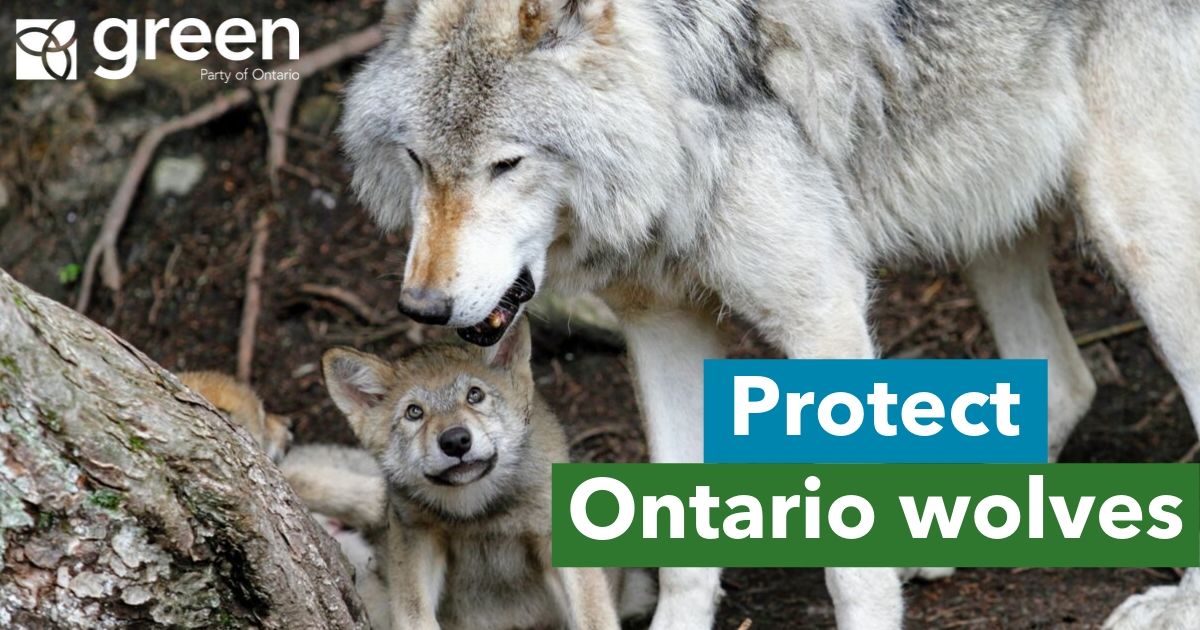
Petition: Protect Ontario’s Wolves

Exposing the Big Game's avatarCommittee to Abolish Sport Hunting Blog

The Ford government is declaring open season on wolves and coyotes with an unscientific plan that is contradicted by even its own research.

Under the guise of moose conservation in northern Ontario, the government wants to drastically relax hunting restrictions for wolves and coyotes.

The result could be a devastating loss of predator species, with major ecosystem-wide impacts that hurt the health of our environment.

Scientists agree this one-dimensional strategy won’t help moose.

And the Ford government is removing all tag and reporting requirements, so we won’t even know the full impact of increased hunting.

If we are serious about protecting moose, then we need an evidence-based wildlife management strategy that deals with all the factors affecting moose decline, including climate change, habitat loss, diseases, and calf hunting.

The public consultation ends September 26th.

Join us in opposing these unethical and unscientific changes to wolf and coyote hunting.

Petition here:…

View original post 1 more word

Lion trade: The secret threat faced by SA’s tourism industry

TRAVEL NEWS / 17 SEPTEMBER 2019, 4:30PM / IOL SUPPLIED

A recent study has shown that nearly half of the captive lion facilities in SA are directly linked to tourism through offering one or more unethical activities. Picture: Supplied

Annually, thousands of tourists flock to South Africa to experience our unique wildlife. But behind this booming industry is an ugly truth, many wildlife encounters support the mistreatment of iconic species, such as lions.

Tourism plays a vital role in job creation and contributed over R130-billion to the economy in 2017, about 2.9% of the total gross domestic product (GDP).

However, exploitative wildlife interactions such as cub petting, walking with lions and the associated volun-tourism sectors are all closely linked to the captive predator breeding, canned hunting and lion bone trade in South Africa. All of which has the potential to drastically damage South Africa’s reputation as a tourist destination.

A recent study has shown that nearly half of the captive lion facilities in South Africa are directly linked to tourism through offering one or more of these unethical activities, explained Fiona Miles, country director of FOUR PAWS in South Africa, one of the largest national animal welfare organisations fighting for the protection of big cats.

Dragging down the South African name

RELATED ARTICLES

“Although global trends in responsible tourism are showing that tourism is moving away from such exploitative captive wildlife interactions, many tour operators at home and abroad continue to promote these activities to their clients,” said Miles.

“Local and international visitors carry on supporting hands-on captive wildlife facilities either through a lack of awareness or purely to get that perfect wildlife selfie.”

In addition, the captive lion trade has the potential to tarnish South Africa’s reputation as a conservation leader.

A recent Legacy Report of the Portfolio Committee on Tourism in the Fifth Parliament on the effects of wildlife interaction found the safari niche market has been marred by the growth of animal interactions and canned hunting, which have “damaged the country’s brand as a champion of wildlife conservation”.

According to a report by the South African Institute of International Affairs on the economics of captive predator breeding in South Africa, our tourism brand value could potentially be negatively affected by as much as R54 billion loss in revenue over the next decade, if the captive lion breeding industry is allowed to thrive.

Take a stand

ADVERTISING

But there is a way to prevent further damage to our image as a tourism destination, believes Miles, and this starts with ending the demand for these devastating activities.

“Collectively, we need to stop supporting any type of cub petting, walking with predators or associated volunteering options, whether this involves lions, tigers, or cheetahs, as none of these activities support conservation of the species in the wild, as many facilities would like you to believe,” added Miles.

“It is also time for all of the establishments offering these activities to put a stop to it.”

This is why FOUR PAWS is challenging both the tourism industry and the public to commit to their Lion Longevity Oath: A commitment to end all support of activities and interaction with captivate lions and raise awareness of lion trade and canned lion hunting.

Six major tour operator companies have already signed the oath in against visiting establishments where lion cub and other animal interactions take place.

Trophy hunting is not sustainable

Exposing the Big Game's avatarCommittee to Abolish Sport Hunting Blog

Ross Harvey
| 19th September 2019
Lion
The arguments for trophy hunting contained within a recent letter published in the journal Science simply don’t stack up.

A new letter published in Science argues that banning trophy hunting imperils biodiversity.

The letter’s authors present arguments which, to their collective mind, offer a compelling scientific case for trophy hunting, even if they find it repugnant.

Persistent caveats

The letter aims to bolster its ostensible scientific strength through a supplementary list of 128 signatories. The inclusion of these 128 signatories constitutes a fallacious appeal to authority. It is indicative of a strange but prevalent view that simply because a scientist makes a statement, that statement is somehow imbued with scientific rigour.

But a statement in speculation remains a statement in speculation regardless of whether it is made by a scientist.

Moreover, many of the names on the list of 128 belong to people…

View original post 1,429 more words

A sliver of the atmosphere is about to cause big problems on Earth

Exposing the Big Game's avatarThe Extinction Chronicles

That percentage of CO2 isn’t as small as you think.

Earth
By Jason West

 on 

Filed Under Climate CrisisEnergy & Environment

I heard that carbon dioxide makes up 0.04% of the world’s atmosphere. Not 0.4% or 4%, but 0.04%! How can it be so important in global warming if it’s such a small percentage?

I am often asked how carbon dioxide can have an important effect on global climate when its concentration is so small — just 0.041% of Earth’s atmosphere. And human activities are responsible for just 32% of that amount.

I study the importance of atmospheric gases for air pollution and climate change. The key to carbon dioxide’s strong influence on climate is its ability to absorb heat emitted from our planet’s surface, keeping it from escaping out to space.

“Keeling Curve”
The “Keeling Curve,” named for scientist Charles David Keeling, tracks the accumulation of carbon…

View original post 1,037 more words

Green new ride: 2020ers race toward an electric car future.

Exposing the Big Game's avatarThe Extinction Chronicles

Trump haeas other ids.

The candidates’ proposals set up a clash with the president, who has mocked electric cars and tried to deregulate the industry to allow vehicles to pollute more.
Image: Dem's Green New ride

Adrian Lam / NBC News

Green new ride: 2020ers race toward an electric car future. Trump has other ideas.

The candidates’ proposals set up a clash with the president, who has mocked electric cars and tried to deregulate the industry to allow vehicles to pollute more.
Image: Dem's Green New ride

Adrian Lam / NBC News

View original post 3,256 more words

U.S., Canada have lost 3 billion birds since 1970. Scientists say ‘nature is unraveling.’

Exposing the Big Game's avatarThe Extinction Chronicles

“It’s an empty feeling in your stomach that these same birds that you grew up with just aren’t there anymore.”
Image: Common Nighthawk

The population of birds at the start of breeding season in the U.S. and Canada has fallen from just over 10 billion to a little more than 7 billion in the last 50 years. Above, a common nighthawk.Joaquin Paredes / 500px / Getty Images/500px Plus

View original post 1,074 more words

Ted Nugent says new Michigan hunting rules will trigger ‘widespread civil disobedience’

Exposing the Big Game's avatarCommittee to Abolish Sport Hunting Blog

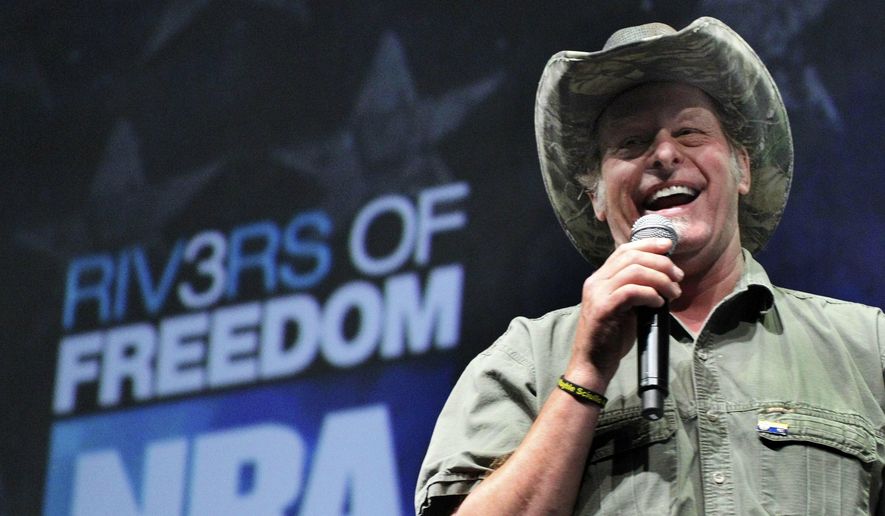
In this May 1, 2011, photo, musician and gun rights activist Ted Nugent addresses a seminar at the National Rifle Association's 140th convention in Pittsburgh. (AP Photo/Gene J. Puskar)
In this May 1, 2011, photo, musician and gun rights activist Ted Nugent addresses a seminar at the National Rifle Association’s 140th convention in Pittsburgh. (AP Photo/Gene J. Puskar) more >
– The Washington Times – Wednesday, September 18, 2019

Ted Nugent took aim Tuesday at a new rule prohibiting baiting and feeding deer and elk in Michigan, insisting the ban will lead to “widespread civil disobedience” among fellow hunters.

Mr. Nugent, a Michigan-born rock guitarist and longtime board member of the National Rifle Association, testified in front of a state House committee in support of a bill that would overturn the recently enacted rule against baiting game.

“This is a Rosa Parks moment,” Mr. Nugent told reporters afterward, according to the Detroit Free Press. “The law is wrong, the law is bad, the law is illegal.”

Backed by both…

View original post 96 more words

We’re losing species at shocking rates – so why is conservation failing?

Exposing the Big Game's avatarCommittee to Abolish Sport Hunting Blog

One million plant and animal species are threatened with extinction, yet governments are failing to stem the tide

A mother orangutan cuddles her baby daughter, in Kalimantan, Indonesia
 A mother orangutan cuddles her baby daughter, in Kalimantan, Indonesia. Photograph: Vier Pfoten/Four Paws/Rhoi/REX/Shutterstock

The number of mammals, insects, amphibians, fish and birds is in steep decline, the world’s forests are on fire and the abundance of life is diminishing at rates unprecedented in human history. The TV screens are full of images of gorgeous wildlife but one million plant and animal species are threatened with extinction and governments appear paralysed.

Faced with stark and mounting evidence of nature’s precipitous decline, leading natural and social science researchers, philosophers, anthropologists and conservationists have come together to ask why conservation is failing, and to call for an urgent re-think of how the natural world should be protected.

View original post 1,149 more words

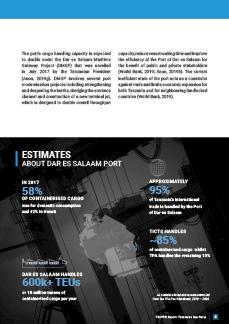
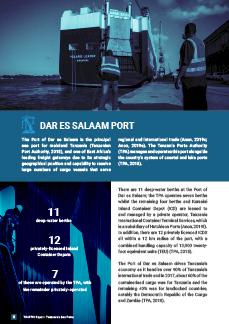
countering wildlife trafficking through Tanzania’s sea ports

Published 19th September 2019

Countering wildlife trafficking through Tanzania’s ports

Wildlife trafficking is the illegal cross-border trade in live wildlife, wildlife products or their derivatives, both of fauna and flora. It is one of the most lucrative types of transnational crime along with the illegal trade in drugs, counterfeit goods and human trafficking. This report was prepared in advance of a three-day workshop organised in Dar Es Salaam, Tanzania by TRAFFIC, UNDP and UNODC, which brought together key port stakeholder groups to discuss ways to counter wildlife trafficking through Tanzania’s sea ports.

Countering wildlife trafficking through Tanzania’s ports

Report author(s):
Leanne Little

Publication date:
September 2019

About Wildlife TRAPS

The USAID-funded Wildlife Trafficking, Response, Assessment and Priority Setting (Wildlife TRAPS) Project is an initiative that is designed to secure a transformation in the level of co-operation between an international community of stakeholders who are impacted by illegal wildlife trade between Africa and Asia. The project is designed to increase understanding of the true character and scale of the response required, to set priorities, identify intervention points, and test non-traditional approaches with project partners.

UNDP-GEF Reducing Maritime Trafficking of Wildlife between Africa and Asia project

Implemented by UNDP between 2018 and 2021, this project under the GEF-financed, World Bank led Global Wildlife Program aims to curb maritime wildlife trafficking, targeting key routes and transit points between Africa and Asia. The GEF launched the 7-year Global Wildlife Program (GWP) in June 2015, bringing together funding from the GEF and a wide range of partners, including the Governments of participating countries, GEF Agencies, bilateral and multilateral donors, foundations, the private sector and civil society. Twenty GWP national projects are currently under implementation in 19 partner countries across Africa and Asia, including Tanzania.

Fewer young people are taking up hunting, which has hunters worried about the sport’s future

Exposing the Big Game's avatarCommittee to Abolish Sport Hunting Blog

Numbers show sharp drop in the 25-34 age group, which used to be the largest share of the hunting population

Tim Brass, state policy and field operations director with Colorado Backcountry Hunters and Anglers, wades back with his first duck of the day at sun up at Jackson Lake State Park on Nov. 16, 2018, near Orchard, Colorado. (Joe Amon, The Denver Post)

As leaves begin to turn and Colorado heads into the heart of the fall hunting season, recreational hunters and those who make their livelihood off an industry with a $26 billion annual impact on the American economy are wondering why their numbers are declining, especially among millennials.

There were 11.5 million hunters in 2016, according to the most recent figures published by the U.S. Fish and Wildlife Service, representing a decline of 2.2 million from 2011.

View original post 1,031 more words