Exposing the Big Game

Forget Hunters' Feeble Rationalizations and Trust Your Gut Feelings: Making Sport of Killing Is Not Healthy Human Behavior

Exposing the Big Game

Rogue Pack wolves strike again


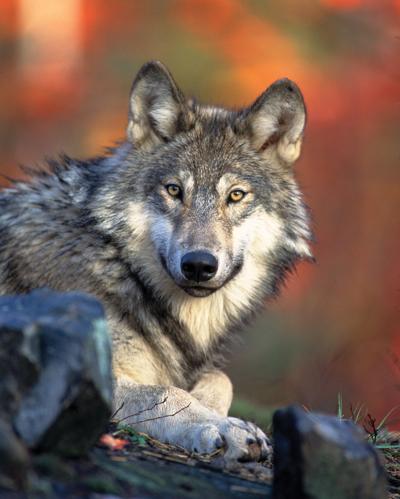
Wolf OR-7 is pictured in southwest Oregon. AP Photo / USFWS

The Oregon Department of Fish and Wildlife has confirmed new kills by a group of Southern Oregon wolves called the Rogue Pack.

A 300-pound calf was found dead by a ranch hand last Friday, and a second 300-pound calf was found dead Saturday in the Rancheria area of Jackson County near the border with Klamath County, according to a press release issued by ODFW.

The Rogue Pack, which includes the famous wandering wolf OR-7, is suspected of killing more than a dozen livestock animals in western Jackson and eastern Klamath counties, according to ODFW.

The calf found dead at about 9 a.m. Friday was in a grass pasture on private land. Most of the muscle tissue from the hind legs as well as most organs had been consumed. The 5-month-old calf was estimated to have died within 12 hours of being discovered dead, ODFW said.

The calf had bite wounds on its legs, abdomen, shoulders and back. Bite marks, bleeding and muscle tissue trauma were similar to injuries observed on other calves attacked by wolves, the agency said.

“This depredation is attributed to wolves of the Rogue Pack,” ODFW said in a summary of its investigation.

The second calf was about 7 months old and was also in a pasture on private land. A ranch hand found its body at about 7 a.m. Saturday, and ODFW believes it also died within 12 hours of being found.

Unlike the first calf, the second calf’s carcass was largely intact, with about 95 percent of the muscle tissue and hide still remaining, ODFW said.

ODFW’s report attributed the second killing to the Rogue Pack, as well.

Ranchers in the Rogue Pack’s range have used a variety of tactics to try and fend off the wolves, including guard dogs, electric fences, lights, bright flags, noisemakers and a flailing, inflatable dancer like those sometimes used to attract people’s attention at car dealerships.

The devices have scared off wolves at first, until they become used to them.

Wolf reintroduction group confident of getting measure on ballot

Exposing the Big Game's avatarThe Extinction Chronicles

Gray wolves like this one could be reintroduced to Colorado

Gray wolves like this one could be reintroduced to Colorado if an initiative is placed on the November 2020 ballot and voters approve it. The Rocky Mountain Wolf Action Fund, leading the petitioning, says it has 170,000 signatures now and needs roughly 200,000 to confidently get the initiative placed on the ballot.

The Rocky Mountain Wolf Action Fund is close to having enough signatures to get an item placed on the ballot for the November 2020 election that would ask voters to allow the reintroduction of wolves to Colorado.

Rob Edward, president of the board for the fund, told the Montrose Daily Press that, despite a short pause in the early fall from gathering signatures to raise more funds, the group has collected roughly 170,000 signatures.

“We’ve got a whole bunch of (signature) booklets out right now,” he…

View original post 425 more words

Another hunter myth: Americans are losing touch with nature

Exposing the Big Game's avatarCommittee to Abolish Sport Hunting Blog

By John W…

View original post 789 more words

‘The climate doesn’t need awards’: Greta Thunberg declines environmental prize

The teen activist implored politicians and people in power to ‘listen to the best available science’ in an Instagram post

Greta Thunberg, teen climate activist, was honoured by the Nordic Council with an environmental award which she declined.
 Greta Thunberg, teen climate activist, was honoured by the Nordic Council with an environmental award which she declined. Photograph: Canadian Press/Rex/Shutterstock

The Swedish climate activist Greta Thunberg has refused to accept an environmental award, saying the climate movement needed people in power to start to “listen” to “science” and not awards.

The young climate activist, who has rallied millions to her “Fridays for Future” movement, was honoured at a Stockholm ceremony held by the Nordic Council, a regional body for inter-parliamentary cooperation.

She had been nominated for her efforts by both Sweden and Norway and won the organisation’s annual environment prize.

But after it was announced, a representative for Thunberg told the audience that she would not accept the award or the prize sum of 350,000 Danish kroner (about $52,000 or €46,800), the TT news agency reported.

She addressed the decision in a post on Instagram from the United States.

“The climate movement does not need any more awards,” she wrote.

“What we need is for our politicians and the people in power start to listen to the current, best available science.”

While thanking the Nordic Council for the “huge honour”, she also criticised Nordic countries for not living up to their “great reputation” on climate issues.

“There is no lack of bragging about this. There is no lack of beautiful words. But when it comes to our actual emissions and our ecological footprints per capita … then it’s a whole other story,” Thunberg said.

Still only 16 years old, Thunberg rose to prominence after she started spending her Fridays outside Sweden’s parliament in August 2018, holding a sign reading “School strike for climate”.

‘National tragedy’: Hundreds of koalas feared dead in Australian wildfire

Exposing the Big Game's avatarThe Extinction Chronicles

‘We’re not holding out too much hope,’ says conservationist after lightning causes major blaze

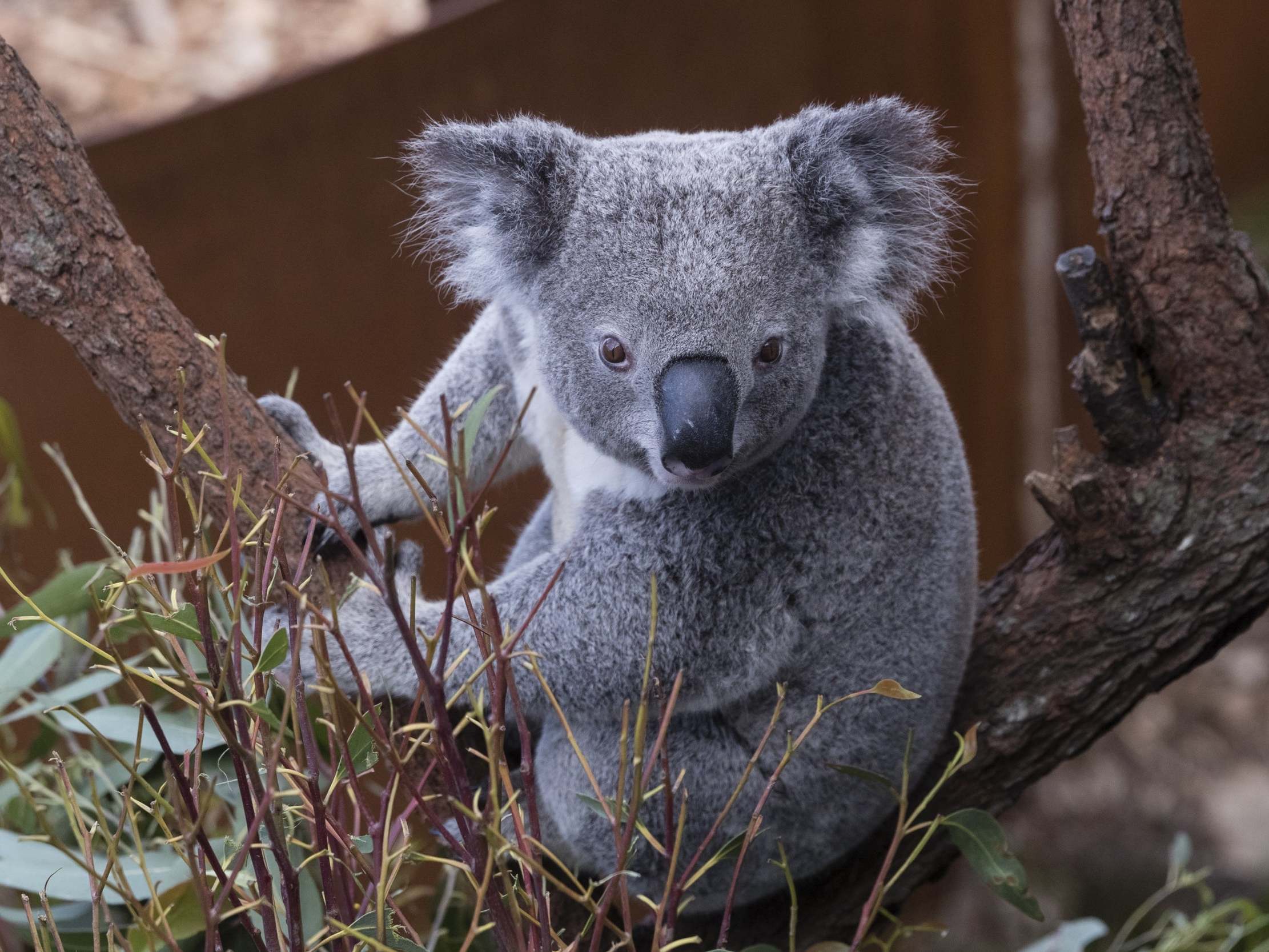
Conservationists fear 350 animals could be killed (file photo)
Conservationists fear 350 animals could be killed (file photo) ( Getty Images )

Hundreds of koalas are feared to have died in wildfires raging along Australia’s east coast.

The fire started on Friday after a lightning strike hit a forest in the state of New South Wales.

The blaze has since burned through 4,900 acres.

Sue Ashton, the president of Port Macquarie Koala Hospital, said two-thirds of the area, 300km north of Sydney, was koala habitat.

“If we look at a 50 per cent survival rate, that’s around about 350 koalas and that’s absolutely devastating,” the conservationist said.

“We’re hoping it’s not as bad as that, but because of the intensity of the fire and the way koala’s behave during fire, we’re not holding out too much hope.”

She added: “It’s a national…

View original post 59 more words

November is the Worst Month for Traffic Accidents with Animal-Related Collisions

PUBLISHED MONDAY, OCTOBER 28, 2019 AT 11:47 AM

48

November is the Worst Month for Traffic Accidents with Animal-Related Collisions

By Adam Estabrook

Come November, a month of holiday travel and bad weather, we’ll see busy roads and busier schedules. And according to the annual report on animal collisions by North Carolina’s Department of Transportation, it’s also a very dangerous time to be a deer.

For the years 2016 to 2018, November sees the most animal-related car crashes, with the month alone accounting for 21.9% of the total combined reported animal-related crashes. While the gathered data does not differentiate between the kinds of animals involved in these crashes, data analyses show that approximately 90% of all reported animal-related crashes involve deer.

The annual report contains information such as what months and times of day (or night) the most animal-related crashes occur, and which counties experience the greatest number of them.

Wake County sees the most crashes out of the 100 counties, with 822 in 2017, having a population of 1.072 million in 2017. While this yields one animal-related crash per 1,304 people, population is far from the only factor. Places with fewer roads and drivers see significantly fewer animal-related crashes, a story common in the western part of the state.

As for Watauga, while our 2017 figure was a mere 77 crashes (less than a tenth of Wake County), this is still one crash per 715 people. So while Wake County is far and away the most animal-unfriendly from a raw numbers perspective, Watauga is still a little more deadly per capita. Of course, any number of factors outside population may play into the figure, from how frequently our roads are traveled to nighttime visibility, to road culture. Likewise, more traffic through a particular county may increase the likelihood of animal-related crashes in that area.

Given Watauga’s close relationship to nature, the danger of animal collisions is all the more pronounced. Deer presence on roads is heightened during fall and early winter months, due to the hunting and mating seasons – by no coincidence are the months of October through January the most crash-prone, containing 56.6% of the year’s total animal-related crashes. Furthermore, the evening hours between 5 PM and midnight account for half of these crashes.

Fortunately for Watauga, the injuries suffered from these crashes have been non-fatal, with 7 injuries between 2016 and 2018 (out of a total of 220 incidents).

As November draws near, the Department of Transportation offers helpful tips to motorists that may decrease the risk to both themselves and the animals during their travels:

  • In heavily wooded areas, and areas with deer crossing signs, slow down, especially during late hours.
  • Wear a seat belt. Most deer-vehicle related injuries occurred while drivers or passengers were not wearing a seat belt.
  • Bridges, overpasses, railroad tracks, streams, and ditches see the most deer activity. Be especially vigilant around these areas.
  • When possible, drive with high beams on, and watch for eyes reflecting in the headlights.
  • Deer travel in groups. If you see just one, be on the lookout for another.
  • To scare oncoming deer, slow down and blow your horn in one long blast. Do not rely on deer whistles or reflectors, as these are unproven to be effective.
  • Maintain a safe distance between your vehicle and others. If a car ahead of you hits a deer, you could also become involved in the crash.
  • Do not swerve to avoid deer. This could cause a more serious crash with other vehicles, or cause your vehicle to flip.
  • Lastly, if you do strike a deer, do not touch it. Frightened and wounded deer can injure you or itself further. If possible, pull the car off the road and call 911.

So when traveling for the holidays, be mindful of the heightened deer activity, both for their safety and for yours. The annual report by the North Carolina Department of Transportation can be found here.

Spartanburg man dies in apparent deer hunting accident

Exposing the Big Game's avatarCommittee to Abolish Sport Hunting Blog

https://www.wspa.com/news/death-investigation-underway-after-deer-hunting-accident-in-spartanburg-co/?fbclid=IwAR0xNTbEYb_Kdxvnd6ry0oVPWUPCUFbf196k7SJCwRSsvZNzwC0KG51dQA4

SPARTANBURG Co., S.C. (WSPA) — The coroner said a Spartanburg man died in an apparent deer hunting accident.

The victim is identified as Douglas E. Parton, 66, of Valley Street in Spartanburg by the Spartanburg County Coroner’s Office.

Coroner Rusty Clevenger said Parton was hunting Monday near Cowpens Clifton Road and Shady Acres Road.

A family member received a message from Parton’s phone around 6:10 p.m. Monday, Clevenger said. After Parton did not return later that evening, a family member searched for him and found him dead.

Clevenger said Parton was hunting in a tree stand and apparently fell from the stand, which was about 32 feet high.

Parton was pronounced dead at 10 p.m. Monday.

Clevenger said an autopsy found that Parton received head injuries consistent with his fall from the tree stand.

His death has been ruled an accident.

View original post

CODY MAN LOSES HUNTING PRIVILEGES FOR KILLING WOLF, BRINGING IT TO WYOMING FROM CANADA

Exposing the Big Game's avatarCommittee to Abolish Sport Hunting Blog

A Wyoming man will lose his hunting privileges nationwide after pleading guilty to illegally transporting wildlife, according to federal court records.

James Sessions of Cody, 59, pleaded guilty to one misdemeanor count of violating the Lacey Act during a hearing Monday before U.S. Magistrate Judge Teresa McKee in Lander, according to court records and Wyoming U.S. Attorney spokesman Mark Trimble.

Sessions killed a wolf in British Columbia and brought it to Wyoming, Trimble said.

The Lacey Act prohibits importing, exporting, transporting, selling, acquiring or buying in interstate or foreign commerce any wildlife in violation of any law in any state or in violation of any foreign law. The maximum penalty is up to one year imprisonment and up to a $10,000 fine.

McKee handed down to Sessions a six-month jail sentence and a $1,000 fine, and suspended it if he meets these conditions:

  • Lose…

View original post 75 more words

Federal judge renews ban on gillnet fishing in Nantucket area to protect whales

By  Oct. 29, 2019 17:43 GMT

A federal judge in Washington, DC, on Monday ruled that the US’ National Marine Fisheries Service (NMFS) violated the Endangered Species Act, Magnuson Stevens Act, and other federal laws when it removed a roughly 20-year-old ban last year on gillnet fishing within a 3,000 square mile area south and east of the Massachusetts island Nantucket.

US District Court judge James Boasberg has renewed the ban in order to protect North Atlantic right whales, the Boston Globe reports. He said, in his 32-page ruling, that his decision was “not a close call” and quoted Herman Melville’s “Moby Dick”.

“Demonstrating that ‘there is no folly of the beasts of the earth which is not infinitely outdone by the madness of men’ … humans have brought the North Atlantic right whale to the brink of extinction,” he wrote.

Boasberg’s ruling does not apply to the scallop industry, which will be allowed to continue using its dredging equipment in the area, as it has not been found to harm the marine mammals.

The ruling echoed concerns laid out in a recent whistleblower complaint that suggested NMFS misrepresented the views of its own scientists to justify the action, the newspaper noted.

The agency had argued that it wasn’t required to conduct a deeper review and consult with all of its branches, though Boasberg disagreed.

NMFS’ “duty was clear,” he wrote in his opinion. Once scientists in the agency make “the determination that its action ‘may affect’ a listed species, it is without discretion to avoid consultation with the expert agency as to the effects of the action on the listed species. The court cannot excuse this breach.”

Eulogy for a Duck Dynasty

Exposing the Big Game's avatarCommittee to Abolish Sport Hunting Blog

The 52-year-old Minnesota Waterfowl Association folded last month amid a long decline in state duck hunter numbers

https://www.outdoorlife.com/eulogy-for-duck-dynasty/?fbclid=IwAR2wVj46c6DtU1402ZY74gEbp955yb-EJzLn8BkmHFjlydYWiZZrXNuEUVI
Minnesota Waterfowl Association
“The old duck men are fading into the sunset.”Minnesota Waterfowl Association

The Minnesota Waterfowl Association, one of the oldest, largest, and most effective state-based conservation groups in the nation, has ended its 52-year run.


Article Continues Below:

The MWA announced its dissolution in a message posted on its website last month; the doors closed Sept. 30.

“Times have changed in the waterfowl and conservation world, and the old duck men are fading into the sunset,” the group announced in the statement. “Due to an aging and declining use base in waterfowl hunting and conservation a trend has developed over the last decade or so which points to the reality of the time. Declining duck populations, Duck Stamp sales, access, and declining membership are…

View original post 1,262 more words