A wet market, where animals are freshly slaughtered rather than chilled was identified as the source of the coronavirus outbreak. But experts have long warned of dangers
People buy meat at a butchers’ shop at the Bowrington Road food market in Hong Kong. Photograph: Grant Rooney/Alamy
Each evening, under cover of darkness, hundreds of live pigs from farms across China are trucked through the rusting gates of a cluster of mildew-stained quarantine and inspection buildings in the Qingshuihe logistics zone in Shenzhen.
Overnight they are checked for illness, primarily the African swine fever (ASF) that is expected to kill off a quarter of the world’s pigs, and reloaded on to ventilated trucks with dual mainland China and Hong Kong licence plates.
Q&A
Why are we reporting on live exports?
Show
Before sunrise the caravan makes its way five-and-a-half miles south to the border at Man Kam To, a small customs and immigration checkpoint, where the pigs go through further visual health checks before crossing into Hong Kong.
They are bound for Sheung Shui slaughterhouse, the largest of three abattoirs in the territory. Once there they will be checked again before being dispatched in less than 24 hours under new rules meant to prevent the spread of ASF.
It’s a lot of effort to get fresh meat from the 1,400 pigs that cross the border each day.
Sheung Shui slaughterhouse in Hong Kong is the largest of three abattoirs in the territory. Photograph: Getty
The appetite for freshly slaughtered ‘warm meat’
For various reasons, the Chinese prefer freshly slaughtered pig, chicken and beef over chilled or frozen meat that has been slaughtered before being shipped.
That desire is at the heart of why diseases such as avian flu in poultry and ASF have been so difficult to eradicate, with huge movements of live animals from all over the country – from farm to slaughterhouse to market – on a daily basis making controlling the spread of disease incredibly difficult.
A recent coronavirus outbreak in China has been linked to a wet market in Wuhan, eastern China. Like other respiratory illnesses, the disease was initially transmitted from animal to human, but is now being passed human to human.
But despite awareness of the issues, the markets are a huge part of Chinese life. On a busy morning at a so-called “wet market” in the Shajing area, the oldest inhabited and very Cantonese part of Shenzhen, hundreds of shoppers arrive soon after daybreak. Slabs of pork hang from the stalls and various cuts are piled on the counters amid lights with a reddish glare and the occasional buzzing of flies.
Just a few minutes away at the nearby Walmart, where there are also options for fresh, chilled and frozen meat, the customer flow at this time of day is only a trickle compared to the wet market. It has your average western supermarket vibe – white daylight lighting, sterile and clean.
Staff at the meat counter in Walmart and at the stalls in the wet market both say the meat comes in from the same slaughterhouse around 2am. So why the huge difference in foot traffic?
Molly Maj, a corporate communications representative for Walmart, says “the average customer in China still prefers fresh meat” over other options.
One reason for the demand for wet markets is that widespread refrigeration only came to China in recent years. While most urban homes now have refrigerators, many in rural areas and low income urban renters still do not own one, or only a mini-fridge if they do.
‘Wet’ markets are a huge part of life in China but have been linked to disease outbreaks. Photograph: Alamy
Advertisement
The habit of buying perishable food for daily use is still prevalent in many consumers, particularly older shoppers who grew up without refrigerators. They say they can tell the quality of fresh meat by its smell, colour and how it feels to the touch.
“When I’m talking with my students I say: ‘The term warm meat, fresh meat, sounds disgusting to me, I grew up [in Germany] with chilled meat, that’s all I know,” Dirk Pfeiffer, a professor of veterinary medicine at City University in Hong Kong and an expert on diseases related to animal husbandry, says.
Share your story
Share your experiences
If you or someone you know has expertise in this field, we would like to hear from you. You can get in touch by filling in the form below, anonymously if you wish. Only the Guardian can see your contributions and one of our journalists may contact you to discuss further.
Tell us
“So I ask them why and they come up with all sorts of vague things like the soup tastes better or that it is a trust issue, knowing it is a live animal at the other end and not some diseased animal,” he says. “It’s all very subjective.”
An ‘utter disaster’ for disease
Wet markets are central to the perception that fresh meat is better, says Pfeiffer. They evoke nostalgia among shoppers, many of whom come from rural areas where all they knew were wet markets and no refrigeration.
Where a wet market feels familiar a supermarket can seem alien and out of place.
“I actually believe that it is an important thing for the older generation to go to the wet market and chat,” says Pfeiffer. However, the way the animal trade operates in China is “an utter disaster”, for animal disease and welfare, he adds.
‘It is an important thing for the older generation to go to the wet market and chat’ – Prof Dirk Pfeiffer. Photograph: Alamy
A year ago, before rising concerns about the spread of ASF, nearly 4,000 pigs crossed daily with less scrutiny. Pigs were held in dismal conditions for as long as five days before being slaughtered on the Hong Kong side, greatly enhancing the possibility of disease transmission, says Pfeiffer.
The recent shortages due to the ASF outbreak have doubled and tripled prices for fresh pork at wet markets across Hong Kong. Farms in Hong Kong itself can usually supply about 300 pigs a day. Land use and environmental restrictions prevent any increase in production. The result is further worries about Hong Kong’s reliance on mainland China beyond its water and energy dependence.
“Many years ago, we had imports from all over Asia of live animals, but eventually the entire supply was monopolised by mainland China,” said Helena Wong, a member of Hong Kong’s legislative council panel on food safety and environmental hygiene. “They killed all their competitors and monopolised the supply of live pig and chicken.”
More than 6,000 pigs at the Sheung Shui slaughterhouse were culled in May 2019 after ASF was found among animals brought in from China. Hong Kong’s legislative council is now trying to figure out how much it owes traders and farmers in compensation.
Massive culls of poultry due to avian flu in imported mainland chickens in the last decade also led to large compensation bills and, eventually, to ending live chicken imports in early 2016.
Pigs about to be buried alive in a pit after an outbreak of African swine fever in Guangxi in February 2019. Photograph: Reuters
Advertisement
“We as taxpayers have to give that money,” said Wong. “So now we are in a big crisis because in the past few years we have experienced avian flu and now African swine fever.”
A future beyond ‘warm meat’ for Hong Kong
Disease outbreaks have raised wider questions about the sustainability of Chinese consumers’ appetite – both on the mainland and in Hong Kong – for what is often called “warm” meat.
For Deborah Cao, a professor at Griffith University in Australia and an expert on animal protection in China, a deeper issue driving the live animal trade is a cultural disconnect about animal welfare.
“The main problem is the indifference or perception of people who simply regard animals as food, tools, or as things that people can do anything they want to,” she said.
“In particular, there is no perception of farm animals as having feelings, or being capable of feeling pain or suffering.”
Hong Kong may find it difficult to switch to a different model. There is almost no chance of farm expansion to support larger scale production within Hong Kong and, although the government is looking at possibilities of live imports from other Asian countries, the ports do not have adequate facilities to cope with large numbers.
“To a large extent, if we insist on fresh food, we have to rely on China,” said Wong. “If we can change and make certain concessions, Hong Kong has always been an open market for importing food items from many parts of the world. It is only for the provision of live animals that we are monopolised by the mainland farms.”
(CNN)The US Centers for Disease Control and Prevention has ordered a federal 14-day quarantine for the 195 Americans onan Air Force base in California recently evacuated from Wuhan, China, the epicenter of the coronavirus outbreak.
It’s the first such order in more than 50 years, made as officials work to contain the outbreak that has so far killed at least 213 people and infected more than 9,000 others in China, most of them in Wuhan. Outside mainland China, there are 140 confirmed cases, including six in the United States.
“While we recognize this is an unprecedented action, we are facing an unprecedented public health threat, and this is one of the tools in our toolbox to mitigate the potential impact of this novel…
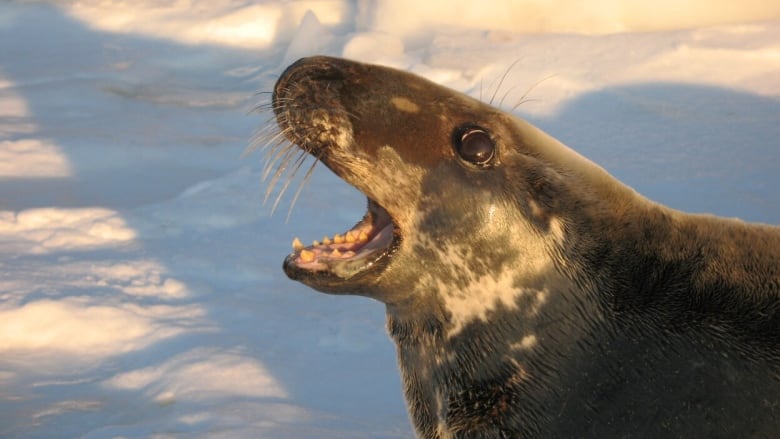
Alexis Boudreault received 26 stitches after being attacked by the grey seal
CBC News ·
The grey seal charged at Alexis Boudreault after his hakapik was confiscated. (Radio-Canada)
A 29-year-old man from the Magdalen Islands had to be airlifted to a hospital after he was attacked by a 226 kilogram (500 pound) seal on Tuesday.
Alexis Boudreault was flown from Nova Scotia’s Pictou Island, where the attack occurred, to a hospital in Charlottetown, where he received 26 stitches. He was able to return home two days later.
Boudreault was out on a seal hunting expedition with several others and armed with a hakapik — a club with a hammer head and hook, designed for seal hunting.
His weapon was confiscated by agents from the Fisheries and Oceans Canada because it was not up to code.
The captain of the expedition, Denis Éloquin, said they were told that the length of their hakapiks did…
GREAT FALLS – A Red Flag Warning has been into effect for Central and Eastern Montana.
The Red Flag Warning went into effect around 3 am with expected wind gusts of at least 75 miles per hour.
The warning will last over the next two days and during this span, areas with little to no snow cover will be at an increased risk of being able to catch a spark.
“We have to talk about fire danger in the middle of Winter here with these Chinook wind events but it’s definitely not something that happens every year that’s for sure,” said Francis Kredensor, Meteorologist, National Weather Service Great Falls.
This week we already saw a 22-acre grass fire start-up and the strong winds will also be putting high profile vehicles at risk when traveling on highways.
If you are traveling this weekend remember to take extra precautions so you can avoid any unnecessary risks.
A couple of easy things to remember for this weekend is to avoid doing any burning during the strong winds, prepare an emergency kit should a fire spark in your area and prepare a family communications plan in case of an emergency.
9 pm: Russia reports its first two cases of coronavirus
Russia’s Deputy Prime Minister Tatiana Golikova told reporters on Friday that the country had confirmed its first two cases of the coronavirus.
The two people that contracted the virus were Chinese citizens who had been isolated, Golikova said, before adding all flights to China from Russia would be halted from 5 a.m. Beijing time on Saturday.
However, national airline Aeroflot will continue to operate as normal.
7:50 pm: Singapore bans Chinese travelers
Singapore’s health ministry has banned entry to all Chinese visitors and foreigners with a recent history…
TOKYO (Reuters) – Two of three Japanese people evacuated from China and found to be infected with a new coronavirus had not shown symptoms, the health ministry said on Thursday, adding to worries about the fast-spreading virus and its economic fallout.
The three cases were among 206 Japanese people who were evacuated to Tokyo on Wednesday from the Chinese city of Wuhan, the epicenter of the epidemic that has killed 170 people in China and infected nearly 8,000.
While the vast majority of cases have been in China, more than 100 cases have also appeared in about 15 other countries. Later on Thursday, a Chinese man in his 50s, who had previously stayed in Wuhan, was found be infected in the western prefecture of Mie, Kyodo news agency reported.
A Chinese woman in her 20s, who had previously stayed in Wuhan…
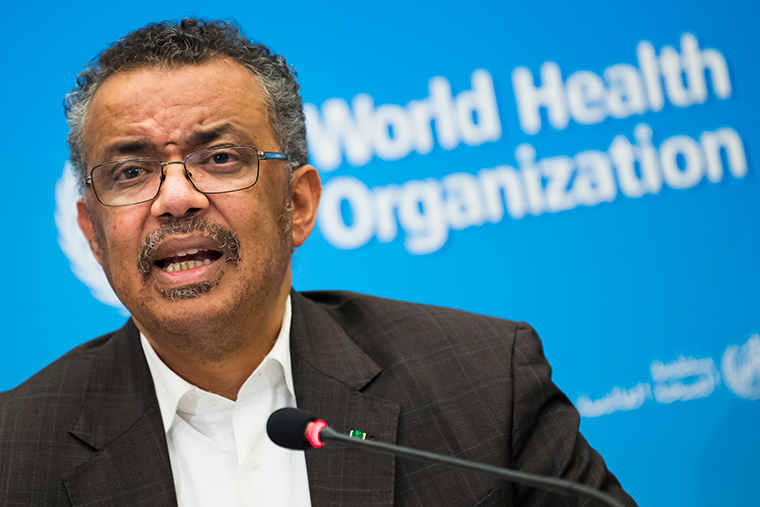
Tedros Adhanom Ghebreyesus, Director General of the World Health Organization Jean-Christophe Bott/Keystone/AP
The World Health Organization has declared the novel coronavirus outbreak a public health emergency of international concern, after an emergency committee reconvened Thursday in Geneva.
Last week, the organization said the virus did not yet constitute the emergency declaration. But with rising numbers and evidence of person-to-person transmission in a handful of cases outside of China, WHO leadership called the committee back together due to the “potential for a much larger outbreak,” WHO Director-General Tedros Adhanom Ghebreyesus told reporters earlier this week.
WHO defines a public health emergency of international concern as “an extraordinary event” that constitutes a “public health risk to other States through the international spread of disease” and “to potentially require a coordinated international response.” Previous emergencies have included Ebola, Zika and H1N1.
PARK CITY — Authorities say if it is a fake post, as they suspect it is, it’s a cruel thing to do to a grieving family.
“It’s pretty heartless if this is, in fact, a fake profile. It is very cruel of someone to put the family through this to create more questions surrounding his disappearance,” said Summit County Sheriff’s Lt. Andrew Wright.
Carl Crumrine, 69, of West Virginia, was with a hunting party in the Lyman Lake area of the Uinta-Wasatch-Cache National Forest in October when he went missing. Crumrine told others that he was going for a walk but did not return to the campsite that evening. He has not been seen since, despite several intense search efforts in the area.
According to a newly unsealed search warrant affidavit, “Carl had kept his…
(CNN)The husband of an Illinois woman with Wuhan coronavirus is now infected with the illness, and is the first confirmed case of person-to-person transmission of the virus in the United States, the US Centers for Disease Control and Prevention announced on Thursday.
“I want to emphasize that the risk of this novel coronavirus to the general public in Illinois remains low,” Dr. Ngozi Ezike, director of the Illinois Department of Public Health, said in a written statement on Thursday. She added that local, state and federal health officials are working to identify people who have had close contact with the case in…










/cdn.vox-cdn.com/uploads/chorus_image/image/66215655/merlin_14665.0.png)


 Exposing the Big Game