Roy Wathen was using a pellet gun to hunt the invasive lizards in Rotonda West on Tuesday; but, someone called 911 to report a man who appeared to have a rifle near Vineland Elementary. The consequences of those actions led to two school lockdowns, dozens of worried parents and terrified students.
“Within a minute,” Wathen said, “there was at least 30 officers surrounding, helicopters flying, it was scary, to say the least.”
Charlotte County Sheriff’s Office deputies detained Wathen for nearly four hours.
“I was embarrassed,” Wathen said. “Very embarrassed.”
Law enforcement placed Vineland and nearby L.A. Ainger Middle School on lockdown. The move made the neighborhood chaotic, parents anxious and students fearful.
“It was kind of bone-chilling,” said Sophie Eichenberger, an L.A. Ainger Middle School…
These members of the genus Homo have long occupied two different branches on the family tree. But now that researchers think these groups interbred, scholars are giving serious consideration to whether we are the same species after all.
Around 200,000 years ago, in what is now northern Israel, a small band of tech-savvy humans dragged home and dismembered a bounty of wildlife. Using exquisitely pointed flint spearheads and blades, they hunted and butchered myriad prey, including gazelles, deer, and now-extinct aurochs, the ancestors of modern cattle.
In the cool, humid climate of the coastal plain, these early Homo sapiens foraged for acorns in nearby forests of oak, olive, and pistachio. They ate the saline leaves of shrubby saltbush and lugged ostrich eggs back to the cave, where they slurped down the yolks.
This vision of the past comes from Haifa University archaeologist Mina Weinstein-Evron. In 2002, she and her colleagues discovered the upper jaw and teeth of a H. sapiens that dated to between 177,000 and 194,000 years old in Israel’s Misliya Cave, with animal bones and sharp tools nearby.
It’s probable, Weinstein-Evron explains, that these humans migrated to the Arabian Peninsula more than 200,000 years ago, trekking along lush corridors out of Africa. “We don’t know how many crossed, and how many of them perished, and how many went back. We only know that these people arrived,” she says.
We also know that they were likely not alone. Based on small finds of teeth and bones from local caves, “we know that the area was inhabited by Neanderthal-like creatures,” or the predecessors of Neanderthals, at that time, says Tel Aviv University anthropologist Israel Hershkovitz, an expert on modern human origins.
While out foraging, H. sapiens may have mated with these Neanderthal-like inhabitants. In this land that later birthed the Bible, they likely knew each other in the Biblical sense.
The Misliya Cave in northern Israel may have seen early human habitation some 200,000 years ago. Reuveny/Wikimedia Commons
The humans* who lived in the Misliya Cave were part of a population that, many scholars suspect, ultimately died out. Later waves of H. sapiens that left the African continent succeeded in reproducing and spreading out. But braided into the story of those human migrations is that of Neanderthals, hominins—members of our family tree closest to modern humans—who may have first evolved in Europe from African ancestors some 400,000 years ago.
Many scientists now suspect that H. sapiens and Neanderthals met and mingled their genes multiple times. Geneticists have documented how Neanderthal genes survive today among modern humans, evidence of some earlier instances of interbreeding.
New studies, made possible in part by computational techniques that enable researchers to analyze huge quantities of genetic data, show that H. sapiens and Neanderthals interbred far more than previously imagined. Indeed, their proclivity for pairing off has led many researchers to question the old dictum that Neanderthals and H. sapiens were separate species.
Such ideas raise questions as to what it really means to be a distinct “species.” They also raise the possibility that perhaps H. sapiens did not outcompete Neanderthals into extinction, as some scientists have suggested. Rather, one species may have simply absorbed the other—and so, Neanderthals, in a sense, could survive in us.
In 1856, in the Neander Valley of Prussia (now Germany), limestone cutters discovered the partial skeleton of a thick-boned, brow-ridged hominin in a cave. A German anthropologist named Hermann Schaaffhausen examined the bones.
Schaaffhausen realized that the skull differed from that of modern humans but concluded it could nonetheless belong to what he called a “barbarous and savage race” of human. However, his contemporary, Irish geologist William King, disagreed.
This fragment, found in what is today Germany, comes from the skull of a Neanderthal. DEA Picture Library/Getty Images
King noted that the skull of this fossil, with its “strong simial [apelike] tendencies” was “generically distinct from Man.” In 1863, King declared it a new species, which he named Homo neanderthalensis.
Scientists have been arguing over whether H. sapiens and H. neanderthalensis are truly separate species ever since. By appearances alone, Neanderthal fossils resemble ours—they are clearly members of our hominin family tree. But on closer examination, Neanderthal features are also quite distinct.
“There was debate back and forth: Was this just a weird variant of us—a more primitive, brutish-looking thing than living humans—or was it really something different?” asks physical anthropologist and evolutionary biologist Jeffrey Schwartz of the University of Pittsburgh.
Schwartz can rattle off a raft of anatomical differences between H. sapiens and Neanderthals: H. sapiens are flat-faced; the Neanderthal face sticks out. Neanderthals had boxy, stout bodies, and their major arm and leg bones were thick. H. sapiens, by contrast, have thinner, gracile bodies. Neanderthals had different teeth and thumb lengths, as well as longer collarbones.
The argument might have been confined to questions of anatomy had it not been for a singular discovery in 2010. A team led by evolutionary geneticist Svante Pääbo of the Max Planck Institute for Evolutionary Anthropology in Leipzig, Germany, extracted bits of DNA from Neanderthal fossils and published an early version of the Neanderthal genome.
By comparing portions of the Neanderthal genome with the genomes of five modern-day humans—from Southern Africa, West Africa, Papua New Guinea, China, and France—they found that Neanderthals share more genetic snippets with humans in Europe and Asia today than with people living presently in much of sub-Saharan Africa.
Pääbo and his team’s findings showed that between 1 and 4 percent of the genomes of modern non-African humans consist of Neanderthal DNA. That overlap suggested, for the first time, that our H.sapiens ancestors could have had intimate encounters with Neanderthals.
This 450,000-year-old jaw from Tautavel, France, held by a paleontologist, came from an archaic human. Raymond Roig/AFP/Getty Images
That study would be the first of many to indicate that these two hominins interbred. And such studies matter to the question of whether Neanderthals and H. sapiens are one or two species because, by biologist Ernst Mayr’s “classic definition,” Hershkovitz explains, “if two organisms can breed and produce fertile offspring, it means that they belong to the same species.”
Genetic research has long faced a challenge in scale. There are an estimated 21,000 genes in the human genome that code for proteins, complex molecules that do most of the work in cells and play crucial roles in the body. Sequencing these genes involved studying the 3 billion DNA base pairs that make up the human genome.
Every advance that makes studying an individual genome cheaper, more accurate, and faster is a major step forward in understanding how individuals—whether H. sapiens, Neanderthal, or other—compare. For all of those reasons, the development of artificial intelligence (AI) techniques, which enable researchers to set computers to solving problems and conducting analyses, has been a game changer.
AI has not only helped to confirm earlier genetic findings that H. sapiens and Neanderthals interbred, but also suggested their sexual encounters occurred to a degree that scholars never anticipated. All of this builds the case that the two could be the same species.
In 2018, for example, research published by population geneticists Fernando Villanea and Joshua Schraiber, then at Temple University in Philadelphia, made use of an AI tool called a deep learning algorithm, which seeks patterns in complex layers of data and is inspired by the brain’s approach to acquiring knowledge.
Computer scientists “train” algorithms by instructing them to identify specific patterns based on previously assembled data. In this case, Villanea and Schraiber used an algorithm to spot Neanderthal ancestry.
The pair then analyzed the distribution of Neanderthal DNA in the genomes of about 400 contemporary East Asians and Europeans, people whose ancestors have lived in these regions for a long time. This data came from the 1000 Genomes Project, an international collaboration to catalogue human genetic variation.
By the “classic definition,” explains anthropologist Hershkovitz, “if two organisms can breed and produce fertile offspring, it means that they belong to the same species.”
Schraiber and Villanea found fragments of Neanderthal ancestry: about 1.5 percent in each individual and 1.7 percent among people in East Asia specifically. Fabrizio Mafessoni, an evolutionary geneticist at the Max Planck Institute for Evolutionary Anthropology, reviewed Schraiber and Villanea’s findings and argued that the proportion of Neanderthal fragments among modern humans was a bit higher than would be expected if there had only been one episode in which these two populations mated.
“The intuitive explanation,” Schraiber says, “is that there were multiple episodes of interbreeding and that [populations in East Asia] interbred more.”
A 2019 study, co-led by Oscar Lao, who studies population genomics at Spain’s National Center of Genomic Regulation, and Jaume Bertranpetit, an evolutionary biologist at Pompeu Fabra University in Barcelona, used deep learning algorithms to identify a hitherto-unknown human population, a hybrid of Neanderthals and Denisovans. (The Denisovans are archaic hominins identified from the Denisova Cave in the Altai Mountains of Siberia.)
Their data showed that—given the distribution of Neanderthal DNA in various living human groups—Neanderthals interbred with Denisovans in East Asia, creating the Neanderthal-Denisovan population, and their hybrid descendants did the deed with modern humans before their arrival in Australia some 60,000 years ago.
That evidence for “admixing” between Neanderthals, Denisovans, and modern humans, Bertranpetit says, indicates “that all of these populations belong to a single lineage.”
Still other research, published in 2017, indicates that gene flow from early H. sapiensinto Neanderthals might have occurred earlier in humanity’s story—around the time that the Misliya Cave H. sapiens were sucking the yolks of those ostrich eggs.
That study, led by Cosimo Posth, an archaeogeneticist at the Max Planck Institute for the Science of Human History in Jena, Germany, examined DNA collected from an approximately 120,000-year-old femur bone excavated in a cave in southwestern Germany.
A researcher examines a Neanderthal fossil with protection on so as not to contaminate the sample’s DNA. Max Planck Institute for Evolutionary Anthropology via Wikimedia Commons
Specifically, they turned to mitochondrial DNA, genetic information handed down from mother to child and found within the cells’ energy-generating structures called mitochondria. The analysis concluded that the ancestors of Neanderthals and H. sapiens interbred at some point between 270,000 and 220,000 years ago, most likely in the Levant.
Taken together, these studies strengthen the case that H. sapiens-Neanderthal pairings occurred and that such mating was by no means unusual. Rather, H. sapiens, Neanderthals, Denisovans, and their hybrids all interbred (hinting, yes, that all three were the same species). And that mixing may have occurred as early as some of the first forays of modern human ancestors out of Africa.
“For hundreds of thousands of years, modern humans as well as archaic humans, such as Neanderthals and Denisovans, have been … crossing modern-day borders that, of course, were not existing in the past and multiple times admixing and exchanging genetic material,” Posth says. “This was not the exception but was the norm.”
If “species” is defined in large part by the ability to breed and have young who can also reproduce, one might argue that Neanderthals and H. sapiens are indeed one species. And many of the scientists who work on these studies agree. Yet some experts still contend otherwise.
Approximately 75 kilometers south of the Misliya Cave, Hershkovitz is sitting in his tiny office in Tel Aviv. Around him, the skulls of H. sapiens—the oldest dating back 15,000 years—jostle with one another on shelves lining the walls.
These skulls, which belonged to living, breathing human beings, evoke an aura of a long-forgotten world. And once, earlier still, such humans coexisted with other hominin species. Yet determining how different these species were from each other is difficult. Hershkovitz, for example, sees H. sapiens and Neanderthals as “sister populations” within the same species.
Anthropologist Israel Hershkovitz stands by a cast of human remains in his office. Josie Glausiusz
But Mayr’s “classic definition” of a species, based on interbreeding, is riddled with exceptions. For instance, if members of two different species happen to reproduce, they can have offspring but that new generation of “hybrids” may not be able to reproduce.
A horse and a donkey’s offspring, the mule, is typically sterile, for example. But lions and tigers, separate species that in the wild live on different continents, can sire “ligers” or “tigons” in captivity, and those hybrid felines can rarely or occasionally reproduce. In other words, scientists recognize instances where two species remain separate despite interbreeding—and some researchers extend that exception to H. sapiens and Neanderthals.
New York University biological anthropologist Shara Bailey believes H. sapiens and Neanderthals reproduced but remained distinct species—just like lions and tigers. She describes the two hominins as morphologically separate species who diverged from each other at least 800,000 years ago.
“For all intents and purposes, they were separate species,” Bailey says, “but they maintained the ability to hybridize.” Their offspring, she argues, would have been rare and, though able to reproduce, less successful in reproducing compared with their parents. The genetic record, then, indicates that some hybrids did sometimes succeed, contributing Neanderthal DNA to the modern human gene pool.
Bailey’s not alone in this viewpoint. Anthropologist Chris Stringer, at the Natural History Museum in London, also concludes that these populations both were separated long enough in terms of their evolution and were physically distinct enough in their features to remain separate species that occasionally hybridized.
Given the complications in Mayr’s definition, some scholars argue it ought to be replaced. To that end, there are now 20 different conceptions of what a “species” could be—and no strong consensus on which should take center stage. Some scientists subscribe to the theory of species mate recognition, in which members of the same species “recognize” one another as mates through courtship rituals, breeding seasons, or protein compatibility.
Untold Homo species contributed to the eventual emergence of both Neanderthals and Homo sapiens. Fiorella Ikeue/SAPIENS
And at least one researcher still questions the genetic evidence for interbreeding. Schwartz says he has seen and studied almost every specimen of the entire human fossil record and notes that “Neanderthals are clearly a different species from us: They are so morphologically unique.”
Schwartz doubts the interpretation of genetic evidence thus far. Although dozens of hominins once existed, Schwartz points out, scientists have only sequenced the genomes of three specimens whose species they could clearly identify by their morphology: modern H. sapiens, the Neander Valley Neanderthal, and a 400,000-year-old hominin called Homo heidelbergensis. (Researchers have endeavored to identify the species of other, fragmentary specimens, primarily using genetic clues derived from the definitively identified Neanderthal and H. sapiens fossils.)
Because we don’t know how many hominin species there were—and because the vast majority have not had their DNA sequenced—we can’t know how many of these hominins had genes that were specifically “Denisovan” or “Neanderthal,” Schwartz argues. Therefore, he says, there is no way of knowing whether the DNA sequences extracted from Neanderthals were exclusive to Neanderthals.
“Pääbo and his group are very good technicians,” Schwartz says. “I don’t doubt that they have really worked hard to make sure these sequences are not contaminated.” Still, he says, we lack the DNA of many other hominins. The evidence that the sequenced DNA is specific to Neanderthals is therefore unreliable, he argues, and so claims that they interbred with H. sapiens are also dubious.
“I’m not saying that the comparisons are incorrect or that the sequences are incorrect,” Schwartz says. “I’m saying that the conclusion is not that solid.”
Schwartz doubts that Neanderthals and H. sapiens would have recognized each other as mates: “Neanderthals don’t look like us; we don’t look like them; they wouldn’t move the same way we did,” he says. Also, “they probably smelled different than we do.”
For the moment, then, the answer to whether or not H. sapiens and H. neanderthalensis were the same species is still up for debate (along with the entire messy concept of “species”). But the larger message that comes through with each wave of findings is simple: Despite a long history of derogatory “cave man” descriptors, H. neanderthalensis was probably a lot like us.
The first time H. sapiens and Neanderthals met was likely in the region that is now Israel. Just as the Misliya Cave helps establish how long anatomically modern humans were present in the region, tools associated with Neanderthals, such as spearheads and knives, have been found in other caves in Israel.
But many mysteries remain. Did H. sapiens and Neanderthals whisper sweet nothings to each other beneath the leaves of a pistachio tree? Was there some secret lure, facial or pheromonal, that attracted one to the other? We can only speculate.
Archaeologists fit together chipped stone pieces that may have been tools crafted by Neanderthals at a Stone Age site in northern Israel. Netta Mitki /PLOS ONE
Neanderthals were intelligent; they were skilled toolmakers. We don’t know whether they had spoken language, because even though they had vocal anatomy similar to H. sapiens, the soft tissue associated with the vocal box—the area of the throat containing the vocal cords—has not been preserved.
Some scholars suspect that fierce competition between H. sapiens and Neanderthals pushed the latter from the warmer Levant into an ice-covered Europe. “The world was almost empty,” Hershkovitz says. “The way I personally see this—probably most people would not agree with me—the European Neanderthals had no other choice.”
Though Hershkovitz declines to conjecture as to whether female Neanderthals were forced into sex—rape has been used as a weapon of war through the ages to punish and terrorize—he does offer, “I don’t think it was a happy marriage.”
Others, including Schraiber, posit more peaceful encounters. “I imagine that when humans ran into some vaguely human-like thing, they were like, ‘This is cool,’” he speculates. But, he demurs, “I really don’t know, Did they whisper sweet nothings beneath the leaves of a pistachio tree? We can only speculate.especially since I’m not an anthropologist, I’m a geneticist.”
At least one researcher, computational biologist Rasmus Nielsen of the University of California, Berkeley, goes further. He hypothesizes that Neanderthals never went extinct: They, or their genes, were simply absorbed into modern humans. In other words, instead of dying out through violence or starvation, the Neanderthal population hybridized with H. sapiens.
Using mathematical models, Nielsen and his colleague Kelley Harris have argued that at one point, the proportion of Neanderthal DNA in humans alive today was as high as 10 percent—and that proportion later dwindled. That 10 percent figure is significant because other researchers have estimated H. sapiens outnumbered Neanderthals 10-to-1, so perhaps, Nielsen contends, the two species interbred to such an extent that they merged together.
Over time, however, modern humans lost significant amounts of Neanderthal DNA, perhaps because it carried harmful mutations. Indeed, another research team, which included Pääbo, found that most Neanderthal genes survive in H. sapiens in regions of non-coding DNA. “The regions that are most important for function—the protein-coding genes—are depleted of Neanderthal DNA,” Nielsen says.
In a Q&A for the journal BMC Biology, Nielsen and Harris write: “It is possible that Neanderthals did not truly die off at all but simply melted together with the human species. One could perhaps argue that Neanderthals did not disappear due to warfare or competition—but due to love.”
If they are right, then whether we were once one species or two does not matter because we are all one now.
*Editor’s note: Many anthropologists use the term “human” to not only mean modern Homo sapiens but also many other hominin species on our family tree. (In other words, for some scholars, Neanderthals have always been “human,” as members of the genus Homo.) In our story, we use “human” broadly while using “H. sapiens” to refer to the only living species of the Homo lineage and “modern humans” to point to “all humans living today.”
Donald Trump Jr’s gun was adorned with the US flag and a label reading: ‘Made in USA’: Donald Trump Jr
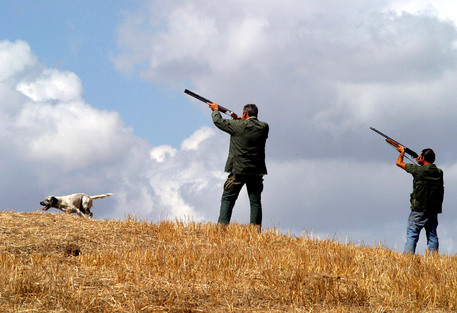
Donald Trump Jr, an avid trophy hunter who has been accused of killing an endangered animal under controversial circumstances, will speak at the world’s largest trophy hunting convention in Nevada next week, according to reports.
The first son and top campaign surrogate to Donald Trump was set to attend the Safari Club International’s annual three-day convention in Reno, Nevada, where he was scheduled to speak on 8 February.
In addition to the speech, Mr Trump Jr also planned to sell a trophy hunting trip with him in Alaska.
For $17,000 (£13,067), attendees of the convention can bid to hunt black-tailed deer native to the region with him, according to Safari Club International.
Other features of the event include an estimated 870 exhibits selling…
(ANSA) – Rome, January 29 – Italy’s hunting season will end on January 30 in most regions, with a few extending it until February 10, with a death toll thus far of 15 dead and 49 injured. The World Wide Fund for Nature (WWF) noted that, according to the national association for the victims of hunting, that over the five-month season 15 people had been killed and 49 had been injured in accidents. Moreover, some 178 confiscations and 170 criminal violations had been reported by the 232 WWF volunteer guards, who alone – WWF said – cannot fight against illegality. Referring to the continuing of the hunting season in some regions, the environmental association noted that while it is true that it is officially limited to some species, poaching likely continues due…
For years, whenever I found myself in Miami with an afternoon to spare, I sneaked off west to where a road abruptly separates the urban grid from the Everglades. Depending on time, I drove as deep into the saw grass void as I could, parked, got out and gazed up at tropical clouds racing unimpeded by tree or building.
Sky and grass. Nothing else. It’s a bit embarrassing to admit that anything in Florida — with its postcard palms plastered against postcard sunsets, its coconut tanning oil and Lily Pulitzer pinks and greens, its schmaltz and buffoonery and hanging chads and “Florida Man,” with his love of Styrofoam, weapons and monster trucks — affects me this way. But it does.
“There are no other Everglades in the world. They are, they have always been, one of the unique regions of the earth; remote, never wholly known,” Marjory Stoneman Douglas wrote in her 1947 book, “The Everglades: River of Grass.” “The spears prick upward, tender green, glass green, bright green, darker green, to spread the blossoms and the fine seeds like brown lace,” she wrote. “The grass stays. The fresh river flows.”
Where it’s not diverted or blocked by human engineering, the water still trickles south at the rate of a quarter mile a day, as it has for millenniums. But it is profoundly imperiled by pollution, human schemes to drain and control it, animal and plant invasives and sea level rise. As salt water breaches the limestone bedrock around the Florida peninsula and enters the aquifer, this natural freshwater wonder is threatened like never before.
I’ve traveled far but never found a place where the Garden of Eden and the Fall of Man are so palpable in one place. I am not alone. I know by the way eyes fill with tears when people get to talking about the glades. The Everglades were designated a national park in 1947, the same year that its most ardent fan, the environmentalist Douglas, published her book.
If doubt remains that Eden and the Fall coexist here, consider that the name of the author who extolled the wonders of this paradise is affixed to a school — the Marjory Stoneman Douglas High School in Parkland — forever associated with the 2018 school massacre that left 17 people dead.
In a series of trips to South Florida in the last year, I explored the interior of the River of Grass, the only subtropical wilderness in North America, plunging into microclimates and diminishing habitats, traversing slices of the Everglades National Park and its adjacent neighbor, Big Cypress National Preserve, by car, kayak, foot and even looking down from a small plane. Yet after almost two weeks I still barely scratched around the edges of more than a million acres of wetlands with nearly 300 species of fish and about 360 bird species and more than 700 kinds of plants.
Before dawn we drove in darkness to the bird-festooned Marsh Trail in the Ten Thousand Islands National Wildlife Refuge. Mysterious ploppings, splashings, groanings and crashings emanated from waters shrouded by the dense stands of palm and mangrove, and blue herons and great white egrets soared and settled again in the pink tinted vapor rising around us with the sun.
We hiked thigh-deep in cafe latte-colored water, slogging to explore the mysteries of the cypress domes. During the dry season, from December through April (when most tourists visit the glades because it is virtually bug-free), these stands of swamp cypress rise, leafless and bone white above the grass, visible for miles. They look to be on high ground but signal areas of deep water formed by dips in the limestone bedrock.
We got up close to them as they dozed dry and oblivious in the sun, alongside roads or paths. Even a large mama-gator surrounded by about a dozen babies, sprawled lazily by the cycling path at the National Park’s Shark Valley, as groups of tourists five feet away recorded the family on their iPhones.
I am here to attest that it is possible for a non-Floridian to get acclimated to alligators. The man to see for that is the Everglades guide Garl Harrold. Garl — as he prefers to be known — grew up in Michigan, went south several decades ago, doffed his shoes, walked into the swamp, and never looked back — or put his shoes back on for work. He picks up clients barefoot — in a 12-person Ford van in the parking lot of a fruit stand outside Homestead city limits.
He has silly nicknames for the monsters he claims lurk near his walks. “Sneaky, she’s around here somewhere.” “I saw Croc-zilla out here last week.” He is encyclopedic on the flora, pointing out plants like the lemon bacopa that the Calusa and Tequesta tribes used as mosquito repellent, and the saltwort, a pale green crunchy plant great as a snack or in a salad.
Every few feet of elevation produces a discrete ecosystem with its own animals and plants that are not only adapted to but maintain the systems as well. It is the only place where both alligators and crocodiles coexist. The highest elevations in the Everglades are called pine rockland, and they are considered endangered habitat. Dry and high, prime real estate for mammals — of course man claimed it first. Most of the old pine woods are paved over with towns and apartment complexes and strip malls whose names — Pine Crest, Pine Heights, Pines — refer to what was there.
The mysterious cypress domes also tower above the grass, but they thrive just a few feet closer to sea level, or even in holes in the limestone below sea level. Viewed from above, they are teardrop shaped, narrow at the top and bulging at the bottom, marking the shape of the water flowing in and around the holes.
The Everglades formed 5,000 years ago. It once covered most of the peninsula of Florida, from Lake Okeechobee (the 10th largest fresh water lake in the United States) down to Florida Bay and the Gulf of Mexico. Since 1845, when Florida became a state, man has been refashioning the glades, chiefly, to dry, build on, farm and make money off the land, some of the most fertile in the world. Two big sugar companies now control 500,000 acres; today, more than eight million people also depend upon the glades for their drinking water.
For 175 years, the drive to control the flow of water was planned, plotted and executed with devastating results for the native inhabitants — flora, fauna and human. Dredging, levee building, pumping water in and out, more than 2,100 miles of canals, 2,000 miles of levees and hundreds of floodgates, pump stations and other water-control structures, usually initiated with a blind zeal for progress and indifference to — or ignorance about — the fact that engineers were playing a game of Jenga on an interconnected fragile system.
All of New Jersey could have fit into the pre-drainage Everglades. But the ecosystem today is half the size it was before development. It is overrun by invasive plants and animals. As of 2015, in the Everglades, 60 plants were listed as endangered.
The state of mourning began at least as far back as the 1920s, when the botanist John Kunkel Small recorded his observations during an expedition, listing the Latin names of hundreds of plants and recording everywhere signs of their degradation and demise, from the “approaching extermination of native coral life” — which has come to pass around the Keys — to the ground itself “being drained and burned until it is unproductive.”
His panic is palpable in the exclamation points and capital letters he deployed in his report on the Lake Okeechobee area. “Here we were again very forcibly impressed with the terrible destruction which is returning Florida to its primitive geological condition, namely a barren desert. DRAINAGE and FIRE! The two processes are tending to eliminate all the native life from the state. … Thus the magnificent monument that took ages to construct has been wrecked within the fraction of a generation!”
What’s gone is gone, and what’s still there is threatened by invasives like the cattails and the ornamental plant Brazilian pepper that leapt from people’s manicured gardens and into the Everglades. The pepper is so endemic that the park service is mulching it and sequestering it in small mountains visible from above as bright green squares throughout the backcountry. Nonnative bamboo now chokes waterways and birding marshes throughout the park.
Along with the plants, the Burmese python is an unwelcome invader, probably introduced into the habitat first by pet owners when they got too big to keep in the condos. The snakes grow to tremendous length and weights — 15-foot 90 pounders have been found. They wiped out 99 percent of the marsh rabbit and the raccoons, decimated the otters and are now setting their sights on the birds. Researchers chip male pythons and track them to the nests of huge mother snakes, removing hundreds of eggs. In just two days, we saw two giants caught by the roadside in the area, and heard tell of a third. The state sponsors annual python-killing competitions. (The winner of the 2020 “Python Bowl” gets a truck.)
There are success stories. Alligators were nearly hunted to extinction in the 1960s but surged back after restrictions. So have the birds. The Victorian taste for big hats with plumage led to near extinction of the Everglades’ snowy egrets and other wading birds, with more than five million birds killed annually by 1900. Anti-plumage campaigns at the turn of the 20th century stopped that.
All over the Everglades, efforts to save something rare are underway. Panthers are collared and tracked near Big Cypress Preserve, but 21 were hit by cars last year, out of an estimated statewide population of only 150.
Sections of Tamiami Trail — the main east-west road connecting Miami and Naples — are being turned into bridges to allow water to flow back into the sloughs to the south, bringing back native vegetation for the first time in a century. At least one river, the Kissimee, straightened by the Army Corps of Engineers to benefit the northern farms, has been returned to its natural bed.
In 2000, the state and federal government agreed to a $4 billion Comprehensive Everglades Restoration Plan. Twenty years on, a few of the major infrastructure projects have been built, but most are still on the drawing board, awaiting money. In a promising development, Congress just authorized $200 million to the U.S. Army Corps of Engineers for Everglades restoration.
The Everglades Foundation is among many area nonprofits studying the effects of human activity on the fresh water flow, and advocating efforts to restore the ecosystem.
“We know what the consequences of inaction are, because we’ve already experienced it: polluted waterways, toxic algae, sea grass die-off, continued habitat loss, and even threats to imperiled species,” said Stephen Davis, a foundation scientist. “We simply cannot afford to wait any longer. Without Everglades restoration, Florida’s tourism-based economy is at risk.”
Paddling in Florida Bay one night at twilight, Garl trailed his hand in the warm salty water and pulled up some gray muck, let it drip back into the murk. “When I first came down, this water was clear, and I used to dip my hand in here and pull up a handful of sand and sea grass and find dozens of baby clams and tiny living shells,” he said. “It’s all gone. We’re in a dead zone now.” As he spoke, a full moon rose behind us and roseate spoonbills sailed in V-formation across pink cumulus clouds fading into periwinkle to the west.
I, as usual, choked back a sob.
Florida Bay has not recovered from a great sea grass die-off in 2015 because of unusual salinity caused by the man-made diversion of fresh water away from the bay. All Florida shores have also been plagued by a series of deadly red tides caused by fertilizer and other pollutants. Worse, as sea levels rise around Florida, increased salinity on the edges of the Everglades is killing the saw grass, setting off a cycle of damage to the sediment, allowing even more salty water farther inland.
Knowing all that, I wasn’t so bothered by the legendary Everglades mosquitoes that came out with the spectacular sunset (“You can set your watch to that,” locals say). As they pricked away at exposed skin and whined in my ears, I took it as proof that, for now anyway, the threatened glades biome lives on.
______
Nina Burleigh is a journalist and the author, most recently, of “Golden Handcuffs: The Secret History of Trump’s Women,” due out in paperback later this year.
Jakarta / Thu, January 30, 2020 / 11:34 am Sellers display animals for sale on a sidewalk of Jl. Matraman Raya in Jatinegara, East Jakarta, on June 20, 2019. (Kompas.com/Ardito Ramadhan)
5
Shares
Responding to the outbreak of the novel coronavirus, animal rights organizations have called on the Indonesian government to close all markets that slaughter or sell illegal wildlife. The virus, 2019-nCoV, is believed to have first emerged among wild animals in a market in the Chinese city of Wuhan.
Read also: Monitor wildlife trade as certain animals ‘have potential’ as coronavirus carriers, warns LIPI
In an open letter sent to President Joko “Jokowi” Widodo, Dog Meat Free Indonesia, a coalition of several animal rights organizations in the country, says that zoonotic coronaviruses can originate from wild animal markets.
“We urge the Indonesian government to take strong and immediate action to mitigate the risk…
From the New York Department of Environmental Conservation
Forest Ranger Actions from January 20 to January 26, 2020
Town of Riverhead
Suffolk County
Wilderness Rescue: On Jan. 20 at 1:14 p.m., DEC’s Central Office Dispatch received a call reporting a lost hunter in the Sarnoff State Forest. Forest Rangers Joseph Pries and John Scott responded to the hunter’s last known location, but quickly received word the hunter was able to send a screenshot from his phone with his location to Environmental Conservation Police Officer (ECO) Sean Rockefeller. Using the screenshot, Forest Rangers Pries and Scott met ECO Rockefeller and ECO Jacob Clark and pinpointed the lost hunter’s exact location. The officers found the 48-year-old hunter one-quarter mile off the trail and assisted him back to his vehicle.
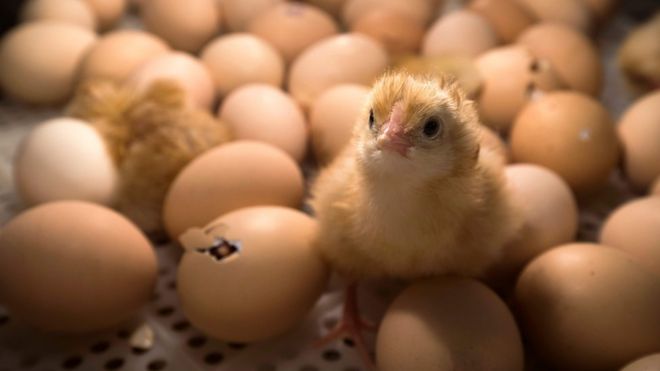
Mr Guillaume said he hoped a method would soon be developed that would allow the gender of a chick to be determined before it had hatched.
Researchers have been working on the issue for years, but are yet to come up with a solution that works on an industrial scale.
The 2021 ban will make France one of the first countries to outlaw the practice of culling male chicks. A ban in Switzerland came into effect earlier this year, while a top court in Germany has ruled that the practice can continue on a temporary basis until an alternative can be found.
France and Germany last year said they would work together to put an end to mass chick culling.
Mr Guillaume also announced on Tuesday that the practice of castrating piglets without anaesthesia would be banned by the end of 2021.
Castration is performed to prevent “boar taint” – a potent smell or taste that can occur in the meat of non-neutered pigs. Several countries have already made the use of anaesthesia obligatory.
How widespread is male chick culling?
The mass-killing of male chicks shortly after birth is common practice in food production around the world.
For the billions of hens used in egg and poultry farming every year, a similar number of male chicks are killed shortly after birth.
Male chicks are viewed in the industry as commercially useless, because they grow more slowly than hens so are deemed unsuitable for meat production.
After sorting, the most common methods of killing involve asphyxiation by gassing or maceration in high-speed grinders.
What has the response been?
Many animal rights activists welcomed the changes in France but said they did not go far enough.
They are “a step in the right direction, but still inadequate”, Anissa Putois of the campaigning group People for the Ethical Treatment of Animals (Peta) told AFP news agency.
French animal protection group L214 said the measures were “not ambitious” and “do not address the basic problems”.
“There is nothing on slaughter conditions, nor on how to exit from intensive animal farming,” it said, according to AFP.
Live animals are normally slaughtered in front of each other at wet markets (Photo: Adobe. Do not use without permission)
On New Year’s Eve last year, the World Health Organisation (WHO) was informed of a cluster of cases of pneumonia of unknown cause in Wuhan City in the Hubei Province of China.
In January of this year, the Wuhan novel coronavirus (WN-CoV) was identified as a new respiratory illness, previously unseen in humans.
To try and contain this outbreak, over 20 million people in Wuhan and other cities have been placed on lock-down, with public transport being closed.
What is the situation internationally?
Most people affected are in China, but cases have been reported from other countries: Thailand, USA, Australia, Singapore, Taiwan, Malaysia, South Korea, Japan, France, Vietnam, Nepal, Canada, Cambodia, Sri Lanka, Germany and Bavaria.
The number of total cases confirmed by China rose to 4,515 as of 27 January, up from 2,835 a day earlier. At the time of writing, 106 people have died, but if the virus is able to spread before symptoms show, it seems likely the death toll will rise considerably.
UPDATE: 29 January, the outbreak has killed 132 people in China and infected close to 6,000.
What are coronaviruses?
Coronaviruses are a common type of virus that cause mild illnesses, such as the common cold, but can cause more serious problems like severe acute respiratory syndrome (SARS).
Where did it come from?
The new virus is thought to have originated in a crowded so-called ‘wet market’ in Wuhan, selling marmots, birds, dogs, pigs, badgers, rabbits, bats, snakes, wolf pups, cicadas, scorpions, bamboo rats, squirrels, foxes, salamanders, turtles, crocodiles and civet cats.
Live wild and farmed animals are packed into crowded cages alongside each other – think of it as an all-you-can-eat smorgasbord of infectious diseases.
The outbreak has so-far killed 132 people in China and infected close to 6,000 (Photo: Adobe. Do not use without permission)
Previous outbreaks
We’ve seen it before with HIV/AIDS, Ebola, Zika, avian influenza (bird flu) and SARS – all originating in animals. Ebola came from monkeys, infected by bats, then eaten by villagers living in the African bush.
The 2003 SARS outbreak, which killed 774 people, was thought to be caused by an animal virus, again maybe from bats, which spread to civet cats and infected humans in the Guangdong province of southern China.
Following this, there was a temporary ban on wild animal markets. However, these markets are trading again.
Repulsive places filled with caged, frightened souls
Juliet Gellatley, founder of Viva! and zoologist said: “Wet markets are called ‘wet’ because animals are often slaughtered in front of customers. They are repulsive places filled with caged, frightened souls – many captured illegally in the wild.
“We reap what we sow. The world must wake up and shun meat and all animal flesh and instead eat vegan. No cruelty. No cages. No fear. No blood. And no zoonoses. No brainer.”
A bat-snake hybrid
The new coronavirus may also have originated in bats, but then transferred to snakes (both sold in the market) before jumping species to humans.
Viruses from different species can combine when animals are kept in close proximity. Wet markets put a wide variety of live animals alongside large numbers of people – a ripe breeding ground for emerging viruses.
Exposure to respiratory droplets, faeces or body fluids from animals, or from carcasses and raw meat, provides plenty of opportunity for new strains of viruses to infect humans. It is a perfect storm – a disaster of our own making.
The H5N1 bird flu virus that kills 60 percent of those it infects, thankfully has a low infection rate – it’s hard to catch. This new coronavirus appears to be spreading relatively easily, but does not have such a high mortality rate. If the next virus to jump from animals to humans has a high mortality rate and is easily spread, we will be in big trouble.
Time to ban wildlife markets
Experts are now calling for the banning of wild animal markets worldwide – the sale of sometimes endangered species for human consumption is the cause of this new coronavirus outbreak and many other past epidemics.
Of course it’s not just meat-eaters that are affected. Dr Jonathan Quick, Adjunct Professor of Global Health at the Duke Global Health Institute, says: “Traditional Chinese wet markets remain a threat to global health.”
There are currently no known cases of the virus in the UK, but it’s probably only a matter of time. Public Health England has issued a guide to hospitals on symptoms and how to handle the virus and the NHS has been put on high alert as the country braces for the outbreak to hit.
Time to go vegan
Back in 2004, following the SARS outbreak, Professor Diana Bell from the University of East Anglia’s School of Biological Sciences warned: “A major lesson from SARS is that the underlying roots of newly emergent zoonotic diseases [from animals] may lie in the parallel biodiversity crisis of massive species loss as a result of overexploitation of wild animal populations and the destruction of their natural habitats by increasing human populations.”
We are decimating wild landscapes, killing wild animals or caging them and sending them to market. Invading and disrupting ecosystems will inevitably shake viruses loose from their natural hosts.
It’s high time we listened to the warnings and put a halt to wildlife markets. It’s time to go vegan.
Whether you’re an educator, resident, scientist or wildlife officer, as someone who cares about bears, it’s your responsibility to spread the bear smart word – choosing your words carefully.
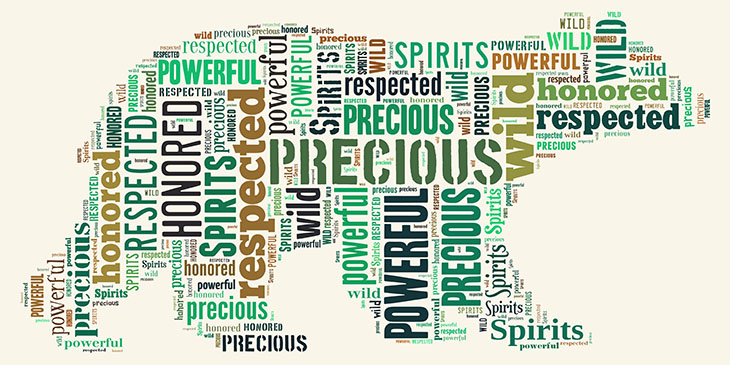
Words are powerful. They can find their way deep into the very fabric of our being and belief systems, shaping our thoughts and actions.
Words influence our perceptions and affect attitudes. They can inspire and encourage the right behaviour; or hinder and create apathy and inaction.
In Yosemite: The Embattled Wilderness, historian Alfred Raunte notes that even well-meaning bear advocates use terms like “marauding,” “offending,” and “trouble-some” to describe the very bears they are protecting.
Some words may be appropriate when used correctly, but harmful when misused. Consider the sentence; “Grizzly bears are dangerous, aggressive animals.” Without any context to this sentence, it misrepresents the grizzly’s character and behavioural traits. Grizzly bears are not dangerous and aggressive in all situations at…









 Exposing the Big Game