Elk Raise Tensions Between Tribes And Farmers In Washington’s Skagit Valley

Elk graze in Skagit Valley, an area north of Seattle, Wash., populated for centuries by Native Americans and, more recently, by farmers.

Megan Farmer/KUOW

https://www.npr.org/2020/01/18/797000272/elk-raise-tensions-between-tribes-and-farmers-in-washingtons-skagit-valley

Just after sunrise, elk are grazing in a misty field in Washington’s Skagit Valley, an hour and a half north of Seattle.

“It looks like there are roughly 40 animals there,” says Scott Schuyler, a member of northwest Washington’s Upper Skagit Tribe.

These elk are at the center of a conflict that’s unfolding between Native Americans and farmers in northwest Washington. After being nearly wiped out in the late 1800s, the animals are making a comeback in Skagit Valley. Local tribes are thrilled, but the agricultural industry is not.

Schuyler grew up in the suburbs south of Seattle, but, when a court decision reaffirmed his tribe’s right to hunt and fish in the Skagit Valley, his family moved back to their ancestral home.

Schuyler remembers hunting his first elk in 1987, when he was 24 years old.

“I was really proud at the time,” he says. “It’s our tradition, when you get your first animal, you give to your community; you give to your elders. And so I gave most of the animal away.”

But, Schuyler says, some of the Skagit Valley’s farmers and ranchers were not happy that tribal members were moving back, claiming their rights.

Scott Schuyler is a member of the Upper Skagit tribe. He remembers hunting his first elk in 1987, when he was 24 years old.

Megan Farmer/KUOW

“I’ve had a lot of firearms pointed in my direction, a lot of lead being shot in my direction,” he says. “I’ve been peppered with birdshot.”

He says he’s had his tires slashed, his fish stolen. He’s gotten death threats on social media.

Schuyler’s tribe and others are sovereign nations that have treaties with the US government that date back to the mid-1800s. Those treaties guarantee their right to hunt, fish and gather. The treaties also grant them a role in fish and wildlife management.

But Schuyler says some residents and some public officials don’t think the tribe should have those rights.

“And [so] it becomes socially acceptable to attack the tribe, tribal members and tribes’ rights,” he says.

Elk damage farms

Not far from where the elk grazed in a pasture in the early morning, Eileen and Randy Good have worked as dairy farmers and cattle ranchers for more than four decades. The Goods both grew up in Skagit Valley.

Now, Eileen Good says, the elk are “making it impossible for us to survive as a farmer.”

She says the elk knock down fences, eat up pastures and destroy crops.

“I figure we have lost like $36,000 a year due to the elk crossing and wrecking the fences all the time,” Randy Good says.

He points to a Skagit County Assessor’s report that says elk are causing $1.4 million of damage in the valley every year. That number relies on farmers self-reporting the damage, but no one doubts the loss is real and widespread.

Bill Schmidt is president of the Skagit Valley Farm Bureau. He objects to any tribal involvement in elk management.

Randy and Aileen Good have farmed in Skagit Valley for four decades. They say elk have damaged their farm and farm equipment.

Megan Farmer/KUOW

“I mean, it’s like one percent or less of our population is controlling the management of the elk,” he says, “and it doesn’t seem right.”

Historians say Native Americans in the Pacific Northwest have hunted elk for thousands of years. Still, Schmidt maintains white settlers in the early 1900s said there weren’t many Native Americans in Skagit Valley.

And those who were there, he says, “They were not into deer and elk. They were basically fishermen.”

Historians say that claim is incorrect.

But, for Schmidt, this is about something beyond the specifics of deer and elk and fish.

“They’re claiming all these rights because it’s an easy way to have extra rights,” he says. “I think they should be more forthright and try and be — to me — more American.”

The Washington Department of Fish and Wildlife is trying to bridge the divide by keeping elk away from farms, reimbursing farmers for losses and shooting problematic animals.

Wildlife officials will be spending the next three months counting and collaring the Skagit Valley’s elk. Their goal is to minimize conflict while also growing the herd to a more robust population.

Tribal member Scott Schuyler says compromise is difficult because of the pervasive belief that neither elk nor tribes belong in the valley.

“We made this deal with the United States,” Schuyler says. “It was like, ‘OK, well, you’re giving up your land, but, you know what? We’ll let you continue fishing and hunting.'”

“Those same rights are under attack.”

Exposing the Big Game's avatarThe Extinction Chronicles

AK: Fairbanks man snared dozens of moose to use as wolf bait, troopers say

A Fairbanks trapper faces misdemeanor charges after he admitted snaring more than two dozen moose to use the meat as bait for catching wolves, the Fairbanks Daily News-Miner reported this week.

Joseph Lyndon Johnson, 24, was charged in early January after an Alaska wildlife trooper investigated a trapline the man had set, the newspaper reported, citing an affidavit for a criminal complaint.

The trooper, investigating the man’s trapline on March 21 near Hess Creek north of Fairbanks, found a trapped live wolf next to a moose carcass. He also found two marten traps, still set though the season ended weeks earlier.

The trooper set up a camera to observe the trapline. That was soon stolen.

Days later, a trooper, after flying over the area in a helicopter, found that only part of the moose remained. The…

View original post 160 more words

MS: Mississippi hunter bitten on head by copperhead in tree

Exposing the Big Game's avatarCommittee to Abolish Sport Hunting Blog

https://www.clarionledger.com/story/news/local/2020/01/17/hunter-bitten-head-copperhead-snake-tree-mississippi/4492436002/

It’s the stuff of nightmares.

A Mississippi hunter was taking the last of his dog pack back to a truck on Wednesday evening when he encountered a flooded ditch. He found a narrow spot where he could jump across. When he leaned forward to jump, he felt a severe pain on the left side of his head.

“As soon as I leaned forward it was, ‘Bam,'” said Tyler Hardy of Philadelphia. “As soon as it hit me I thought it was…

View original post 871 more words

Are we measuring ruminant methane emissions correctly?

17 January 2020

Researchers at Oxford University have developed GWP*, a new climate metric that accurately measures the impact of methane emissions on global warming – recontextualising the debate surrounding ruminant methane emissions and climate change.

ffinlo Costain, host of FAI Farm’s Farm Gate podcast interviewed Myles Allen and John Lynch from Oxford University to explore their new method of measuring the impacts of methane on climate change. GWP* is a new metric for global warming potential that measures the change in emission rates for methane instead of measuring emissions by volume. According to their research, GWP* gives a more accurate picture of the influence greenhouse gases have on the world’s climate than existing measures, which assign gases a nominal CO2 equivalent number.

Current climate measures, like GWP100, categorise ruminant-emitted methane and agricultural activities among the greatest contributors to climate change. GWP100 reaches this conclusion by comparing the total amount of emissions and extrapolating the potential impacts on the global climate. According to Roland Bonney, co-founder of FAI Farms and Benchmark Holdings plc, many farmers and farm organisations feel unfairly demonised by these conclusions and public reaction to them. Allen and Lynch echo this view and assert that the GWP100 metric doesn’t capture the full relationship between emissions and climate change.

Bonney asserts that raising ruminants sustainably can be part of the solution to climate change. Raising cattle and sheep in a mixed rotation system, ensuring they are grass-fed and that they have access to natural pastureland can reduce greenhouse gas emissions significantly. In his view, how we farm has a greater impact on global climate than what we choose to eat.

The differences between methane and carbon dioxide

Though both methane and CO2 contribute to climate change, they impact global temperatures differently. Humans emit more carbon dioxide than any other greenhouse gas and it remains the largest contributor to climate change. Though some CO2 can be absorbed by the ocean or be fixed in plant biomass, the bulk of human emissions go into the atmosphere. According to Allen, the CO2 left in the atmosphere causes a persistent warming effect over thousands of years, making its impact more cumulative than other gasses. Unless humans ramp up efforts to remove carbon, it will remain in the environment.

In contrast, methane is emitted in smaller quantities. The gas has a stronger warming effect than CO2, but it breaks down quickly. This means that after a few decades, the methane will be out of the atmosphere and any warming affects will cease.

When describing the different impacts of the gases, Lynch compared the impacts of methane emissions to drinking excessively and getting a hangover – the immediate effects will set you back, but as long as you don’t drink to excess again, the pain and nausea will dissipate. Carbon dioxide, on the other hand, is more akin to lead poisoning – exposure will cause immediate negative effects, and sustained exposure will cause significant damage in the future.

Metaphors aside, comparing one tonne of emitted CO2 to one tonne of emitted methane (CH4) doesn’t give researchers an accurate picture of the gases’ warming potential. Allen’s research indicates that for methane to have the same warming effect as CO2, humans would need to increase methane emissions by multiple tonnes per year and maintain that emissions level indefinitely. In his view, it’s more appropriate to compare the emission rates of methane with a single tonne of emitted carbon dioxide – the central aim of the new GWP* measure. The new metric will also give more accurate climate forecasting than the current GWP100 standard.

GWP* appears to capture these subtleties more effectively than GWP100. Researchers at the SRUC found that measuring the warming impact of farms with a traditional carbon calculator overestimated the impact of farm emissions on climate. When they used GWP* to analyse the same farm data however, methane emissions fell by 75 percent, halving the total climate impact of agricultural emissions.

Ruminant methane and GWP*

In Allen’s analysis, methane’s contribution to climate change is historic – we are feeling the effects of methane pulses from 50 years ago when the global ruminant herd increased. Ruminants contribute to global methane emissions as the herd expands. A new source of methane will have a huge effect, but a sustained source won’t be as impactful. If the herd remains stable or declines (which is happening currently), the methane they produce won’t add to the warming that’s already occurred. Allen argues that the methane produced by the world’s ruminants is keeping global temperatures at stasis – it isn’t contributing to warming or cooling either way.

GWP* allows researchers to differentiate between new sources of methane and existing ones, meaning that fluctuations in the global ruminant herd can be accurately accounted for. According to Lynch, analysing discrete methane sources makes GWP* more accurate and prevents overestimates of the gas’s climate effects.

In Allen’s view, removing all ruminants in order to tackle methane emissions wouldn’t provide a huge climate benefit. Culling ruminants would only give the climate a temporary pulse of cooling – a temporary reduction of 0.1 degrees at the absolute maximum. That’s the equivalent of a few years’ worth of warming from CO2 emissions. Instead of focusing solely on ruminant emissions, activists should also account for methane leakages in Britain’s natural gas infrastructure. Both Lynch and Allen agreed that eliminating CO2 emissions would do more to counteract climate change than simply reducing methane produced by ruminants.

Refocusing on carbon

Allen told Costain that though reducing methane would help the climate, tackling carbon emissions from the fossil fuel industry is more pressing. The emissions from this sector are “additional” to the world’s existing carbon cycle and cause present and future warming events. Unless the UK and other countries enact zero net carbon emissions policies, global climate change will continue. Lynch echoed these sentiments, saying that carbon emissions needed to be removed or offset to stabilise global temperatures.

Listen to the Farm Gate podcast with ffinlo Costain here.

Saudi Arabia arrests cheetah smugglers

Exposing the Big Game's avatarCommittee to Abolish Sport Hunting Blog

Side View Of Cheetah Walking On Grassy Field – stock photo

Security forces in Saudi Arabia have reportedly arrested a number of people accused of trying to smuggle cheetahs into the country.

Local media said the suspects had travelled on foot across rough terrain on the border with Yemen.

The security personnel noticed movements in bags that the smugglers had on their backs. They were opened, and the cheetahs discovered.

The animals are trafficked from the Horn of Africa to the Gulf states, where they are sold as pets.

Conservationists say many die en route and warn that the illegal trade is threatening to wipe out the cheetah populations in countries like Somalia and Ethiopia.

Owning or trading wild animals is illegal in Saudi Arabia, yet lions and cheetahs are still being smuggled and kept as pets.

A man in 2019 was arrested after he was…

View original post 80 more words

‘Scale of This Failure Has No Precedent’: Scientists Say Hot Ocean ‘Blob’ Killed One Million Seabirds

Exposing the Big Game's avatarThe Extinction Chronicles

by

The lead author called the mass die-off “a red-flag warning about the tremendous impact sustained ocean warming can have on the marine ecosystem.”

Dead common murres

Dead common murres were found on the beach in Cochrane Bay, Prince William Sound on Jan 10, 2016. These birds were part of the large die-off of common murres across the Gulf of Alaska in 2015-2016. (Photo: Sarah Schoen/USGS Alaska Science Center)

On the heels of new research showing that the world’s oceans are rapidly warming, scientists revealed Wednesday that a huge patch of hot water in the northeast Pacific Ocean dubbed “the blob” was to blame for killing about one million seabirds.

The peer-reviewed study, published in the journal PLOS ONE, was conducted by a team of researchers at federal and state agencies, conservation groups, and universities. They tied the mass die-off to…

View original post 689 more words

More Americans are alarmed by global warming than ever before, survey reveals

Exposing the Big Game's avatarThe Extinction Chronicles

(CNN)The proportion of Americans who are “alarmed” by global warming tripled over the last five years and is now at an all-time high, a new survey shows.

Almost 6 in 10 Americans are either “alarmed” or “concerned” by global warming, marking what researchers say is a major shift in public perception of the issue.
The survey was conducted by the Yale Program on Climate Change Communication and George Mason University’s Center for Climate Change Communication, which together have tracked Americans’ views on climate change since 2008.
As recently as 2014, the percentage of Americans categorized as “dismissive” of global warming was roughly the same as those who were “alarmed” — around 11 to 12%.
But in the years since, the ranks of the “dismissive” — those who believe global warming is not happening or…

View original post 473 more words

Keep gun safety in mind when taking your hunting photos […or not.]

Exposing the Big Game's avatarCommittee to Abolish Sport Hunting Blog

Blake Keen, 12, of Vicksburg, killed his first buck while hunting on private property on Dec. 24. The buck was a 6-pointer. Blake is the son of John Keen and Mindy Morris. • The Vicksburg Post invites hunters to submit their photos. Please email them to sports@vicksburgpost.com and include the name of the hunter, the date and location of the hunt, the size of the animal, and contact information. Photos with an excess of blood and gore will not be published.

So far this winter, The Vicksburg Post has received and published more than a dozen photos of deer that have been bagged by local hunters. It’s a longstanding tradition that goes back decades, and one we hope to continue for years to come. You can email them to us at sports@vicksburgpost.com.

Over the years we’ve…

View original post 419 more words

Germany, France push to end male chick ‘shredding’ in European Union

France and Germany are calling for an end to male chick culling.
 France and Germany are calling for an end to male chick culling. Canadian Press
Descrease article font size

A

Increase article font size

A+

Germany and France are teaming up to push for the end of male chick shredding in the European Union by the end of 2021.

Agriculture ministers Julia Klöckner of Germany and Didier Guillaume of France announced their plans to help press this issue further during a Monday meeting in Germany.

“It’s time to end the shredding of chicks. France and Germany should be the European motor to advance on this issue,” Guillaume said, according to France24.

Shredding refers to the act of killing male chicks shortly after they hatch. This practice occurs in many poultry businesses because male chicks don’t produce eggs and generate less meat than their female counterparts.

READ MORE: New York City passes bill banning sale of foie gras [2019]

The two European countries hope to bring together industry groups, companies, researchers and campaign groups to “share scientific knowledge” and “implement alternative methods,” France24 reports.

STORY CONTINUES BELOW ADVERTISEMENT

“We welcome this scheme and the fact that non-governmental organizations are involved, but we expect clear regulatory commitments,” Agathe Gignoux of CIWF, a French NGO, said.

In 2009, the Associated Press reported U.S. egg producers euthanize 200 million male chicks per year. According to AP, Chicago-based animal rights organization Mercy for Animals videotaped male chicks being ground up alive while undercover in Iowa hatchery Hy-Line North America that same year.

The same practice appears to occur in Canada, too, though the Canadian government has announced recent changes in an effort to minimize this waste.

Jean-Michel Laurin, president and CEO of the Canadian Poultry and Egg Processors Council, told Global News that the industry has been working towards eliminating the euthanizing of male chicks.

READ MORE: ‘It’s a cold scary trip’: Tabby cat travels more than 80 km hiding in truck engine

“This requires a great deal of research, which has been occurring worldwide and includes Canadian-based research which has been active for about 10 years,” he said. “Currently, stakeholders in Canadian industry have made significant investments to bring us beyond the research trial phase.”

“Our industry is committed to continually improving practices. Farmers, hatcheries and others in the supply chain have demonstrated, over generations, their desire to improve and to respond to change.”

STORY CONTINUES BELOW ADVERTISEMENT

He added that the National Farm Animal Care Council’s (NFACC) Code of Practice for the Care and Handling of Chickens, Turkeys and Breeders lists several methods to euthanize day-old chicks and emphasizes that in all circumstances, the termination of life must be instantaneous.

2:36
Toronto Chick-fil-A launch draws customers and demonstrators

Toronto Chick-fil-A launch draws customers and demonstrators

In 2018, then-Agriculture and Agri-Food Minister Lawrence MacAulay announced an $844,000 investment would go towards developing an electronic scan to determine a bird’s sex and fertility of eggs prior to hatching, Poultry World reported.

This would mean male eggs could be sold before hatching, which would increase capacity and efficiency of Canadian hatcheries and ultimately end male chick culling.

“The Canadian egg industry is driving our economy and creating good jobs,” he said in a statement. “The government of Canada is produce [sic] to support the Egg Farmers of Ontario for this first-of-its-kind study that will make Canada a world leader in animal welfare.

“This investment will help pilot a solution that will be welcomed in Canada and around the world and will keep the egg industry strong and growing.”

READ MORE: London animal rights activist ‘targeted’ by aggressive driver due to bumper stickers

The Canadian egg industry contributes over $1 billion a year to the national economy and employs more than 17,000 people.

Nebraska once again opens its fragile mountain lion population to trophy hunters

Exposing the Big Game's avatarCommittee to Abolish Sport Hunting Blog

January 10, 2020 35 Comments

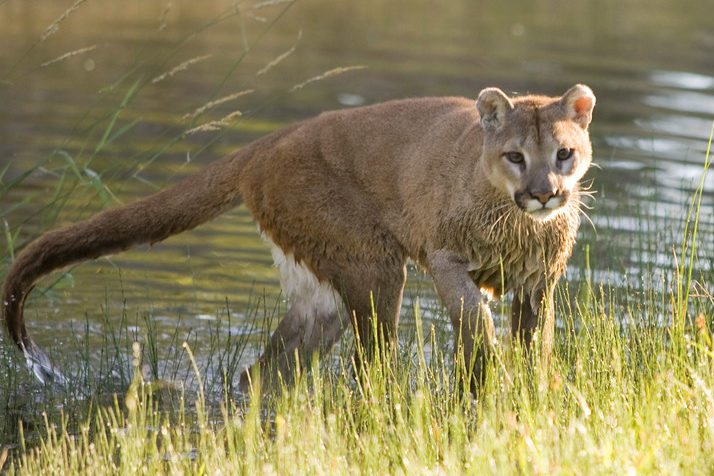
Last week, a trophy hunter killed a mountain lion in Nebraska and posted a photo of himself on social media with the dead animal, a one-and-a-half-year-old male. While most Americans would find this unnecessary killing of a majestic native carnivore horrifying by itself, the facts behind this killing are even more outrageous. There are just an estimated 40 adult and teenage mountain lions now living in Nebraska, and rather than protect them, the state is playing into the hands of trophy hunters by letting them go after these beautiful animals.

This is the second consecutive year that Nebraska has opened season on…

View original post 731 more words