


https://kwwl.com/2020/01/12/man-shot-in-leg-while-hunting-dnr-investigating/

A man was injured in a Benton County hunting accident Saturday when a gun discharged in a pickup truck that was pursuing a coyote.
Passenger Brian McManemy, 41, of Blairstown, was shot in the left leg at about 12:21 p.m., while the truck was traveling across a field near Keystone, according to a news release from the Iowa Department of Natural Resources. The accident happened just north of Highway 30 at 13th Avenue.
McManemy was taken to a Cedar Rapids hospital with non-life-threatening injuries.
The DNR continues to investigate the incident.
1/10/2020
A famous local hunting personality whose television shows appeared in many North Country homes was arraigned Jan. 8 on accusations he led paying hunters on illegal waterfowl hunts over baited ponds in October and November 2018 in Jefferson County.
William “Bill” Saiff III, 56, Henderson, was arraigned in federal court in Syracuse after being charged by indictment with three felony counts, according to the Department of Justice.
The charges were announced by United States Attorney Grant C. Jaquith; Ryan Noel, Regional Special Agent in Charge, U.S. Fish and Wildlife Service, Office of Law Enforcement; and Bernard Rivers, Director of Law Enforcement, New York State Department of Environmental Conservation.
If convicted, Saiff faces up to five years in prison on each count, a fine of up to $250,000, and a term of supervised release of up to three years. A defendant’s sentence is imposed by a judge based on the…
View original post 131 more words
1/13/2020
A Michigan man who shot a fellow hunter on the opening day of firearm deer hunting season has been sentenced.
David Barber, 46, of Gaylord, was sentenced to at least 5 years in prison on Monday, according to the Associated Press.
A jury found Barber guilty of of involuntary manslaughter, felony firearm and trespassing in December 2019. The charges stem from the Nov. 15, 2018, death of Sanford resident Justin E. Beutel.
Department of Natural Resources officers responded to a call of a hunting accident at about 1 p.m. near the intersection of West Elder Road and Northeast Torch Lake Drive, near the village of Alden, roughly 20 miles northeast of Traverse City.
EMS workers administered first aid to Beutel, but he did not recover.
Beutel’s family spoke at the sentencing, according to UpNorthLive.com, mostly about the impact his death has had on them.
Barber will be…
View original post 8 more words

The heat in the world’s oceans reached a new record level in 2019, showing “irrefutable and accelerating” heating of the planet. Photograph: Modis/Terra/Nasa
Oceans are clearest measure of climate crisis as they absorb 90% of heat trapped by greenhouse gases
by Damian Carrington Environment editor
The heat in the world’s oceans reached a new record level in 2019, showing “irrefutable and accelerating” heating of the planet.
The world’s oceans are the clearest measure of the climate emergency because they absorb more than 90% of the heat trapped by the greenhouse gases emitted by fossil fuel burning, forest destruction and other human activities.
The new analysis shows the past five years are the top five warmest years recorded in the ocean and the past 10 years are also the top 10 years on record. The amount of heat being added to the oceans is equivalent to every person on the planet running 100 microwave ovens all day and all night.
Hotter oceans lead to more severe storms and disrupt the water cycle, meaning more floods, droughts and wildfires, as well as an inexorable rise in sea level. Higher temperatures are also harming life in the seas, with the number of marine heatwaves increasing sharply.
The most common measure of global heating is the average surface air temperature, as this is where people live. But natural climate phenomena such as El Niño events mean this can be quite variable from year to year.
“The oceans are really what tells you how fast the Earth is warming,” said Prof John Abraham at the University of St Thomas, in Minnesota, US, and one of the team behind the new analysis. “Using the oceans, we see a continued, uninterrupted and accelerating warming rate of planet Earth. This is dire news.”
“We found that 2019 was not only the warmest year on record, it displayed the largest single-year increase of the entire decade, a sobering reminder that human-caused heating of our planet continues unabated,” said Prof Michael Mann, at Penn State University, US, and another team member.
The analysis, published in the journal Advances In Atmospheric Sciences, uses ocean data from every available source. Most data is from the 3,800 free-drifting Argo floats dispersed across the oceans, but also from torpedo-like bathythermographs dropped from ships in the past.
The results show heat increasing at an accelerating rate as greenhouse gases accumulate in the atmosphere. The rate from 1987 to 2019 is four and a half times faster than that from 1955 to 1986. The vast majority of oceans regions are showing an increase in thermal energy.
This energy drives bigger storms and more extreme weather, said Abraham: “When the world and the oceans heat up, it changes the way rain falls and evaporates. There’s a general rule of thumb that drier areas are going to become drier and wetter areas are going to become wetter, and rainfall will happen in bigger downbursts.”

Hotter oceans also expand and melt ice, causing sea levels to rise. The past 10 years also show the highest sea level measured in records dating back to 1900. Scientists expect about one metre of sea level rise by the end of the century, enough to displace 150 million people worldwide.
Dan Smale, at the Marine Biological Association in the UK, and not part of the analysis team, said the methods used are state of the art and the data is the best available. “For me, the take-home message is that the heat content of the upper layers of the global ocean, particularly to 300 metre depth, is rapidly increasing, and will continue to increase as the oceans suck up more heat from the atmosphere,” he said.
The new analysis assesses the heat in the top 2,000m of the ocean, as that is where most of the data is collected. It is also where the vast majority of the heat accumulates and where most marine life lives.
The analysis method was developed by researchers at the Chinese Academy of Sciences in Beijing and uses statistical methods to interpolate heat levels in the few places where there was no data, such as under the Arctic ice cap. An independent analysis of the same data by the US National Oceanographic and Atmospheric Administration shows that same increasing heat trend.
Reliable ocean heat measurements stretch back to the middle of the 20th century. But Abraham said: “Even before that, we know the oceans were not hotter.”
“The data we have is irrefutable, but we still have hope because humans can still take action,” he said. “We just haven’t taken meaningful action yet.”
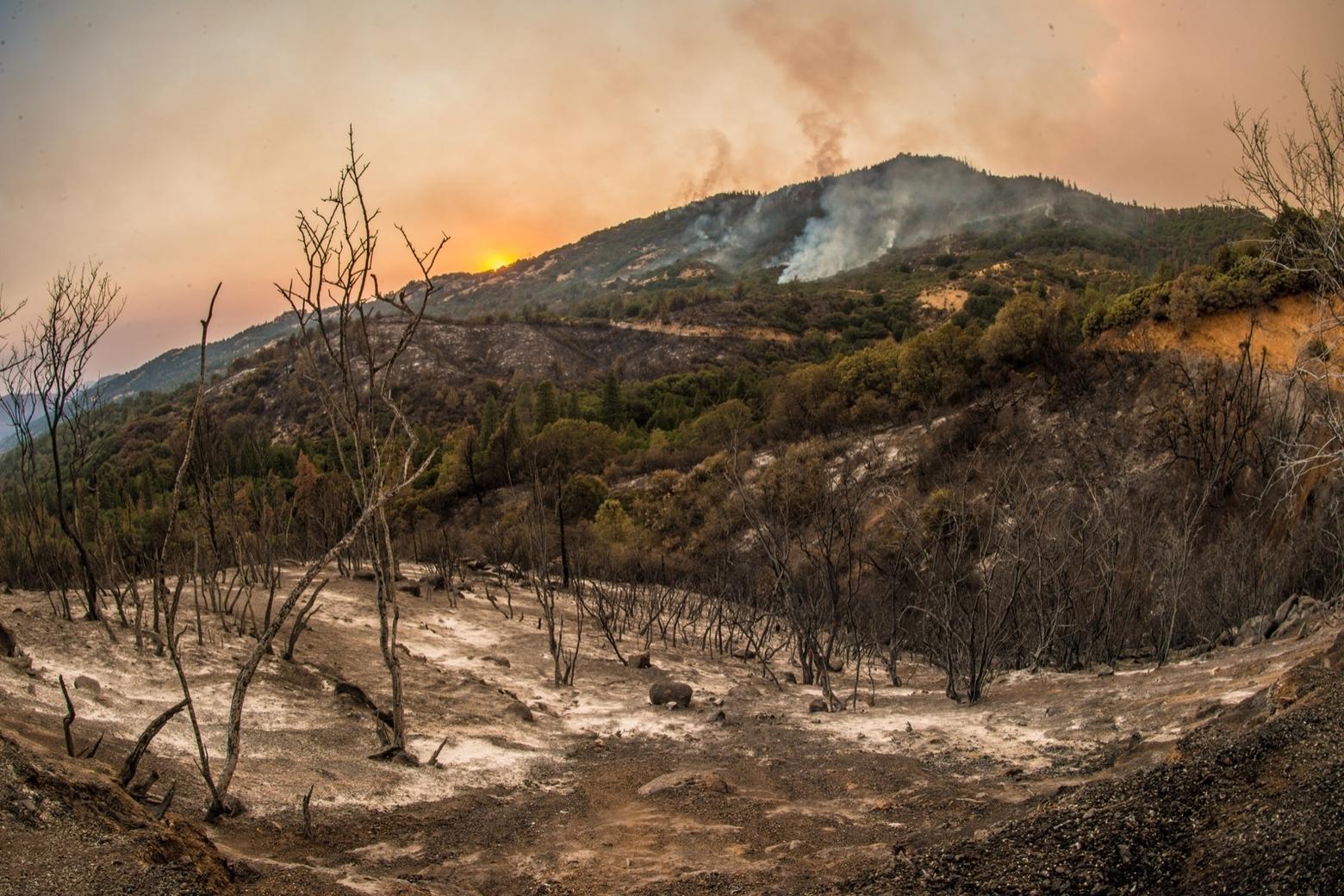
I’m no climate scientist. The best I can say for myself is that I’ve been a pretty close student of varied specialties associated with climate science for about four decades. For the past 15 or more years, I’ve run a restricted listserv devoted to daily updates on the impact of climate change for all forms of life, habitat, and ecological process on Earth.
View original post 5,438 more words
As animals try to recover from bushfires which have ravaged Australia, wildlife services in New South Wales have taken to the skies to help wallabies.
The marsupials’ food sources and habitats have been burned in the fires, so authorities are airdropping over 2,000 kg of carrots and sweet potatoes from helicopters.
Elsewhere in the state, communities and rescue centres have helped kangaroos, camels, horses and alpacas to survive.
But they’re the lucky ones – many more animals have died in the fires, and in some cases the animals have had to be put down because their burns are too severe.
Follow Newsbeat on Instagram, Facebook, Twitter and YouTube.
Listen to Newsbeat live at 12:45 and 17:45 weekdays – or listen back here.
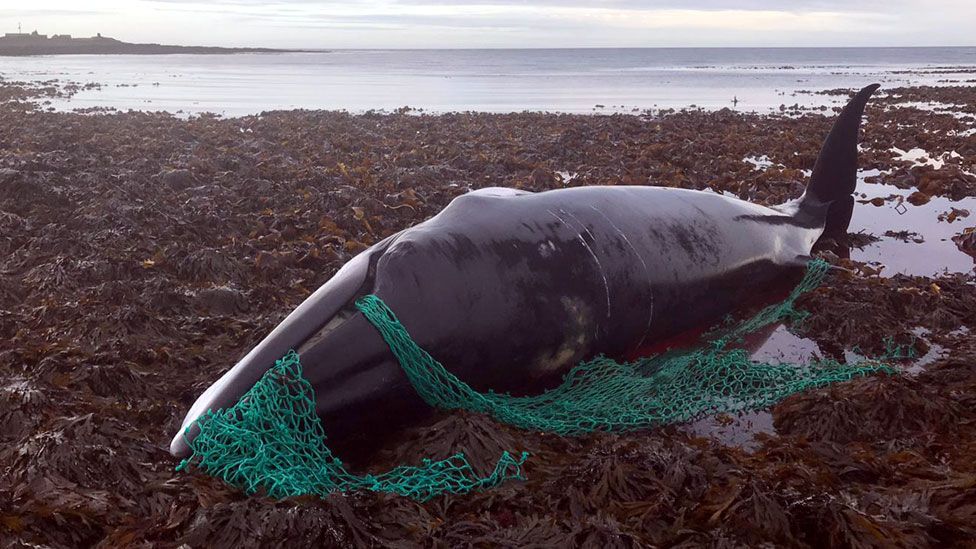 Image copyrightSMASS ORKNEY
More than half a million tonnes of fishing gear is estimated to be lost or abandoned every year in the world’s seas and oceans. Some of it entangles and kills wildlife at sea and on shore.
Conservationists call it “ghost gear”.
It includes fishing nets, long lines, fish traps and lobster pots left drifting at sea usually after being accidentally lost from fishing grounds or boats, or discarded in an emergency such as in a storm.
“Fishing gear is designed to trap marine organisms, and it can continue to do so long after the gear is lost or discarded in the ocean,” says Joel Baziuk of the Global Ghost Gear Initiative (GGGI).
“When lost fishing gear keeps catching fish after its intended lifespan, it is called ghost fishing.”
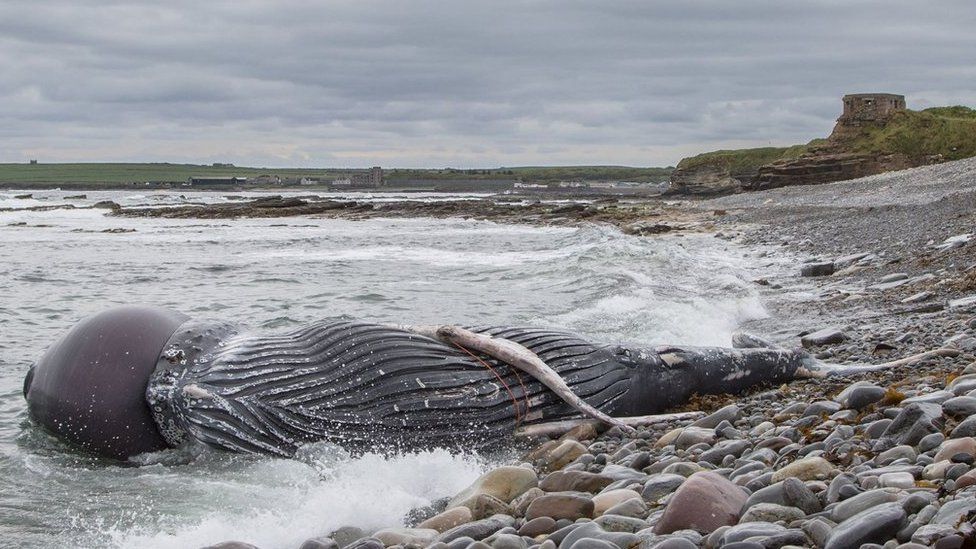 Image copyrightKAREN MUNRO
He said ghost gear was the most harmful form of debris to marine life because of the risk of entanglement or entrapment.
GGGI estimates at least 640,000 tonnes of fishing gear are lost or abandoned every year.
The hotspots include the Gulf of Carpentaria in Australia and Hawaii in the Pacific.
Joel says: “Ghost gear is a problem anywhere fishing takes place, and that includes Scotland.”
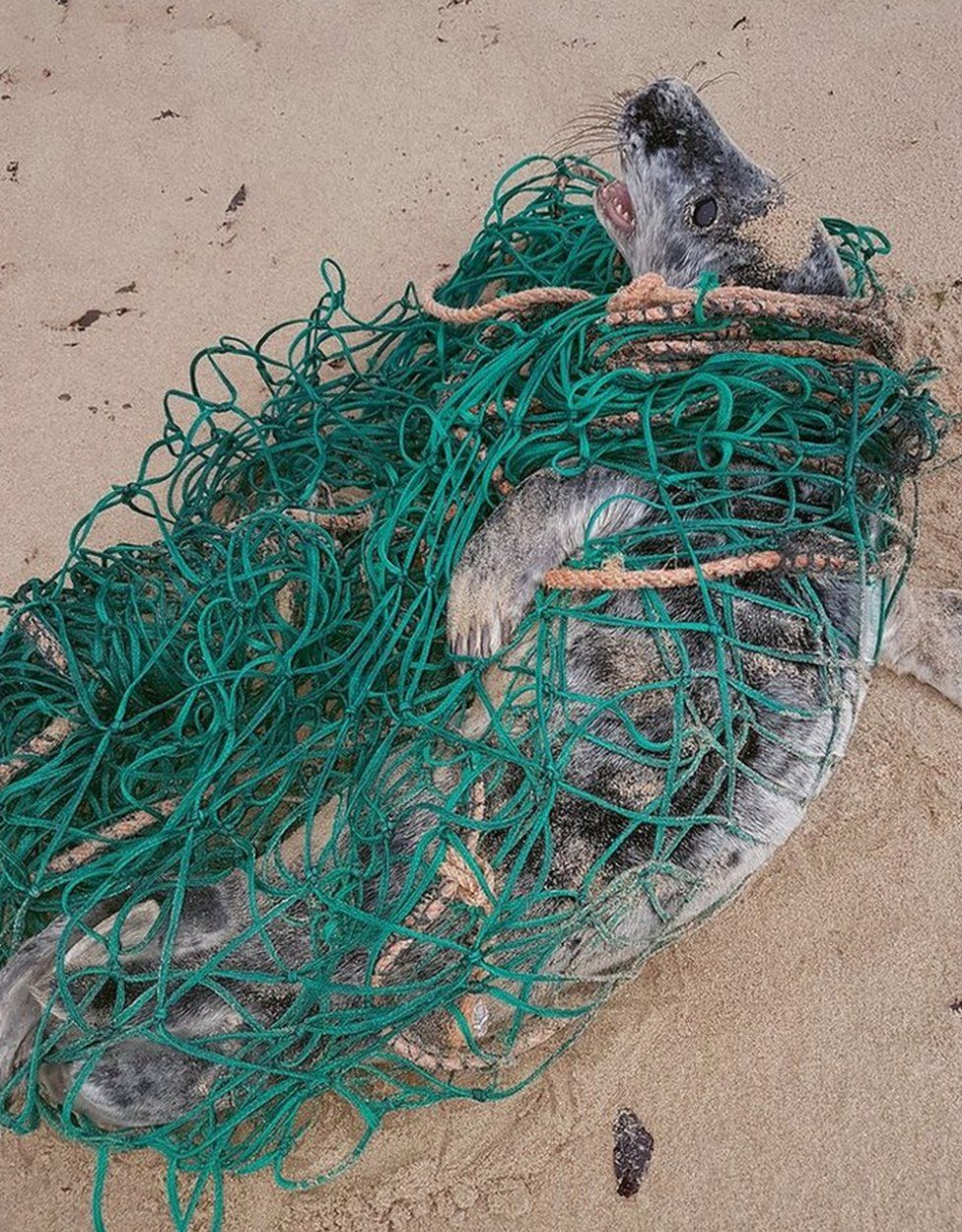 Image copyrightDAVID YARDLEY
The risks this marine pollution poses to wildlife include entanglement, when animals get wrapped up in rope and other gear.
In Scotland, the Scottish Marine Animal Strandings Scheme (Smass), which investigates marine animal deaths, recorded 12 entanglement cases in 2019.
They included a pregnant whale found dead and tangled in a fishing net in Orkney in October. The net was jammed in the animal’s baleen, the filter-feeder system inside its mouth.
In May, a humpback whale entangled in fishing gear washed up dead close to Scrabster, near Thurso on the north Caithness coast.
The previous month, another humpback whale was found to have been entangled in rope for “weeks, if not months” before it drowned off the East Lothian coast near Tyningham.
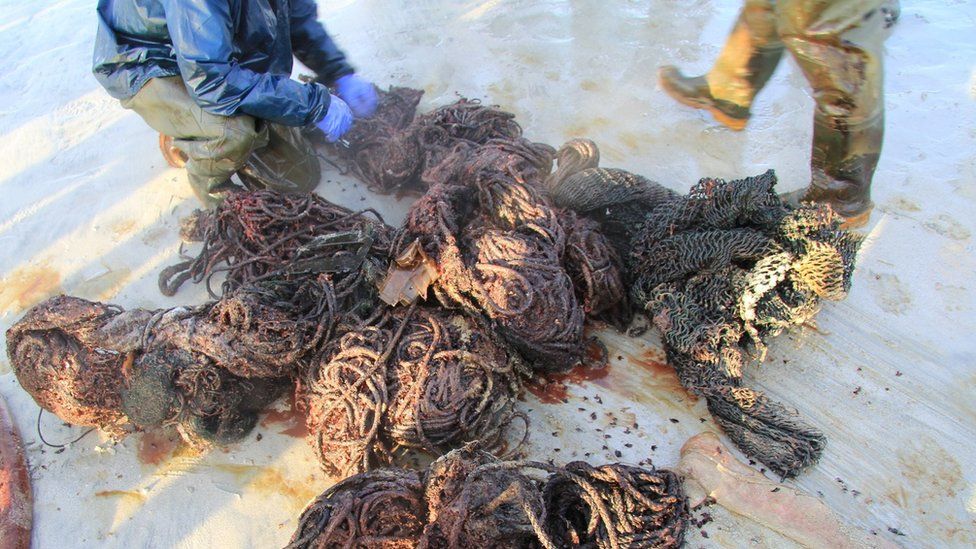 Image copyrightSMASS
Entanglement is not the only threat posed to whales.
A sperm whale that died after stranding on the Isle of Harris in November had a 100kg “litter ball” in its stomach.
Fishing nets, rope, packing straps, bags and plastic cups were among the items discovered in a compacted mass during an investigation by Smass.
Seals have also been caught up in nets and ropes, though there have been successful rescues of these animals, including the saving of a five-week-old grey seal pup entangled in a plastic net on Lewis.
A hotline run by British Divers Marine Life Rescue (BDMLR) has received 47 reports of entangled seals this year in Britain. Some of the animals were lucky and were rescued, or managed to free themselves.
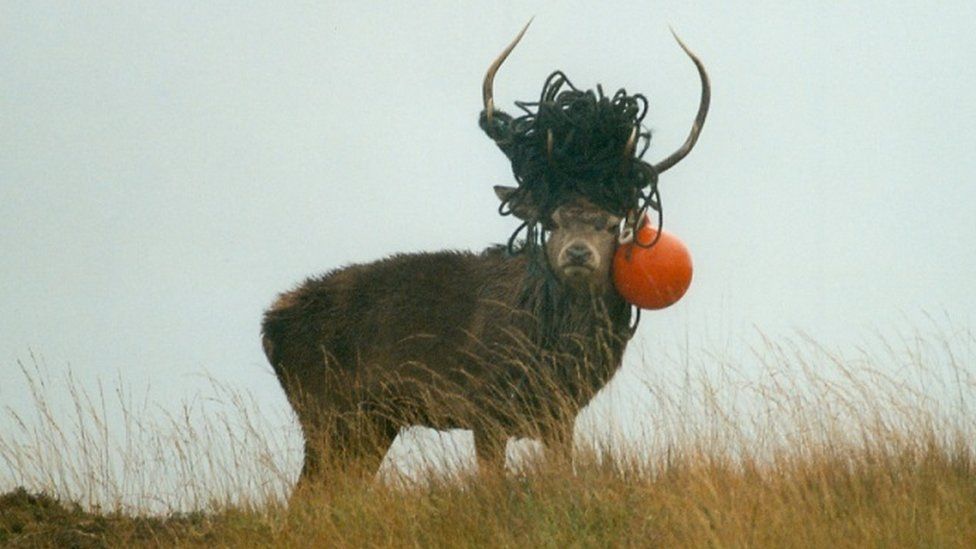 Image copyrightSNH
Other ghost gear victims include animals that forage on shorelines.
In 2017, stags on the Isle of Rum were found with fishing gear caught in their antlers. Two of the animals died after becoming snarled up together in discarded fishing rope, while another stag was photographed with an orange buoy and rope balled up in its antlers.
Even tiny fragments of ghost gear is a risk, say conservationists.
Noel Hawkins, of the Scottish Wildlife Trust’s Living Seas project, says: “Some of the small stuff can be as devastating to wildlife as many seabirds swallow it thinking it is fish eggs or food.
“They choke on it and even use it as nest material, which endangers chicks.”
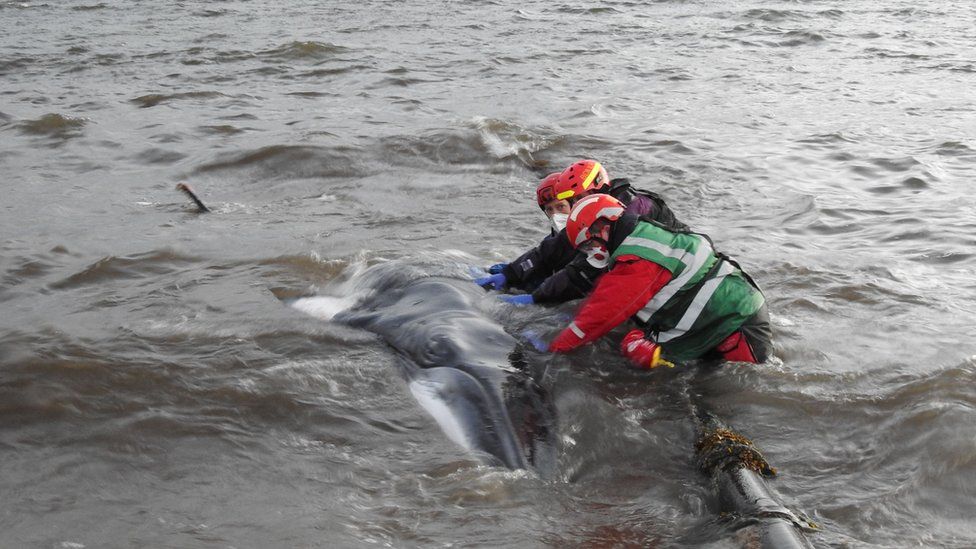 Image copyrightBDMLR
Scotland is playing its part in a global effort to tackle ghost gear.
In a GGGI project, divers from the Ghost Fishing UK initiative have carried out underwater clean-ups in Orkney.
BDMLR, meanwhile, is part of the Scottish Entanglement Alliance (Sea), a coalition of conservation groups, rescue teams and fishermen.
The coalition is seeking to find best practices to avoid entanglements and the most effective responses to any incidents.
This year the alliance trained 20 people working in the fishing industry throughout Scotland in how to help disentangle animals.
And there have been success stories. In October, BDMLR helped to free a humpback from fishing ropes in Orkney.
New technology, such as prawn creels that can be lowered into the sea and returned to the surface without the need of ropes is also being trialled.
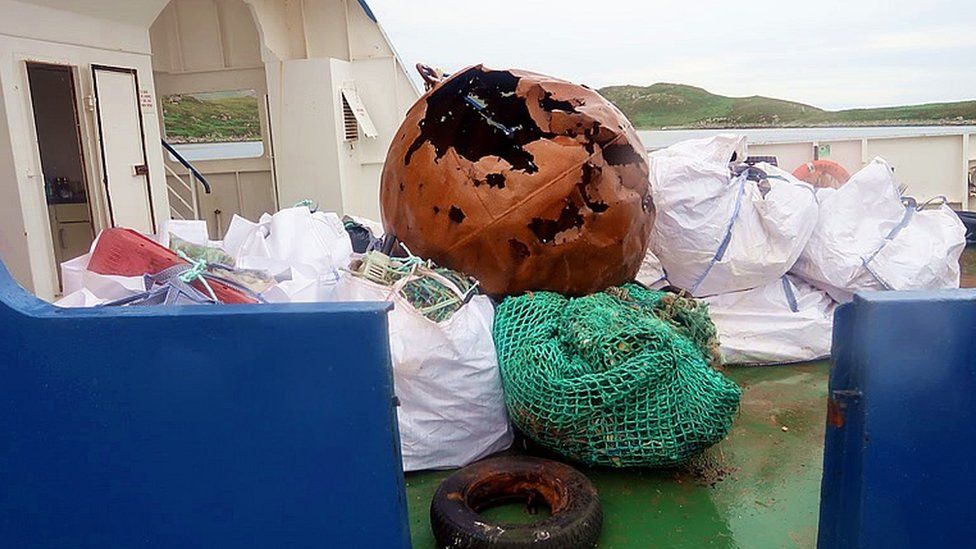 Image copyrightSWT
The Scottish Fishermen’s Federation says the fishing industry across Europe is “actively engaged” with the issue of discarded gear.
“Very little” fishing equipment is lost at sea by the Scottish fleet, according to the federation’s chief executive Elspeth Macdonald.
She says: “Trawl nets are expensive, which means that skippers try to get as much use as possible out of them, and put them ashore to be mended when required.
“The bulk of the ghost gear found in the Scottish sector is monofilament netting used by French and Spanish gill netters and longliners on the west coast.”
There is also an effort to clean up ghost gear that washes up on Scotland’s shores.
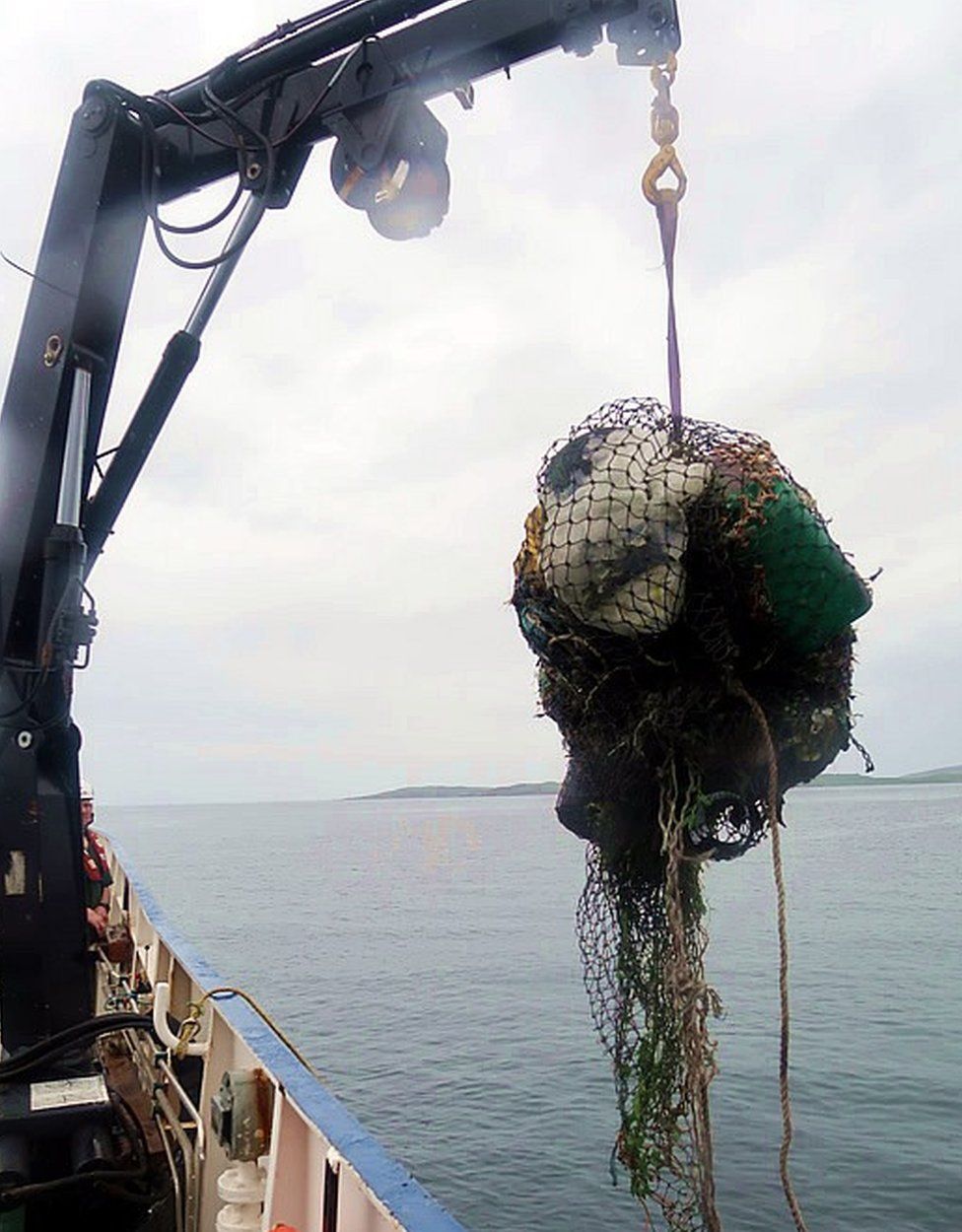 Image copyrightSWT
In the north west Highlands, Scottish Wildlife Trust’s Living Seas project has been setting up beach clean stations in remote locations.
The stations are large pallet boxes with litter pickers and bags attached and members of the public walking along the beaches are encourage to use the stations to gather up any litter they find.
The project’s Noel Hawkins says: “One of these just north of Ullapool at Dun Canna beach has taken in over tonne of rubbish alone.”
In July, tonnes of rubbish was removed from the Summer Isles in the north west Highlands in another of the project’s clean-ups.
Fishing ropes and nets were among the other items gathered in a clean-up
But Noel says: “It is worth remembering that some estimates think only 3 to 5% of rubbish actually comes ashore though.
“There is still a lot more out there.”
All images are subject to copyright.

An Ulster man paid $605 in fines and surcharges after he admitted to baiting and illegally hunting deer.
Ulster County resident Robert Nelson, of Esopus, was charged with the misdemeanor of illegally taking a deer and a violation of hunting with the aid of bait in November 2019, after the state Department of Environmental Conservation received a tip, the state DEC said on Thursday, Jan. 9.
After receiving the tip, EC Officer Jeannette Bastedo responded to the area, that was known to be baited in the past, and located a pile of feed approximately…
View original post 124 more words
US greenhouse gas emissions are up since 2017 and Trump’s administration has ripped up curbs on climate polluters

Climate pollution in the US is up under Donald Trump and threatens to undermine international efforts to stall the crisis, especially if he wins re-election this year and secures a second term in the White House.
While US climate emissions fell 2.1% in 2019, they rose significantly in 2018, according to estimates from the economic analysis firm Rhodium Group. On net, emissions are slightly higher than in the beginning of 2017, when Trump’s administration began enacting dozens of environment rollbacks aimed at helping the oil and gas industry.
Trump is still working to further…
View original post 906 more words
 Exposing the Big Game
