State officials say a Staten Island man admitted in December to illegally hunting deer on Staten Island’s South Shore.
John Anderson, 36, admitted to shooting a deer with a bow and arrow at around 11 a.m. Dec. 12 in Annadale’s Blue Heron Park, according to a Thursday media release from the Department of Environmental Conservation.
DEC Environmental Conservation Police Officer Michael Wozniak initially spotted a deer with an arrow sticking out of its neck while responding to a complaint.
He tracked the deer, following its blood trail, but needed to discontinue due to inclement weather. He later spotted Anderson “acting suspiciously” near where the injured deer was seen, and began questioning him.
During questioning, Anderson allegedly provided Wozniak with a home address, but the wrong identification, according to the media release. Wozniak, accompanied by Environmental Conservation Police Officer Ryan Grogan, went to the address and continued questioning Anderson…
Liberal firebrand Rep. Alexandria Ocasio-Cortez is once again being dogged by criticism — this time over a puppy.
The animal rights group PETA blasted AOC for apparently buying a purebred French bulldog instead of adopting a homeless dog from a shelter.
“The dog is pretty clearly a Frenchie and a very young puppy who appears to have been purchased from a breeder,” PETA spokeswoman Ashley Byrne told The Post.
The freshman Democrat introduced the pup to her social media followers Tuesday, but has refused to answer questions about the still-unnamed dog’s origins.
But she is taking name suggestions from her followers: “We are thinking something Star Trek related or Bronx/Queens/NYC/social good related,” she said on Instagram.
PETA didn’t think there was anything cute about AOC’s pet pick.
“With the millions of homeless dogs out there, you apparently chose to buy a purebred puppy instead of adopting one from an animal shelter,” PETA president Ingrid Newkirk wrote in a letter to AOC on Thursday.
“Right this minute, on Petfinder alone, there are more than 110,000 dogs — including French bulldogs — who need homes. Animal shelters are bursting at the seams with hundreds of thousands more, many of whom will be ‘put to sleep’ for lack of a home,” Newkirk wrote.
SEE ALSO
Meet AOC’s new best friend
“French bulldogs are inbred in order to produce breed-specific traits, which cause health problems that many people who will be influenced by your purchase won’t be able to afford to address,” Newkirk continued.
“They are particularly at risk because their ‘cute’ features plague them with a lifetime of breathing problems, ear and eye infections, skin irritation, a weak stomach, and other issues,” she wrote.
Newkirk also lectured AOC about proper canine care.
“We’re also sending you a copy of the book Dogs Hate Crates, which explains why crate training is not humane or effective,” Newkirk wrote.
Ocasio-Cortez had posted a video on her Instagram of the bulldog whimpering inside a small black cage.
Reps for the congresswoman did not immediately respond to requests for comment.
One of the ducks Roich has saved over the years, warming in the cab of his pickup truck after being washed clean of contaminants from an oilfield wastewater pit. (Adam Roich)
Dominion Energy fired an oilfield worker in Rock Springs after the employee saved an estimated 50 waterfowl from wastewater ponds.
Adam Roich said he’s rescued about that many waterfowl in the last five years after they landed in tainted ponds at his worksite about 50 miles south of Rock Springs. He would take the oil-slicked birds to a company facility, wash them with Dawn householdsoap, warm them in his truck, then set them free on clean water, he told WyoFile in an interview.
“I got fired a couple days before Christmas for rescuing these guys throughout the years,” he posted recently on Facebook above many photographs of his avian patients. “I only did what I thought was right.”
Dominion terminated Roich on Dec. 19 for violating company policy, according to a letter obtained by WyoFile. His firing followed an internal investigation, the seven-sentence letter read.
Dominion wouldn’t say why it fired Roich, calling the issue “an internal matter.”
“[T]he company has fully complied with the applicable laws and company policies with respect to the individual,” Dominion’s Don Porter, media relations manager, wrote WyoFile. “[W]e abide by federal regulations which direct us to notify the U.S. Fish & Wildlife Service only in the event of a bird fatality.”
Roich described a sad scene at the water’s edge: “They’d get oil on their feathers,” he said. “They’d just go to the bank and sit there. They’d freeze to death if I didn’t grab them.”
No bird rescues allowed
Four ponds, the largest about the size of a football field, dot the Canyon Creek energy field complex along the southern border of the state, Roich said. “It’s really toxic water,” he said. “Slicks of oil on them accumulate over time.”
A net covers one of them, Dominion’s Porter wrote. A BirdAvert system uses radar to deploy plastic falcons, strobes and falcon screeches to scare waterfowl away from the others.
<img class="i-amphtml-intrinsic-sizer" style="max-width: 100%; display: block !important;" role="presentation" src="data:;base64,” alt=”” aria-hidden=”true” />A trumpeter swan in one of the oilfield ponds. (Adam Roich)
“The system doesn’t work that well,” Roich said. Dominion called the bird-scaring system “not 100% effective,” and wrote that some birds alight in the ponds anyway, landing in produced water from natural gas wells — contaminated groundwater that contains gas and other substances.
Oilfield workers at the Canyon Creek field employed their own rescue system, Roich said. “We had a net out there,” he said. “I would just net the duck or grab it.
“I would take into our facility,” he said. “I would wash it. They rode around with me in my truck loving the heat while I worked my ass off.”
At the end of the day, Roich would release the rehabilitated ducks in a freshwater pond nearby, he said. Most would fly off.
Roich contacted state wildlife officials who told him what he was doing was probably OK, he said. But Dominion wrote that such rescues by employees are not allowed.
“When this happens, Dominion Energy follows federal Migratory Bird Treaty Act-related regulations, which forbid our employees from retrieving the fowl,” Dominion’s Porter wrote WyoFile.
Roich said other workers had been rescuing ducks during his five years with the company and beyond. “Before I was there they were doing the same thing,” he said. “Others did the same, but it all got pinned on me.”
Roich said he tried to work within the system. He believes Dominion could get a permit to handle the ducks and told supervisors as much.
Federal regulations allow licensed veterinarians to rescue migratory birds without a rehabilitation permit, but they must transfer the birds to an authorized rehabilitator within 24 hours after they are stabilized.
This fall a supervisor told Roich not to rescue any more waterfowl, Roich said. “He recently ordered me to let them die and not touch them,” he wrote on Facebook. After that, “I never touched another duck,” he told WyoFile.
Dominion put him on paid leave for almost two months, Roich said. “Like I’m some criminal,” he said. He called the episode a two-month ordeal that led up to his firing.
“Then I was terminated.” Ducks were at issue, Roich said. “An HR person told me that.”
Dominion’s Porter said the company is following federal regulations.
“We did not create these rules and regulations, but we are committed to adhering to them,” he wrote. “One of Dominion Energy’s core values is ‘ethics,’ which we take seriously — especially pertaining to government regulations concerning our business operations.”
Dominion fired him for violating the company’s code of ethics, Roich said he was told. “I don’t think there’s anything about ducks in the code of ethics,” he said.
Roich has another job in a Rock Springs auto shop in Rock Springs, he said, but isn’t making as much as he used to in the oil patch. He believes he’s made the right decisions.
Animal rights activists carry the bodies of slaughtered animals as they hold a protest march during the 9th Annual National Animal Rights Day in Los Angeles on June 2, 2019.Photo: Mark Ralston/AFP/Getty Images
THE FACTORY farming industry has had enough of Direct Action Everywhere, the controversial animal liberation activist group.
The California Farm Bureau Federation, the powerful agribusiness trade group, along with its local affiliates, has pushed for aggressive policing and prosecutions of Direct Action Everywhere, or DxE. Now, records obtained by The Intercept show that the California Farm Bureau worked behind closed doors to limit legal exemptions that DxE has long claimed provide protections for its work.
DxE, which is based in Berkeley, California, has waged a provocative campaign of civil disobedience in recent years, staging actions that the group calls “open rescues,” in which volunteers brazenly walk into meat plants and seize animals, many of which are facing slaughter, often ferrying them to medical tents erected outside the facility or to local veterinarians.
The actions, which have included rescues at meat and egg plants over the last two years in Sonoma County, have seized headlines and drawn national attention to the organization’s cause — while mobilizing opposition within the factory farming industry. DxE has claimed that its actions are protected under an obscure section of state law, California Penal Code §597e, which authorizes individuals to enter pounds to provide nourishment for neglected animals.
Join Our Newsletter
Original reporting. Fearless journalism. Delivered to you.
I’m in
In DxE’s view, the statute allows legal entry into an area in which animals are confined if the animals have been deprived of food and water for over 12 hours. The group consulted with Hadar Aviram, a professor at the University of California, Hastings College of the Law, to develop a modern legal interpretation of §597e, which was originally passed in the 1870s and has rarely been cited in court. In DxE’s view, any commercial animal agriculture site constitutes a pound, given that the term simply refers to a facility for confined animals, a standard that is reflected in eight states with similar statutes.
That argument has enraged the animal agriculture interests throughout California, which have leaned on authorities to take a more aggressive response to DxE.
“In my view, what they are doing is bordering on terrorism involving the use of illegal practices to push their points of view,” said Tawny Tesconi, executive director of the Sonoma County Farm Bureau, an affiliate of the California Farm Bureau Federation, in an interview with KSRO radio host Pat Kerrigan. Following an action in which hundreds of DxE activists entered an egg farm in Petaluma to free chickens and care for them in medical tents set up around the facility by the group, Tesconi called for farmers to “work more closely with law enforcement and the DA’s office to provide the tools they need to fully prosecute actions like this.” (The police, notably, euthanized many of the chickens, which were found by veterinarians to be starving and unable to walk from being bred in sheds with thousands of birds.)
Behind closed doors, the California legislature moved last summer to redefine §597e, adding language to the code that explicitly exempts factory farms. The legal shift received virtually no attention or substantive legislative debate. The legislation that made the change was sponsored by Assemblyman Vince Fong, R-Bakersfield, whose bill, AB 1553, was presented as a “technical, nonsubstantive” changethat required a lower threshold of scrutiny. The bill sailed through committee and was signed by Gov. Gavin Newsom last June.
DxE strongly disputes that the bill was merely a technical change and was shocked to discover the discreet push to amend the code. “Over one hundred activists have relied on §597e to protect them from politically-motivated prosecutions,” said DxE co-founder Wayne Hsiung, who is also a former visiting law professor at Northwestern School of Law. “We’ve obtained dismissal or diversion of charges in dozens of cases where people were trying to give aid to starving animals.”
The California Farm Bureau denies promoting the bill, despite disclosures showing that the group lobbied on the Fong bill. “The California Farm Bureau did not actively advocate on the legislation, either for or against,” wrote Dave Kranz, a spokesperson for the California Farm Bureau. “We did take part in technical discussions about the bill and potential impacts to California agriculture, as was correctly disclosed.”
Fong’s office and the Sonoma County Farm Bureau did not respond to multiple requests for comment.
The California Farm Bureau’s claim that the group acted merely as a neutral observer, and did not seek to limit the scope of §597e, appears unlikely given the group’s advocacy over the last year.
Robert Spiegel, a lobbyist with the California Farm Bureau in Sacramento, spoke at the Flamingo Resort & Conference Center in Santa Rosa last May to explain to farmers in Sonoma County how his organization had worked to respond to the threat posed by animal rights activists.
During his remarks, Spiegel referenced the interpretation produced by Aviram on behalf of DxE and informed the group that California Farm Bureau’s “senior legal counsel as well as other individuals in our operations” produced a counter-memo to dispute Aviram’s arguments. DxE shared a recording of Spiegel’s remarks and, using a records request, obtained a copy of Spiegel’s memo, which had been sent to the Sonoma County district attorney’s office as well as to other prosecutors in California.
The memo attempts to dispute DxE’s rationale for its use of §597e by claiming that even if animal farms are “pounds,” the group may not claim there is an “imminent threat” if they rely on past video evidence of abuse or deprivation.
Far from taking a neutralstance, the memo strongly suggests the California Farm Bureau’s lobbying team took an active role in shaping the interpretation of §597e.
Around the country, animal agriculture interests have worked carefully to criminalize similar forms of activism around factory farms, including hidden camera investigations. The Intercept previously obtained emails showing a bill signed into law in Idaho that provided criminal penalties for filming animal abuse at factory farms had been quietly authored by a dairy lobbyist — one of many so-called ag-gag laws enacted around the country. A federal judge later overturned most of the statute. Farm Bureau groups have worked to enact similar laws in Missouri, Iowa, Utah, and other states.
The California Farm Bureau wields significant influence in state politics. The group spends upward of $600,000 a year peddling influence in Sacramento with a team of eight in-house lobbyists, according to disclosures.
In 2018, the Sonoma County Farm Bureau, responding to a wave of open rescues, brought in a national farm industry group known as the Animal Agriculture Alliance to host seminars for farmers on how to push back against future DxE activism. The group has promoted ag-gag laws and in more recent years sought to pressure law enforcement to view animal rights activists as terror threats. The alliance relies on financial support from the American Farm Bureau, the California Farm Bureau’s national affiliate, as well as the National Pork Industry Foundation.
“The Farm Bureau wants to change §597e because it knows that factory farms routinely allow animals to starve to death,” added Hsiung. “It’s the result of a system that has operated in secrecy, and ruthless pursuit of profit, for decades.”
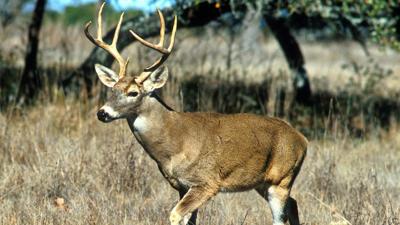
In November, Americans were stunned by a viral video that showed two teenagers kicking and stomping an injured white tail deer they had just shot. In the 30-second clip, Alex Smith, 18, and his companion could be seen laughing and ripping off one of the deer’s antlers as the injured animal tried to get away.
Today, Pennsylvania charged the two teens with multiple counts of felony and misdemeanor animal cruelty under a law that the Humane Society of the United States fought hard to pass in the state two years ago. The charges include four felony counts of aggravated cruelty to animals, one misdemeanor count of corruption of minors, a misdemeanor count of cruelty to animals, a misdemeanor count of…
BEAVER TWP., Pa. – Two Pennsylvania teenagers are charged after the Pennsylvania Game Commission says they held down and repeatedly kicked an immobile white-tailed deer and recorded social media videos of themselves doing it.
Alexander Brock Smith, 18, and a 17-year-old boy face two felony counts of aggravated animal cruelty and two felony counts of conspiracy to commit aggravated animal cruelty. the game commission said in a news release. They also face several other misdemeanor and summary counts. The Pennsylvania Game Commission does not release the names of minors who are charged with violations of the state Game and Wildlife Code.
The game commission started investigating after a viewer shared a video to the agency’s Facebook page.
Thousands of people worldwide have viewed the videos.
Both suspects said they were hunting together on Nov. 30 in an enclosed tree stand on property Smith’s family owns in Beaver Township, Jefferson County…
Facebook CEO Mark Zuckerberg doesn’t kill his own food anymore but still enjoys the thrill of the hunt.
The billionaire executive talked about his bowhunting hobby in response to a comment on his recent Facebook post announcing his New Year’s resolutions.
“I miss the ‘I’m going to personally kill what I eat’ days,” a…
There’s an invasion afoot at the border of Central America and South America. The assailant: North America’s coyote.
Coyotes are among the most adaptable species in the world. No matter where they go, they seem to make themselves at home, from the frosty tundras of Canada to the deserts of Mexico to the busy cities of the United States. Historically, their range ended where the jungles of Central America began, but now scientists worry that barrier isn’t holding up.
A recent study underscores why: Deforestation in the rainforests of Panama has carved out new routes of passage for the coyote. Before long, the paper’s authors warn, the species could inhabit an entirely new continent — the first wave in what could be a new threat to the biodiversity of the Western hemisphere.
The study, published recently in the Journal of Mammalogy, used camera-trap surveys and data from roadkill to track the movement of the intrepid animal. Coyotes began punching through the jungles south of Mexico in the 1950s, reaching the isthmus of Panama in the early 1980s. Since then, as the country lost hundreds of thousands of acres of jungle to agriculture, the animals rapidly expanded their territory, crossing the Panama Canal around 2014.
in the course of just three years, beginning in 2015, the animals pushed forward their territory by at least 124 miles, the study says. Scientists have detected the species all the way to the western edge of Panama’s Darien National Park — the last obstacle left before they reach South America.
That obstacle might just hold back the coyote’s conquest. After all, humans have yet to tame Darien’s dense jungles and wetlands, home to fierce jaguars and deadly snakes. Attempts at completing a road through the region — which would have filled the last remaining gap in the Pan-American Highway running from northern Alaska to the southern tip of Argentina — failed in the 1970s, and humans have yet to attempt it since.
But the cunning coyote might yet prevail. “Anyone who studies coyotes for long knows not to underestimate them,” said Roland Kays, head of the Biodiversity Lab at the North Carolina Museum of Natural Sciences and co-author of the study.
Kays points out that another invasive species has already made the jump from one American continent to the next — in the opposite direction. The crab-eating fox, another adventurous canid species native to South America, made its way from Colombia to Panama through the Darien gap a couple of years ago, also largely thanks to deforestation. The fox species and the coyote now share territory for the first time in recorded history.
The ramifications for such a species interchange have yet to be seen, but if previous episodes of invasive species tell us anything, it won’t be good. Coyotes that reach South America would almost certainly spread far and wide, just as they have in the north. The coyotes aren’t typically any more threatening than feral dogs. But they would disrupt food chains and compete for ecological resources with native wildlife across the continent. They would also clash with South American human communities, as they have in North American cities.
And coyotes could just be the start. As deforestation continues, other species might follow the path across the Darien gap, including insects and agricultural pests. Who knows what havoc such travelers could wreak on either side of the Panamanian land bridge?
Such an event alone would probably not pose existential threats to American continents. Wildlife, after all, has proved resilient and adaptable. But invasive species would add another stress to ecosystems already strained by human-made challenges, such as climate change and habitat destruction. Combined, these forces could unleash unforeseen ripple effects for decades — even centuries — to come.
Why risk such a fate? Fortunately, the nations of Central America resolved last month at the U.N. COP 25 Climate Change Conference to halt the destruction of the “five great forests” of southern Mexico and Central America, including the Darien. It’s an encouraging development, but those nations must be held accountable to make sure they actually follow through.
To begin, they can set one concrete goal: Hold the line against invading coyotes. Fortify the region’s rainforest defenses. Do everything possible to keep these animals from arriving in a new continent. If we can stave off this offense, perhaps we can win the bigger war to save biodiversity.
President Trump speaks during a White House event on Thursday. Drew Angerer/Getty Images
The White House says President Donald Trump plans to do some reading about climate change. But the specific book he has his eye on is the stuff of a Saturday Night Live skit.
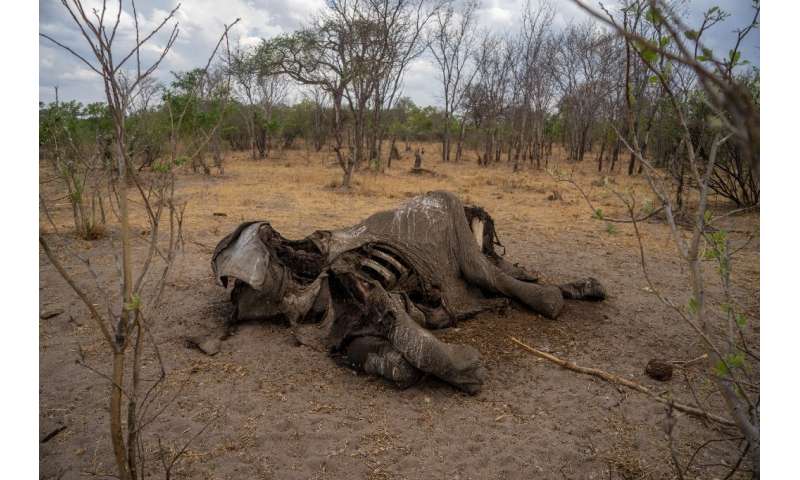
Taken on November 12, 2019 it shows the carcass of an elephant that succumbed to drought in the Hwange National Park, in Zimbabwe.
Zimbabwean villager Dumisani Khumalo appeared to be in pain as he walked gingerly towards a chair under the shade of a tree near his one-room brick shack.
The 45-year-old was attacked by a buffalo days earlier, and he was lucky to be on his feet.
Wild animals in Zimbabwe were responsible for the deaths of at least 36 people in 2019, up from 20 in the previous year.
“I thank God that I survived the attack,” said Khumalo with a laugh, making light of the fact that the buffalo almost ripped off his genitals.
Authorities recorded 311 animal attacks on people last year, up from 195 in 2018.
The attacks have been blamed on a devastating drought in Zimbabwe which has seen hungry animals breaking out of game reserves, raiding human settlements in search of food and water.
“The cases include attacks on humans, their livestock and crops,” said national parks spokesman Tinashe Farawo.
He said elephants caused most fatalities, while hippos, buffalos, lions, hyenas and crocodile also contributed to the toll.
Hwange National Park, which is half the size of Belgium, is Zimbabwe’s largest game park and is situated next to the famed Victoria Falls. The park is not fenced off.
Animals breach the buffer and “cross over to look for water and food as there is little or none left in the forest area,” Farawo said
Starving animals
Khumalo vividly remembers the attack.
More than 200 elephants starved to death over three months last year
He was walking in a forest near his Ndlovu-Kachechete village to register for food aid, when he heard dogs barking.
Suddenly a buffalo emerged from the bush and charged, hitting him in the chest and tossing him to the ground.
It went for his groin and used its horn to rip off part of the skin around his penis.
Khumalo grabbed the buffalo’s leg, kicked it in the eye and it scampered off.
Villagers in Zimbabwe’s wildlife-rich but parched northwestern region are frequently fighting off desperately hungry game.
More than 200 elephants starved to death over three months last year.
Despite suspecting that Khumalo was hunting illegally when he was attacked, Phindile Ncube, CEO of Hwange Rural District Council admitted that wild animals are killing people and that the drought has worsened things.
“Wild animals cross into human-inhabited areas in search of water as … sources of drinking water dry up in the forest,” said Ncube.
He described an incident that took place a few weeks earlier, during which elephants killed two cows at a domestic water well.
Armed scouts have been put on standby to respond to distress calls from villagers.
But it was while responding to one such call that the scouts inadvertently shot dead a 61-year-old woman in Mbizha village, close to Khumalo’s.
“As they tried to chase them off one (elephant) charged at them and a scout shot at it. He missed, and the stray bullet hit and killed Irene Musaka, who was sitting by a fire outside her hut almost a mile away.”
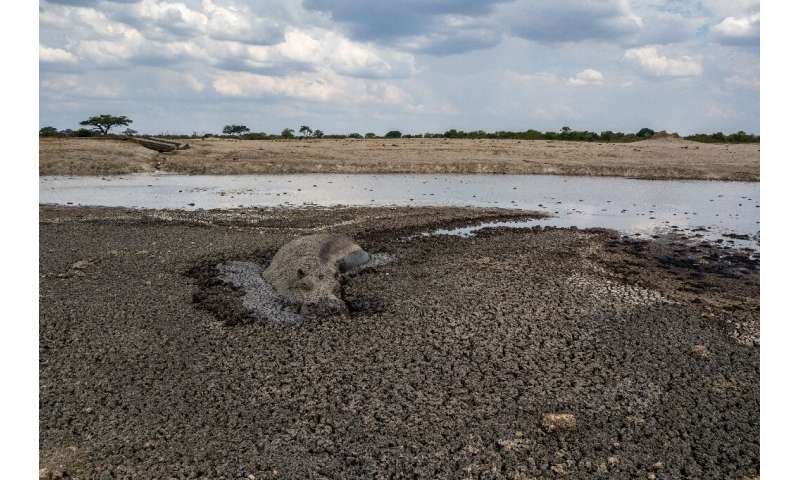
In this file photo taken on November 12, 2019 a hippo is stuck in the mud at a drying watering hole in the Hwange National Park, in Zimbabwe.
Chilli cake repellant
Locals are encouraged to play their part to scare off animals. One way is to beat drums.
But the impact is limited.
“Animals, such as elephants get used to the noise and know it… won’t hurt them, so it does not deter them in the long term,” said George Mapuvire, director of Bio-Hub Trust, a charity that trains people to respond to animal attacks.
Bio-Hub Trust advocates for a “soft approach” that encourages peaceful co-existence between humans and wildlife.
Mapuvire suggested burning home-made hot chilli cakes to repel wildlife.
“You mix chilli powder with cow or elephant dung and shape it into bricks, once the bricks dry, you can burn them when elephants are approaching. They can’t stand the smell!”
Villagers have created an elephant alarm system by tying strings of empty tin cans to trees and poles.
When the cans click, they know an elephant is approaching and they light chilli cakes to keep it away.
Another way of keeping elephants at bay is the chilli gun, a plastic contraption loaded with ping-pong balls injected with chilli oil.
“When it hits an elephant, it disintegrates, splashing the animal with the chilli oil,” Mapuvire explained.





/cdn.vox-cdn.com/uploads/chorus_image/image/66081867/1192749711.jpg.0.jpg)

 Exposing the Big Game