By Karen Davis, PhD, President, United Poultry Concerns
If we cannot imagine how chickens must feel being grabbed in the middle of the night by men who are cursing and yelling at them while pitching them into the crates in which they will travel to the next wave of human terror attacks at the slaughterhouse, then we should try to imagine ourselves placed helplessly in the hands of an overpowering extraterrestrial species, to whom our pleas for mercy sound like nothing more than mere noise to the master race in whose “superior” minds we are “only animals.”
– Karen Davis, The Holocaust and the Henmaid’s Tale
“The garbage dump is crammed with our heads and entrails.”
– Rooster narrator of “Cockadoodledoo” by Isaac Bashevis Singer
Month-old chickens in a commercial operation courtesy of the PEW Charitable Trust
Eternal Treblinka
Some people will say that treating creatures badly in order to eat them is a far cry from treating creatures badly simply because you hate them, but Charles Patterson notes in his book, Eternal Treblinka: Our Treatment of Animals and the Holocaust, that the psychology of contempt for “inferior life” links the Nazi mentality to that which allows us to torture and kill billions of nonhuman animals and millions of human beings with no more concern for them and their suffering than Hannibal Lecter and Jame Gumb feel for their victims, apart from the pleasure they derive from the taste of their victims’ pain, in Thomas Harris’s book, The Silence of the Lambs. That book says that the plight of the lambs screaming in the slaughterhouses – the whole human enterprise of degradation, cruelty, and murder – “will not end, ever” (Harris, 366).
Eternal Treblinka reminds us of all those other slaughterhouses that were running alongside the human ones under the Nazis – “Around-the-clock killing and butchering” conducted at Treblinka, Auschwitz, in Dresden, and elsewhere (Patterson, 129). In their diaries and letters, Nazi officials note indifferently such things as “huge slaughter of chickens and pigs” (Patterson, 125), and they dote on their meals. One writes to his wife: “The sight of the dead – including women and children – is not very cheering. Once the cold weather sets in you’ll be getting a goose now and again. There are over 200 chattering around here, as well as cows, calves, pigs, hens and turkeys. We live like princes. Today, Sunday, we had roast goose (1/4 each). This evening we are having pigeon” (Patterson, 129).
In Eternal Treblinka, chickens and pigs shriek as they are being cursed and butchered. Nazis bear their souls in letters and diaries. We read the opposing testimony of Holocaust survivors and their descendants. A question raised over and over by those who became vegetarians rather than perpetuate the legacy of butchery in their own lives, is “How can ‘we’ do to ‘them’ what was done to ‘us’ and not even recognize it?” Because, says Albert Kaplan, “we have learned nothing from the Holocaust” (Patterson, 167). Kaplan tells of a visit he made in Israel to a kibbutz Holocaust museum near Haifa: “Around two hundred feet from the main entrance to the museum is an Auschwitz for animals from which emanates a horrible odor that envelops the museum. I mentioned it to the museum management. Their reaction was not surprising. ‘But they are only chickens’” (Patterson, 166).
Degradation of the Victim
Christa Blanke, a former Lutheran pastor in Germany and founder of the organization Animals’ Angels, cites a link between how we treat animals and Nazism. First we strip the animals of their dignity – “The degradation of the victim always precedes a murder” (Patterson, 228). But, we want to know, why do humans want to degrade and kill? Serial killer Ted Bundy said it wasn’t that he had no feelings of remorse for his victims, but that those feelings were weak and ephemeral compared to his rapacious emotions (Rule). Naturalist John Muir wrote that the people he knew enjoyed seeing the passenger pigeons fill the sky, but they liked shooting and eating them more – “Every shotgun was aimed at them” (Teale, 46).
Comfort with Cruelty
The Holocaust thus raises questions, and we long for answers. Why, asked Isaac Bashevis Singer, do we pretend animals don’t feel in order to justify our cruelty, but even more importantly, why do we want to be cruel to animals? Is comfort with cruelty, taking pleasure in cruelty, a trait we carry from our past in our genes? Why, when we have the technology to duplicate animal products, do people insist they have to have meat? Why do we praise technology for developing substitutes for cruder practices in other areas of life while balking at its use to end slaughterhouses, which technology can do?
“Just Chickens”
The Holocaust epitomized an attitude, the manifestation of a base will. It is the attitude that we can do whatever we please, however vicious, if we can get away with it, because “we” are superior, and “they,” whoever they are, are, so to speak, “just chickens.” Paradoxically, therefore, it is possible, indeed requisite, to make relevant and enlightening comparisons between the Holocaust and our base treatment of nonhuman animals. We can make comparisons while agreeing with philosopher, Brian Luke: “My opposition to the institutionalized exploitation of animals is not based on a comparison between human and animal treatment, but on a consideration of the abuse of animals in and of itself” (Luke, 81).
Paradoxically, while the words “Nazi” and “Holocaust” represent unique historical phenomena, they can transcend these phenomena to function more broadly. And a broader approach to the Holocaust would appear to hold more promise for a more enlightened and compassionate future than attempting to privatize the event to the extent that its only permissible reference is self-reference. A broader approach provides a more just apprehension of past and present atrocities, while connecting the Nazis and the Holocaust to the larger ethical challenges confronting humanity.
Identity or Exclusivity?
In A Little Matter of Genocide: Holocaust and Denial in the Americas 1492 to the Present, Native American scholar Ward Churchill writes that the experience of the Jews under the Nazis is unique “only in the sense that all such phenomena exhibit unique characteristics. Genocide, as the Nazis practiced it, was never something suffered exclusively by the Jews, nor were the Nazis singularly guilty of its practice” (Churchill 1997, 35-36).
One of the many questions that emerge from the current debate about the use of the Holocaust to illuminate humankind’s relationship to billions of nonhuman animals is the extent to which the outrage of having one’s own suffering compared to that of others centers primarily on issues of identity and uniqueness or on issues of superiority and privilege. The ownership of superior and unique suffering has many claimants, but as Isaac Bashevis Singer observed speaking of chickens, there is no evidence that humans are more important than chickens (Shenker, 11).
The Fascist Within
There is no evidence, either, that human suffering, or Jewish suffering, is separate from all other suffering, or that it needs to be kept separate and superior in order to maintain its identity. But where, it may be asked, is the evidence that we humans have had enough of inflicting massive preventable suffering on one another and on the individuals of other species, given that we know suffering so well, and claim to abhor it? In Eternal Treblinka: Our Treatment of Animals and the Holocaust, Charles Patterson concludes: “the sooner we put an end to our cruel and violent way of life, the better it will be for all of us – perpetrators, bystanders, and victims” (232). Who but the Nazi within us disagrees? If we are going to exterminate someone, let it be the fascist within.
As Australia burns, the media shows harrowing scenes of indigenous species like koalas and kangaroos, injured, burned and dying. We see so many human interest stories, individual koala mothers with infants clutching at their fur being rescued and cared for; we are invited to feel the personal tragedy of a single kangaroo joey tangled in the fence where he was incinerated. Whether mourned or rescued, they are viewed as individuals, and we are united in hope for their survival, watching with bated breath as we are shown desperate creatures under an orange sky, fleeing through the smoke with the inferno roaring at their heels. The estimated number of 500,000,000 deaths has remained static for well over a week and has no doubt been wildly exceeded by now – possibly by several orders of magnitude – and will continue to climb.
I see occasional comments that wonder why no count is…
An Iranian military truck carries a US-made Hawk air-defense missile system during a parade on the occasion of the country’s Army Day on April 18, 2017 in Tehran. Atta Kenare/AFP/Getty Images
intraceable, ruthless proxies spreading chaos on multiple continents. Costly miscalculations. And thousands — perhaps hundreds of thousands — killed in a conflict that would dwarf the war in Iraq.
Welcome to the US-Iran war, which has the potential to be one of the worst conflicts in history.
The Thursday night killing of Maj. Gen. Qassem Soleimani, who led Iranian covert operations and intelligence and was one of the country’s most senior leaders, brought Washington and Tehran closer to fighting that war. Iran has every incentive to retaliate, experts says, using its proxies to target US commercial interests in the Middle East, American allies, or even American troops and diplomats hunkered down in regional bases and embassies.
It’s partly why the Eurasia Group, a prominent international consulting firm, now puts the chance of “a limited or major military confrontation” at 40 percent.
But the seeds of conflict weren’t planted with Thursday’s airstrikes alone. Washington and Tehran have remained locked in a months-long standoff that only continues to escalate. The US imposed crushing sanctions on Iran’s economy over its support for terrorism and its growing missile program, among other things, after withdrawing from the 2015 nuclear deal last year; Iran has fought back by violating parts of the nuclear agreement, bombing oil tankers, and downing an American military drone.
The crisis has become more acute over the past week. An Iranian-backed militia killed an American contractor while wounding others in rocket attacks, leading the Trump administration to order retaliatory strikes on five targets in Iraq and Syria that killed 25 of the militia’s fighters. In protest, the militia — Ketaib Hezbollah — organized a rally outside the US embassy in Baghdad where some got inside the compound and set parts of it ablaze.
That led Secretary of Defense Mark Esper to tell reporters on Thursday that “if we get word of attacks, we will take pre-emptive action as well to protect American forces, protect American lives,” adding “the game has changed.” The US killed Soleimani hours after that statement, underscoring that change.
Importantly, experts note that neither country wants a full-blown conflict, with President Donald Trump saying he prefers “peace” when it comes to Iran. But the possibility of war breaking out anyway shouldn’t be discounted, especially now that Iran’s leadership has sworn to avenge Soleimani. “The great nation of Iran will take revenge for this heinous crime,” Iranian President Hassan Rouhani tweeted Friday morning.
Hassan Rouhani
✔@HassanRouhani
The flag of General Soleimani in defense of the country’s territorial integrity and the fight against terrorism and extremism in the region will be raised, and the path of resistance to US excesses will continue. The great nation of Iran will take revenge for this heinous crime.
Which means US-Iran relations teeter on a knife edge, and it won’t take much more to knock them off. So to understand just how bad the situation could get, I asked eight current and former White House, Pentagon, and intelligence officials, as well as Middle East experts, last July about how a war between the US and Iran might play out.
The bottom line: It would be hell on earth.
“This would be a violent convulsion similar to chaos of the Arab Spring inflicted on the region for years,” said Ilan Goldenberg, the Defense Department’s Iran team chief from 2009 to 2012, with the potential for it to get “so much worse than Iraq.”
How the US-Iran war starts
US-imposed sanctions have tanked Iran’s economy, and Tehran desperately wants them lifted. But with few options to compel the Trump administration to change course, Iranian leaders may choose a more violent tactic to make their point, especially after Soleimani’s death.
Iranian forces could bomb an American oil tanker traveling through the Strait of Hormuz, a vital waterway for the global energy trade aggressively patrolled by Tehran’s forces, causing loss of life or a catastrophic oil spill. The country’s skillful hackers could launch a major cyberattack on regional allies like Saudi Arabia or the United Arab Emirates.
That last option is particularly likely, experts say. After all, Iran bombed US Marine barracks in Lebanon in 1983 and killed more than 600 US troops during the Iraq War. Taking this step may seem extreme, but “Iran could convince itself that it could do this,” Goldenberg, now at the Center for a New American Security think tank in Washington, told me.
At that point, it’d be nearly impossible for the Trump administration not to respond in kind. The recommendations given to the president would correspond to whatever action Iran took.
If Tehran destroyed an oil tanker, killing people and causing an oil spill, the US might destroy some of Iran’s ships. If Iran took out another US military drone, the US might take out some of Iran’s air defenses. And if Iranian-backed militants killed Americans in Iraq, then US troops stationed there could retaliate, killing militia fighters and targeting their bases of operation in return. The US could even bomb certain training grounds inside Iran or kill high-level officials.
Fire and smoke billowing from the Norwegian-owned Front Altair oil tanker attacked in the waters of the Gulf of Oman on June 13, 2019. The US blames Iran for the bombing. AFP/Getty Images
It’s at this point that both sides would need to communicate their red lines to each other and how not to cross them. The problem is there are no direct channels between the two countries and they don’t particularly trust each other. So the situation could easily spiral out of control.
Messaging “is often more important than physical action,” Jasmine El-Gamal, formerly a Middle East adviser at the Pentagon, told me. “Action without corresponding messaging, public or private, could most certainly lead to escalation because the other side is free to interpret the action as they wish.”
Which means the initial tit-for-tat would serve as the precursor to much more bloodshed.
“What are we going to be wrong about?”
You may have heard the phrase “the fog of war.” It refers to how hard it is for opposing sides to know what’s going on in the heat of battle. It’s particularly difficult when they don’t talk to one another, as is the case with the US and Iran.
Which means that the way the US and Iran interpret each other’s next moves would mainly come down to guesswork.
Eric Brewer, who spent years in the intelligence community before joining Trump’s National Security Council to work on Iran, told me that’s when the Pentagon and other parts of the government rely heavily on their best-laid plans.
The problem, he noted, is that wars rarely play out as even the smartest officials think they will. A guiding question for him, then, is “what are we going to be wrong about?”
Here’s one scenario in which the US might get something wrong — and open up the door to chaos: After America launches its first set of retaliatory strikes, Iran decides to scatter its missiles to different parts of the country.
Now the Trump administration has to figure out why Iran did that. Some people in the administration might think it’s because Tehran plans to attack US embassies, troops, or allies in the region and is moving its missiles into position to do so. Others might believe that it was merely for defensive reasons, with Iran essentially trying to protect its missile arsenal from being taken out by future US strikes.
Without a clear answer, which interpretation wins out comes down to which camp in the Trump administration is the most persuasive. And if the camp that believes Iran is about to launch missile strikes wins, they could convince the president to take preemptive action against Iran.
That could be a good thing if they were right; after all, they’d have made sure Iran couldn’t carry out those planned attacks. But what if they were wrong? What if the other camp guessed correctly that Iran was merely moving its missiles around because it was scared the US would strike once more? In that case, the US would have bombed Iran again, this time for essentially no reason — thus looking like the aggressor.
That could cause Iran to retaliate with a bigger attack, setting off a spiral that could end in full-scale war.
Iran could make a grave error too. Imagine Trump sends thousands of troops, say 25,000, along with advanced warplanes to the Middle East in the hope that they’ll deter Iran from escalating the conflict any further.
Tehran could just as easily read that buildup as preparation for a US invasion. If that’s the case, Iranian forces could choose to strike first in an effort to complicate the perceived incursion.
US Navy sailors on the flight deck of USS Abraham Lincoln on May 10, 2019, in the Red Sea. Mass Communication Specialist Mass Communication Specialist 3rd Class Amber Smalley/US Navy via Getty Images
Of course, cooler heads could prevail in those moments. But experts say the political pressures on both Washington and Tehran not to be attacked first — and not to be embarrassed or look weak — might be too strong for the countries’ leaders to ignore.
“Unintended civilian casualties or other collateral damage is always possible, and it is not clear that this administration — or any administration — understands what Iran’s own red lines are,” El-Gamal, now at the Atlantic Council think tank in Washington, told me. “As such, the greatest risk of a full-blown war comes from one side miscalculating the other’s tolerance” for conflict.
If that proves true, and the US and Iran officially escalate their fighting to more than a few one-off attacks, it’s war.
What the US-Iran war might look like
At this point, it’s hard to be very precise about a hypothetical full-blown conflict. We know it would feature a series of moves and countermoves, we know it’d be very messy and confusing, and we know it’d be extremely deadly.
But unlike with the path to war, it’s less useful to offer a play-by-play of what could happen. So with that in mind, it’s better to look at what the US and Iranian war plans would likely be — to better understand the devastation each could exact.
How the US might try to win the war
The US strategy would almost certainly involve using overwhelming air and naval power to beat Iran into submission early on. “You don’t poke the beehive, you take the whole thing down,” Goldenberg said.
The US military would bomb Iranian ships, parked warplanes, missile sites, nuclear facilities, and training grounds, as well as launch cyberattacks on much of the country’s military infrastructure. The goal would be to degrade Iran’s conventional forces within the first few days and weeks, making it even harder for Tehran to resist American strength.
That plan definitely makes sense as an opening salvo, experts say, but it will come nowhere close to winning the war.
“It’s very unlikely that the Iranians would capitulate,” Michael Hanna, a Middle East expert at the Century Foundation in New York, told me. “It’s almost impossible to imagine that a massive air campaign will produce the desired result. It’s only going to produce escalation, not surrender.”
It won’t help that a sustained barrage of airstrikes will likely lead to thousands of Iranians dead, among them innocent civilians. That, among other things, could galvanize Iranian society against the US and put it firmly behind the regime, even though it has in many ways treated the population horribly over decades in power.
There’s another risk: A 2002 war game showed that Iran could sink an American ship and kill US sailors, even though the US Navy is far more powerful. If the Islamic Republic’s forces succeeded in doing that, it could provide a searing image that could serve as a propaganda coup for the Iranians. Washington won’t garner the same amount of enthusiasm for destroying Iranian warships — that’s what’s supposed to happen.
An Iranian Army soldier stands guard on a military speedboat, passing by a submarine during the “Velayat-90” navy exercises in the Strait of Hormuz on December 28, 2011. Ali Mohammadi/AFP/Getty Images
Trump has already signaled he doesn’t want to send ground troops into Iran or even spend a long time fighting the country. That tracks with his own inclinations to keep the US out of foreign wars, particularly in the Middle East. But with hawkish aides at his side, like Secretary of State Mike Pompeo, there’s a chance they could convince him not to look weak and to go all-in and grasp victory.
But the options facing the president at that point will be extremely problematic, experts say.
The riskiest one — by far — would be to invade Iran. The logistics alone boggle the mind, and any attempt to try it would be seen from miles away. “There’s no surprise invasion of Iran,” Brewer, who is now at the Center for Strategic and International Studies think tank in Washington, told me.
The geography is also treacherous. It has small mountain ranges along some of its borders. Entering from the Afghanistan side in the east would mean traversing two deserts. Trying to get in from the west could also prove difficult even with Turkey — a NATO ally — as a bordering nation. After all, Ankara wouldn’t let the US use Turkey to invade Iraq, and its relations with Washington have only soured since.
The US could try to enter Iran the way Saddam Hussein did during the Iran-Iraq war, near a water pass bordering Iran’s southwest. But it’s swampy — the Tigris and Euphrates rivers meet there — and relatively easy to protect. Plus, an invading force would run up against the Zagros Mountains after passing through, just like Saddam’s forces did.
It’s for these reasons that the private intelligence firm Stratfor called Iran a “fortress” back in 2011. If Trump chose to launch an incursion, he’d likely need around 1.6 million troops to take control of the capital and country, a force so big it would overwhelm America’s ability to host them in regional bases. By contrast, America never had more than 180,000 service members in Iraq.
And there’s the human cost. A US-Iran war would likely lead to thousands or hundreds of thousands of dead. Trying to forcibly remove the country’s leadership, experts say, might drive that total into the millions.
That helps explain why nations in the region hope they won’t see a fight. Goldenberg, who traveled recently to meet with officials in the Gulf, said that none of them wanted a US-Iran war. European nations will also worry greatly about millions of refugees streaming into the continent, which would put immense pressure on governments already dealing with the fallout of the Syrian refugee crisis. Israel also would worry about Iranian proxies targeting it (more on that below).
Meanwhile, countries like Russia and China — both friendly to Iran — would try to curtail the fighting and exploit it at the same time, the Century Foundation’s Hanna told me. China depends heavily on its goods traveling through the Strait of Hormuz, so it would probably call for calm and for Tehran not to close down the waterway. Russia would likely demand restraint as well, but use the opportunity to solidify its ties with the Islamic Republic.
President Donald Trump and Mohammed bin Salman, the crown prince of Saudi Arabia, stand side by side in the group picture at the G20 summit on June 28, 2019. Bernd von Jutrczenka/picture alliance via Getty Images
And since both countries have veto power on the UN Security Council, they could ruin any political legitimacy for the war that the US may aim to gain through that body.
The hope for the Trump administration would therefore be that the conflict ends soon after the opening salvos begin. If it doesn’t, and Iran resists, all that’d really be left are a slew of bad options to make a horrid situation much, much worse.
How Iran might try to win the war
Retired Marine Lt. Gen. Vincent Stewart left his post as the No. 2 at US Cyber Command in 2019, ending a decorated four-decade career. Toward the end of it, he spent his time at the forefront of the military intelligence and cybersecurity communities.
If anyone has the most up-to-date information on how Iran may fight the US, then, it’s Stewart.
“The Iranian strategy would be to avoid, where possible, direct conventional force-on-force operations,” he wrote for the Cipher Brief on July 2, 2019. “They would attempt to impose cost on a global scale, striking at US interests through cyber operations and targeted terrorism with the intent of expanding the conflict, while encouraging the international community to restrain America’s actions.”
In other words, Tehran can’t match Washington’s firepower. But it can spread chaos in the Middle East and around the world, hoping that a war-weary US public, an intervention-skeptical president, and an angered international community cause America to stand down.
That may seem like a huge task — and it is — but experts believe the Islamic Republic has the capability, knowhow, and will to pull off such an ambitious campaign. “The Iranians can escalate the situation in a lot of different ways and in a lot of different places,” Hanna told me. “They have the capacity to do a lot of damage.”
Take what it could do in the Middle East. Iran’s vast network of proxies and elite units — like Soleimani’s Islamic Revolutionary Guard Corps — could be activated to kill American troops, diplomats, and citizens throughout the region. US troops in Syria are poorly defended and have little support, making them easy targets, experts say. America also has thousands of civilians, troops, and contractors in Iraq, many of whom work in areas near where Iranian militias operate within the country.
US allies would also be prime targets. Hezbollah, an Iran-backed terrorist group in Lebanon, might attack Israel with rockets and start its own brutal fight. We’ve heard this story before: In 2006, they battled in a month-long war where the militant group fired more than 4,000 rockets into Israel, and Israeli forces fired around 7,000 bombs and missiles into Lebanon.
About 160 Israelis troops and civilians died, according to the Israel Ministry of Foreign Affairs, and about 1,100 Lebanese — most of them civilians — perished, per Human Rights Watch, a US-headquartered advocacy organization. It also reports about 4,400 Lebanese were injured, and around 1 million people were displaced.
But that’s not all. Iran could encourage terrorist organizations or other proxies to strike inside Saudi Arabia, the United Arab Emirates, and other Gulf nations. Last year, it planned and executed drone strikes on two major Saudi oil facilities deep inside the kingdom, convulsing world markets. Its support for Houthis rebels in Yemen would mostly certainly increase, offering them more weapons and funds to attack Saudi Arabia’s airports, military bases, and energy plants.
The US government on April 8, 2019, said it had designated the IRGC as a terrorist organization, marking the first time a US government has made such a designation on a foreign government’s organization. Rouzbeh Fouladi/NurPhoto via Getty Images
Experts note that the Islamic Republic likely has sleeper cells in Europe and Latin America, and they could resurface in dramatic and violent ways. In 1994, for example, Iranian-linked terrorists bombed the hub of the Jewish community in Argentina’s capital, Buenos Aires, killing 85 people and injuring roughly 300 more.
That remains the largest terrorist attack in Latin America’s history, and the possibility for an even bigger one exists. In 2018, Argentina arrested two men suspected of having ties with Hezbollah.
But Chris Musselman, formerly the National Security Council’s counterterrorism director under Trump, told me the US and its allies may have the most trouble containing the proxy swarm in Western Africa.
“We could see a conflict that spread quickly to places the US may not be able to protect people, and it’s a fight that we are grossly unprepared for,” he said, adding that there’s a strong Hezbollah presence in the region and American embassy security there isn’t great. Making matters worse, he continued, the US isn’t particularly good at collecting intelligence there, meaning some militants could operate relatively under the radar.
“This isn’t really a law enforcement function that US can take on a global scale,” he said. It would require that countries unwittingly hosting proxies to lead on defeating the Iranian-linked fighters, with US support when needed.
The chaos would also extend into the cyber realm. Iran is a major threat to the US in cyberspace. Starting in 2011, Iran attacked more than 40 American banks, including JPMorgan Chase and Bank of America. The attack made it so the banks had trouble serving its customers and customers had trouble using the bank’s services.
In 2012, Iran released malware into the networks of Saudi Aramco, a major oil company, which erased documents, emails, and other files on around 75 percent of the company’s computers — replacing them with an image of a burning American flag.
In the middle of a war, one could imagine Tehran’s hackers wreaking even more havoc.
“I would expect them to have begun selected targeting through socially-engineered phishing activities focused on the oil and gas sector, the financial sector and the electric power grid in that order,” Stewart wrote. “There may be instances now where they already have some persistent access. If they do, I expect they would use it, or risk losing the access and employ that capability early in the escalation of the crisis.”
Recent reports indicate that Iranian cyberwarriors have stepped up their online operations, with a particular emphasis on preparing to attack US firms. Among other moves, they’re aiming to trick employees at major businesses to hand over passwords and other vital information, giving them greater access to a firm’s networks.
“When you combine this increase with past destructive attacks launched by Iranian-linked actors, we’re concerned enough about the potential for new destructive attacks to continue sounding the alarm,” Christopher Krebs, a top cybersecurity official at the Department of Homeland Security, told Foreign Policy last July.
Iranian Supreme Leader Ayatollah Ali Khamenei attends a graduation ceremony of the Iranian Navy cadets in the city of Noshahr on September 30, 2015. Office of the Iranian Supreme Leader/Anadolu Agency/Getty Images
All of this — proxies striking around the world, cyberattacks on enterprise — would happen while Iran continued to resist conventional American forces.
In the Strait of Hormuz, for instance, Iranian sailors could use speedboats to place bombs on oil tankers or place mines in the water to destroy US warships. The Islamic Republic’s submarines would also play a huge part in trying to sink an American vessel. And the nation’s anti-ship missiles and drones could prove constant and deadly nuisances.
Should US troops try to enter Iranian territory on land, Iranian ground forces would also push back on them fiercely using insurgent-like tactics while the US painfully marches toward Tehran.
Put together, Brewer notes succinctly, a US-Iran war would be “a nasty, brutal fight.”
Aftermath: “The worst-case scenarios here are quite serious”
Imagine, as we already have, that the earlier stages of strife escalate to a major war. That’s already bad enough. But assume for a moment not only that the fighting takes place, but that the US does the unlikely and near impossible: It invades and overthrows the Iranian regime (which Trump’s former National Security Adviser John Bolton, at least, has openly called for in the past).
If that happens, it’s worth keeping two things in mind.
First, experts say upward of a million people — troops from both sides as well as Iranian men, women, and children, and American diplomats and contractors — likely will have died by that point. Cities will burn and smolder. Those who survived the conflict will mainly live in a state of economic devastation for years and some, perhaps, will pick up arms and form insurgent groups to fight the invading US force.
Second, power abhors a vacuum. With no entrenched regime in place, multiple authority figures from Iran’s clerical and military circles, among others, will jockey for control. Those sides could split into violent factions, initiating a civil war that would bring more carnage to the country. Millions more refugees might flock out of the country, overwhelming already taxed nations nearby, and ungoverned pockets will give terrorist groups new safe havens from which to operate.
Iran would be on the verge of being a failed state, if it wasn’t already by that point, and the US would be the main reason why. To turn the tide, America may feel compelled to help rebuild the country at the cost of billions of dollars, years of effort, and likely more dead. It could also choose to withdraw, leaving behind a gaping wound in the center of the Middle East.
In some ways, then, what comes after the war could be worse than the war itself. It should therefore not be lost on anyone: A US-Iran war would be a bloody hell during and after the fighting. It’s a good thing neither Trump nor Iran’s leadership currently wants a conflict. But if they change their minds, only carnage follows.
“The worst-case scenarios here are quite serious,” Hanna told me.
Refugees on April 5, 2019, camp out in Greece as they flee violence in the Middle East. Nicolas Economou/NurPhoto via Getty Images
Almost a half a billion non-human animals have perished in the Australian fires in the past month. A few dozen humans have also died. All of these deaths are a tragedy of epic proportions.
Imagine if that were half a billion humans. Hard to comprehend but such a horrific tragedy is on the horizon before the end of this century.
Some 8,000 Koalas have been reported as having perished in the fires. The numbers are most likely much higher.
The world is beginning to burn and the reality of the catastrophic consequences are beginning to pry open the closed minds of many deniers, especially when it it is their home and their lives are are being directly affected.
Most of the media coverage is focused on the human tragedies but by comparison, humans fared relatively well, at least so far.
In this aerial view ice lies in a lake formed by meltwater from the Rhone glacier on August 19, 2019 near Obergoms, Switzerland. Credit: Sean Gallup Getty Images
The 2010s were almost certainly the hottest decade on record — and it showed. The world burned, melted and flooded. Heat waves smashed temperature records around the globe. Glaciers lost ice at accelerating rates. Sea levels continued to swell.
At the same time, scientists have diligently worked to untangle the chaos of a rapidly warming planet.
In the past decade, scientists substantially improved their ability to draw connections between climate change and extreme weather events. They made breakthroughs in their understanding of ice sheets. They raised critical questions about the implications of Arctic warming. They honed their predictions about future climate change.
As another decade begins, scientists say there are more questions to be answered. We asked climate researchers across a variety of disciplines about the biggest priorities and hottest topics for the 2020s. Here’s what they said.
ARCTIC MYSTERIES
The Arctic is warming faster than anywhere else on Earth, with temperatures rising at least twice as fast as the global average. Many scientists believe that understanding the consequences of Arctic warming is essential for making accurate predictions about climate change around the world.
Some of these links are straightforward. Melting Arctic ice pouring into the ocean can raise global sea levels. Thawing permafrost can release large amounts of carbon dioxide and methane into the atmosphere, potentially accelerating the rate of global warming.
Others are more contentious.
In the last decade, a growing scientific debate has arisen about the influence of Arctic warming on global climate and weather patterns, particularly in the midlatitudes.
Some observational studies have pointed to a statistical connection between Arctic warming and weather events in places like the United States, Europe and parts of Asia — for instance, a link between shrinking sea ice and cold winters in Siberia, or Arctic heat waves and extreme winter weather in the United States.
The trouble is models have a hard time capturing the causes driving these connections.
“No one argues that the Arctic meltdown will affect weather patterns, the question is exactly how,” said Arctic climate expert Jennifer Francis, a researcher at Woods Hole Research Center. “So figuring out what’s not right in the models will be a major focus. Without realistic models, it’s hard to use them to separate Arctic influences from other possible factors.”
Resolving the debate will require “a combination of data and modeling,” according to NASA climatologist Claire Parkinson. Many scientists are already hard at work on this issue.
One ongoing project known as the Polar Amplification Model Intercomparison Project is conducting a series of coordinated model experiments, all using the same standard methods, to investigate the Arctic climate and its connections to the rest of the globe. Experts say these kinds of projects may help explain why modeling studies conducted by different groups with different methods don’t always get the same results.
At the same time, improving the way that physical processes are represented in Arctic climate models is also essential, according to Xiangdong Zhang, an Arctic and atmospheric scientist at the University of Alaska, Fairbanks.
Outside that debate, there are still big questions about the Arctic climate to resolve. Scientists know the Arctic is heating up at breakneck speed — but they’re still investigating all the reasons why.
Researchers believe a combination of feedback processes are probably at play. Sea ice and snow help reflect sunlight away from the Earth. As they melt away, they allow more heat to reach the surface, warming the local climate and causing even more melting to occur.
One key question for the coming decade, Zhang said in an email, is “what relative role each of the physical processes plays and how these processes work together” to drive the accelerating warming.
Unraveling these feedbacks will help scientists better predict how fast the Arctic will warm in the future, according to Francis — and how quickly they should expect its consequences to occur. They include vanishing sea ice, thawing permafrost and melting on the Greenland ice sheet.
OCEANS AND ICE
Sea-level rise is one of the most serious consequences of climate change, with the potential to displace millions of people in coastal areas around the world.
At the moment, the world’s oceans are rising at an average rate of about 3 millimeters each year. It appears to be speeding up over time. That may not sound like much, but scientists are already documenting an increase in coastal flooding in many places around the world.
Accurately predicting the pace of future sea-level rise is one of the biggest priorities in climate science. And one of the biggest uncertainties about future sea-level rise is the behavior of the Greenland and Antarctic ice sheets, both of which are pouring billions of tons of ice into the ocean each year.
Recent satellite studies have found that ice loss in both places is speeding up. Antarctica is losing about three times as much ice as it was in the 1990s, while losses in Greenland may be as much as seven times higher than they were in previous decades.
Investigating the processes driving the accelerations — and then using that knowledge to fine-tune predictions of future sea-level rise — is a key priority for 2020 and beyond, according to Marco Tedesco, an ice sheet expert at Columbia University.
“How do we connect the physical processes that we do understand are creating this acceleration from Greenland and Antarctica, very likely over the next decade, to sea-level rise impacts?” he asked E&E News. “And how do we account for the potential shocks of the things that we cannot anticipate still?”
Some scientists worry that as ice loss continues to speed up in both Greenland and Antarctica, parts of the ice sheets could eventually destabilize and collapse entirely — leading to catastrophic sea-level rise.
In recent years, scientists have discovered that warm ocean currents are helping to melt some glaciers from the bottom up, both in Greenland and particularly in parts of West Antarctica. Better understanding the relationship between oceans and ice is a key priority for glacier experts, Tedesco said.
At the same time, monitoring the way water melts and moves along the top of the ice is also a major priority. In Greenland, climate-driven changes in the behavior of large air currents like the jet stream may be helping to drive more surface melting.
“The important thing is to understand how Greenland mass loss can be connected to the recent changes in the atmospheric circulation that we are witnessing,” Tedesco said.
EXTREME WEATHER EVENTS
The past decade saw leaps and bounds in a field of climate research known as “attribution science” — the connection between climate change and extreme weather events.
It was once thought to be impossible, but scientists are now able to estimate the influence of global warming on individual events, like heat waves or hurricanes. In the past few years alone, scientists have found that some events are now occurring that would have been impossible in a world with no human-caused climate change.
As attribution science has advanced, researchers have been able to tackle increasingly complex events, like hurricanes and wildfires, which were previously too complicated to evaluate with any confidence. They’ve gotten faster, too — researchers are now able to assess some extreme events nearly in real time.
Some organizations are working to develop sophisticated attribution services, similar to weather services, which would release analyses of extreme events as soon as they occur. The German national weather service; the United Kingdom’s Met Office; and the Copernicus program, part of the European Centre for Medium-Range Weather Forecasts, have all begun exploring these kinds of projects.
At the same time, scientists are working to improve their predictions of future extreme events in a warming world.
So far, climate models predict that many extreme weather events will happen more frequently, or will become more severe, as the climate continues to change. Heat waves will be hotter, hurricanes will intensify, heavy rainfall events may happen more frequently in some places, and droughts may be longer in others.
Continuing to improve these kinds of predictions — and then communicating them in useful ways to communities that will be affected by them — is a major priority, according to Piers Forster, director of the Priestley International Centre for Climate at the University of Leeds.
There’s often great uncertainty when it comes to predicting extreme weather events, he noted — different climate models sometimes deliver vastly different results. But it can often be both expensive and time-consuming to run the models enough times, and at high enough resolutions, to investigate and narrow these uncertainties.
Tackling this issue is one of the key challenges for climate modeling in the coming years, Forster said, noting that “we need to get clever about how we use models to make projections and how we test them.”
PROJECTING THE FUTURE
Predicting how much the Earth will warm, given a certain level of greenhouse gas emissions, may seem like the simplest goal of climate modeling. But it’s harder than it sounds.
Climate models don’t always agree on the Earth’s exact sensitivity to greenhouse gas emissions — although they do tend to fall within a certain range. If global carbon dioxide concentrations were to double, for instance, models from the past decade have tended to predict that the Earth would warm from between 1.5 and 4.5 degrees Celsius.
Scientists around the world are working on a new suite of updated climate models, which will be used to inform future reports produced by the Intergovernmental Panel on Climate Change. But there’s one issue that’s already raising eyebrows, according to Zeke Hausfather, a climate scientist at the University of California, Berkeley — so far, the newer models seem to be predicting a much higher climate sensitivity than the older models.
“The high end is much higher,” he told E&E News. “There’s a number of models above 4.8 degrees sensitivity and even up to 5.6.”
Only about 20 new models have submitted results; far more will come pouring in before the project is complete. And as Hausfather pointed out, other recent studies have suggested that the Earth’s climate sensitivity might actually be narrower than the old models suggested.
But it’s something to keep in mind at a time when accurate predictions about future warming are more pressing than ever.
“The fact that some of these models are high is interesting but doesn’t necessarily mean we should believe them over other lines of evidence,” Hausfather said. “It just reflects the fact that climate sensitivity is this huge remaining source of uncertainty in our climate projections.”
At the same time, climate modelers are also working to hone their projections in other ways. Models are able to capture increasingly complex processes the more they advance. But there are still a few key areas scientists are focused on improving.
Clouds, for instance, are believed to have a significant influence on the climate system. But they’re notoriously difficult to reproduce in climate models. Certain aspects of the carbon cycle are also underrepresented in models, Hausfather noted — for instance, the way that forests and oceans absorb or release greenhouse gases into the atmosphere.
And scientists are also working to develop more realistic climate scenarios for their modeling projects. In the past, many studies have focused on a “business as usual” climate scenario, which suggests high rates of future greenhouse gas emissions, the continued expansion of coal, and other assumptions about industry and socioeconomics that may no longer be realistic, according to Hausfather.
While global climate action is still significantly lagging when it comes to meeting the goals of the Paris climate agreement, the future may not be as dire as previous business-as-usual climate studies would suggest. Focusing new studies on more realistic scenarios may be more useful to policymakers and communities trying to plan for the future.
“In many ways the range of possible futures is narrowing,” Hausfather said. “As we get closer to 2100 and as the world takes more climate action, the worst-case 4 degrees-plus warming scenarios are a lot less likely.”
About this blog: Climate change, despite its outsized impact on the planet, is still an abstract concept to many of us. That needs to change. My hope is that readers of this blog will develop a better understanding of how our climate is evolving a… (More)
It can be difficult to talk about climate change with friends, family, or co-workers, all of whom may have different perspectives. So imagine doing that at the country level, where you are also expected to cooperate to solve the problem. Can countries to work together to address our climate crisis?
After reading about the state of global discussions, I can only hope we are raising a new generation of excellent negotiators — we are going to need them. This is Model UN in real-life, complete…
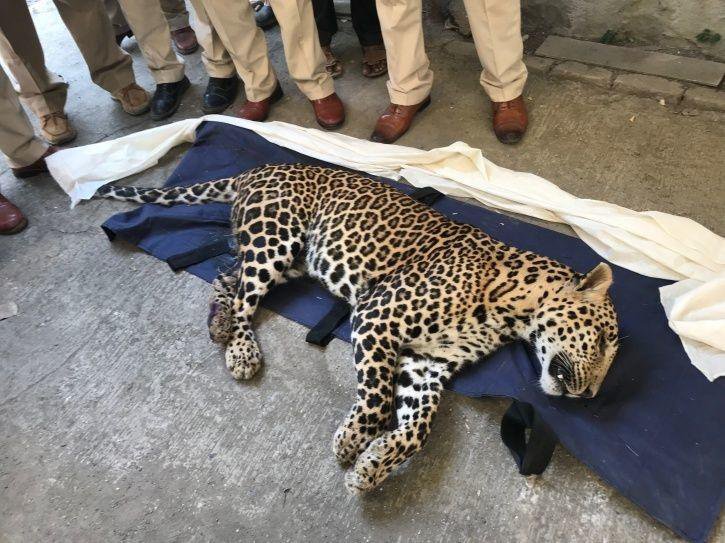
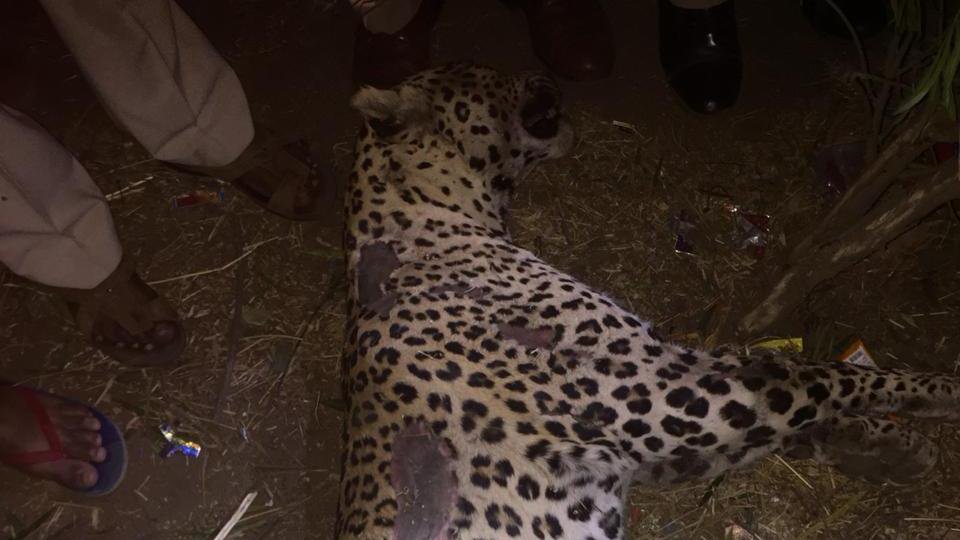
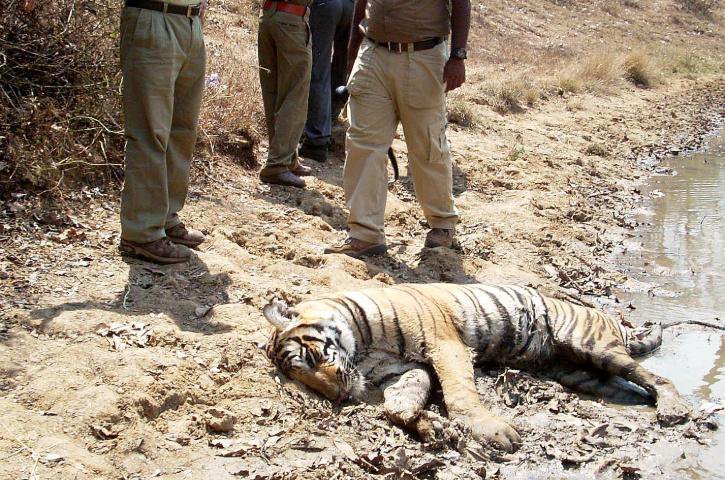
2019 was harsh for animals in India and around the world. In particular, our country reported the death of 112 tigers and 491 leopards mostly due to cases of poaching, hunting and accidents.
According to data collected, over the year, by the Wildlife Protection Society of India, India has now lost close to 991 leopards in the last two years.
In addition, 216 tigers were killed, in 2018 and 2019, either by poaching activities or accidents caused due to rapid urbanization.
The fact that the state of Madhya Pradesh lost 29 tigers and Maharashtra had to see 22 being killed tells us that the shrinking habitat might’ve increased the number in 2019.
Cases of leopards and tigers being beaten to death for entering civilian areas had time and again been reported this year.
WHITNEY POINT, N.Y. — Reacting to news of a coyote hunting tournament in the Catskills being cancelled this week due to criticisms from animal rights advocates, a small sportsmen’s group in Broome County announced it is picking up the slack and sponsoring its own coyote hunt on the same dates.
The Whitney Point Coon Hunters Club in Broome County announced it will be holding a coyote hunting tournament on Jan. 18-19, the same dates that the Hancock Fire Department in Delaware County had scheduled theirs before announcing this week it was being cancelled.
“And we won’t be shut down,” said Brian Brown, of Greene, a spokesman for the Coon Hunter’s group. “All the antis are dancing around, throwing a party, thinking they won.”
Brown said registration for his group’s hunt will be $25 per hunter, due no later than Jan. 17.
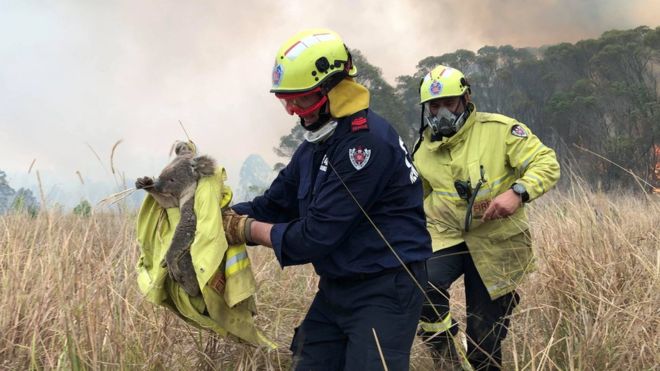
Ecologists at the University of Sydney are estimating that nearly half a billion animals have been killed in Australia’s unprecedented and catastrophic wildfires, which have sparked a continent-wide crisis and forced tens of thousands of people to flee their homes in desperation.
News Corp Australiareported Wednesday that “there are real concerns entire species of plants and animals have been wiped out by bushfires following revelations almost 500 million animals have died since the crisis began.”
ADVERTISING
“Ecologists from the University of Sydney now estimate 480 million mammals, birds, and reptiles have been lost since September,” according to News Corp. “That figure is likely to soar following the devastating fires which have ripped through Victoria and the [New South Wales] South Coast over the past couple of days, leaving several people dead or unaccounted for, razing scores of homes and leaving thousands stranded.”
The horrifying figures come as images and videos of animals suffering severe burns and dehydration continue to circulate on social media.
Mark Graham, an ecologist with the National Conservation Council, told the Australian parliament that “the fires have burned so hot and so fast that there has been significant mortality of animals in the trees, but there is such a big area now that is still on fire and still burning that we will probably never find the bodies.”
00:0000:38
Koalas in particular have been devastated by the fires, Graham noted, because they “really have no capacity to move fast enough to get away.”
As Reutersreported Tuesday, “Australia’s bushland is home to a range of indigenous fauna, including kangaroos, koalas, wallabies, possums, wombats, and echidnas. Officials fear that 30 percent of just one koala colony on the country’s northeast coast, or between 4,500 and 8,400, have been lost in the recent fires.”
Australia’s coal-touting Prime Minister Scott Morrison has faced growing scrutiny for refusing to take sufficient action to confront the wildfires and the climate crisis that is driving them. Since September, the fires have burned over 10 million acres of land, destroyed more than a thousand homes, and killed at least 17 people—including 9 since Christmas Day.
On Thursday, the government of New South Wales (NSW) declared a state of emergency set to take effect Friday morning as the wildfires are expected to intensify over the weekend.
“We’ve got a lot of fire in the landscape that we will not contain,” said Rob Rogers, deputy commissioner of the NSW Rural Fire Service. “We need to make sure that people are not in the path of these fires.”
There is a widely-reported estimate that almost half a billion (480 million) animals have been killed by the bush fires in Australia.
It’s a figure that came from Prof Chris Dickman, an expert on Australian biodiversity at the University of Sydney.
He released a statement explaining how he had reached the figure – a statement which refers to the number of animals affected rather than those necessarily dying as a direct result of the fire (although the title of the release talks about 480 million being killed).
The numbers are based on a report he co-wrote in 2007 for the World Wide Fund for Nature (WWF) on the impact of land-clearing on Australian wildlife in New South Wales.
It estimated that there were an average of 17.5 mammals, 20.7 birds and 129.5 reptiles per hectare (10,000 square…


/cdn.vox-cdn.com/uploads/chorus_image/image/64685285/669664486.jpg.0.jpg)

:no_upscale()/cdn.vox-cdn.com/uploads/chorus_asset/file/18279669/1149672892.jpg.jpg)
:no_upscale()/cdn.vox-cdn.com/uploads/chorus_asset/file/18279672/1143755170.jpg.jpg)
:no_upscale()/cdn.vox-cdn.com/uploads/chorus_asset/file/18279721/136184192.jpg.jpg)
:no_upscale()/cdn.vox-cdn.com/uploads/chorus_asset/file/18279754/1152460637.jpg.jpg)
:no_upscale()/cdn.vox-cdn.com/uploads/chorus_asset/file/18279825/1136994101.jpg.jpg)
:no_upscale()/cdn.vox-cdn.com/uploads/chorus_asset/file/18279784/490675020.jpg.jpg)
:no_upscale()/cdn.vox-cdn.com/uploads/chorus_asset/file/18279817/1135098153.jpg.jpg)







 Exposing the Big Game