Exposing the Big Game

Forget Hunters' Feeble Rationalizations and Trust Your Gut Feelings: Making Sport of Killing Is Not Healthy Human Behavior

Exposing the Big Game

Could nearly half of those with Covid-19 have no idea they are infected?

Exposing the Big Game's avatarThe Extinction Chronicles

As studies confirm many infected people show no symptoms, contact tracing and face masks assume even greater importance

Illustration by James Melaugh.
 Illustration by James Melaugh.

When Noopur Raje’s husband fell critically ill with Covid-19 in mid-March, she did not suspect that she too was infected with the virus.

Raje, an oncologist at Massachusetts General Hospital in Boston, had been caring for her sick husband for a week before driving him to an emergency centre with a persistently high fever. But after she herself had a diagnostic PCR test – which looks for traces of the Sars-CoV-2 virus DNA in saliva – she was astounded to find that the result was positive.

“My husband ended up very sick,” she says. “He was in intensive care for a day, and in hospital for 10 days…

View original post 1,627 more words

Scientists say an apocalyptic bird flu could wipe out half of humanity

Sign up for our special edition newsletter to get a daily update on the coronavirus pandemic.

The coronavirus has killed over 365,000 people worldwide in just five months — but that’s nothing compared to what could be coming if humans don’t clean up their act when it comes to chickens.

In his new book, “How to Survive a Pandemic,” Dr. Michael Gregor, a scientist and physician who once testified for Oprah Winfrey in her “meat defamation” trial, warns that an apocalyptic virus emanating from overcrowded and unsanitary chicken farms has the potential to wipe out half of humanity.

Greger, a vegan, writes that “In the ‘hurricane scale’ of epidemics, COVID-19, with a death rate of around half of one percent, rates a measly Category Two, possibly a Three. … The Big One, the typhoon to end all typhoons, will be 100 times worse when it comes, a Category Five producing a fatality rate of one in two. … Civilization as we know it would cease.”

While environmentalists warned earlier this month that the world would face another stronger epidemic if we continue to have contact with wildlife, Gregor places the blame squarely on chickens.

“With pandemics explosively spreading a virus from human to human, it’s never a matter of if, but when,” Greger writes.

Citing the bird-based Spanish Flu outbreak of 1920, and the H5N1 outbreak in Hong Kong in 1997, Gregor writes, “the worry is that the virus never stands still but is always mutating. … This is the monster lurking in the undergrowth, the one that makes epidemiologists shudder.”

The Hong Kong outbreak, which originated in a bird market, “started with a three-year-old boy in Hong Kong, whose sore throat and tummy ache turned into a disease that curdled his blood and killed him within a week from acute respiratory and organ failure.” While only 18 people contracted that flu – a third of them died.

During that pandemic, the government killed 1.3 million chickens in an attempt to eliminate the virus – but there have since been two more outbreaks between 2003 and 2009 outside of China.

But with over 24 billion chickens on earth feeding the world, what can be done?

Gregor writes we have to change the entire system – away from large scale farms where chickens are fed antibiotics and are crammed together and pass diseases from one to another easily to smaller, free-range farms … and eventually not eating chickens or ducks at all.

“The pandemic cycle could theoretically be broken for good,” he writes. “Bird flu could be grounded.”

But until then, he warns, “as long as there is poultry, there will be pandemics. In the end, it may be us or them.”

Crab blood to remain big pharma’s standard as industry group rejects substitute

Animal rights groups have been pushing a synthetic alternative to horseshoe crab blood in drug safety testing

https://www.theguardian.com/environment/2020/may/31/crab-blood-to-remain-big-pharmas-standard-as-industry-group-rejects-substitute

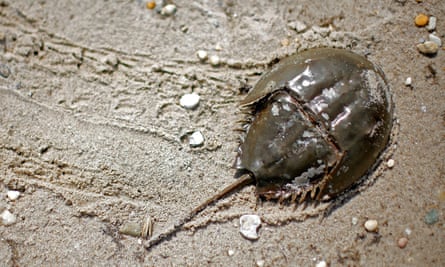
An Atlantic horseshoe crab on a beach

The copper-rich blue blood of the horseshoe crab has long been used to detect contaminants in pharmaceuticals. Photograph: Mike Segar/Reuters

Reuters
Published onSat 30 May 2020 22.53 EDT

Horseshoe crabs’ icy-blue blood will remain the drug industry’s standard for safety tests after a powerful US group ditched a plan to give equal status to a synthetic substitute pushed by Swiss biotech Lonza and animal welfare groups.

The crabs’ copper-rich blood clots in the presence of bacterial endotoxins and has long been used in tests to detect contamination in shots and infusions.

More recently, man-made versions called recombinant Factor C (rFC) from Basel-based Lonza and others have emerged.

An industry battle has been brewing, as another testing giant, Lonza’s US-based rival Charles River Laboratories, has criticised the synthetic option on safety grounds.

Maryland-based US Pharmacopeia (USP), whose influential publications guide the drug industry, had initially proposed adding rFC to the existing chapter governing international endotoxin testing standards.

USP has now abandoned that, it announced late on Friday, opting instead to put rFC in a new stand-alone chapter. This means drug companies seeking to use it must continue to do extra validation work, to guarantee their methods of using rFC tests match those of tests made from crab blood.

The decision gives the drug industry fewer incentives to end its reliance on animal-based tests, even as companies like Lonza and France’s bioMerieux promote man-made alternatives and wildlife advocates worry about crab bleeding’s effect on the coastal ecosystem.

USP told Reuters on Sunday its experts concluded there was too little practical experience with drug products tested with rFC to put the synthetic tests on equal footing with crab blood tests, which have been widely used for decades.

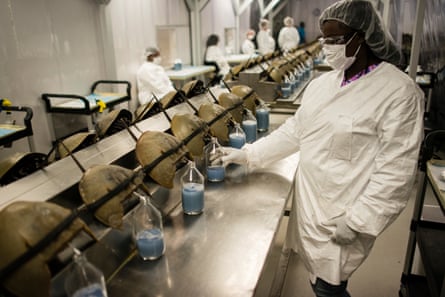
Horseshoe crabs being bled at Charles River Laboratory

Horseshoe crabs being bled at Charles River Laboratory. Photograph: Timothy Fadek/Corbis via Getty Images

“Given the importance of endotoxin testing in protecting patients … the committee ultimately decided more real-world data [was needed],” USP said in a statement, adding this approach will give the US Food and Drug Administration flexibility to work with drugmakers on rFC validation requirements.

USP did say it supports efforts to shift to rFC tests, including for potential testing of Covid-19 medicines or vaccines, where it is offering technical assistance.

Endotoxin tests number 70 million annually and estimates put the relevant market at $1bn annually by 2024.

Eli Lilly, one drugmaker that has shifted to synthetic tests for drugs like its migraine treatment Emgality, has said rFC is safe and that the extra validation requirements have been a hurdle to adoption by more companies.

Conservationists, including advocates for migratory birds that dine on horseshoe crab eggs on the US east coast, have also been pushing for rFC’s increased use to take pressure off crabs, some of which die after being returned to the Atlantic Ocean following bleeding.

Lonza did not immediately comment on USP’s move. Charles River also did not return a request for comment.

The New Jersey Audubon Society and Delaware-based Ecological Research & Development Group, a crab conservation group, did not respond to messages seeking comment.

Global report: new clues about role of pangolins in Covid-19 as US severs ties with WHO

Experts condemn Trump’s actions; India records worst daily rise in infections; surges in Russia and Brazil; Australia tests sewage water

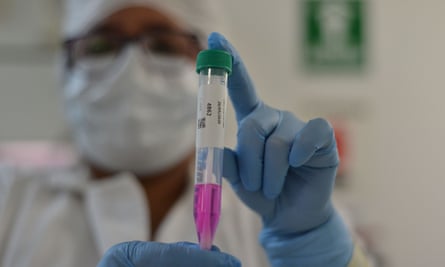
A researcher in Mexico works with reagent samples for taking Covid-19 tests.

A researcher in Mexico works with reagent samples for taking Covid-19 tests. Photograph: Carlos Tischler/Rex/Shutterstock

Published onSat 30 May 2020 01.39 EDT

Scientists claim to have found more clues about how the new coronavirus could have spread from bats through pangolins and into humans, as India reported its worst single-day rise in new cases, and the number of Covid-19 infections worldwide neared 6 million.

Writing in the journal Covid-19 Science Advances, researchers said an examination of the closest relative of the virus found that it was circulating in bats but lacked the protein needed to bind to human cells. They said this ability could have been acquired from a virus found in pangolins – a scaly mammal that is one of the most illegally trafficked animals in the world.

Dr Elena Giorgi, of Los Alamos national laboratory, one of the study’s lead authors, said people had already looked at the pangolin link but scientists were still divided about their role in the evolution of Sars-Cov-2, the virus that causes Covid-19.

“In our study, we demonstrated that indeed Sars-Cov-2 has a rich evolutionary history that included a reshuffling of genetic material between bat and pangolin coronavirus before it acquired its ability to jump to humans,” she said, adding that “close proximity of animals of different species in a wet market setting may increase the potential for cross-species spillover infections”.

However, Prof Edward Holmes, an evolutionary biologist at the University of Sydney, in Australia, said more work on the subject was needed. “There is a clear evolutionary gap between Sars-Cov-2 and its closest relatives found to date in bats and pangolins,” he said. “The only way this gap will be filled is through more wildlife sampling.”

The findings came as Donald Trump announced that the United States was severing its ties with the World Health Organization because it had “failed to reform”.

In a speech at the White House devoted mainly to attacking China for its alleged shortcomings in tackling the initial outbreak of coronavirus, Trump said: “We will be today terminating our relationship with the World Health Organization and redirecting those funds to other worldwide and deserving urgent global public health needs.”

The US is the biggest funder of the WHO, paying about $450m (£365m) in membership dues and voluntary contributions for specific programmes.

Trump’s declaration was condemned in the US and around the world, with Australian experts joining counterparts in the UK and elsewhere in voicing their support for the WHO. Prof Peter Doherty, a Nobel laureate and patron of the Doherty Institute, which is part of global efforts to find a Covid-19 vaccine, said the WHO had the “full support of the scientific community”.

Deaths in the US have climbed to more than 102,000, with 1,747,000 infections. It is by far the biggest total in the world. On Friday it emerged that one person who attended the controversial pool parties in the Ozarks last weekend had tested positive for the virus.

In Brazil, there was another large rise in deaths. More than 27,000 people have died from the disease and the country has the world’s second highest number of cases, at 465,000.

There were also big surges in reported deaths in Russia, which identified more coronavirus cases in a day than at any time since early April; 2,819 more people tested positive on Friday.

Iran also recorded its biggest daily increase in deaths  232 in 24 hours – bringing the total to 4,374. President Hassan Rouhani nevertheless said mosques were to resume daily prayers throughout the country, despite some areas reporting continuing high levels of infections. He added that physical distancing and other health protocols would be observed in mosques. He did not say when they were due to reopen.

India, meanwhile, reported a record daily jump of 7,964 new infections. With the latest tally, India has now reported 173,763 coronavirus cases and 4,971 deaths, making it the ninth most-affected country, according to Reuters. While the fatality rates in India have been lower than in worse-hit countries, experts fear the peak has not been reached. The latest numbers would appear to confirm that prediction.

Egypt registered 1,289 new cases and 34 deaths, the health ministry said, marking another record of daily increases on both counts despite stricter curfew rules.

Other developments across the world include:

  • A leading UK government adviser has warned that it is too early to lift lockdown restrictions as planned next month because the number of new infections is still too high. John Edmunds, a professor of infectious disease modelling at the London School of Hygiene and Tropical Medicine, said he wanted the level of new cases to be “driven down further” before larger gatherings are allowed as the government has said it wants to do. Tory MPs are still being bombarded by constituents with calls for Boris Johnson’s top adviser to quit after he appeared to breach lockdown rules.
  • Restrictions continue to be lifted to some degree across Europewith thousands flocking to open-air cinemas to see films together for the first time in weeks.
  • In Australia, where states are expected to move to relax the rules to allow gatherings of more people from Monday, anti-vaccine protesters gathered in several cities to claim that they believed Covid-19 was a “scam”.
  • Also in Australiascientists are examining the sewage waste in a town in Queensland where a 30-year-old man died this week from the virus. Nathan Turner is the youngest victim in the country so far and the case has baffled experts because he had not left the remote town of Blackwater.
  • The global death toll passed 365,000, according to data compiled by Johns Hopkins University, with the number of cases just short of 6 million. The true number of infections is likely to be much higher, however, given the vast number of unrecorded and asymptomatic cases.

Minnesota governor says he expects to see a spike in Covid-19 cases following protests

Exposing the Big Game's avatarThe Extinction Chronicles

2 hr 4 min ago

Minnesota Gov. Tim Walz said he expects to see a spike in Covid-19 cases following protests in the Twin Cities over the last few days.

“I am deeply concerned about a super-spreader type of incident,” Walz said. “We’re going to see a spike in Covid-19. It’s inevitable.” 

Walz told reporters the jails do have the capacity to hold everyone taken into custody during the protests.

“We have a situation of urban warfare of folks that want to see chaos spread,” Walz said, noting that responding to the protests takes priority.

Walz said that he and other leaders responding to this are working in the interest of protecting residents and businesses.

More: https://www.cnn.com/us/live-news/george-floyd-protests-05-30-20/index.html

View original post

Pangolins may have incubated the novel coronavirus, gene study shows

(CNN)A deep dive into the genetics of the novel coronavirus shows it seems to have spent some time infecting both bats and pangolins before it jumped into humans, researchers said Friday.

But they said it’s too soon to blame [“blame”??  Not their fault humans captured and dragged them to wet markets] pangolins for the pandemic and say a third species of animal may have played host to the virus before it spilled [?] over to people.
What is clear is that the coronavirus has swapped genes repeatedly with similar strains infecting bats, pangolins and a possible third species, a team of researchers from Duke University, Los Alamos National Laboratory and elsewhere reported in the journal Science Advances.
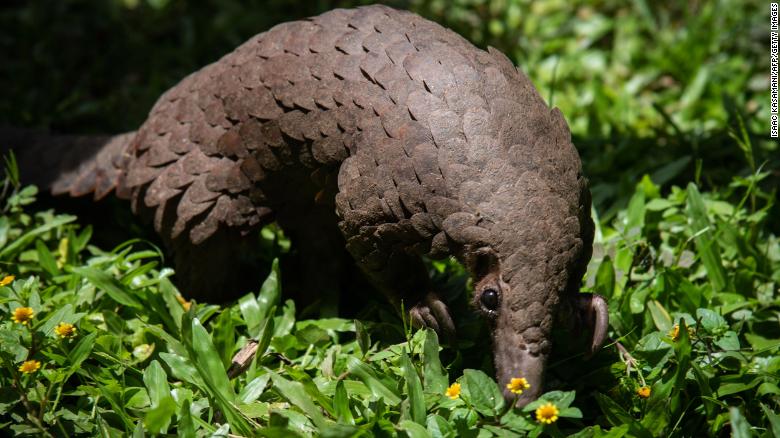
A white-bellied pangolin  rescued from local animal traffickers at the Uganda Wildlife Authority office in Kampala, Uganda, on April 9, 2020.

What’s also clear is that people need to reduce contact with wild animals that can transmit new infections, the researchers concluded.
The team analyzed 43 complete genomes from three strains of coronaviruses that infect bats and pangolins and that resemble the new Covid-19 virus.
close dialog
“In our study, we demonstrated that indeed SARS-CoV-2 has a rich evolutionary history that included a reshuffling of genetic material between bat and pangolin coronavirus before it acquired its ability to jump to humans,” said Elena Giorgi, a staff scientist at Los Alamos National Laboratory who worked on the study.
But their findings may let pangolins off the hook. The animals, also known as scaly anteaters, are sold as food in many countries, including China, and have been a prime suspect as a possible source of the pandemic.
“The currently sampled pangolin coronaviruses are too divergent from SARS-CoV-2 to be its recent progenitors,” the researchers wrote.
Whether the mixing and matching between bat viruses and pangolin viruses was enough to change the virus into a form that now easily infects humans remains unclear, the researchers said.
“It is also possible that other not yet identified hosts (can be) infected with coronaviruses that can jump to human populations through cross-species transmission,” the researchers wrote. “If the new SARS-CoV-2 strain did not cause widespread infections in its natural or intermediate hosts, such a strain may never be identified.”
Get CNN Health’s weekly newsletter

Sign up here to get The Results Are In with Dr. Sanjay Gupta every Tuesday from the CNN Health team.

But people are setting themselves up to be infected with new viruses via “wet markets” where many different species of live animals are caged and sold, and by moving deeper into forests where animals live, the researchers said.
“While the direct reservoir of SARS-CoV-2 is still being sought, one thing is clear: reducing or eliminating direct human contact with wild animals is critical to preventing new coronavirus zoonosis in the future,” they concluded.

A steaming cauldron follows the dinosaurs’ demise

Exposing the Big Game's avatarThe Extinction Chronicles

https://phys.org/news/2020-05-steaming-cauldron-dinosaurs-demise.html

A Steaming Cauldron Follows the Dinosaurs' Demise
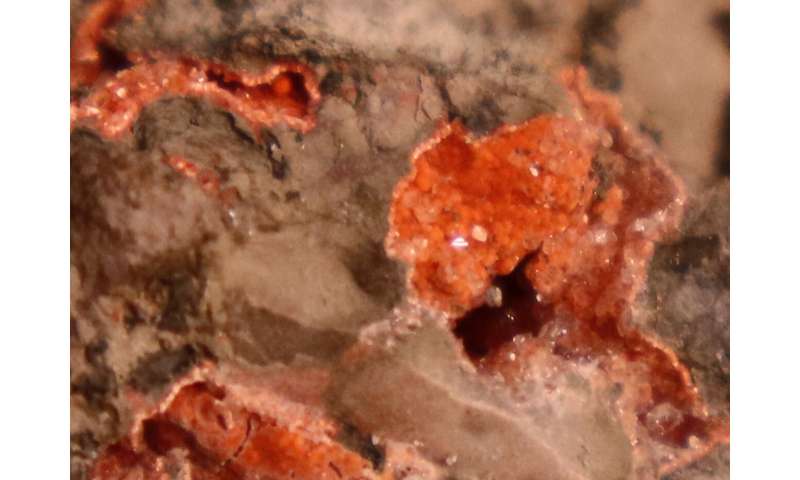
Hydrothermal minerals (analcime and dachiardite) in 1 centimeter cavity within impact rocks that fill the Chicxulub crater. Credit: David A. Kring

A new study reveals the Chicxulub impact crater may have harbored a vast and long-lived hydrothermal system after the catastrophic impact event linked to the extinction of dinosaurs 66 million years ago.

The Chicxulub impact crater, roughly 180 kilometers in diameter, is the best preserved large impact structure on Earth and a target for exploration of several impact-related phenomena. In 2016, a research team supported by the International Ocean Discovery Program and International Continental Scientific Drilling Program drilled into the crater, reaching a depth of 1,335 meters (> 1 kilometer) below the modern-day sea floor. The team recovered rock core samples which can be used to study the thermal and chemical modification of Earth’s crust caused by the impact…

View original post 737 more words

England risks COVID-19 resurgence by ending lockdown too soon, scientific advisers say

Exposing the Big Game's avatarThe Extinction Chronicles

LONDON (Reuters) – England risks losing control of the coronavirus pandemic again and is at a “very dangerous moment” as it starts to ease out of the COVID-19 lockdown, senior scientific and medical advisers warned on Saturday.

One of the slowest countries to lock down, Britain is now one of the worst-hit and is just starting to take tentative steps to reopen parts of the economy, aided by a newly launched track and trace system that is designed to suppress outbreaks.

From Monday, up to six people will be able to meet outside their homes in England, some school classes will restart and elite competitive sport…

View original post 441 more words

Southern wildlife in jeopardy as giant tegu lizards invade Georgia and Florida

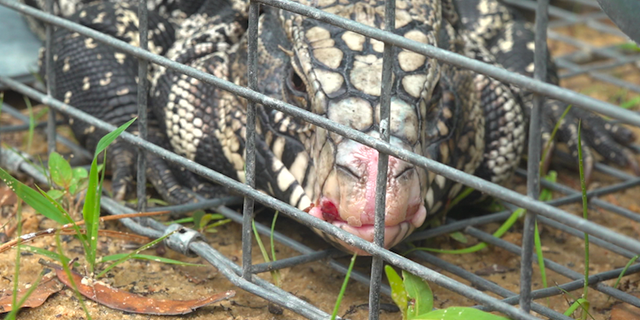
REIDSVILLE, Ga. — An invasive, giant, and dangerous lizard is creeping its way through southeast Georgia and beyond.

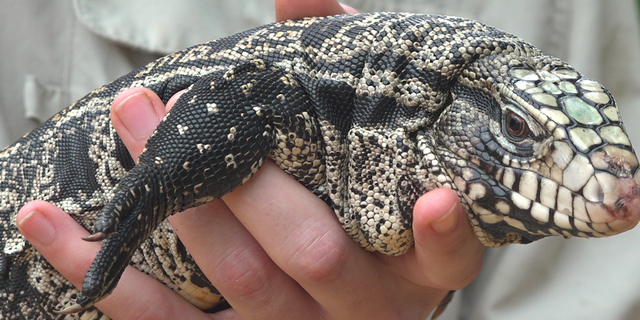
The Argentine black and white tegu lizards are originally from South America, and now they are wreaking havoc on wildlife throughout the South.

Daniel Sollengberge, senior wildlife biologist with the Georgia wildlife, said they never knew there was a population established in the wild until recently.

Tegu lizards are known to eat anything that they want, especially the eggs of other reptiles. 

Tegu lizards are known to eat anything that they want, especially the eggs of other reptiles.

“We presume that the animals started as the result of escaped or released pets in the area… there really common in the pet trade,” Sollengberger said.

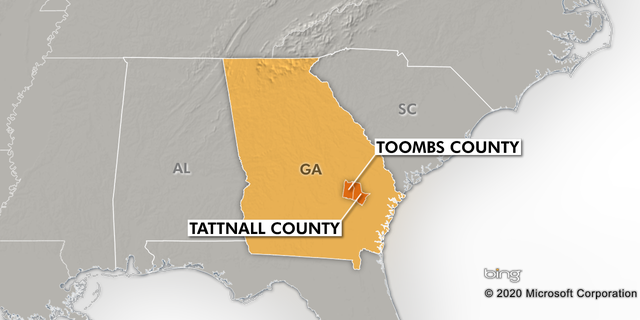
After over a dozen sightings of the lizards in southeast Georgia, Tegus have become known as an invasive species particularly in Toombs and Tattnall counties.

Map showing the two southeastern counties that have been invaded by Tegu lizards. 

Map showing the two southeastern counties that have been invaded by Tegu lizards.

Georgia Southern professor, Dr. Lance Mcbrayer studies the evolution of lizards and leads the U.S Geological Survey team.

“Already in 2020 we’ve caught five animals at this site right here,” Mcbrayer said.

The lizards can grow up to four feet long. As the number of lizards in southeast Georgia continue to increase, the geological survey team is racing to put down traps.

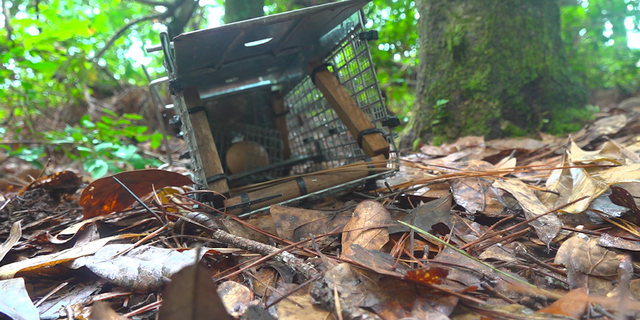
The traps are placed about 100 meters apart and members of the Geological team check them daily.

One trap in southeast Georgia that is set up to capture Tegu lizards. 

One trap in southeast Georgia that is set up to capture Tegu lizards.

Daniel Haro is a part of the geological team and works in the field about three to four times a week. “In general, right now, we have 85 and we’re going to get to 90… so, this week I’m hoping to place five more,” Haro said.

According to Georgia wildlife, the lizards don’t attack people unless provoked. However, with their strong jaws and sharp teeth, they will eat anything they can put in their mouth, especially eggs.

Crews hold Tegu lizards that was captured years ago. 

Crews hold Tegu lizards that was captured years ago.

“Whereby they’re damaging our gopher tortoise populations or bobwhite quail populations or turkey populations…the animal walks around and it hunts up nests on the ground,” Mcbrayer said.

On top of that, tegu lizards can lay up to 40 eggs, and once they hatch, they will be around 6 to 10 inches long.  “That’s our real concern… that there could be a very rapid increase in the number of tegus in just a few years,” Mcbrayer said.

The crew in southeast Georgia has not caught a juvenile tegu yet but, “all the habitat and the size of the animals we’re catching suggest that they’re reproducing – so that’s a problem,” Mcbrayer said.

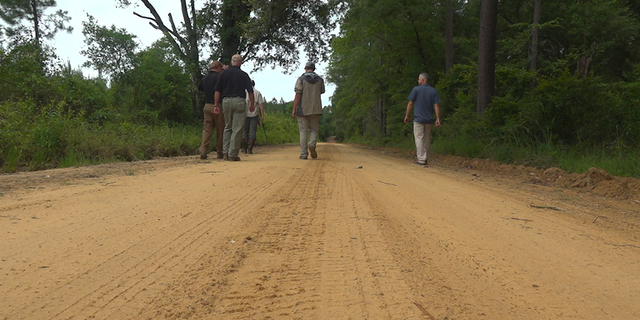
The U.S Geological survey team works to capture Tegu lizards in Reidsville, GA. 

The U.S Geological survey team works to capture Tegu lizards in Reidsville, GA.

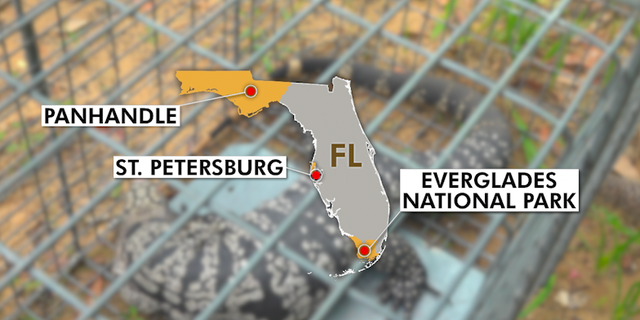
Tegu lizards have established themselves as invasive species in Florida, too. “There’s at least three populations in Florida… the north side of the Everglades…one inland in St. Pete from Tampa … and now one in the Panhandle,” Mcbrayer said.

Map shows areas in Florida that have been impacted by Tegu lizards. 

Map shows areas in Florida that have been impacted by Tegu lizards.

The population of lizards in the South could spread rapidly because, unlike most lizards, Tegus move around.

“These animals can walk several miles in a day. They could walk 10 or 12vmiles just in a day or two,” Mcbrayer said.

As the population of lizards continues to grow, Mcbrayer says the lizards will spread if they aren’t stopped.

“These animals can be trapped or hunted humanely in safely,” Mcbrayer said. “We encourage anyone to do that to remove these animals from the wild.”

The “Pro-Life” Movement’s Response to COVID-19 Reveals Its Hypocrisy

Exposing the Big Game's avatarThe Extinction Chronicles

As communities reel from the devastating impacts of COVID-19, conservative politicians and lawmakers in an alarming number of states have capitalized on the fear and scarcity surrounding the pandemic. They are using legitimate health concerns as a smokescreen to enact anti-choice abortion bans. They have done so under the pretense of public safety, but their actions jeopardize the health and well-being of their communities.

Abortion clinics in Texas have been locked in a legal battle with the state government in recent weeks, leaving vulnerable patients in limbo, after Gov. Greg Abbott deemed abortion a “non-essential” medical procedure. This was purportedly a decision made in…

View original post 875 more words