June 30, 2020 – The killing of Cecil the lion five years this week ago by an American trophy hunter in Zimbabwe triggered worldwide outrage. Father of a pride, lured with an elephant carcass, wounded by an arrow, he suffered for hours before being killed by gunshot. As it turned out, this was a shot heard around the world, giving momentum to global demand for an end to trophy killing of animals.
Cecil should not have been the victim of such wanton brutality. He was known and admired by tourists and wildlife photographers from around the world who came to Zimbabwe’s Hwange National Park to observe him and other animals. He was also the subject of a long-term research study by scientists.
Sadly, however, Cecil’s fate was not unusual. Every year dozens of wild lions are killed by trophy hunters in range states. With as…
Crab traps, Bodega Bay, California. (Courthouse News photo/Chris Marshall)
(CN) — At a public hearing Monday on proposed regulations for managing whale and sea turtle entanglements in commercial crab fishing gear on California’s coast, one thing was clear: No one’s happy.
Stakeholders on both sides of the aisle had complaints — environmentalists don’t think the protections go far enough, while industry groups say the regulations threaten the economic viability of the crab fishing industry.
Set to take effect Nov. 1, the California Department of Fish and Wildlife’s Risk Assessment Mitigation Program (RAMP) will serve as the primary mechanism for mitigating entanglement risk to humpback and blue whales and leatherback sea turtles whose populations are endangered and could suffer additional casualties due to getting caught in Dungeness crab fishing gear.
The regulation would replace the interim authority given to the director of the Department of Fish and Wildlife under Senate Bill 1309, a 2018 law which gave the director the ability to restrict take of Dungeness crab in response to significant risk of marine life entanglement.
In 2018, 7 of the 46 confirmed whale entanglements on the coast of California, Oregon and Washington state reported by the National Oceanic and Atmospheric Administration were associated with California Dungeness crab commercial traps.
The vast majority — 30 — of the whale entanglements reported by NOAA in 2018 happened off California’s coast, though the location where animals are reported entangled does not necessarily reflect where the entanglement occurred.
A lawsuit brought the year prior by the Center for Biological Diversity over whale and sea turtle entanglements in California Dungeness crab fishery traps spurred a settlement between the environmental nonprofit, Department of Fish and Wildlife and Pacific Coast Federation of Fisherman’s Associations that ended the 2019 fishing season early.
The Center for Biological Diversity suggested the settlement led to a drop in whale entanglements in 2019, down to 18 reported entanglements on the West Coast.
The proposed regulations — formulated with feedback from the California Dungeness Crab Fishing Gear Working Group — would protect blue and humpback whales and leatherback sea turtles from entanglement in the traps used during crab fishing season.
Risk assessments for entanglements will be performed monthly or more frequently during the fishing season. Data on entanglements for each species — “impact scores” — will be used to determine if the fishing season should be closed for the remainder of the year, a data calculation fishing industry trade groups took issue with during public comment on the proposed regulation Monday.
Ben Platt, president of the California Coast Crab Association, said during the virtual meeting some of the triggers for mitigation or closing fisheries appeared arbitrary, especially those for the leatherback sea turtles, which had only been found entangled off California’s coast once between 2013 and 2019.
“The basis for the proposed RAMP rules are overly zealous and an unfair overreach,” Platt said, adding, “The proposed regulation poses an existential threat to our entire livelihood.”
But Catherine Kilduff, an attorney for the Center for Biological Diversity, said the proposed regulations do not go far enough to mitigate fishing gear entanglements by still allowing for the vertical fishing lines most dangerous to whales and sea turtles.
“These whales and sea turtles provide the foundation of the ocean’s health … and the nutrient cycle that allows other animals, including Dungeness crabs, to thrive,” Kilduff said.
The Center for Biological Diversity was joined by a host of other ocean conservation organizations in calling for the use of alternative pop-up and ropeless gear during crab season.
If the Department of Fish and Wildlife makes substantial changes to the proposed regulations, it will host another public comment period and public hearing July 23.
FLATHEAD RESERVATION — The Tribal Council recently approved Gray Wolf Hunting and Trapping Regulations for the Flathead Indian Reservation for the 2020-21 hunting and trapping season. Wolf hunting and trapping tags will be available from the Tribal Fish, Wildlife, Recreation and Conservation Permit Office to CSKT Tribal members who present valid Tribal Identification.
There are three wolf hunting and trapping zones within the Flathead Indian Reservation:
The Mission Mountain zone, the Northwest zone and the Southern zone. The Mission Mountains Zone is described as the Reservation south of the northern boundary of the Reservation along the east shore of Flathead Lake to Kerr Dam, then southward to the confluence of the Flathead River and the Jocko River, then east along the north side of the Jocko River to the source of its middle fork at the east boundary of the Reservation. Hunting season for…
As a result of the lockdowns around the world to control COVID-19, huge decreases in transportation and industrial activity resulted in a drop in daily global carbon emissions of 17 percent in April. Nonetheless, CO2 levels in the atmosphere reached their highest monthly average ever recorded in May — 417.1 parts per million. This is because the carbon dioxide humans have already emitted can remain in the atmosphere for a hundred years; some of it could last tens of thousands of years.
Beyond carbon emissions, however, COVID-19 is resulting in changes in individual behavior and social attitudes, and in responses by governments that will have impacts on the environment and on our ability to combat climate change. Many of these will make matters worse, while others could make them better. While it’s unclear how these factors…
Mountains of produce, including eggs, milk and onions, are going to waste as the COVID-19 pandemic shutters restaurants, restricts transport, limits what workers are able to do and disrupts supply chains. And as that food decays, it releases methane, a powerful greenhouse gas.
Fresh milk and eggs have been dumped, and some ripe crops reploughed back into fields, according to reports in the Wall Street Journal and the New York Times. While consumer demand for some supermarket items has risen as a result of lockdowns, it’s unlikely to offset steep declines elsewhere, such in restaurants and school and workplace canteens.CORONAVIRUS, HEALTH, COVID19, PANDEMIC
What is the World Economic Forum doing to manage emerging risks from COVID-19?
Show
Methane on the rise
Not only is this a tragic waste of food at a time when many are going hungry, it is also an environmental hazard and could contribute to global warming. Landfill gas – roughly half methane and half carbon dioxide (CO2) – is a natural byproduct of the decomposition of organic material.
Food decay leads to production of greenhouse gases, methane and carbon dioxide.Image: EPA
What’s the World Economic Forum doing about climate change?
Show
“Many export-oriented producers produce volumes far too large for output to be absorbed in local markets, and thus organic waste levels have mounted substantially,” says Robert Hamwey, Economic Affairs Officer at UN agency UNCTAD . “Because this waste is left to decay, levels of methane emissions, a greenhouse gas, from decaying produce are expected to rise sharply in the crisis and immediate post-crisis months.”
Food supply chains are easily disrupted.Image: UN FAO
Dumping food was already a problem before the crisis. In America alone, $218 billion is spent growing, processing, transporting and disposing of food that is never eaten, estimates ReFED, a collection of business, non-profit and government leaders committed to reducing food waste. That’s equivalent to around 1.3% of GDP.
Since the pandemic took hold, farmers are dumping 14 million litres of milk each day because of disrupted supply routes, estimates Dairy Farmers of America. A chicken processor was forced to destroy 750,000 unhatched eggs a week, according to the New York Times, which also cited an onion farmer letting most of his harvest decompose because he couldn’t distribute or store them.
Food prices collapsing
The excess has also seen prices collapse. The FAO Food Price Index (FFPI) averaged 162.5 points in May 2020, down 3.1 points from April and reaching the lowest monthly average since December 2018. The gauge has dropped for four consecutive months, and the latest decline reflects falling values of all the food commodities – dairy, meat, cereal, vegetable – except sugar, which rose for the first time in three months.
All this while the pandemic is exacerbating other global food trends.
“This year, some 49 million extra people may fall into extreme poverty due to the COVID-19 crisis,” said António Guterres, Secretary-General of the UN. “The number of people who are acutely food or nutrition insecure will rapidly expand. Even in countries with abundant food, we see risks of disruptions in the food supply chain.”https://platform.twitter.com/embed/index.html?dnt=false&embedId=twitter-widget-0&frame=false&hideCard=false&hideThread=false&id=1271747397002067968&lang=en&origin=https%3A%2F%2Fwww.weforum.org%2Fagenda%2F2020%2F06%2Fcovid-19-food-waste-mountains-environment%2F&theme=light&widgetsVersion=9066bb2%3A1593540614199&width=550px
The World Economic Forum has launched its Great Reset initiative, which urgently calls for global stakeholders to cooperate in managing the consequences of the COVID-19 crisis. It calls on policymakers to put the environment at the heart of plans to rebuild as we emerge from the pandemic.
Staff at the South African reserve found the bloodied head and limbs of poachers who broke in to hunt rhinos.
The lions are the watchers and guardians of the Sibuya Game Reserve.
Over the last few years, the Sibuya Game Reserve in South Africa has faced several intrusion by poachers attracted to the reserve’s vast diversity of animals.
Now, in what some are calling an act of nature’s karma, a group of poachers who broke into the reserve to hunt rhinos has been devoured by a pack of hungry lions.
The park’s owner, Nick Fox, believes that the groups of poachers were eaten alive by the pride of lions sometime between the evening of July 1 and the early morning of July 2.
And so little of their remains were left, investigators weren’t even sure how many…
“Although many countries have made some progress, globally, the pandemic is actually speeding up,” WHO chief Tedros Adhanom Ghebreyesus said during a virtual news conference.
The virus has infected more than 10.1 million people around the world and killed at least 502,634 people, according to data compiled by Johns Hopkins University.
“The single most important intervention is … tracing and quarantine contacts,” he said. “Six months since the virus started, it could be like a broken record to say exactly the same thing, but the same thing works. Test, test, isolate, quarantine cases.”
WATCH NOW
VIDEO02:13
WHO chief warns Covid-19 pandemic is speeding up as countries ease lockdown rules
The coronavirus pandemic is accelerating around the world as many countries that reopened their economies see a resurgence in Covid-19 cases, Tedros Adhanom Ghebreyesus, director-general of the World Health Organization, said Monday.
Saharan dust is bad for health. But it’s also crucial to Earth’s biology and climate
Thanks to mounting studies and research, doctors’ understanding of how to treat severe cases of incoming coronavirus patients is getting better with each passing day. Unfortunately, it’s also becoming clear that the disease is taking a greater toll on the body than we originally thought in the form of surprisingly horrific side effects and complications. Now, medical experts are raising concern over COVID-19 survivors developing post-traumatic stress disorder (PTSD) that could affect them for years—and that the medical community should be prepared to deal with the care demands it will create.
Administrators from Britain’s National Health Service have begun issuing calls for all physicians to automatically screen COVID-19 patients for PTSD before being discharged from the hospital. Effects of the disease, which can include intense nightmares and vivid flashbacks, can potentially…
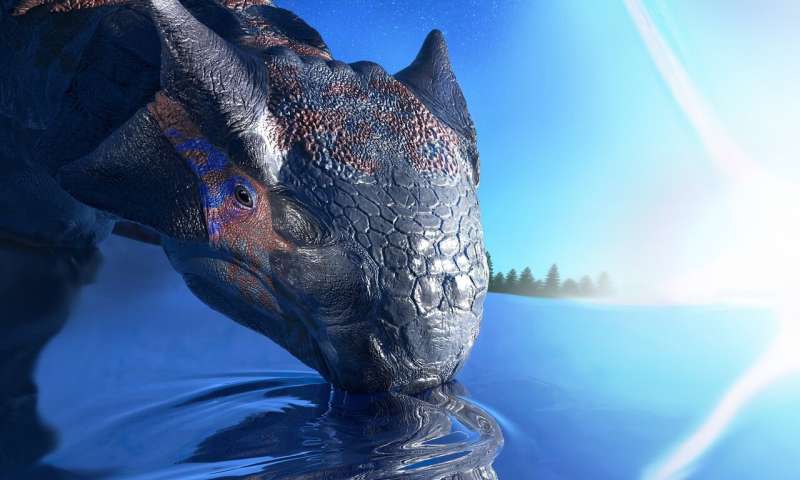
An individual of Ankylosaurus magniventris, a large armoured dinosaur species, witnesses the impact of an asteroid, falling on the Yucatán peninsula 66 million years ago. Not even its large size and thick armour sheltered its kind from the violence of this cosmic disaster. Credit: Fabio Manucci
Modelling of the Chicxulub asteroid impact 66 million years ago shows it created a world largely unsuitable for dinosaurs to live in.
The asteroid, which struck the Earth off the coast of Mexico at the end of the Cretaceous era 66 million years ago, has long been believed to be the cause of the demise of all dinosaur species except those that became birds.
However, some researchers have suggested that tens of thousands of years of large volcanic eruptions may have been the actual cause of the extinction event, which also killed off almost…
New research suggests that as the Earth warms natural ecosystems such as freshwaters will release more methane than expected from predictions based on temperature increases alone.
The study, published today in Nature Climate Change, attributes this difference to changes in the balance of microbial communities within ecosystems that regulate methane emissions.
The production and removal of methane from ecosystems is regulated by two types of microorganisms, methanogens—which naturally produce methane—and methanotrophs that remove methane by converting it into carbon dioxide. Previous research has suggested that these two natural processes show different sensitivities to temperature and could therefore be affected differently by global warming.
Research led by Queen Mary University of London and the University of Warwick studied the impact of global warming on freshwater microbial communities and methane emissions by observing the effect…


 COVID-19



 Exposing the Big Game