Dave Alsup and Hollie Silverman, CNN • Updated 30th June 2020FacebookTwitterEmail
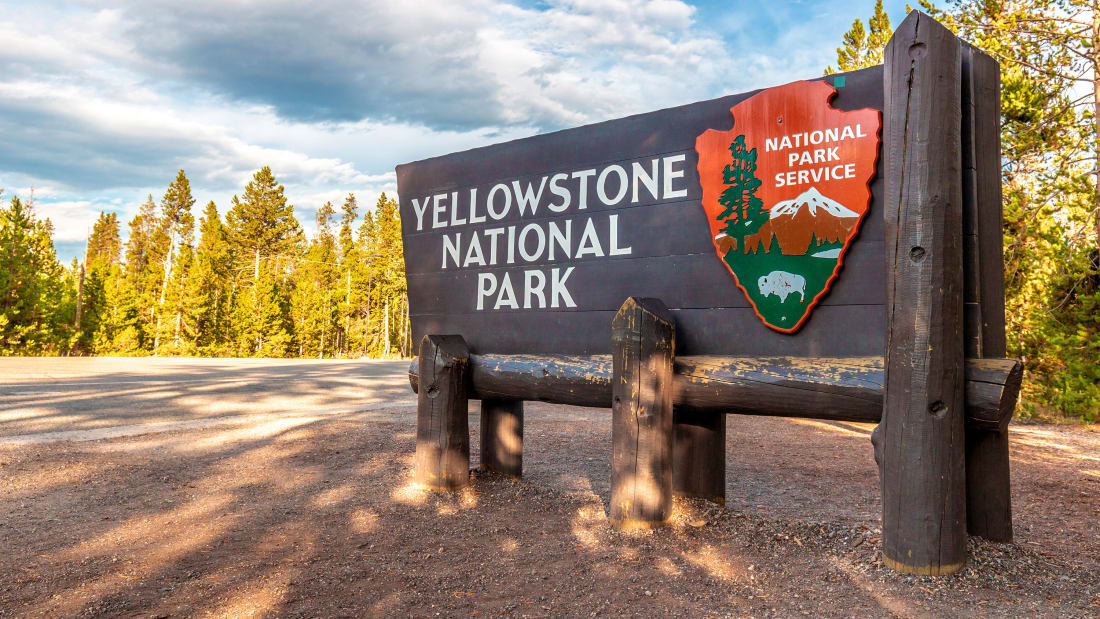
(CNN) — A 72-year-old California woman was gored by a bison in Yellowstone National Park, a news release from the park said.The woman approached the bison to take a picture and got within 10 feet of it multiple times before it gored her on June 25, according to the release.She sustained multiple goring wounds and was treated by rangers before being flown to Eastern Idaho Regional Medical Center for further treatment.The news release said the woman approached the bison several times near her campsite at Bridge Bay Campground in northwest Wyoming before the bison charged.Related contentA woman suffers burns after illegally entering Yellowstone National Park, park officials say“The series of events that led to the goring suggest the bison was threatened by being repeatedly approached to within 10 feet,” Yellowstone’s senior bison biologist Chris Geremia said in the release.”Bison are wild animals that respond to threats by displaying aggressive behaviors like pawing the ground, snorting, bobbing their head, bellowing, and raising their tail. If that doesn’t make the threat (in this instance it was a person) move away, a threatened bison may charge,” Geremia added. “To be safe around bison, stay at least 25 yards away, move away if they approach, and run away or find cover if they charge.”The attack serves as a reminder that “wildlife in Yellowstone National Park are wild,” the release said.Park visitors must stay 25 yards away from all large animals in the park including bison, elk, bighorn sheep, deer, moose and coyotes, the release said. If people encounter bears and wolves they should stay 100 yards away.Another woman was also gored at the park in late May only days after the park reopened to visitors following a closure for coronavirus.
Updated 12:02 PM ET, Tue June 30, 2020A beaver swims in a pond near the Tonsina River, Alaska. The master builders are enjoying a dam-building boom in parts of the Alaskan tundra where they previously haven’t been established.
(CNN)The beaver may be an unlikely agent of climate change, but the cuddly-looking creatures are transforming the Arctic landscape in a way that could be exacerbating global warming, a new study has suggested.With their sharp teeth, beavers fell trees and shrubs and build dams, which flood small valleys and form new lakes that can cover several hectares of land.These new water bodies contribute to the thawing of the frozen permafrost soil, which is a huge natural reservoir of methane — a potent greenhouse gas.Scientists are concerned that as the permafrost degrades, the climate-changing methane and carbon leak into the atmosphere.Content by CNN UnderscoredEverything you need to make ice cream in a Mason jarDid you know that with just two ingredients and a Mason jar, you can create your own ice cream?
Arctic permafrost is melting so fast it’s damaging the equipment scientists use to measure it.In the past few years, scientists have spotted beavers in the Alaskan tundra where they’ve previously never been seen before — and the animals have been enjoying a dam-building boom in their new neighborhood, according to the study of high-resolution satellite imagery published in the journal Environmental Research Letters Monday.They also seem to be building their dams and creating new lakes in the very locations that are most likely to intensify the thawing of the permafrost.”We’re seeing exponential growth there. The number of these structures doubles roughly every four years,” said Ingmar Nitze, a researcher from the Alfred Wegener Institute, Helmholtz Centre for Polar and Marine Research in Potsdam, Germany, and author of the study.”Their methods are extremely effective.”The study found that the number of beaver dams in a 100-square-kilometer area surrounding the city of Kotzebue, northwest Alaska, increased from just two in 2002 to 98 in 2019 — a 5,000% increase. Beaver dams in the larger, 430-square-kilometer area on Alaska’s Baldwin Peninsula have increased from 94 in 2010 to 174 in 2013 and 409 last year.”It’s possible to see them and spot them (the dams) in the imagery. It’s also possible to see the development of lakes. They had a distinctive signal,” said Nitze.Beavers gnawed this wood from a lake shore, Kobuk River National Park, Alaska.
Blame it on the beavers?
Hot summers causing arctic sinkholes as permafrost thaws rapidly: studySeveral different factors explain why the beavers have occupied a region they wouldn’t normally call home, said Nitze. One is climate change, which is altering the typically treeless tundra.”We see an increase in vegetation. There are more shrubs coming in there so all the stuff beavers need to build their dams, or as food, is there,” he said. Furthermore, the lakes, which used to freeze solid, now offer friendlier conditions for beavers, as a result of their thinner seasonal winter ice coverThe tundra is also not the beavers’ usual habitat so they face no predators or competition for resources, plus the animals are better protected now by US federal law and hunted far less by humans than they used to be.Beavers erected a dam and lodge in a small stream north of Nome, southern Seward Peninsula in western Alaska.Because the lakes the beavers create contain water that is warmer than the surrounding soil, the new bodies of water accelerate the permafrost thawing.”The thing about permafrost is that water interacts very strongly with the frozen ground beneath it,” Nitze said. “The more surface water you have, the worse it is for the permafrost–because in the winter the cold air cannot penetrate again into the ground, and the water stores a lot of the heat and can even penetrate it into the ground,” he said.Lakes and water bodies influenced by beavers accounted for two-thirds of the 8.3% increase in total surface water area in the Kotzebue study area during a 17-year period, the study found.Beaver dams created in lakes contain water that is warmer than the surrounding soil. They form new bodies of water that accelerate permafrost thawing.The beavers also seemed to intuitively target drained lake basins, turbocharging the impact they had on the landscape and the permafrost.”It’s a special landscape. There’s typically a lot of lakes but they are dynamic so they can drain and leave a lot of basins … and these beavers are smart enough to block the outlet and refill the basin again. They dam up a lot of area with minimum effort.”Nitze said the beaver dam-building boom was also likely taking place in the Canadian tundra, and could also be happening in Siberia.”We’re working to expand the analysis on a bigger scale.”
Arctic melt: Threat beneath the iceSome climate scientists think that we are underestimating the warming effect of the thawing permafrost.”There are a lot of people trying to quantify methane and CO2 emissions from lakes in the Arctic but not specifically yet from beaver lakes,” said Nitze.”It’s a very new topic and something we have uncovered over the past few years. Beavers can have a quite significant impact on these landscapes, so there’s no real quantification yet for these lakes but it will be done in the future.”
Correction: An earlier version of this story misstated a year in the timeline of beaver dam increases on Alaska’s Baldwin Peninsula.
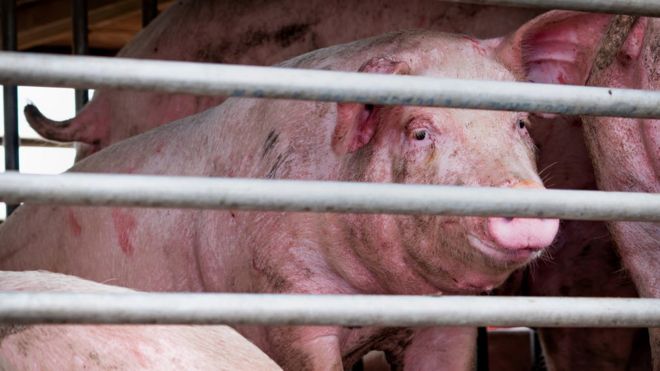
Image captionThe new flu strain is similar to the swine flu that spread globally in 2009
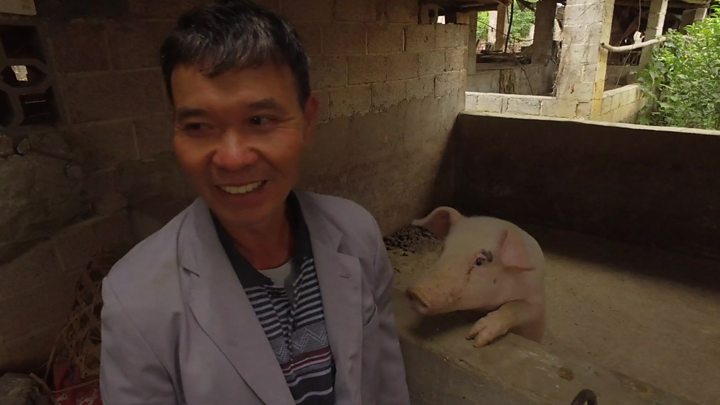
A new strain of flu that has the potential to become a pandemic has been identified in China by scientists.
It emerged recently and is carried by pigs, but can infect humans, they say.
The researchers are concerned that it could mutate further so that it can spread easily from person to person, and trigger a global outbreak.
While it is not an immediate problem, they say, it has “all the hallmarks” of being highly adapted to infect humans and needs close monitoring.
As it’s new, people could have little or no immunity to the virus.
Pandemic threat
A bad new strain of influenza is among the top disease threats that experts are watching for, even as the world attempts to bring to an end the current coronavirus pandemic.
The last pandemic flu the world encountered – the swine flu outbreak of 2009 that began in Mexico – was less deadly than initially feared, largely because many older people had some immunity to it, probably because of its similarity to other flu viruses that had circulated years before.
That virus, called A/H1N1pdm09, is now covered by the annual flu vaccine to make sure people are protected.
The new flu strain that has been identified in China is similar to 2009 swine flu, but with some new changes.
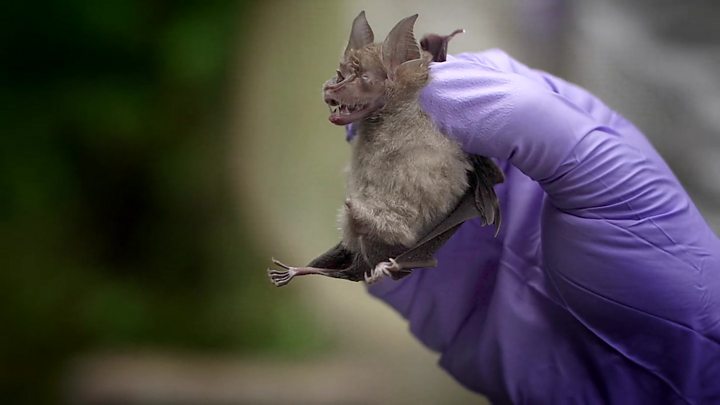
Media captionSearching for viruses in Thai bats – watch scientists collect samples from the animals in order to look for clues about coronaviruses
So far, it hasn’t posed a big threat, but Prof Kin-Chow Chang and colleagues who have been studying it, say it is one to keep an eye on.
The virus, which the researchers call G4 EA H1N1, can grow and multiply in the cells that line the human airways.
They found evidence of recent infection starting in people who worked in abattoirs and the swine industry in China.
Current flu vaccines do not appear to protect against it, although they could be adapted to do so if needed.
Prof Kin-Chow Chang, who works at Nottingham University in the UK, told the BBC: “Right now we are distracted with coronavirus and rightly so. But we must not lose sight of potentially dangerous new viruses.”
While this new virus is not an immediate problem, he says: “We should not ignore it”.
The scientists write in the journal Proceedings of the National Academy of Sciences that measures to control the virus in pigs and closely monitor working populations should be swiftly implemented.
Prof James Wood, Head of the Department of Veterinary Medicine at the University of Cambridge, said the work “comes as a salutary reminder” that we are constantly at risk of new emergence of pathogens, and that farmed animals, with which humans have greater contact than with wildlife, may act as the source for important pandemic viruses.
Media captionHow swine fever devastated China’s pigs in 2019
This undated photo provided by the Wildlife Conservation Society in June 2020 shows a giant ibis in Cambodia. In April 2020, the WCS documented the poisoning of three critically endangered giant ibises for the wading bird’s meat. (Phann Sithan/WCS via AP)
In parts of the developing world, coronavirus safety measures have fueled concerns about an increase in illegal hunting of wild animals.
Some people say the hunting is a result of food shortages and an easing of law enforcement in some wildlife protection areas. Yet at the same time, border closures and travel restrictions have slowed illegal trade of some high-value animal species.
Economic problems and food shortages have created situations in which more people have been attacking rare or endangered species.
A firefighter in Siberia on June 2 monitors a controlled burn to reduce the threat from wildfires. Amid record heat, the region is bracing for more blazes. Yevgeny Sofroneyev/TASS via Getty Images
Over the weekend, Verkhoyansk, Russia, hit a temperature of 100.4 degrees Fahrenheit. Researchers are still working to confirm the result, which may be recognized as a record high for the Arctic Circle.
And the small Siberian town isn’t alone. Much of Russia has been facing a heat wave in recent days, with multiple locations reporting temperatures as high as 113 degrees on June 19. The surprising warmth was also felt in other parts of the Arctic like northern Canada and Scandinavia.
It’s part of a pattern of soaring temperatures this year in what are ordinarily…
Hunting African lions is controversial but is legal in Tanzania, Zambia, South Africa, Zimbabwe, Namibia, and Mozambique. Credit: Alex Braczkowski
Griffith University scientists have revealed the devastating effects a trophy hunting ban will have on wildlife conservation and livelihoods in Africa. Although controversial, the practice of trophy hunting conserves land that wouldn’t otherwise be protected.
Dr. Duan Biggs, leader of the Resilient Conservation Research Group at the Environmental Futures Research Institute worked with a group of international collaborators to investigate the effect a trophyhunting ban would have on South African landowners, who hold the majority of the hunting market in Africa.
In an article published this week in The Conversation, the researchers stress the timeliness and importance of their findings in light of the COVID-19 pandemic, which has devastated the African tourism economy.
“Trophy hunting is facing increasing pressure due to…
It’s not fire’s fault that we’re steadily handing it a hotter, drier world. But there it is.
As we gear up for another year of fighting fire in the summer of 2020, we still have time to pause and ponder how we’ve encouraged it. Namely — thanks to our firing up the fossil fuels, thus emitting heat-trapping CO2 to the atmosphere — we’ve been forcing the world into increasingly frequent, intense, and persisting rounds of heat.
Then, on the heels of heat, increasingly frequent, intense, and persistent drought.
This new frequency, intensity, and persistence of heat and drought has thrown open the door to more frequent, more intense, and more persistent fire.
There’ll be more of it, and it’s going to get worse. After all, we’re not done firing up the fossil fuels.
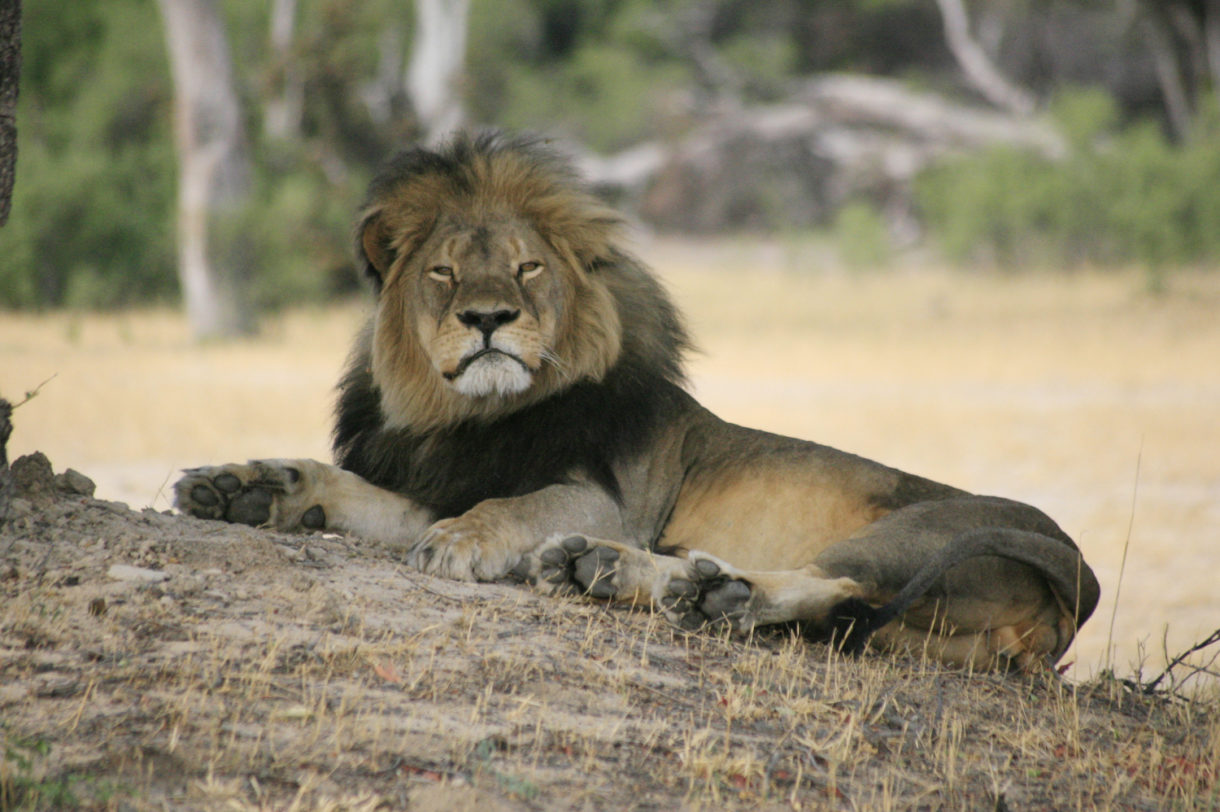
The killing of Cecil the lion (pictured above) five years ago by an American trophy hunter in Zimbabwe triggered worldwide outrage. Since then we have been working to end the horrors of trophy hunting both in the U.S. and abroad. And one of the best ways to do it is by prohibiting the import of lion trophies to the world’s three largest importers, the UK, the EU, and the U.S. And together, with your support, that’s what we’re going to do. Photo by iStockphoto
The killing of Cecil the lion five years this week ago by an American trophy hunter in Zimbabwe triggered worldwide outrage. Father of a pride, lured with an elephant carcass, wounded by an arrow, he suffered for hours before being killed by gunshot. As it turned out, this was a shot heard around the world, giving…
Fireworks and other explosive materials, whose reactions can produce sparks, flames, and fumes, cause various harms to nonhuman animals. These often affect animals who are human companions, and whose reactions we can easily see. They also harm the other animals who are around us, both in urban environments and outside them, as well as those who are on farms or confined in other spaces.
Physical damage to the hearing organs of animals
The hearing of many animals is much more sensitive than it is in humans, so the explosions of fireworks are not only more disturbing to them, but they can damage their hearing more severely. Fireworks can emit sounds of up to 190 decibels (110 to 115 decibels above the range of 75 to 80 decibels where the damage to the human ear begins). Fireworks generate a higher noise level than firecrackers, gunshots (140 decibels), and some jet planes (100 decibels).
Noises caused by fireworks and firecrackers can lead to loss of hearing and tinnitus. Dogs are known to suffer irreversible hearing loss caused by proximity to the noise of gunfire.
Fear and stress
In addition to these harms, the noises caused by fireworks harm animals by causing fear. In fact, repeated exposure to unexpected, unpredictable loud noises can cause phobias in many animals, increasing panic reactions to loud noises in the future.1
It is estimated that one-fifth of disappearances of animals who are companions to humans are due to very loud sounds, mainly fireworks and storms.2
The effects of fireworks on animals can be observed very clearly in zoos.3 It has been shown that the noise of fireworks makes animals such as rhinos and cheetahs very nervous, also visibly affecting others such as elephants, while rodents continue running minutes after the noises cease.4
Harmful effects by chemical particles
In addition, firecrackers are poisonous, and their explosion releases harmful particles such as fine dust (PM10) that is toxic to inhale. It can worsen existing diseases and cause others. Therefore, fireworks represent a danger both to animals who live in areas where they explode, or in relatively distant locations when the wind transports the particles.5 There is also a risk of ingestion of the residue of fireworks and firecrackers.6 The proximity of the animals to the areas where the firecrackers are made often causes burns and damage to the eyes.
The chemicals are also dangerous for cats and dogs, just as they are for humans with respiratory diseases such as asthma. Careless use of fireworks can also cause mutilations and fatal accidents in animals near the event, as well as causing fires that harm animals. When accidents of this type occur that affect humans, it is common for us to talk about it, but we must remember such things often affect animals of other species even when humans aren’t badly affected.
Ways different animals are affected by fireworks
Dogs
Dogs are able to hear up to 60,000hz, while humans can’t hear anything above 20,000hz, which is only a third of the capacity of dogs. This auditory acuity of dogs is one of the reasons the sound of fireworks can be so harmful to them. They show signs of overwhelming anxiety as they are unable to escape from the sound.7
Dogs, like many other animals, also suffer from other phenomena that produce loud sounds, such as storms. However, in the case of storms, the noises are accompanied by previous warning signs, so that animals can perceive them in advance. This can cause them anguish in anticipation, but it does not cause them the unexpected fright caused by fireworks, which are sudden and not identifiable.8 The fear of noise among older dogs is more common.9
Many urban dogs suffer negative symptoms from the explosions of firecrackers. Common reactions are freezing or paralysis, uncontrolled attempts to escape and hide, and tremors. Other more intense signs may also be present, such as salivation, tachycardia, intense vocalizations, urination or defecation, increased activity, hyper alertness and gastrointestinal disorders. All these signs are indicative of great discomfort.
It has been pointed out that the reaction of dogs to the sound of fireworks is similar to post-traumatic stress in human animals. However, this effect could be much more harmful in dogs, because they do not have the ability to rationalize their anxiety, or the possibility of an immediate cognitive response that allows them to respond to their fear. It is likely they experience a deeper and more intense form of terror. This is in addition to the noise phobia which can be greater in some dogs due to personality differences. It is important to keep in mind that in the first years of their lives, dogs are especially vulnerable to the development of phobias, and exposing them to sounds like fireworks contributes to future fear responses that they might not otherwise have had. It has been estimated that one in two dogs has significant fear reactions to fireworks.10
Cats
The effects of fireworks on cats are less obvious, but their responses are similar to those of dogs, such as trying to hide or escape.11 However, regardless of the fear they have, they have a higher risk of being poisoned. Many cats who are near areas where firecrackers are made ingest them or their parts. In addition, they can go blind or be seriously injured by the explosions of firecrackers.12
Horses
Horses can easily feel threatened by fireworks due to their hypervigilance since they are constantly on high alert due to possible predators.13 Horses also act quite similarly to dogs and cats, showing signs of stress and fear, and trying to flee or escape. It is estimated that 79% of horses experience anxiety because of firecrackers, and 26% suffer injuries from them. Sometimes they react to fireworks by trying to jump fences and flee to dangerous areas where they can be run over by cars.14
Birds
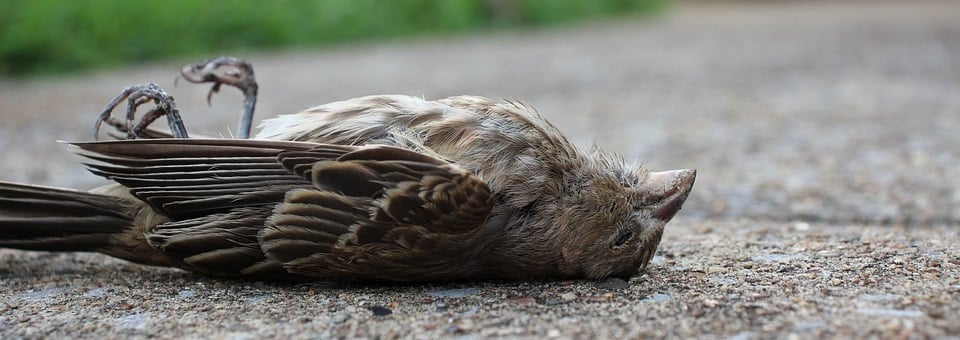
The noise of firecrackers can cause birds tachycardia and even death by fright. The high degree of stress birds experience is indicated by the fact that birds may temporarily or permanently abandon the places where they are.15
In areas that are aircraft flyover zones, Creole ducks grow more slowly and have a lower body weight than Creole ducks who live in areas with little noise. Snow geese affected by these noises spend less time eating during the day and try to compensate during the night, which entails shortening their period of rest and sleep, gradually reducing their survival rate.16
Disorientation and panic from fireworks can cause birds to crash into buildings or fly towards the sea. The colonial species of birds who nest in high densities, such as silver gulls, are at greater risk of this during explosions of firecrackers. Many birds who flee from their nests due to the sounds do not know how to return to their nests once the noise ends, which leaves many of their young helpless.
Invertebrates and small vertebrates
The harms caused to invertebrates and small vertebrates have been evaluated much less than those caused to the animals discussed above. Presumably, these animals can do little to avoid harm if the explosions occur in areas near where they live. Keep in mind that for these animals fireworks are very large explosions, so the harms to them can be much greater than in other animals.17
Alternatives to the use of fireworks
There is a growing acceptance of alternatives to fireworks, such as laser light shows. One notable case is in the city of Collechio (Italy), one of the first to program silent fireworks, with the message that it is possible to enjoy fireworks without causing panic among the nonhuman inhabitants of the municipality.18 However, there is the possibility that this type of show may affect birds negatively.
Some might think that administering a soothing drug to animals could be the solution, but this proposal isn’t satisfactory for two reasons. First, the use of drugs to calm animals could cause harmful side effects. Second, we wouldn’t be able to reach almost all of the animals affected by fireworks. The animals who live with human beings are not the only ones harmed. Even if we only consider domesticated animals in urban areas, there are animals who live in the street or are alone. In addition, domesticated animals are the minority of animals affected. We must take into account all animals who live outside the reach of humans, whether in the wild or in urban environments, as well as those on farms and other places where they are exploited. For this reason, the only really satisfactory solution is to reject the use of fireworks.
Gahagan, P. & Wismer, T. (2012) “Toxicology of explosives and fireworks in small animals”, Veterinary Clinics of North America: Small animal practice, 42, pp. 361-373.
Overall, K. L.; Dunham, A. E. & Frank, D. (2001) “Frequency of nonspecific clinical signs in dogs with separation anxiety, thunderstorm phobia, and noise phobia, alone or in combination”, Journal of the American Veterinary Medical Association, 219, pp. 467-473.
Shamoun-Baranes, J.; Dokter, A. M.; van Gasteren, H.; van Loon, E. E.; Leijnse, H. & Bouten, W. (2011) “Birds flee en mass from New Year’s Eve fireworks”, Behavioral Ecology, 22, pp. 1173-1177 [accessed on 30 March 2019].
Shannon, G.; McKenna, M. F.; Angeloni, L. M.; Crooks, K. R.; Fristrup, K. M.; Brown, E.; Warner, K. A.; Nelson, M. D.; White, C.; Briggs, J.; McFarland, S. & Wittemyer, G. (2016) “A synthesis of two decades of research documenting the effects of noise on wildlife”, Biological Reviews, 91, pp. 982-1005.
Simpson, S. D.; Radford, A. N.; Nedelec, S. L.; Ferrari, M. C.; Chivers, D. P.; McCormick, M. I. & Meekan, M. G. (2016) “Anthropogenic noise increases fish mortality by predation”, Nature Communications, 7 [accessed on 12 May 2019].
Notes
1 British Small Animal Veterinary Association (2019) “Fireworks”, BSAVA [accessed on 18 June 2019].
3 In one case, the noise caused by nearby works were a cause of stress for snow leopards kept in zoos. They withdrew to the most remote parts of their exhibition area, and spent more time sleeping than on the days when there was no noise. We can imagine the harm caused by much more thunderous sounds, such as those caused by fireworks. Sulser, E.; Steck, B. L. & Baur, B. (2008) “Effects of construction noise on behaviour of and exhibit use by snow leopards Uncia uncia at Basel zoo”, International Zoo Yearbook, 42, pp. 199-205.
4 Rodewald, A.; Gansloßer, U. & Kölpin, T. (2014) “Influence of fireworks on zoo animals: Studying different species at the zoopark erfurt during the classic nights”, International Zoo News, 61, pp. 264-271.
6 Stanley, M. K.; Kelers, K.; Boller, E. & Boller, M. (2019) “Acute barium poisoning in a dog after ingestion of handheld fireworks (party sparklers)”, Journal of Veterinary Emergency and Critical Care, 29, pp. 201-207.
7 Blackwell, E. J.; Bradshaw, J. W. & Casey, R. A. (2013) “Fear responses to noises in domestic dogs: Prevalence, risk factors and co-occurrence with other fear related behaviour”, Applied Animal Behaviour Science, 145, pp. 15-25.
8 Franzini de Souza, C. C.; Martins Maccariello, C. E.; Martins Dias, D. P.; dos Santos Almeida, N. A.; Alves de Medeiros, M. (2017) “Autonomic, endocrine and behavioural responses to thunder in laboratory and companion dogs”, Physiology & Behavior, 169, pp. 208-215.
9 Storengen, L. M. & Lingaas, F. (2015) “Noise sensitivity in 17 dog breeds: Prevalence, breed risk and correlation with fear in other situations”, Applied Animal Behaviour Science, 171, pp. 152-160.
10 Hargrave, C. (2018) “Firework fears and phobias in companion animals – why do we let owners take the one in two chance?”, The Veterinary Nurse, 9, pp. 392-392.
16 Conomy, J. T.; Dubovsky, J. A.; Collazo, J. A. & Fleming, W. J. (1998) “Do black ducks and wood ducks habituate to aircraft disturbance?”, Journal of Wildlife Management, 62, pp. 1135-1142.
17 Morley, E. L.; Jones, G. & Radford, A. N. (2014) “The importance of invertebrates when considering the impacts of anthropogenic noise”, Proceedings of the Royal Society B: Biological Sciences, 281, 20132683. Studies have also been conducted on the effects of noise on marine invertebrates, due to their economic interest. Hawkins, A. D.; Pembroke, A. E. & Popper, A. N. (2015) “Information gaps in understanding the effects of noise on fishes and invertebrates”, Reviews in Fish Biology and Fisheries, 25, 39-64; Nedelec, S. L.; Radford, A. N.; Simpson, S. D.; Nedelec, B.; Lecchini, D. & Mills, S. C. (2014) “Anthropogenic noise playback impairs embryonic development and increases mortality in a marine invertebrate”, Scientific Reports, 4, p. 5891.

 A beaver swims in a pond near the Tonsina River, Alaska. The master builders are enjoying a dam-building boom in parts of the Alaskan tundra where they previously haven’t been established.
 Beavers gnawed this wood from a lake shore, Kobuk River National Park, Alaska.
 Beavers erected a dam and lodge in a small stream north of Nome, southern Seward Peninsula in western Alaska.Because the lakes the beavers create contain water that is warmer than the surrounding soil, the new bodies of water accelerate the permafrost thawing.”The thing about permafrost is that water interacts very strongly with the frozen ground beneath it,” Nitze said. “The more surface water you have, the worse it is for the permafrost–because in the winter the cold air cannot penetrate again into the ground, and the water stores a lot of the heat and can even penetrate it into the ground,” he said.Lakes and water bodies influenced by beavers accounted for two-thirds of the 8.3% increase in total surface water area in the Kotzebue study area during a 17-year period, the study found.
 Beaver dams created in lakes contain water that is warmer than the surrounding soil. They form new bodies of water that accelerate permafrost thawing.The beavers also seemed to intuitively target drained lake basins, turbocharging the impact they had on the landscape and the permafrost.”It’s a special landscape. There’s typically a lot of lakes but they are dynamic so they can drain and leave a lot of basins … and these beavers are smart enough to block the outlet and refill the basin again. They dam up a lot of area with minimum effort.”Nitze said the beaver dam-building boom was also likely taking place in the Canadian tundra, and could also be happening in Siberia.”We’re working to expand the analysis on a bigger scale.”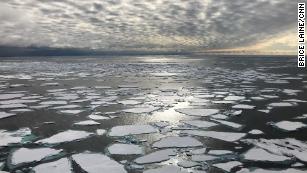


/cdn.vox-cdn.com/uploads/chorus_image/image/66972485/GettyImages_1217494677.0.jpg)

![Image may contain: 2 people, people standing, text that says '[First day as car salesman] Customer: Cargo space? Me: Car no do that. Car no fly. Manager: Can I see you in my office?'](https://scontent.fhio3-1.fna.fbcdn.net/v/t1.0-9/75285844_3252909718065835_9078213984377145352_n.jpg?_nc_cat=109&_nc_sid=ca434c&_nc_ohc=mDsQzPdAjg8AX-OBA8k&_nc_ht=scontent.fhio3-1.fna&oh=25cb7c87e52556a99fc66e75970dba84&oe=5F216E5C)


 Exposing the Big Game