Exposing the Big Game

Forget Hunters' Feeble Rationalizations and Trust Your Gut Feelings: Making Sport of Killing Is Not Healthy Human Behavior

Exposing the Big Game

Breaking news: Dutch parliament votes to permanently close mink fur farms

June 24, 2020 1 Comment
Breaking news: Dutch parliament votes to permanently close mink fur farms

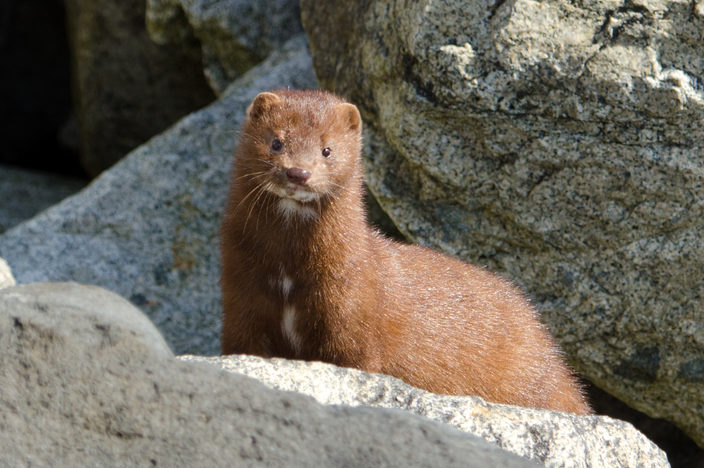
After the Dutch government confirmed that two fur farm workers were “extremely likely” to have contracted the virus from mink, the country ordered the killing of hundreds of thousands of mink on the infected farms to prevent future outbreaks. Photo by BirdImages/iStock.comShare7KTweetRedditEmail7KSHARES

The Dutch parliament has voted to permanently shut down an estimated 128 mink fur farms in the wake of coronavirus outbreaks on 17 of these farms since April. If approved by the Dutch government, the decision would bring a welcome end to the cruel business of fur farming in the country—a business that causes immeasurable suffering for millions of animals each year.

Mink on fur farms in the Netherlands have already paid a heavy price during the pandemic. After the government confirmed that two farm workers were “extremely likely” to have contracted the virus from mink, the country ordered the killing of hundreds of thousands of mink on the infected farms to prevent future outbreaks. Most of the animals killed were days’ old and weeks’ old pups.

Denmark, which is Europe’s largest mink producer, has also discovered infected mink on its fur farms and has culled at least 11,000 mink as a result.

The Netherlands is Europe’s third largest producer, producing 4.5 million mink pelts, according to the latest data available. Along with a dozen other countries in the European Union, the Netherlands has been in the process of phasing out ​mink fur farming ​since 2013, when a ban was adopted, with a deadline of December 2023. But animal protection groups, including Humane Society International, have been lobbying the Dutch government to end the practice sooner in the wake of the pandemic.

The Netherlands has already phased out fox and chinchilla fur farming.

The novel coronavirus is believed to have originated at a wildlife market in Wuhan, China, and since the outbreak there has been more attention focused than ever before on trades that cruelly confine animals. We have been warning for years about the animal welfare problems inherent in such businesses, and the strong public health risk they pose. Last month the Humane Society family of organizations released an 11-point policy report to prevent the risk of future pandemics, including ending the wildlife trade, ending fur farming, ending the large-scale commercial breeding of dogs in puppy mills, and ending the intensive confinement of farm animals on factory farms.

Infectious disease experts around the world have voiced similar concerns over future pandemic outbreaks and animals kept in close confinement.

Conditions on fur farms are not all that different from those in a wildlife market: scared animals are kept in filthy, crowded cages. Many are often sick or injured, creating the perfect environment for diseases to breed. An HSl investigation of a fur farm in Finlandshowed hundreds of foxes and mink crammed in small, barren and filthy battery cages. Many of the animals had eye infections and gaping wounds, including a mink with a large, bloody hole in the head. Some animals lay dead in the cages and others ate them or walked over them.

The vote yesterday in the Netherlands shows that the people of that country do not want their nation contributing to such cruelty anymore, and we urge the government to approve the closure of fur farms without delay. The experience of the Netherlands should also serve as a reminder for other fur-producing nations that this is a business rife with animal welfare and public health problems, and that they should act swiftly to end fur farming on their soil. The market for fur is dropping fast, with major fashion houses and retailers shutting their doors on this cruel commodity. Now, with the danger of disease looming, there is not a single reason to keep this fading industry alive.

Grizzly cubs should be rehabbed

Exposing the Big Game's avatarCommittee to Abolish Sport Hunting Blog


BY LETHBRIDGE HERALD OPINON ON JUNE 25, 2020.

Judy Malone

TOURISTS AGAINST TROPHY HUNTING

In his response to a recent open letter to the Alberta and B.C. governments, signed by more than 100 scientists, bear experts and advocates, asking for three grizzly cubs to be rehabbed for return to the wild, and for an updated grizzly recovery plan, Alberta government spokesperson Gordon Stenhouse seems unaware of recent studies in grizzly rehabilitation and behaviours. It is evidence that should factor into any decisions regarding individuals of a threatened species.

Until 2018 Alberta protocol for all orphaned bear cubs stated they are to be either shot by a conservation officer or sent to a zoo. But as the government well knows, the public reacts strongly to bad news about baby bears. It was only after intense public pressure in 2018 that two black bear cubs were eventually released to the Cochrane…

View original post 611 more words

Europe swelters with another day of extreme heat

Exposing the Big Game's avatarThe Extinction Chronicles

Excessive heat as far north as Scandinavia

JUST WATCHED

Excessive heat as far north as Scandinavia

01:49/01:49
Now PlayingExcessive heat as far…
Excessive heat as far north as Scandinavia 01:49

(CNN)Only one week into the official start of summer and parts of Europe have already been experiencing near-record temperatures.

Fast forward to Wednesday and London’s Heathrow Airport observed its hottest weather of 2020 with a temperature of 91 degrees Fahrenheit (32.6 C). A 68 degree afternoon (20 C) in London is more typical for this time of year.
Thursday, another day of excessive heat is forecast, as highs climb into the upper 80s…

View original post 129 more words

161 ways to prevent another pandemic: Cambridge University academics say going vegan,

Exposing the Big Game's avatarThe Extinction Chronicles

 banning trade of exotic animals and clamping down on crowded farms will stop the world being hit by more killer diseases

  • University of Cambridge study said shutting down wet markets was not enough 
  • Highlighted seven ways pandemic could jump from animals to humans in future
  • Gave 160 ways to mitigate future crises, from going vegan to limiting livestock

Going vegan, banning the trade of exotic animals and clamping down on crowded farms could prevent the world from being ravaged by another pandemic, leading scientists warned today.

A 25-strong team of wildlife and veterinary experts have identified seven routes by which pandemics could occur moving forward — and 161 ways to reduce the risk of another infectious disease striking every corner of the planet.

The team — led by Cambridge University experts — said humans must drastically change…

View original post 333 more words

CDC adds 3 new coronavirus symptoms to list

Exposing the Big Game's avatarThe Extinction Chronicles

The Centers for Disease Control and Prevention (CDC) appears to have recently added three new symptoms of the novel coronavirus to its ongoing list.

Congestion or runny nose, nausea, and diarrhea were added, joining the federal agency’s list that already included fever or chills, cough, shortness of breath or difficulty breathing, fatigue, muscle or body aches, headache, new loss of taste or smell and sore throat.

CLICK HERE FOR FULL CORONAVIRUS COVERAGE

“This list does not include all possible symptoms. CDC will continue to update this list as we learn more about COVID-19,” per the CDC. 

The new symptoms were quietly added, with one news outlet reporting that the changes were made on May…

View original post 211 more words

Dolphins are learning smart fish-catching trick from peers, not mothers

By Katie Hunt, CNN

https://www.cnn.com/2020/06/25/world/dolphins-tools-shell-learning-scn/index.html

Updated 1:56 PM ET, Thu June 25, 2020

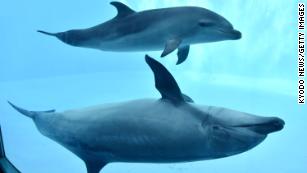
Dolphins learn this fish-catching trick from their peers

Dolphins learn this fish-catching trick from their peersCNN01:27/01:27Now PlayingDolphins learn this…

Source: CNNDolphins learn this fish-catching trick from their peers 01:27

(CNN)Only a very few animals use tools. Crows wield sticks to find food, chimps have fashioned primitive spears to hunt and dolphins in Australia have been spotted trapping fish in huge conch shells.Now, scientists have discovered just how these dolphins learn to catch their prey in this extraordinary way — using their beaks to bring the shells to the surface and then shake the fish into their mouths — similar to how we humans get at those last few chips at the bottom of a packet.”Our study shows that the foraging behavior ‘shelling’ — where dolphins trap fish inside empty seashells —spreads through social learning among close associates,” said Sonja Wild, who conducted this research for her doctorate at the University of Leeds.

It's not only humans who are right-handed. Dolphins also have a dominant side

It’s not only humans who are right-handed. Dolphins also have a dominant side“This is surprising, as dolphins and other toothed whales tend to follow a ‘do-as-mother-does’ strategy for learning foraging behavior,” she said in a press statement. Dolphin mothers and calves typically form very tight bonds, staying close to one another for at least two years learning social behaviors and feeding techniques.The findings provided more evidence of similarities between dolphins and great apes — chimpanzees, gorillas and humans — who have also shown a range of socially learned foraging behavior, the study, which published Thursday in Current Biology, said.close dialog

Receive Fareed Zakaria’s Global Analysisincluding insights and must-reads of world newsActivate Fareed’s BriefingBy subscribing you agree to ourprivacy policy.“Despite their divergent evolutionary histories and the fact they occupy such different environments: Both dolphins and great apes are long-lived, large-brained mammals with high capacities for innovation and the cultural transmission of behaviors,” saidMichael Krützen, director of the department of anthropology at the University of Zurich and senior author on the study.Using boats, the international team of researchers conducted surveys in the western gulf of Shark Bay, Australia, between 2007 and 2018 to evaluate how shelling behavior spread across the population.In 5,278 encounters with dolphins during that time, the scientists identified 1,035 different Indo-Pacific bottlenose dolphins (Tursiops aduncus). They spotted 19 dolphins in the act of shelling 42 times.This image shows a dolphin shelling in Shark Bay in Western Australia. This image shows a dolphin shelling in Shark Bay in Western Australia.Although shelling appears quite rare, both the number of shelling events and the number of individual “shellers” is likely to be an underestimate, according to the study, as the shell-shaking only lasts a few seconds, and is therefore hard to observe.”Some dolphins use shells quite regularly during foraging, while others have only ever been seen with a shell once,” said Wild.”So, while there may be other explanations, it’s possible that some dolphins have mastered the skill more than others.”
The social network

To find out how this way of foraging had spread from one dolphin to the next, the researchers looked at the influence of environmental factors, genetic predisposition and the dolphin’s social network.The model they developed showed that dolphins learn shelling from associates within their social group and they concluded that using the shells spreads primarily within — rather than between — generations, providing the first evidence that dolphins are also capable of learning from their peers, not just their mothers.

Male bottlenose dolphins form gangs to get a mate

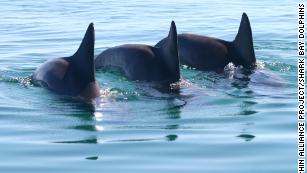
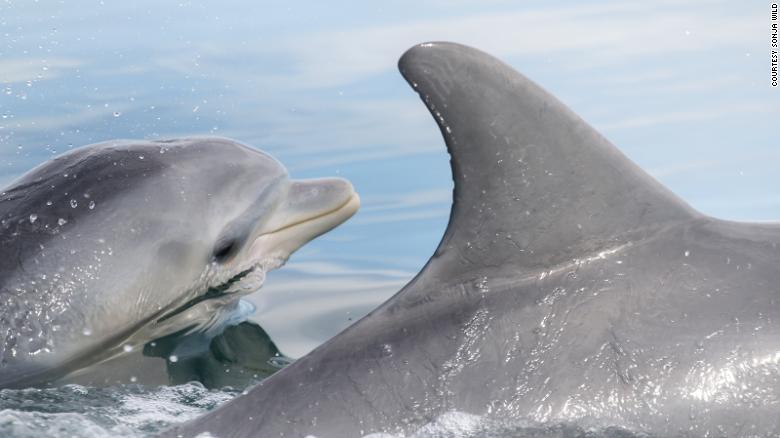
Male bottlenose dolphins form gangs to get a mateShelling is only the second reported case of tool use in dolphins. Dolphins in the same area are also known to use marine sponges as foraging tools to help them catch prey, according to the researchers.Wild said that a marine heat wave in 2011 wiped out Shark Bay’s critical seagrass habitat and triggered a die-off of fish and invertebrates, including the gastropods — sea snails — that live in the giant shells. She said it was possible that the resulting abundance of dead giant gastropod shells may have made it easier for the dolphins to learn this behavior.A mother and calf swimming together in Shark Bay, Australia.A mother and calf swimming together in Shark Bay, Australia.”Our results show that dolphins are definitely capable, and in the case of shelling, also motivated to learn new foraging tactics outside the mother-calf bond,” Wild said.”Learning from others allows for a rapid spread of novel behaviors across populations, and it has been suggested that species with the capacity for learning from others in this way may be better able to survive,” she said.

  • Paid Content4/5

Gray wolf hunting and trapping regulations for 2020-2021 announced

Exposing the Big Game's avatarCommittee to Abolish Sport Hunting Blog

  •  

FLATHEAD RESERVATION — The Tribal Council recently approved Gray Wolf Hunting and Trapping Regulations for the Flathead Indian Reservation for the 2020-21 hunting and trapping season. Wolf hunting and trapping tags will be available from the Tribal Fish, Wildlife, Recreation and Conservation Permit Office to CSKT Tribal members who present valid Tribal Identification.

There are three wolf hunting and trapping zones within the Flathead Indian Reservation:

The Mission Mountain zone, the Northwest zone and the Southern zone. The Mission Mountains Zone is described as the Reservation south of the northern boundary of the Reservation along the east shore of Flathead Lake to Kerr Dam, then southward to the confluence of the Flathead River and the Jocko River, then east along the north side of the Jocko River to the source of its middle fork at the east boundary of the Reservation. Hunting season…

View original post 483 more words

Trump’s Arizona Rally Confirms His COVID Policy Is Driven Only by His Ego

Beyond Meat shares fall after McDonald’s ends Canadian trial of meatless burger

PUBLISHED THU, JUN 25 202010:49 AM EDTUPDATED 38 MIN AGOAmelia LucasKEY POINTS

https://www.cnbc.com/2020/06/25/beyond-meat-shares-fall-after-mcdonalds-ends-canadian-trial-of-meatless-burger.html

  • McDonald’s Canada stopped testing a meat-free burger made with a Beyond Meat patty on April 6.
  • The chain has no plans to bring back the menu item at this point.
  • McDonald’s has yet to test a vegan burger in the U.S.
The "P.L.T." sandwich is arranged for a photograph at a McDonald's Corp. restaurant in London, Ontario, Canada, on Wednesday, Jan. 8, 2020.

The “P.L.T.” sandwich is arranged for a photograph at a McDonald’s Corp. restaurant in London, Ontario, Canada, on Wednesday, Jan. 8, 2020.Cole Burton | Bloomberg | Getty Images

Shares of Beyond Meat fell 7% in morning trading after the CBC reported that McDonald’s stopped testing a burger made with its patties in Canada.

In a tweet to a consumer asking about the burger, McDonald’s Canada said that the test ended April 6. The chain has no plans to bring back the item at this time. 

McDonald’s stock was trading down 1%.https://platform.twitter.com/embed/index.html?creatorScreenName=CNBC&dnt=false&embedId=twitter-widget-0&frame=false&hideCard=false&hideThread=false&id=1255271846888574978&lang=en&origin=https%3A%2F%2Fwww.cnbc.com%2F2020%2F06%2F25%2Fbeyond-meat-shares-fall-after-mcdonalds-ends-canadian-trial-of-meatless-burger.html&siteScreenName=CNBC&theme=light&widgetsVersion=3f79a62%3A1592980045844&width=550px

“We can only comment generally and share that we were pleased with the test,” a Beyond spokesperson said in a statement to CNBC.

Beyond Meat CEO Ethan Brown told analysts in early May that the test concluded “for no negative reason at all.”

“I mean, we feel very good about our relationship with McDonald’s. And what’s going to be happening both, there and potentially elsewhere,” Brown said. “So, by the nature of it being a test, it had a beginning and an end.”

In September, McDonald’s joined the push for more meat alternatives in North America when it started testing the meat-free P.L.T. burger in southwestern Ontario. The test expanded to another 24 locations in January for a 12-week test.

McDonald’s said in a statement that there has been no change to its relationship with Beyond Meat.

“We’re evaluating learnings from our recent test to inform future menu options. As we look ahead, we will plan to bring plant-based options to the menu at the right time for customers in individual markets,” the company said.

Other international McDonald’s markets have found more success with meatless burgers. Restaurants in Germany, for example, have added veggie burgers made by Nestle to their menus.

In the United States, McDonald’s has yet to test a vegan burger. The coronavirus pandemic led the chain to streamline its menus temporarily and to push back product launches, including a new chicken sandwich.

Rival Burger King has been serving an Impossible Whopper nationwide for nearly a year. The Restaurant Brands International chain recently announced that it will be adding a meat-free breakfast sandwich to national menus.

Beyond’s stock, which has a market value of $8.9 billion, has risen nearly 84% so far this year. Shares of McDonald’s, which has a market value of $140 billion, has fallen 8% in 2020. 

WATCH NOWVIDEO01:28Beyond Meat launches cookout value pack in latest play for market shareTRENDING NOW