Push For Wisconsin Wolf Hunting Season This Winter Fails

By SUSAN BENCE JAN 25, 2021ShareTweetEmail

https://www.wuwm.com/post/push-wisconsin-wolf-hunting-season-winter-fails?fbclid=IwAR2466f6n-lgKxsXrKS35ORl5p4mtwD3mNYl66tiVN6cyZw3keJpMQpGy-s#stream/0

  • One of the concerns raised about a proposed late winter hunting season is that it could disrupt the wolf breeding season.UW-STEVENS POINT

ListenListening…5:49WUWM’s environment reporter Susan Bence reports on a Natural Resources Board special meeting to consider a call to hold a wolf hunting and trapping season this winter.

The controversy over how the gray wolf, humans, livestock and pets can coexist is not new. The wolf has been on and off of the federal endangered species list within the last decade.

Early this month, the U.S. Fish & Wildlife Service delisted the wolf, transferring its management to states.

A dozen Republican lawmakers in Wisconsin sent a letter to the state’s Natural Resources Board urging approval of a hunt this winter. The letter resulted in a special board meeting Friday to discuss the issue.

Sen. Rob Stafsholt reminded the board about the 2011 statute requiring — whenever the wolf is delisted — an annual hunting and trapping season from early November through February.

“Hunting and trapping regulations from the 2014 wolf harvest season could easily be used for a current season. Science was already used for that regulation book; no new science is needed,” he said.

The Natural Resources Board sets wildlife management policy for the Department of Natural Resources (DNR) to follow, which includes hunting seasons.

Wisconsin has held three concurrent annual wolf harvests, the last in 2014. DNR officials are proposing the next kick off November 6, 2021.

Wildlife and Parks Division Administrator Keith Warnke said that gives the DNR time to factor in the latest science — both biological and social. He said one of the first steps is updating the state’s wolf management plan.

“Our goal is to launch a wolf management webpage in early February, launch a public input process in late April or early May, and host the first of four public meetings on the wolf management plan in July,” explained Warnke.

The need of an updated management plan now is a point of contention.

“The management plan that’s in place now, it is solid science. Clearly the science in the current plan would be fully protective of the wolf population of the state of Wisconsin,” said George Meyer, executive director of the Wisconsin Wildlife Federation and a former DNR secretary.

Now-retired DNR wildlife biologist Adrian Wydeven headed Wisconsin’s wolf recovery program and helped craft the existing management plan more than 20 years ago. Wydeven said new research — including population modeling and people’s attitudes about sustaining a wolf population — needs to be considered to properly steward wolves now and into the future.

“We’ve got more information on just the ecological benefits of wolves, the potential impact on things like chronic wasting diseases and using that as a factor. I think there is a lot of work that has been done since the 1999 plan that needs to be included in updating this new wolf harvest system,” he said.

On Friday, lots of people had a lot to say about the gray wolf — over four hours of testimony. At least 800 watched remotely, and more than 1,000 comments flooded the Natural Resources Board inbox.

Ryan Klusendorf wanted anyone listening to know that his fourth generation 120-cow dairy farm “on the edge of the Northwoods” in Medford is being threatened by wolves.

“Our first known harassment started in 2011 and has not stopped since and I move my cattle within 100 feet of my buildings at night to protect them, and all it did was bring wolves closer to my children as well,” he said. “I plead with you, rural Wisconsin needs the hunt now.”Wildlife specialist Abi Fergus commented on behalf of the Bad River Band of Lake Superior Chippewa during the special Natural Resources Board meeting.CREDIT SCREEN SHOT

Abby Fergus said tribal input must be factored into Wisconsin’s wolf management and harvest plan. Fergus is a wildlife specialist for The Bad River Band of Lake Superior Chippewa and spoke on behalf of her tribe.

“Bad River and other Anishinaabe bands have stewarded relationships with Ma’iingans (wolves) since time in memorial and hold great knowledge in this area,” she said.

Fergus warned that a decision to hold a wolf harvest in February may create unintended consequences.

“I’d like to point out the high potential for a hunt concentrated during the sensitive mating season would entail even more negative and more unpredictable impacts. Wolves that survive may experience pack breakup and these situations can lead to increased livestock depredation,” she said. “The state has legal obligations to be working with the tribes on this.”

In the end, the board took up a motion to open a wolf hunting season no later than February 10, using the 2014 harvest quotas.

It was voted down 4 to 3, after a lengthy discussion about obligations under a 1983 federal court ruling that clarified treaties signed in the 1800s with Ojibwe tribes.

DNR Chief Legal Counsel Cheryl Heilman explained the state is required to consult with tribes before, not after, a harvest plan is finalized.

“The usual process is that if the department has a committee, and so we have a wolf committee. There needs to be tribal representation. And setting the quota, ordinarily the process would allow us to consult with the wolf committee to get that tribal input. There are other ways that the department could get the tribal input, but I believe based on at least the testimony I heard here today, you haven’t yet taken that step,” she said.

For now, it looks like the DNR will move forward with updating its management plan and approving a hunt starting November 6 after, the agency says, “working collaboratively and transparently with the wide array of diverse interests associated with wolf management in Wisconsin.”

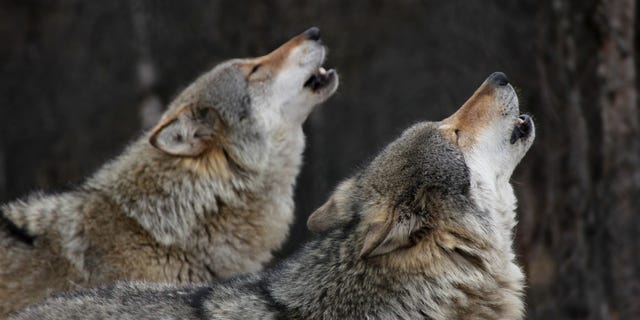
Montana may expand wolf hunting

Exposing the Big Game's avatarCommittee to Abolish Sport Hunting Blog

22 hours ago

One of the proposals may change wolves to being classified as predators

By Michael Hollan | Fox News

https://www.foxnews.com/great-outdoors/montana-may-expand-wolf-hunting

Video

Fox News Flash top headlines for January 25

Fox News Flash top headlines are here. Check out what’s clicking on Foxnews.com.

Wolf hunting inMontanamay see some significant changes.

According to reports, multiple bills are being considered in the state right now that implement serious changes forwolf management. According to one of the lawmakers behind these bills, the state has seen a significant increase in the number of wolves.

The bills include proposals such as expanding trapping seasons, including wolf licenses with big game combination licenses and even reclassifying the animals as predators.

The bills include proposals such as expanding trapping seasons,including wolf licenses with big game combination licenses and even reclassifying the animals as predators.(iStock)

The bills include proposals such as expanding trapping seasons,including wolf licenses with big game combination licenses and even reclassifying the animals as predators,KTVBreports. Sen…

View original post 235 more words

Biden administration targets hunters with regulations on Day One

Exposing the Big Game's avatarCommittee to Abolish Sport Hunting Blog

6 days ago

Biden administration targets hunters with regulations on Day One

The administration plans to review rules that loosened restrictions for hunters and farmers

ByJulia Musto| Fox News

https://static.foxnews.com/static/orion/html/video/iframe/vod.html?v=20210119180528#uid=fnc-embed-1

Fox News Flash top headlines for January 20

Fox News Flash top headlines are here. Check out what’s clicking on Foxnews.com.

WhenJoe Bidenenters theWhite Housefor his first day as President of the United States, he is set tosign 17 executive actions and orders– many of which review or reverseenvironmental policywritten underPresident Donald Trump.

Ina fact sheetreleasedTuesday to the heads of relevant agencies, titled “President-elect Biden’s Day One Executive Actions Deliver Relief for Families Across America Amid Converging Crises,” the administration pledged to examine or instate changesregardingunion jobs, advancing environmental justiceand combattingclimate change.

“These actions are rooted in the rightful recognition of…

View original post 1,170 more words

Gray whales are starving and dying off at an alarming rate

Exposing the Big Game's avatarThe Extinction Chronicles

CBS News

Jeff BerardelliMon, January 25, 2021, 2:06 PM

As long as yellow school bus and weighing as much as 20 cars, the eastern North Pacific gray whale is a gentle giant often seen breaching just off the California coast. As of 2016 the population consisted of27,000individuals, but around two years ago unusual numbers of whales started dying off, alarming scientists.

Since 2019, gray whales have been decimated by something called anunusual mortality event, or UME. A UME is an unexpected phenomenon during which a significant number of marine mammals die. So far, this UME has resulted in 378 confirmed gray whale deaths, and possibly many more that are unrecorded. This event continues.

A dead adult female gray whale stranded in Laguna San Ignacio in Mexico on March 17, 2019. The whale was 12.8m in length. / Credit: Fabian Rodr
A dead adult female gray whale stranded in Laguna San Ignacio in Mexico on March 17, 2019. The whale was 12.8m in length. / Credit: Fabian Rodríguez-González

Scientists are not exactly sure why the…

View original post 1,013 more words

Audubon Files Lawsuit to Protect Migratory Bird Treaty Act

https://www.audubon.org/news/audubon-files-lawsuit-protect-migratory-bird-treaty-act?fbclid=IwAR0xihMe1PwjxeMdkX3O83JwxDwkWapGMdkj6DSWvUuz6DH5usDCa9-xqMI

A coalition of conservation groups is going to court to overturn Trump Administration’s weakening of the landmark bird protection law.By National Audubon SocietyJanuary 19, 2021

Popular Stories

Tundra Swans. Photo: Joshua Pelta-Heller/Audubon Photography Awards

Reverse the Rollback of the MBTA

Speak out to reinstate critical bird protections under the Migratory Bird Treaty Act.Take Action

WASHINGTON  – “What the Trump administration did to the Migratory Bird Treaty Act was illegal and we are going to do whatever it takes to reverse it,” said David Yarnold, president and CEO of the National Audubon Society. “This bird-killer policy has already been struck down in court and we’re confident that we’ll see the same outcome again here.”

The National Audubon Society, joined by several other conservation organizations,** filed a federal lawsuit today in the Southern District of New York challenging the Trump Administration’s weakening of the Migratory Bird Treaty Act. This is not the first legal challenge to the rollback of the MBTA. In August of 2020, in response to a previous lawsuit filed by Audubon, other organizations, and states, the Southern District ruled that the administration’s 2017 Solicitor’s Opinion did not align with the intent and language of the 100-year-old law, and overturned the policy.

Despite this ruling, the administration spent the remainder of its term racing to finalize a regulation to codify the unlawful Solicitor’s Opinion, and published the regulation two weeks ago.

“While we’re confident in the wide-ranging and bipartisan support to reinstate these vital protections, this lawsuit is necessary to challenge a plainly illegal policy that will devastate our bird populations, said Sarah Greenberger, interim chief conservation officer, National Audubon Society. “With both the law and public opinion on our side, we intend to act not only in the courts but with the new administration and Congress to quickly reinstate and strengthen the decades-old precedent for protecting our nation’s birds.”

The 2017 policy change by the Trump administration ignored the intent and language of the law to protect and conserve birds.  Instead, it attempted to limit the MBTA’s protection only to activities that purposefully kill birds, exempting all industrial hazards from enforcement. Any “incidental” death—no matter how inevitable, avoidable or devastating to birds—became immune from enforcement under the law. If the Trump administration’s legal opinion had been in place in 2010, BP would have faced no consequences under the MBTA for the more than one million birds killed in the Deepwater Horizon oil spill.

New science has revealed the loss of 3 billion birds in North America since 1970 and that two-thirds of those birds are at risk of extinction due to climate change. In light of these alarming reports, the National Audubon Society is advocating for a multi-front approach to reinstate the longstanding and common sense interpretation this foundational law.

“We hope to see the Biden-Harris administration begin a process to reinstate MBTA protections and use the opportunity to add a reasonable permitting process to manage incidental take,” said Greenberger. “We also hope to see Congress pass the Migratory Bird Protection Act to clarify these longstanding protections and authorize this common-sense approach.”

The Migratory Bird Protection Act was passed out of the House Natural Resources Committee in the 116th Congress and had a bipartisan group of 90+ co-sponsors. The bill would secure protections for birds and direct the Fish and Wildlife Service (FWS) to develop a permitting process for “incidental take” through which relevant businesses would implement best management practices and document compliance, further driving innovation in how to best prevent bird deaths.

**Co-plaintiffs in the lawsuit filed today are: the American Bird Conservancy, Center for Biological Diversity, Defenders of Wildlife, Natural Resources Defense Council, National Wildlife Federation, and Sierra Club.**

Biden takes Day One action to protect Arctic lands and waters

Exposing the Big Game's avatarThe Extinction Chronicles

January 22, 2021ByTim Woody

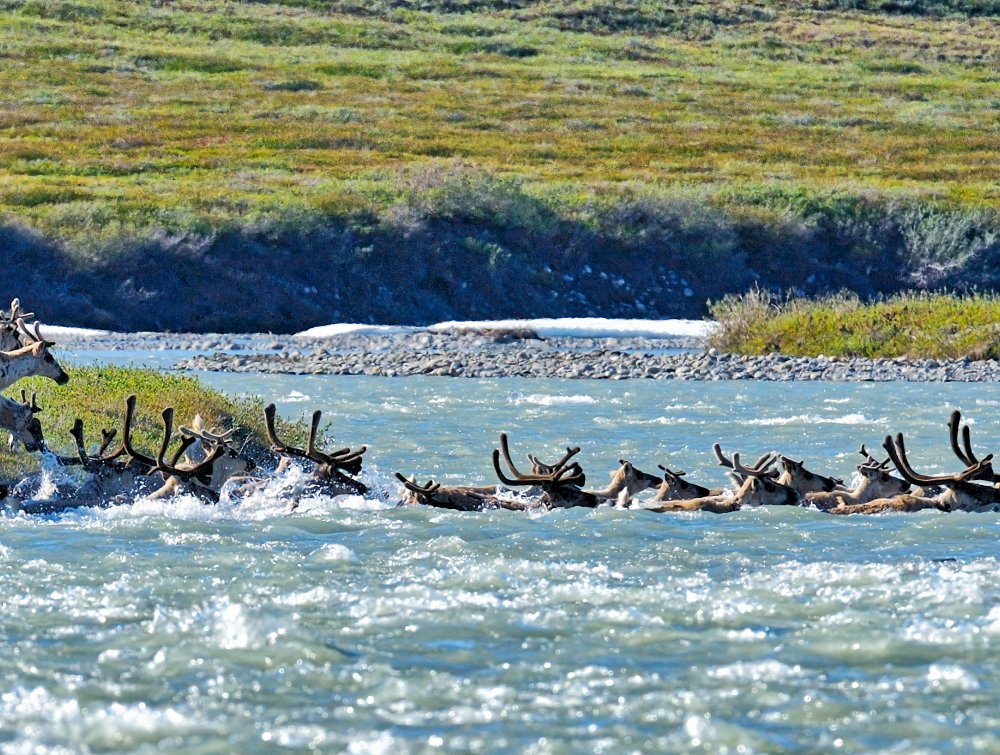
Animals from the Porcupine Caribou Herd in the Arctic Refuge
The Hulahula River runs from Alaska’s Brooks Range to the cArctic Refuge’s coastal plain, which is the calving ground of the Porcupine Caribou Herd.EDWARD BENNETT/BENNETT IMAGES LLC

SHAREShare on TwitterShare on FacebookShare on LinkedInShare via Email

After Trump’s sell off, the Arctic Refuge gets a reprieve

Just hours after being sworn into office, President Biden took a number of monumental actions to protect public lands, address the climate crisis and combat systemic racism, including an executive order that places a moratorium on all oil and gas activity in the Arctic National Wildlife Refuge.

This occurred only one day after the previous administration issued leases for drilling in the refuge’s coastal plain in a rushed, flawed and likely illegal process.

Biden’s action was met with great enthusiasm, particularly by many Gwich’in and Iñupiat peoples who have depended on and protected the…

View original post 364 more words

Trump Has Made Threats to Launch a New Political Party — the “Patriot Party”

Exposing the Big Game's avatarThe Extinction Chronicles

The back of Donald Trump's head
Outgoing U.S. President Donald Trump steps into his limo after landing at Palm Beach International Airport in West Palm Beach, Florida, on January 20, 2021.

BYWilliam Rivers Pitt,TruthoutPUBLISHEDJanuary 25, 2021SHAREShare via FacebookShare via TwitterShare via Email

A white lower-case t on a black background

One of these days, and I pray that day comes soon, I will arrive at a writing assignment with no compelling reason to type the letters t-r-u-m-p in that particular sequence. Ignoring him completely will someday be balm and reward, not to mention responsible journalism. The fact that he appears to be positioning himself to potentially destroy the Republican Party, however, means I have to write that name a few more times before I’m free.

After losing the 2020 election dozens of times at the ballot box and subsequently in courtrooms across the…

View original post 948 more words

Federal court orders Jeff Lowe to surrender all cubs, mothers

Exposing the Big Game's avatarCommittee to Abolish Sport Hunting Blog

https://blog.humanesociety.org/2021/01/federal-court-orders-jeff-lowe-to-surrender-all-cubs-mothers.html?credit=blog_em_011921_id11942&utm_source=feedblitz&utm_medium=FeedBlitzRss&utm_campaign=humanenation

By Kitty Block and Sara Amundson

January 19, 2021 2Comments

Federal court orders Jeff Lowe to surrender all cubs, mothers

Congress is now considering a bill that would stop exhibitors from using big cats for public contact.Photo by the HSUS3.3KSHARES

A U.S. District Court has ordered Jeff Lowe, a notorious big cat exhibitor who took over the running of Joe Exotic’s zoo, GW Exotics, to ​surrender all big cat cubs and their mothers in his possession over allegations of mistreatment.

The preliminary injunction in the Department of Justice case for recurring inhumane treatment and improper handling of animals protected by the Endangered Species Act was based on shocking findings by the U.S Department of Agriculture at Lowe’s facility in Oklahoma.

The shocking allegations against Lowe, his wife and his business partner Eric Yano included claims of ongoing failure to provide animals with adequate food and veterinary care.Federal officials also allegedthat there were “foul-smelling, partially…

View original post 669 more words

Rare beast visits the beach: Wolverine confirmed in Pacific County

Exposing the Big Game's avatarThe Extinction Chronicles

An animal identified as a wolverine by Washington Department of Fish and Wildlife biologists was photographed scavenging a marine mammal carcass on the ocean shore near Surfside on May 23.Jennifer HenryFEATURED

You have viewed 1 of 5 of your monthly page views.Subscribe todayorLogin

LONG BEACH PENINSULA — One of the Pacific Northwest’s most secretive and seldom-seen animals escaped to the beach during the Memorial Day weekend.

A wolverine was photographed in south Pacific County last week at two locations separated by dozens of miles. Numbering only about 300 in the lower 48 states with fewer than 50 in Washington, these bear-like members of the weasel family are legendary fighters with what a state biologist on May 26 called a “tough as nails” attitude.

To catch even a glimpse of…

View original post 1,467 more words