Why animal justice is crucial in addressing the climate emergency

https://www.all-creatures.org/environment/environment-why-animal-justice.html?fbclid=IwAR3UUMbRyQq6uQCPP0J7vzOD6Z9be7otmAWIV9QfFz2oOU9JX3rRBxQsU2c


An Environment Article from All-Creatures.org

Share on Facebook

FROM Philip Murphy, OpenDemocracy.net
June 2021

A vegan diet is probably the single biggest way to reduce your impact on planet Earth, as well as preventing the suffering of animals.

Philip Murphy is the Co-Founder of Animal Rebellion NYC and Continental Liaison, Turtle Island (North America)

Animal rebellion

“I refuse to be sidelined and overlooked as a weak-minded sentimentalist. I am vegan for justice. I am vegan as a rejection of violence. I am vegan because what we are doing as a species is wrong. I am vegan with my heart and my soul, but also with my mind, my intellect and my intelligence.”
– Linda Clark, There’s An Elephant In the Room

The environmental movement Extinction Rebellion (XR) burst into public consciousness on 31 October 2018 with a “Declaration of Rebellion” against the UK government, delivered in Parliament Square in London. Responding to the “climate emergency” and advancing behind a narrative calling for systems-level change through nonviolent direct action, XR grew into a global movement that catalyzed worldwide mass civil disobedience demonstrations in April and October of 2019.

The April actions were widely regarded to have been successful; the October actions less so, as acknowledged by Extinction Rebellion national spokesperson Rupert Read in a speech to the Sheffield XR group in December. In his talk Read shared a thoughtful and considered analysis of these actions, and in doing so articulated his belief that XR’s demands and associated values and principles can and must be actualized from “necessity, not ideology.”

In January 2020 Read and his co-authors Marc Lopatin and Skeena Rathor published a pamphlet entitled “Rushing The Emergency, Rushing The Rebellion?,” which represents a significant philosophical reorientation of the movement. The pamphlet calls for “a new story and vision [that] is human-centric, as opposed to environmental…[and] is nearer-term (as opposed to far-flung) as evidenced by the vulnerability of civilisation to locked-in unpredictable and extreme weather.”

Efforts to address this vulnerability are to be grounded in an approach to inequality that is broadly conceived; this new story is “above all, a story about how Mother Nature is making us all one.” But who exactly is included in this unity, and what about the rights of non-human animals in the way the climate emergency is framed and addressed?

“Rebel Alliance” member organization Animal Rebellion was birthed in the interval between the April and October Rebellions by a group of vegan animal justice advocates who were inspired by the impact of XR on the public consciousness. Incorporating the demands, core principles and values of XR and affirming an anti-speciesist stance, Animal Rebellion asserts that “we cannot end the climate emergency without first ending the animal emergency,” and calls for the adoption of a plant-based food system as a foundational means to mitigate climate change. ‘Speciesism’ simply means prejudice or discrimination that is based on species membership, rooted in the idea of human superiority.

In the words of Animal Rebellion member Alex Lockwood, “We are not here to replace calls for individuals to go vegan. Our intention was to add to the individual programmes and campaigns that urge, help and support people to go vegan…programmes that are bottom-up processes enacted one person at a time. We want to add to these with a new, top-down mass movement demand focused on the government for immediate system change.” Since its public launch at The Official Animal Rights March in London in August 2019, Animal Rebellion has grown to include over 60 local groups in 12 countries including the US, Canada, Mexico, New Zealand and Germany.

While it can be said that Animal Rebellion has drawn inspiration from XR, it is equally true that it came into being as a response to the latter’s shortcomings with regard to the consideration it affords to nonhuman sentient beings. Virtually from XR’s launch, the movement had engendered sharp criticism from the global animal justice community regarding its failure to address the profound environmental impacts of so-called ‘animal agriculture’ and the deleterious impact of the active subjugation of non-human sentient beings for the purpose of turning them into commodities such as food. This criticism included powerful pieces by the noted abolitionist animal rights scholar and activist Gary Francione here and here.

These critiques are well-founded: the negative environmental impacts of raising animals for food make this one of the leading causes of ecosystem degradation, if not the leading cause. These impacts include increased emissions of greenhouse gases like methane and nitrous oxide, deforestation, biodiversity loss (including species extinction), and air and water pollution (including ocean acidification). In the words of Oxford University’s Joseph Poore, the lead researcher on one of the largest metanalyses of the environmental impacts of food production:

“A vegan diet is probably the single biggest way to reduce your impact on planet Earth, not just greenhouse gases, but global acidification, eutrophication, land use and water use. It is far bigger than cutting down on your flights or buying an electric car.”

Substantively animal-generated emissions of methane and nitrous oxide have much more potent near-term impacts as greenhouse gases than carbon dioxide. Moreover, owing to what’s known as the “aerosol masking effect” associated with carbon dioxide emissions – whereby particulates in CO2 reflect a portion of the sun’s rays away from the Earth’s surface and thereby mask their actual warming effects – removing substantive quantities of CO2 in advance of reducing or eliminating methane and nitrous oxide from the atmosphere will serve to increase global average temperatures rapidly.

All this is scientifically true and should be politically compelling, but the genius of Animal Rebellion is as much philosophical and ethical as technical. The movement aims to illuminate the standing of all sentient beings as members of a moral community, and the profoundly damaging impacts associated with remaining ignorant of this fact. As Animal Rebellion’s ‘first value’ states:

“We are an anti-speciesist movement that has a shared vision of change – creating a world that protects beings of all species for generations to come…We are inspired not only by human action but also animal resistance and we believe in co-creating a world with individuals from all species for a just and secure future.”

This stance affirms the landmark 2012 Cambridge Declaration on Consciousness, which states that “Convergent evidence indicates that non-human animals have the neuro-anatomical, neuro-chemical, and neuro-physiological substrates of conscious states along with the capacity to exhibit intentional behaviors. Consequently, the weight of evidence indicates that humans are not unique in possessing the neurological substrates that generate consciousness.”

In his book Animal Oppression and Human Violence: Domesecration, Capitalism, and Global Conflict, the American sociologist David Nibert points to the domestication of animals (renamed “domesecration”) and the associated and unrelenting drive to secure the land and resources necessary to maintain populations of these animals, as being foundational to the development of the acquisitive, violent and expansionist mindset that has informed the creation of an unfettered, ‘grow or die,’ corporate capitalism – which in turn drives the planetary ecocide that has been called the “First Extermination Event” (in contrast to the commonly used term “Sixth Extinction”). As Nibert writes:

“Prejudice against other animals arises from socially promulgated beliefs that reflect a speciesist ideology, created to legitimate economic exploitation or elimination of a competitor. Oppressive practices have deep roots in economic and political arrangements. Therefore, for injustices to be addressed effectively, it is not enough to try to change socially acquired prejudice or to focus only on moral change. The structure of the oppressive system itself must be challenged and changed.”

A more skillful approach to addressing the climate and ecological emergency as affirmed by Read and his co-authors would necessitate that the new story and vision they advocate be centered not merely on human beings, but rather on all beings who demonstrate a unified psychological presence and who are, in the words of the moral philosopher and animal rights activist Tom Regan, the “subject of a life.” It is to all sentient beings that equality must be afforded, with the shared right to be treated with respect honored universally. Mother Nature is indeed “making us all one,” and that unitary domain must therefore include all beings who have the capacity to suffer.

By virtue of its uncompromising anti-speciesist stance and the actions that follow from it, Animal Rebellion can be identified as a progenitor of this new story and its attendant vision. Consequently, it is Animal Rebellion that can lay claim to being the climate justice movement to which all other such movements can and should aspire.

Weird ‘living fossil’ fish lives 100 years, pregnant for 5

Exposing the Big Game's avatarThe Extinction Chronicles

https://apnews.com/article/fish-science-environment-and-nature-0364a1007aea49574a2b68aee6009aa6

BY SETH BORENSTEIN2 hours ago

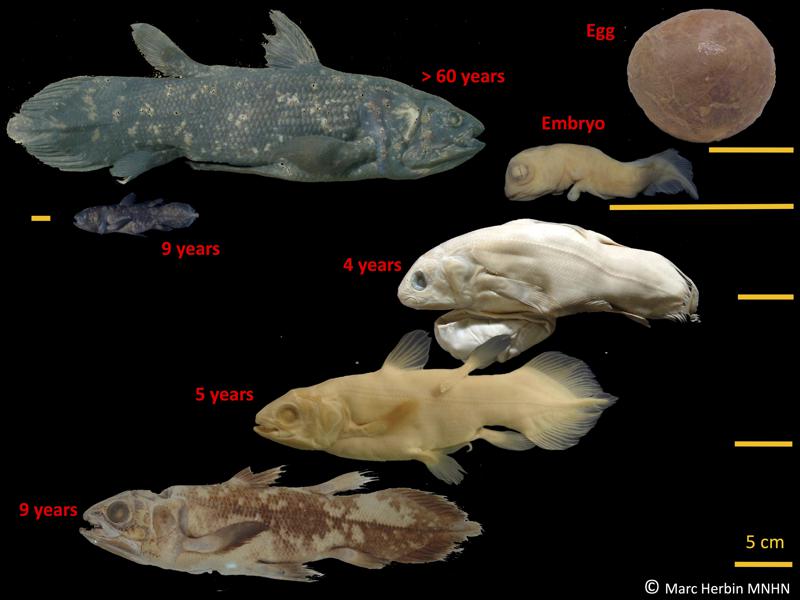
This image provided by Marc Herbin shows the development stages of the coelacanth fish. The "living fossil," still around from the time of the dinosaurs, can live for 100 years, according to a study released in the Thursday, June 17, 2021 edition of Current Biology. And for females it may seem longer because scientists calculate that the live-birth bearing fish stays pregnant for five years. (Marc Herbin/MNHN via AP)

1 of 2This image provided by Marc Herbin shows the development stages of the coelacanth fish. The “living fossil,” still around from the time of the dinosaurs, can live for 100 years, according to a study released in the Thursday, June 17, 2021 edition of Current Biology. And for females it may seem longer because scientists calculate that the live-birth bearing fish stays pregnant for five years. (Marc Herbin/MNHN via AP)

The coelacanth — a giant weird fish still around from dinosaur times — can live for 100 years, a new study found.

These slow-moving, people-sized fish of the deep, nicknamed a “living fossil,” are the opposite of the live fast, die young mantra. These nocturnal fish grow at an achingly slow pace.

Females don’t hit sexual maturity until their late 50s, the study said, while malecoelacanthsare sexually mature at 40 to…

View original post 327 more words

‘It’s much easier to get the vaccine’: Man declines COVID-19 shot, needs double lung transplant

https://abc7.com/double-lung-transplant-covid-vaccine-joshua-garza-man-gets-after-denying/10801344/

By Meredith DelisoThursday, June 17, 2021 9:06AMabout:blankEMBED <>MORE VIDEOS 

Days after Aiden Leos was fatally shot on the 55 Freeway, the suspects ​got into another traffic altercation in which the alleged shooter waved a gun at another motorist, prosecutors say.HOUSTON — Joshua Garza had a chance to get vaccinated against COVID-19 in January but he passed it up, thinking he didn’t really need it.

Now, the 43-year-old Texan is hoping to inspire others to get the shot after he became so ill following his COVID-19 diagnosis that he needed a rare double lung transplant to survive.

After testing positive for COVID-19 in late January, Garza’s health deteriorated rapidly. On Feb. 2, when he ended up falling while trying to walk, his wife called for an ambulance to take him to the hospital. He was ultimately transferred to Houston Methodist, where he was put on an extracorporeal membrane oxygenation (ECMO) machine to pump and oxygenate his blood for him.

“It was quick, it was within three weeks, the lungs were already shot,” said Garza, who works in the oil and gas industry.

“They’re telling you your lungs are failing, so you don’t know if you’re going to go to bed tonight and wake up tomorrow,” he said.

Garza was put on the lung transplant list, and on April 13, successfully underwent surgery. He spent several more weeks recovering and rehabilitating to regain his strength after two months on life support before being released from the hospital on May 27.

Lung transplants are a rare intervention for COVID-19 patients “with no other options,” Dr. Howard Huang, the medical director of lung transplantation at Houston Methodist and one of the doctors who treated Garza, told ABC News.

“Mr. Garza is an extreme example of somebody who had complete lung failure, and there was really no other way out in the immediate future other than transplant,” he said.

It was “almost miraculous” that Garza was able to be put on the ECMO machine during the winter surge of COVID-19 hospitalizations and matched with a donor, Huang said. “Everything just lined up in his favor.”

Houston Methodist has performed eight double lung transplants on COVID-19 patients, and has several more patients who are on life support awaiting transplant, Huang said.

“These people are still fighting for their lives,” he said.

Houston Methodist continues to see patients with severe illness from COVID-19, many of whom have not been vaccinated, Huang said. It’s difficult to say for sure, but Huang believes that had Garza gotten the vaccine when he was able to, “it’s likely that we would have never gotten to this point.”

“The data that’s now coming out suggests that the vaccines are very good at preventing severe illness,” he said. “Even if he had ended up in a hospital, maybe it wouldn’t have progressed all the way to complete lung failure that couldn’t be salvaged without a lung transplant.”

Over 44% of the U.S. population is fully vaccinated, and over 52% have received at least one dose, according to data from the Centers for Disease Control and Prevention.

Most coronavirus hospitalizations occur in adults, though COVID-19 poses a severe risk to unvaccinated teens, a recent U.S. Centers for Disease Control and Prevention report found. Nearly a third of teens ages 12-17 hospitalized with COVID-19 ended up in the intensive care unit, the study found.

MORE: Harris kicks off tour of Southern states to boost vaccination rates
Health officials are urging young Americans to get vaccinated, particularly given the potential threat of the more contagious Delta variant.

“It’s much easier to get the vaccine than to go through something like this,” Huang said of Garza’s case. “He’s extremely lucky. Most people in this situation don’t make it to the transplant. You can’t count on this outcome.”

For Garza, he’s sharing his story in hopes of helping prevent others from experiencing what we went through.

“If I knew what I know now,” he said, “I would have definitely went through with the vaccination.”

ABC News’ Gina Sunseri contributed to this report.

New fossils of giant rhinos — the largest land mammals ever — are found in China

https://www.nbcnews.com/science/science-news/new-fossils-giant-rhinos-largest-land-mammals-ever-are-found-china-rcna1213

The discovery recalls an important phase of scientific history, and hints at the landscape of Asia millions of years ago.

Image:  giant rhino Paraceratherium linxiaense

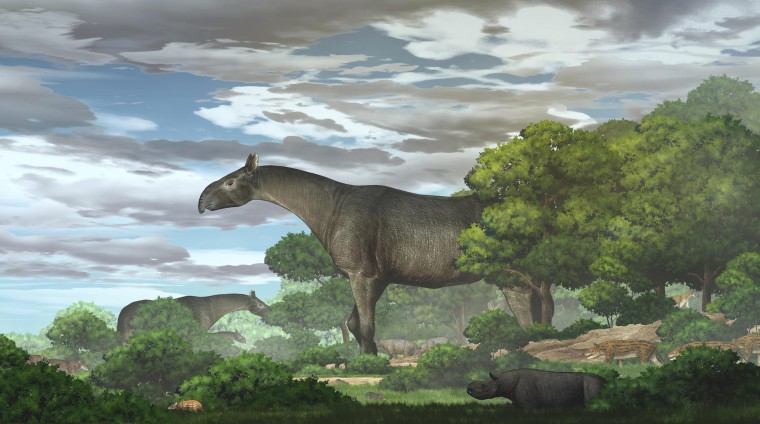
Ecological reconstruction of the new giant rhino Paraceratherium linxiaense in the northeastern Tibetan Plateau during the late Oligocene.Yu ChenJune 17, 2021, 9:16 AM PDT / Updated June 17, 2021, 11:39 AM PDTBy Tom Metcalfe

Fossils from two giant rhinos dating back about 22 million years have been unearthed in China, according to a study published Thursday.

They are among the latest relics of the gigantic animal, which was discovered amid great fanfare early last century. Much larger than modern rhinos, giant rhinos often stood more than 20 feet tall at the shoulder and weighed more than 20 tons, making them bigger than mammoths and the largest land mammal that ever lived.

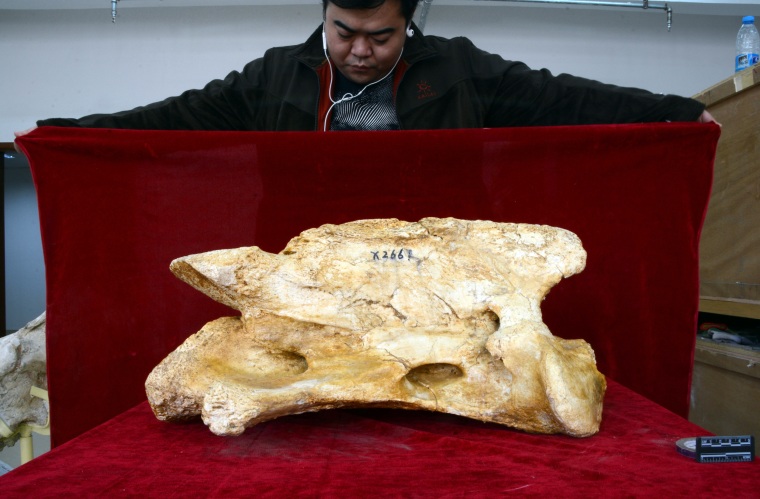
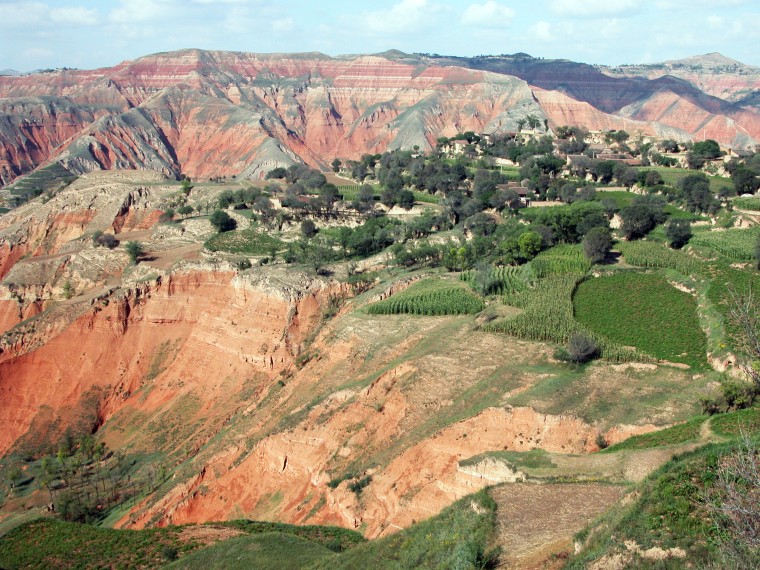
The new fossils were found in May 2015 in the Linxia region of Gansu province in northwest China. One fossil consists of a skull, jawbone and teeth, and the atlas vertebra —  where the head connects to the spine — while the other consists of three vertebrae.

From these remains, the scientists have reconstructed the ancient animals. And they’ve discerned enough differences in their skeletons to classify them as a new species, according to research published in the journal Communications Biology. They’ve dubbed it Paraceratherium linxiaense — the first name from its wider group of giant rhinos, and the second from the region where it was found.

Tao Deng, the director of the Institute of Vertebrate Paleontology and Paleoanthropology at the Chinese Academy of Sciences in Beijing, explained that the Linxia region has been famous for fossils since the 1950s, when local farmers there first found “dragon bones” that were used to make traditional medicines.

Image: A huge axis of the giant rhino Paraceratherium linxiaense
A huge axis of the giant rhino Paraceratherium linxiaense compared to the technician. Tao Deng

Deng’s team has searched for fossils in Linxia since the 1980s and discovered several complete skeletons of ancient mammals, he said in an email. But they’d only found fragments of giant rhinoceros fossils before now, although more complete fossils have been found elsewhere in China. 

The new giant rhino species isn’t quite the largest — Deng said it was slightly smaller than Dzungariotherium orgosense, a species identified from fossils from China in the 1970s, but it was around a fifth larger than the relatively common Paraceratherium bugtiense, the first remains of which were identified in what’s now Pakistan in the early 1900s.

None of the giant rhinos had horns on their noses, however, although they’re the ancestors of modern rhinos: the horns they’re named after are a much later adaptation.

Recommended

CORONAVIRUSThere’s still no evidence of a Chinese lab leak. But here’s what’s changed, scientists say.

CHINAShunned from ISS, China sends astronauts to build space station on first trip in years

Giant rhinos became world famous in the 1920s after an expedition in Mongolia and China by the celebrated American explorer Roy Chapman Andrews, the model for several early Hollywood heroes.

Andrews’ team found giant rhinoceros fossils in the largely unexplored Gobi Desert and returned a fossilized skull of one beast to New York, where it went on display in the American Museum of Natural History. The discovery was such a success that giant rhinos briefly outshone even the biggest dinosaurs in the public imagination, according to historian Chris Manias of King’s College London.

Donald Prothero, a palaeontologist with the Natural History Museum of Los Angeles County and the author of a book about giant rhinos, said the immense animal was one of the last surviving giants to stalk the earth.

Cenozoic red deposits of the Linxia Basin in Gansu Province, northwestern China.
Cenozoic red deposits of the Linxia Basin in Gansu Province, northwestern China. Tao Deng

Although gigantic mammals were common in some earlier periods of prehistory, most died out when the climate became much drier during the Oligocene period, from about 34 to 23 million years ago, he said.

That led to the demise of the Earth’s extensive forests, and most of the mammals that relied on them for food became extinct. But giant rhinos still survived for a time. 

“It was a much drier climate with lots of open turf, and trees were about the only resource that large mammals could live off,” he said. “So they would go from one stand of trees to another.”

Deng notes that the new species of giant rhino was closely related to the species in Pakistan, which raises the possibility that a close ancestor species once roamed across the Tibet region before it became the elevated plateau that it is today.

The Investigation Of The Pandemic’s Origins Is At An Impasse

https://www.npr.org/sections/goatsandsoda/2021/06/17/1006352333/the-mystery-of-the-origins-of-the-pandemic-can-it-be-solved

  • Facebook
  • Twitter
  • Flipboard
  • Email

June 17, 20219:08 AM ET

WILL STONE

Security personnel stand guard outside the Wuhan Institute of Virology during the February 3 visit of the World Health Organization team investigating the origins of the SARS-CoV-2, the virus that triggered a pandemic.Hector Retamal /AFP via Getty Images

It’s still a mystery. How did the pandemic begin?Many Scientists Still Think The Coronavirus Came From Nature May 28, 2021

There is the leading hypothesis among scientists: The virus hopped from an animal — possibly a bat — to a human, or to some other animal, which later spread the disease to humans.

And then there is the lab leak hypothesis: The virus somehow escaped from the Wuhan Virology Institute.

The debate over the origins is now burning hot, with increasing demand for an international investigation into the possibility of a lab leak. Media reports have fanned speculation, much of it based on circumstantial evidence like the cluster of illnesses among lab workers at the Wuhan lab, first reported on May 23 by The Wall Street Journal but denied by Shi Zhengli, a top scientist at the Wuhan Institute of Virology, in an interview with The New York Times this week.

At the G7 summit last weekend, the U.S. and its allies called for a “timely, transparent, expert-led and science-based” study of how the virus first emerged. And World Health Organization Director-General Tedros Adhanom Ghebreyesus has reiterated that China should be more forthcoming.Article continues after sponsor messagehttps://ce6dfac37f890a7a48bb0712f76098a2.safeframe.googlesyndication.com/safeframe/1-0-38/html/container.html

But for all the pressure, meaningful efforts to delve into the matter — and get WHO investigators back into China to follow up — appear to be stalling.

“We’re at an impasse,” says Lawrence Gostin, a professor of global health law at Georgetown University and director of the World Health Organization Collaborating Center on National and Global Health Law. “China is implacably opposed to a continued investigation and certainly opposed to one that’s fully transparent.”

WHO’s Initial Findings: Is That All There Is To Say?

The first official report from the World Health Organization on the origins of the virus came from an international team of scientists who traveled to Wuhan at the beginning of the year as part of a joint WHO-China investigation. During their 28-day trip, the scientists tried to reconstruct the early moments of the outbreak and the possible pathways for the emergence of the virus.

The final report, titled “WHO-convened Global Study of the Origins of SARS-CoV-2,” was issued on March 30 and failed to turn up any conclusive evidence. It did, however, uncover new details about the possible role of livestock farms in southeast Asia and suggested that the Huanan Seafood Wholesale Market in Wuhan may not have been the original source of the outbreak. The authors concluded it was most likely that the virus was introduced to humans by an animal, which acted as an “intermediate host.” The possibility that the virus came from a lab was deemed “extremely unlikely.”

But there was widespread concern about how the study was conducted.

In a rare move, WHO’s director-general Tedros even called out China for not being more transparent and raised concerns that scientists were unable to get unfettered access to “biological samples” and “raw data” that was relevant to the investigation.

“Although the team has concluded that a laboratory leak is the least likely hypothesis, this requires further investigation,” he said.

The first report was intended to be the starting point for the joint WHO-China probe, with a second phase of more in-depth studies to follow, based on evidence scientists turned up during their initial trip.

Increasingly, it’s unclear what that next phase will look like.

WHO’s Lack Of Sway

Ultimately, the U.N. agency has few tools at its disposal to make China cooperate.

“WHO doesn’t have the power to compel anyone in this regard,” the head of WHO’s health emergencies program Dr. Mike Ryan told reporters earlier this month, adding that “cooperation” and “consensus” has “worked for us and for our member states for 70 years.”

But China has “dragged its feet” on the questions of the origins of the virus all along and sees this ongoing debate over pandemic origins in “stark political terms,” so there’s no reason to assume that would change now,” says Gostin of Georgetown. And that attitude has become more deeply entrenched since speculation over whether the virus leaked from a lab in Wuhan has gone mainstream, he says.

The World Health Assembly — the decision-making body of the WHO — plans to hold talks in November around the possibility of a new international pandemic treaty. The goal of the treaty would be to make countries more accountable to one another in the event of any future global outbreak by sharing information, technology, resources and data.

In theory, says Gostin, this treaty could also expand WHO’s authority to do “investigations on sovereign territory and to independently verify official state reports.”

“I can assure you that China will try to block a really rigorous treaty, but it’s still possible that it could go through,” he says.

Meanwhile, China is not budging in response to current demands for transparency. During a meeting of WHO nations last month in Geneva, a representative of the government said his country’s part of the investigation was complete and scientists should pursue other leads.

China has pushed the idea that the virus came to Wuhan from outside the country, either through frozen food or by some other means. Government officials have also floated unsubstantiated theories that a military lab in the U.S. may have somehow sparked the pandemic.

Pros And Cons Of Pressuring China

Could the situation change? Is it possible that China would rethink its stance and be willing to work with WHO and the U.S.?

Only under the right conditions, says Yanzhong Huang, senior fellow for global health at the Council on Foreign Relations and professor at Seton Hall University.

“I think China has not shut the door — it has left flexibility,” he says. “Instead of publicly accusing China of covering up, quiet diplomacy would be a more constructive approach to handling this issue.”

But some experts argue that pursuing a softer, more conciliatory approach amounts to a fool’s errand.

“We need to call them out,” says Jamie Metzl, a senior fellow at the Atlantic Council. “If China continues to obfuscate and to deny the world the possibility of the comprehensive investigation that we need, it would be entirely appropriate for there to be some penalties, whether economic, trade or otherwise.”

The WHO can ramp up the pressure just by using their moral authority to call out the lack of transparency and the finger pointing that China is doing back at the United States,” says Dr. Amesh Adalja, a senior scholar at the Johns Hopkins Center for Health Security, who adds that the United Nations should also get directly involved in the effort to make China cooperate.

The stuttering international effort has led President Biden to publicly order U.S. intelligence agencies to redouble their own efforts to find the likely origin of the virus and to report back to him by the end of August.

“In the end, the Biden administration’s review is likely to be inconclusive and satisfy no one a hundred percent,” predicts Juliette Kayyem, a professor at the Harvard Kennedy School and former assistant secretary at the Department of Homeland Security under President Obama.

But Kayyem expects the review at the very least will underscore how the WHO “took China’s word far too often” in the early months of the outbreak, for example when it repeated China’s contention that the virus did not spread human to human and then waited until March to declare a pandemic.

“We’re not going to war with China over this, but what it can do is put pressure on the WHO about how it conducts itself in these kinds of investigations and how China is not to be believed anymore,” she says. “If the WHO hasn’t learned that now, then we’re in big trouble.”

A Delicate Position For WHO

The WHO finds itself in a delicate diplomatic situation because it’s reliant on its member nations, particularly China, which has grown its influence over the international agency just as the U.S. — under the Trump administration — took a combative approach, even announcing that the U.S. would withdraw from the agency.

“They’re walking a very tight line,” says Dr. Jennifer Bouey, senior policy researcher and the Tang Chair in China Policy Studies at the RAND Corporation, who notes that Chinese scientists are wary to trust their counterparts in the U.S, after the tumultuous years under President Trump.

China has been very supportive of WHO,” she says, referring to Trump’s withdrawal plans.

But even if China did reverse its current stance and allow a team of impartial scientists back into the country, what would they hope to find?

Dr. Daniel Lucey, an expert on infectious disease outbreaks, doesn’t believe they’d find much that China hasn’t already uncovered. He assumes scientists there followed the obvious leads for what could have seeded the initial outbreak in Wuhan — even if they haven’t shared information publicly. This includes the recommendation made in the first WHO report to follow the supply chain of animals that could have harbored the virus and brought it to the market.

“It’s just not plausible in my mind that [China] just hasn’t looked enough,” says Lucey, who teaches at Georgetown University and the Dartmouth Geisel School of Medicine. “They would have done it immediately because it was in their medical, public health and national security interests.”

But Lucey says there seems to be valuable information that China has withheld about how the virus may have made it into the market and when cases of COVID-19 were first identified.

For example, a peer-reviewed study that was published only this month in the journal Scientific Reports contains extensive details of which live animals were being sold in Wuhan’s markets leading up to the first known outbreak of COVID-19. In the study, scientists from China and Canada described animals like minks and racoon dogs — two examples of mammals known to harbor coronaviruses — being sold alive, caged, stacked and in poor condition” with most stalls offering butchering services on site.

We’ve heard nothing about testing any of these animals — where did all those live animals go when the market was closed? It’s just silence,” says Lucey, who notes that China’s official position has been that neither live mammals nor illegal wildlife were being sold at the Wuhan market.

Another detail that has gained more attention comes from a March 2020 story in the South China Morning Post. The reporter claims to have seen internal government documents showing more than 260 cases of COVID-19 identified in 2019, with the earliest cases traced back to November 17.

Rather than pushing for access to Chinese labs, WHO should pursue these two pieces of evidence in its ongoing probe and see whether China in return will offer up more details, Lucey says.

“I just don’t see any reason China would ever allow a forensic lab investigation,” he says. “Even then, if you want to hide something, you can hide it.”

Dr. Adalja at Johns Hopkins isn’t expecting another on-the-ground investigation will yield much, either — unless China suddenly grants full access to data and samples that could be relevant to the first cases and to personnel who worked at the Wuhan Virology Institute.

Says Adalja: “I’m becoming less and less inclined to think that the traditional epidemiology is going to give us the answer this late in the game.”

Record number of bears harvested in North Carolina hunting season

Exposing the Big Game's avatarCommittee to Abolish Sport Hunting Blog

https://www.foxnews.com/great-outdoors/record-number-bears-hunted-north-carolina?fbclid=IwAR2-bmN7S9W8ETLoafy027zBkJbllMCQjx84KtsVJTr1PxNqgtQqfr_cAsA

ByMichael Hollan| Fox News

closehttps://static.foxnews.com/static/orion/html/video/iframe/vod.html?v=20210617182828#uid=fnc-embed-1

Fox News Flash top headlines for June 15

Bearsneed to watch out.

The past 12 months have been very exciting forhunting and fishingenthusiasts. With many businesses closed due to the lockdowns, many more people headed out into the wild than in previous years. With more people hunting and fishing, more records were set across the country.

Hunters in North Carolina killed more black bears than in any previous year that records were kept for.

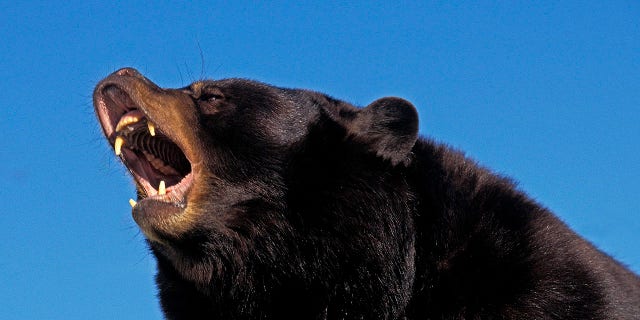
Hunters in North Carolina killed more black bears than in any previous year that records were kept for.(iStock)

For example, hunters in North Carolina killed more black bears than in any previous year that records were kept for,Pilot Onlinereports. The majority of the bears were hunted in the state’s coastal counties. Black bears are reportedly more plentiful in these counties than anywhere else in North America.

placeholder

AVERAGE AMERICAN THINKS THEY COULD SURVIVE TWO WEEKS…

View original post 213 more words

Virginia Dog Saves Fawn From Drowning and Refuses to Leave Its Side: He ‘Kept Caring For It’

https://people.com/pets/dog-saves-fawn-from-drowning/?fbclid=IwAR1ir2QVV8CljkFUXFYMHUAWUyZ9WNb-dVOcDG4Ua0eDNnhps2dcjQ9KGCI

“We could tell right away, even as a puppy, he had such a good heart,” Ralph Dorn, the heroic Goldendoodle’s owner, tells PEOPLE By Diane HerbstJune 15, 2021 05:53 PMhttps://de1c20f78a059337a45edb32d45be6e2.safeframe.googlesyndication.com/safeframe/1-0-38/html/container.htmlADVERTISEMENTFBTweetMore

https://imasdk.googleapis.com/js/core/bridge3.467.0_en.html#goog_139178747

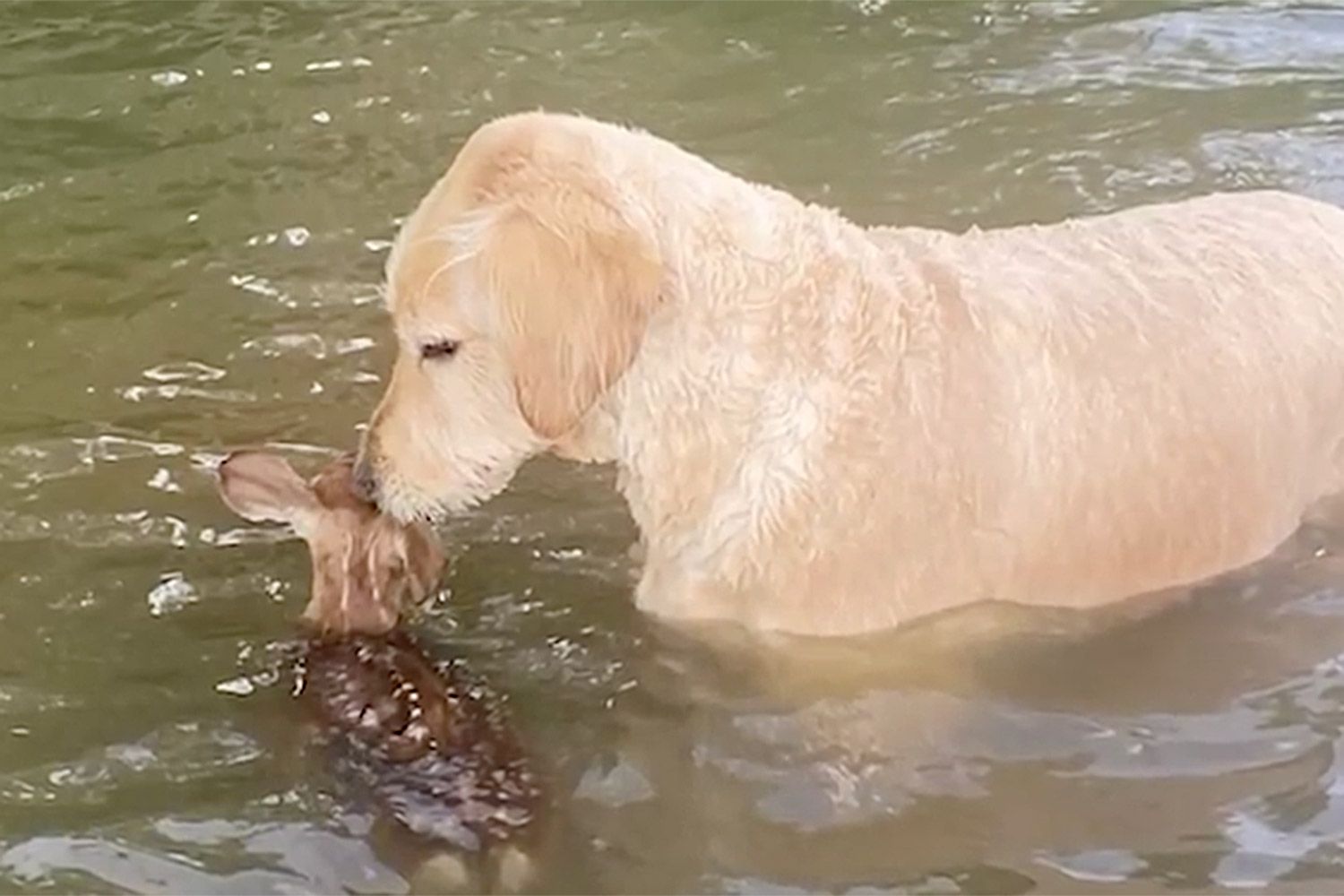
Ralph Dorn surveyed the lake’s surface behind his home during the early evening of June 2, looking for his Goldendoodle, Harley. Then he spotted the pup about 200 feet from shore; the 6-year-old canine was swimming with another animal that, after a few moments, Dorn realized was a tiny baby deer. 

“Not sure how the fawn got out there but Harley obviously didn’t ask why, he just jumped into action,” Dorn, 62, of Culpeper, Virginia, wrote in a viral Facebook post about the incident that’s been shared over 250,000 times.https://www.facebook.com/v2.10/plugins/post.php?app_id=&channel=https%3A%2F%2Fstaticxx.facebook.com%2Fx%2Fconnect%2Fxd_arbiter%2F%3Fversion%3D46%23cb%3Df698b07a5adcd8%26domain%3Dpeople.com%26origin%3Dhttps%253A%252F%252Fpeople.com%252Ff8edfd58336c58%26relation%3Dparent.parent&container_width=656&href=https%3A%2F%2Fwww.facebook.com%2Fralph.dorn.5%2Fposts%2F4048171178624386&locale=en_US&sdk=joey&width=552

Harley paddled side-by-side with the fawn all the way to shore. Dorn met the animals on land and helped the fawn up a steep ledge. After he lifted the baby deer from the water and placed her on the grass, Harley began gently licking the fawn’s body.

“Harley didn’t want to leave the fawn,” Dorn tells PEOPLE.  “He just kept interacting with it, licking it, caring for it.”

dog saves fawn

CREDIT: RALPH & PATRICIA DORN/USETMX

The fawn’s mother appeared on the lawn shortly after the fawn reached the shore. Once Dorn spotted the mother deer, he took Harley inside their nearby home. The doe waited until Dorn and Harley were gone and then walked off with her baby. 

But the next morning, while Dorn and his wife, Patricia, 64, were drinking coffee, something was amiss.  

“Harley got restless running from window to window. I opened the front door and we could hear the fawn bleating,” Dorn wrote in the Facebook post. 

“Harley ran into the tree line and found the fawn,” he wrote. “The little one stopped bleating, tail wagging, they touched noses sniffed each other and Harley came calmly back to the house with me.”

After the brief reunion with Harley, the fawn settled down, Dorn tells PEOPLE, and by the end of the day, the baby and its mom were gone again. Dorn, who estimates the fawn was a few days old, hasn’t seen the pair since. 

Harley’s heartwarming actions are not a surprise to the retired Marine Corps pilot. “We could tell right away, even as a puppy, he had such a good heart,” says Dorn. “He has always been like that with children and animals. He loves them all.”

RELATED: Woodchuck Rides on Golden Retriever’s Back Across Massachusetts Lake, Gives Dog a ‘Little Kiss’

Harley has worked as a certified therapy dog, visiting the elderly in care facilities and sitting with children during reading hours at the local library. He’s also a hit with Dorn’s four grandchildren.

“He’s 100 percent glued to them,” says Dorn. Harley is even cuddly best friends with the family cat, Zsu Zsu.

RELATED VIDEO: Dog Surfs at Beach00:0000:49https://imasdk.googleapis.com/js/core/bridge3.467.0_en.html#goog_139178749You might like×Corgi Surprised at Dog’s Effortless LeapPuppy Wants Attention From DogClingy Dog Won’t Let Owner WorkDalmatian Puppy with Three Legs Gets RescuedGrandfather Gifted Portrait of Late WifeBird Wants KissesFather and Daughter Work Out TogetherCousins Meet for First TimeBig Brother Meets Baby Sister for First TimeCouple Takes A Ride In Their Amphibious Vehicle Near South Bass Island, OhioDog Stands on Hind Legs to Look Out DoorDogs Reunite After Year Separation due to PandemicLittle Girl Takes First Steps on Prosthetic LegPuppy Wakes Up to First Pup CupHelicopter Crew Rescue 4 Women Stuck In Boat Dangling Over Edge Of Dam In TexasToddler Hates The Sound of Mom’s CoughMan Travels 14 Hours To Surprise Girlfriend At White Coat CeremonyDaughter Surprises Dad Who Suffered Brain Injury After COVID-19 SeparationBalloon Artist Creates Pop Culture CharactersOwner Encourages Cat to Walk Down StairsDad Uses Beatboxing To Stop Baby From CryingWoman Surprises Grandparents With News She’s Officially A DoctorGirl Makes First Trip to Build-A-BearGrooms Do Parent Trap Handshake at WeddingDads Make Mini Peloton For Daughter Who is Obsessed With Their BikeWoman Tries Ranch Dressing on Different FoodsFamily Displays Pride Flag Outside HomeDog Knocks Over Yard ChairsIdris Elba ‘Fell Head Over Heels’ for Wife Sabrina DhowreThe History and Celebration of Juneteenth‘One Tree Hill’ Stars Hilarie Burton, Sophia Bush and Bethany Joy Lenz on Their Longtime Friendship: “This Is What Real Sisterhood Is”Baby Tamanduas Takes Its First Steps at Point Defiance Zoo and AquariumMarried at First Sight Season 13 Set to Premiere in July: Meet the New Couples!In the Heights’ Jimmy Smits Says He Is ‘Always Singing in the Shower’A Prankster Horse Steals the Show at His Owner’s Maternity Photo ShootAmerican Shepherds Love to Join Owner in the GymErika Girardi’s Attorneys Withdraw from Representing Her After Documentary on Legal TroublesGirl Adjusts Height of Dad’s Desk‘In the Heights’ Cast Shares Their Favorite Neighborhoods in AmericaLin-Manuel Miranda Apologizes for Colorism in In The Heights: ‘I Promise to Do Better’Needy Cat Crawls Under Bathroom DoorMeghan Markle and Prince Harry Welcome Baby GirlDwayne Johnson Says Being a Girl Dad Has Taught Him to Be “More Tender and Gentle”Daughter Shaves Head to Support Mom with Cancer2-Year-Old Shows How to Make Banana Ice CreamTiny Pomeranian and German Shepherd PlayJennie Garth Recounts Being Put in a Zoo Cage with Luke Perry to Escape 90210 FansDad Surprises Daughter After 7 Months ApartPrincess Diana’s Wedding Dress Is on Display at Kensington PalaceKids Interview the Cast of ‘Peter Rabbit 2: The Runaway’

However, what has surprised Ralph and Pat Dorn, a retired Navy nurse, are the scores of supportive comments Harley has received on Facebook.

“We were just amazed,” says Pat. “We had no idea of the reaction.”

Direct messages of gratitude include some from people who have shared the photos and video from Harley’s rescue with their grief groups, adds Ralph.

“We’re very happy that it has touched so many people,” he says, “and brought joy to so many as well.” `

People Exclusive

Vietnam Circus Decides to End Bear Performances and Surrenders 4 Moon Bears to Animal Rescue

https://people.com/pets/vietnam-circus-ends-bear-performances-surrenders-bears/

The four performing bears have retired to Animals Asia’s Tam Dao sanctuary in Vietnam, where they are enjoying fresh foods, lush habitats, and enrichment toysBy Kelli BenderJune 16, 2021 03:38 PMhttps://579afaa23650d59239ab879f0b3763f9.safeframe.googlesyndication.com/safeframe/1-0-38/html/container.htmlADVERTISEMENTFBTweetMore

Vietnam Circus bear surrendered

CREDIT: ANIMALS ASIA

Vietnam’s Hanoi Central Circus took a big step towards ending the use of animals in circus performances.

According to a release from animal welfare organization Animals Asia, the circus chose to stop including wild bear performances in their shows and voluntarily handed over their four moon bears to Animals Asia so the nonprofit could move the now-retired performers to a sanctuary.

Hanoi Central Circus is one of 15 circuses in Vietnam to end animal performances over the past several years. Animals Asia sees these changes as a “crucial” move towards better global animal welfare and is campaigning for more circuses to follow suit.

The four moon bears handed over by the Hanoi Central Circus arrived at Animals Asia’s sanctuary in Tam Dao, Vietnam on June 15.

“For the first time in years, these four beautiful bears will have access to wide, open spaces and feel lush, fresh grass beneath their paws. They will be able to express natural behaviors like climbing, foraging for food, digging in the dirt, and playing with their new friends.” Heidi Quine, the bear and vet team director at Animals Asia’s Tam Dao sanctuary, said in a statement.

RELATED: Bear Rescued from Narrow Cage at Bile Farm: He ‘Can Live Out the Rest of His Life in Peace’

Vietnam Circus bear surrendered

CREDIT: ANIMALS ASIA

The new bear arrivals will also be reuniting with old friends. In 2019, Animals Asia successfully campaigned to release two female bears from the Hanoi Central Circus. The animals, which the nonprofit named Sugar and Spice “because of their lively character and the joy they brought to the sanctuary,” moved into the Tam Dao sanctuary that year.

Now, all six of the former Hanoi Central Circus performers are enjoying retirement together. At the sanctuary, the bears are treated to lush habitats, fresh food tailored to their diets, soothing pools, a variety of enrichment items, and life-long health care.

Vietnam Circus bear surrendered

CREDIT: ANIMALS ASIA

Animals Asia’s Tam Dao sanctuary is currently home to 186 bears, but the organization hopes to add more. The charity has been campaigning for the end of animal performances in Vietnam’s circuses since 2014. Their work prompted “the Vietnam Ministry of Culture, the government body responsible for entertainment, to instruct circuses to stop using wild animals in their shows” in 2017, according to Animals Asia’s release.

Vietnam Circus bear surrendered

CREDIT: ANIMALS ASIA

“Attitudes in Vietnam are changing,” Tuan Bendixsen, Animals Asia’s Vietnam director, shared. “Schools are starting to refuse to attend circuses that use wild animals, and over 32,000 Vietnamese people have signed our petition to end the use of wild animals in entertainment. This is a direct result of our tenacious yet collaborative approach to working with authorities and communities.”

Now is the time for countries across the world to ban fur

By Kitty Block and Sara Amundson

June 17, 2021 0 Comments

Now is the time for countries across the world to ban fur

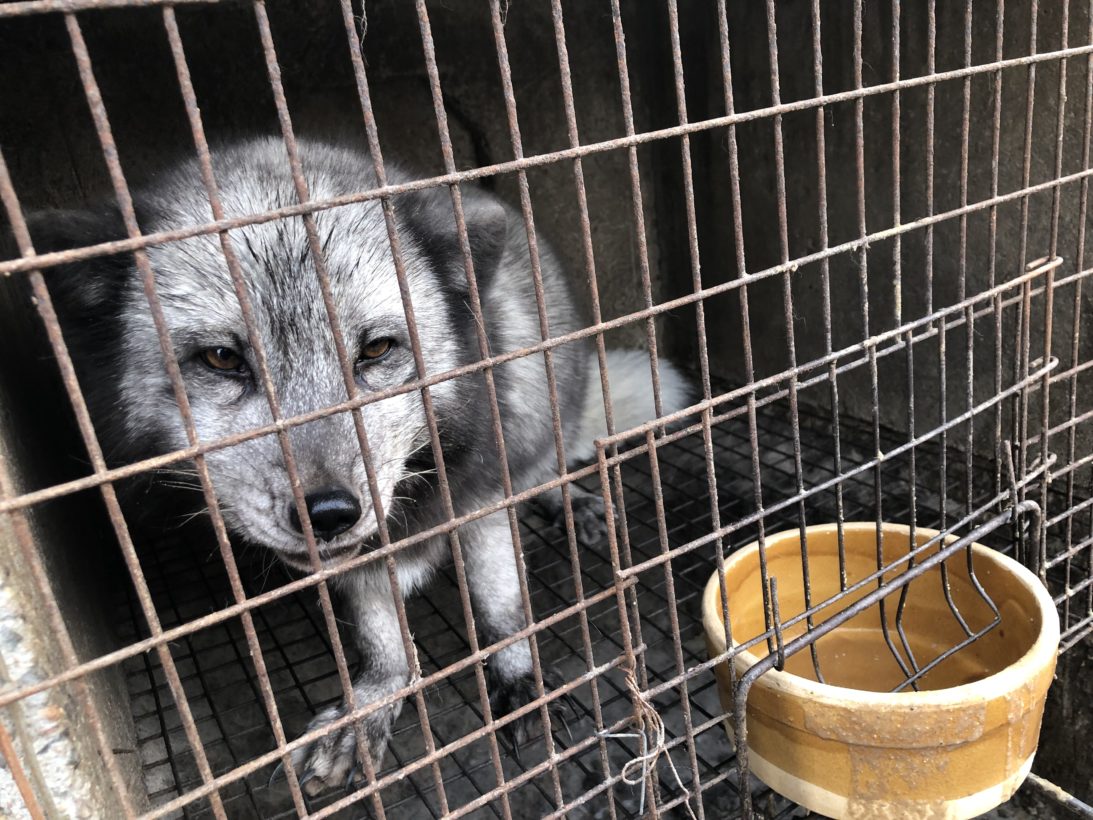
A silver fox languishing on a fur farm, just one of countless animals across the world who suffer and die for fashion every year.

Last week, Israel became the first country in the world to ban the sale of new fur products used for fashion. We want to share why this is meaningful progress for animals and for advocates around the globe fighting for a fur-free future.

A strong recognition of the inherent cruelty to animals in the fur trade

Israel’s ban, which will take effect in six months, came with a strong statement from the environmental protection minister: “The fur industry causes the deaths of hundreds of millions of animals worldwide and inflicts indescribable cruelty and suffering. Using the skin and fur of wildlife for the fashion industry is immoral and is certainly unnecessary. Animal fur coats cannot cover the brutal murder industry that makes them. Signing these regulations will make the Israeli fashion market more environmentally friendly and far kinder to animals.” The ban does allow for a few exemptions for “scientific research, education or instruction, and for religious purposes or tradition,” including fur hats traditionally worn by Orthodox Jewish men. Even so, the ban will prevent the suffering and deaths of countless animals.

Our recent fur farm investigations have shown raccoon dogs being stabbed with double-pronged lances fitted with high voltage batteries that leave the animals paralyzed yet still conscious. They’ve also shown foxes being beaten with metal rods and skinned alive. These practices are meant to keep production cheap but the pelt intact.

Given what our fur farm investigations have revealed—animals repetitively pacing their small cages, suffering from open wounds, with deformed feet and infected eyes—it’s not surprising that banning fur has increasingly come into fashion.

Laying the groundwork for a fur-free future

Israel’s ban sets an important precedent. It lays the groundwork for other countries to follow suit with similar sales bans, furthering the case that fur has no place in today’s world.

We heard rumblings of a fur sales ban in Israel going back to 2010 shortly before West Hollywood became the first city in the world to ban fur sales. That ban led to similar legislation in Los Angeles, San Francisco and Berkeley before California became the first state to ban fur sales in 2019. Now, two towns in Massachusetts—Wellesley and Weston—have joined California by ending fur sales, and the state of Massachusetts introduced a similar bill in February.

The recognition of the gross mistreatment of animals in the fur trade started in the small city of West Hollywood and has now entered the world stage. It shows no signs of slowing down.

Last month, the government of the United Kingdom announced a “call for evidence” for a potential ban on fur imports and sales. The proposal has strong support, with 72% of Brits in favor of ending fur sales and a further 93% against wearing animal fur. Momentum there has been building thanks to Humane Society International’s Fur Free Britain campaign, which asks U.K. leaders to ban the import and sale of animal fur. The U.K. banned fur farming on ethical grounds in 2003, so it makes sense to no longer want to import that cruelty from other countries. Citizens from around the world are encouraged to take part in the call for evidence, including those of us in fur-producing countries such as the U.S., Canada, Finland and Italy where fur-bearing animals suffer for fashion exported to and sold in the U.K. Once the selling stops, the suffering can stop, too.

Adding to this momentum, this month, Estonia became the latest country to end fur farming, joining over a dozen other countries, including the U.K., Austria, Belgium, the Netherlands and Norway. France is currently debating a ban on mink fur farming, and the Irish government has made a commitment to bring forward legislation this year.

The absurdity of supporting the fur trade after COVID

The time to end the fur trade globally has never been so crucial. We’ve long known the inherent cruelty and environmental degradation that goes hand in hand with caging and killing millions of animals like foxes, raccoon dogs and mink, but now the pandemic has shined a new spotlight on the fur industry’s risk to public health. Israel’s fur sales ban and Estonia’s fur production ban come at a time when supporting the fur trade anywhere in the world seems especially dangerous for human beings and animals alike.

Since April 2020, outbreaks of COVID-19 have occurred on more than 420 mink fur farms in 12 countries—including 16 fur farms in four U.S. states. The virus can mutate as it spreads through fur farms, which could end up reducing the efficacy of vaccines, and evidence shows that mink can transmit the virus back to humans. As infections decline around the world, mink fur farms will still present potential reservoirs for the virus unless action is taken to shut them down.

This is why ahead of the recent G7 meeting in the U.K., we asked governments around the world to permanently end fur farming to prevent future pandemic outbreaks, and we plan to do the same at the G20 meeting later this year. G7 leaders appear to be listening, stating a commitment to adopt a “One Health” approach across all aspects of pandemic prevention and preparedness and recognizing the critical links between human health, animal health and the environment.

Putting fur permanently out of fashion

To help put fur permanently out of fashion, Stella McCartney has joined forces with HSI and the HSUS to bring awareness to the unnecessary fur trade and share our FurFreeBritain and Stop Deadly Fur petitions, which will be used to push for a U.K. fur sales ban and to ask G20 leaders to publicly acknowledge that fur farming must end.

“I wanted to address a serious issue: ending the use of fur,” Stella McCartney said upon the launch of her latest collection. “This effort is key to my life’s mission of bringing a conscience to the fashion industry. I am proud to partner with Humane Society International and to help raise awareness of the incredible work they do.”

Many of fashion’s biggest names believe being associated with a product linked to so much animal suffering, environmental destruction and now the potential spread of COVID-19 is no longer worth it. Alexander McQueen, BalenciagaValentino and Saks Fifth Avenue have all gone fur-free this year joining Gucci, Chanel, Versace, Nordstrom, Prada, Macy’s and so many others. These companies are helping drive innovation for alternatives that are better for animals and the planet and are doing their part to ensure that fur never returns as an acceptable trend.

Israel’s ban helps give further fodder to this fight, showing that country-wide bans aren’t only possible—they are necessary. Right now, we have the very real chance to relegate the fur trade to the history books once and for all, and the Humane Society family of organizations are dedicated to making that happen.

You can join us by signing this petition calling for the end of fur farming worldwide.

Sara Amundson is president of the Humane Society Legislative Fund.

Vaccine Refusal in Trump Country Makes It a Sitting Duck for COVID Delta Variant

Exposing the Big Game's avatarThe Extinction Chronicles

Anti-vaxxers and anti-maskers gather at Indiana University&#039;s Sample Gates to protest against mandatory COVID vaccinations that the university is requiring for students, staff and faculty during the upcoming fall semester on June 10, 2021.
Anti-vaxxers and anti-maskers gather at Indiana University’s Sample Gates to protest against mandatory COVID vaccinations that the university is requiring for students, staff and faculty during the upcoming fall semester on June 10, 2021.

BYWilliam Rivers Pitt,TruthoutPUBLISHEDJune 15, 2021SHAREShare via FacebookShare via TwitterShare via Email

A white lower-case t on a black background

READING LISTPOLITICS & ELECTIONSChomsky: Republicans Are Willing to Destroy Democracy to Retake PowerECONOMY & LABOR25 Richest Americans Pay Few Taxes — Partly Thanks to the “Family Fund” LoopholePOLITICS & ELECTIONSAfter Weeks of Wasted Time, Senate Democrats Demand Action on InfrastructurePOLITICS & ELECTIONSA GOP Lawmaker Wants to Ban Critical Race Theory — Without Knowing What It IsPRISONS & POLICINGRep. Cori Bush Introduces Bill to Decriminalize Possession of All DrugsPOLITICS & ELECTIONSVaccine Refusal in…

View original post 984 more words