In a new study, an international team led by Sebastian Stumpf from the University of Vienna describes a fossil skeleton of an ancient shark, which is assigned to a new, previously unknown genus and species.
This rare fossil find comes from the Kimmeridge Clay Formation in England, a series of sedimentary rocks that was formed in a shallow, tropical-subtropical sea during the Upper Jurassic, about 150 million years ago. The fossil shark skeleton was found more than 20 years ago on the southern coast of England and is now held in the Etches Collection. Additional fossil shark specimens from it will be investigated in the years to come.
Over 50 million Americans in eightdifferent states were under heat warnings and watches on Tuesday.
The National Weather Service urged people to remainhydrated and tostayindoors.
Temperatures in many states are forecast to remain above the 90s over the weekend.
A 100-year record broken in Montana. The hottest temperature in a Utah city in 147 years. Dozens of daily records smashed throughout many states.
And the heat wave in the West isn’t letting up.
More than 50 million Americans in eightstates were under heat warnings and watches Tuesday as the National Weather Service urged people to remainhydrated and stayindoors.
Dozens of daily records were smashedMonday and Tuesday stretching from California’s central and inland valleys to as far north as Montana and Wyoming.
Salt Lake City also set another heat record for the second day in a row, experiencing its hottest day of the year…
Zoos and aquariums are just two types of place where members of nonhuman species face lifelong incarceration for the ‘entertainment’ of our species. Many with vested interests are quick to claim that the ‘entertainment’ aspect is only part of the story; that the main reason for imprisoning other species has something to do with ‘education’ or about ‘conservation’, and there’s no doubt that both these words frequently allow a free pass from criticism or even critical thinking for these widespread and lucrative businesses.
Zoos , ‘wild life parks’, and sea world equivalents crop up frequently on social media and one doesn’t have far to look to discover that the folk myths about ‘education’ and ‘conservation’ are alive and well, and have been since long before the days of TV and film.
We may arguably live in at a time when the use of other animals is increasingly frowned upon as…
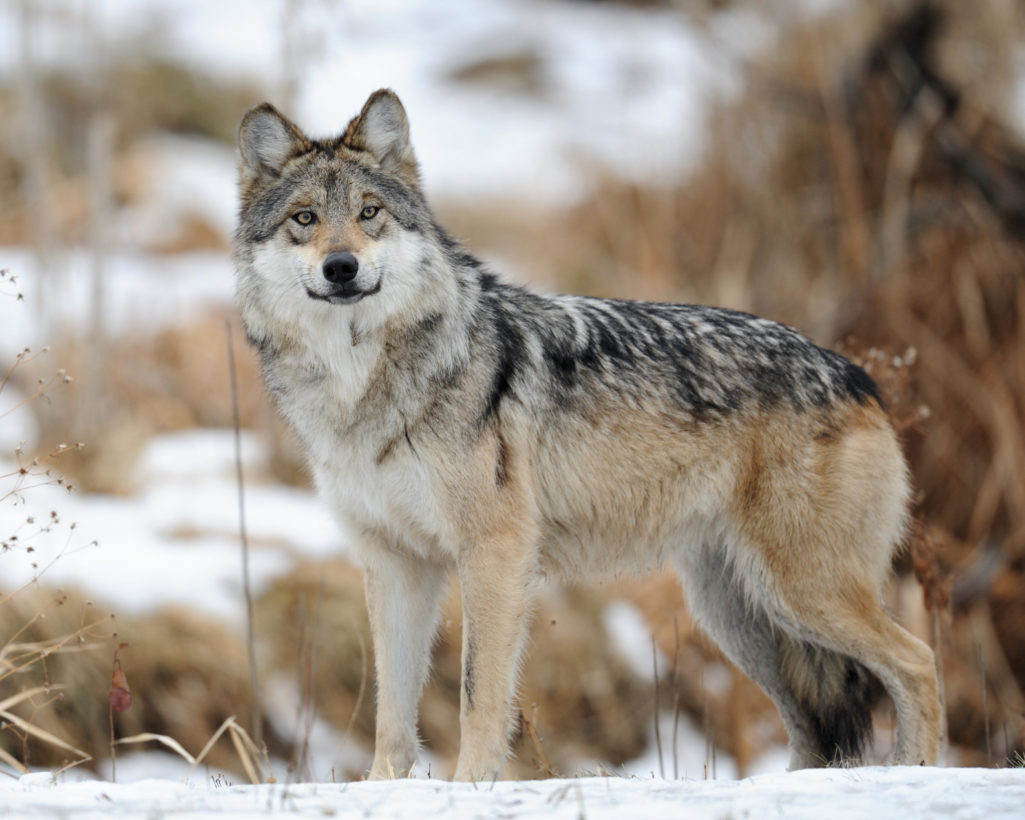
A new report indicates that poachers may have killed at least 100 more wolves since they lost endangered species protections than previously believed. Alamy Stock Photo
A whopping 2,380 wolf hunting permits—twice as many as are typically issued for hunts in the state—were made available for a quota of 119 wolves in what was supposed to be a week-long season. Less than three days later, more than 200 wolves had been killed, entire wolf families were decimated, and the hunting season had to be shut down early, having gone nearly 100 wolves over the quota.
Each wolf lost in this killing spree had represented hope for wolf conservation in America—and that hope was shattered. Little if any input was sought from Wisconsinites, tribal nations or the scientific community. We led a strong campaign to try to stop the February wolf hunt, sending a letter to the Wisconsin governor, state lawmakers and Department of Natural Resources officials, emphasizing that the hunt would have disastrous consequences for the wolves; unfortunately a court decision forced the hunt to continue. We still believe that the wrongs of this hunt deserve closer inspection, which is why we’ve just published “A call to end wolf trophy hunting in Wisconsin,” in an effort to prevent a repetition of this reckless hunt in November 2021.
One of the deadliest hunts in local memory
We now know that Wisconsin’s February hunt was the second deadliest wolf hunt in Wisconsin’s recorded history, with 218 wolves recorded dead. The best available science indicates that poachers may have killed at least an additional 100 more since wolves were delisted. We also know that nearly half the wolves killed were females. Because it was breeding season, many of them may have been pregnant. More than 85% of the wolves killed were hunted down by packs of dogs—an extremely cruel practice that no other Midwestern state allows for wolf hunting. Hunt participants also used unfair killing equipment such as night vision devices, snowmobiles, traps and snares.
Our report emphasizes that even more wolves died than the state calculated—largely because it failed to account for the tremendous numbers likely killed by poachers. Because of time constraints, hunters could self-report, or report to a local game warden (and not a biologist), the wolves they killed. The state did not require hunters to turn in the dead wolves for analysis, which would have allowed the state to verify the age of the wolf and whether a female was pregnant at the time of her death, among other information. Only 22 of the 218 were voluntarily turned in, and only because the tribal nations had requested to conduct their own research. As a result, the state failed to account for what was likely a substantial loss to the breeding population and for the for the offspring of pregnant wolves who were killed.
We believe that Wisconsin has lost about one-third of its wolf population since they were delisted from federal Endangered Species Act protections in November 2020. These wolves are largely counted using their tracks in snow, which will make it impossible to count the wolf population before the next proposed wolf trophy hunt in November. If that hunt occurs, the future survival of this population of wolves will be in jeopardy.
We conducted a poll of Wisconsin residents, cutting across demographics and including farmers, hunters, all party affiliations, genders and jurisdictions, and found that 68% of respondents think that the November wolf hunt is a bad idea. Some 62% opposed the trophy hunting and trapping of wolves. The majority of respondents believed the February 2021 hunt was “mismanaged” and “reckless” and that the methods to hunt wolves in Wisconsin are cruel and unfair, and 68% stated they are convinced that wolves are sentient, evolved, familial beings who drive ecological processes while keeping their prey herds healthier. And most respondents—even most Wisconsin farmers—did not feel that wolves pose a serious threat to livestock.
This is why we are calling upon Wisconsin officials to stop the proposed November wolf hunt and adopt a hunting quota of zero wolves. And we’re urging the federal government to relist Wisconsin’s wolves under the federal Endangered Species Act.
The fight to reinstate wolf protections
The struggle to save gray wolves spans decades. Nearly eradicated from their native U.S. habitats at the beginning of the 20th century, gray wolves are still absent from about 70% of currently suitable habitat in the lower 48 states. Yet in recent years legislators and wildlife agencies have systematically continued to roll back wolf protections. The carnage of the Wisconsin hunt showed what can happen when wolves are stripped of those protections.
But there are stories that bring hope to the fight for wolves. For the first time in 80 years, wolf pups were born in Colorado. The pups’ parents had immigrated into Colorado themselves, and unlike other immigrants before them, were not shot or poisoned before having the opportunity to breed. In 2020, Colorado residents showed support for wolves in their state by passing a ballot measure mandating the restoration of wolves on public lands in the western region of the state by 2023. The best way to protect the future of this wolf family would be to relist gray wolves under the Endangered Species Act.
David Knowles·Senior EditorMon, June 14, 2021, 12:11 PM·4 min read
A week of triple-digit temperatures made worse by climate change is forecast across much of the American West this week, with records poised to fall in several towns, cities and states across the drought-plagued region.
Scorching summer heat waves, which climate scientists warn will become become more commonplace in the coming decades, result in increased health risks. A study released in May found that more than one-third of the world’s heat deaths are now directly attributable to global warming.
On Monday, 43 million people found themselves under heat alertsin the U.S.
It’s not just the United States that is baking. Temperatures topped a record 125 degrees in the Middle East last week, with five countries seeing temperatures exceed 122 degrees. The National Oceanic and Atmospheric Administration noted that the average land and ocean surface temperature across the world was 1.76 degrees above average in 2020 and that the Northern Hemisphere saw its warmest year ever, with temperature exceeding the 20th century average by 2.3 degrees.
“The 10 warmest years on record have all occurred since 2005, and 7 of the 10 have occurred just since 2014,” NOAA says on its website.
Infographic courtesy of NOAA
Climate scientists have long warned that, thanks to the increasing concentration of carbon dioxide in the Earth’s atmosphere, the number of record-high temperatures being recorded had begun outpacing record lows.
“In a stable climate, the ratio of new record highs to new record lows is approximately even. However, in our warming climate, record highs have begun to outpace record lows, with the imbalance growing for the past three decades,” the nonprofit group Climate Nexus says on its website. “This trend is one of the clearest signals of climate change that we experience directly.”
Analyzing data provided by the United States Geological Survey and NOAA, the homeowners’ website Porch Group published a forecast predicting that, because of climate change, by the year 2080 many counties in the U.S. can expect to see temperatures above 90 degrees over 60 percent of the year.
Webb County, Texas, tops the list with an estimated 218 days above 90 degrees by 2080. Yuma County, Ariz., can expect 217 days per year above 90 degrees, while St. Lucie County, Fla., will break that temperature mark 193 days each year.
With wildfires already springing up months ahead of the traditional fire season in California, the rising temperatures will continue to dry out vegetation and further deplete reservoirs that are already experiencing record low levels.
“With high temperatures, we’re going to get more evaporation and less water to use later on. We’re obviously not going to get much rain anytime soon,” Mike Wofford, a meteorologist with the National Weather Service in Oxnard, Calif., told the Los Angeles Times. “I’m not sure how much worse it makes it. It’s already pretty bad.”
State Assemblyman Robert Smullen speaks in favor of a local law allowing 12 and 13-year-olds to hunt deer in Fulton County during the Board of Supervisors meeting Monday at the County Office Building in Johnstown. (The Leader-Herald/Michael Anich)
JOHNSTOWN — The Fulton County Board of Supervisors on Monday unanimously adopted a local law authorizing 12 and 13-year-old licensed hunters to hunt deer during hunting season, under supervision of a licensed adult hunter.
The temporary law is effective immediately upon filing and publication in accordance with Section 27 of the state’s Municipal Home Rule Law.
The state is allowing counties to decide whether they want 12 and 13-year-olds sanctioned as deer hunters within their borders.
Hunting for this younger population would allow hunting deer with a firearm — to include rifles, shotguns and muzzle-loaded firearms, or crossbows.
Scott Douthit was arrested in connection to a deadly January shooting (Photo: River Valley Now)
LITTLE ROCK (KATV) —A man wanted in a deadly shooting that happened in January turned himself in on Monday, according to KATV content partnerRiver Valley Now.
Scott Douthit, 25, of Russellville, was charged with manslaughter.
The shooting, which was originally reported as ahunting accident, happened near the Holla Bend National Wildlife Refuge in Carden Bottoms. At the scene, Jared Sykes, 20, of Dardanelle was found with a gunshot wound, according to the Yell County Sheriff’s Department.
Deputies said following an autopsy, Sykes’ cause of death was determined to be homicide.
Author of the article:Joanne LauciusPublishing date:Jun 14, 2021 • 19 hours ago • 2 minute read • Join the conversation
OTTAWA – June 14, 2021 – NCC Conservation officers and Ottawa Police were at 18 Royal Field Cres in Ottawa Monday trying to remove a bear from a back yard. The bear climbed a tree and was stuck. At the time of the photo the bear had been tranquilized 4 times. PHOTO BY TONY CALDWELL /Postmedia
Article content
A wayward bear that spent most of Monday sleeping in a Barrhaven tree will wake up in the bush near White Lake.
The bear appeared to be healthy, said Dominique Huras of the National Capital Commission, the lead agency on the “Bearhaven bear” incident.
The bear was first sighted around 8:30 a.m. and later in the morning made its way into a private backyard in the Fallowfield area near the Transitway.
OTTAWA – June 14, 2021 – NCC Conservation officers and Ottawa Police were at 18 Royal Field Cres in Ottawa Monday trying to remove a bear from a backyard. The bear climbed a tree and was stuck. PHOTO BY TONY CALDWELL /PostmediaOTTAWA – June 14, 2021 – NCC Conservation officers and Ottawa Police were at 18 Royal Field Cres in Ottawa Monday trying to remove a bear from a backyard. PHOTO BY TONY CALDWELL /PostmediaOTTAWA – June 14, 2021 – NCC Conservation officers and Ottawa Police were at 18 Royal Field Cres in Ottawa Monday trying to remove a bear from a backyard. PHOTO BY TONY CALDWELL /PostmediaOTTAWA- June 14, 2021. The bear in a backyard in Barrhaven earlier in the day. SOURCE: Ottawa Police Services jpg
Police say the “sizeable” bear, believed to be an adult, spent most of the morning sleeping, but would wake up to have a look around before falling asleep again. Later in the morning, the bear went up a tree, where it remained most of the day, watched by police and the conservation officers.
OTTAWA- June 14, 2021. A bear has settled into a resident’s backyard in Barrhaven, causing police to block off nearby roads. PHOTO BY HANDOUT /Ottawa Police Services
Last summer, NCC conservation officers trapped a bear that had made its home at the Britannia Conservation Area and released it near White Lake. In September 2018, the officers tranquilized a bear that had been wandering in the ByWard Market. That bear was then lowered out of a tree on a rope with the help of firefighters, and was later tagged and released.
OTTAWA- June 14, 2021. Ottawa police blocked off Earl Mulligan and Woodpark Way in Barrhaven Monday morning due to a bear sighting. Tony Caldwell, Postmedia jpg
OC Transpo rerouted Route 171 on Monday morning in the area of Woodroffe Avenue and Earl Mulligan Drive after the bear was sighted and police kept Earl Mulligan closed off until the bear was captured.
According to the Ontario Ministry Of Natural Resources and Forestry, when bears are caught off guard, they are stressed, and usually just want to flee.
“Generally, the noisier the bear is, the less dangerous it is, provided you do not approach. The noise is meant to ‘scare’ you off and acts as a warning signal, says the province’s “bear wise” website.
The ministry advises those who encounter a bear to slowly back away while keeping the bear in sight and wait for it to leave.
If you are near a building or vehicle, get inside as a precaution. Drop any food you may be carrying and slowly move away.
If a bear is in a tree, leave it alone. Leave the area. The bear will come down when it feels safe.
Do not run, climb a tree or swim. Do not kneel down, make eye contact with the bear or approach it to get a better look. And never attempt to feed a bear.
“A threatened black bear will give off warning signs to let you know you are too close. A black bear standing on its hind legs is not a sign of aggressive behaviour. The bear is trying to get a better look at you or catch your scent.”
These horrifying images show a a dead dolphin that washed up on a beach with a diaper stuck in its mouth and a broken jaw.
Tourists and fishermen, who spotted the washed-up striped dolphin with the man-made waste still attached to its teeth, believe it died from suffocation.
The mammal was found on the Bacocho beach in the municipality of Puerto Escondido, in the southern Mexican state of Oaxaca.+6
Gory photos showed extensive damage to the dolphin’s body and a broken jaw with pieces of…






 +6
+6 Exposing the Big Game